

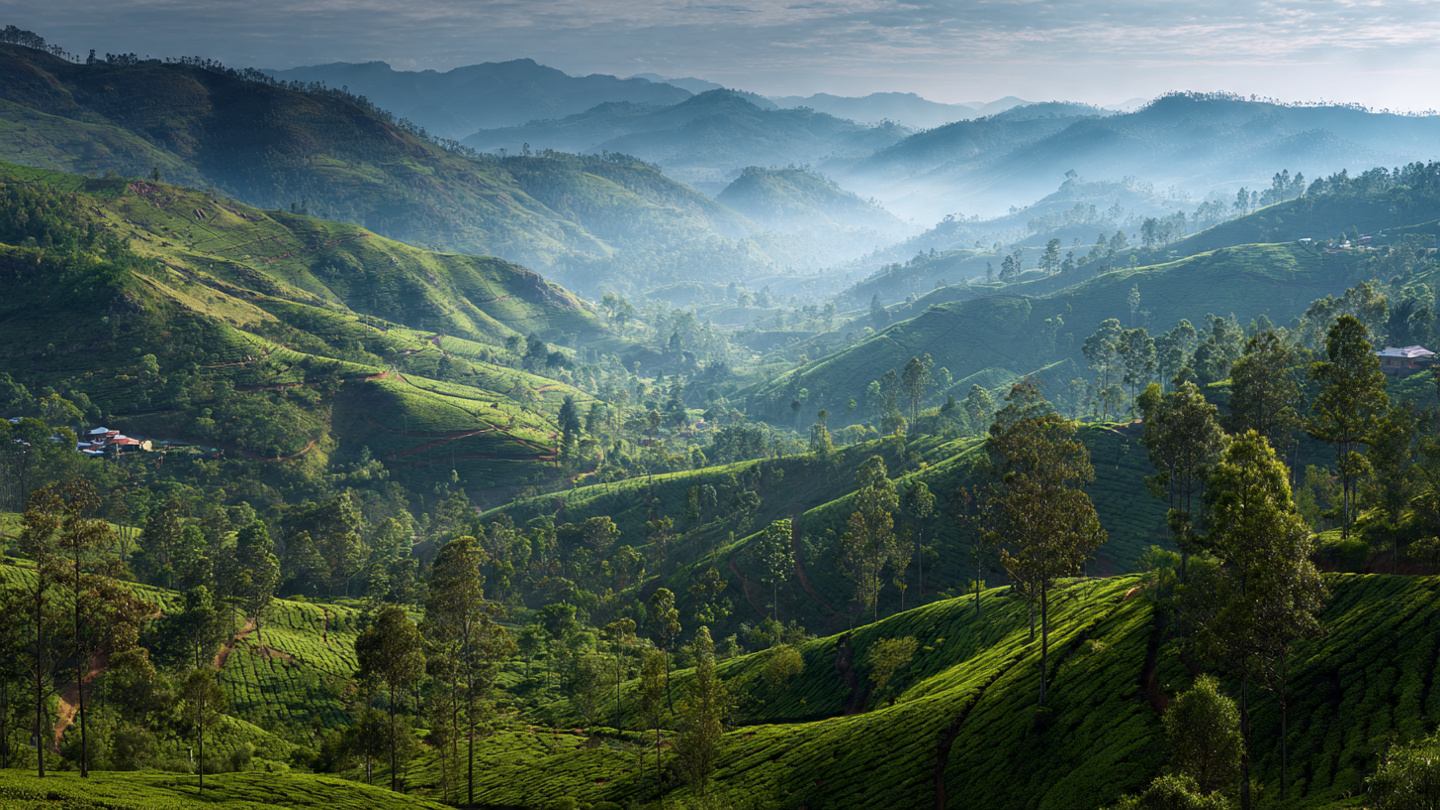
But a slow revelation of Sri Lanka awaits the traveler, particularly after the route proceeds inland. The experience of the tea of Sri Lanka is an important part of this exploration. For most foreign visitors, the first change of feeling occurs when the roads begin to go up the hill, the climate cools, and the wide valley stretches into a series of green layers. The regions are the ones where the tea in Sri Lanka is not a mere background feature in an interesting landscape or an historical afterthought. It is the system that defined the landscape.
The hill country as known to travelers was formed by the tea plantations. The towns, railways, estate roads, scenic lookouts, and even pedestrian trails came into being as a function of tea planting. When traveling in these areas, visitors are not traversing a country with a sequence of isolated points of interest. They are traveling in an area where there is one single agricultural cycle that still forms the life rhythms.
For travelers who want a practical, on-the-ground understanding of how tea estates operate and what to expect during real visits, this guide to tea plantation visits in Sri Lanka explains the experience in detail. To understand how tea landscapes change across the island and how each area feels to visit, this detailed breakdown of the seven tea regions of Sri Lanka explains the geography, climate, and travel experience behind each tea-growing zone.
How Tea Shapes the Way Travelers Experience Sri Lanka
What makes tea especially powerful as a travel experience is its visibility. Unlike many agricultural products that remain hidden behind factories or private land, tea in Sri Lanka unfolds openly across hillsides. Harvesting, transport, and processing happen within view of roads, trains, and footpaths. Even travelers who do not plan a plantation visit quickly realize they are inside a working landscape rather than a decorative one.
This openness creates understanding without instruction. Travelers begin to notice how elevation affects plant growth, how mist settles differently across valleys, and how weather patterns influence daily routines. Tea becomes something observed rather than explained, which makes the experience feel organic and personal.
A Slower Rhythm That Changes How Travel Feels
Tea country naturally slows travel down. Roads curve instead of cutting straight through terrain. Trains reduce speed as they climb higher elevations. Walks feel longer because views encourage pauses rather than urgency. This slower pace is not designed for tourists. It is a direct result of landscapes shaped for cultivation rather than convenience.
For visitors arriving from fast-paced cities in the USA or Europe, this shift often becomes one of the most memorable parts of the journey. Without planning to slow down, travelers find themselves doing exactly that. Time feels less compressed. Movement feels intentional. Even short distances feel meaningful because they are experienced rather than rushed through.
Layers of History Embedded in Tea Landscapes
Tea regions in Sri Lanka carry history in a subtle but powerful way. Indigenous highland routes, colonial-era estates, stone markers, railway engineering, and modern rural life coexist within the same valleys. Instead of isolating history inside museums or monuments, tea country blends it into everyday movement.
A single walk may pass century-old infrastructure, active factories, and contemporary homes without clear boundaries between eras. This continuity gives the region authenticity that resonates strongly with travelers who prefer lived history over preserved displays. Tea landscapes do not present the past as something finished. They show it as something still functioning.
Tea as a Connector Between Regions
Tea also plays an important role in connecting different parts of the hill country into a coherent journey. Routes such as the famous Kandy to Ella corridor feel continuous rather than fragmented because tea cultivation stretches across multiple regions. Changes in altitude, climate, and scenery happen gradually, allowing travelers to experience progression instead of abrupt transitions.
This sense of flow strengthens the travel narrative. Each stop feels related to the last, and visitors begin to understand the hill country as a whole rather than as a collection of separate destinations.
Accessibility Beyond Luxury Travel
One of the most overlooked aspects of tea travel in Sri Lanka is its accessibility. While luxury estate stays and colonial bungalows exist, much of tea country remains open and affordable. Roads, viewpoints, walking paths, and train journeys are public. Small towns offer budget accommodation and simple food. Meaningful experiences do not require curated packages or high costs.
This openness aligns well with independent travel styles common among international visitors. Tea landscapes can be explored at one’s own pace, whether through short walks, train journeys, or unplanned stops along the road. The experience feels discovered rather than sold.
Where Nature and Culture Intersect
Tea country sits in a space between wilderness and settlement. The hills are cultivated, yet deeply connected to natural systems. Weather changes quickly. Mist moves through valleys without warning. Wildlife, agriculture, and human routines interact constantly. This dynamic environment gives even quiet moments a sense of movement and depth.
For travelers interested in photography, storytelling, or slow exploration, this interaction creates endless variation. Light shifts rapidly. Colors change with altitude and season. No two valleys feel exactly the same, even when they follow similar patterns of cultivation.
Why Tea Becomes the Lens Through Which the Hill Country Makes Sense
Many travelers arrive in Sri Lanka without strong interest in tea itself. Yet after spending time in the hill country, tea often becomes the framework that helps everything else make sense. It explains settlement patterns, transport routes, architectural styles, and daily rhythms.
Rather than functioning as a single attraction, tea provides coherence. It ties together scenery, history, movement, and culture into a unified travel experience. Visitors may come for cooler weather, scenic trains, or landscapes, but tea is what quietly connects those elements into something memorable and grounded.
What Makes Sri Lanka Tea Unique for Travelers

Geography That Shapes the Experience
Tea in Sri Lanka is inseparable from geography. Unlike destinations where tea grows on flat estates or isolated farms, Sri Lanka’s tea regions unfold across steep hills, long ridges, and layered valleys. Elevation changes quickly, sometimes within a few kilometers, and that variation shapes both the landscape and the travel experience. For visitors, this means that movement itself becomes part of discovery. A short drive or train ride can reveal dramatic shifts in scenery, temperature, and atmosphere.
Highland tea areas sit between 3,000 and 6,000 feet above sea level, creating cooler conditions that feel immediately noticeable to international travelers. After time spent in coastal heat or lowland cities, the change feels refreshing rather than subtle. Windows open naturally. Walks become longer. Even simple activities like sitting outdoors feel different. Tea thrives in these conditions, and so does slow travel.
Altitude, Climate, and Daily Rhythm
Tea cultivation depends on precise environmental balance, and travelers feel this balance in daily rhythms. Mornings often arrive with mist moving through valleys. Afternoons bring clearer views and softer light. Evenings cool quickly, encouraging early dinners and quieter streets. These patterns are not designed for visitors, yet they shape the experience in a way that feels calming and natural.
Rain plays an important role as well. Sudden showers are common, but they rarely last long. For travelers, this creates moments of pause rather than disruption. Trains slow slightly. Walks pause under shelter. Views change as clouds lift and settle again. Tea landscapes respond quickly to weather, and visitors begin to notice how closely daily life follows these shifts.
Tea as a Living Landscape, Not a Static Attraction
One reason tea travel feels so immersive is because the landscape is active. Hillsides are not preserved for viewing alone. They are planted, harvested, maintained, and renewed continuously. Rows change color with growth cycles. Paths show signs of daily use. Factories operate on visible schedules tied to harvest times.
This sense of movement gives tea regions a lived-in quality. Travelers are not observing a finished scene. They are stepping into an ongoing process. Even without formal tours, it becomes easy to sense how the land works and why it looks the way it does. The experience feels grounded rather than staged.
How Tea Shapes Settlement Patterns
Towns in Sri Lanka’s hill country often appear where tea required them. Processing facilities needed nearby housing. Transport routes followed estate boundaries. Markets developed where workers gathered. For travelers, this creates towns that feel purposeful rather than random.
Railway stations sit close to estates. Roads wind around plantations instead of cutting through them. Accommodations cluster near viewpoints that once served practical needs. Understanding this relationship helps travelers navigate tea regions more intuitively. Stops begin to feel connected rather than accidental.
A Travel Experience Built on Gradual Discovery
Tea regions reward travelers who move slowly and pay attention. Unlike destinations with singular landmarks, tea country offers discovery through accumulation. Views change gradually. Valleys open without announcement. Small moments build into lasting impressions.
This gradual unfolding suits long stays and unplanned detours. Travelers often find that the most memorable moments happen between destinations rather than at them. A curve in the road reveals a new valley. A train window frames a different pattern of fields. Tea country encourages presence rather than urgency.
Cultural Continuity Without Performance
Tea landscapes also offer cultural continuity without overt performance. Daily routines continue regardless of visitors. Harvest schedules, transport, and processing follow agricultural cycles, not tourist calendars. This creates authenticity that many travelers value, especially those seeking experiences beyond curated attractions.
Visitors can observe without interrupting. Respectful distance becomes possible. The experience feels observational rather than transactional, which aligns well with travelers who prefer understanding over entertainment.
Why Tea Feels Personal Even to First-Time Visitors
Many travelers arrive with limited knowledge of tea cultivation, yet still connect with the experience on a personal level. The reason lies in accessibility. Landscapes are open. Movement is visible. Cause and effect are easy to sense. Elevation explains temperature. Rain explains growth. Transport explains settlement.
This clarity allows travelers to build understanding intuitively. Tea does not require explanation to feel meaningful. It reveals itself through repetition and presence, making the experience feel personal even during short visits.
Tea as a Framework for Exploring the Hill Country
As travelers spend more time in tea regions, tea becomes a mental map rather than a topic. It explains why certain routes exist, why views open where they do, and why daily life follows particular rhythms. The hill country begins to feel coherent instead of fragmented.
This framework helps travelers plan more confidently. Decisions feel grounded in landscape rather than guesswork. Tea becomes the context that ties together scenery, movement, and time.
Understanding Ceylon Tea Regions as Travel Destinations

Thinking of Tea Regions as Travel Zones, Not Just Growing Areas
For travelers, Sri Lanka’s tea regions make the most sense when viewed as travel zones rather than agricultural categories. While tea is often discussed in terms of flavor profiles or export grades, those distinctions matter far less on the ground than geography, climate, and accessibility. Each tea region offers a different travel rhythm, landscape, and set of experiences shaped by elevation and weather rather than labels.
When moving through the hill country, travelers quickly notice that no two tea areas feel the same. Some regions feel expansive and open, with wide valleys and long views. Others feel enclosed and dramatic, with steep slopes and sudden drops. Understanding these differences helps visitors choose destinations that match their travel style rather than chasing names alone.
The Central Highlands as the Gateway to Tea Country
Most international travelers encounter tea landscapes for the first time in the central highlands. This area acts as a natural gateway, both geographically and experientially. Roads, rail lines, and historic towns converge here, making it an easy entry point for visitors arriving from cultural centers or major cities.
The central highlands balance accessibility with immersion. Facilities are well developed, transport options are reliable, and views appear almost immediately after entering the region. For first-time visitors, this area offers a gentle introduction to tea country without requiring difficult logistics or long detours.
How Elevation Creates Distinct Travel Experiences
Elevation is one of the most important factors separating tea regions as travel destinations. Higher elevations bring cooler temperatures, misty mornings, and slower-paced towns. Lower elevations feel warmer, more open, and often less crowded. These differences influence everything from walking comfort to accommodation styles and daily schedules.
Travelers sensitive to heat often prefer higher regions, where afternoons remain mild and evenings cool quickly. Those seeking less tourist traffic sometimes gravitate toward slightly lower or less famous areas, where landscapes remain just as striking but infrastructure feels simpler and quieter.
Climate and Seasonality Across Tea Regions
Tea grows year-round in Sri Lanka, but travel experiences change with seasonal patterns. Rainfall varies by region and time of year, affecting visibility, walking conditions, and train journeys. Some regions experience clearer skies during months when others see heavier rain, making timing an important consideration for travelers planning photography or scenic routes.
Understanding seasonality helps visitors avoid disappointment and make realistic plans. Mist, for example, can enhance atmosphere but reduce long-distance views. Travelers who value mood and texture may enjoy these conditions, while those focused on clear panoramas may prefer drier periods. Tea regions accommodate both preferences depending on timing.
Regional Character Beyond Scenery
Beyond landscapes, each tea region carries a distinct character shaped by settlement history and development patterns. Some areas feel more colonial in layout, with wide roads and historic buildings. Others feel more rural, with compact towns and fewer formal structures. These differences influence how travelers interact with each destination.
Accommodation styles reflect this character as well. Some regions offer restored bungalows and estate stays, while others rely on small guesthouses and locally run lodgings. Choosing a region often means choosing a pace and atmosphere rather than specific attractions.
Accessibility and Movement Between Regions
One of the strengths of Sri Lanka’s tea country is how well regions connect to each other. Train lines, especially through the central hills, allow travelers to move between areas without constant road travel. This connectivity supports flexible itineraries and encourages exploration rather than fixed schedules.
Travelers can experience multiple tea regions within a single journey without feeling rushed. Gradual transitions between elevations and climates make movement feel natural rather than disruptive. This flow reinforces the sense that tea country functions as a connected landscape rather than isolated destinations.
Why Travelers Should Avoid Treating Tea Regions as Checklists
A common mistake among first-time visitors is trying to see every tea region within a short timeframe. While this may sound efficient, it often reduces the experience to surface-level impressions. Tea regions reveal their character through time spent rather than places checked off.
Staying longer in fewer areas allows travelers to notice daily patterns, weather shifts, and subtle landscape changes. These details create memory and meaning. Tea country rewards patience more than coverage.
Using Tea Regions to Shape a Personal Travel Style
Ultimately, understanding tea regions helps travelers align destinations with personal travel goals. Some regions suit relaxed stays with scenic walks and quiet evenings. Others support active exploration through train journeys and short hikes. Some offer easy access to cultural sites, while others emphasize solitude and space.
By viewing tea regions as travel environments rather than product origins, visitors gain control over how their journey unfolds. Tea becomes a guide rather than a subject, shaping movement, mood, and memory throughout the hill country.
Explore the regional orientation map on Google Maps
Visiting Tea Plantations and Factories in Sri Lanka

What Travelers Should Expect From Plantation Visits
Visiting tea plantations and factories in Sri Lanka is less about staged demonstrations and more about observing a working system. Unlike highly commercialized agricultural tours found in some destinations, tea visits here tend to be practical, straightforward, and closely tied to daily operations. For travelers, this creates an experience that feels informative without being overwhelming.
Most plantation visits follow a simple flow. Visitors move through fields or estate grounds, observe harvesting areas if work is underway, and then enter processing spaces where leaves move through different stages. The emphasis is usually on explanation rather than performance. This suits travelers who prefer understanding how things work instead of being entertained.
Differences Between Estate Walks and Factory Visits
Tea experiences generally fall into two categories. Estate walks focus on landscapes, elevation, and cultivation patterns. Factory visits focus on processing, grading, and preparation. While these experiences often overlap, understanding the distinction helps travelers choose what fits their interests.
Estate walks appeal to travelers interested in scenery, photography, and movement. They allow visitors to see how terrain influences planting patterns and how estates integrate with surrounding towns. Factory visits, on the other hand, provide structure and clarity. Travelers see machinery, timelines, and quality control processes that explain why tea from different regions varies.
Timing Matters More Than Many Travelers Realize
Tea processing follows harvest cycles, which means timing affects what travelers see. Visits during active processing hours provide a fuller picture of how tea moves from field to finished product. Arriving outside those windows may still be informative, but the experience feels quieter and more observational.
For travelers planning visits independently, understanding daily schedules helps avoid disappointment. Morning and early afternoon tend to be more active. Weather also plays a role. Rain can alter harvesting schedules, which in turn affects factory activity. Flexibility improves the experience.
Guided Versus Independent Visits
Some tea estates offer guided visits with structured explanations. Others allow visitors to walk grounds or observe processing informally. Both approaches have value depending on travel style.
Guided visits suit travelers who want clear explanations and context, especially those unfamiliar with tea production. Independent visits appeal to travelers who prefer quiet observation and minimal interaction. In many cases, combining both styles across different locations creates balance without repetition.
Costs, Expectations, and Practical Etiquette
Tea plantation visits are generally affordable. Some factories charge small entry fees, while others operate on informal contributions or shop-based support. Travelers should approach visits with realistic expectations. Facilities prioritize production over presentation. Spaces may feel industrial rather than polished.
Etiquette matters. Asking before taking close-up photographs, respecting working areas, and following guidance helps maintain positive interactions. Tea estates are workplaces first. Observing respectfully enhances both understanding and access.
Why Plantation Visits Feel Different From Tea Museums
Unlike tea museums or heritage centers, plantations offer immediacy. Visitors witness tea in motion rather than as history. This immediacy makes information easier to absorb. Travelers connect processes with landscapes they have already seen, reinforcing understanding through context.
Museums explain tea. Plantations show it. The difference changes how travelers remember the experience. Knowledge gained through observation tends to stay longer than information presented through displays.
Choosing Quality Over Quantity
Travelers often wonder how many plantations to visit. In most cases, fewer visits lead to better experiences. After one or two well-timed visits, patterns become clear. Additional stops risk repetition rather than deeper insight.
Choosing locations that differ in elevation or region adds variety without overload. This approach allows travelers to notice contrasts rather than repeat details.
How Plantation Visits Fit Into a Broader Journey
Tea plantations work best as part of a larger travel flow rather than isolated stops. Combining visits with scenic drives, train journeys, or town stays prevents the experience from feeling instructional. Tea becomes part of the journey rather than its sole focus.
When integrated thoughtfully, plantation visits add depth without dominating the itinerary. They enhance understanding while leaving space for rest, exploration, and reflection.
Tea Country Routes and Journeys Through the Hill Country

Why Movement Is Central to the Tea Country Experience
Tea country in Sri Lanka is not defined by single locations. It is defined by movement. The way travelers pass through hills, valleys, and towns shapes how tea landscapes are understood and remembered. Unlike destinations where attractions exist as fixed points, tea regions reveal themselves most clearly while in transit.
Roads curve along ridges. Trains trace natural contours. Elevation changes unfold gradually rather than abruptly. This constant motion allows travelers to observe how tea connects one place to another. Movement becomes the experience rather than a means to reach it.
Scenic Roads That Follow the Logic of Tea Estates
Many of the most scenic roads in the hill country exist because tea required access between estates, factories, and transport hubs. These roads were built to accommodate terrain rather than reshape it. As a result, they offer views that feel integrated rather than engineered.
For travelers, this means drives that feel immersive rather than directional. Sharp turns reveal new valleys. Short stops offer wide perspectives. Even slow traffic becomes part of the experience because it allows time to absorb surroundings. Tea landscapes feel closer when observed at road speed rather than from fixed viewpoints alone.
Train Journeys as a Window Into Tea Country
Train travel plays a unique role in tea tourism. Rail lines cut through some of the most dramatic plantation areas, offering continuous views unavailable from roads. Trains move slowly through these sections, allowing travelers to observe details such as field patterns, factory locations, and settlement clusters.
Unlike curated scenic routes, these railways function as everyday transport. This gives the experience authenticity. Travelers share space with daily commuters and workers, reinforcing the sense that tea country is lived-in rather than staged.
Train journeys also reduce logistical complexity. Travelers can move between major tea regions without navigating winding roads or arranging private transport. This accessibility supports independent travel and flexible planning.
How Routes Shape Perception of Distance and Scale
Tea country changes how travelers perceive distance. Short segments can feel expansive because scenery shifts constantly. Long journeys feel shorter because views remain engaging. This altered sense of scale encourages exploration rather than fatigue.
Travelers often remember routes as experiences in themselves rather than transitions. Specific bends, bridges, or stretches of track stand out as vividly as destinations. Tea landscapes support this memory-making by offering variation without chaos.
Planning Journeys Without Overloading the Itinerary
Because routes are so visually rich, less planning often leads to better experiences. Over-scheduling stops can interrupt the natural flow of movement. Allowing time for unplanned pauses improves connection to place.
Travelers benefit from choosing routes that balance movement and rest. Long train rides pair well with short stays. Scenic drives work best when combined with simple accommodation nearby. Tea country rewards pacing rather than efficiency.
Viewing Tea Landscapes From Different Angles
Routes allow travelers to see tea landscapes from multiple perspectives. Roads offer close-range observation. Trains provide elevated views. Short walks reveal texture and detail. Experiencing tea from these different angles deepens understanding.
This layered observation helps travelers connect what they see from afar with what they encounter on the ground. Patterns become clearer. Landscapes feel intentional rather than decorative.
How Tea Routes Support Flexible Travel Styles
Tea country routes accommodate many travel styles. Solo travelers benefit from public transport connectivity. Couples enjoy scenic journeys that encourage shared observation. Families find train travel especially manageable due to predictable movement and built-in rest.
The variety of routes allows travelers to adjust plans based on energy, weather, or interest without losing coherence. Tea remains the constant element tying experiences together.
Why Journeys Matter More Than Endpoints in Tea Country
In tea regions, endpoints matter less than the path between them. Destinations gain meaning through the journeys that connect them. Travelers who embrace this mindset often leave with stronger memories and a deeper sense of place.
By treating movement as an experience rather than a task, visitors allow tea country to unfold naturally. Routes become stories. Transitions become moments. Tea landscapes transform travel itself into the destination.
Tea Experiences for Different Types of Travelers

How Tea Country Adapts to Varied Travel Styles
Tea country in Sri Lanka does not demand a single way of traveling. Its landscapes, routes, and towns allow visitors to shape experiences according to personal interests, energy levels, and budgets. Rather than offering one fixed narrative, tea regions support multiple travel styles without losing coherence.
Because tea landscapes are open and accessible, travelers naturally interact with them differently. Some move quickly through scenic routes. Others stay longer and explore on foot. Tea country accommodates both approaches without forcing structure.
Thanks Sallay! Tour was amazing. Amazing introduction as well as experience of picking the tea. Would do it again. Worth every penny.
Read more reviews on Tripadvisor
Tea Travel for First-Time International Visitors
For first-time visitors to Sri Lanka, tea regions offer clarity and balance. Transport options are reliable. Towns are well connected. Facilities cater to international travelers without overwhelming them. This makes tea country a comfortable introduction to inland travel.
Travelers new to the country often appreciate how easy it is to orient themselves. Routes are logical. Landscapes are continuous. Daily rhythms become predictable after a short time. Tea regions reduce uncertainty while still feeling immersive.
Budget Travelers and Independent Explorers
Tea country works particularly well for budget-conscious travelers. Public transport reaches most major tea areas. Guesthouses and small hotels are widely available. Walking, train travel, and scenic viewpoints often cost little or nothing.
This accessibility allows independent travelers to engage deeply without high costs. Tea landscapes do not require paid entry points to be appreciated. Many meaningful experiences happen between destinations rather than inside attractions. For travelers seeking value through immersion rather than amenities, tea country fits naturally.
Slow Travelers and Long-Stay Visitors
Slow travel aligns closely with tea country rhythms. Extended stays allow travelers to notice changes in light, weather, and daily routines. Walking paths become familiar. Small towns reveal patterns rather than highlights.
Longer stays also reduce pressure to see everything. Travelers can focus on fewer regions and explore them gradually. Tea landscapes reward repetition. Familiar views change subtly each day, creating a sense of belonging rather than consumption.
Families and Multi-Generational Travel
Tea regions are well suited to family travel due to moderate temperatures and gentle pacing. Train journeys offer built-in entertainment without effort. Short walks provide activity without strain. Accommodation options range from simple to comfortable, allowing families to choose based on needs.
Because tea landscapes are visually engaging without requiring strenuous activity, they work well for mixed age groups. Shared observation becomes a bonding experience rather than a logistical challenge.
Fascinating tour, we learnt a lot about tea and how it is processed! The staff were very friendly and great place to buy tea!
Read more reviews on Tripadvisor
Photography-Focused Travelers
Tea country offers strong visual variety for photographers. Patterns of fields, shifting mist, and changing light create opportunities throughout the day. Movement through the landscape adds narrative, allowing photographers to capture progression rather than isolated scenes.
Ethical considerations matter. Observing respectfully, maintaining distance, and avoiding intrusive behavior preserves authenticity. Many photographers find that restraint leads to more meaningful images. Tea landscapes respond well to patience.
It was a wonderful experience. We drove with Sampath who was very sweet and drove us around carefully. It was a comfortable ride.
Read more reviews on Tripadvisor
Travelers Seeking Quiet and Space
Not all tea regions attract the same level of traffic. Some areas feel quieter, especially outside peak seasons or popular routes. These spaces appeal to travelers seeking solitude, reflection, or creative focus.
Tea country provides quiet without isolation. Towns remain functional. Transport remains available. The balance allows travelers to step away from crowds without losing comfort or safety.
How Tea Experiences Can Evolve During a Single Trip
Many travelers find that their relationship with tea landscapes changes over time. Initial impressions focus on scenery. Later observations shift toward rhythm, routine, and subtle detail. Tea country supports this evolution naturally.
By allowing flexibility, travelers can adapt plans as understanding deepens. What begins as sightseeing often becomes observation. Tea transitions from subject to setting, shaping the journey quietly in the background.
For travelers looking to experience Sri Lanka’s tea country without high costs, this practical guide to budget tea tourism in Sri Lanka explains how to visit plantations, move between regions, and plan affordable itineraries.
Practical Travel Planning for Sri Lanka’s Tea Country

Choosing the Right Time to Visit Tea Regions
Tea grows throughout the year in Sri Lanka, but travel conditions vary depending on region and season. For international travelers, especially those visiting from the USA or Europe, understanding seasonal patterns helps shape expectations rather than dictate rigid plans.
Some tea regions experience clearer skies during certain months, while others receive heavier rainfall at the same time. This means there is almost always a tea area with favorable conditions, regardless of when travelers arrive. Rather than aiming for a single ideal season, visitors benefit from choosing regions that align with current weather patterns.
Mist and rain should not automatically be seen as negatives. They change atmosphere, soften landscapes, and add texture to views. Travelers who value mood and experience over postcard clarity often find these conditions memorable rather than disappointing.
How Much Time to Allocate for Tea Country
Tea regions reward time more than coverage. Short visits provide visual impressions, but longer stays create understanding. International travelers with limited schedules often try to fit tea country into one or two days, which can feel rushed.
A balanced approach works best. Allocating several nights across one or two regions allows travelers to settle into local rhythms without sacrificing variety. Movement slows naturally, and the experience becomes less about reaching destinations and more about being present within them.
Getting Around Without Overplanning
Transport in tea country supports flexibility. Trains connect major towns and pass through key landscapes. Buses and local transport cover shorter distances. Roads allow scenic travel but often take longer than expected due to terrain.
Rather than planning every segment tightly, travelers benefit from allowing buffer time. Delays are common but rarely stressful. Tea landscapes turn waiting into observation. Movement remains part of the experience even when plans shift.
Accommodation Choices and What to Expect
Accommodation in tea regions ranges from simple guesthouses to heritage-style stays. Many options prioritize location and view over luxury. Rooms may feel modest but compensate through atmosphere and access to landscapes.
Travelers should set expectations accordingly. Hot water, heating, and Wi-Fi availability vary by altitude and infrastructure. These differences are part of the experience rather than shortcomings. Choosing accommodation based on location and pacing often leads to greater satisfaction than focusing on amenities alone.
Cultural Awareness and Respectful Observation
Tea country remains a working environment. Fields, paths, and factories are part of daily routines. Travelers who approach with awareness and respect tend to have better interactions and deeper experiences.
Simple practices make a difference. Asking before entering working areas, keeping distance during harvesting, and observing quietly all contribute to mutual respect. Tea regions do not require performance from visitors. Observation is enough.
Managing Expectations for Activities and Attractions
Tea country does not operate on attraction-based tourism. Experiences emerge through movement, repetition, and observation rather than scheduled activities. Travelers expecting frequent highlights may initially feel underwhelmed.
Those who adjust expectations often discover depth. Walks become moments of reflection. Views change with light. Conversations happen naturally. Tea country offers richness through continuity rather than novelty.
Packing and Preparation Considerations
Practical preparation improves comfort. Light layers accommodate temperature changes. Waterproof footwear supports walking during wet conditions. A flexible mindset matters more than specific gear.
Travelers should prepare for variation rather than uniformity. Days shift quickly. Weather changes without warning. Tea regions reward adaptability.
Why Planning Lightly Leads to Better Experiences
Overplanning can reduce responsiveness to the environment. Tea country reveals itself through patience and presence. Travelers who allow plans to evolve often experience stronger connections and fewer frustrations.
By focusing on flow rather than schedules, visitors align with the natural rhythm of tea landscapes. Planning becomes a guide rather than a constraint, allowing tea country to shape the journey organically.
Tea Country Beyond the Familiar Highlands

Looking Past the Most Visited Tea Areas
Many travelers associate Sri Lanka’s tea landscapes with a small number of well-known highland towns. While these areas provide an easy introduction, they do not represent the full scope of tea country. Beyond the familiar routes lie regions that feel less structured, less crowded, and often more immersive.
Exploring these lesser-visited tea areas allows travelers to experience the same landscapes without the sense of repetition that can develop in popular centers. Views remain expansive. Cultivation remains active. The difference lies in atmosphere rather than quality.
Why Some Tea Regions Feel Quieter Than Others
Crowding in tea country often has more to do with accessibility than beauty. Regions located along major rail lines or close to established travel circuits naturally attract more visitors. Areas slightly removed from these routes receive fewer travelers despite offering equally dramatic scenery.
For visitors seeking space and quiet, choosing regions with fewer transport links can make a noticeable difference. Travel may require additional planning, but the reward often comes in the form of uninterrupted landscapes and slower-paced towns.
Experiencing Tea as Part of Daily Life
In less-visited regions, tea blends more seamlessly into daily routines. Fields sit closer to homes. Processing facilities operate as community centers rather than visitor stops. Travelers observe tea as part of life rather than as a curated experience.
This integration creates a different relationship with the landscape. Observation feels less intentional and more incidental. Tea becomes background rather than subject, allowing travelers to absorb atmosphere without analysis.
How Landscape Changes Outside the Central Highlands
Tea landscapes evolve as elevation and climate shift. Hills may feel broader. Valleys open wider. Patterns become less uniform. These variations add diversity to the tea country experience and prevent visual fatigue.
Travelers who explore beyond familiar zones often notice stronger contrasts between regions. These contrasts deepen understanding of how geography influences cultivation and settlement patterns.
Movement Without the Pressure of Itineraries
Less-visited tea areas encourage unstructured exploration. Without fixed attractions or schedules, travelers move according to curiosity rather than plans. Roads lead to viewpoints without signage. Walks unfold without expectations.
This freedom suits travelers who value intuition over instruction. Tea country becomes a space for wandering rather than navigating.
Why Fewer Visitors Often Means Deeper Engagement
Reduced tourist presence changes interactions. Conversations feel less transactional. Observation feels more natural. Travelers blend into daily life rather than standing apart from it.
This environment supports reflection and connection. Tea landscapes regain their role as living systems rather than destinations.
Choosing Balance Between Familiar and Quiet Regions
Exploring quieter tea regions does not require avoiding popular areas entirely. Combining familiar destinations with less-visited ones creates contrast and perspective. Travelers gain appreciation for both accessibility and solitude.
Balance allows travelers to experience tea country in full. Well-known areas provide structure and orientation. Quieter regions offer depth and calm.
Letting Tea Country Set the Pace
Beyond the familiar routes, tea country asserts its own rhythm more strongly. Days unfold slowly. Views reveal themselves without effort. Travelers adjust naturally.
By allowing the landscape to guide movement and attention, visitors experience tea country as it exists rather than as it is presented. The journey becomes personal, shaped by observation rather than expectation.
How to Use This Guide to Plan Your Tea Country Journey

Treating This Guide as a Framework, Not a Checklist
This guide works best when used as a framework rather than a fixed itinerary. Tea country does not reward rigid schedules or attraction-based planning. Instead, it responds to curiosity, patience, and flexibility. Each section of this guide is designed to help travelers understand how tea shapes landscapes and movement, so decisions feel informed without feeling forced.
Rather than trying to experience everything, travelers benefit from selecting a few regions or routes that align with their pace and interests. Tea country becomes richer when explored through intention rather than completion.
Starting With Landscape, Then Layering Experiences
A useful way to approach planning is to begin with landscape preference. Some travelers enjoy cooler, misty environments. Others prefer broader valleys and clearer skies. Choosing regions based on atmosphere creates a strong foundation.
Once the landscape feels right, experiences can be layered naturally. Walks, plantation visits, train journeys, and town stays fit more easily when the setting matches expectations. Tea country planning works best from the outside inward.
Using Movement to Structure the Journey
Movement provides structure without pressure. Train routes, scenic roads, and short walking corridors create natural progression. Planning around these movements simplifies decisions and reduces the need for constant adjustments.
Travelers often find that selecting one or two key journeys provides enough shape for the entire trip. Stops can then be chosen based on energy rather than obligation.
Allowing Time for Observation and Adjustment
Tea country reveals itself gradually. Travelers should allow space for unplanned moments. Weather may change views. A quiet walk may become the highlight of a day. These experiences cannot be scheduled, but they often define the journey.
Adjusting plans based on observation strengthens connection to place. Tea landscapes reward responsiveness more than preparation.
Balancing Planning With Presence
Good planning supports presence rather than replacing it. Knowing transport options, general distances, and seasonal conditions reduces uncertainty. Beyond that, overplanning can limit engagement.
This guide provides context so travelers feel confident enough to let go of details. Tea country works best when visitors remain open to how days unfold.
Integrating Tea Into a Wider Sri Lanka Trip
Tea country fits naturally between coastal, cultural, or wildlife-focused travel. It acts as a transition zone where pace slows and reflection increases. Travelers can use tea regions to balance energy across the trip rather than treating them as isolated highlights.
By positioning tea country as connective tissue rather than a standalone destination, travelers often experience greater coherence across their journey.
Letting Tea Guide Decisions Rather Than Dominate Them
Tea does not need to be the focus of every day. In fact, it works best as a backdrop. Travelers who allow tea landscapes to frame experiences rather than define them often feel more relaxed and present.
This guide is meant to support that approach. Tea becomes a guidepost, not a requirement.
Final Thoughts on Exploring Sri Lanka’s Tea Country
Tea country is not an attraction to be consumed. It is an environment to be experienced over time. For travelers willing to slow down, observe, and move with intention, tea landscapes offer clarity, continuity, and quiet depth. Rather than demanding attention, they reward presence.
This pillar guide provides context and structure, but the most meaningful moments happen between sections, between destinations, and between plans. Tea country works best when allowed to shape the journey rather than follow it.
Frequently Asked Questions About Sri Lanka Tea Travel
General Tea Travel Questions
Yes. Tea regions offer reliable transport, comfortable temperatures, and a slower pace that helps international travelers adjust easily. The landscapes are immersive without being overwhelming, making them ideal for early or mid-trip exploration.
No. Tea landscapes are accessible and intuitive. Most visitors connect through scenery, movement, and atmosphere rather than technical details. Understanding develops naturally through observation.
Planning and Timing Questions
There is no single best time. Conditions vary by region. Some areas offer clearer weather during months when others experience more rain. Choosing regions based on current conditions works better than aiming for a specific season.
Spending several nights allows time to settle into the rhythm of the landscape. Short visits provide visual impressions, but longer stays create deeper understanding and more memorable experiences.
Transportation and Movement
Train journeys offer continuous views and reduce travel stress, making them an excellent option. Roads provide flexibility and closer access. Combining both often creates balance.
Yes. Major tea areas connect through rail and road networks. Movement feels gradual rather than abrupt, allowing travelers to experience transitions naturally.
Accommodation and Comfort
No. While high-end stays exist, many tea areas offer affordable guesthouses and simple hotels. Meaningful experiences are accessible across budgets.
Accommodation often prioritizes location and atmosphere over luxury. Facilities may feel modest but are well suited to the environment and pace of travel.
Experience and Etiquette
Many plantations allow informal observation, while some offer guided visits. Both approaches work depending on interest and timing. Respectful behavior improves access and experience.
Photography should be approached with care. Maintaining distance and asking permission when possible helps preserve respect and authenticity.
Travel Style Considerations
Yes. Moderate climates, scenic train journeys, and gentle pacing make tea regions comfortable for families and mixed-age groups.
Not usually. Landscapes change with elevation, weather, and movement. Travelers who slow down tend to notice variation rather than repetition.


