

When travelers speak of Sri Lanka, they often picture golden beaches and ancient temples—but for gem lovers, it’s the island’s blue sapphire that captures the imagination. The blue sapphire Sri Lanka is more than a precious stone; it’s a reflection of centuries-old craftsmanship, deep geology, and cultural pride that has made Ceylon famous across the world.
I still remember standing inside a small workshop in Ratnapura, the city of gems. Sunlight filtered through a tin roof, scattering across trays of sapphires like fragments of ocean light. The craftsman smiled as he tilted a stone toward the sun, revealing streaks of royal blue so vivid they seemed to breathe. In that instant, I understood why traders, collectors, and even kings once crossed oceans for these stones.
💎 Why Understanding Sapphire Prices Matters in 2026
Today, the demand for Ceylon blue sapphires remains stronger than ever. Whether you’re a traveler seeking a meaningful souvenir or an investor comparing international markets, understanding how these gems are priced can make the difference between a once-in-a-lifetime treasure and a costly mistake. If you’d like to explore the full story of how Sri Lanka became the world’s sapphire capital — from ancient trade routes to modern craftsmanship — read our main guide: Sri Lankan Sapphires: The Ultimate Guide to Ceylon’s Precious Gems.
In this 2026 guide, we’ll explore everything you need to know about blue sapphire prices in Sri Lanka — from the factors that shape their value to real market prices by carat, color, and clarity. You’ll also learn where to buy, what certifications to look for, and how Sri Lanka’s prices compare with global markets like Thailand or Madagascar.
💡 Traveler Reflection: When I first visited the gem streets of Ratnapura, I expected chaos. Instead, I found rhythm — quiet voices negotiating, magnifiers glinting under fluorescent lamps, and a deep respect for a craft that has endured for generations. Buying a sapphire here isn’t just a purchase; it’s an experience stitched into the heart of Sri Lanka.
🏺 2. A Gem Steeped in Legacy: History and Origins
Long before the world knew the island as Sri Lanka, traders called it Serendib, a name that later gave birth to the word serendipity. From the time of ancient Rome and Persia, merchants journeyed across the Indian Ocean in search of one thing above all others — the blue sapphire Sri Lanka had become famous for. Chronicles describe caravans leaving Ratnapura with tiny pouches worth a king’s ransom, their contents destined for royal crowns and sacred temples far from the island’s shores.
Archaeologists have found evidence of gem trading routes linking Sri Lanka with Arabia and the Mediterranean as early as the second century B.C. These stones were prized not just for their color but for the island’s reputation for purity and honesty in trade. Even Marco Polo noted that the gems from Ceylon were “of finer quality than those of any other place in the world.”
⏳ The Ancient Trade and Global Fame
Through centuries of colonial influence — from the Portuguese to the British — the sapphire trade evolved yet never lost its authenticity. By the 19th century, British geologists had mapped the Ratnapura Gem Belt, revealing that the island’s ancient riverbeds held deposits formed over 600 million years ago. This geological fortune explains why the blue sapphire Sri Lanka remains unmatched in brightness and hue; it owes its glow to minerals forged under immense heat and pressure deep within the earth.
💡 Traveler Reflection: Walking along the banks of the Kalu Ganga River, I watched men waist-deep in muddy water sifting gravel through wooden pans — the same way their ancestors had done for generations. There was a rhythm to their work, almost meditative, as if each swirl of sand carried the promise of discovery. It’s humbling to realize that every sapphire we hold began as a whisper of color buried beneath Sri Lanka’s soil millions of years ago.
Even today, Ceylon sapphires are symbols of purity and good fortune in Buddhist and Hindu culture. Kings wore them as talismans of divine wisdom; modern brides choose them for their celestial color and promise of loyalty. For travelers, the story of the blue sapphire Sri Lanka offers a bridge between the island’s ancient soul and its living craft — a reminder that beauty here is never only surface deep.
💠 3. Understanding Blue Sapphire Value
To understand the true worth of a blue sapphire Sri Lanka, one must look beyond its surface sparkle. Every stone tells a story written in weight, color, and clarity — the very factors that gem experts refer to as the Four Cs: Carat, Color, Clarity, and Cut. Together, they form the invisible balance between rarity and beauty that determines a sapphire’s price per carat.
⚖️ 3.1 Carat and Weight
The first element every buyer notices is the carat — a measure of the gem’s weight, not its size. In Sri Lanka, sapphires typically range from small accent stones under one carat to statement gems of ten carats or more.
However, price doesn’t rise linearly with weight. Instead, it jumps dramatically at certain thresholds. A 1-carat Ceylon blue sapphire of fine quality might cost around USD 350–600 per carat, while a 2-carat stone with similar clarity can easily double that rate. Once a sapphire exceeds 5 carats, rarity begins to dominate the price conversation.
💡 Insider Tip: When buying, don’t focus only on size. Sometimes a slightly smaller stone with excellent color and cut will outshine a heavier but duller gem. The magic of a blue sapphire Sri Lanka lies in its light, not just its weight.
🎨 3.2 Color and Hue Ranges
Color is the soul of a sapphire. Experts say that the perfect Ceylon blue is neither too light nor too dark — it glows like calm ocean water under afternoon sun.
Sri Lankan stones are famous for their brightness, often described as cornflower blue or royal blue. These hues result from trace elements of iron and titanium locked within the crystal over millions of years.
The color saturation directly influences the price.
-
Light Blue Sapphires: USD 250–450 per carat (often used in minimalist jewelry).
-
Medium Blue Sapphires: USD 500–1,000 per carat — the most sought-after range.
-
Royal or Cornflower Blue: USD 1,200–3,000+ per carat depending on clarity and cut.
💡 Traveler Reflection: I once held two sapphires under a jeweler’s lamp in Kandy — both looked similar at first glance. But when tilted toward the light, one glowed with that unmistakable Ceylon fire while the other seemed flat. The jeweler smiled and said, “That’s the difference between a sapphire that whispers and one that sings.”
🔍 3.3 Clarity and Transparency
Unlike diamonds, sapphires are expected to have minor inclusions — tiny fingerprints of nature that prove authenticity. Still, clarity matters.
A blue sapphire Sri Lanka with minimal visible inclusions will command far higher prices.
-
IF to VVS (Very Very Slight): Nearly flawless — extremely rare and expensive.
-
VS to SI (Slight Inclusions): Common in fine jewelry; inclusions only visible under magnification.
-
I (Included): Visible inclusions that may reduce brilliance; affordable for travelers seeking beauty on a budget.
💡 Insider Tip: Avoid “too perfect” sapphires sold cheaply — many are heat-treated or synthetic. Authentic Ceylon sapphires often carry soft internal reflections known as silk, a sign of their natural growth.
💎 3.4 Cut and Craftsmanship
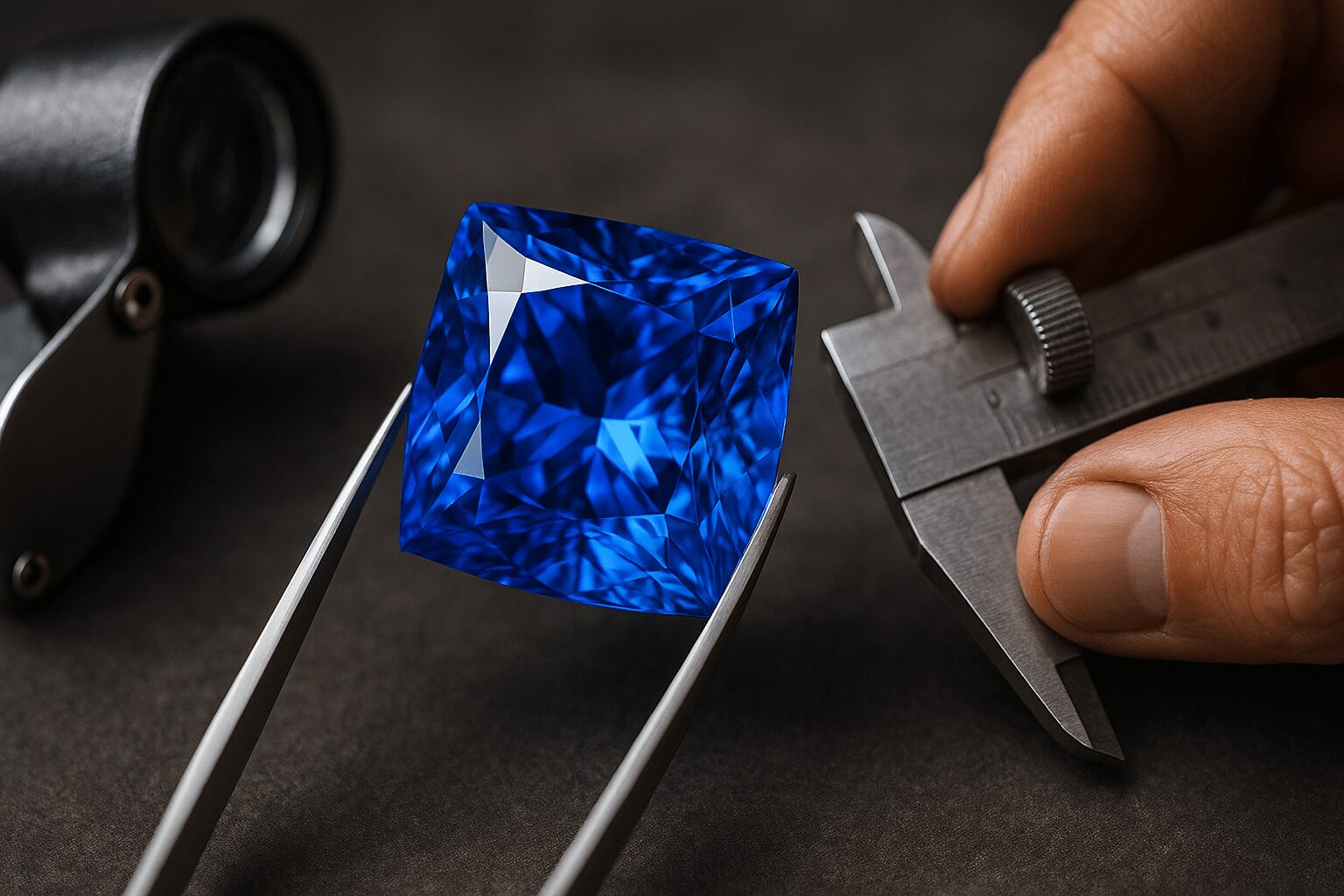
A sapphire’s cut doesn’t just define its shape — it decides how the light dances across the stone.
Sri Lankan lapidaries are globally respected for their hand-cut precision. They balance brilliance and color depth rather than chasing perfect symmetry.
A well-cut stone amplifies its natural fire and can raise value by 20–40 percent compared to a poorly cut one of the same weight.
Common cuts in Sri Lanka include oval, cushion, and round, each designed to highlight color intensity. Jewelers in Ratnapura often prefer shallower cuts to enhance brightness, while boutique cutters in Colombo focus on proportion and symmetry for export markets.
💡 Traveler Reflection: Watching a master cutter in Ratnapura polish a rough stone felt like witnessing an artist at work. With every turn of the wheel, the cloudy crystal revealed a pulse of blue — a transformation that reminded me why craftsmanship still matters as much as carats.
Together, these four factors — carat, color, clarity, and cut — create the complex pricing pattern that defines every blue sapphire Sri Lanka sold in 2026. In the next section, we’ll translate those qualities into numbers with an updated price chart by carat and quality to help you compare real market values before buying. Beyond market prices, see how these stunning blue stones become timeless heirlooms in Ceylon Sapphire Jewellery: Timeless Elegance.
💰 4. 2026 Blue Sapphire Price Chart (By Carat & Quality)
For buyers and collectors, prices can vary wildly depending on grade and origin. In Sri Lanka’s gem hubs — particularly Ratnapura, Kandy, and Colombo — pricing reflects not only the gem’s physical traits but also its rarity and provenance. While the island remains one of the best places in the world to purchase a blue sapphire Sri Lanka, understanding 2026 market values will help you recognize fair offers and avoid overpaying. Wondering why sapphire prices differ locally and abroad? Read our full breakdown in Are Sapphires Cheaper in Sri Lanka? A Buyer’s Guide to Ceylon Sapphire Prices.
Below is a realistic 2026 price guide, compiled from current market observations, trade-fair listings, and certified dealers. All prices are approximate retail averages in USD per carat for natural, heat-treated stones (the most common commercial standard). Untreated stones or those with exceptional color can command much higher premiums.
💡 Tip: Check daily currency values at the Central Bank of Sri Lanka exchange rate page before finalizing your purchase.
📊 2026 Ceylon Blue Sapphire Price Table
| Carat Range | Commercial Grade | Fine Grade | Investment Grade (Gem Quality) | Notes & Typical Use |
|---|---|---|---|---|
| 0.50 – 0.99 ct | $250 – $400 | $450 – $700 | $800 – $1,000 | Ideal for small rings or earrings — bright but affordable. |
| 1.00 – 1.49 ct | $350 – $600 | $700 – $1,100 | $1,200 – $1,600 | Popular traveler size; vivid cornflower blue fetches premium. |
| 1.50 – 1.99 ct | $500 – $800 | $900 – $1,400 | $1,700 – $2,200 | High clarity and even color dramatically increase price. |
| 2.00 – 2.99 ct | $700 – $1,000 | $1,200 – $2,000 | $2,400 – $3,200 | Rare size range for fine jewelry settings. |
| 3.00 – 4.99 ct | $900 – $1,400 | $1,800 – $3,000 | $3,200 – $4,800 | Collectors’ favorite; ratios of color to clarity critical. |
| 5.00 – 7.99 ct | $1,200 – $2,000 | $2,500 – $4,200 | $5,000 – $7,500 | Investment tier; each carat adds exponential value. |
| 8.00 – 10.00 ct | $1,500 – $2,500 | $3,000 – $5,000 | $7,800 – $10,000 | Extremely rare and museum-quality specimens. |
💡 Traveler Reflection: I remember visiting a gem fair in Colombo where a 7-carat stone sat beneath glass, shimmering like still water under moonlight. Its price tag—over $40,000 —made me pause, not for the sum, but for the realization that nature’s artistry can fit within the palm of one’s hand.
Price Patterns to Understand
-
Non-linear Increase: Each carat jump brings a percentage-based rise, but the jump from 2 to 5 carats is often double per carat value.
-
Color Premiums: The purest “cornflower” or “royal blue” tones are rare; even slight shifts toward greenish or grayish reduce price by 30–40 %.
-
Origin Verification: Gems mined in the Ratnapura Gem Belt and certified as “Ceylon Origin” carry up to 25 % higher market value than unverified stones.
-
Treatment Transparency: Heat-treatment is acceptable and industry-standard; however, diffusion-treated or synthetic stones cost 90 % less — always check certificates before purchase.
-
Global Demand: With increased exports to the U.S. and Japan, prices in Sri Lanka saw a 5–10 % rise since 2023, and experts predict further growth in 2026 as ethical sourcing gains value.
💡 Insider Tip
When comparing offers, ask dealers whether the quoted figure is per carat or per stone — a common confusion among first-time buyers. Some shops quote “total stone price” to sound cheaper, but the standard international metric is price per carat. Always request a certificate and invoice that specifies the exact carat weight and treatment status.
🌍 Why Prices Stay Competitive in Sri Lanka
Despite rising global demand, the blue sapphire Sri Lanka remains more affordable locally due to its short supply chain. Gems move directly from mine to workshop to market, cutting out middlemen who inflate prices abroad. Additionally, the National Gem & Jewellery Authority (NGJA) regulates exports to maintain transparency and fair valuation.
💡 Traveler Reflection: In Ratnapura, I once sat beside a miner who laughed softly when I asked if he’d ever keep a gem for himself. He replied, “No — we don’t own the stones, only the chance to find them.” That sentence summed up the spirit of Sri Lanka’s gem culture — humble, hopeful, and eternally shining.
In the next section, we’ll examine how color variations — from soft sky blues to deep royal tones — influence pricing and collector value. Each shade tells a different story and holds its own market appeal in 2026.
🎨 5. Color Variations and Their Price Impact
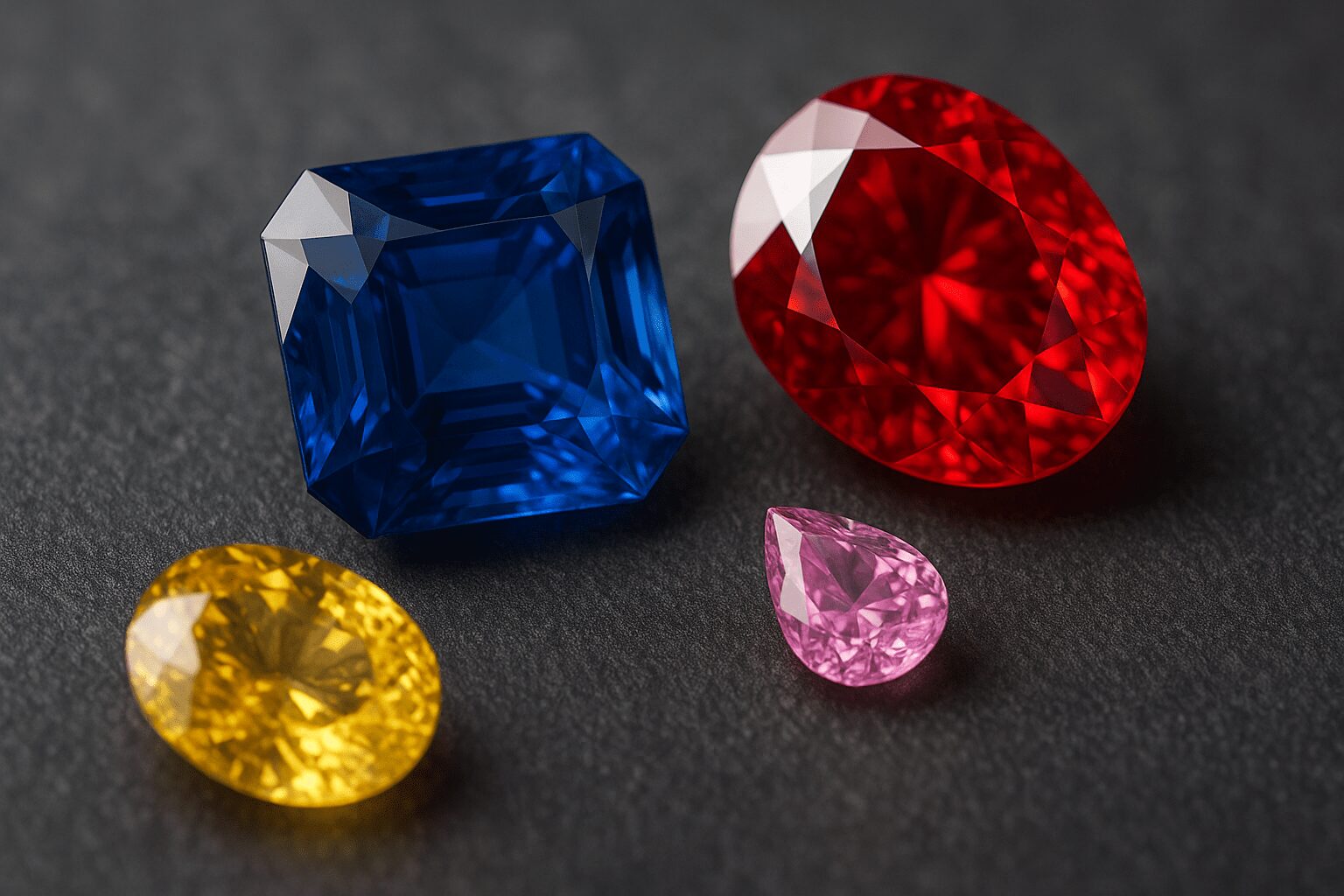
The most captivating feature of a blue sapphire Sri Lanka is its color — that glowing spectrum of blues that shift with light, depth, and cut. To the untrained eye, all sapphires may appear blue; to an expert, every tone tells a different story, and every shade carries its own market value.
🌊 5.1 The Spectrum of Sri Lankan Blue
Sri Lanka produces some of the broadest hue ranges in the world, from pale sky blues to the celebrated cornflower blue and deep royal blue.
Each tone reflects the geological fingerprint of the island’s gem deposits. Stones from Elahera often display soft, velvety hues, while those from Ratnapura tend to be vivid and brilliant, with slightly cooler undertones.
-
Pale Blue Sapphires: These gems are lighter and often more transparent. Their airy glow appeals to modern minimalist jewelry trends. Average 2026 price: USD 250 – 400 per carat.
-
Medium Blue Sapphires: Balanced tone and brightness; the sweet spot for most buyers. Average 2026 price: USD 500 – 1,000 per carat.
-
Royal Blue / Cornflower Blue Sapphires: Deeply saturated, almost electric in tone. Premium grade fetching USD 1,500 – 3,500 per carat and often used in fine jewelry.
-
Velvet Blue Sapphires: Exhibit a subtle softness similar to Kashmir stones. Exceptionally rare; can exceed USD 4,000 per carat when paired with top clarity.
💡 Traveler Reflection: I once compared two stones under the same lamp in a small Kandy boutique — one was soft, sky-like; the other, as dark as midnight. The dealer smiled and said, “Light or night — both are born from the same earth.” That moment made me realize that color in a sapphire isn’t about preference alone — it’s about emotion.
💎 5.2 The Science Behind the Hue
Color differences arise from trace amounts of titanium and iron within the crystal lattice. When perfectly balanced, they create the pure royal blue that defines the Ceylon blue sapphire.
Too much iron introduces darker, inky tones; too little results in lighter shades that may appear grayish. The most valuable sapphires have consistent color from center to edge — a feature known as even saturation.
Cut also influences how color appears. A shallow cut brightens the gem but can make the hue look lighter. A deeper cut enhances saturation but may darken the center. This is why two sapphires of identical carat weight can differ in value by thousands of dollars.
💠 5.3 How Color Impacts Market Value
In 2026, color accounts for nearly 60 percent of a sapphire’s total price. Buyers often prioritize hue before clarity or cut, as a perfectly balanced blue evokes the island’s signature aesthetic. Dealers frequently classify stones by color grade to standardize pricing:
| Color Grade | Description | Typical Market Range (USD per carat) |
|---|---|---|
| AAA (Top Royal Blue) | Highly saturated cornflower tone, vivid under any light. | 2,000 – 3,500+ |
| AA (Medium Vivid Blue) | Bright, well-balanced color with mild zoning. | 1,000 – 1,800 |
| A (Light Blue) | Soft pastel shade with high brilliance. | 400 – 700 |
| B (Pale or Grayish Blue) | Desaturated, less demand in luxury market. | 250 – 400 |
💡 Insider Tip: Always view a blue sapphire Sri Lanka under both daylight and artificial lighting. A stone that maintains its color consistency in different conditions holds its value better and indicates higher natural quality.
🌈 5.4 Color Zoning and Bicolor Stones
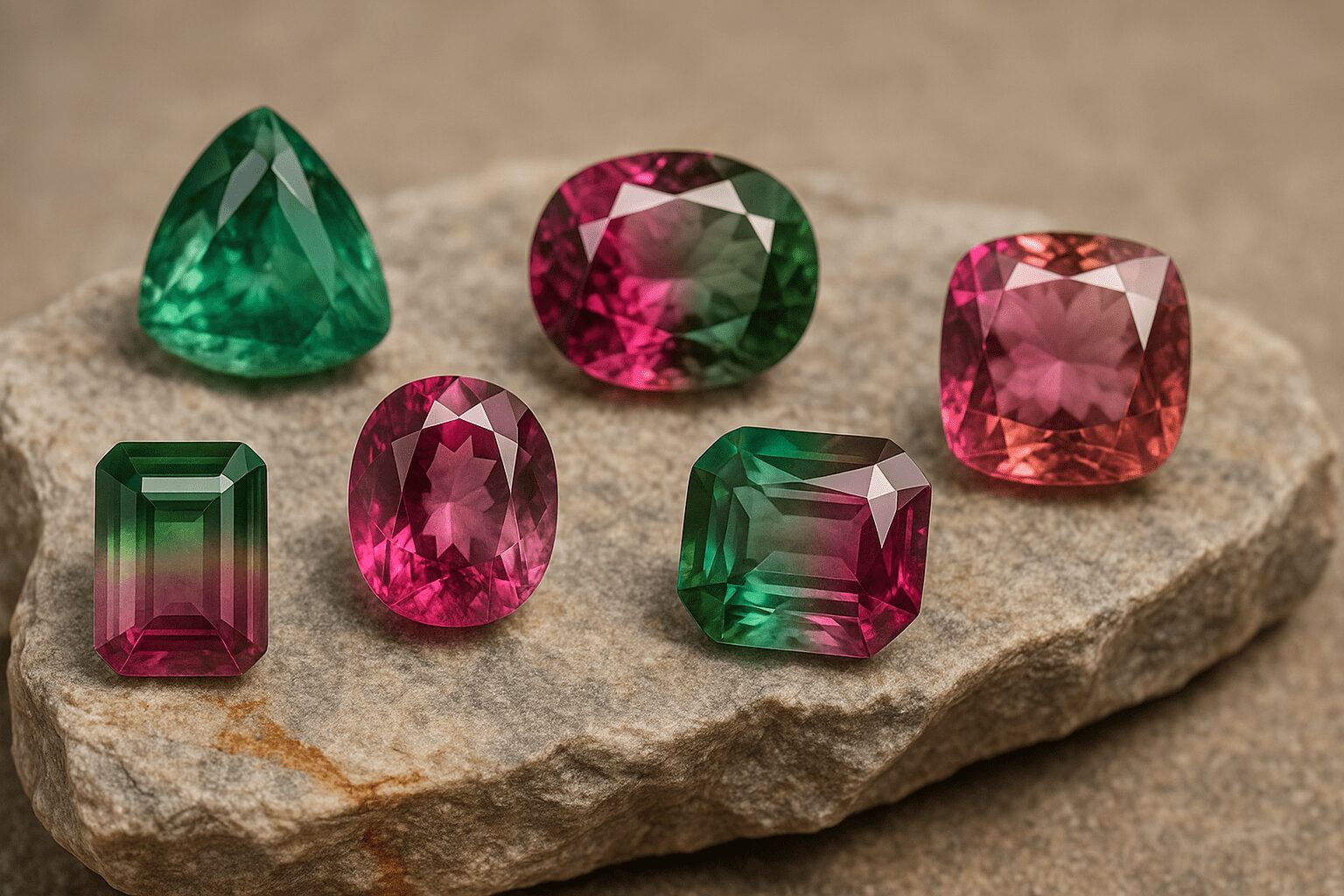
Some Ceylon sapphires show slight color zoning — bands or patches of lighter and darker blue. While too much zoning can reduce value, gentle gradients are not necessarily flaws. In fact, many collectors see them as nature’s signature.
Occasionally, you’ll encounter parti sapphires — stones showing two colors such as blue and green or blue and yellow. Though less traditional, these gems are gaining attention among modern designers for their uniqueness and story. Their prices range from USD 300 to 900 per carat depending on balance and appeal.
💡 Traveler Reflection: In Ratnapura, a dealer once told me, “Even the sky is never one shade of blue — why should a sapphire be?” His words stuck with me; perfection in gems is not uniformity but character.
Color remains the most emotionally charged factor in sapphire valuation. The right shade can transform a stone from ordinary to extraordinary and elevate its price to royal status. Next, we’ll look closely at clarity grades and their effect on value — a critical aspect for collectors who demand beauty and purity in the same stone.
🔍 6. Clarity Grades and Their Value Impact
A sapphire’s inner world is as fascinating as its color. When you tilt a blue sapphire Sri Lanka under light and peer through a jeweler’s loupe, you’ll often see tiny wisps or dots — nature’s fingerprints formed deep underground. These inclusions tell you the gem is real, yet they also influence its market value.
💠 6.1 Understanding Natural Inclusions
Unlike diamonds, which are graded for flawlessness, sapphires are judged by how harmoniously their inclusions coexist with brilliance. Inclusions may appear as:
-
Needle-like “silk” fibers of rutile, often shimmering under magnification.
-
Feather or veil patterns that scatter light gently across the stone.
-
Minute crystal dots or color bands formed as the gem cooled.
Small, evenly distributed silk can actually enhance a gem’s velvety glow — the classic signature of a fine Ceylon blue sapphire. But when inclusions cluster or reach the surface, they begin to dull brilliance and reduce price.
💡 Traveler Reflection: I remember watching a gem cutter in Elahera hold a rough stone to the sun. He smiled and said, “Every mark is a memory of how it was born.” That day I realized clarity isn’t about perfection — it’s about balance.
🧭 6.2 Clarity Grades Used in Sri Lanka
Sri Lankan dealers often use a simplified version of the international clarity scale. Below is a guide adapted for buyers in 2026:
| Grade | Description | Typical Market Range (USD per carat) | Notes |
|---|---|---|---|
| IF – Internally Flawless | Almost no visible inclusions even under 10× magnification. Exceptionally rare. | 2,500 – 5,000 + | Found mainly in museum-grade stones. |
| VVS – Very Very Slight Inclusions | Microscopic inclusions invisible to naked eye; high brilliance. | 1,200 – 2,500 | Premium export quality. |
| VS – Very Slight Inclusions | Minor inclusions visible only on close inspection. | 700 – 1,200 | Common in fine jewelry. |
| SI – Slight Inclusions | Noticeable under magnification; minor impact on light return. | 400 – 700 | Good balance of price and beauty. |
| I – Included (Visible) | Inclusions visible to naked eye; lower brilliance. | 200 – 400 | Budget traveler option or practice stone. |
💡 Insider Tip: When a seller calls a gem “eye-clean,” it means no inclusions are visible without a loupe. Always examine stones in both natural and artificial light to see how clarity affects sparkle.
⚗️ 6.3 Treatment and Transparency
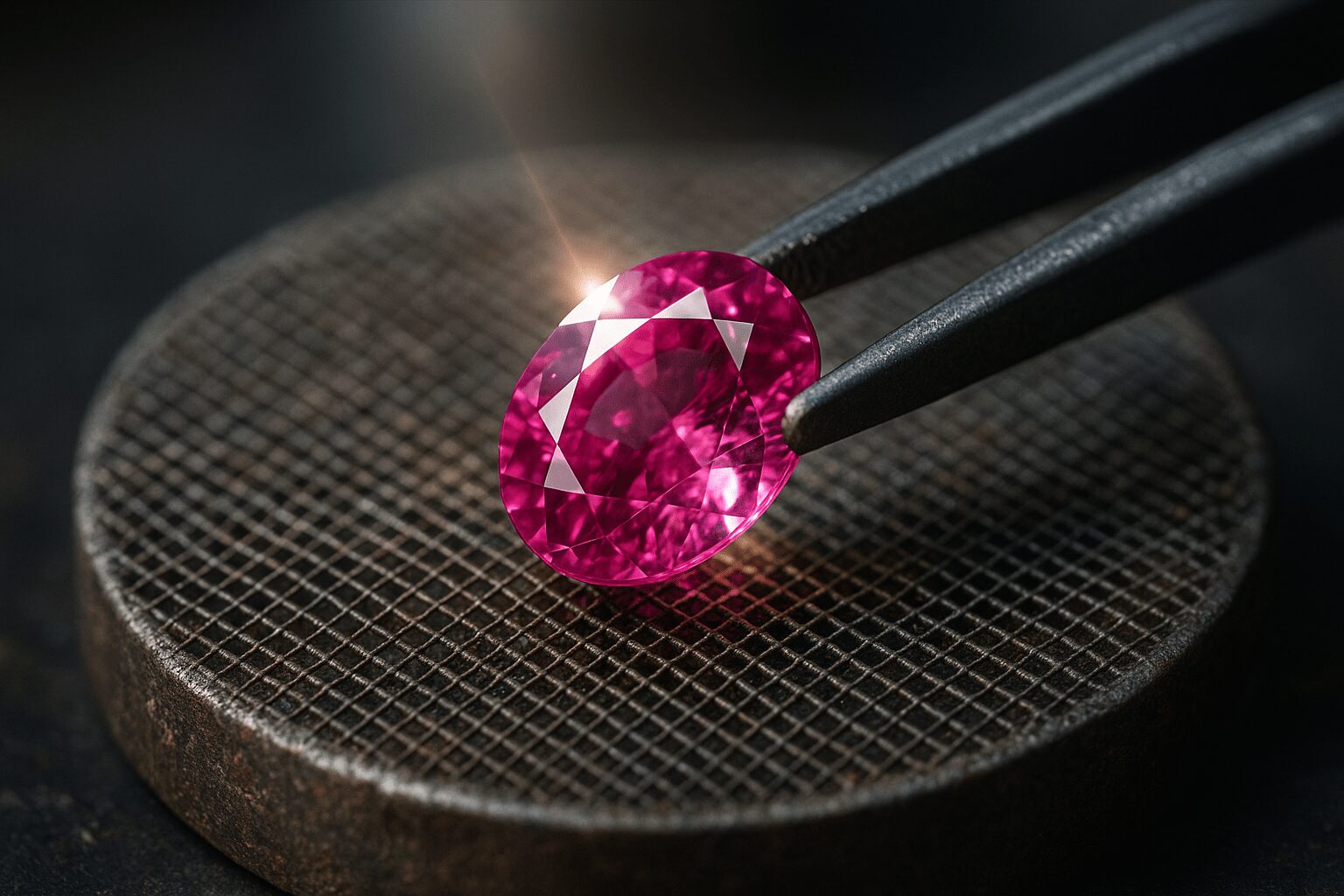
In Sri Lanka’s markets, most commercial stones undergo traditional heat treatment to improve color and clarity. This process, accepted worldwide, softens rutile silk and makes the blue more vivid without adding foreign elements.
However, be cautious of diffusion-treated or glass-filled sapphires often sold cheaply to tourists. These stones have altered surfaces that fade over time and carry little resale value. Authentic Ceylon stones will always be accompanied by a certificate from a reputed laboratory such as the National Gem & Jewellery Authority (NGJA) or GIA.
💡 Traveler Reflection: During a visit to Colombo’s Gem Museum, I saw two stones under the microscope — one natural, one diffusion-treated. The treated stone looked artificially blue, like paint beneath glass. The natural one glowed with depth — like a tiny ocean alive inside the crystal.
💎 6.4 How Clarity Affects Price
Clarity can influence a sapphire’s value by as much as 40 percent. For example, a 2-carat royal blue stone rated VVS may cost USD 2,200 per carat, while a similar color stone rated SI might sell for USD 800 per carat. Collectors typically prioritize balance — preferring slight, natural inclusions that affirm authenticity rather than stones that appear too perfect to trust.
💡 Insider Tip: Under magnification, look for “silk” that diffuses light softly without clouding transparency. This texture creates the famous velvety glow of the blue sapphire Sri Lanka is known for.
Clarity defines not only beauty but trust. The inclusions inside each stone serve as a record of its natural journey — proof that your gem was formed by the island itself and not by machines. In the next section, we’ll explore how regional pricing differences within Sri Lanka — from Ratnapura to Kandy to Colombo — can affect the final value of your sapphire.
🏙 7. Regional Pricing – Ratnapura | Kandy | Colombo Markets
Although prices follow global benchmarks, location still shapes the cost of a blue sapphire Sri Lanka. The island’s three main gem centers—Ratnapura, Kandy, and Colombo—form a triangle of trade, each with its own rhythm, culture, and pricing dynamic.
For a detailed list of trusted showrooms, family-run boutiques, and government-approved gem shops, see our companion article on the Best Places to Buy Sapphires in Sri Lanka.
💎 7.1 Ratnapura – The Heart of the Gem Trade
Nicknamed “The City of Gems,” Ratnapura is where the story begins. Most mines lie within a short drive of town, and stones often travel directly from riverbed to jeweler’s table. Here, you’ll find the lowest base prices in the country, yet the widest variation in quality.
-
Local Market Range (2026): USD 400 – 1,500 per carat depending on color and clarity.
-
Advantages: Freshly mined stones, negotiable prices, and authentic interaction with cutters and miners.
-
Challenges: Requires experience to spot quality; many stones are uncertified.
💡 Traveler Reflection: I once followed a narrow lane where miners sat behind glass boxes filled with glittering roughs. A dealer handed me a sapphire still coated in river dust and said, “You see the truth before the polish.” That moment captured the raw honesty of Ratnapura’s markets — rough beauty at its source.
🏛 7.2 Kandy – Tradition Meets Refinement
Nestled in the highlands, Kandy offers a calmer, more curated buying experience. Many workshops here specialize in hand-cut Ceylon sapphires, combining Buddhist heritage with centuries-old craftsmanship.
-
Local Market Range (2026): USD 700 – 2,500 per carat.
-
Advantages: Better transparency, family-run boutiques, and mid-to-high-grade stones with NGJA certificates.
-
Challenges: Prices slightly higher than Ratnapura due to tourism and logistics costs.
💡 Insider Tip: Many dealers in Kandy allow you to watch the cutting process through a glass window. If a merchant is confident enough to show his lapidary work in real time, it’s usually a sign of authenticity and fair practice.
🏙 7.3 Colombo – The Global Gateway
Colombo is where the blue sapphire Sri Lanka meets the world. Here, luxury showrooms cater to export clients, designers, and investors seeking certified stones ready for international trade. Prices reflect that polish and reputation.
-
Local Market Range (2026): USD 1,000 – 3,500 per carat for fine grade stones.
-
Advantages: Extensive certification (GIA, NGJA, SGL), cutting-edge designs, and transparent valuation.
-
Challenges: Premium markup for presentation and retail ambience.
💡 Traveler Reflection: At a Colombo showroom, I watched a buyer from Japan compare three stones under different light temperatures. The dealer explained each certificate line by line, translating gemological jargon into trust. That’s what sets Colombo apart — confidence through clarity.
🔄 7.4 Regional Comparison at a Glance
| Region | Price Range (USD / ct) | Market Type | Best For | Notes |
|---|---|---|---|---|
| Ratnapura | 400 – 1,500 | Mine-source local markets | Budget buyers & collectors | Negotiate carefully; certify before export. |
| Kandy | 700 – 2,500 | Boutique & artisan workshops | Mid-range travelers | Good balance of authenticity and presentation. |
| Colombo | 1,000 – 3,500 + | High-end retail & export | Investors & designers | Fully certified stones; premium pricing. |
💬 Why Regional Variation Matters
For a traveler or collector, choosing where to buy is as important as what to buy. Those seeking affordable stones should begin in Ratnapura but finalize purchases in Colombo after testing and certification. Kandy sits between the two — offering emotion and trust together. Understanding this triangle lets you navigate the island’s gem culture with confidence and avoid typical tourist traps.
💡 Traveler Reflection: After weeks of visiting all three cities, I realized that price is just a mirror of trust. Where you buy shapes how you remember the stone — Ratnapura feels like birth, Kandy like heritage, and Colombo like destiny.
💭 8. Traveler Reflection – My Visit to a Gem Dealer in Ratnapura
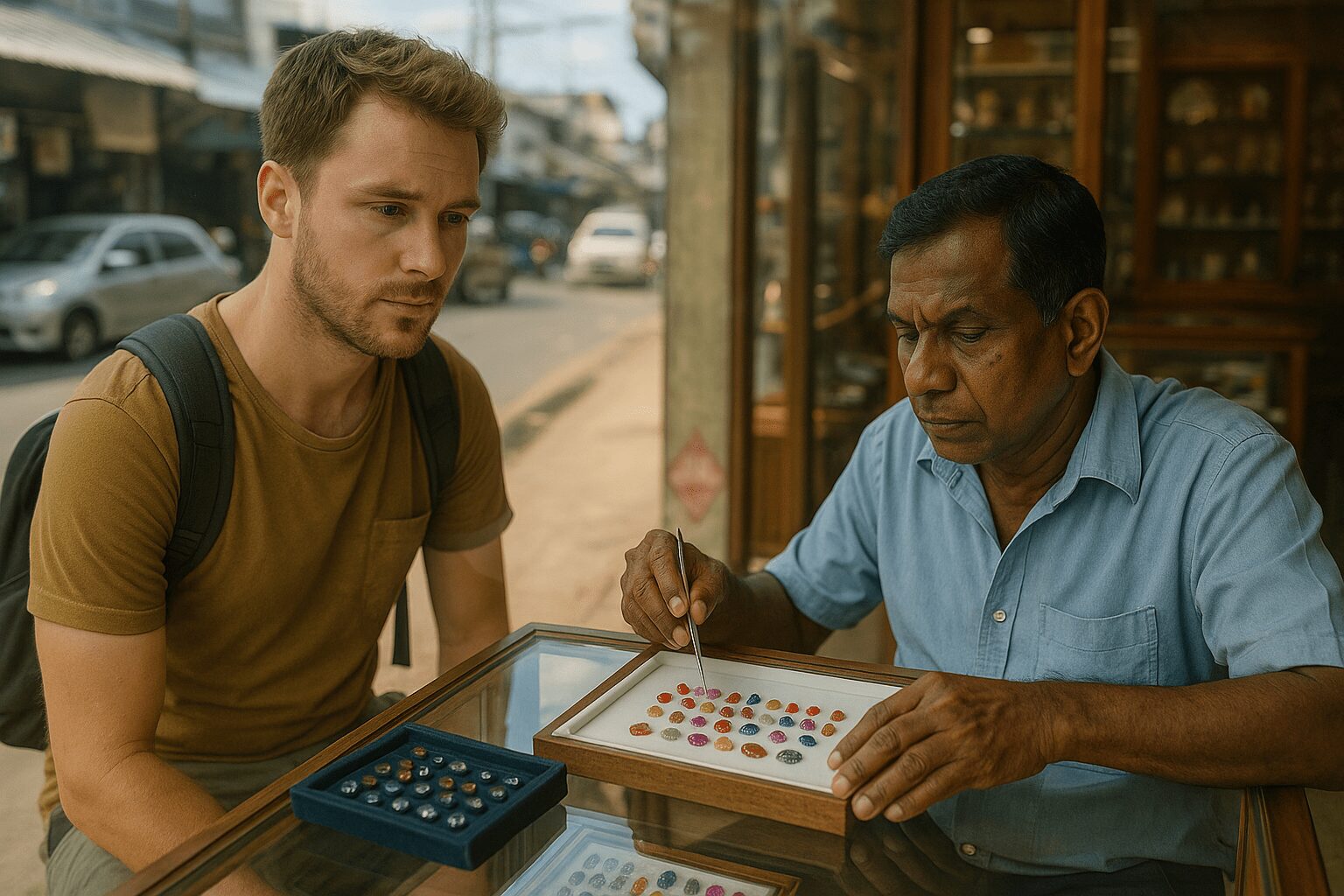
It was a humid afternoon when I arrived in Ratnapura, the name itself meaning City of Gems. The air carried a scent of wet earth and cinnamon tea. Down a narrow lane, beyond the rhythm of tuk-tuks and temple bells, I found a small shop where the story of the blue sapphire Sri Lanka truly came alive.
Inside, glass counters glimmered under soft yellow bulbs. A man in his fifties — thin, patient, and wearing spectacles with a slight tilt — introduced himself simply as Saman the Cutter. His family had been in the trade for three generations. On a wooden tray before him lay an array of stones: some pale like morning sky, others as dark as twilight.
💎 Lessons from the Cutter’s Table
He gestured to one that caught my eye. It was a 3-carat oval sapphire, deep blue with silver undertones that moved like ripples on water. “This one,” he said softly, “was found near Kuruwita two months ago. Not heat-treated. Still carries the breath of the river.”
I leaned closer, noticing faint inclusions — tiny silk threads running diagonally through its core. “Natural,” he added quickly. “That’s how you know it’s alive.” His words stayed with me. The idea that imperfection could mean authenticity changed how I saw gemstones forever.
💡 Traveler Reflection: Buying a blue sapphire Sri Lanka isn’t like shopping for jewelry in a mall. It’s personal. You don’t just choose a stone — you share a moment with the person who unearthed it, the craftsman who shaped it, and the legacy that continues through every carat.
Before leaving, Saman handed me a small magnifier. “Always look through your own eyes before you decide,” he said. It wasn’t just gem advice — it was life advice. I realized then that these markets weren’t merely places of trade; they were living museums of culture, honesty, and patience.
Outside, the streets of Ratnapura glowed gold under sunset. Miners returned from the fields carrying baskets of gravel, their laughter echoing through alleys lined with sapphire signs. For them, each day held the possibility of discovery — a reminder that Sri Lanka’s brilliance lies as much in its people as in its stones.
🧾 9. Authenticity & Certification – Avoiding Fakes
When it comes to buying a blue sapphire Sri Lanka, the most important step after choosing the gem is verifying that it’s genuine. Sri Lanka has earned its reputation as one of the world’s most trusted sapphire sources, but with growing demand, imitation and misrepresentation have also become more common—especially in tourist-heavy markets.
To learn how to confidently choose, inspect, and verify genuine Ceylon sapphires before purchasing, explore our full Buying Sri Lankan Sapphires: Complete Price & Authenticity Guide.
🔍 9.1 Why Certification Matters
A gem certificate isn’t just a formality; it’s the legal and scientific proof of authenticity. Every certified sapphire is examined by trained gemologists who assess its origin, treatment, clarity, and color grade. In Sri Lanka, the National Gem & Jewellery Authority (NGJA) oversees official certifications, while global institutions like GIA (Gemological Institute of America) and SGL (Swiss Gemmological Laboratory) add international credibility.
💡 Traveler Reflection: I once compared two sapphires at a Colombo showroom—both beautiful, both blue. Yet one came with a laminated certificate from the NGJA and the other only a handwritten note. Under magnification, the uncertified stone revealed color inconsistencies from diffusion treatment. That small piece of paper, I realized, can protect thousands of dollars and a lifetime memory.
🧪 9.2 Common Treatments Explained
Most natural sapphires are heat-treated, a standard process that enhances color and transparency without adding chemicals. This treatment is accepted by the global gem trade and doesn’t reduce value if disclosed honestly. However, there are several non-standard or deceptive treatments to watch out for:
| Treatment Type | Description | Effect on Value | How to Detect |
|---|---|---|---|
| Heat Treatment | Enhances color and clarity using high temperatures. | Neutral (industry-accepted). | Usually disclosed on certificates. |
| Diffusion Treatment | Introduces coloring agents (like beryllium) into surface. | -70–90 % of natural value. | Color concentrates on edges; fades when recut. |
| Glass-Filling | Fills fractures with colored glass to improve appearance. | Worth <10 % of natural value. | Bubbles or blue streaks visible under loupe. |
| Synthetic/Man-Made Stones | Created in labs to imitate Ceylon sapphires. | No natural value. | Perfect clarity and identical hue — too flawless. |
💡 Insider Tip: A genuine blue sapphire Sri Lanka often displays a soft, silky glow with tiny natural inclusions. If a stone looks too perfect or intensely vivid under all lights, it’s likely synthetic or heavily treated.
9.3 Trusted Certification Centers in Sri Lanka
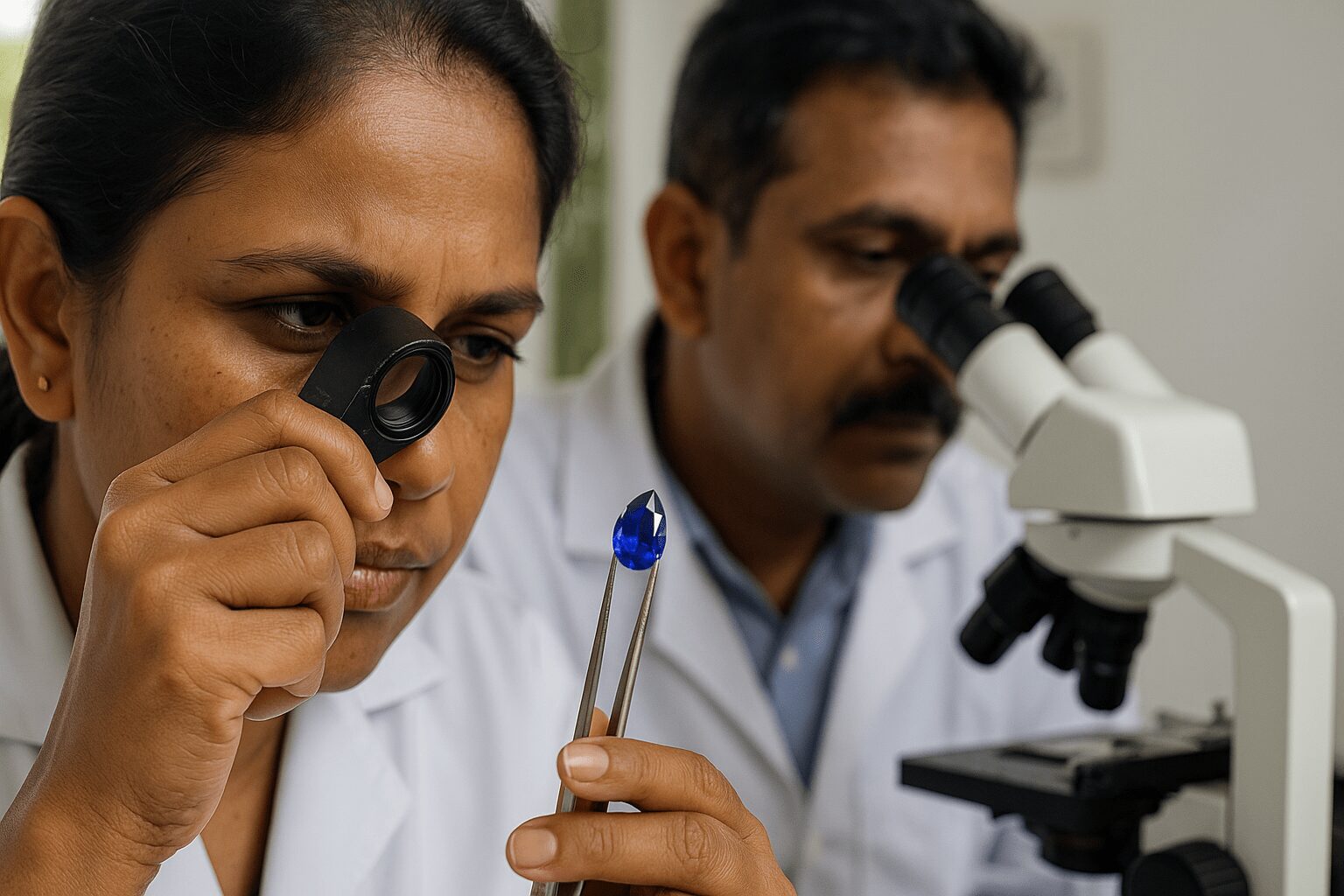
If you plan to purchase locally, always insist on documentation from one of the following recognized institutions:
-
National Gem & Jewellery Authority (NGJA) – Colombo: The official government body that certifies stones before export.
-
GIA Authorized Dealers – Several Colombo showrooms and exporters provide GIA-verified reports.
-
Gemological Research Laboratory (GRL) – Ratnapura and Kandy branches, specializing in origin verification.
-
SGL and EGL – International labs with Sri Lankan partnerships for advanced optical analysis.
💡 Traveler Reflection: In Ratnapura, I watched a dealer slip a sapphire into a sealed plastic case stamped with an NGJA number. He smiled and said, “This paper travels with the gem.” That phrase reminded me how certification is more than formality—it’s the gem’s passport to the world.
Certification from the National Gem & Jewellery Authority (NGJA) ensures that your stone meets Sri Lanka’s official gem standards.
⚠️ 9.4 Red Flags When Buying
-
No Certificate or Vague Paperwork: Always a warning sign, no matter how charming the dealer.
-
Unusually Low Prices: If a stone seems far cheaper than similar gems, assume treatment or imitation.
-
Opaque Shops Without Lighting: Authentic dealers will encourage inspection under bright light or daylight.
-
Pressure Tactics: Real professionals never rush a buyer; they explain and educate.
💡 Insider Tip: Ask politely, “Can you show me the certification number and lab name?” Legitimate sellers expect this question—it shows you’re informed.
Authenticity forms the foundation of trust in the sapphire trade. A certified blue sapphire Sri Lanka not only guarantees natural beauty but also preserves value for generations. In the next section, we’ll broaden perspective by comparing Sri Lankan sapphire prices with other major gem-producing countries such as Thailand, Madagascar, and Myanmar to show why Ceylon stones continue to stand above the rest.
🌍 10. Price Comparison – Sri Lanka vs Thailand vs Madagascar
The global gem trade is a complex web of history, geology, and reputation. Although sapphires are mined in several countries, few names evoke trust and prestige like Ceylon sapphires. Comparing the blue sapphire Sri Lanka with stones from Thailand, Madagascar, and Myanmar reveals why collectors and jewelers continue to value the island’s gems above others.
According to the Sri Lanka Export Development Board, the island maintains strict export regulations to protect authenticity and quality.
💎 10.1 Sri Lanka – Purity and Provenance
Sri Lanka’s sapphires are known for their brightness, purity, and natural luster. The island’s deposits produce a wide variety of tones—from pastel blues to deep royal shades—without excessive inclusions. Most stones require only mild heat treatment, preserving their authenticity and long-term value.
-
Average 2026 Price: USD 600 – 3,500 per carat (depending on grade).
-
Key Strengths: Exceptional brightness, ethical mining, trusted certification (NGJA), and minimal treatment.
-
Buyer Profile: Collectors and investors who value both beauty and origin traceability.
💡 Traveler Reflection: I met a Dutch jeweler in Colombo who said, “When clients ask for sapphire, they don’t say blue sapphire—they say Ceylon.” That’s how powerful the island’s reputation has become.
🔴 10.2 Thailand – Precision and Enhancement
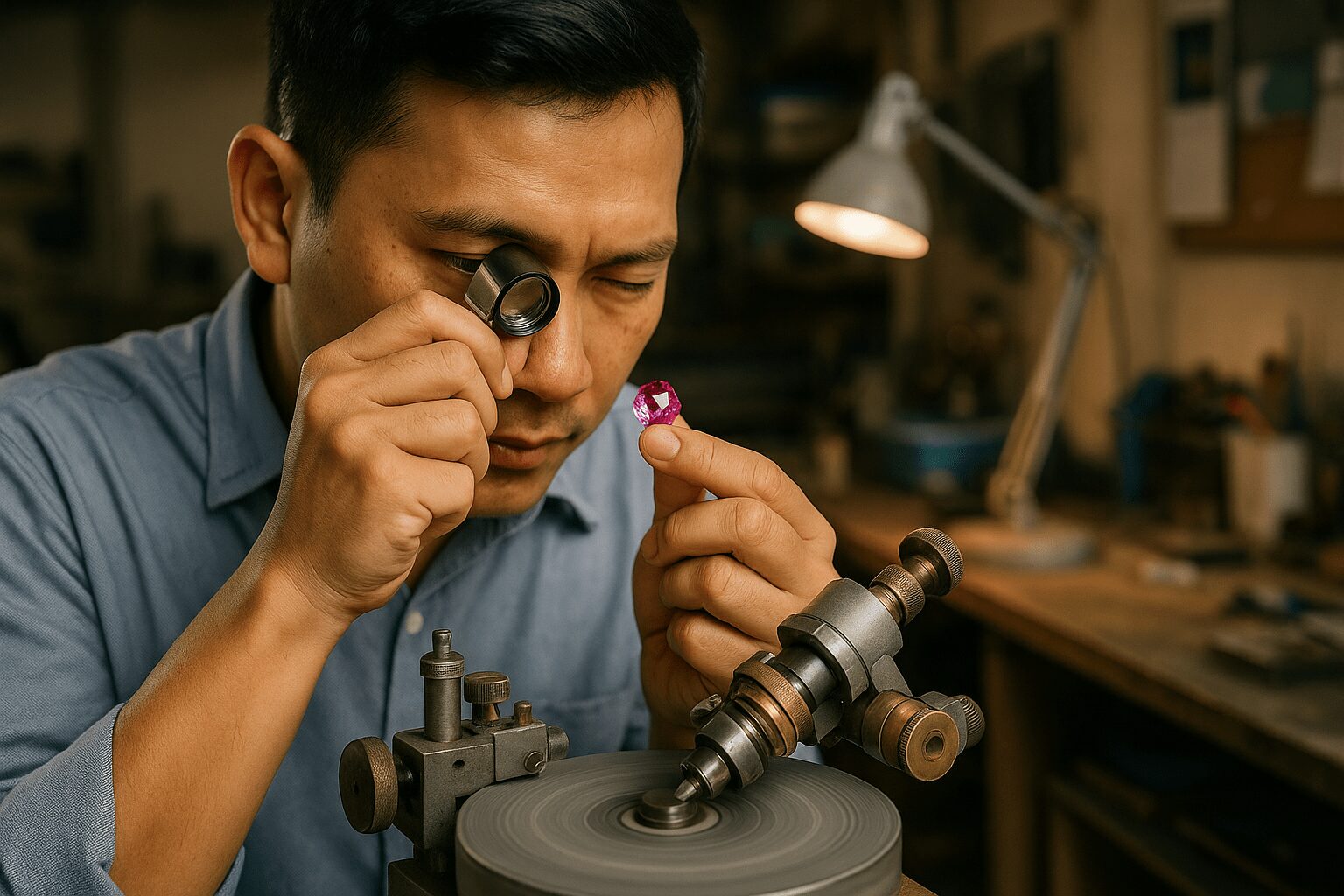
Thailand, particularly Chanthaburi, serves as the world’s leading sapphire-cutting and heat-treatment hub. While some Thai sapphires are locally mined, many are imported roughs from Africa and Australia, treated and polished for export. The result is a mix of excellent craftsmanship and heavy enhancement.
-
Average 2026 Price: USD 300 – 1,200 per carat.
-
Key Strengths: Skilled cutting, steady supply, lower cost.
-
Drawbacks: High rate of diffusion and glass-filled stones; color often artificially enhanced.
-
Buyer Profile: Jewelers seeking affordable, visually striking stones for fashion markets.
💡 Insider Tip: A sapphire that looks too intense or uniform under artificial light often originates from diffusion-treated stock—a practice common in Thailand’s mass market.
🟣 10.3 Madagascar – Rising Star of the Gem World
Madagascar entered the sapphire market in the 1990s and quickly gained fame for producing fine blue stones. The best deposits—such as Ilakaka and Sakaraha—yield sapphires comparable in color to those from Sri Lanka. However, inconsistent quality control and limited local certification reduce global confidence.
-
Average 2026 Price: USD 400 – 2,000 per carat.
-
Key Strengths: High-quality color potential, natural crystal structure.
-
Drawbacks: Wide variation in quality, frequent undisclosed treatments, fewer established gem labs.
-
Buyer Profile: Traders and lapidaries seeking potential investment-grade roughs.
💡 Traveler Reflection: At a gem fair in Bangkok, I saw Madagascan and Ceylon stones side by side. To my eye, the difference wasn’t just in color—it was in energy. The Sri Lankan sapphire sparkled softer, almost as if the light came from within, not just from the lamp above.
🔵 10.4 Myanmar (Burma) – Legacy and Rarity
Myanmar, famous for its rubies, also produces deep-blue sapphires, especially from Mogok. However, political instability and export restrictions limit supply. Burmese sapphires often have a dense blue tone that some buyers find overly dark compared to the blue sapphire Sri Lanka’s brightness.
-
Average 2026 Price: USD 1,000 – 4,000 per carat (rare supply).
-
Key Strengths: Deep, velvety hues and historic prestige.
-
Drawbacks: Inconsistent availability and ethical sourcing issues.
-
Buyer Profile: High-end collectors and auction houses.
⚖️ 10.5 Summary of Global Comparison
| Country | Average Price Range (USD/ct) | Color Tone | Treatment Level | Market Reputation |
|---|---|---|---|---|
| Sri Lanka | 600 – 3,500 | Bright, vivid royal blue | Mild heat only | 🌟 Excellent |
| Thailand | 300 – 1,200 | Dark to vivid blue | High (diffusion, filling) | Moderate |
| Madagascar | 400 – 2,000 | Medium to deep blue | Moderate | Rising |
| Myanmar | 1,000 – 4,000 | Dark royal blue | Minimal | Exclusive |
💡 Insight: Sri Lanka’s advantage lies not only in beauty but in trust. Buyers know that stones are ethically mined, transparently graded, and internationally recognized for quality—something few other markets combine so consistently.
In the next section, we’ll explore practical tips for negotiating prices and avoiding common scams, ensuring your sapphire purchase in Sri Lanka is both rewarding and secure.
💬 11. Negotiation Tips & Buying Advice
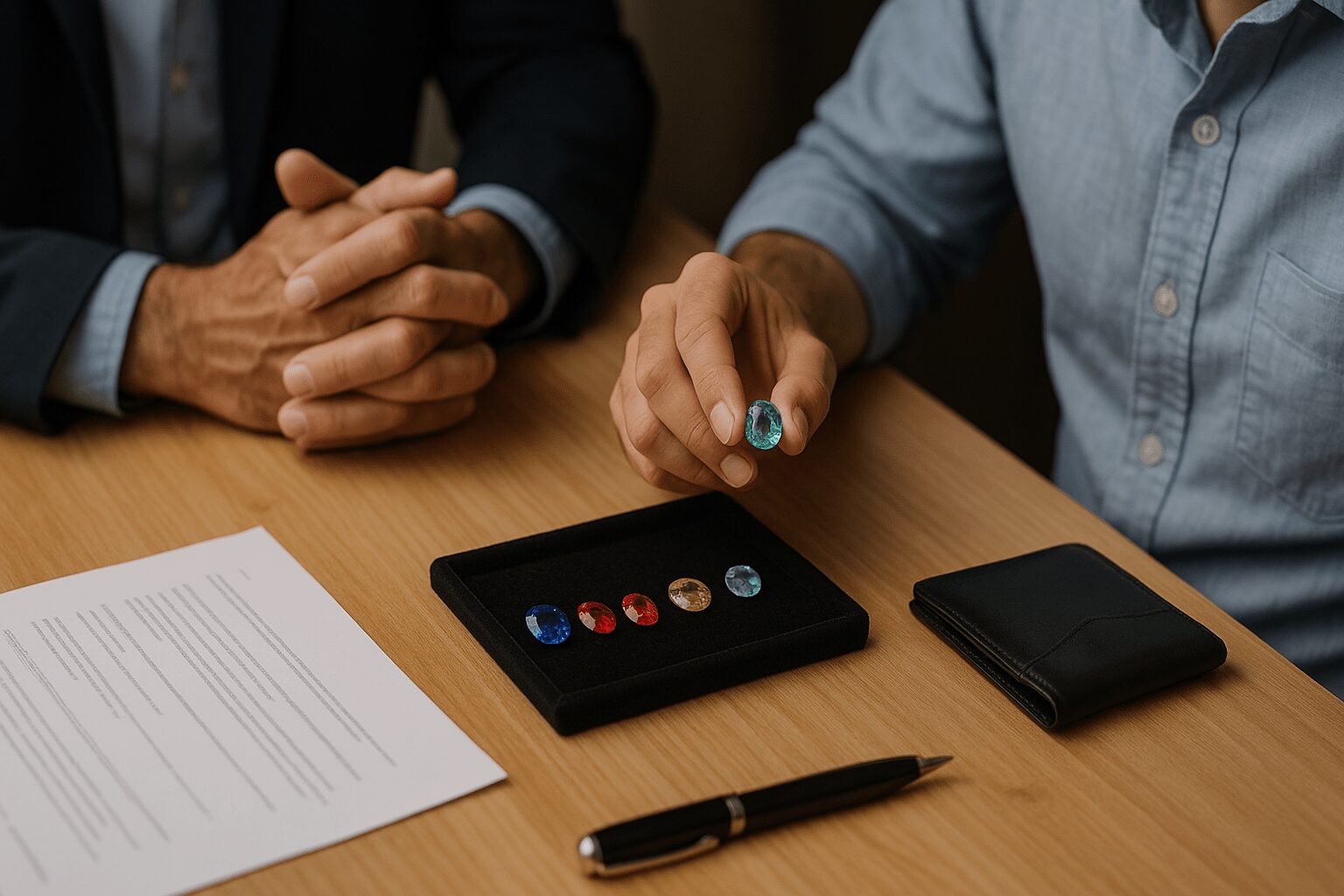
Even with knowledge of carats, clarity, and color, buying a blue sapphire Sri Lanka can be daunting—especially in markets where bargaining is expected. A few smart strategies can transform a stressful purchase into a rewarding, confident experience.
🤝 11.1 Do Your Homework Beforehand
Before entering any gem shop, familiarize yourself with 2026 market ranges. Knowing that a fine 2-carat stone costs roughly USD 1,200–2,000 per carat immediately positions you as an informed buyer. Most dealers respect knowledge; it signals you value fairness rather than cheapness.
💡 Insider Tip: Carry a small LED torch and loupe. Dealers instantly recognize a prepared buyer and are less likely to inflate prices.
💵 11.2 Always Ask Price Per Carat
Many first-time visitors mistake the total price for per-carat value. A simple question—“Is this price per carat or per stone?”—prevents confusion and shows you know the trade’s language.
Reputable Ratnapura or Colombo merchants will state the carat price first, followed by total cost and certification fee.
🧾 11.3 Request Written Quotes and Certificate References
Ask for a printed quotation that lists:
-
Carat weight
-
Treatment type (heat-treated / untreated)
-
Certification number and issuing lab
-
Price per carat
Keeping this document helps you compare offers later and ensures the seller stands by their stated quality.
🧠 11.4 Compare Across Cities
If you start in Ratnapura and end your trip in Colombo, revisit a few showrooms to cross-check prices. You’ll often find similar stones 10–15 % cheaper in mining regions. Conversely, Colombo offers better-cut stones with verified certificates—worth the extra cost for serious buyers.
💡 Traveler Reflection: I once compared a 1.8-carat sapphire in both cities. Same weight, same hue—but the Colombo dealer included NGJA paperwork and lifetime cleaning service. That small difference made the purchase effortless.
🕊 11.5 Never Rush a Decision
A genuine blue sapphire Sri Lanka can last a lifetime; there’s no reason to decide in ten minutes. Good dealers encourage buyers to inspect gems under daylight, LED, and candlelight. If anyone pressures you—walk away. There will always be another stone, but not another moment of trust.
🧭 11.6 Negotiation Etiquette
-
Start Politely: A friendly smile and soft tone go further than hard bargaining.
-
Offer 10–15 % below asking price: Standard in most local markets.
-
Stay Respectful: Remember, miners and cutters invest months of work; a fair price honors their craft.
-
Bundle Buys: Buying multiple stones or settings often earns extra discounts.
💡 Insider Tip: If a dealer adds a small “lucky stone” or free polishing service after negotiation, it’s a sign you’ve reached fair ground—accept graciously.
🛡 11.7 Avoid Common Scams
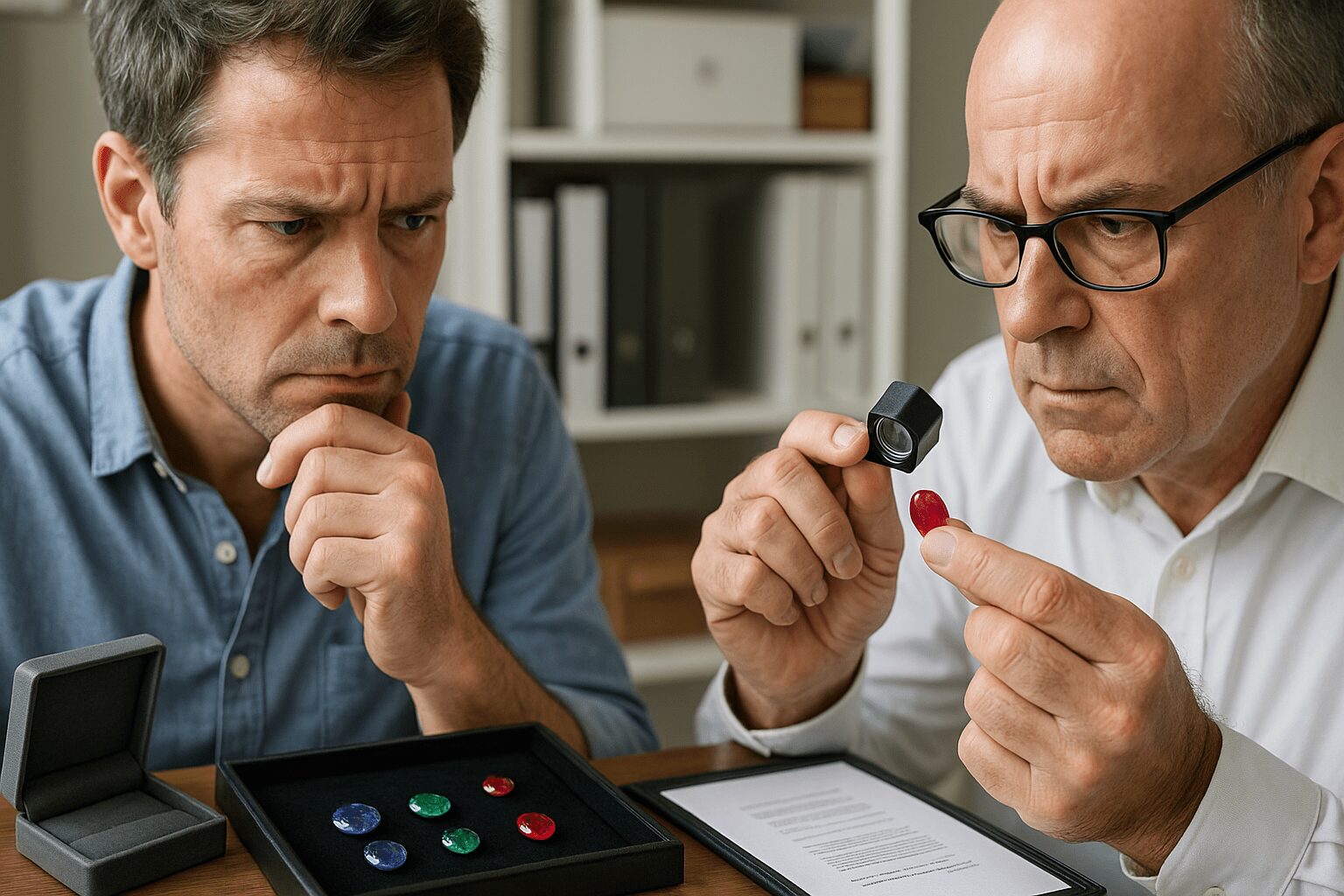
-
“Tourist Special” Stones – Brightly colored diffusion-treated gems sold near beach resorts. Always ask for NGJA certification.
-
Switch Tactics – A seller shows one stone and bags another; record a photo of your chosen gem before packing.
-
Fake Receipts or Overstated Weights – Check the carat number on the certificate matches your invoice.
-
Heat-Treatment Denial – All authentic dealers disclose if a stone is heated; if they avoid the topic, leave.
🧳 11.8 Export and Travel Advice
Before departing Sri Lanka, declare any gemstone purchases at the airport’s NGJA Export Counter. The process is straightforward: officers verify certificates, seal the stones, and issue an export slip—protecting you from customs disputes abroad.
💡 Traveler Reflection: At Bandaranaike Airport, I watched travelers smile as officers stamped their gem packets—one final symbol of Sri Lanka’s honesty in trade. It felt like closing the loop of trust that began in Ratnapura’s muddy fields.
A thoughtful purchase blends awareness with respect. The blue sapphire Sri Lanka isn’t merely an object of value—it’s a link between miner, cutter, and traveler. In the next section, we’ll explore TripAdvisor reviews and local insights, offering practical feedback from real visitors who’ve walked the gem trails of Sri Lanka.
🗺 12. TripAdvisor Reviews & Local Insights
When travelers research where to buy a blue sapphire Sri Lanka, they often turn to platforms such as TripAdvisor, where authentic experiences reveal what guides and brochures cannot. These first-hand stories show the emotional side of gem shopping — trust, connection, and discovery.
💎 12.1 Ratnapura Gem Tours and Mines
Many reviewers describe Ratnapura as “the beating heart of Sri Lanka’s gem culture.” Visitors often book half-day tours that include a mine visit, gem-cutting demonstration, and showroom stop.
⭐ TripAdvisor Review Highlight:
“We visited a small mine outside Ratnapura and watched miners sift gravel in the river. The guide explained every step, then drove us to a government-certified shop where we bought a cornflower-blue Ceylon sapphire with full NGJA papers. It felt honest and educational.” — Traveler from Australia
See more reviews on tripAdvisor
💡 Traveler Reflection: When I toured Ratnapura, what struck me most wasn’t the sparkle of gems, but the patience of the people. Each miner treated the earth like a friend — slow, careful, and grateful for what it offered. That respect is what keeps the blue sapphire Sri Lanka so special.
🏛 12.2 Colombo Showrooms & Gem Museums
In Colombo, reviews consistently praise professional service and transparent certification.
⭐ TripAdvisor Review Highlight:
“We visited the National Gem & Jewellery Authority showroom in Colombo. The staff explained differences between heated and untreated stones, then verified our gem on the spot. Worth every minute for peace of mind.” — Traveler from Germany
Travelers also mention the Sri Lanka Gem Museum, a free-entry gallery where visitors can see sapphires at every stage — rough, polished, and set in royal replicas. It’s an excellent first stop before making a purchase.
12.3 Kandy Boutiques & Cultural Shops

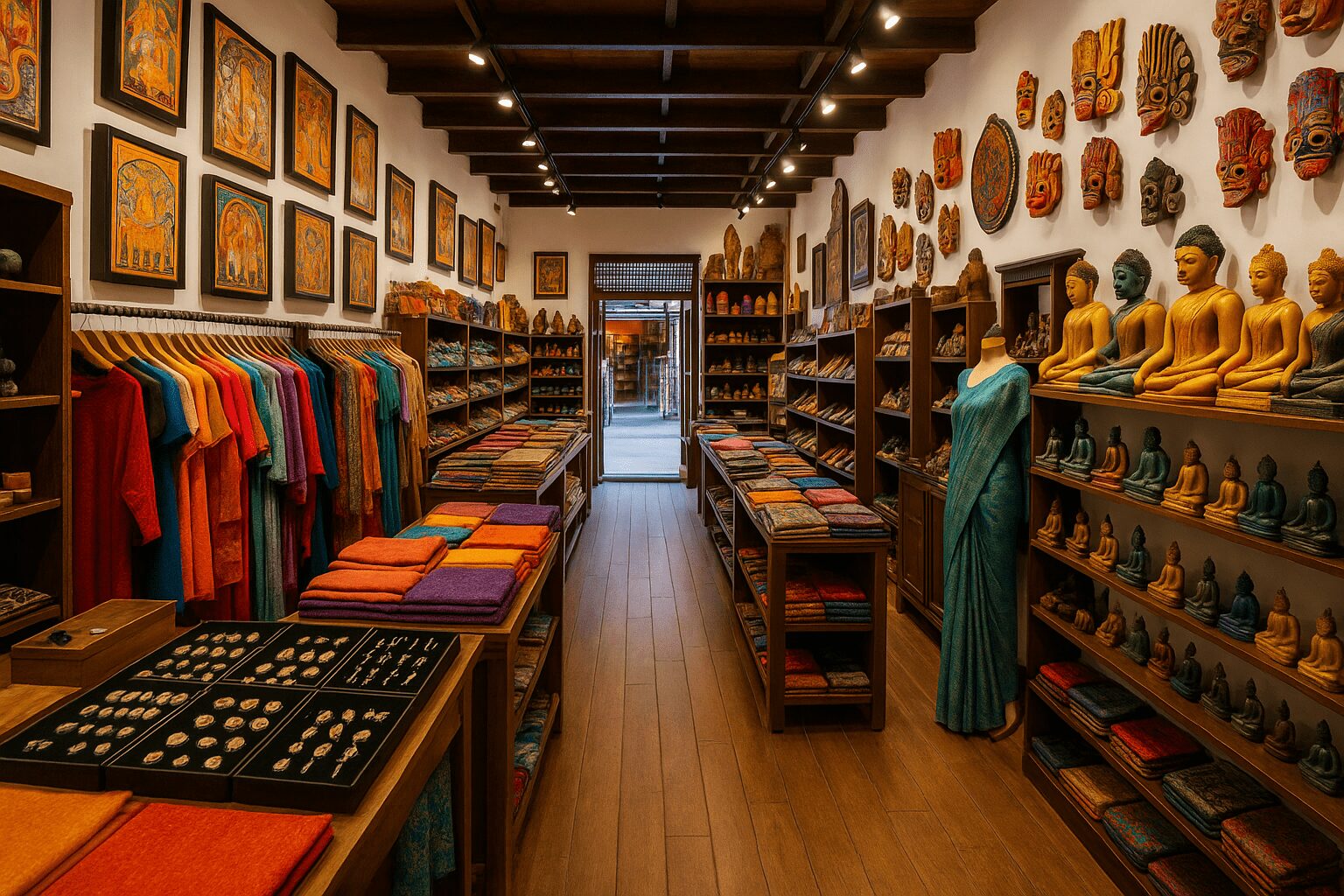
Kandy’s smaller workshops attract those who value experience over luxury. Many reviewers appreciate the calm, no-pressure environment compared to coastal tourist strips.
⭐ TripAdvisor Review Highlight:
“Our guide took us to a family-run cutting studio in Kandy. They let us watch through a glass wall as the craftsman shaped a 2-carat stone. No rush, no tricks — just skill.” — Traveler from France
💡 Insider Tip: When visiting Kandy, plan to stop at both a cultural gem shop and the Temple of the Tooth Museum nearby. The mix of spiritual calm and artistic craft creates a memorable day that blends heritage with sparkle.
🗺️ 13. Map & Museum References
Exploring the origins and artistry of the blue sapphire Sri Lanka becomes far more meaningful when you can trace its story on a map. From the gem fields of Ratnapura to the museum displays in Colombo, these locations help travelers see the island’s sapphire heritage with their own eyes.
📍 13.1 Ratnapura Gem Belt – The Birthplace of Ceylon Sapphires
The Ratnapura Gem Belt stretches across the valleys of Sabaragamuwa Province. This region produces over 70 % of Sri Lanka’s sapphires, mined from river gravels rich in corundum deposits. Visitors can tour active pits, meet miners, and witness gem sorting by hand — an authentic introduction to how every blue sapphire Sri Lanka begins its journey.
💡 Traveler Reflection: Watching miners wash gravel under morning sunlight reminded me that every sparkle starts with patience. The quiet determination of these workers is what keeps Sri Lanka’s sapphire legend alive.
Explore Ratnapura Gem Market on google maps
Located in the heart of the capital, the National Gem & Jewellery Authority (NGJA) serves as the country’s certification headquarters. Visitors can verify stones, watch laboratory demonstrations, and even purchase officially sealed sapphires. If you’re planning to export a gem, this is the office that issues final clearance and authentication documents.
💡 Insider Tip: Bring your purchase receipt and dealer’s certificate when visiting NGJA. The verification process is quick and ensures your sapphire is ready for customs clearance when you leave Sri Lanka.
Explore NGJA Head Office, Colombo on google maps
13.3 Kandy Gem Museum & Lapidary Workshops
This small but beautifully curated museum sits just a few minutes from the Temple of the Tooth. It displays rough stones, cutting tools, and a chronological exhibit on Ceylon sapphire mining. Adjacent workshops allow travelers to watch artisans facet stones under vintage machines, highlighting the skill and tradition behind every blue sapphire Sri Lanka.
💡 Traveler Reflection: Standing in that workshop, I realized gem cutting is less about tools and more about intuition — knowing exactly when to stop polishing so the stone keeps its soul.
Explore Kandy Gem Museum on google maps
🧭 13.4 Suggested Gem Route for Travelers
To experience the full sapphire trail, travelers can follow this three-city route:
-
Start in Colombo – Visit NGJA and certified showrooms.
-
Head to Kandy – Learn about gem cutting and artistry.
-
End in Ratnapura – Witness mining and buy directly from the source.
This circular path offers both education and adventure, connecting the blue sapphire Sri Lanka from earth to elegance.
🌟 14. Final Thoughts & Personal Recommendations
When I look back on my journey through the sapphire towns of Sri Lanka, I realize the story of the blue sapphire Sri Lanka is not about gems—it’s about people. It’s about miners who begin their mornings in muddy rivers, gem cutters who work under single bulbs with patient hands, and travelers who cross oceans in search of something that sparkles with meaning.
Many of these pricing patterns begin deep underground in the Sri Lanka Sapphire Mines: Inside the Gem Valley, where generations of miners continue to uncover the stones that define Sri Lanka’s gemstone legacy.
💙 The Real Worth
A sapphire’s value is more than its price per carat. It lives in its journey—from the rivers of Ratnapura to the glass counters of Colombo. When you hold one of these stones, you hold centuries of craftsmanship and an unbroken thread of trust. That’s what makes a Ceylon blue sapphire unlike any other gem in the world.
💡 Traveler Reflection: I still keep my first sapphire wrapped in a small silk cloth. It isn’t the most expensive one I’ve seen, but every time light touches it, I remember the laughter of miners and the scent of Sri Lankan rain. That’s something money can’t measure.
🧭 My Buying Recommendations
-
Buy for Emotion, Not for Trend. Pick a stone that speaks to you; color and clarity mean more when they connect with feeling.
-
Insist on Certification. NGJA, GIA, or SGL paperwork is your shield against mistakes.
-
Compare Across Cities. Visit Ratnapura for raw authenticity, Kandy for artisan skill, and Colombo for polished assurance.
-
Ask and Learn. Most dealers love to share knowledge. The more you listen, the more confident you’ll feel.
-
Respect the Process. Every gem was born from patience—approach your purchase the same way.
🌍 The Legacy Continues
Sri Lanka’s sapphire industry thrives because it blends tradition with transparency. As the world seeks ethical luxury, the island’s miners and gemologists are showing that heritage and honesty can shine together. Supporting certified dealers means supporting sustainable livelihoods and the preservation of an ancient craft.
When travelers leave Sri Lanka carrying a small velvet pouch, they’re not just bringing home a gemstone—they’re carrying a piece of the island’s heart.
Closing Words
If this guide has helped you understand the brilliance of the blue sapphire Sri Lanka, remember that knowledge is the best accessory you can wear while shopping for one. Whether you choose a single-carat souvenir or a collector’s piece, let your purchase tell a story—your story.
💙 May your sapphire remind you of sunlight over the Kalu Ganga, of laughter in gem markets, and of a country whose treasures lie not only beneath its soil but also within its people.
❓ 15. Frequently Asked Questions on Blue Sapphire Sri Lanka
Pricing & Value
Prices range from USD 400 – 3,500 per carat depending on color, clarity, carat, and cut. Fine-quality cornflower or royal blue sapphires command the highest value.
Because the supply chain is short. Gems move directly from mine to cutter to market, eliminating middlemen. This keeps the blue sapphire Sri Lanka competitively priced while maintaining authenticity.
Yes. Untreated stones are rarer and maintain natural hue and brilliance. Expect a 30–50 % premium over standard heat-treated sapphires.
Authenticity & Certification
Ask for an official certificate from the National Gem & Jewellery Authority (NGJA) or an international lab such as GIA. Certificates list origin, treatments, and carat weight.
Yes. Heat treatment is globally recognized as standard. What reduces value is diffusion or glass-filling, which artificially changes color.
At NGJA’s head office in Colombo 07 or its Ratnapura and Kandy branches. Verification ensures your gem is legal for export and insured for transport.
Buying & Export Tips
Ratnapura: Source for raw and semi-cut stones at local rates.
Kandy: Family-run workshops for custom cuts.
Colombo: Certified showrooms for export-ready gems.
Offer 10–15 % below the asking rate, remain polite, and insist on certification. Dealers respect informed, courteous buyers.
Yes. Declare your gems at the NGJA Export Counter at the airport. Officers will verify certificates and issue an export slip for customs clearance.
Quality & Identification
“Cornflower Blue” or “Royal Blue” with even saturation and medium tone is the highest-valued color grade for a blue sapphire Sri Lanka.
Tiny silk or crystal lines are normal. They confirm the stone’s natural origin. Completely flawless stones are often synthetic.
Yes. A masterfully proportioned cut enhances brightness and can increase value by up to 40 %. Poor cuts make even good-color stones appear dull.
Travel & Timing
The dry season (December – April) is ideal, as river-mining operations are fully active and travel conditions are comfortable.
At NGJA, same-day service is available for most gemstones. Complex or large stones may take up to 48 hours for advanced testing.
Yes. Several operators in Ratnapura offer guided visits where you can watch the washing process and learn about ethical mining practices.
💡 Traveler Reflection: I’ve answered these questions countless times to fellow travelers, but each answer leads back to the same truth — trust, patience, and curiosity make buying a blue sapphire Sri Lanka more than a transaction; it becomes part of your travel story.


