


There’s something magnetic about the shimmer of a sapphire — a glow that seems to hold both earth and sky in its depth. Among all sapphire origins, Sri Lankan sapphire jewellery stands apart for its unmatched color purity and traditional craftsmanship. It also has a centuries-old legacy of elegance. From royal crowns to engagement rings, Ceylon sapphires have adorned those who seek more than beauty. They seek meaning.
Sri Lanka, once known as Serendib, has been a crossroads of gem traders for over two millennia. Ancient merchants described the island’s stones as “drops of frozen starlight.” Even today, that legend continues. Every piece of Ceylon sapphire jewellery — whether a ring set in white gold or a pendant framed in filigree silver — carries a story. It reflects artistry passed down through generations.
When I first walked through the jewellery lanes of Ratnapura, I was struck not only by the sparkle of the gems but by the quiet precision of the goldsmiths. Their hands moved with rhythm, shaping fine metal into frames that seemed to respect the sapphire. They did not overpower it. That harmony between nature’s gem and human skill is what defines Sri Lankan sapphire jewellery — timeless, sophisticated, and deeply cultural.
This article explores that heritage in full — from the island’s ancient craftsmanship to the modern designs gracing international runways. Whether you’re a traveller, a collector, or someone seeking a piece of lasting beauty, you’ll soon see why Ceylon sapphire jewellery remains one of the most coveted treasures in the world.
To understand the origins, types, and unique characteristics of these remarkable gemstones, read our full guide — Sri Lankan Sapphires: The Ultimate Guide to Ceylon’s Precious Gems.
2. A Legacy of Craftsmanship: Sri Lanka’s Gem and Jewellery Heritage

Every piece of Sri Lankan sapphire jewellery begins with a legacy that stretches far beyond the workshop. The island’s jewellery-making traditions date back thousands of years. They were shaped by royal courts and trade routes. There was also a deep cultural connection to the earth. Ancient chronicles, such as the Mahavamsa, describe how Sri Lankan kings gifted sapphires and rubies to foreign rulers as tokens of goodwill. Those early exchanges built the reputation that still defines Ceylon sapphires today. They are symbols of purity, wisdom, and enduring love.
For centuries, the artistry of jewellery making in Sri Lanka evolved in tandem with its gem trade. Skilled goldsmiths and silversmiths once worked exclusively for noble families and temple patrons. They mastered the art of balancing brilliance with restraint — designing pieces where the gemstone itself always took center stage. Even today, many traditional jewellers in Ratnapura, Galle, and Kandy preserve this philosophy, blending ancestral techniques with modern aesthetics.
The heritage of Ceylon sapphire craftsmanship is also inseparable from family tradition. Many of Sri Lanka’s master jewellers come from lineages that have practiced gem cutting and setting for generations. In small family-run workshops, you can still hear the faint ring of hammers shaping fine gold wires into delicate filigree. These aren’t assembly-line creations; they’re heirlooms in the making. Each sapphire is studied under natural light. The mount is chosen not merely for beauty but for harmony. It shows a quiet respect for balance and proportion.
Historically, jewellery in Sri Lanka carried spiritual meaning. Sapphires were believed to attract blessings, bring emotional calm, and protect the wearer from misfortune. Ancient Buddhist monks even wore sapphire-studded relics, symbolizing clarity of mind. This blend of art, spirituality, and technical precision has given Sri Lankan sapphire jewellery its signature identity. It honors both material and meaning.
In the modern era, Sri Lanka’s craftsmanship continues to evolve without losing its soul. Contemporary jewellers now pair age-old metalwork with global design influences. They range from Art Deco-inspired cuts to minimalist luxury collections featured in international boutiques. Yet, despite this evolution, the essence remains unchanged: the sapphire itself is always the star.
That respect for authenticity, passed through centuries of craft and culture, is why a Ceylon sapphire ring or necklace feels less like a fashion choice. Instead, it feels more like a connection to history.
3. From Mines to Masterpieces: The Journey of a Sri Lankan Sapphire

Before a sapphire ever gleams in a ring or necklace, it undertakes a remarkable journey — one that begins deep beneath Sri Lanka’s lush soil. The island’s central and southern regions, particularly Ratnapura, known as the “City of Gems,” have been the heart of sapphire mining for over 2,000 years. Here, generations of miners work the same rivers and gravel beds that once supplied stones to the Silk Road traders.
The process is slow, deliberate, and profoundly human. Unlike industrialized mining in other parts of the world, much of Sri Lanka’s gem extraction still relies on traditional methods. These include manual digging, gentle washing, and careful sifting of river sediment. This approach minimizes environmental damage and preserves both land and livelihood. For the miners, the work is a blend of skill and faith. Each shovel of soil could hide a sapphire that will one day crown a masterpiece of Sri Lankan sapphire jewellery.
Once unearthed, the rough sapphire embarks on its transformation. Skilled lapidaries — gemstone cutters — study each crystal to decide its best shape. Each angle and facet must reveal the stone’s natural brilliance without compromising its integrity. For example, a deep royal blue sapphire may demand a precise cushion cut to enhance its depth. In contrast, lighter shades often suit oval or emerald cuts that maximize sparkle.
In Ratnapura’s workshops, you’ll often see cutters working under open daylight, using their eyes more than machines. This natural light reveals subtle color tones invisible under artificial bulbs. It’s an art that ensures the finished gemstone reflects the island’s true beauty. Many of these lapidaries learned their craft from fathers and grandfathers, continuing an unbroken chain of expertise that defines the soul of Ceylon sapphires.
After cutting comes the setting — where artistry meets metal. Goldsmiths handcraft mounts that complement the sapphire’s individuality. Some pieces follow traditional Sinhalese designs, incorporating floral and peacock motifs symbolizing purity and grace. Others embrace modern minimalism, allowing the gemstone to shine without distraction. Whether cast in yellow gold, white gold, or platinum, each piece carries the signature harmony of Sri Lankan design: natural simplicity paired with quiet sophistication.
What makes this journey so captivating is the connection between land, hand, and heart. From the miner who first glimpses a flash of blue in river gravel to the artisan who sets it into a ring, every step is guided by respect. That reverence transforms mere stone into Sri Lankan sapphire jewellery — jewellery that doesn’t just sparkle, but tells a story of people, patience, and place.
4. Popular Designs and Styles in Sri Lankan Sapphire Jewellery

Every sapphire carries its own personality — a quiet glow, a deep hue, or a shifting tone that changes with the light. Sri Lankan jewellers have mastered the art of translating those natural traits into design. Whether classic or contemporary, Sri Lankan sapphire jewellery reflects a perfect union between tradition and innovation, elegance and emotion.
4.1 Classic Ceylon Sapphire Rings
Few gemstones evoke romance like a sapphire ring from Sri Lanka. Traditionally, these rings feature a single central sapphire surrounded by diamonds, symbolizing loyalty and clarity. The deep blue tones of Ceylon sapphires make them a timeless choice for engagement and anniversary rings. In Colombo’s fine jewellery boutiques, you’ll find both vintage-style halo settings and minimalist solitaires — each crafted to emphasize the sapphire’s royal color rather than the metal around it.
What makes these rings distinct is their light. Ceylon sapphires are known for a luminous transparency that allows light to dance through each facet. When set in white gold or platinum, they radiate a silvery brilliance; when framed by yellow gold, they exude warmth and heritage. That contrast allows designers to cater to both modern and traditional aesthetics while staying true to the gemstone’s origin.
4.2 Pendants and Necklaces: Grace Around the Heart
Sapphire pendants have long been a symbol of devotion and faith in Sri Lankan culture. Early temple jewellery often featured star sapphires believed to bring spiritual protection. Modern versions reinterpret these ideas through delicate settings and fine chains. Many jewellers now blend Ceylon sapphires with South Sea pearls, rose-cut diamonds, or lace-like filigree designs — echoing the intricate metalwork of old Sinhalese craftsmanship.
One of the most admired designs is the teardrop sapphire pendant, often chosen by travellers seeking a wearable reminder of the island. It captures both simplicity and sentiment — a small piece of Sri Lanka that rests close to the heart.
4.3 Earrings: Where Subtlety Meets Brilliance
Among the most elegant expressions of Sri Lankan sapphire jewellery are sapphire earrings. From tiny studs to chandelier drops, their versatility allows designers to play with color and light. Oval-cut sapphires paired with diamonds remain a classic combination, while Art Deco–inspired geometric earrings appeal to contemporary buyers who prefer a vintage twist.
Sri Lanka’s craftsmen often use asymmetrical gemstone placement or mixed metals to give each pair individuality. Whether for evening wear or daily use, sapphire earrings embody the idea that luxury need not be loud — it can whisper beauty through detail.
4.4 Bracelets and Bangles: The Modern Statement
In recent years, Sri Lankan sapphire bracelets have become a statement of understated luxury. Designers now combine multi-colored sapphires — blue, pink, yellow, and green — in single bands to represent harmony and diversity. Each bracelet tells a visual story of the island’s rich gem palette.
A signature trend is the open bangle design: minimal, adjustable, and elegant. These pieces blend effortlessly with Western fashion while preserving the spirit of Ceylon’s gem culture. For collectors, limited-edition sapphire cuff bracelets featuring locally sourced stones have become prized additions.
4.5 Bespoke Jewellery: Personal Stories in Stone
Beyond store collections, many visitors to Sri Lanka choose to commission custom designs directly from local jewellers. This practice — known as bespoke jewellery making — is a cherished part of the island’s gem culture. Buyers can select their own sapphire from the cutter’s hands and watch it evolve into a finished masterpiece.
Each custom piece becomes a personal narrative. Some clients design engagement rings to symbolize a shared journey; others order pendants inspired by family traditions. The jeweller acts less as a craftsman and more as a storyteller, ensuring the final design reflects both emotion and origin.
From traditional bridal sets to minimalist modern accents, the diversity of Sri Lankan sapphire jewellery reflects not just changing trends but timeless artistry. Each design, whether classic or contemporary, continues the same unbroken promise — to let the sapphire speak for itself.
5. Symbolism and Meaning: What Makes Sapphire Jewellery Special

Long before sapphires became centerpieces in engagement rings or royal tiaras, they were worn as symbols of purity, truth, and wisdom. Across cultures and centuries, people believed that these luminous stones carried celestial energy — that their deep blue represented a bridge between heaven and earth. In Sri Lanka, where sapphires have been mined and cherished for millennia, those beliefs still shimmer through every piece of Sri Lankan sapphire jewellery.
5.1 The Stone of Royalty and Faith
Throughout history, sapphires have adorned kings, queens, and spiritual leaders. The ancient rulers of Ceylon presented sapphires to visiting monarchs as signs of friendship and divine favor. Even today, the gemstone remains an emblem of nobility and grace. Many royal families, including Britain’s, favor Sri Lankan sapphires for their brilliance and exceptional clarity — the famous blue sapphire engagement ring of Princess Diana, later worn by Catherine, Princess of Wales, came from Ceylon’s mines.
Beyond royalty, sapphires carry deep spiritual symbolism. In Buddhist tradition, blue sapphires represent serenity, mindfulness, and divine insight. Monks once inlaid sapphire stones into temple artifacts, believing they reflected the “light of truth.” When set into jewellery, those same stones are thought to inspire calm, clarity, and emotional balance.
5.2 A Modern Symbol of Love and Integrity
While diamonds may symbolize strength, sapphires tell a quieter story — one of faithfulness and wisdom in love. Many couples now choose Sri Lankan sapphire jewellery for engagements or anniversaries because the gem represents loyalty and emotional depth. Its blue hue is timeless but also adaptable, harmonizing with any metal or style. For those seeking a ring that expresses meaning beyond luxury, sapphire is often the perfect choice.
Designers often incorporate small design cues — intertwining bands, dual tones, or infinity motifs — to symbolize unity. Every curve, cut, and clasp carries significance, making the piece not just decorative but personal. A Ceylon sapphire isn’t merely an ornament; it’s a message of trust and emotional honesty crafted in stone.
5.3 Healing, Protection, and Energy
In traditional Sri Lankan and Ayurvedic beliefs, sapphires are more than adornment — they’re considered stones of healing and protection. Blue sapphires are believed to calm the mind and strengthen intuition. Yellow sapphires, or Pukhraj, are thought to attract prosperity and success, while pink sapphires symbolize compassion and peace. These associations continue to influence jewellery choices today, especially among those who view gemstones as carriers of energy.
When wearing Sri Lankan sapphire jewellery, many believe the gem’s energy aligns with the wearer’s emotional state, amplifying clarity and focus. Whether spiritual or aesthetic, the sapphire’s allure lies in its ability to make the wearer feel centered — connected to both heritage and inner calm.
5.4 Timeless Meaning Across Generations
Perhaps the most beautiful quality of a sapphire is its permanence. Unlike trends that fade, sapphires endure. They’re passed from one generation to the next, carrying memories and meanings that outlive their owners. A grandmother’s sapphire pendant often becomes a granddaughter’s wedding gift — a living story told through stone.
That continuity is what makes Sri Lankan sapphire jewellery truly special. It’s not only about craftsmanship or color; it’s about continuity — the way a gemstone mined from the island’s soil can hold love, heritage, and human emotion for centuries. Each piece becomes a silent heirloom, whispering stories of faith, beauty, and belonging.
6. Buying Guide: Choosing Authentic Sri Lankan Sapphire Jewellery
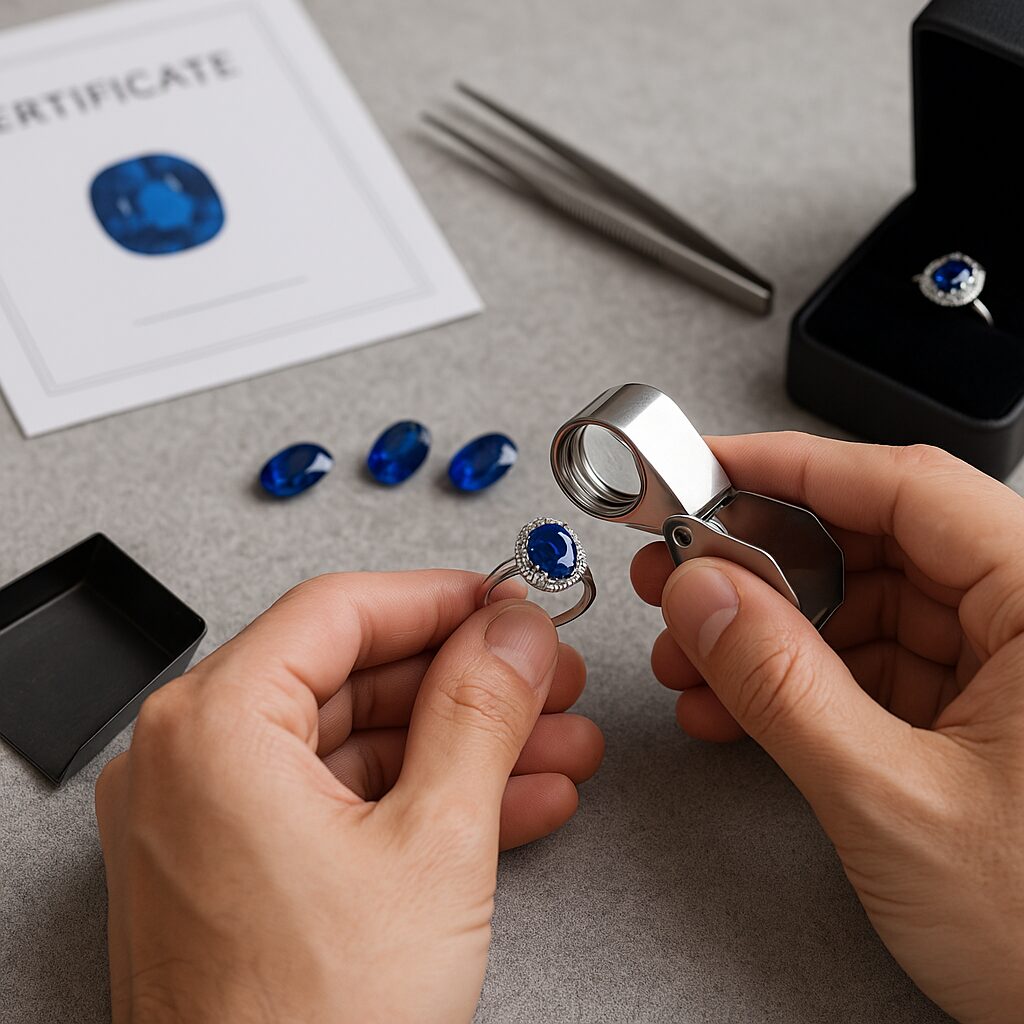
Buying Sri Lankan sapphire jewellery is more than a transaction — it’s an investment in beauty, heritage, and authenticity. Whether you’re shopping in Colombo’s luxury boutiques or exploring Ratnapura’s gem markets, understanding what makes a genuine Ceylon sapphire stand apart ensures that your purchase holds lasting value.
6.1 Understanding Sapphire Quality: The Four Cs
Just like diamonds, sapphires are evaluated based on the Four Cs — Color, Clarity, Cut, and Carat Weight. But unlike diamonds, color is the most decisive factor for sapphires.
-
Color: The most prized Ceylon sapphires display a vivid cornflower blue — bright yet deep, never dull or overly dark. Some stones exhibit a velvety hue that seems to glow even under soft light.
-
Clarity: Natural sapphires may have tiny inclusions, known as silk. A small number of inclusions actually enhance brilliance and confirm natural origin. Flawless sapphires are rare and often heat-treated.
-
Cut: A precise cut maximizes light reflection. Cushion, oval, and round cuts are classic favorites in Sri Lankan sapphire jewellery because they highlight the gem’s natural depth.
-
Carat Weight: Larger sapphires are valuable, but beauty isn’t only about size. A well-cut 2-carat sapphire can appear more vibrant than a poorly cut 4-carat one.
When purchasing, remember: color and craftsmanship together determine a sapphire’s soul. Before purchasing, it’s helpful to understand how pricing and certification work. Read our full guide on Buying Sri Lankan Sapphires: A Complete Price & Authenticity Guide for Gem Lovers to make an informed decision.
6.2 Natural vs. Treated Sapphires
Not all sapphires are created equal. Some are heat-treated to improve color or clarity, while others are completely natural, showing their original tone. Heat treatment is widely accepted in the gem trade — even Sri Lanka’s finest jewellers use it — but untreated sapphires, with certified documentation, command higher prices.
To verify authenticity, always ask for a gemological certificate. Laboratories such as the National Gem and Jewellery Authority (NGJA) in Colombo and GIA (Gemological Institute of America) issue reliable reports confirming origin and treatment. Never rely solely on verbal assurance.
6.3 Identifying Genuine Sri Lankan Origin
Sri Lanka’s sapphires possess a light, lively color tone that distinguishes them from darker stones mined elsewhere. The island’s gems often show excellent clarity and even color distribution, with subtle hints of violet or silvery blue. A genuine Ceylon sapphire should never appear overly dark or blackish — that’s a sign it likely comes from another source.
If you’re buying abroad, look for certificates mentioning “Origin: Sri Lanka (Ceylon).” Many reputed dealers proudly include this on both certificates and receipts.
6.4 Trusted Places to Buy

While online shopping has grown, the most reliable way to buy Sri Lankan sapphire jewellery is directly from licensed jewellers or certified gem merchants in Sri Lanka.
Some renowned areas include:
-
Colombo: Modern boutiques and design studios offering luxury sapphire collections.
-
Ratnapura: Authentic gem markets and family-run lapidary workshops.
-
Galle Fort: Boutique jewellery stores blending heritage design with fine craftsmanship.
Buying locally not only guarantees authenticity but also supports ethical mining communities and sustainable craftsmanship.
6.5 Budget and Pricing Tips
Ceylon sapphires vary widely in price, from affordable pieces under USD 500 to premium jewellery worth tens of thousands. Several factors influence cost:
-
Intensity of color
-
Size and clarity
-
Certification authenticity
-
Craftsmanship of the setting
When comparing options, consider the overall harmony of the design, not just the gemstone. Some smaller sapphires with superior brilliance can look far more elegant than large, heavily treated stones. Curious about current price trends? Our updated Blue Sapphire Sri Lanka 2025 Price Guide explains the latest market rates and factors that influence value.
6.6 Avoiding Common Pitfalls
Unfortunately, imitation sapphires and synthetic stones exist in many markets. Here’s how to stay safe:
-
Always request an origin certificate from a recognized gem lab.
-
Be cautious of prices that seem “too good to be true.”
-
Prefer reputed jewellers with established businesses over unverified stalls.
-
Trust your instincts — if a seller pressures you to buy quickly, walk away.
Buying Sri Lankan sapphire jewellery should be an inspiring experience, not a rushed decision. Take your time, ask questions, and choose a piece that speaks to you.
At its heart, this process is about connection — between you and the stone, between tradition and design. When chosen wisely, a single sapphire can embody generations of craftsmanship and centuries of trust, carrying Sri Lanka’s spirit wherever it goes.
7. Caring for Your Sapphire Jewellery

Owning Sri Lankan sapphire jewellery is more than possessing a beautiful accessory — it’s a relationship between you and a gemstone shaped by earth, time, and tradition. With proper care, that relationship can last for generations. Sapphires are among the hardest gemstones on earth, second only to diamonds, but even their brilliance needs gentle attention to remain timeless.
7.1 Cleaning and Maintenance
Regular cleaning keeps sapphires radiant. Oils from the skin, dust, and daily wear can dull a gemstone’s sparkle over time. Fortunately, sapphire maintenance is simple:
-
Mix mild soap with lukewarm water.
-
Use a soft brush (a clean toothbrush works well) to remove dirt around the setting.
-
Rinse thoroughly and pat dry with a lint-free cloth.
Avoid harsh chemicals, ultrasonic cleaners, or abrasive pads. These can damage metal settings or loosen the gemstone. Jewellers recommend professional cleaning every 6–12 months, especially for frequently worn items like rings or bracelets.
7.2 Storage and Protection
Even though sapphires are durable, they can still scratch softer stones if stored together. Always keep Sri Lankan sapphire jewellery in a separate fabric-lined box or a soft pouch. Avoid leaving them near perfume bottles or in humid bathrooms, as moisture and chemicals can affect certain metals over time.
When traveling, wrap each piece individually in microfiber cloths. For antique or delicate designs, use rigid cases to prevent pressure or bending.
7.3 Handling and Daily Wear
One of the joys of sapphire jewellery is its strength — you can wear it often without worry. Still, good habits make a difference:
-
Remove sapphire rings when doing household chores or gardening.
-
Avoid wearing them during heavy workouts or swimming in chlorinated water.
-
Apply lotion, perfume, or hairspray before putting on your jewellery, not after.
Such small habits protect both the gemstone and the metal, ensuring that your jewellery retains its original polish for decades.
7.4 Re-Polishing and Professional Care

Over time, even the hardest stones can lose some of their shine. Professional jewellers in Colombo and Ratnapura offer gentle re-polishing services that restore the sapphire’s surface brilliance without altering the stone itself. It’s also a good time to have the setting checked for loose prongs or wear on the metal frame.
Re-polishing once every few years — especially for pieces worn frequently — helps keep Sri Lankan sapphire jewellery as dazzling as the day it was made.
7.5 Emotional Care: Passing Down a Legacy
Beyond physical care, there’s another kind of preservation — emotional care. Sapphires often carry stories: a proposal, a milestone, or a gift from a loved one. Many Sri Lankan families pass down sapphire jewellery as heirlooms, linking generations through shared memories. Keeping the original certificate, photos, and even purchase details alongside the piece adds sentimental and historical value.
Every time a sapphire changes hands, its meaning deepens. What began as a purchase becomes a legacy — a tangible reminder of beauty, craftsmanship, and love.
A well-cared-for sapphire doesn’t just sparkle; it glows with history. That gentle gleam you see under light isn’t only the result of precise cutting — it’s the reflection of centuries of artistry and the care of every hand that’s ever worn it.
8. Where to Find Exquisite Ceylon Sapphire Jewellery in Sri Lanka
Explore this section to discover trusted locations in Sri Lanka where you can shop for authentic Sri Lankan sapphire jewellery, combining design, heritage and ethical sourcing. For more trusted gemstone destinations across the island, see our list of Best Places to Buy Sapphires in Sri Lanka — featuring authentic local shops and gem markets.
8.1 Why Sri Lanka is the Ideal Place to Buy
Sri Lanka is known worldwide as the “Gem Island” — particularly for the exceptional quality of its Ceylon sapphires. According to the Export Development Board of Sri Lanka, there are more than 300 gem-traders and dealers with export licenses in Sri Lanka. Sri Lanka Business+1
By buying in Sri Lanka you can:
-
See the gemstone origin, cutting and setting — adding transparency and authenticity.
-
Avoid some of the mark-ups and middle-men of international markets.
-
Choose from local designs rooted in Sri Lankan craftsmanship, especially when it comes to Sri Lankan sapphire jewellery.
-
Support ethical and local craftsmanship.
Tip: Even if you buy abroad, having visited a showroom in Colombo or Ratnapura gives you confidence in the piece’s origin and value.
8.2 Recommended Jewellery Houses
Below are three reputable jewellery houses you can trust when looking for fine Ceylon sapphire pieces:
a) Vogue Jewellers – Colombo

Established in 1962, Vogue Jewellers is a trusted brand in Sri Lanka. Their collections include luxury sapphire-ring sets, engagement pieces, coloured-stone jewellery and custom designs. voguejewellers.lk+1
Why go there: They combine modern design capability with heritage reputation. For someone seeking premium Sri Lankan sapphire jewellery, their showroom in Colombo offers a curated experience.
Tip: Ask to see their certificate of origin for the sapphire, and enquire about their custom design options.
b) Heritage Sapphires – Colombo
With roots going back to 1865, Heritage Sapphires is a jewellery house built on multi-generational craftsmanship. Heritage Sapphires Gems & Jewellery
Why go there: Their history gives strong E-E-A-T credibility. If you are looking for artfully crafted pieces of Sri Lankan sapphire jewellery, their heritage and workshop capability assure quality.
Tip: When visiting, ask about availability of untreated or minimally treated sapphires for your piece — they can often guide you through the options.
c) Prestige Gems – Colombo (Liberty Plaza)
Prestige Gems specialises explicitly in natural sapphires — including blue, yellow, pink and padparadscha varieties. prestigegemsstore.com
Why go there: Their niche focus on sapphire gemstones makes them ideal for those who specifically want Sri Lankan sapphire jewellery.
Tip: Ask to view the rough stone (if available) and the final setting to understand the transformation. This gives you insight into the value addition.
8.3 Shopping Tips & Practical Advice
-
Always request a gem certificate (origin, treatment status, carat weight, etc.).
-
Compare a few stores to understand market pricing and design styles.
-
If possible, visit during morning hours when natural light is available (helps assess the true color of sapphires).
-
Confirm the jeweller offers after-sales services: cleaning, setting check, polishing.
-
When paying: ensure you get a receipt with specification of sapphire weight, metal type, setting, and certificate number.
-
For tourists: allow enough time for customs or export documentation if you plan to bring your piece home.
9. Final Thoughts: The Timeless Glow of Ceylon Sapphires
When you hold a piece of Sri Lankan sapphire jewellery in your hand, you’re holding more than a gemstone — you’re holding a story that began millions of years ago and continues through the artistry of human hands. From the mist-covered hills of Ratnapura to the goldsmith’s bench in Colombo, every sapphire embodies a dialogue between nature and craftsmanship.
What makes Ceylon sapphires truly remarkable isn’t only their radiance, but their spirit. They carry whispers of rivers, the rhythm of mining songs, and the dedication of generations who have perfected their craft. Each ring, pendant, or bangle reflects the island’s quiet elegance — the same calm strength that has drawn gem traders and dreamers here for centuries.
As I look back on the sapphire markets I’ve wandered and the artisans I’ve met, one truth stands clear: Sri Lanka’s legacy lies not just in what it creates, but in how it creates. Crafted with care, shaped through patience, and guided by reverence for the earth. That is what transforms a beautiful stone into a timeless treasure.
For those seeking jewellery that tells a story — a story of purity, artistry, and emotion — Sri Lankan sapphire jewellery remains unmatched. It’s the meeting point of past and present, where heritage becomes wearable and beauty becomes eternal. Whether you wear it for love, faith, or legacy, a Ceylon sapphire will always carry the island’s heartlight — steady, enduring, and unmistakably true.
💬 Frequently Asked Questions for Sri Lankan Sapphire Jewellery
About Ceylon Sapphires & Craftsmanship
Q1. Why is Sri Lankan sapphire jewellery so famous worldwide?
Sri Lankan sapphire jewellery is celebrated for its exceptional color purity, ethical sourcing, and centuries-old craftsmanship. Ceylon sapphires are mined and cut by skilled artisans who preserve both the stone’s brilliance and cultural heritage.
Q2. What makes Ceylon sapphires different from other sapphires?
Ceylon sapphires have a bright, vivid tone with remarkable clarity. Unlike darker stones from other regions, Sri Lankan sapphires show lively transparency that reflects natural daylight beautifully.
Q3. Where are most Sri Lankan sapphires mined?
Most come from Ratnapura, the “City of Gems,” as well as Balangoda and Elahera. These regions produce blue, pink, yellow, and padparadscha sapphires renowned for quality and diversity.
Buying & Authenticity Guide
Q4. How can I verify if a sapphire is truly from Sri Lanka?
Ask for a gemological certificate from a recognized lab such as the National Gem and Jewellery Authority (NGJA) or GIA. Authentic Ceylon sapphires will list the origin as “Sri Lanka (Ceylon).”
Q5. Are treated sapphires considered real?
Yes. Many genuine sapphires are heat-treated to enhance color and clarity. However, untreated stones with full certification are rarer and often more valuable.
Q6. What should I look for when buying Sri Lankan sapphire jewellery?
Check the Four Cs — color, clarity, cut, and carat — along with authenticity certificates and craftsmanship. Choose trusted jewellers in Colombo, Galle, or Ratnapura to ensure quality.
Q7. Where can I buy authentic Ceylon sapphire jewellery in Sri Lanka?
Recommended names include Vogue Jewellers, Heritage Sapphires, and Prestige Gems in Colombo. Each offers certified, ethically sourced Sri Lankan sapphire jewellery.
Design & Personal Meaning
Q8. What types of jewellery use Ceylon sapphires?
They feature in rings, pendants, earrings, bangles, and custom sets, often mixed with diamonds or pearls. Designs range from traditional Sinhalese motifs to minimalist modern styles.
Q9. What does a sapphire symbolize in Sri Lankan culture?
Sapphires symbolize wisdom, faithfulness, and inner peace. They’re believed to protect the wearer from negativity and to bless relationships with clarity and loyalty.
Q10. Can I order custom Sri Lankan sapphire jewellery?
Yes. Many local jewellers create bespoke pieces, letting you choose the stone, design, and setting. It’s a wonderful way to blend personal meaning with Sri Lankan heritage.
Care & Maintenance
Q11. How should I clean and care for sapphire jewellery?
Clean gently using mild soap and lukewarm water with a soft brush. Avoid harsh chemicals, and store each piece separately in a fabric-lined box or pouch.
Q12. Can sapphires lose their shine over time?
With proper care, they retain brilliance for generations. If dullness appears, a professional jeweller can perform safe re-polishing to restore the surface glow.
Q13. Is it safe to wear sapphire rings daily?
Absolutely. Sapphires are durable (Mohs 9) and ideal for everyday wear. Just remove them during heavy work, exercise, or exposure to chemicals.
Pricing & Value
Q14. How much does Sri Lankan sapphire jewellery cost?
Prices vary by color, size, and treatment. Simple silver pendants may start around USD 300, while premium designer sapphire rings can exceed USD 10,000.
Q15. Why is color so important in sapphire pricing?
Color determines 60–70 % of a sapphire’s value. The vivid “cornflower blue” hue of Ceylon sapphires is especially prized for its balance of light and depth.


