


The first time I stepped into royal palace polonnaruwa, I noticed the silence before anything else. The open space, the tall stone pillars, and the soft wind moving through the ruins created a calm that felt almost unreal. Even with other visitors around, the place held a quiet strength that stayed with me.
After understanding royal life inside the palace walls, this companion guide takes you beyond the crowds into the forgotten corners of the city in Hidden Places in Polonnaruwa You Should Not Miss.
This is not a site that tries to impress you quickly. Instead, it unfolds slowly as you walk deeper into the palace grounds. If you are planning your first visit to the ancient city, you may also like my complete Polonnaruwa travel guide which covers routes, local life, and all the main places to see.
Seeing how the royal complex connects to surrounding monuments becomes easier when using this practical Polonnaruwa travel map for major attractions.
What Makes This Palace Unique
Polonnaruwa has many beautiful monuments, yet the Royal Palace stands apart. This was not just a religious or decorative site. It was once the political and administrative center of a powerful kingdom.
As I moved through the wide courtyards, I kept thinking about the thousands of people who once worked and lived around this space. Kings, guards, advisors, and servants all passed through these same paths. That thought alone adds a deeper meaning to every step you take here.
What You Will Learn in This Guide
In this long-form guide, you will find:
-
The historical background of the palace
-
What you can still see today
-
How to plan your visit with ease
-
Practical travel tips from real experience
-
Nearby places you should not miss
Each section is written to help you see the palace not just as a ruin, but as a living piece of Sri Lanka’s past.
Historical Background of the Royal Palace

The story of the Royal Palace begins in the 12th century, during the reign of King Parakramabahu I. His rule marked one of the most powerful and organized periods in Sri Lanka’s ancient history. Polonnaruwa became the capital under his leadership, and with that decision came the need for a royal residence that reflected authority, stability, and vision.
Unlike many rulers who focused mainly on religious monuments, King Parakramabahu placed equal importance on administration, city planning, and defense. The Royal Palace was built as the nerve center of this well organized kingdom. It was not only a royal residence. It functioned as a political command post where major decisions shaping the entire island were made.
Walking through the ruins today, it is easy to forget how active this place once was. Yet, when you pause and look closely at the layout, the scale, and the strategic positioning, the purpose of the palace becomes clear.
King Parakramabahu I and His Vision
King Parakramabahu I ruled from 1153 to 1186 AD. His leadership was shaped by a clear goal which was to unite the island under one strong and efficient kingdom. He believed that water management, military strength, and urban planning were the foundations of lasting power.
This vision shaped everything he built, including the Royal Palace. It was designed not only to display royal authority but also to support daily governance. From here, royal orders were issued, alliances were formed, and military strategies were planned.
What impressed me most while learning about his reign was how practical his ambitions were. He did not focus only on grandeur. He focused on systems that worked, many of which still influence Sri Lanka’s irrigation network today.
The Palace as a Political and Administrative Center
The Royal Palace was more than a place where the king slept or met guests. It functioned as a structured administrative complex. Several sections of the palace served different purposes, from royal meetings to internal court affairs.
Based on archaeological findings, historians believe that:
-
The palace had multiple upper floors
-
Each section was assigned a specific administrative role
-
The building design allowed for controlled access and security
This was not accidental planning. It reflected a kingdom that valued order, control, and long term stability.
When you stand near the remaining stone pillars, you can still sense how carefully this entire space was designed to manage people, power, and movement all at once.
Decline of the Palace and the City
After the fall of Polonnaruwa as the capital, the Royal Palace slowly lost its importance. Invasions, environmental changes, and shifting political centers led to abandonment. Over time, nature reclaimed what humans left behind.
For centuries, the palace remained hidden beneath vegetation and soil. It was only through archaeological efforts in the modern era that its structure was uncovered and studied. What you see today is the solid lower foundation of what was once a towering royal building.
Even in its ruined state, the site carries dignity. Instead of feeling forgotten, it feels preserved in silence, holding onto a story that still deserves to be told.
Location and Layout Within the Ancient City

The Royal Palace sits at the very heart of the Polonnaruwa Sacred City. Its position was not chosen at random. From here, the king had direct access to key religious, administrative, and ceremonial sites. This placement reflects how tightly governance and spiritual life were connected during this era.
When you enter the ancient city complex, the palace is easy to reach by foot or bicycle. It lies close to some of the most important landmarks in Polonnaruwa, which makes planning your route simple and efficient.
Nearby sites include:
-
The audience hall
-
The council chamber
-
The Quadrangle area with major religious monuments
-
Several ancient bathing pools and courtyards
Because of this central placement, the Royal Palace naturally becomes a starting point for many visitors exploring the city.
Explore Polonnaruwa Ancient City on Google Maps
How the Palace Was Oriented for Control and Access
What struck me most while walking around the palace grounds was how open yet controlled the space felt. Wide courtyards allowed gatherings and movement, while elevated platforms and inner chambers restricted access where needed.
Archaeologists believe that:
-
The main entrances were designed to regulate movement
-
Inner sections were reserved for royal and administrative use
-
Outer areas allowed public and ceremonial access
This layered structure helped maintain both authority and security without making the palace feel closed off.
Understanding the Scale From the Ground Today
Ancient chronicles describe the Royal Palace as a seven story structure with over a thousand rooms. While those upper levels no longer exist, the footprint alone tells a powerful story. The base is massive. The alignment of pillars stretches far into the distance. Even without walls, the size feels overwhelming when you stand in the center and slowly turn in a full circle.
At one point during my visit, I stepped back and counted the visible stone columns in a single row. It was then that the true scale finally settled in. This was not a symbolic palace. It was built to function on a grand administrative level.
Even now, centuries later, the open layout allows you to clearly visualize how authority once flowed through this space.
Architectural Features and Construction Style

As you walk deeper into royal palace polonnaruwa, the design begins to reveal its true character. Unlike many ancient ruins that rely heavily on decoration, this palace impresses through strength, balance, and scale. Every element feels purposeful rather than ornamental.
The builders used large baked bricks as the main construction material. These bricks still hold together after centuries of exposure to heat, rain, and shifting ground. Even today, you can see how precisely workers shaped and stacked them. Because of this craftsmanship, the lower structure still stands firm.
At the same time, stone played an equally important role. Massive stone pillars rise across the palace base, and their alignment reflects careful planning. Instead of placing pillars randomly, the builders followed a grid system. As a result, the palace gained both stability and symmetry.
Stone Columns and Structural Support
The stone columns define the visual identity of the palace. When you first see them, they appear almost endless. Yet, each pillar once carried real weight. They supported multiple upper floors and allowed large open spaces below.
Moreover, the spacing between pillars matters. Wide gaps created large halls, while narrow spaces provided stronger reinforcement in key sections. Because of this design, the palace could support massive vertical pressure without collapsing inward.
While standing among these columns, I noticed how sound travels differently in certain areas. Voices echo softly, yet never sharply. That acoustics suggests that planners also considered how people would communicate inside the palace.
Brick Walls and Defensive Thickness
In contrast to the open pillars, the brick walls show another side of the design. These walls stand unusually thick. In some areas, their width exceeds three meters. This thickness served several purposes at once.
First, it gave the upper floors solid support. Second, it added protection during times of conflict. Finally, it helped regulate interior temperature by blocking direct heat.
Even today, when you touch these walls, you can feel how dense they remain. That physical density reflects the deeper mindset behind the construction. This palace had to last. And for centuries, it did.
Drainage, Water Control, and Daily Function
Perhaps the most impressive feature does not stand out at first glance. Beneath the palace grounds, ancient drainage systems still exist. These channels guided rainwater away from living spaces and prevented flooding.
Because Polonnaruwa experienced heavy seasonal rains, this system proved essential. Without proper drainage, upper floors would weaken quickly. Instead, the palace remained functional through changing weather.
In addition, nearby bathing pools and water channels connected directly to the palace complex. As a result, the royal household enjoyed clean water access without relying on distant sources. This practical planning shows how deeply the builders understood both comfort and survival.
What You Will See When You Visit Today

Although time has reshaped the Royal Palace, the site still offers a powerful and layered experience. Instead of walking through enclosed rooms, you now move through open space where imagination fills the gaps. With each step, the past feels closer rather than distant.
As soon as you enter the palace grounds, the wide stone base immediately commands attention. The ground stretches out in every direction, and the remaining pillars guide your movement forward. Unlike compact temple spaces, this area breathes. Because of that openness, you can pause often and take in the full scale without feeling rushed.
I went to the Gal viharaya of Ruins Area . Extremely Nice place & more attractive place for peaceful mind. Environment is very clean & neat .
Read more reviews on Tripadvisor
The Main Palace Platform
The elevated stone platform forms the core of the palace complex. From here, the king once oversaw both court life and political affairs. Today, this platform gives you the best sense of how large the original structure truly was.
As you walk across it, notice how the stone under your feet changes in texture. Some sections feel smooth from centuries of foot traffic, while others remain rough and untouched. That contrast alone tells a quiet story of use and abandonment.
From this central point, you can clearly see:
-
Long rows of remaining stone pillars
-
Open courtyards once used for gatherings
-
Entry paths that directed movement through the complex
Each element still works together visually, even in ruin.
The Audience Hall and Lion Staircase
Just beyond the main platform, the audience hall stands as one of the most memorable features. This is where royal meetings took place. Foreign envoys, ministers, and high ranking officials once stood here awaiting the king’s presence.
Today, the lion staircase guards the entrance. Its stone lions remain worn yet expressive. I remember slowing my pace here without thinking about it. Something about that entrance naturally demands respect.
The raised design of this hall also reveals how carefully the palace controlled visibility. From above, the king could observe without obstruction. Meanwhile, those below had to look upward. That physical positioning reinforced authority without a single word being spoken.
Inner Courtyards and Open Spaces
Beyond the public areas, inner courtyards once provided light, air, and controlled privacy. These open sections broke up the massive structure and offered breathing space within the heavy brick environment.
As you walk through them today, sunlight filters in from every direction. Trees now grow where royal gardens may have once stood. Birds move freely where courtiers once walked.
Because these spaces remain open, they now serve a new purpose. They give visitors a chance to slow down, reflect, and absorb the atmosphere without distraction.
For me, these quiet sections created the strongest emotional connection to the site. The palace felt less like a monument and more like a place that once held everyday life.
Best Time to Visit and Weather Considerations

Choosing the right time to visit royal palace polonnaruwa can shape your entire experience. Although the site remains open throughout the year, weather and light conditions change how the ruins feel and how comfortably you can explore them.
The dry season, which usually runs from May to September, offers the most balanced conditions. During these months, the skies stay clearer, the paths remain dry, and movement across the open stone base feels much easier. Because of that, most travelers prefer this period.
However, the shoulder months before and after the dry season also offer advantages. Fewer crowds often mean a quieter walk through the palace grounds. With fewer voices in the air, the atmosphere feels more intimate and reflective.
Morning Visits Versus Afternoon Visits
If you ask me to choose one ideal time of day, I would always recommend early morning. The light falls softly across the stone pillars, and the air stays cooler for longer. As a result, you can walk farther and focus better without feeling drained.
In contrast, afternoon visits bring stronger sunlight and deeper shadows. While this lighting works beautifully for photography, the heat can slow your pace. Still, many visitors prefer late afternoons because sunset colors add a warm glow to the ruins.
Whichever time you choose, plan to spend at least one to two hours at the palace itself. Rushing this site never feels right.
Seasonal Heat and Rain Factors
Polonnaruwa sits in Sri Lanka’s dry zone, so temperatures remain high for most of the year. Even during cooler months, midday heat can surprise you. Therefore, light clothing, water, and sun protection always matter.
During the rainy season, occasional showers cool the air but also make stone surfaces slippery. Because of this, careful footing becomes essential. On the positive side, rain refreshes the surrounding greenery and adds contrast to the ancient brickwork.
Every season changes how the palace feels. Yet, its presence remains constant, steady, and quietly powerful regardless of the weather.
Entry Tickets and Practical Access Information

Before stepping into royal palace polonnaruwa, every visitor must pass through the main ticketing system for the Sacred City. Unlike some attractions that operate independently, this palace falls under the central archaeological zone. As a result, one ticket grants access to several major sites in the ancient city.
When I purchased my ticket, I noticed how organized the process felt. Clear signs guided visitors, and staff handled the system efficiently. Still, arriving early helps reduce waiting time, especially during peak travel months.
At present, ticket categories usually include:
-
Foreign visitors
-
SAARC nationals
-
Local visitors
Prices change from time to time, so I always recommend checking the latest rates at the main entrance counter. Because tickets cover multiple locations, they offer good value for anyone planning to explore beyond just the palace.
Entry Rules and On Site Behavior
Once inside the complex, certain expectations guide visitor behavior. These rules protect both the ruins and the experience of others.
You should keep in mind:
-
Climbing on restricted structures is not allowed
-
Removing stones or artifacts is strictly prohibited
-
Loud music and disruptive behavior disturb the atmosphere
-
Drones usually require special permission
Because the palace grounds remain open and exposed, visitors often forget how fragile these ruins truly are. However, every small action matters. Respect keeps the site alive for future generations.
Facilities Available Near the Palace
Although royal palace polonnaruwa sits within an ancient setting, basic visitor facilities remain easy to find. Restrooms, small refreshment stalls, and shaded resting areas appear near major entry points. These simple comforts make long explorations far more manageable.
Bicycle rentals also operate close to the Sacred City entrance. Because distances between monuments stretch out, cycling saves both time and energy. I found this option especially useful when combining the palace with nearby temples in a single visit.
While modern facilities stay limited inside the archaeological core, the surrounding town of Polonnaruwa offers restaurants, cafés, and accommodation within a short drive.
How to Reach the Royal Palace in Polonnaruwa

Reaching royal palace polonnaruwa feels simple once you understand the layout of Sri Lanka’s road and rail network. Because Polonnaruwa sits in the North Central Province, many travelers connect their visit with Sigiriya, Dambulla, or Anuradhapura.
If you travel from Colombo, you have several comfortable options. Trains run daily to Polonnaruwa, and although the journey takes about five to six hours, the scenery gradually shifts from urban sprawl to open countryside. I have always enjoyed this route because it eases you into the cultural heart of the island.
Buses also operate frequently from Colombo, Kandy, and Dambulla. These rides often feel faster than expected when traffic stays light. Meanwhile, private cars and taxis offer the most flexibility, especially if you plan to explore multiple sites in one day.
Approaching from Sigiriya and Dambulla
Many travelers combine Polonnaruwa with Sigiriya Rock Fortress. From Sigiriya or Dambulla, the drive takes around one and a half to two hours. Along the way, the road passes through quiet villages, farmland, and stretches of open water channels.
Because this route feels calm and scenic, it makes an excellent morning drive. I once left Sigiriya just after sunrise and reached the palace before the crowds formed. That early start shaped one of my most peaceful visits to the site.
Getting Around Inside the Ancient City
Once you arrive at the Sacred City entrance, moving between landmarks becomes the next challenge. Fortunately, the area suits cycling and walking perfectly.
Most visitors choose between:
-
Bicycle rentals near the ticket counter
-
Walking short distances between clusters
-
Hiring a tuk-tuk for larger loops
Cycling offers the best balance. It gives speed without rushing and allows you to stop whenever something catches your eye. At the same time, walking works well if you explore only one or two major areas, such as the palace and nearby religious monuments.
Whichever method you choose, the flat terrain makes movement easy and relaxed.
Parking and Accessibility Notes
If you arrive by private vehicle, designated parking areas sit close to main entry points. These spaces usually remain safe during daytime hours. Still, I always lock valuables away and carry only what I need.
For visitors with limited mobility, the palace grounds present mixed accessibility. While open spaces feel manageable, uneven stone surfaces and steps appear throughout the site. Because of that, assistance may help in certain areas.
Even with these limits, the main viewing points remain accessible enough to give a meaningful sense of the palace’s scale and design.
What to Wear and What to Carry

A visit to royal palace polonnaruwa feels far more comfortable when you prepare with the right clothing and essentials. Because the palace grounds remain wide open with little shade in some areas, your choices can shape how long you enjoy staying there.
I usually choose light, breathable clothing that allows easy movement. Cotton shirts, loose trousers, or long skirts work well under the dry zone sun. At the same time, comfortable walking shoes matter more than many travelers expect. The stone surfaces feel uneven in places, and steady footing makes a clear difference.
Essential Items for a Comfortable Visit
Although the palace does not require heavy gear, a few basic items improve the experience greatly. I learned this after cutting one visit short due to heat and dehydration.
It helps to carry:
-
A reusable water bottle
-
Sun protection such as a hat or umbrella
-
Sunscreen for exposed skin
-
A small towel for sweat during warmer hours
-
A compact day bag for easy movement
Because food stalls remain limited inside the archaeological zone, light snacks also help if you plan to explore for several hours.
Cultural Awareness and Respectful Clothing
Although the Royal Palace itself does not function as a religious site, it sits inside a wider sacred and historic area. As a result, modest clothing still shows respect for the space and its cultural value.
For that reason, I avoid wearing very short shorts or revealing tops while exploring the palace complex. This small adjustment helps maintain harmony with local customs while allowing you to feel comfortable and confident.
Photography Equipment and Tech Care
Most visitors carry cameras or smartphones, and the palace offers countless photographic angles. However, heat and dust can affect electronic equipment over time. Therefore, keeping your gear shaded and wiping lenses occasionally prevents damage and improves image clarity.
If you plan to stay longer under the sun, a power bank also helps. Long walks and photography drain battery life quickly, and charging inside the site remains impossible.
Nearby Attractions Worth Adding to Your Route

After spending time at royal palace polonnaruwa, many travelers feel tempted to slow down and reflect. However, several remarkable sites sit just minutes away, and together they complete the full Polonnaruwa experience. Because distances stay short, you can connect these places easily in a single visit.
I often encourage visitors to plan the palace as the starting point. From there, the surrounding monuments unfold naturally, each adding a new layer to the story of the ancient city. Because the Royal Palace sits close to the Sacred Quadrangle, it is easy to combine this visit with the nearby Polonnaruwa Vatadage, which holds deep spiritual and architectural significance.
Polonnaruwa Vatadage and the Sacred Quadrangle
Just a short walk from the palace, the Vatadage stands as one of the most sacred and visually striking structures in the city. The circular design, stone guardstones, and seated Buddha statues create a calm contrast to the palace’s wide, open layout.
When you move from the palace into the Quadrangle area, the atmosphere shifts. The space feels quieter, more spiritual, and deeply focused on devotion rather than power. This change in mood helps you understand how closely religion and governance once worked together.
Gal Vihara and Its Rock Cut Sculptures
A little farther along, Gal Vihara offers a completely different expression of skill and belief. Four massive Buddha statues carved directly into granite rock dominate this area. Each figure carries a different posture and emotional energy.
What always stays with me here is the sense of stillness. Even when visitors gather, the carvings hold a silence that feels untouched by time. After walking through the administrative strength of the palace, this quiet spiritual space balances the journey beautifully.
After exploring the royal ruins, many travelers continue their journey at Gal Vihara, where serene stone Buddha statues reveal the spiritual soul of Polonnaruwa.
Rankoth Vehera and the Monumental Stupa
Rankoth Vehera rises high above the surrounding ruins, and its sheer size quickly draws attention. As one of the largest stupas in Polonnaruwa, it once played a central role in religious life.
From a distance, the stupa anchors the landscape. Up close, its brickwork shows the same disciplined craftsmanship seen at the palace. Because of this connection, visiting both sites helps you see how builders applied similar skill across very different structures.
After exploring the royal residence of the Polonnaruwa kings, many visitors walk toward Rankoth Vehera Polonnaruwa, a monumental stupa that reflects the deep Buddhist devotion of the same era.
Lankathilaka Image House and Ancient Carvings
Not far from the palace grounds, the Lankathilaka Image House preserves finely detailed carvings and surviving wall structures. While time has faded much of its interior art, traces of ancient craftsmanship remain visible.
This site feels more intimate than the grand palace and massive stupas. Because of that, it often becomes a quiet pause point in a long day of exploration.
After exploring the royal complex, many visitors continue toward the Lankathilaka Image House Polonnaruwa to experience the spiritual side of Polonnaruwa through its ancient Buddha statues and brick architecture.
Suggested Half Day and One Day Visit Planning
Planning how much time to spend at royal palace polonnaruwa often depends on your overall travel pace. Some visitors arrive with limited time, while others prefer a slow, immersive exploration. Both approaches work well when structured carefully.
If you arrive early and focus only on the palace and its closest surroundings, a half day visit gives you enough space to explore without pressure. On the other hand, a full day plan allows deeper exploration of connected monuments and relaxed movement between sites.
Half Day Visit Plan for Focused Travelers
This option suits travelers who arrive from Sigiriya, Dambulla, or Habarana and return by evening. The goal here is depth rather than distance.
A balanced half day route usually looks like this:
-
Enter the Sacred City early in the morning
-
Spend extended time at the Royal Palace
-
Walk to the Audience Hall and inner courtyards
-
Move toward the Vatadage and Quadrangle area
-
Finish with Gal Vihara before midday heat rises
This plan works especially well when the weather stays clear. Because walking distances remain manageable, you can slow your pace and absorb each location without rushing.
One Day Visit Plan for Complete Exploration
If you have a full day available, the experience changes completely. A broader route allows you to connect governance, religion, water management, and daily life into one flowing narrative.
A well balanced full day plan often includes:
-
Early morning entry and palace exploration
-
Vatadage and Quadrangle monuments by mid morning
-
Gal Vihara before lunch
-
Rankoth Vehera in the early afternoon
-
Lankathilaka Image House as a quieter late stop
-
Sunset return through open courtyards and water tanks
With this rhythm, movement never feels forced. Instead, each transition naturally builds on the last.
When to Take Breaks and Reset Your Energy
Long days at archaeological sites can feel surprisingly tiring. Stone paths reflect heat, and shade appears only in selected areas. Because of that, short rest stops matter more than most travelers expect.
I usually stop every hour for water and a shaded pause. Those small moments reset focus and prevent fatigue from sneaking in quietly. With better pacing, exploration stays enjoyable from start to finish.
Cycling Routes and Movement Between Key Sites

Cycling around royal palace polonnaruwa offers one of the most enjoyable ways to experience the ancient city. Because the terrain stays mostly flat and the roads remain well spaced, cycling feels both easy and rewarding. At the same time, it allows you to control your own pace without depending on transport schedules.
When I first chose a bicycle over walking, the entire visit changed. Instead of focusing only on the palace, I could link several major landmarks smoothly. More importantly, the open air movement made the journey feel like part of the experience rather than just a way to get from one point to another.
Popular Cycling Loops Near the Palace
Several well known cycling loops pass through the palace zone. These loops connect royal, religious, and residential ruins into one flowing route.
A commonly used cycling loop includes:
-
Sacred City entrance
-
Royal Palace platform
-
Audience Hall
-
Vatadage and Quadrangle
-
Gal Vihara
-
Rankoth Vehera
-
Return through water tank roads
This route keeps riding time comfortable while allowing extended stops at each monument. Because distances remain short, you never feel the urge to rush.
Advantages of Choosing a Bicycle Over Walking
Cycling offers several practical benefits. First, it saves energy during warmer hours. Second, it allows you to cover a wider area without physical strain. Third, it creates space between crowded zones and quieter ruins.
Compared to tuk-tuks, bicycles also offer freedom. You stop where you want, wait when light changes and return to a location if something catches your attention.
For me, the real benefit came from silence. Cycling quietly through ancient streets lets you hear wind through trees and birds over water, rather than engine sounds.
Safety Tips for Cycling in the Ancient City
Although cycling stays safe overall, a few simple habits make the experience smoother. I always check brakes and tire pressure before starting. I also avoid riding too fast near uneven stone paths.
It helps to:
-
Keep a steady pace in shaded areas
-
Slow down near pedestrian clusters
-
Watch for loose gravel near water channels
-
Carry water in a secured bottle holder
With these small precautions, cycling becomes one of the most relaxed and memorable ways to explore the palace zone and beyond.
Food Options Near the Royal Palace Area

After several hours of walking or cycling around royal palace polonnaruwa, hunger arrives quietly but firmly. Because the archaeological zone itself does not allow restaurants inside, food planning becomes part of the overall travel experience. Fortunately, the nearby town offers enough variety to suit different tastes and budgets.
On my first visit, I underestimated how tiring the heat and walking could feel. Since then, I always plan a proper meal either before entering the site or immediately after finishing the main circuit. That simple decision makes a noticeable difference in energy levels.
Local Sri Lankan Meals Around the Sacred City
Small family run eateries operate just outside the Sacred City entrance and along the main roads leading into Polonnaruwa town. These places serve fresh, simple, and filling local meals.
You will often find:
-
Rice and curry with seasonal vegetables
-
Fried rice with chicken, egg, or vegetables
-
Hoppers and string hoppers in the morning
-
Fresh fruit plates and king coconut drinks
These meals feel light yet satisfying after hours in the sun. Moreover, prices remain friendly for both local and international travelers.
Cafés and Tourist Friendly Dining Spots
For those who prefer familiar food after a long cultural walk, several cafés and small restaurants cater to travelers. These spots usually offer:
-
Sandwiches and burgers
-
Pasta and Western breakfasts
-
Fresh juices and iced coffee
-
Bakery items for quick snacks
While these places cost slightly more than local eateries, they provide air conditioned rest spaces and reliable hygiene. On especially hot afternoons, that comfort feels well worth it.
Timing Your Meals During a Palace Visit
Meal timing matters when exploring the palace area. I usually follow one of two patterns depending on my arrival time:
-
Early start: Light breakfast, palace visit, then lunch in town
-
Late start: Brunch in town, palace visit, then early dinner nearby
This rhythm prevents heavy food intake during peak heat and keeps the body balanced throughout the day.
Hydration also deserves attention. Even if you do not feel thirsty, regular water breaks protect you from quiet exhaustion.
Where to Stay Near the Sacred City

Choosing accommodation near royal palace polonnaruwa shapes how relaxed your visit feels. Because the Sacred City covers a wide area, staying close allows you to arrive early, avoid traffic, and revisit spots without stress. At the same time, Polonnaruwa town offers a wide range of stays that suit different budgets and travel styles.
On my first overnight visit, I stayed slightly outside the main area. While the room felt comfortable, the early morning travel took longer than expected. Since then, I always recommend staying closer when possible. The time you save feels surprisingly valuable.
Budget Guesthouses and Backpacker Stays
Many small guesthouses operate within a short drive of the Sacred City. These places usually focus on simplicity, cleanliness, and personal service rather than luxury.
You can expect:
-
Basic private rooms with attached bathrooms
-
Home cooked Sri Lankan meals on request
-
Bicycle rentals arranged through the host
-
Helpful local travel advice
These stays work especially well for solo travelers and backpackers who care more about location and experience than luxury. In many cases, the hosts treat you more like a guest than a customer, which adds warmth to the stay.
Mid Range Hotels for Comfort and Convenience
For travelers who prefer more privacy and comfort, several mid range hotels sit around Polonnaruwa town and nearby lake areas. These properties balance convenience with comfort without reaching high end pricing.
Most offer:
-
Air conditioned rooms
-
In house restaurants
-
Swimming pools for afternoon relaxation
-
Easy access to main roads and attractions
After a long day under the sun, a cool swim and quiet room feel like a reward. Because of this, many families and couples choose this category.
Eco Lodges and Nature Oriented Stays
For a slower and more immersive experience, eco lodges around the outskirts of Polonnaruwa offer a different rhythm. These stays blend nature, wildlife sounds, and open spaces into the travel experience.
You often find:
-
Cabins surrounded by trees and water channels
-
Outdoor dining under the stars
-
Birdlife and early morning wildlife sounds
-
Minimal urban noise
Although these lodges sit slightly farther from the Sacred City, the peaceful atmosphere makes the extra travel worthwhile for many visitors.
Safety Tips and Visitor Etiquette
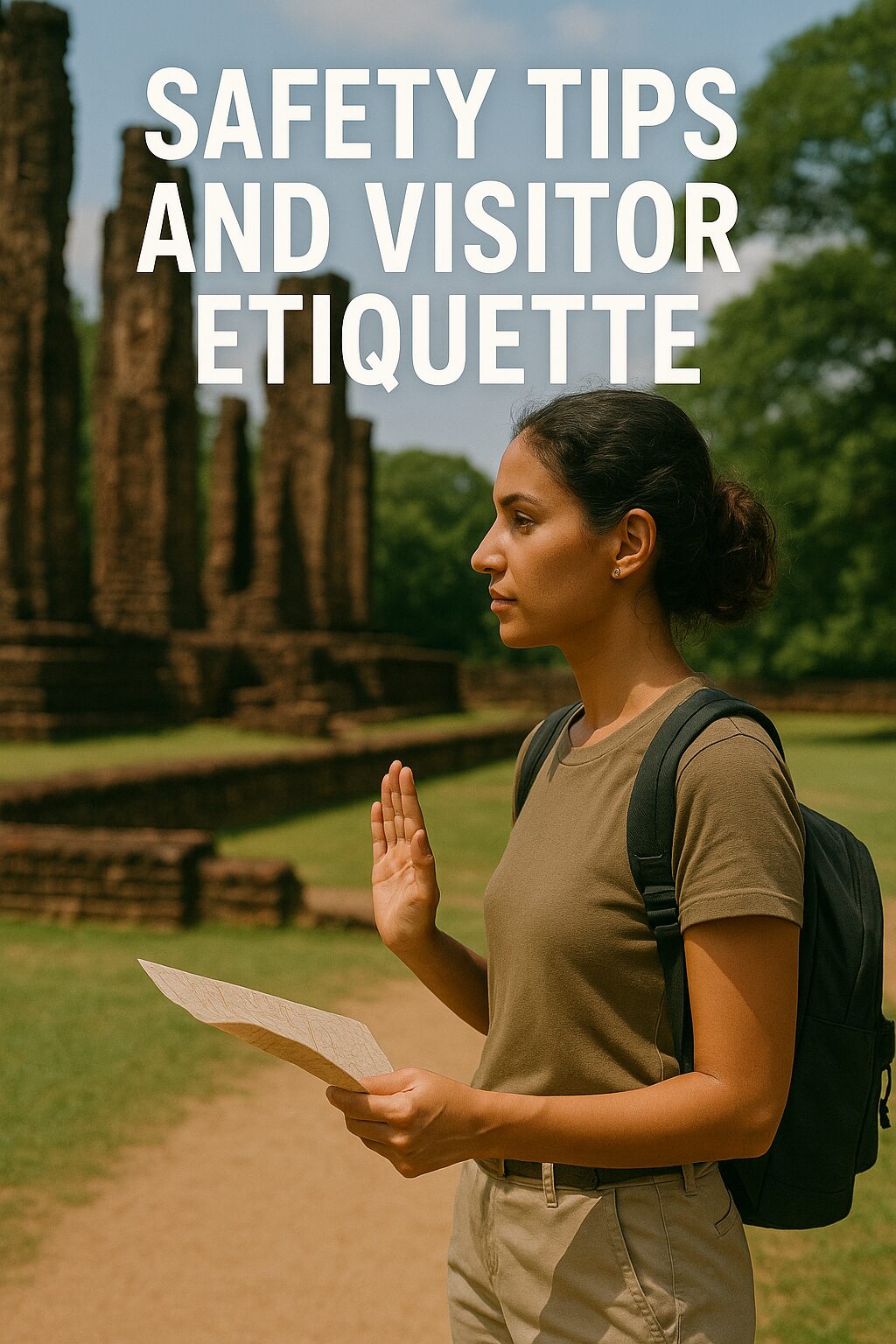
Although royal palace polonnaruwa feels open and calm, simple awareness helps keep your visit safe and respectful. Because the site remains spread out with uneven surfaces, both physical safety and cultural sensitivity matter at every step.
On my early visits, I moved too quickly across the stone paths. Over time, I learned that slowing down not only improves safety but also deepens the experience. When you move with care, the space begins to reveal details you might otherwise miss.
Staying Safe on Uneven Ground
Stone steps, broken brick edges, and hidden dips appear throughout the palace complex. While these features add character, they also demand attention.
To move safely:
-
Walk at a steady pace
-
Avoid climbing unsupported ruins
-
Step carefully after rain
-
Watch where bicycles cross pedestrian paths
Because the ground reflects sunlight strongly, glare can also affect vision. Sunglasses reduce strain and help you read the surface better while walking.
Respecting the Historical Space
Even though the palace does not function as an active temple, it remains a deeply respected heritage site. Every stone carries meaning, and each structure reflects generations of craftsmanship.
For that reason, visitors should avoid:
-
Sitting on fragile ruins
-
Touching delicate carvings
-
Leaving behind litter
-
Playing loud music
When you show respect through small actions, the atmosphere of the site remains peaceful for everyone.
Interactions With Other Visitors and Guides
The palace attracts travelers from many countries as well as local school groups and researchers. Because of this diversity, patience and courtesy go a long way.
If you hire a guide, listen actively and ask questions. Many local guides hold deep personal pride in Polonnaruwa’s history. When you engage with curiosity rather than rushing, the visit becomes far richer.
Wildlife and Natural Awareness
Occasionally, monkeys, birds, and small reptiles appear near the palace grounds. While they usually stay harmless, feeding wildlife encourages risky behavior. Therefore, keeping food secured protects you and the animals alike.
With simple care and mindful movement, safety becomes effortless. In turn, the palace experience remains calm, reflective, and memorable.
Photography Tips and Best Angles at the Palace

Photography at royal palace polonnaruwa feels both rewarding and challenging. The space stretches wide, the light shifts quickly, and the ruins change character throughout the day. Because of this, a little planning can help you capture images that feel alive rather than flat.
On my earlier visits, I rushed through taking photos. Later, I learned that waiting for light and slowing down always produces stronger results. The palace rewards patience more than speed.
Best Time of Day for Palace Photography
Light shapes how the stone appears. Early morning creates soft shadows that reveal texture without harsh contrast. As a result, pillars look taller, and the open courtyards feel calmer.
Late afternoon offers a very different mood. The sun drops low, and long shadows stretch across the palace base. Warm tones replace sharp highlights, which works beautifully for wide landscape shots.
Midday light, however, often feels too strong. Colors wash out easily, and heat haze can soften distant details. When possible, I avoid serious photography during this time.
Angles That Add Depth and Scale
The palace easily appears flat if you shoot only from straight on. Instead, angles that include foreground elements add depth and story.
Strong angles often come from:
-
Shooting along rows of stone pillars
-
Framing doorways with open courtyards beyond
-
Using staircases to lead the eye upward
-
Capturing reflections after light rain
Low angle shots also work well. They emphasize the height of columns and restore some of the palace’s lost vertical scale.
People in the Frame for Storytelling
Although many travelers aim for empty ruins, including a few people in your frame can strengthen the sense of scale. A single figure standing among towering pillars instantly brings history into present time.
When using people in photos, I wait until they pause naturally rather than rushing past. Stillness always adds calm to the image.
Protecting Your Gear in Heat and Dust
Heat, dust, and long exposure to sunlight can strain equipment. Therefore, I keep cameras shaded when not in use and wipe lenses regularly. Power banks also help during long exploration days.
With steady pacing and awareness of light, photography at the palace becomes less about chasing images and more about responding to the environment as it unfolds.
Environmental Responsibility and Site Preservation

Walking through royal palace polonnaruwa makes one thing very clear. This place has survived for centuries because generations chose to protect it. However, survival alone does not guarantee safety. Every visitor now plays a small but important role in how well these ruins endure into the future.
Over time, I have noticed how even quiet actions shape the site. A single plastic bottle left behind, a stone moved for a photo, or repeated climbing on fragile edges slowly changes the ground for everyone. Because of that, preservation depends more on daily behavior than on distant authorities.
How Visitors Can Protect the Palace
Simple choices during your visit create meaningful impact. You do not need special training to act responsibly. Awareness alone changes how you move through the space.
You can help by:
-
Carrying all waste back with you
-
Using marked paths instead of shortcuts
-
Avoiding contact with fragile surfaces
-
Keeping food away from ruins and wildlife
Each of these actions may feel small in the moment. Yet, when thousands of visitors repeat them daily, the difference becomes measurable.
Respecting the Balance Between Access and Protection
Open heritage sites face a quiet challenge. They must welcome people while also staying protected. The Royal Palace exists within that delicate balance.
While free movement allows deeper connection to the site, unrestricted access can cause long term damage. For this reason, certain areas remain blocked or controlled. Instead of viewing these boundaries as limits, I see them as signals of care.
When visitors accept those boundaries without resistance, the site breathes easier.
Supporting Local Conservation Efforts
Beyond behavior inside the palace, broader support also matters. Choosing local guides, buying from nearby vendors, and supporting community run stays help keep conservation rooted in local hands.
When communities benefit from preservation, protection gains strength. In that way, responsible travel becomes a shared effort rather than a rule enforced from above.
The palace stands today because of both ancient craftsmanship and modern care. Protecting it now keeps that partnership alive.
Personal Reflection and Travel Insight
How the palace changed with each visit
Every visit to royal palace polonnaruwa has left me with a slightly different feeling. On my first visit, the size and scale overwhelmed me. I focused mostly on how massive everything felt. The pillars seemed endless, and the open courtyards felt larger than any royal space I had seen before.
During later visits, my attention shifted. I began to notice quieter details. The uneven stone edges beneath my feet. The way light slid slowly between the columns. The pauses between footsteps. Over time, the palace stopped feeling like a structure and started feeling like a presence.
What continues to surprise me is how alive the space still feels, even without walls or roofs. Many ruins appear frozen in time. This palace feels as if it is still breathing. Trees now grow where halls once stood. Birds occupy spaces once filled with ministers and guards. In that way, the palace has not disappeared. It has simply changed its form.
Thoroughly enjoyed out tour through the ancient city. I would typically read my way through independently or use Google for info, but we decided to hire a local guide who was well worth it.
You can read more reviews on Tripadvisor
What the palace quietly teaches about travel
I have seen visitors move through the palace in less than fifteen minutes. They take a few photos, glance at the pillars, and move on. At the same time, others sit quietly on shaded steps for long stretches, watching how the light shifts across the stone. Between those two approaches lies a choice. The palace reflects back only the time you give it.
One of my strongest memories comes from an early morning visit after light rain. The ground still held moisture, and the stone reflected soft shades of grey and gold. There were almost no other visitors. For nearly half an hour, I stood alone near the audience hall and listened to nothing but wind and distant birds. In that moment, the palace did not feel like a ruin at all. It felt like a place that simply waited.
Travel often pushes us to chase highlights and lists. Yet, places like this ask for stillness instead. They reward those who slow down. And long after the details of other sites fade, the feeling this palace leaves stays quietly present.
Frequently Asked Questions About the Royal Palace
Tickets and Entry Information
Yes, the Royal Palace is included in the standard Sacred City ticket. This same ticket also covers nearby monuments such as Vatadage, Gal Vihara, and Rankoth Vehera.
No, a separate ticket is not available. You must enter through the Sacred City ticket system.
Visit Duration and Planning
Most visitors spend between 45 minutes and 1.5 hours. However, slow travelers and photographers often stay much longer.
Yes, it is possible with an early start. Many travelers visit Sigiriya in the morning and Polonnaruwa in the afternoon. Still, separating them across two days feels more relaxed.
Guides and Learning Experience
A guide is not required, but it adds strong historical context. Without a guide, you still enjoy the ruins visually. With a guide, the palace story becomes much clearer.
Family, Safety, and Accessibility
Yes, children can visit safely with supervision. Parents should closely watch children near uneven stone surfaces and elevated platforms.
Accessibility is limited. Some open areas remain manageable, but many sections include steps and uneven stone paths that make full access difficult.
Photography and Drone Rules
Drone use usually requires special permission from archaeological authorities. Flying without approval can lead to penalties.
The dry season from May to September offers the most reliable light and weather. Early mornings and late afternoons create the best conditions.
Food and Crowds
Food stalls do not operate inside the main archaeological zone. You will find eateries near the entrance and throughout Polonnaruwa town.
Crowds depend on season and time of day. Mid mornings during peak travel months are the busiest. Early mornings and late afternoons stay much calmer.


