


Polonnaruwa, a region full of heritage and charm, Sri Lanka welcomes you with a gentle calm that feels different from many other places in the country. As you approach the ancient city, the warm air and open landscape create a steady rhythm that encourages you to slow down. Sunlight moves through tall trees, glows across old stone walls, and reveals wide spaces shaped by centuries of history. Because of this, many travelers feel an immediate connection before they even explore first site.
Finding the right place to stay makes exploring Polonnaruwa easier and more affordable, and this guide focuses specifically on budget-friendly options suited for backpackers and independent travelers: Cheap Hotels in Polonnaruwa Sri Lanka.
First Impressions That Stay With You
Although most visitors come knowing Polonnaruwa is a UNESCO World Heritage Site, the experience often goes beyond expectations. The ancient ruins stand quietly across the dry zone, yet the surroundings remain full of life. Families sit by the reservoir in the evening. Monkeys wander along the edges of the temples. Meanwhile, cyclists follow narrow paths that curve through open fields. These everyday scenes blend naturally with the historic structures, which makes the ancient city feel lived-in rather than distant.
To plan your visit more efficiently and understand how the ancient city is laid out, this detailed Polonnaruwa travel map for major attractions provides a clear overview of zones, distances, and routes.
Why This Guide Helps You Explore Confidently
The entire region stretches over a large area, and many important sites sit in separate zones. Because of this wide layout, planning your route makes a big difference. A clear guide saves time, prevents unnecessary backtracking, and ensures you see both the major attractions and the smaller places travelers often miss. Moreover, it helps you understand how the ancient kingdom functioned, which adds depth to your visit.
What You Will Discover in This Guide
This pillar article brings together everything you need for a complete and enjoyable experience. As you read, you will find:
-
A clear explanation of the city’s layout
-
The history behind the ancient capital
-
Reasons why Polonnaruwa still matters today
-
The best times to visit based on weather and light
-
Different routes for reaching the region
-
Main attractions with practical insights
-
Hidden spots worth noticing along the way
-
Travel tips that help your day run smoothly
Each section builds on the previous one so you can move through the city with a sense of flow. As a result, the guide offers a balanced view of Polonnaruwa Sri Lanka — one that shows the historic depth of the ruins while highlighting the calm, everyday life surrounding them.
Why Polonnaruwa Sri Lanka Matters

A Capital That Shaped the Island’s Story
Polonnaruwa Sri Lanka represents one of the most stable and influential periods in the country’s past. Although earlier kingdoms faced conflict and decline, this ancient capital brought new structure and confidence. As you move through the ruins, you can sense the careful planning that guided the rulers who built it. Each temple, hall, and pathway reflects an intention to create a strong and unified city.
A Vision Built on Order and Community
The development of Polonnaruwa did not happen randomly. Instead, leaders arranged the capital with clear zones for worship, governance, and everyday life. Sacred monuments stood near markets. Meeting halls sat close to residential areas. As a result, the city worked as a connected whole, where people lived, traded, prayed, and gathered within a short distance of one another.
Engineering That Transformed the Dry Zone
Water shaped the identity of the kingdom. Since the dry zone climate brought limited rainfall, rulers created an advanced irrigation system to support life throughout the year. Their work turned the landscape into productive farmland and ensured steady food supplies.
Key elements of the system included:
-
Large reservoirs that stored seasonal rain
-
Channels that carried water across long distances
-
Smaller tanks that supported nearby villages
-
A network that connected each part of the region
Because of this innovation, the city could grow without depending heavily on unpredictable weather.
The Role of Parakrama Samudra
At the heart of the system, you find Parakrama Samudra, one of the most important reservoirs in Sri Lanka. Its size and design show the ambition of the ancient engineers. Even today, it continues to feed fields and support daily life. When you stand near the water, you understand how essential it was to the success of the old capital.
A Heritage Site That Still Feels Alive
Although Polonnaruwa is an ancient city, it does not feel abandoned. Instead, modern life moves quietly around the ruins. Children cycle past old walls on their way to school. Fishermen work along the reservoir. Monks walk between temples during their daily routines. These moments give the area a warm, grounded feeling. They remind you that the city has been part of people’s lives for many centuries.
A Bridge Between the Past and the Present
One of the most meaningful things about Polonnaruwa Sri Lanka is the way ancient and modern elements exist together. The city still supports communities, farms, and religious activities. As you explore, you move through a space where history is preserved but not separated from everyday life. This balance makes the experience more authentic and helps you appreciate how the past continues to shape the region today.
Polonnaruwa is recognized as a UNESCO World Heritage Site, and you can explore the official listing here: UNESCO World Heritage Site
Understanding the Layout of Polonnaruwa Sri Lanka

Why the Layout Helps You Explore Better
Polonnaruwa Sri Lanka stretches across a wide landscape, and its ancient sites sit in carefully arranged zones. Because the city was planned with both spiritual and practical needs in mind, the layout still feels organized. When you understand how each area connects, your visit becomes smoother and more enjoyable. Moreover, it helps you explore with confidence, since you can plan your time around distance, light, and movement.
The Sacred Quadrangle
This compact area forms the spiritual heart of the ancient capital. It holds a cluster of important monuments, all within a short walk of each other. As a result, many travelers begin their journey here.
Inside the Sacred Quadrangle, you will find:
-
Temples with detailed stone carvings
-
Platforms used for ceremonies and rituals
-
Shrines built with remarkable precision
-
Pathways linking each structure neatly
Although the space is small, the depth of craftsmanship is impressive. Every structure contributes to the sense of sacredness that defines the area.
The Northern Monuments
The northern section feels more open and less crowded. The land widens, and the sites appear in calm, natural surroundings. This zone holds several key monuments that attract travelers from around the world.
Highlights include:
-
Large rock-carved statues
-
Wide paths bordered by trees
-
Iconic sites such as Gal Vihara
-
Quiet spots ideal for reflection
Because the monuments stand across open ground, the atmosphere remains peaceful. You can take your time without feeling rushed by crowds.
Within the Sacred Quadrangle, the quiet stone shrine of Shiva Devalaya Polonnaruwa reflects the rare Hindu presence inside a predominantly Buddhist royal city.
The Royal Complex
Located closer to the center, the royal district once served as the administrative core of the kingdom. Even though the structures now appear in ruins, their foundations show the scale of the city’s political life.
You can still see:
-
The broad base of the royal palace
-
Stone pillars from large audience halls
-
Pathways that connected leadership areas
-
Remains of structures that once supported governance
The layout here helps you imagine how the ancient rulers worked, planned, and led their people.
Parakrama Samudra and the Surrounding Grounds
The edge of the ancient city meets the waters of Parakrama Samudra, a massive reservoir that shaped life in the region. This area feels open and calm, and the water adds a steady, peaceful rhythm to the landscape.
Around the reservoir, you will find:
-
Walking paths with wide views
-
Soft breezes that ease the midday heat
-
Resting spots with clear sightlines
-
A quiet atmosphere perfect for ending your day
Because the reservoir remains essential to the area, it keeps the connection between past and present strong.
Moving Between the Main Zones
Distances between sections can be longer than they appear on a map. Therefore, planning your route saves time and prevents unnecessary walking. Many travelers choose to cycle, since it allows a smoother flow between sites. Walking is still possible, although it requires more time and pacing. With a simple plan, you can move through the entire city without backtracking.
Best Time to Visit Polonnaruwa Sri Lanka

Understanding the Local Climate
Polonnaruwa Sri Lanka sits in the dry zone, which means the area enjoys warm weather almost all year. Although temperatures stay steady, certain months feel more comfortable than others. Because of this, choosing the right time can make your visit smoother and more enjoyable, especially if you plan to explore large sections of the ancient city.
Weather Patterns Throughout the Year
The conditions change gently from season to season, yet each period offers its own advantages.
June to September:
-
Days become dry and warm
-
Skies remain clear with strong sunlight
-
Early mornings feel fresh and pleasant
-
Midday heat builds quickly
This period suits travelers who prefer bright days and dry ground, although shaded breaks become important.
October to January:
-
Temperatures ease slightly
-
Light showers appear but rarely last long
-
Air feels cooler and softer
-
Cycling becomes more comfortable
Many visitors consider these months the best balance between comfort and predictable weather.
February to May:
-
Warmth returns, though evenings stay mild
-
Conditions remain steady and manageable
-
The landscape feels open and quiet
This period works well for travelers who enjoy stable, warm weather without heavy crowds.
The Light That Enhances the Ruins
The ancient sites reveal their beauty differently depending on the time of day. As a result, planning around natural light can improve your experience.
Morning light offers:
-
Clear visibility
-
Soft shadows across stonework
-
Cooler temperatures
-
Ideal conditions for photography
Evening light brings:
-
Gentle tones across the ruins
-
A warm glow over the reservoir
-
A calm atmosphere with fewer visitors
These times allow you to appreciate the details of the structures without harsh sunlight.
Choosing the Ideal Period for Your Trip
Your decision depends on your comfort level and travel style.
Visit from October to January if you prefer:
-
Cooler weather
-
Balanced light throughout the day
-
Easy walking and cycling conditions
Visit from June to September if you enjoy:
-
Bright, cloudless days
-
Dry paths and clear ground
-
A stronger dry-zone feel
No matter the month, planning your exploration around early mornings and late afternoons ensures a smoother experience. Moreover, these times let you enjoy Polonnaruwa Sri Lanka while the landscape feels calm and inviting.
How to Reach Polonnaruwa Sri Lanka

Main Travel Routes Into the Region
Reaching Polonnaruwa Sri Lanka is straightforward because several transport options connect the area to major cities. Although the journey may be long depending on your starting point, the roads remain reliable and the scenery changes beautifully as you approach the dry zone. Since travel styles vary, choosing the right route helps you begin your visit in a relaxed state.
Reaching Polonnaruwa From Colombo
Colombo remains the most common starting point for many travelers. As you leave the coast and head inland, the scenery shifts from busy streets into open fields and quiet villages. Several transport options connect the capital to the ancient city, each offering a different style of travel.
Bus travel
-
Frequent services operate on the Colombo–Batticaloa route
-
The full journey usually takes 5 to 6 hours
-
Tickets are affordable and widely available
-
This option suits travelers who want a simple local experience
Train journey
-
The Batticaloa line links Colombo directly to Polonnaruwa
-
Expect a travel time of about 6 to 7 hours
-
Views include farmland, water bodies, and small rural towns
-
Booking in advance is useful during weekends and holidays
Traveling by car or taxi
-
Driving generally takes 4 to 5 hours depending on traffic
-
The comfort level suits families or groups
-
The route allows flexible stops for meals or breaks
-
This option works best for travelers who prefer privacy and convenience
Traveling From Kandy, Sigiriya, and Dambulla
These routes feel shorter and smoother because they remain within the central region.
From Kandy:
-
Roughly 3.5 to 4 hours by car
-
Roads pass through green hills and small towns
-
Suitable for combining with cultural sites in the hill country
From Sigiriya or Dambulla:
-
Around 1.5 to 2 hours
-
Quick and direct
-
Ideal for travelers exploring several ancient cities in one trip
These inland routes offer less travel stress and plenty of scenic moments.
Choosing the Best Transport Option
Each method suits a different travel style, so think about what matters most to you before deciding.
Bus fits your plan
-
A lower cost option
-
Plenty of departure times
-
A typical Sri Lankan travel atmosphere
Train feels right
-
Wide scenic views
-
A slower, relaxed pace
-
More room to move and enjoy the journey
A car or taxi works better
-
Higher comfort
-
Direct travel without transfers
-
Full control over your schedule
Regardless of which option you choose, the final stretch into Polonnaruwa offers long views, warm breezes, and the first signs of the ancient city waiting ahead.
Exploring the Main Zones of Polonnaruwa Sri Lanka

A City Built With Clear Purpose
Polonnaruwa Sri Lanka was not a city that grew randomly. Instead, it developed along an organized plan that grouped temples, royal buildings, and community spaces into specific areas. This planning helps modern visitors move through the ancient city with ease. Moreover, it explains why certain attractions appear close together while others sit across wide open ground.
The Sacred Quadrangle
A Spiritual Center With High Craftsmanship
The Sacred Quadrangle forms one of the most important clusters in the entire ancient capital. Although the area is compact, it holds several remarkable monuments, each showcasing skilled stonework and a strong sense of devotion. Because the structures sit close to each other, you can explore them without long gaps between sites.
Inside this zone, you will see:
-
Well-preserved temples
-
Raised platforms with fine carvings
-
Shrines built on symmetrical foundations
-
Pathways that link each structure naturally
As a result, the Sacred Quadrangle creates a strong first impression and sets the tone for the rest of the visit.
The Northern Monuments
Open Spaces and Iconic Ruins
The northern zone shifts into a more open landscape. The monuments appear across wide spaces, which adds a sense of calm. Moreover, this section includes some of the most admired attractions in Polonnaruwa Sri Lanka.
Highlights include:
-
Impressive rock-cut statues
-
Long walking paths shaded by trees
-
The famous Gal Vihara with its detailed craftsmanship
-
Quiet corners ideal for reflection and rest
Because the northern section feels spacious, it encourages visitors to slow down and enjoy the scenery.
The Royal Complex
The Administrative Heart of an Ancient Kingdom
The royal district once served as the center of political life. Although many structures now stand in ruins, their foundations show the grand scale of the ancient capital.
You will find:
-
The remains of the royal palace
-
Stone pillars that once supported large halls
-
Pathways that connected important government spaces
-
Wide foundations that reveal the size of former buildings
This area helps you imagine how leaders managed the kingdom and how daily administrative tasks shaped life during that era.
The Reservoir and Surrounding Grounds
A Landscape Defined by Water
Parakrama Samudra forms the edge of the ancient city and remains one of the most significant reservoirs in the region. Its presence brings a sense of openness and calm, especially during the golden hours.
Around the reservoir, you will notice:
-
Breezes that soften the afternoon heat
-
Views that stretch across open water
-
Resting spots perfect for breaks between site visits
-
A quiet environment that balances the energy of the ancient city
Because the reservoir still supports nearby communities, it strengthens the connection between history and present life.
Moving Smoothly Through the Zones
Planning Your Route for a Better Experience
The layout of Polonnaruwa Sri Lanka covers long distances, so it helps to plan before you start exploring. Walking is possible, although it requires steady pacing. Meanwhile, cycling offers an easier and more comfortable flow between sites.
To move smoothly:
-
Begin early to avoid heat
-
Follow a path that reduces backtracking
-
Take breaks near shaded areas
-
Explore the Sacred Quadrangle before crowds arrive
With simple planning, you can enjoy the entire city without feeling rushed or overwhelmed.
For choosing the best base close to the ancient sites, lake areas, and transport access, this guide to accommodation in Polonnaruwa explains the best hotels and guesthouses for different travel styles.
Top Attractions in Polonnaruwa Sri Lanka

Exploring the Heart of the Ancient Capital
Polonnaruwa Sri Lanka offers a collection of remarkable attractions that reveal the depth of the ancient kingdom. Each site carries its own atmosphere, and together they create a rich picture of the city’s history. Although the monuments sit across different zones, the overall experience feels connected and easy to follow once you understand the layout.
The Polonnaruwa Vatadage
A Circular Shrine With Remarkable Carving
The Vatadage stands as one of the most iconic structures in the entire ancient city. Its circular design is both elegant and unique. As you approach, you notice the fine carvings along the entrances and the symmetrical layout inside the structure.
Key features include:
-
A raised circular platform
-
Intricate moonstones at the entrances
-
Stone pillars arranged in precise lines
-
A central shrine area that once held sacred images
Because of its beauty and craftsmanship, the Vatadage often becomes a favorite site for travelers.
This is my favorite of the Polonnaruwa ruins. It is particularly famous for its unique circular architecture, but it is also a must-see with a variety of interesting buildings around it. Read more reviews on Tripadvisor
One of the most spiritually powerful landmarks inside the Sacred Quadrangle is the Polonnaruwa Vatadage, a beautifully preserved circular relic house surrounded by intricate stone carvings and seated Buddha statues. You can explore its full history, ticket details, and visiting tips in this complete guide: Visit here
Gal Vihara
Stone-Carved Statues That Reflect Spiritual Depth
Gal Vihara is one of the most admired attractions in Polonnaruwa. This rock temple features four statues carved from a single granite outcrop. Each statue reflects a different posture and meaning, and together they create a peaceful setting.
The statues include:
-
A standing figure with gentle features
-
A seated Buddha in deep meditation
-
A reclining Buddha that represents calm and compassion
-
A smaller, sheltered seated figure
Because the site feels quiet and open, many visitors spend extra time here.
One of the main reasons I include Polonnaruwa in the itinerary of a Sri Lankan Holiday is to visit the ancient carvings of Lord Buddha at Gal Vihara, Polonnaruwa, Sri Lanka. Read more reviews on Tripadvisor
Lankathilaka Image House
A Towering Brick Structure With Strong Presence
Lankathilaka Image House stands out due to its impressive height and thick walls. Although the roof no longer exists, the structure still feels grand. Its tall entranceway and carved details show the skill of the artisans who built it.
You will notice:
-
The remains of large brick walls
-
Tall pillars leading to the inner chamber
-
A sense of scale that reveals the importance of the site
Moreover, the surrounding area stays peaceful, which adds to the experience.
Impressive from every angle. The huge statue is the centrepiece, but don’t forget to explore the outer walls too. Read more reviews on Tripadvisor
Rankoth Vehera
A Monument Honoring Ancient Architectural Skill
Rankoth Vehera is one of the largest stupas in Polonnaruwa Sri Lanka and remains an important religious structure. Its wide base and rounded shape create a strong visual presence that draws visitors from across the site.
Highlights include:
-
A commanding stupa with a broad footprint
-
A clean, open space around the structure
-
A spiritual calm that encourages slow movement and reflection
Because of its size, Rankoth Vehera stands as a symbol of the city’s religious dedication.
Polonnaruwa is mind-boggling with its beauty, religion and cultural significance. Rankoth Vehera is a prime example. Read more reviews on Tripadvisor
One of the most powerful symbols of Buddhist devotion in the ancient city is Rankoth Vehera Polonnaruwa, a massive stupa built by King Nissanka Malla that still stands as a sacred landmark for visitors and worshippers today.
Kiri Vehera
A Stupa With a Quiet Surrounding
Kiri Vehera rests in a quieter part of the city, which gives the site a peaceful character. Its white plaster once stood out against the landscape, and although time has changed its surface, the structure still holds a graceful simplicity.
Visitors often appreciate:
-
The calm atmosphere
-
The open space around the stupa
-
The soft light that falls across the area during the afternoon
This makes Kiri Vehera a meaningful stop during your route.
Beautiful stupas and monuments abound in the area. Polonnaruwa is a visual and cultural treat. Go ahead and explore! Read more reviews on Tripadvisor
Shiva Devalaya
A Glimpse Into the City’s Cultural Diversity
Shiva Devalaya represents the Hindu presence in Polonnaruwa. The structure includes details linked to Hindu worship and stands as a reminder of the cultural mix that shaped the ancient capital.
You will see:
-
Carved stone frames
-
Shrines with distinct architectural elements
-
A different style compared to the Buddhist monuments
Because it adds variety to the exploration, many travelers appreciate this shift in atmosphere.
As you go around Polonnaruwa and enjoy the Buddhist themes of the place and its monuments, the Shiva temple (which highlights the Hindu influence on the place) adds to the lure. Read more reviews on Tripadvisor
For travelers who want to experience a quieter, more enclosed sacred space, the Lankathilaka Image House Polonnaruwa offers a deeply reflective visit inside the Sacred Quadrangle.

Quiet Places That Many Travelers Miss
Although Polonnaruwa Sri Lanka is known for its major temples and ruins, the city also holds smaller spots that offer a deeper sense of connection. These hidden corners appear away from the usual paths, and they often stay quiet even during busy hours. Because of this, they give you moments of calm that balance the energy of the main sites.
Lesser Known Monuments and Silent Corners
Riverside Trails Near Parakrama Samudra
The reservoir is famous, yet the walking paths along its quieter edges remain overlooked. These spots feel peaceful, especially during early mornings.
You can expect:
-
Cool breezes from the water
-
Long views with soft reflections
-
A calm atmosphere away from crowds
-
Occasional birds resting near the shore
Moreover, these trails offer a refreshing break before or after visiting the main monuments.
Small Shrines Near the Northern Zone
Not far from the larger monuments, you find smaller shrines hidden among trees and open ground. Although they receive fewer visitors, they carry their own charm.
Here you may notice:
-
Stone bases partly covered by roots
-
Simple carvings that remain intact
-
Open spaces with natural shade
These places add a gentle, reflective mood to your journey.
Natural Spots That Add Balance
Tree-Lined Paths Between Ruins
Several connecting paths run through shaded areas. Because they sit between major zones, travelers often walk past them without stopping. However, these paths provide moments of quiet and feel cooler than the open ground.
They offer:
-
Soft light through tree branches
-
Occasional wildlife
-
Space to rest your footsteps
-
A slower rhythm compared to main roads
These little pauses make your overall visit smoother.
Lakeside Corners Away From the Main Route
The region contains more than one body of water. Some lakes lie behind clusters of ruins, and although they remain small, they create gentle scenery.
You might find:
-
Still water surrounded by green edges
-
Small fishing spots used by locals
-
Clear reflections during the late afternoon
Because these lakes sit away from the main path, they feel untouched and quiet.
Why These Spots Matter
Hidden areas help you experience the city differently. They bring balance, especially after exploring the major monuments. In addition, they reveal how the ancient capital once connected urban spaces with natural surroundings. As you move between well-known sites and quiet corners, you feel a deeper sense of how Polonnaruwa Sri Lanka functioned as a living city.
Best Things to Do in Polonnaruwa Sri Lanka

Experiences That Bring the Ancient City to Life
Polonnaruwa Sri Lanka offers far more than a sequence of ruins. Although the historic sites form the foundation of your visit, the activities around the city give you a richer experience. These moments help you connect with the surroundings, and they reveal how the ancient capital blends with modern life. Because of this, the things you do in the city matter as much as the places you see.
Explore the Ancient City by Bicycle
To understand how kings once ruled this powerful city, a visit to the Royal Palace Polonnaruwa offers a clear picture of royal life, governance, and ancient engineering.A Relaxed Way to See More in Less Time
Cycling remains one of the most enjoyable ways to explore the ancient capital. The paths are mostly flat, and the distance between zones becomes much easier to manage on two wheels. Moreover, cycling allows you to move at your own pace and stop whenever something catches your eye.
You can enjoy:
-
Smooth routes between major attractions
-
Shade from trees along several paths
-
More time saved for detailed exploration
-
A steady rhythm that suits the dry zone climate
Because bicycles are widely available for rent, you can begin almost immediately after arriving.
Walk Through the Sacred Sites
Slower Movement With Deeper Insight
Walking through the ancient areas brings a different kind of experience. Although it takes more time, each step gives you a closer look at the carvings, textures, and details that define the ruins. Furthermore, walking lets you notice quiet corners you might miss while cycling.
Walking helps you:
-
Pause for detail when needed
-
Take photographs with ease
-
Experience the quiet atmosphere fully
-
Move gently through sacred spaces
This method works best in the early morning or late afternoon when the heat stays softer.
Spend Time Near Parakrama Samudra
A Calm Setting With Wide Views
The reservoir adds balance to your day. After exploring ruins, stopping near the water brings a refreshing change. Since the area stays open and breezy, it becomes a comfortable place to slow down.
You may find:
-
Pleasant wind in the late afternoon
-
Fishermen preparing their nets
-
Water birds resting near the shore
-
Soft colors during sunset
This spot helps you end your day with calm surroundings.
Visit Smaller Shrines and Quiet Ruins
A Break From the Main Paths
Polonnaruwa holds several smaller monuments that many visitors pass quickly. Although they are less dramatic than the main attractions, these sites offer peaceful breaks.
You may notice:
-
Stone bases hidden among trees
-
Simple carvings that show daily life
-
Untouched spaces with steady shade
-
A gentle atmosphere away from larger crowds
These places help you appreciate the broader scale of the ancient city.
Experience Local Life Around the City
Modern Rhythm Beside Historic Walls
The city around the ruins holds its own charm. Although it appears simple at first, spending a little time here helps you understand the community that still depends on this region. Small shops, lakeside corners, and quiet roads offer moments that bring the area’s character into focus.
You can enjoy:
-
Local snacks near the main road
-
Small shops with crafts and handmade items
-
Friendly daily interactions
-
A slower pace that fits the dry zone lifestyle
These scenes show how modern life continues alongside the ancient heart of Polonnaruwa Sri Lanka.
Cycling Routes in Polonnaruwa Sri Lanka

Why Cycling Fits the Ancient City
Cycling has become one of the most popular ways to explore Polonnaruwa Sri Lanka. The city’s layout stretches across wide areas, yet the paths remain mostly flat and smooth. Because of this, cycling allows you to cover more ground without losing the quiet atmosphere that makes the ancient capital special. Moreover, the freedom to stop anywhere adds a flexible rhythm to your day.
Finding Bicycles Around the City
Easy Renting Options for All Travelers
You don’t have to search far to find a bicycle. Several guesthouses, small shops, and local rental points offer them at affordable rates. Additionally, most places provide simple instructions and maps so you can begin your route with little planning.
Common advantages include:
-
Quick renting without paperwork
-
Low daily cost
-
Multiple sizes and styles
-
Helpful local tips on route timing
Because bicycles are common in the region, you can switch or upgrade easily if needed.
Suggested Cycling Routes
The Classic Heritage Loop
This route takes you through the main attractions in a single, smooth circle. It works especially well for first–time visitors.
The loop usually includes:
-
The Sacred Quadrangle
-
The Royal Complex
-
Northern Monuments
-
Gal Vihara
-
The stretch toward Parakrama Samudra
Although the loop covers several zones, the journey stays comfortable with steady stops.
The Northern Trail
This route focuses on the quieter part of Polonnaruwa Sri Lanka. It is ideal if you want more space and fewer crowds.
You will pass:
-
Shaded tree lines
-
Open fields
-
Smaller shrines
-
Large scattered monuments
Because the northern zone offers natural beauty with less traffic, the ride feels calm and refreshing.
Tips for a Smooth Cycling Experience
Make the Most of the Cool Hours
The climate can warm up quickly, so timing matters. Early morning remains the best period to start your cycling route. Meanwhile, late afternoon offers soft light and gentler air.
For a smoother experience:
-
Begin early to avoid heat
-
Carry enough water
-
Take short breaks under shade
-
Use moderate speed to enjoy the surroundings
These small practices keep your energy steady throughout the day.
Staying Safe and Comfortable
Keep Your Ride Simple and Steady
Cycling through ancient terrain requires some awareness. Although the paths are mostly clear, a few sections include uneven stones or soft ground.
Stay prepared by:
-
Wearing a hat or cap for sun protection
-
Keeping your phone charged
-
Securing personal items in a small bag
-
Slowing down near crowded sections
These steps help you enjoy the day without distraction.
Why Cycling Enhances the Experience
Cycling lets you experience Polonnaruwa Sri Lanka in a more personal way. The gentle movement, the freedom to pause, and the ability to flow between sites create a journey that feels natural. You see both the large monuments and the small details, and each moment adds to your understanding of the ancient city.
Wildlife Around Parakrama Samudra

A Landscape Where Nature Stays Close
Parakrama Samudra shapes both the environment and the daily rhythm of Polonnaruwa Sri Lanka. Although the ancient reservoir served a practical purpose, it also created a habitat where wildlife continues to thrive. When you walk near the water, you notice how the area feels alive even during quiet hours. Moreover, the mix of water, open land, and scattered trees attracts many species that appear throughout the day.
Birds That Add Color to the Evenings
A Peaceful Spot for Watching Local Birdlife
Birds gather around the reservoir from morning until dusk. Because the water draws fish and insects, the shoreline becomes a natural feeding ground. As a result, you can see several types of birds without leaving the main paths.
Common sightings include:
-
Herons standing still near the shallows
-
Kingfishers flashing bright colors along branches
-
Egrets moving gracefully through tall grass
-
Cormorants drying their wings on warm rocks
Although these birds appear often, each sighting adds a gentle moment to your walk.
Animals Along the Water’s Edge
Small Creatures That Move Quietly
Aside from birds, smaller animals also use the reservoir for water and shade. The dry zone climate encourages certain species to remain near the lake, especially during warmer hours. Although many stay hidden, some appear if you move slowly and stay observant.
You may notice:
-
Monitor lizards sunbathing near the shore
-
Small fish moving close to the surface
-
Dragonflies hovering above the grass
-
Occasional squirrels darting near the trees
Because the area stays calm, these creatures continue their routines without much disturbance.
How Wildlife Blends With the Ancient Setting
Nature and Ruins Sharing the Same Space
One of the unique qualities of Polonnaruwa Sri Lanka is the way wildlife appears alongside its history. You might see a heron standing near an old stone wall or a monkey resting in the shade of a centuries-old temple. This blend of nature and heritage makes the experience more layered, especially during the quieter parts of the day.
This connection appears through:
-
Birds circling above the old city
-
Animals resting near pathways
-
Water reflections touching nearby ruins
-
Evening sounds rising as daylight fades
These moments add depth to your visit and help you appreciate how the ancient city still supports life today.
Best Times to See Wildlife
When the Area Feels Most Active
Wildlife movement shifts with the temperature and light. Because of this, certain times offer better chances to observe animals and birds comfortably.
Consider visiting during:
-
Early morning, when the air feels cooler
-
Late afternoon, when birds gather near the water
-
Sunset, when reflections create a calm scene
-
Post-rain moments, when the ground softens
These periods help you enjoy the natural side of Polonnaruwa without strong heat.
Why This Area Matters to Your Experience
Spending time near Parakrama Samudra adds a calming balance to your route. Although the ancient ruins carry history and structure, the water and wildlife bring gentle movement to the day. As a result, your visit becomes more rounded, allowing you to experience both the heritage and the living environment of Polonnaruwa Sri Lanka.
Local Food and Eating Around Polonnaruwa

Tasting the Flavors of the Ancient City
Food becomes a memorable part of any trip, and Polonnaruwa Sri Lanka offers dishes that reflect the region’s simple, warm character. Although the area is not filled with large restaurants, the small eateries and family-run places create meals that feel fresh and comforting. Moreover, the flavors suit the dry zone climate, with many dishes prepared using local vegetables, spices, and lake fish.
Classic Sri Lankan Dishes You Will Find
Simple Meals With Strong Local Influence
Many small restaurants and food stalls serve dishes that feel both familiar and unique. Since ingredients come from nearby farms and markets, the meals often taste fresh and well-balanced.
Common options include:
-
Rice and curry with seasonal vegetables
-
Fresh lake fish cooked with mild spices
-
Coconut sambol with gentle heat
-
Roti served with dhal or spicy gravy
Because these dishes rely on simple preparation, they keep their natural flavors.
Snacks and Light Bites
Quick Stops That Add Energy to Your Day
While exploring Polonnaruwa Sri Lanka, you often find small snack shops near the main roads. These places offer light bites that help you stay energized as you move between zones.
You may come across:
-
Vegetable buns
-
Soft kottu made with thin roti
-
Small cakes and sweet treats
-
Fruit stalls with bananas, papayas, or mangoes
These quick snacks help you continue your journey without slowing down.
Eating Near Parakrama Samudra
A Calm Setting With Local Choices
Some small eateries sit close to the reservoir. Although they appear simple, they offer peaceful views and fresh meals. Furthermore, the breeze from the water makes the experience more relaxing, especially in the late afternoon.
Expect options such as:
-
Fried lake fish with lime
-
Noodles with vegetables
-
Mild curries prepared with local produce
-
Cool drinks served in shaded areas
These spots give you a calming break between exploring nearby ruins.
Visiting Local Bakeries and Small Shops
Everyday Food With a Friendly Atmosphere
Local bakeries add another layer to your food experience. Although the items are simple, they reflect the daily eating habits of the community. Because these shops serve locals throughout the day, you often see fresh items coming out at different times.
Popular choices include:
-
Fresh bread with soft texture
-
Fish buns baked in small batches
-
Egg rolls with mild spice
-
Tea served in simple cups
Stopping at these bakeries gives you a good sense of the region’s daily rhythm.
What Makes Eating Here Special
Eating in Polonnaruwa Sri Lanka feels different because the meals are grounded in the land and its traditions. The food is not fancy, yet it carries warmth and a steady sense of comfort. Since most dishes rely on local ingredients, you get a taste of how people in the region cook, share, and enjoy food. Overall, these meals add a personal touch to your journey through the ancient capital.
Where to Stay in Polonnaruwa

Choosing the Right Area for Your Visit
Finding a comfortable place to stay can shape your entire experience in Polonnaruwa Sri Lanka. The region offers several types of accommodation, ranging from simple guesthouses to more comfortable hotels. Although the choices vary in style, most places remain close to the ancient city, which allows easy access to the main attractions. Because of this, choosing your base becomes simpler once you understand the strengths of each area.
Staying Near the Ancient City
A Convenient Option for Easy Exploring
Many travelers prefer accommodations close to the archaeological sites. This area offers quick access to the main entrance points, and it reduces travel time during busy hours. Moreover, the surroundings feel calm, especially during early mornings.
Benefits of staying here include:
-
Short distances to major ruins
-
Quiet mornings with light traffic
-
Easy cycling access
-
Several small shops nearby
This zone works well for travelers who want to spend most of their time exploring the ancient capital.
Staying Near the Reservoir
Peaceful Views and Steady Breezes
Some accommodations sit close to Parakrama Samudra. This area feels open and quiet, with wide views of the reservoir. Although the options vary, many places offer relaxing spaces and a cooler atmosphere in the evenings.
You can expect:
-
Breezes that soften the dry heat
-
Sunset views over the water
-
A calm setting away from the main road
-
Good access to cycling routes
Because the reservoir brings a gentle rhythm to the area, these stays feel peaceful.
Staying Within the Town Area
Convenience and Local Life
The central town area provides access to shops, restaurants, and transport. Although the setting feels more active, it remains a comfortable option for travelers who prefer convenience. Furthermore, you can reach the ancient city within a short drive or cycle.
You may find:
-
Easy access to daily essentials
-
Affordable meal options
-
Local bakeries and snack shops
-
Quick connections to nearby regions
This area works well if you prefer a mix of comfort and everyday activity.
Types of Accommodation Available
Guesthouses
These places feel friendly and homelike. Owners often prepare meals or offer local advice. Moreover, guesthouses usually remain budget-friendly.
They offer:
-
Clean rooms with basic amenities
-
Simple meals
-
Personal guidance from hosts
-
Quiet surroundings
Mid-range Hotels
These provide more comfort while still keeping prices reasonable. Many include air conditioning, larger rooms, and improved facilities.
You may get:
-
Comfortable beds
-
Private bathrooms
-
On-site dining areas
-
Better overall space
Eco Lodges and Resorts
These stays sit closer to natural areas and offer unique, peaceful environments. Although they cost more, they provide a deeper sense of relaxation.
They often include:
-
Open views
-
Natural surroundings
-
Comfortable outdoor spaces
-
Calm nighttime atmosphere
How to Choose the Best Stay
Your choice depends on how you want to experience Polonnaruwa Sri Lanka. If you want to explore the ruins early, staying near the ancient city helps. If you prefer peaceful evenings, the reservoir area suits you better. Meanwhile, the town area offers convenience for longer stays. By matching your stay with your travel style, you can enjoy a smoother and more comfortable visit.
Budget Stays in Polonnaruwa

Affordable Places for a Comfortable Visit
Polonnaruwa Sri Lanka offers several budget-friendly stays that suit travelers looking for simple comfort without high costs. Although these places are not luxurious, they provide clean rooms, helpful hosts, and easy access to the main attractions. Because of this, budget stays work well for backpackers, solo travelers, and anyone trying to explore the ancient city while keeping expenses low.
What to Expect From Budget Accommodation
Simple Rooms With Essential Amenities
Most budget stays focus on providing the basics. The rooms often feel modest, yet they stay clean and functional. Moreover, many places include small touches that make the stay more comfortable.
You will usually find:
-
Clean bedding
-
Private or shared bathrooms
-
Electric fans or air conditioning
-
Free Wi-Fi in common areas
-
Small outdoor spaces for relaxing
Although the facilities vary, the essentials remain reliable.
Guesthouses Run by Local Families
A Warm and Friendly Environment
Many affordable places in Polonnaruwa Sri Lanka are run by local families who offer personal attention to guests. As a result, the service often feels more genuine than in larger hotels. If you enjoy local interaction and home-style meals, these stays may suit you best.
You can expect:
-
Friendly conversations
-
Home-cooked Sri Lankan meals
-
Guidance on attractions and routes
-
Simple but caring hospitality
This style of stay also brings cultural insight into the region.
Stays Near the Ancient City
Convenience at a Lower Price
Several budget accommodations sit close to the archaeological sites. Therefore, you can reach the main attractions by foot or bicycle within minutes. This helps reduce travel time and keeps your day flexible.
Benefits include:
-
Quick access to popular zones
-
Less need for transport
-
Easy cycling routes
-
A calm environment in the early morning
Budget travelers often prefer this area for its convenience.
Stays Around the Town Area
More Options and Lower Prices
The town area offers the widest range of budget stays. Although the surroundings feel slightly busier, the prices often drop here compared to stays near the ruins or reservoir. Furthermore, access to small shops and bakeries becomes easier.
Expect:
-
Lower room rates
-
Simple eateries nearby
-
Grocery shops within short walking distance
-
Quick access to buses and taxis
This zone works well if you want a mix of affordability and convenience.
Tips for Choosing a Budget Stay
Making the Most of What You Spend
A little planning helps you choose the best option at the right price.
Consider:
-
Checking room photos before booking
-
Reading recent guest reviews
-
Asking about bicycle rental options
-
Confirming check-in times and breakfast availability
These small steps improve your overall stay and help you enjoy Polonnaruwa Sri Lanka without unnecessary stress.
Why Budget Stays Work Well Here
Budget accommodation suits the region because the true experience of Polonnaruwa lies outdoors — among the ruins, the water, the paths, and the open sky. Since you spend most of your time exploring, affordable stays allow you to enjoy each day while keeping your trip cost-effective. In the end, they offer everything you need for a simple, practical, and comfortable visit.
Family Friendly Hotels in Polonnaruwa

Comfortable Options for Families Visiting the Ancient City
Families exploring Polonnaruwa Sri Lanka often look for safe, clean, and accessible places to stay. Thankfully, the region offers several family-friendly hotels that include spacious rooms, calm surroundings, and easy access to the main attractions. Because many families move at a slower pace, these hotels often provide helpful services that make the stay smoother.
One of the most spiritually powerful stops in Polonnaruwa is the rock-cut Buddha shrine at Gal Vihara, where massive stone statues express meditation, compassion, and final release in breathtaking silence.
What Makes a Hotel Family Friendly?
Space, Safety, and Steady Convenience
Hotels designed for families usually offer features that support comfort and security. These details help parents travel with more confidence, while children enjoy a relaxed environment.
You can expect:
-
Medium to large rooms
-
Clean bathrooms
-
Safe outdoor areas
-
Air conditioning or fans
-
On-site meals with mild options for children
These features create a balanced stay for all ages.
Hotels Near the Ancient City
Quick Access for Easier Day Planning
Several family-friendly hotels sit close to the archaeological sites. This allows families to begin their day early, return for rest as needed, and avoid long travel times.
Benefits include:
-
Quick cycling or walking access
-
Opportunity to return during peak heat
-
Scenic paths around the hotel
-
Quiet nights with low traffic noise
Because families often prefer shorter travel distances, this area works especially well.
Hotels Near Parakrama Samudra
Peaceful Views for Relaxing Evenings
Some family stays sit near the reservoir, offering wide open views and calm surroundings. Although the area feels more spacious, it remains safe and comfortable for children.
Families enjoy:
-
Gentle evening breezes
-
Open outdoor areas
-
Relaxing lake views
-
Easy access to sunset walks
This environment helps children unwind after a day of exploring Polonnaruwa Sri Lanka.
Services That Benefit Families
Features That Improve Comfort and Convenience
Hotel services often make the biggest difference when traveling with children. Several family stays include small additions that support parents throughout the day.
Useful services may include:
-
On-site restaurants
-
Early breakfast options
-
Bicycle rental
-
Laundry facilities
-
Transport arrangement
-
Friendly staff who help with local advice
These small touches improve the overall experience.
Tips for Choosing a Family Stay
Finding the Best Fit for Your Family
A little planning helps you choose the right place.
Consider:
-
Room size and layout
-
Proximity to the ancient city
-
Food options suitable for children
-
Access to cool shaded areas
-
Quiet surroundings for restful nights
Because each family travels differently, matching the hotel features to your daily routine ensures a smoother trip.
Why Families Enjoy Staying Here
Polonnaruwa Sri Lanka offers a calm environment that suits families well. The roads remain less crowded than in larger cities, the hotels feel welcoming, and the region provides plenty of space for children to explore safely. Moreover, the combination of nature, history, and quiet atmosphere creates a balanced experience that parents and children can enjoy together.
Luxury and Eco Resorts in Polonnaruwa

Stays That Bring Comfort and Nature Together
Polonnaruwa Sri Lanka offers several luxury and eco-style resorts for travelers who want a more comfortable and immersive stay. These places blend relaxation, natural surroundings, and thoughtful design. Moreover, they give you peaceful environments that help you unwind after exploring the ancient city. Although they cost more than other stays, they deliver a calmer and more refined experience.
What to Expect From Luxury Resorts
Comfort Focused on Space and Service
Luxury resorts in the region aim to provide wide rooms, private spaces, and attentive service. Because of this, they suit couples, families seeking comfort, and travelers who appreciate a softer pace.
Typical features include:
-
Large, airy rooms
-
Comfortable bedding
-
Private terraces or balconies
-
On-site restaurants with varied menus
-
Swimming pools or lounge areas
-
Scenic views of water, trees, or open fields
These resorts create a restful escape from the warm climate.
Eco Resorts Near Natural Areas
Designed to Blend With the Landscape
Eco resorts focus on sustainability and natural surroundings. Although the designs remain simple in some places, the experience feels deep and refreshing. They encourage slow travel, quiet moments, and gentle movement around the property.
You will often find:
-
Rooms built with natural materials
-
Open-air designs
-
Minimal noise
-
Green areas with shade
-
Soft lighting that protects wildlife activity
Because eco stays emphasize nature, they offer a peaceful break from busy routes.
Resorts Near Parakrama Samudra
Wide Views and Calm Water
Several resorts sit near the reservoir. Since the area opens toward the water, these stays offer large horizons and a quiet atmosphere. They also provide shade and fresh breezes, especially in the evenings.
Guests enjoy:
-
Sunset views
-
Lakeside walking paths
-
Open dining spaces
-
Gentle wind throughout the day
This setting suits travelers looking for a scenic and restful stay.
Resorts Near the Ancient City
Convenience Paired With Comfort
Some luxury stays sit closer to the archaeological sites. Although they offer modern facilities, they also keep a quiet environment, which helps you rest easily between visits.
Expect:
-
Quick access to the main entrance
-
Comfortable rooms
-
On-site dining
-
Calm surroundings with garden areas
This location works especially well for travelers who plan full days of exploring Polonnaruwa Sri Lanka.
Why Choose a Luxury or Eco Resort?
A Higher Level of Comfort and Relaxation
Choosing one of these stays changes the pace of your trip. After walking or cycling across the ancient city, returning to a comfortable room or a natural setting helps you recharge. In addition, the service, quiet spaces, and clean design give your journey a more refined feel.
You may appreciate:
-
Peaceful nights
-
More privacy
-
Fresh spaces for unwinding
-
Less noise from the main road
For travelers seeking a gentle and memorable experience, luxury and eco resorts offer an ideal balance of comfort and natural beauty.
Lovely hotel. It’s like the pictures. Very good service. From the service of Suresh, Buddini, Nethmi at the reception like the rest of the services including the restaurant, the infinity pool… an experience to recommend. Read more reviews on Tripadvisor
Understanding the City Before You Explore

A clear understanding of the layout helps you move smoothly through Polonnaruwa Sri Lanka. Although the ancient capital is large, the zones follow a logical order. Because of this, knowing the general shape of the area makes your visit easier and prevents unnecessary backtracking. Moreover, understanding the route helps you plan your day according to heat, light, and your own pace.
Explore Polonnaruwa Archaeological Zone on Google Maps
How the Ancient City Is Arranged
A Long Stretch Divided Into Functional Zones
The ancient city spreads across a long stretch of land, with major attractions arranged in a sequence. Therefore, you can explore most sections by following a simple north–south route.
The zones appear in this order:
-
The Royal Complex
-
The Sacred Quadrangle
-
Nearby shrine clusters
-
The Northern Monuments
-
Gal Vihara area
-
Outer ruins and quiet corners
Because the layout flows in one direction, cycling becomes a popular choice.
Why You Don’t Need a Physical Map
Natural Pathways Guide You Without Confusion
Although traditional maps used to be essential, the city’s pathways make navigation surprisingly simple. The routes are well marked, and the gaps between major sites remain small. Furthermore, most travelers follow the same sequence, which helps you stay on track.
You can rely on:
-
Signboards at key points
-
Straightforward paths between sections
-
Clear distance markers
-
Visible landmarks that guide your direction
This makes the entire area easy to follow even for first-time visitors.
Helpful Landmarks Along the Way
Points That Keep You Oriented
Several landmarks act as natural indicators of where you are within the ancient city. Because they stand tall or open into wide spaces, they help you stay oriented throughout your journey.
These include:
-
Parakrama Samudra, which sits near the southern entrance
-
Rankoth Vehera, visible from long distances
-
Gal Vihara’s rock face
-
The wide grounds of the Royal Complex
Recognizing these landmarks ensures you always know which zone you’re entering.
Planning Your Route Around Light and Time
A Simple Flow That Keeps Your Day Comfortable
Because the temperature in Polonnaruwa Sri Lanka rises steadily after late morning, planning your route based on the light helps you explore comfortably.
A balanced approach includes:
-
Starting with the Royal Complex in soft morning light
-
Moving toward the Sacred Quadrangle before crowds arrive
-
Reaching the Northern Monuments around midday shade
-
Ending near the reservoir at sunset
This flow keeps your day steady and enjoyable.
Why Understanding the Map Matters
Knowing how the city is arranged saves time and energy. Instead of wandering without direction, you follow a smooth path through the ancient capital. This allows you to appreciate the history with fewer distractions and more clarity. As a result, your journey through Polonnaruwa Sri Lanka becomes more focused, meaningful, and comfortable.
One Day Polonnaruwa Itinerary
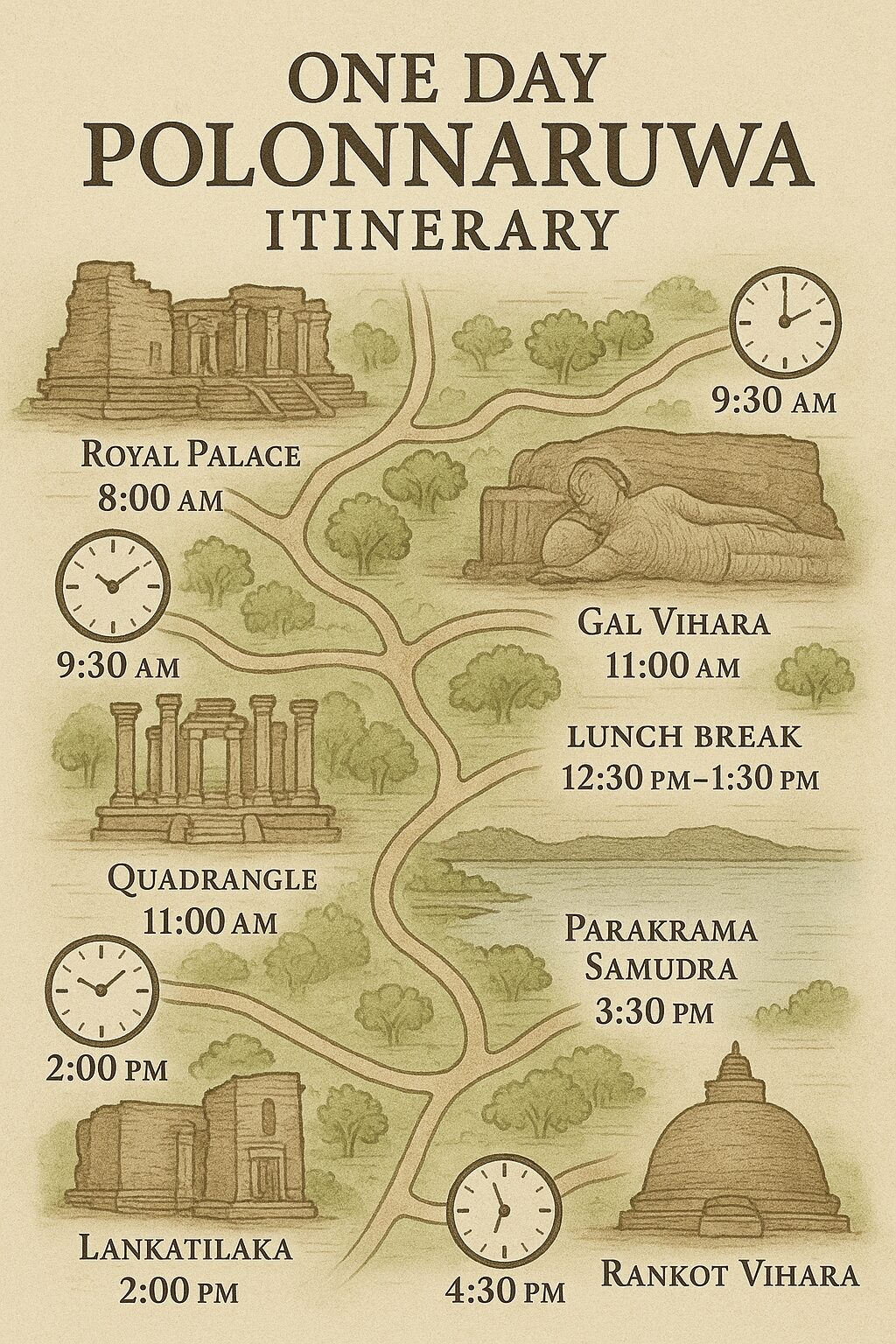
How to Explore the Ancient Capital in a Single Day
A one day visit to Polonnaruwa Sri Lanka can feel complete if you follow a simple route. Although the ancient city stretches across a wide area, the zones connect smoothly. Because of this, you can see the main attractions without rushing, as long as you begin early and move with a steady plan. Moreover, this itinerary balances history, scenery, and breaks, making your day both enjoyable and manageable.
Morning: The Royal Complex and the Sacred Quadrangle
Start Early for Cooler Temperatures
Begin your day before the heat rises. Early morning light softens the ruins and makes the first hours calm and comfortable.
Your first stops:
-
The Royal Palace
-
The Council Chamber
-
The bathing ponds
-
The Sacred Quadrangle
-
The Vatadage and nearby shrines
This section offers detailed carvings, quiet pathways, and some of the city’s most significant historic structures.
Why Begin Here
The Royal Complex and the Sacred Quadrangle sit close together, which helps you explore quickly. Moreover, the soft morning light highlights carvings and stone textures beautifully.
Late Morning: Move Toward the Northern Monuments
A Smooth Transition Into Wider Spaces
After finishing the central zones, follow the main path toward the northern section. This area feels open, and the shift from clustered ruins to wider ground creates a relaxing change.
Key stops include:
-
Rankoth Vehera
-
Kiri Vehera
-
Lankathilaka Image House
Because these monuments appear across more spacious areas, you can explore without feeling crowded.
Midday: Visit Gal Vihara
One of the Most Iconic Sites in Polonnaruwa Sri Lanka
Gal Vihara stands as a highlight of the ancient city. The rock–cut statues reflect remarkable craftsmanship and create a peaceful environment. Although the midday heat increases, the site still feels manageable because of its open layout.
Take your time to see:
-
The seated meditation statue
-
The standing figure
-
The reclining Buddha
-
The smaller sheltered image
Because the site offers shade and open space, it gives you a comfortable break before the final part of the day.
Afternoon: Explore the Quiet Outer Ruins
A Slower Pace With Fewer Crowds
After visiting Gal Vihara, move toward the less visited outer ruins. These areas provide quiet corners, small shrines, and natural scenery.
You may see:
-
Stone bases surrounded by trees
-
Simple shrines with gentle light
-
Long paths with fewer visitors
These moments help balance your day and keep the rhythm steady.
Evening: Relax Near Parakrama Samudra
A Calm Ending With Soft Light
Finish your day near the reservoir. As the sun lowers, the light grows warm and the breeze strengthens. This creates a peaceful atmosphere that helps you unwind after exploring the ancient city.
You can enjoy:
-
Calm water reflections
-
Fishermen preparing for the evening
-
Gentle sounds of birds
-
A slow, scenic end to your visit
This final stop helps you appreciate the natural side of Polonnaruwa Sri Lanka.
Why This One Day Itinerary Works
This route follows a natural flow from the busy historic zones to quiet spaces and finally to the open water. Because everything connects smoothly, you avoid unnecessary walking and enjoy the best parts of the ancient capital without stress. As a result, your one day visit becomes balanced, complete, and memorable.
Two Day Polonnaruwa Itinerary

A Slower, Deeper Way to Explore the Ancient City
A two day visit gives you the time to enjoy Polonnaruwa Sri Lanka at a relaxed pace. Instead of moving quickly from site to site, you can explore each zone more deeply. This approach also allows you to appreciate the hidden corners, the quiet paths, and the natural scenery around the reservoir. Moreover, spreading your journey across two days reduces heat stress and gives you more space to enjoy the city’s rhythm.
Day One: Core Monuments and Cultural Highlights
Morning: Begin With the Royal Complex
Soft Light and Calm Surroundings
Start early to enjoy the cooler air. The Royal Complex sits near the entrance and offers a gentle introduction to the ancient capital.
Visit:
-
The Royal Palace
-
The Audience Hall
-
The bathing pond area
-
The foundations of royal buildings
Because morning light highlights carvings and stone textures, this becomes one of the most rewarding periods of the day.
Late Morning: Explore the Sacred Quadrangle
A Dense Cluster of Historic Sites
Next, move into the Sacred Quadrangle. This zone holds several important monuments within a compact space, making it ideal for steady, unhurried exploration.
Highlights include:
-
The Vatadage
-
Thuparama
-
Hatadage
-
The central shrine platforms
Although the area is small, the craftsmanship here stands out clearly.
Afternoon: Walk Toward Rankoth Vehera and Kiri Vehera
Open Ground and Spacious Movement
After lunch or a short break, continue north toward the larger stupas. The open landscape allows you to walk or cycle comfortably, even in warm conditions.
Stops include:
-
Rankoth Vehera
-
Kiri Vehera
-
Nearby quiet ruins
Since these stupas sit in wide spaces, the atmosphere feels peaceful.
Evening: Relax by Parakrama Samudra
A Gentle End to the Day
Finish your first day near the reservoir. The sky softens, the breeze increases, and the water reflects warm colors.
Enjoy:
-
Sunset views
-
Light wind across the water
-
A calm environment after a full day
This ending sets a comfortable rhythm for day two.
Day Two: Northern Monuments and Natural Spots
Morning: Visit Gal Vihara
One of the Most Iconic Sites in Polonnaruwa Sri Lanka
Begin day two with Gal Vihara. Because the site becomes busier later, an early visit gives you a quiet and meaningful experience.
Take your time with:
-
The seated Buddha
-
The standing figure
-
The reclining statue
-
The smaller sheltered image
Moreover, the morning shade helps keep the area cool.
Late Morning: Explore the Northern Shrines
Smaller Sites With Calm Surroundings
Move beyond Gal Vihara toward the lesser-known northern ruins. Although they attract fewer visitors, they offer quiet beauty and natural balance.
You may find:
-
Tree-covered stone bases
-
Hidden shrines
-
Peaceful paths
-
Gentle natural light
These smaller stops add texture to your journey.
Afternoon: Discover Outer Ruins and Lakeside Corners
A Slower Phase of the Day
After lunch, explore the outer areas of Polonnaruwa Sri Lanka. These sections reveal simple, untouched spaces that contrast with the main monuments.
Expect:
-
Natural shade
-
Light breezes
-
Smaller archaeological remains
-
Paths leading toward small lakes
Because the pace is slower, this part of the day feels restful.
Evening: Return to the Reservoir or Explore the Town
Two Good Options for Winding Down
You can choose between another sunset near Parakrama Samudra or a gentle walk through the town area.
Both offer:
-
A slow, relaxing finish
-
Light activity after a warm day
-
Local scenes and a quieter mood
Either option completes your two day visit smoothly.
Why This Two Day Itinerary Works
This plan gives you time to enjoy both the famous monuments and the quieter corners of Polonnaruwa Sri Lanka. By dividing the zones naturally between the two days, you reduce travel stress and increase the quality of your experience. As a result, you see the ancient city with clarity, comfort, and a deeper sense of connection.
Final Travel Tips for Polonnaruwa Sri Lanka

Small Details That Improve Your Entire Trip
A smooth visit to Polonnaruwa Sri Lanka depends on the little choices you make throughout the day. Although the region is easy to explore, a few practical tips help you stay comfortable, avoid heat, and enjoy the ancient city at your own pace. Because the weather, layout, and distances are unique, preparing well makes a noticeable difference.
Plan Around the Weather
Early Hours Always Work Best
The dry zone climate grows warm quickly. Therefore, starting early helps you avoid strong heat and enjoy soft morning light.
Keep in mind:
-
Begin your exploration around sunrise
-
Visit shaded sites during midday
-
Save open areas for later in the afternoon
-
Carry water at all times
This simple rhythm keeps your energy steady.
Wear Light and Comfortable Clothing
Clothes That Suit the Dry Zone
Because temperatures remain warm, lightweight clothing works best. Natural fabrics help you stay cool and move comfortably through the ruins.
Useful items include:
-
Light cotton shirts
-
Breathable trousers or shorts
-
Comfortable walking shoes
-
A hat for sun protection
These choices also help you enjoy cycling routes more comfortably.
Respect Sacred Sites
Gentle Behavior in Historic Spaces
Polonnaruwa Sri Lanka includes several sacred temples and religious monuments. Although the sites feel open, respectful behavior remains important.
Remember to:
-
Avoid loud conversations near shrines
-
Remove hats at sacred spaces when appropriate
-
Avoid touching statues
-
Keep photography gentle and mindful
This respect preserves the atmosphere for everyone.
Stay Hydrated and Take Breaks
Managing Heat the Easy Way
Because the climate gets warm, taking small breaks becomes essential. Sitting in shaded areas helps you recover quickly without interrupting your route.
Stay prepared by:
-
Carrying a bottle of water
-
Taking short rests under trees
-
Moving slowly through open ground
-
Eating light snacks to maintain energy
These habits make your day smoother.
Use Bicycles for Longer Routes
A Simple Way to Reduce Fatigue
Cycling remains the most efficient way to explore Polonnaruwa Sri Lanka. The paths are flat, and bicycles help you cover long distances with less effort.
Choose cycling when:
-
You want to see many sites in one day
-
You prefer a flexible pace
-
You want to enjoy open scenery
-
You want to avoid long walks in heat
Overall, cycling improves the entire experience.
Keep Essential Items Handy
Small Things That Make a Big Difference
Certain items help you stay prepared throughout the day.
Useful essentials include:
-
Sunscreen
-
A small umbrella or cap
-
Phone charger or power bank
-
Snacks for quick energy
-
A light backpack
These items keep your trip comfortable and stress free.
Why These Tips Matter
Each of these suggestions helps you experience Polonnaruwa Sri Lanka with ease and clarity. The ancient city offers wide spaces, rich history, and peaceful moments — and with a bit of preparation, you can enjoy all of it without feeling rushed or overwhelmed. As a result, your time in Polonnaruwa becomes more meaningful, comfortable, and enjoyable from start to finish.
If you’re exploring more of Sri Lanka’s heritage sites, follow our complete Sri Lanka Cultural Triangle Itinerary, which connects Polonnaruwa with Sigiriya, Dambulla, and other ancient capitals.
Frequently Asked Questions About Polonnaruwa Sri Lanka
General Questions
Polonnaruwa stands out because it blends history, nature, and daily life in a calm and balanced way. Although it is an ancient city, it still feels alive. The ruins are well preserved, and the surrounding landscapes add a peaceful atmosphere.
One full day is enough for a complete overview, while two days allow a slower, deeper experience. With two days, you can enjoy both the main monuments and the quieter areas around the reservoir.
Yes, the region is safe and welcoming. However, as with any trip, it’s best to keep your belongings secure and stay aware of your surroundings. The roads are calm, and the tourist areas remain well maintained.
Planning and Timing
The cooler months from October to January offer the most comfortable weather. Even so, you can visit any time of year if you plan your day around the heat. Early mornings and late afternoons remain the most pleasant.
Start around sunrise. The light stays soft, the temperature remains mild, and the sites feel quiet. Because the dry zone heats up quickly, early exploration improves your overall experience.
A guide is not required. Many visitors explore on their own using maps or cycling routes. However, hiring a guide can provide additional historical insight and help you discover small details you might miss.
Transport and Cycling
Yes, cycling is often the most efficient and enjoyable method. The paths are flat, and you can move easily between attractions. Moreover, cycling saves energy during warmer hours.
Bicycles are available at guesthouses, rental shops, and small stores near the ancient city entrance. Rentals are reasonably priced, and most include basic instructions.
Yes, but the distances between zones can be long. Walking works best if you focus on one or two sections and take breaks under shade.
Monuments and Attractions
The top attractions include the Sacred Quadrangle, Gal Vihara, Rankoth Vehera, and the Royal Complex. These sites offer a clear look into the city’s architectural and cultural strength.
Most visitors spend 45 to 60 minutes here. Although the area is compact, the monuments are detailed and worth viewing carefully.
It can become busy, especially in the late morning. Visiting early helps you enjoy the statues with fewer people around.
Wildlife and Nature
You may see herons, kingfishers, egrets, cormorants, and sometimes monitor lizards. Additionally, the reservoir attracts dragonflies and small fish that bring life to the shoreline.
Yes, it is safe. The paths are open and calm. However, it’s best to avoid walking too close to the edge during rainy periods.
Accommodation Questions
The best areas include the zones near the ancient city, the reservoir area, and the main town. Staying near the ruins offers convenience, while the reservoir provides scenic views and calm surroundings.
Yes, many affordable guesthouses offer clean rooms, friendly hosts, and easy access to main attractions. These stays work well for solo travelers and backpackers.
Several hotels provide larger rooms, safe environments, and helpful services. These places suit parents looking for comfort and a quieter setting.
Yes, Polonnaruwa offers both. Luxury resorts provide more comfort, while eco lodges offer natural surroundings and peaceful spaces.
Practical Tips
Light clothing works best due to the warm climate. Comfortable walking shoes and a hat help you move through the ruins more easily.
Yes, always carry water. The heat builds quickly, especially between late morning and early afternoon.
There are no restaurants inside the archaeological zone. However, several small eateries and snack shops sit along the main roads nearby.
You can purchase tickets at the main entrance without hassle. Lines are usually manageable, especially in the morning.
Cultural and Respectful Behavior
Yes, be respectful. Keep your voice low, avoid touching statues, and remove hats in sacred areas when appropriate. These gestures help maintain the site’s peaceful atmosphere.
You can take photos at most locations. However, be mindful near active worship areas. Always avoid climbing on monuments or stepping onto sacred platforms.
Polonnaruwa, a region full of heritage and charm, Sri Lanka welcomes you with a gentle calm that feels different from many other places in the country. As you approach the ancient city, the warm air and open landscape create a steady rhythm that encourages you to slow down. Sunlight moves through tall trees, glows across old stone walls, and reveals wide spaces shaped by centuries of history. Because of this, many travelers feel an immediate connection before they even explore first site.
Finding the right place to stay makes exploring Polonnaruwa easier and more affordable, and this guide focuses specifically on budget-friendly options suited for backpackers and independent travelers: Cheap Hotels in Polonnaruwa Sri Lanka.
First Impressions That Stay With You
Although most visitors come knowing Polonnaruwa is a UNESCO World Heritage Site, the experience often goes beyond expectations. The ancient ruins stand quietly across the dry zone, yet the surroundings remain full of life. Families sit by the reservoir in the evening. Monkeys wander along the edges of the temples. Meanwhile, cyclists follow narrow paths that curve through open fields. These everyday scenes blend naturally with the historic structures, which makes the ancient city feel lived-in rather than distant.
To plan your visit more efficiently and understand how the ancient city is laid out, this detailed Polonnaruwa travel map for major attractions provides a clear overview of zones, distances, and routes.
Why This Guide Helps You Explore Confidently
The entire region stretches over a large area, and many important sites sit in separate zones. Because of this wide layout, planning your route makes a big difference. A clear guide saves time, prevents unnecessary backtracking, and ensures you see both the major attractions and the smaller places travelers often miss. Moreover, it helps you understand how the ancient kingdom functioned, which adds depth to your visit.
What You Will Discover in This Guide
This pillar article brings together everything you need for a complete and enjoyable experience. As you read, you will find:
-
A clear explanation of the city’s layout
-
The history behind the ancient capital
-
Reasons why Polonnaruwa still matters today
-
The best times to visit based on weather and light
-
Different routes for reaching the region
-
Main attractions with practical insights
-
Hidden spots worth noticing along the way
-
Travel tips that help your day run smoothly
Each section builds on the previous one so you can move through the city with a sense of flow. As a result, the guide offers a balanced view of Polonnaruwa Sri Lanka — one that shows the historic depth of the ruins while highlighting the calm, everyday life surrounding them.
Why Polonnaruwa Sri Lanka Matters
A Capital That Shaped the Island’s Story
Polonnaruwa Sri Lanka represents one of the most stable and influential periods in the country’s past. Although earlier kingdoms faced conflict and decline, this ancient capital brought new structure and confidence. As you move through the ruins, you can sense the careful planning that guided the rulers who built it. Each temple, hall, and pathway reflects an intention to create a strong and unified city.
A Vision Built on Order and Community
The development of Polonnaruwa did not happen randomly. Instead, leaders arranged the capital with clear zones for worship, governance, and everyday life. Sacred monuments stood near markets. Meeting halls sat close to residential areas. As a result, the city worked as a connected whole, where people lived, traded, prayed, and gathered within a short distance of one another.
Engineering That Transformed the Dry Zone
Water shaped the identity of the kingdom. Since the dry zone climate brought limited rainfall, rulers created an advanced irrigation system to support life throughout the year. Their work turned the landscape into productive farmland and ensured steady food supplies.
Key elements of the system included:
-
Large reservoirs that stored seasonal rain
-
Channels that carried water across long distances
-
Smaller tanks that supported nearby villages
-
A network that connected each part of the region
Because of this innovation, the city could grow without depending heavily on unpredictable weather.
The Role of Parakrama Samudra
At the heart of the system, you find Parakrama Samudra, one of the most important reservoirs in Sri Lanka. Its size and design show the ambition of the ancient engineers. Even today, it continues to feed fields and support daily life. When you stand near the water, you understand how essential it was to the success of the old capital.
A Heritage Site That Still Feels Alive
Although Polonnaruwa is an ancient city, it does not feel abandoned. Instead, modern life moves quietly around the ruins. Children cycle past old walls on their way to school. Fishermen work along the reservoir. Monks walk between temples during their daily routines. These moments give the area a warm, grounded feeling. They remind you that the city has been part of people’s lives for many centuries.
A Bridge Between the Past and the Present
One of the most meaningful things about Polonnaruwa Sri Lanka is the way ancient and modern elements exist together. The city still supports communities, farms, and religious activities. As you explore, you move through a space where history is preserved but not separated from everyday life. This balance makes the experience more authentic and helps you appreciate how the past continues to shape the region today.
Polonnaruwa is recognized as a UNESCO World Heritage Site, and you can explore the official listing here: UNESCO World Heritage Site
Understanding the Layout of Polonnaruwa Sri Lanka
Why the Layout Helps You Explore Better
Polonnaruwa Sri Lanka stretches across a wide landscape, and its ancient sites sit in carefully arranged zones. Because the city was planned with both spiritual and practical needs in mind, the layout still feels organized. When you understand how each area connects, your visit becomes smoother and more enjoyable. Moreover, it helps you explore with confidence, since you can plan your time around distance, light, and movement.
The Sacred Quadrangle
This compact area forms the spiritual heart of the ancient capital. It holds a cluster of important monuments, all within a short walk of each other. As a result, many travelers begin their journey here.
Inside the Sacred Quadrangle, you will find:
-
Temples with detailed stone carvings
-
Platforms used for ceremonies and rituals
-
Shrines built with remarkable precision
-
Pathways linking each structure neatly
Although the space is small, the depth of craftsmanship is impressive. Every structure contributes to the sense of sacredness that defines the area.
The Northern Monuments
The northern section feels more open and less crowded. The land widens, and the sites appear in calm, natural surroundings. This zone holds several key monuments that attract travelers from around the world.
Highlights include:
-
Large rock-carved statues
-
Wide paths bordered by trees
-
Iconic sites such as Gal Vihara
-
Quiet spots ideal for reflection
Because the monuments stand across open ground, the atmosphere remains peaceful. You can take your time without feeling rushed by crowds.
Within the Sacred Quadrangle, the quiet stone shrine of Shiva Devalaya Polonnaruwa reflects the rare Hindu presence inside a predominantly Buddhist royal city.
The Royal Complex
Located closer to the center, the royal district once served as the administrative core of the kingdom. Even though the structures now appear in ruins, their foundations show the scale of the city’s political life.
You can still see:
-
The broad base of the royal palace
-
Stone pillars from large audience halls
-
Pathways that connected leadership areas
-
Remains of structures that once supported governance
The layout here helps you imagine how the ancient rulers worked, planned, and led their people.
Parakrama Samudra and the Surrounding Grounds
The edge of the ancient city meets the waters of Parakrama Samudra, a massive reservoir that shaped life in the region. This area feels open and calm, and the water adds a steady, peaceful rhythm to the landscape.
Around the reservoir, you will find:
-
Walking paths with wide views
-
Soft breezes that ease the midday heat
-
Resting spots with clear sightlines
-
A quiet atmosphere perfect for ending your day
Because the reservoir remains essential to the area, it keeps the connection between past and present strong.
Moving Between the Main Zones
Distances between sections can be longer than they appear on a map. Therefore, planning your route saves time and prevents unnecessary walking. Many travelers choose to cycle, since it allows a smoother flow between sites. Walking is still possible, although it requires more time and pacing. With a simple plan, you can move through the entire city without backtracking.
Best Time to Visit Polonnaruwa Sri Lanka
Understanding the Local Climate
Polonnaruwa Sri Lanka sits in the dry zone, which means the area enjoys warm weather almost all year. Although temperatures stay steady, certain months feel more comfortable than others. Because of this, choosing the right time can make your visit smoother and more enjoyable, especially if you plan to explore large sections of the ancient city.
Weather Patterns Throughout the Year
The conditions change gently from season to season, yet each period offers its own advantages.
June to September:
-
Days become dry and warm
-
Skies remain clear with strong sunlight
-
Early mornings feel fresh and pleasant
-
Midday heat builds quickly
This period suits travelers who prefer bright days and dry ground, although shaded breaks become important.
October to January:
-
Temperatures ease slightly
-
Light showers appear but rarely last long
-
Air feels cooler and softer
-
Cycling becomes more comfortable
Many visitors consider these months the best balance between comfort and predictable weather.
February to May:
-
Warmth returns, though evenings stay mild
-
Conditions remain steady and manageable
-
The landscape feels open and quiet
This period works well for travelers who enjoy stable, warm weather without heavy crowds.
The Light That Enhances the Ruins
The ancient sites reveal their beauty differently depending on the time of day. As a result, planning around natural light can improve your experience.
Morning light offers:
-
Clear visibility
-
Soft shadows across stonework
-
Cooler temperatures
-
Ideal conditions for photography
Evening light brings:
-
Gentle tones across the ruins
-
A warm glow over the reservoir
-
A calm atmosphere with fewer visitors
These times allow you to appreciate the details of the structures without harsh sunlight.
Choosing the Ideal Period for Your Trip
Your decision depends on your comfort level and travel style.
Visit from October to January if you prefer:
-
Cooler weather
-
Balanced light throughout the day
-
Easy walking and cycling conditions
Visit from June to September if you enjoy:
-
Bright, cloudless days
-
Dry paths and clear ground
-
A stronger dry-zone feel
No matter the month, planning your exploration around early mornings and late afternoons ensures a smoother experience. Moreover, these times let you enjoy Polonnaruwa Sri Lanka while the landscape feels calm and inviting.
How to Reach Polonnaruwa Sri Lanka
Main Travel Routes Into the Region
Reaching Polonnaruwa Sri Lanka is straightforward because several transport options connect the area to major cities. Although the journey may be long depending on your starting point, the roads remain reliable and the scenery changes beautifully as you approach the dry zone. Since travel styles vary, choosing the right route helps you begin your visit in a relaxed state.
Reaching Polonnaruwa From Colombo
Colombo remains the most common starting point for many travelers. As you leave the coast and head inland, the scenery shifts from busy streets into open fields and quiet villages. Several transport options connect the capital to the ancient city, each offering a different style of travel.
Bus travel
-
Frequent services operate on the Colombo–Batticaloa route
-
The full journey usually takes 5 to 6 hours
-
Tickets are affordable and widely available
-
This option suits travelers who want a simple local experience
Train journey
-
The Batticaloa line links Colombo directly to Polonnaruwa
-
Expect a travel time of about 6 to 7 hours
-
Views include farmland, water bodies, and small rural towns
-
Booking in advance is useful during weekends and holidays
Traveling by car or taxi
-
Driving generally takes 4 to 5 hours depending on traffic
-
The comfort level suits families or groups
-
The route allows flexible stops for meals or breaks
-
This option works best for travelers who prefer privacy and convenience
Traveling From Kandy, Sigiriya, and Dambulla
These routes feel shorter and smoother because they remain within the central region.
From Kandy:
-
Roughly 3.5 to 4 hours by car
-
Roads pass through green hills and small towns
-
Suitable for combining with cultural sites in the hill country
From Sigiriya or Dambulla:
-
Around 1.5 to 2 hours
-
Quick and direct
-
Ideal for travelers exploring several ancient cities in one trip
These inland routes offer less travel stress and plenty of scenic moments.
Choosing the Best Transport Option
Each method suits a different travel style, so think about what matters most to you before deciding.
Bus fits your plan
-
A lower cost option
-
Plenty of departure times
-
A typical Sri Lankan travel atmosphere
Train feels right
-
Wide scenic views
-
A slower, relaxed pace
-
More room to move and enjoy the journey
A car or taxi works better
-
Higher comfort
-
Direct travel without transfers
-
Full control over your schedule
Regardless of which option you choose, the final stretch into Polonnaruwa offers long views, warm breezes, and the first signs of the ancient city waiting ahead.
Exploring the Main Zones of Polonnaruwa Sri Lanka
A City Built With Clear Purpose
Polonnaruwa Sri Lanka was not a city that grew randomly. Instead, it developed along an organized plan that grouped temples, royal buildings, and community spaces into specific areas. This planning helps modern visitors move through the ancient city with ease. Moreover, it explains why certain attractions appear close together while others sit across wide open ground.
The Sacred Quadrangle
A Spiritual Center With High Craftsmanship
The Sacred Quadrangle forms one of the most important clusters in the entire ancient capital. Although the area is compact, it holds several remarkable monuments, each showcasing skilled stonework and a strong sense of devotion. Because the structures sit close to each other, you can explore them without long gaps between sites.
Inside this zone, you will see:
-
Well-preserved temples
-
Raised platforms with fine carvings
-
Shrines built on symmetrical foundations
-
Pathways that link each structure naturally
As a result, the Sacred Quadrangle creates a strong first impression and sets the tone for the rest of the visit.
The Northern Monuments
Open Spaces and Iconic Ruins
The northern zone shifts into a more open landscape. The monuments appear across wide spaces, which adds a sense of calm. Moreover, this section includes some of the most admired attractions in Polonnaruwa Sri Lanka.
Highlights include:
-
Impressive rock-cut statues
-
Long walking paths shaded by trees
-
The famous Gal Vihara with its detailed craftsmanship
-
Quiet corners ideal for reflection and rest
Because the northern section feels spacious, it encourages visitors to slow down and enjoy the scenery.
The Royal Complex
The Administrative Heart of an Ancient Kingdom
The royal district once served as the center of political life. Although many structures now stand in ruins, their foundations show the grand scale of the ancient capital.
You will find:
-
The remains of the royal palace
-
Stone pillars that once supported large halls
-
Pathways that connected important government spaces
-
Wide foundations that reveal the size of former buildings
This area helps you imagine how leaders managed the kingdom and how daily administrative tasks shaped life during that era.
The Reservoir and Surrounding Grounds
A Landscape Defined by Water
Parakrama Samudra forms the edge of the ancient city and remains one of the most significant reservoirs in the region. Its presence brings a sense of openness and calm, especially during the golden hours.
Around the reservoir, you will notice:
-
Breezes that soften the afternoon heat
-
Views that stretch across open water
-
Resting spots perfect for breaks between site visits
-
A quiet environment that balances the energy of the ancient city
Because the reservoir still supports nearby communities, it strengthens the connection between history and present life.
Moving Smoothly Through the Zones
Planning Your Route for a Better Experience
The layout of Polonnaruwa Sri Lanka covers long distances, so it helps to plan before you start exploring. Walking is possible, although it requires steady pacing. Meanwhile, cycling offers an easier and more comfortable flow between sites.
To move smoothly:
-
Begin early to avoid heat
-
Follow a path that reduces backtracking
-
Take breaks near shaded areas
-
Explore the Sacred Quadrangle before crowds arrive
With simple planning, you can enjoy the entire city without feeling rushed or overwhelmed.
For choosing the best base close to the ancient sites, lake areas, and transport access, this guide to accommodation in Polonnaruwa explains the best hotels and guesthouses for different travel styles.
Top Attractions in Polonnaruwa Sri Lanka
Exploring the Heart of the Ancient Capital
Polonnaruwa Sri Lanka offers a collection of remarkable attractions that reveal the depth of the ancient kingdom. Each site carries its own atmosphere, and together they create a rich picture of the city’s history. Although the monuments sit across different zones, the overall experience feels connected and easy to follow once you understand the layout.
The Polonnaruwa Vatadage
A Circular Shrine With Remarkable Carving
The Vatadage stands as one of the most iconic structures in the entire ancient city. Its circular design is both elegant and unique. As you approach, you notice the fine carvings along the entrances and the symmetrical layout inside the structure.
Key features include:
-
A raised circular platform
-
Intricate moonstones at the entrances
-
Stone pillars arranged in precise lines
-
A central shrine area that once held sacred images
Because of its beauty and craftsmanship, the Vatadage often becomes a favorite site for travelers.
This is my favorite of the Polonnaruwa ruins. It is particularly famous for its unique circular architecture, but it is also a must-see with a variety of interesting buildings around it. Read more reviews on Tripadvisor
One of the most spiritually powerful landmarks inside the Sacred Quadrangle is the Polonnaruwa Vatadage, a beautifully preserved circular relic house surrounded by intricate stone carvings and seated Buddha statues. You can explore its full history, ticket details, and visiting tips in this complete guide: Visit here
Gal Vihara
Stone-Carved Statues That Reflect Spiritual Depth
Gal Vihara is one of the most admired attractions in Polonnaruwa. This rock temple features four statues carved from a single granite outcrop. Each statue reflects a different posture and meaning, and together they create a peaceful setting.
The statues include:
-
A standing figure with gentle features
-
A seated Buddha in deep meditation
-
A reclining Buddha that represents calm and compassion
-
A smaller, sheltered seated figure
Because the site feels quiet and open, many visitors spend extra time here.
One of the main reasons I include Polonnaruwa in the itinerary of a Sri Lankan Holiday is to visit the ancient carvings of Lord Buddha at Gal Vihara, Polonnaruwa, Sri Lanka. Read more reviews on Tripadvisor
Lankathilaka Image House
A Towering Brick Structure With Strong Presence
Lankathilaka Image House stands out due to its impressive height and thick walls. Although the roof no longer exists, the structure still feels grand. Its tall entranceway and carved details show the skill of the artisans who built it.
You will notice:
-
The remains of large brick walls
-
Tall pillars leading to the inner chamber
-
A sense of scale that reveals the importance of the site
Moreover, the surrounding area stays peaceful, which adds to the experience.
Impressive from every angle. The huge statue is the centrepiece, but don’t forget to explore the outer walls too. Read more reviews on Tripadvisor
Rankoth Vehera
A Monument Honoring Ancient Architectural Skill
Rankoth Vehera is one of the largest stupas in Polonnaruwa Sri Lanka and remains an important religious structure. Its wide base and rounded shape create a strong visual presence that draws visitors from across the site.
Highlights include:
-
A commanding stupa with a broad footprint
-
A clean, open space around the structure
-
A spiritual calm that encourages slow movement and reflection
Because of its size, Rankoth Vehera stands as a symbol of the city’s religious dedication.
Polonnaruwa is mind-boggling with its beauty, religion and cultural significance. Rankoth Vehera is a prime example. Read more reviews on Tripadvisor
One of the most powerful symbols of Buddhist devotion in the ancient city is Rankoth Vehera Polonnaruwa, a massive stupa built by King Nissanka Malla that still stands as a sacred landmark for visitors and worshippers today.
Kiri Vehera
A Stupa With a Quiet Surrounding
Kiri Vehera rests in a quieter part of the city, which gives the site a peaceful character. Its white plaster once stood out against the landscape, and although time has changed its surface, the structure still holds a graceful simplicity.
Visitors often appreciate:
-
The calm atmosphere
-
The open space around the stupa
-
The soft light that falls across the area during the afternoon
This makes Kiri Vehera a meaningful stop during your route.
Beautiful stupas and monuments abound in the area. Polonnaruwa is a visual and cultural treat. Go ahead and explore! Read more reviews on Tripadvisor
Shiva Devalaya
A Glimpse Into the City’s Cultural Diversity
Shiva Devalaya represents the Hindu presence in Polonnaruwa. The structure includes details linked to Hindu worship and stands as a reminder of the cultural mix that shaped the ancient capital.
You will see:
-
Carved stone frames
-
Shrines with distinct architectural elements
-
A different style compared to the Buddhist monuments
Because it adds variety to the exploration, many travelers appreciate this shift in atmosphere.
As you go around Polonnaruwa and enjoy the Buddhist themes of the place and its monuments, the Shiva temple (which highlights the Hindu influence on the place) adds to the lure. Read more reviews on Tripadvisor
For travelers who want to experience a quieter, more enclosed sacred space, the Lankathilaka Image House Polonnaruwa offers a deeply reflective visit inside the Sacred Quadrangle.
Quiet Places That Many Travelers Miss
Although Polonnaruwa Sri Lanka is known for its major temples and ruins, the city also holds smaller spots that offer a deeper sense of connection. These hidden corners appear away from the usual paths, and they often stay quiet even during busy hours. Because of this, they give you moments of calm that balance the energy of the main sites.
Lesser Known Monuments and Silent Corners
Riverside Trails Near Parakrama Samudra
The reservoir is famous, yet the walking paths along its quieter edges remain overlooked. These spots feel peaceful, especially during early mornings.
You can expect:
-
Cool breezes from the water
-
Long views with soft reflections
-
A calm atmosphere away from crowds
-
Occasional birds resting near the shore
Moreover, these trails offer a refreshing break before or after visiting the main monuments.
Small Shrines Near the Northern Zone
Not far from the larger monuments, you find smaller shrines hidden among trees and open ground. Although they receive fewer visitors, they carry their own charm.
Here you may notice:
-
Stone bases partly covered by roots
-
Simple carvings that remain intact
-
Open spaces with natural shade
These places add a gentle, reflective mood to your journey.
Natural Spots That Add Balance
Tree-Lined Paths Between Ruins
Several connecting paths run through shaded areas. Because they sit between major zones, travelers often walk past them without stopping. However, these paths provide moments of quiet and feel cooler than the open ground.
They offer:
-
Soft light through tree branches
-
Occasional wildlife
-
Space to rest your footsteps
-
A slower rhythm compared to main roads
These little pauses make your overall visit smoother.
Lakeside Corners Away From the Main Route
The region contains more than one body of water. Some lakes lie behind clusters of ruins, and although they remain small, they create gentle scenery.
You might find:
-
Still water surrounded by green edges
-
Small fishing spots used by locals
-
Clear reflections during the late afternoon
Because these lakes sit away from the main path, they feel untouched and quiet.
Why These Spots Matter
Hidden areas help you experience the city differently. They bring balance, especially after exploring the major monuments. In addition, they reveal how the ancient capital once connected urban spaces with natural surroundings. As you move between well-known sites and quiet corners, you feel a deeper sense of how Polonnaruwa Sri Lanka functioned as a living city.
Best Things to Do in Polonnaruwa Sri Lanka
Experiences That Bring the Ancient City to Life
Polonnaruwa Sri Lanka offers far more than a sequence of ruins. Although the historic sites form the foundation of your visit, the activities around the city give you a richer experience. These moments help you connect with the surroundings, and they reveal how the ancient capital blends with modern life. Because of this, the things you do in the city matter as much as the places you see.
Explore the Ancient City by Bicycle
To understand how kings once ruled this powerful city, a visit to the Royal Palace Polonnaruwa offers a clear picture of royal life, governance, and ancient engineering.A Relaxed Way to See More in Less Time
Cycling remains one of the most enjoyable ways to explore the ancient capital. The paths are mostly flat, and the distance between zones becomes much easier to manage on two wheels. Moreover, cycling allows you to move at your own pace and stop whenever something catches your eye.
You can enjoy:
-
Smooth routes between major attractions
-
Shade from trees along several paths
-
More time saved for detailed exploration
-
A steady rhythm that suits the dry zone climate
Because bicycles are widely available for rent, you can begin almost immediately after arriving.
Walk Through the Sacred Sites
Slower Movement With Deeper Insight
Walking through the ancient areas brings a different kind of experience. Although it takes more time, each step gives you a closer look at the carvings, textures, and details that define the ruins. Furthermore, walking lets you notice quiet corners you might miss while cycling.
Walking helps you:
-
Pause for detail when needed
-
Take photographs with ease
-
Experience the quiet atmosphere fully
-
Move gently through sacred spaces
This method works best in the early morning or late afternoon when the heat stays softer.
Spend Time Near Parakrama Samudra
A Calm Setting With Wide Views
The reservoir adds balance to your day. After exploring ruins, stopping near the water brings a refreshing change. Since the area stays open and breezy, it becomes a comfortable place to slow down.
You may find:
-
Pleasant wind in the late afternoon
-
Fishermen preparing their nets
-
Water birds resting near the shore
-
Soft colors during sunset
This spot helps you end your day with calm surroundings.
Visit Smaller Shrines and Quiet Ruins
A Break From the Main Paths
Polonnaruwa holds several smaller monuments that many visitors pass quickly. Although they are less dramatic than the main attractions, these sites offer peaceful breaks.
You may notice:
-
Stone bases hidden among trees
-
Simple carvings that show daily life
-
Untouched spaces with steady shade
-
A gentle atmosphere away from larger crowds
These places help you appreciate the broader scale of the ancient city.
Experience Local Life Around the City
Modern Rhythm Beside Historic Walls
The city around the ruins holds its own charm. Although it appears simple at first, spending a little time here helps you understand the community that still depends on this region. Small shops, lakeside corners, and quiet roads offer moments that bring the area’s character into focus.
You can enjoy:
-
Local snacks near the main road
-
Small shops with crafts and handmade items
-
Friendly daily interactions
-
A slower pace that fits the dry zone lifestyle
These scenes show how modern life continues alongside the ancient heart of Polonnaruwa Sri Lanka.
Cycling Routes in Polonnaruwa Sri Lanka
Why Cycling Fits the Ancient City
Cycling has become one of the most popular ways to explore Polonnaruwa Sri Lanka. The city’s layout stretches across wide areas, yet the paths remain mostly flat and smooth. Because of this, cycling allows you to cover more ground without losing the quiet atmosphere that makes the ancient capital special. Moreover, the freedom to stop anywhere adds a flexible rhythm to your day.
Finding Bicycles Around the City
Easy Renting Options for All Travelers
You don’t have to search far to find a bicycle. Several guesthouses, small shops, and local rental points offer them at affordable rates. Additionally, most places provide simple instructions and maps so you can begin your route with little planning.
Common advantages include:
-
Quick renting without paperwork
-
Low daily cost
-
Multiple sizes and styles
-
Helpful local tips on route timing
Because bicycles are common in the region, you can switch or upgrade easily if needed.
Suggested Cycling Routes
The Classic Heritage Loop
This route takes you through the main attractions in a single, smooth circle. It works especially well for first–time visitors.
The loop usually includes:
-
The Sacred Quadrangle
-
The Royal Complex
-
Northern Monuments
-
Gal Vihara
-
The stretch toward Parakrama Samudra
Although the loop covers several zones, the journey stays comfortable with steady stops.
The Northern Trail
This route focuses on the quieter part of Polonnaruwa Sri Lanka. It is ideal if you want more space and fewer crowds.
You will pass:
-
Shaded tree lines
-
Open fields
-
Smaller shrines
-
Large scattered monuments
Because the northern zone offers natural beauty with less traffic, the ride feels calm and refreshing.
Tips for a Smooth Cycling Experience
Make the Most of the Cool Hours
The climate can warm up quickly, so timing matters. Early morning remains the best period to start your cycling route. Meanwhile, late afternoon offers soft light and gentler air.
For a smoother experience:
-
Begin early to avoid heat
-
Carry enough water
-
Take short breaks under shade
-
Use moderate speed to enjoy the surroundings
These small practices keep your energy steady throughout the day.
Staying Safe and Comfortable
Keep Your Ride Simple and Steady
Cycling through ancient terrain requires some awareness. Although the paths are mostly clear, a few sections include uneven stones or soft ground.
Stay prepared by:
-
Wearing a hat or cap for sun protection
-
Keeping your phone charged
-
Securing personal items in a small bag
-
Slowing down near crowded sections
These steps help you enjoy the day without distraction.
Why Cycling Enhances the Experience
Cycling lets you experience Polonnaruwa Sri Lanka in a more personal way. The gentle movement, the freedom to pause, and the ability to flow between sites create a journey that feels natural. You see both the large monuments and the small details, and each moment adds to your understanding of the ancient city.
Wildlife Around Parakrama Samudra
A Landscape Where Nature Stays Close
Parakrama Samudra shapes both the environment and the daily rhythm of Polonnaruwa Sri Lanka. Although the ancient reservoir served a practical purpose, it also created a habitat where wildlife continues to thrive. When you walk near the water, you notice how the area feels alive even during quiet hours. Moreover, the mix of water, open land, and scattered trees attracts many species that appear throughout the day.
Birds That Add Color to the Evenings
A Peaceful Spot for Watching Local Birdlife
Birds gather around the reservoir from morning until dusk. Because the water draws fish and insects, the shoreline becomes a natural feeding ground. As a result, you can see several types of birds without leaving the main paths.
Common sightings include:
-
Herons standing still near the shallows
-
Kingfishers flashing bright colors along branches
-
Egrets moving gracefully through tall grass
-
Cormorants drying their wings on warm rocks
Although these birds appear often, each sighting adds a gentle moment to your walk.
Animals Along the Water’s Edge
Small Creatures That Move Quietly
Aside from birds, smaller animals also use the reservoir for water and shade. The dry zone climate encourages certain species to remain near the lake, especially during warmer hours. Although many stay hidden, some appear if you move slowly and stay observant.
You may notice:
-
Monitor lizards sunbathing near the shore
-
Small fish moving close to the surface
-
Dragonflies hovering above the grass
-
Occasional squirrels darting near the trees
Because the area stays calm, these creatures continue their routines without much disturbance.
How Wildlife Blends With the Ancient Setting
Nature and Ruins Sharing the Same Space
One of the unique qualities of Polonnaruwa Sri Lanka is the way wildlife appears alongside its history. You might see a heron standing near an old stone wall or a monkey resting in the shade of a centuries-old temple. This blend of nature and heritage makes the experience more layered, especially during the quieter parts of the day.
This connection appears through:
-
Birds circling above the old city
-
Animals resting near pathways
-
Water reflections touching nearby ruins
-
Evening sounds rising as daylight fades
These moments add depth to your visit and help you appreciate how the ancient city still supports life today.
Best Times to See Wildlife
When the Area Feels Most Active
Wildlife movement shifts with the temperature and light. Because of this, certain times offer better chances to observe animals and birds comfortably.
Consider visiting during:
-
Early morning, when the air feels cooler
-
Late afternoon, when birds gather near the water
-
Sunset, when reflections create a calm scene
-
Post-rain moments, when the ground softens
These periods help you enjoy the natural side of Polonnaruwa without strong heat.
Why This Area Matters to Your Experience
Spending time near Parakrama Samudra adds a calming balance to your route. Although the ancient ruins carry history and structure, the water and wildlife bring gentle movement to the day. As a result, your visit becomes more rounded, allowing you to experience both the heritage and the living environment of Polonnaruwa Sri Lanka.
Local Food and Eating Around Polonnaruwa
Tasting the Flavors of the Ancient City
Food becomes a memorable part of any trip, and Polonnaruwa Sri Lanka offers dishes that reflect the region’s simple, warm character. Although the area is not filled with large restaurants, the small eateries and family-run places create meals that feel fresh and comforting. Moreover, the flavors suit the dry zone climate, with many dishes prepared using local vegetables, spices, and lake fish.
Classic Sri Lankan Dishes You Will Find
Simple Meals With Strong Local Influence
Many small restaurants and food stalls serve dishes that feel both familiar and unique. Since ingredients come from nearby farms and markets, the meals often taste fresh and well-balanced.
Common options include:
-
Rice and curry with seasonal vegetables
-
Fresh lake fish cooked with mild spices
-
Coconut sambol with gentle heat
-
Roti served with dhal or spicy gravy
Because these dishes rely on simple preparation, they keep their natural flavors.
Snacks and Light Bites
Quick Stops That Add Energy to Your Day
While exploring Polonnaruwa Sri Lanka, you often find small snack shops near the main roads. These places offer light bites that help you stay energized as you move between zones.
You may come across:
-
Vegetable buns
-
Soft kottu made with thin roti
-
Small cakes and sweet treats
-
Fruit stalls with bananas, papayas, or mangoes
These quick snacks help you continue your journey without slowing down.
Eating Near Parakrama Samudra
A Calm Setting With Local Choices
Some small eateries sit close to the reservoir. Although they appear simple, they offer peaceful views and fresh meals. Furthermore, the breeze from the water makes the experience more relaxing, especially in the late afternoon.
Expect options such as:
-
Fried lake fish with lime
-
Noodles with vegetables
-
Mild curries prepared with local produce
-
Cool drinks served in shaded areas
These spots give you a calming break between exploring nearby ruins.
Visiting Local Bakeries and Small Shops
Everyday Food With a Friendly Atmosphere
Local bakeries add another layer to your food experience. Although the items are simple, they reflect the daily eating habits of the community. Because these shops serve locals throughout the day, you often see fresh items coming out at different times.
Popular choices include:
-
Fresh bread with soft texture
-
Fish buns baked in small batches
-
Egg rolls with mild spice
-
Tea served in simple cups
Stopping at these bakeries gives you a good sense of the region’s daily rhythm.
What Makes Eating Here Special
Eating in Polonnaruwa Sri Lanka feels different because the meals are grounded in the land and its traditions. The food is not fancy, yet it carries warmth and a steady sense of comfort. Since most dishes rely on local ingredients, you get a taste of how people in the region cook, share, and enjoy food. Overall, these meals add a personal touch to your journey through the ancient capital.
Where to Stay in Polonnaruwa
Choosing the Right Area for Your Visit
Finding a comfortable place to stay can shape your entire experience in Polonnaruwa Sri Lanka. The region offers several types of accommodation, ranging from simple guesthouses to more comfortable hotels. Although the choices vary in style, most places remain close to the ancient city, which allows easy access to the main attractions. Because of this, choosing your base becomes simpler once you understand the strengths of each area.
Staying Near the Ancient City
A Convenient Option for Easy Exploring
Many travelers prefer accommodations close to the archaeological sites. This area offers quick access to the main entrance points, and it reduces travel time during busy hours. Moreover, the surroundings feel calm, especially during early mornings.
Benefits of staying here include:
-
Short distances to major ruins
-
Quiet mornings with light traffic
-
Easy cycling access
-
Several small shops nearby
This zone works well for travelers who want to spend most of their time exploring the ancient capital.
Staying Near the Reservoir
Peaceful Views and Steady Breezes
Some accommodations sit close to Parakrama Samudra. This area feels open and quiet, with wide views of the reservoir. Although the options vary, many places offer relaxing spaces and a cooler atmosphere in the evenings.
You can expect:
-
Breezes that soften the dry heat
-
Sunset views over the water
-
A calm setting away from the main road
-
Good access to cycling routes
Because the reservoir brings a gentle rhythm to the area, these stays feel peaceful.
Staying Within the Town Area
Convenience and Local Life
The central town area provides access to shops, restaurants, and transport. Although the setting feels more active, it remains a comfortable option for travelers who prefer convenience. Furthermore, you can reach the ancient city within a short drive or cycle.
You may find:
-
Easy access to daily essentials
-
Affordable meal options
-
Local bakeries and snack shops
-
Quick connections to nearby regions
This area works well if you prefer a mix of comfort and everyday activity.
Types of Accommodation Available
Guesthouses
These places feel friendly and homelike. Owners often prepare meals or offer local advice. Moreover, guesthouses usually remain budget-friendly.
They offer:
-
Clean rooms with basic amenities
-
Simple meals
-
Personal guidance from hosts
-
Quiet surroundings
Mid-range Hotels
These provide more comfort while still keeping prices reasonable. Many include air conditioning, larger rooms, and improved facilities.
You may get:
-
Comfortable beds
-
Private bathrooms
-
On-site dining areas
-
Better overall space
Eco Lodges and Resorts
These stays sit closer to natural areas and offer unique, peaceful environments. Although they cost more, they provide a deeper sense of relaxation.
They often include:
-
Open views
-
Natural surroundings
-
Comfortable outdoor spaces
-
Calm nighttime atmosphere
How to Choose the Best Stay
Your choice depends on how you want to experience Polonnaruwa Sri Lanka. If you want to explore the ruins early, staying near the ancient city helps. If you prefer peaceful evenings, the reservoir area suits you better. Meanwhile, the town area offers convenience for longer stays. By matching your stay with your travel style, you can enjoy a smoother and more comfortable visit.
Budget Stays in Polonnaruwa
Affordable Places for a Comfortable Visit
Polonnaruwa Sri Lanka offers several budget-friendly stays that suit travelers looking for simple comfort without high costs. Although these places are not luxurious, they provide clean rooms, helpful hosts, and easy access to the main attractions. Because of this, budget stays work well for backpackers, solo travelers, and anyone trying to explore the ancient city while keeping expenses low.
What to Expect From Budget Accommodation
Simple Rooms With Essential Amenities
Most budget stays focus on providing the basics. The rooms often feel modest, yet they stay clean and functional. Moreover, many places include small touches that make the stay more comfortable.
You will usually find:
-
Clean bedding
-
Private or shared bathrooms
-
Electric fans or air conditioning
-
Free Wi-Fi in common areas
-
Small outdoor spaces for relaxing
Although the facilities vary, the essentials remain reliable.
Guesthouses Run by Local Families
A Warm and Friendly Environment
Many affordable places in Polonnaruwa Sri Lanka are run by local families who offer personal attention to guests. As a result, the service often feels more genuine than in larger hotels. If you enjoy local interaction and home-style meals, these stays may suit you best.
You can expect:
-
Friendly conversations
-
Home-cooked Sri Lankan meals
-
Guidance on attractions and routes
-
Simple but caring hospitality
This style of stay also brings cultural insight into the region.
Stays Near the Ancient City
Convenience at a Lower Price
Several budget accommodations sit close to the archaeological sites. Therefore, you can reach the main attractions by foot or bicycle within minutes. This helps reduce travel time and keeps your day flexible.
Benefits include:
-
Quick access to popular zones
-
Less need for transport
-
Easy cycling routes
-
A calm environment in the early morning
Budget travelers often prefer this area for its convenience.
Stays Around the Town Area
More Options and Lower Prices
The town area offers the widest range of budget stays. Although the surroundings feel slightly busier, the prices often drop here compared to stays near the ruins or reservoir. Furthermore, access to small shops and bakeries becomes easier.
Expect:
-
Lower room rates
-
Simple eateries nearby
-
Grocery shops within short walking distance
-
Quick access to buses and taxis
This zone works well if you want a mix of affordability and convenience.
Tips for Choosing a Budget Stay
Making the Most of What You Spend
A little planning helps you choose the best option at the right price.
Consider:
-
Checking room photos before booking
-
Reading recent guest reviews
-
Asking about bicycle rental options
-
Confirming check-in times and breakfast availability
These small steps improve your overall stay and help you enjoy Polonnaruwa Sri Lanka without unnecessary stress.
Why Budget Stays Work Well Here
Budget accommodation suits the region because the true experience of Polonnaruwa lies outdoors — among the ruins, the water, the paths, and the open sky. Since you spend most of your time exploring, affordable stays allow you to enjoy each day while keeping your trip cost-effective. In the end, they offer everything you need for a simple, practical, and comfortable visit.
Family Friendly Hotels in Polonnaruwa
Comfortable Options for Families Visiting the Ancient City
Families exploring Polonnaruwa Sri Lanka often look for safe, clean, and accessible places to stay. Thankfully, the region offers several family-friendly hotels that include spacious rooms, calm surroundings, and easy access to the main attractions. Because many families move at a slower pace, these hotels often provide helpful services that make the stay smoother.
One of the most spiritually powerful stops in Polonnaruwa is the rock-cut Buddha shrine at Gal Vihara, where massive stone statues express meditation, compassion, and final release in breathtaking silence.
What Makes a Hotel Family Friendly?
Space, Safety, and Steady Convenience
Hotels designed for families usually offer features that support comfort and security. These details help parents travel with more confidence, while children enjoy a relaxed environment.
You can expect:
-
Medium to large rooms
-
Clean bathrooms
-
Safe outdoor areas
-
Air conditioning or fans
-
On-site meals with mild options for children
These features create a balanced stay for all ages.
Hotels Near the Ancient City
Quick Access for Easier Day Planning
Several family-friendly hotels sit close to the archaeological sites. This allows families to begin their day early, return for rest as needed, and avoid long travel times.
Benefits include:
-
Quick cycling or walking access
-
Opportunity to return during peak heat
-
Scenic paths around the hotel
-
Quiet nights with low traffic noise
Because families often prefer shorter travel distances, this area works especially well.
Hotels Near Parakrama Samudra
Peaceful Views for Relaxing Evenings
Some family stays sit near the reservoir, offering wide open views and calm surroundings. Although the area feels more spacious, it remains safe and comfortable for children.
Families enjoy:
-
Gentle evening breezes
-
Open outdoor areas
-
Relaxing lake views
-
Easy access to sunset walks
This environment helps children unwind after a day of exploring Polonnaruwa Sri Lanka.
Services That Benefit Families
Features That Improve Comfort and Convenience
Hotel services often make the biggest difference when traveling with children. Several family stays include small additions that support parents throughout the day.
Useful services may include:
-
On-site restaurants
-
Early breakfast options
-
Bicycle rental
-
Laundry facilities
-
Transport arrangement
-
Friendly staff who help with local advice
These small touches improve the overall experience.
Tips for Choosing a Family Stay
Finding the Best Fit for Your Family
A little planning helps you choose the right place.
Consider:
-
Room size and layout
-
Proximity to the ancient city
-
Food options suitable for children
-
Access to cool shaded areas
-
Quiet surroundings for restful nights
Because each family travels differently, matching the hotel features to your daily routine ensures a smoother trip.
Why Families Enjoy Staying Here
Polonnaruwa Sri Lanka offers a calm environment that suits families well. The roads remain less crowded than in larger cities, the hotels feel welcoming, and the region provides plenty of space for children to explore safely. Moreover, the combination of nature, history, and quiet atmosphere creates a balanced experience that parents and children can enjoy together.
Luxury and Eco Resorts in Polonnaruwa
Stays That Bring Comfort and Nature Together
Polonnaruwa Sri Lanka offers several luxury and eco-style resorts for travelers who want a more comfortable and immersive stay. These places blend relaxation, natural surroundings, and thoughtful design. Moreover, they give you peaceful environments that help you unwind after exploring the ancient city. Although they cost more than other stays, they deliver a calmer and more refined experience.
What to Expect From Luxury Resorts
Comfort Focused on Space and Service
Luxury resorts in the region aim to provide wide rooms, private spaces, and attentive service. Because of this, they suit couples, families seeking comfort, and travelers who appreciate a softer pace.
Typical features include:
-
Large, airy rooms
-
Comfortable bedding
-
Private terraces or balconies
-
On-site restaurants with varied menus
-
Swimming pools or lounge areas
-
Scenic views of water, trees, or open fields
These resorts create a restful escape from the warm climate.
Eco Resorts Near Natural Areas
Designed to Blend With the Landscape
Eco resorts focus on sustainability and natural surroundings. Although the designs remain simple in some places, the experience feels deep and refreshing. They encourage slow travel, quiet moments, and gentle movement around the property.
You will often find:
-
Rooms built with natural materials
-
Open-air designs
-
Minimal noise
-
Green areas with shade
-
Soft lighting that protects wildlife activity
Because eco stays emphasize nature, they offer a peaceful break from busy routes.
Resorts Near Parakrama Samudra
Wide Views and Calm Water
Several resorts sit near the reservoir. Since the area opens toward the water, these stays offer large horizons and a quiet atmosphere. They also provide shade and fresh breezes, especially in the evenings.
Guests enjoy:
-
Sunset views
-
Lakeside walking paths
-
Open dining spaces
-
Gentle wind throughout the day
This setting suits travelers looking for a scenic and restful stay.
Resorts Near the Ancient City
Convenience Paired With Comfort
Some luxury stays sit closer to the archaeological sites. Although they offer modern facilities, they also keep a quiet environment, which helps you rest easily between visits.
Expect:
-
Quick access to the main entrance
-
Comfortable rooms
-
On-site dining
-
Calm surroundings with garden areas
This location works especially well for travelers who plan full days of exploring Polonnaruwa Sri Lanka.
Why Choose a Luxury or Eco Resort?
A Higher Level of Comfort and Relaxation
Choosing one of these stays changes the pace of your trip. After walking or cycling across the ancient city, returning to a comfortable room or a natural setting helps you recharge. In addition, the service, quiet spaces, and clean design give your journey a more refined feel.
You may appreciate:
-
Peaceful nights
-
More privacy
-
Fresh spaces for unwinding
-
Less noise from the main road
For travelers seeking a gentle and memorable experience, luxury and eco resorts offer an ideal balance of comfort and natural beauty.
Lovely hotel. It’s like the pictures. Very good service. From the service of Suresh, Buddini, Nethmi at the reception like the rest of the services including the restaurant, the infinity pool… an experience to recommend. Read more reviews on Tripadvisor
Understanding the City Before You Explore
A clear understanding of the layout helps you move smoothly through Polonnaruwa Sri Lanka. Although the ancient capital is large, the zones follow a logical order. Because of this, knowing the general shape of the area makes your visit easier and prevents unnecessary backtracking. Moreover, understanding the route helps you plan your day according to heat, light, and your own pace.
Explore Polonnaruwa Archaeological Zone on Google Maps
How the Ancient City Is Arranged
A Long Stretch Divided Into Functional Zones
The ancient city spreads across a long stretch of land, with major attractions arranged in a sequence. Therefore, you can explore most sections by following a simple north–south route.
The zones appear in this order:
-
The Royal Complex
-
The Sacred Quadrangle
-
Nearby shrine clusters
-
The Northern Monuments
-
Gal Vihara area
-
Outer ruins and quiet corners
Because the layout flows in one direction, cycling becomes a popular choice.
Why You Don’t Need a Physical Map
Natural Pathways Guide You Without Confusion
Although traditional maps used to be essential, the city’s pathways make navigation surprisingly simple. The routes are well marked, and the gaps between major sites remain small. Furthermore, most travelers follow the same sequence, which helps you stay on track.
You can rely on:
-
Signboards at key points
-
Straightforward paths between sections
-
Clear distance markers
-
Visible landmarks that guide your direction
This makes the entire area easy to follow even for first-time visitors.
Helpful Landmarks Along the Way
Points That Keep You Oriented
Several landmarks act as natural indicators of where you are within the ancient city. Because they stand tall or open into wide spaces, they help you stay oriented throughout your journey.
These include:
-
Parakrama Samudra, which sits near the southern entrance
-
Rankoth Vehera, visible from long distances
-
Gal Vihara’s rock face
-
The wide grounds of the Royal Complex
Recognizing these landmarks ensures you always know which zone you’re entering.
Planning Your Route Around Light and Time
A Simple Flow That Keeps Your Day Comfortable
Because the temperature in Polonnaruwa Sri Lanka rises steadily after late morning, planning your route based on the light helps you explore comfortably.
A balanced approach includes:
-
Starting with the Royal Complex in soft morning light
-
Moving toward the Sacred Quadrangle before crowds arrive
-
Reaching the Northern Monuments around midday shade
-
Ending near the reservoir at sunset
This flow keeps your day steady and enjoyable.
Why Understanding the Map Matters
Knowing how the city is arranged saves time and energy. Instead of wandering without direction, you follow a smooth path through the ancient capital. This allows you to appreciate the history with fewer distractions and more clarity. As a result, your journey through Polonnaruwa Sri Lanka becomes more focused, meaningful, and comfortable.
One Day Polonnaruwa Itinerary
How to Explore the Ancient Capital in a Single Day
A one day visit to Polonnaruwa Sri Lanka can feel complete if you follow a simple route. Although the ancient city stretches across a wide area, the zones connect smoothly. Because of this, you can see the main attractions without rushing, as long as you begin early and move with a steady plan. Moreover, this itinerary balances history, scenery, and breaks, making your day both enjoyable and manageable.
Morning: The Royal Complex and the Sacred Quadrangle
Start Early for Cooler Temperatures
Begin your day before the heat rises. Early morning light softens the ruins and makes the first hours calm and comfortable.
Your first stops:
-
The Royal Palace
-
The Council Chamber
-
The bathing ponds
-
The Sacred Quadrangle
-
The Vatadage and nearby shrines
This section offers detailed carvings, quiet pathways, and some of the city’s most significant historic structures.
Why Begin Here
The Royal Complex and the Sacred Quadrangle sit close together, which helps you explore quickly. Moreover, the soft morning light highlights carvings and stone textures beautifully.
Late Morning: Move Toward the Northern Monuments
A Smooth Transition Into Wider Spaces
After finishing the central zones, follow the main path toward the northern section. This area feels open, and the shift from clustered ruins to wider ground creates a relaxing change.
Key stops include:
-
Rankoth Vehera
-
Kiri Vehera
-
Lankathilaka Image House
Because these monuments appear across more spacious areas, you can explore without feeling crowded.
Midday: Visit Gal Vihara
One of the Most Iconic Sites in Polonnaruwa Sri Lanka
Gal Vihara stands as a highlight of the ancient city. The rock–cut statues reflect remarkable craftsmanship and create a peaceful environment. Although the midday heat increases, the site still feels manageable because of its open layout.
Take your time to see:
-
The seated meditation statue
-
The standing figure
-
The reclining Buddha
-
The smaller sheltered image
Because the site offers shade and open space, it gives you a comfortable break before the final part of the day.
Afternoon: Explore the Quiet Outer Ruins
A Slower Pace With Fewer Crowds
After visiting Gal Vihara, move toward the less visited outer ruins. These areas provide quiet corners, small shrines, and natural scenery.
You may see:
-
Stone bases surrounded by trees
-
Simple shrines with gentle light
-
Long paths with fewer visitors
These moments help balance your day and keep the rhythm steady.
Evening: Relax Near Parakrama Samudra
A Calm Ending With Soft Light
Finish your day near the reservoir. As the sun lowers, the light grows warm and the breeze strengthens. This creates a peaceful atmosphere that helps you unwind after exploring the ancient city.
You can enjoy:
-
Calm water reflections
-
Fishermen preparing for the evening
-
Gentle sounds of birds
-
A slow, scenic end to your visit
This final stop helps you appreciate the natural side of Polonnaruwa Sri Lanka.
Why This One Day Itinerary Works
This route follows a natural flow from the busy historic zones to quiet spaces and finally to the open water. Because everything connects smoothly, you avoid unnecessary walking and enjoy the best parts of the ancient capital without stress. As a result, your one day visit becomes balanced, complete, and memorable.
Two Day Polonnaruwa Itinerary
A Slower, Deeper Way to Explore the Ancient City
A two day visit gives you the time to enjoy Polonnaruwa Sri Lanka at a relaxed pace. Instead of moving quickly from site to site, you can explore each zone more deeply. This approach also allows you to appreciate the hidden corners, the quiet paths, and the natural scenery around the reservoir. Moreover, spreading your journey across two days reduces heat stress and gives you more space to enjoy the city’s rhythm.
Day One: Core Monuments and Cultural Highlights
Morning: Begin With the Royal Complex
Soft Light and Calm Surroundings
Start early to enjoy the cooler air. The Royal Complex sits near the entrance and offers a gentle introduction to the ancient capital.
Visit:
-
The Royal Palace
-
The Audience Hall
-
The bathing pond area
-
The foundations of royal buildings
Because morning light highlights carvings and stone textures, this becomes one of the most rewarding periods of the day.
Late Morning: Explore the Sacred Quadrangle
A Dense Cluster of Historic Sites
Next, move into the Sacred Quadrangle. This zone holds several important monuments within a compact space, making it ideal for steady, unhurried exploration.
Highlights include:
-
The Vatadage
-
Thuparama
-
Hatadage
-
The central shrine platforms
Although the area is small, the craftsmanship here stands out clearly.
Afternoon: Walk Toward Rankoth Vehera and Kiri Vehera
Open Ground and Spacious Movement
After lunch or a short break, continue north toward the larger stupas. The open landscape allows you to walk or cycle comfortably, even in warm conditions.
Stops include:
-
Rankoth Vehera
-
Kiri Vehera
-
Nearby quiet ruins
Since these stupas sit in wide spaces, the atmosphere feels peaceful.
Evening: Relax by Parakrama Samudra
A Gentle End to the Day
Finish your first day near the reservoir. The sky softens, the breeze increases, and the water reflects warm colors.
Enjoy:
-
Sunset views
-
Light wind across the water
-
A calm environment after a full day
This ending sets a comfortable rhythm for day two.
Day Two: Northern Monuments and Natural Spots
Morning: Visit Gal Vihara
One of the Most Iconic Sites in Polonnaruwa Sri Lanka
Begin day two with Gal Vihara. Because the site becomes busier later, an early visit gives you a quiet and meaningful experience.
Take your time with:
-
The seated Buddha
-
The standing figure
-
The reclining statue
-
The smaller sheltered image
Moreover, the morning shade helps keep the area cool.
Late Morning: Explore the Northern Shrines
Smaller Sites With Calm Surroundings
Move beyond Gal Vihara toward the lesser-known northern ruins. Although they attract fewer visitors, they offer quiet beauty and natural balance.
You may find:
-
Tree-covered stone bases
-
Hidden shrines
-
Peaceful paths
-
Gentle natural light
These smaller stops add texture to your journey.
Afternoon: Discover Outer Ruins and Lakeside Corners
A Slower Phase of the Day
After lunch, explore the outer areas of Polonnaruwa Sri Lanka. These sections reveal simple, untouched spaces that contrast with the main monuments.
Expect:
-
Natural shade
-
Light breezes
-
Smaller archaeological remains
-
Paths leading toward small lakes
Because the pace is slower, this part of the day feels restful.
Evening: Return to the Reservoir or Explore the Town
Two Good Options for Winding Down
You can choose between another sunset near Parakrama Samudra or a gentle walk through the town area.
Both offer:
-
A slow, relaxing finish
-
Light activity after a warm day
-
Local scenes and a quieter mood
Either option completes your two day visit smoothly.
Why This Two Day Itinerary Works
This plan gives you time to enjoy both the famous monuments and the quieter corners of Polonnaruwa Sri Lanka. By dividing the zones naturally between the two days, you reduce travel stress and increase the quality of your experience. As a result, you see the ancient city with clarity, comfort, and a deeper sense of connection.
Final Travel Tips for Polonnaruwa Sri Lanka
Small Details That Improve Your Entire Trip
A smooth visit to Polonnaruwa Sri Lanka depends on the little choices you make throughout the day. Although the region is easy to explore, a few practical tips help you stay comfortable, avoid heat, and enjoy the ancient city at your own pace. Because the weather, layout, and distances are unique, preparing well makes a noticeable difference.
Plan Around the Weather
Early Hours Always Work Best
The dry zone climate grows warm quickly. Therefore, starting early helps you avoid strong heat and enjoy soft morning light.
Keep in mind:
-
Begin your exploration around sunrise
-
Visit shaded sites during midday
-
Save open areas for later in the afternoon
-
Carry water at all times
This simple rhythm keeps your energy steady.
Wear Light and Comfortable Clothing
Clothes That Suit the Dry Zone
Because temperatures remain warm, lightweight clothing works best. Natural fabrics help you stay cool and move comfortably through the ruins.
Useful items include:
-
Light cotton shirts
-
Breathable trousers or shorts
-
Comfortable walking shoes
-
A hat for sun protection
These choices also help you enjoy cycling routes more comfortably.
Respect Sacred Sites
Gentle Behavior in Historic Spaces
Polonnaruwa Sri Lanka includes several sacred temples and religious monuments. Although the sites feel open, respectful behavior remains important.
Remember to:
-
Avoid loud conversations near shrines
-
Remove hats at sacred spaces when appropriate
-
Avoid touching statues
-
Keep photography gentle and mindful
This respect preserves the atmosphere for everyone.
Stay Hydrated and Take Breaks
Managing Heat the Easy Way
Because the climate gets warm, taking small breaks becomes essential. Sitting in shaded areas helps you recover quickly without interrupting your route.
Stay prepared by:
-
Carrying a bottle of water
-
Taking short rests under trees
-
Moving slowly through open ground
-
Eating light snacks to maintain energy
These habits make your day smoother.
Use Bicycles for Longer Routes
A Simple Way to Reduce Fatigue
Cycling remains the most efficient way to explore Polonnaruwa Sri Lanka. The paths are flat, and bicycles help you cover long distances with less effort.
Choose cycling when:
-
You want to see many sites in one day
-
You prefer a flexible pace
-
You want to enjoy open scenery
-
You want to avoid long walks in heat
Overall, cycling improves the entire experience.
Keep Essential Items Handy
Small Things That Make a Big Difference
Certain items help you stay prepared throughout the day.
Useful essentials include:
-
Sunscreen
-
A small umbrella or cap
-
Phone charger or power bank
-
Snacks for quick energy
-
A light backpack
These items keep your trip comfortable and stress free.
Why These Tips Matter
Each of these suggestions helps you experience Polonnaruwa Sri Lanka with ease and clarity. The ancient city offers wide spaces, rich history, and peaceful moments — and with a bit of preparation, you can enjoy all of it without feeling rushed or overwhelmed. As a result, your time in Polonnaruwa becomes more meaningful, comfortable, and enjoyable from start to finish.
If you’re exploring more of Sri Lanka’s heritage sites, follow our complete Sri Lanka Cultural Triangle Itinerary, which connects Polonnaruwa with Sigiriya, Dambulla, and other ancient capitals.
Frequently Asked Questions About Polonnaruwa Sri Lanka
General Questions
Polonnaruwa stands out because it blends history, nature, and daily life in a calm and balanced way. Although it is an ancient city, it still feels alive. The ruins are well preserved, and the surrounding landscapes add a peaceful atmosphere.
One full day is enough for a complete overview, while two days allow a slower, deeper experience. With two days, you can enjoy both the main monuments and the quieter areas around the reservoir.
Yes, the region is safe and welcoming. However, as with any trip, it’s best to keep your belongings secure and stay aware of your surroundings. The roads are calm, and the tourist areas remain well maintained.
Planning and Timing
The cooler months from October to January offer the most comfortable weather. Even so, you can visit any time of year if you plan your day around the heat. Early mornings and late afternoons remain the most pleasant.
Start around sunrise. The light stays soft, the temperature remains mild, and the sites feel quiet. Because the dry zone heats up quickly, early exploration improves your overall experience.
A guide is not required. Many visitors explore on their own using maps or cycling routes. However, hiring a guide can provide additional historical insight and help you discover small details you might miss.
Transport and Cycling
Yes, cycling is often the most efficient and enjoyable method. The paths are flat, and you can move easily between attractions. Moreover, cycling saves energy during warmer hours.
Bicycles are available at guesthouses, rental shops, and small stores near the ancient city entrance. Rentals are reasonably priced, and most include basic instructions.
Yes, but the distances between zones can be long. Walking works best if you focus on one or two sections and take breaks under shade.
Monuments and Attractions
The top attractions include the Sacred Quadrangle, Gal Vihara, Rankoth Vehera, and the Royal Complex. These sites offer a clear look into the city’s architectural and cultural strength.
Most visitors spend 45 to 60 minutes here. Although the area is compact, the monuments are detailed and worth viewing carefully.
It can become busy, especially in the late morning. Visiting early helps you enjoy the statues with fewer people around.
Wildlife and Nature
You may see herons, kingfishers, egrets, cormorants, and sometimes monitor lizards. Additionally, the reservoir attracts dragonflies and small fish that bring life to the shoreline.
Yes, it is safe. The paths are open and calm. However, it’s best to avoid walking too close to the edge during rainy periods.
Accommodation Questions
The best areas include the zones near the ancient city, the reservoir area, and the main town. Staying near the ruins offers convenience, while the reservoir provides scenic views and calm surroundings.
Yes, many affordable guesthouses offer clean rooms, friendly hosts, and easy access to main attractions. These stays work well for solo travelers and backpackers.
Several hotels provide larger rooms, safe environments, and helpful services. These places suit parents looking for comfort and a quieter setting.
Yes, Polonnaruwa offers both. Luxury resorts provide more comfort, while eco lodges offer natural surroundings and peaceful spaces.
Practical Tips
Light clothing works best due to the warm climate. Comfortable walking shoes and a hat help you move through the ruins more easily.
Yes, always carry water. The heat builds quickly, especially between late morning and early afternoon.
There are no restaurants inside the archaeological zone. However, several small eateries and snack shops sit along the main roads nearby.
You can purchase tickets at the main entrance without hassle. Lines are usually manageable, especially in the morning.
Cultural and Respectful Behavior
Yes, be respectful. Keep your voice low, avoid touching statues, and remove hats in sacred areas when appropriate. These gestures help maintain the site’s peaceful atmosphere.
You can take photos at most locations. However, be mindful near active worship areas. Always avoid climbing on monuments or stepping onto sacred platforms.
The top attractions include the Sacred Quadrangle, Gal Vihara, Rankoth Vehera, and the Royal Complex. These sites offer a clear look into the city’s architectural and cultural strength.
Most visitors spend 45 to 60 minutes here. Although the area is compact, the monuments are detailed and worth viewing carefully.
It can become busy, especially in the late morning. Visiting early helps you enjoy the statues with fewer people around.
Wildlife and Nature
You may see herons, kingfishers, egrets, cormorants, and sometimes monitor lizards. Additionally, the reservoir attracts dragonflies and small fish that bring life to the shoreline.
Yes, it is safe. The paths are open and calm. However, it’s best to avoid walking too close to the edge during rainy periods.
Accommodation Questions
The best areas include the zones near the ancient city, the reservoir area, and the main town. Staying near the ruins offers convenience, while the reservoir provides scenic views and calm surroundings.
Yes, many affordable guesthouses offer clean rooms, friendly hosts, and easy access to main attractions. These stays work well for solo travelers and backpackers.
Several hotels provide larger rooms, safe environments, and helpful services. These places suit parents looking for comfort and a quieter setting.
Yes, Polonnaruwa offers both. Luxury resorts provide more comfort, while eco lodges offer natural surroundings and peaceful spaces.
Practical Tips
Light clothing works best due to the warm climate. Comfortable walking shoes and a hat help you move through the ruins more easily.
Yes, always carry water. The heat builds quickly, especially between late morning and early afternoon.
There are no restaurants inside the archaeological zone. However, several small eateries and snack shops sit along the main roads nearby.
You can purchase tickets at the main entrance without hassle. Lines are usually manageable, especially in the morning.
Cultural and Respectful Behavior
Yes, be respectful. Keep your voice low, avoid touching statues, and remove hats in sacred areas when appropriate. These gestures help maintain the site’s peaceful atmosphere.
You can take photos at most locations. However, be mindful near active worship areas. Always avoid climbing on monuments or stepping onto sacred platforms.
Polonnaruwa, a region full of heritage and charm, Sri Lanka welcomes you with a gentle calm that feels different from many other places in the country. As you approach the ancient city, the warm air and open landscape create a steady rhythm that encourages you to slow down. Sunlight moves through tall trees, glows across old stone walls, and reveals wide spaces shaped by centuries of history. Because of this, many travelers feel an immediate connection before they even explore first site.
Finding the right place to stay makes exploring Polonnaruwa easier and more affordable, and this guide focuses specifically on budget-friendly options suited for backpackers and independent travelers: Cheap Hotels in Polonnaruwa Sri Lanka.
First Impressions That Stay With You
Although most visitors come knowing Polonnaruwa is a UNESCO World Heritage Site, the experience often goes beyond expectations. The ancient ruins stand quietly across the dry zone, yet the surroundings remain full of life. Families sit by the reservoir in the evening. Monkeys wander along the edges of the temples. Meanwhile, cyclists follow narrow paths that curve through open fields. These everyday scenes blend naturally with the historic structures, which makes the ancient city feel lived-in rather than distant.
To plan your visit more efficiently and understand how the ancient city is laid out, this detailed Polonnaruwa travel map for major attractions provides a clear overview of zones, distances, and routes.
Why This Guide Helps You Explore Confidently
The entire region stretches over a large area, and many important sites sit in separate zones. Because of this wide layout, planning your route makes a big difference. A clear guide saves time, prevents unnecessary backtracking, and ensures you see both the major attractions and the smaller places travelers often miss. Moreover, it helps you understand how the ancient kingdom functioned, which adds depth to your visit.
What You Will Discover in This Guide
This pillar article brings together everything you need for a complete and enjoyable experience. As you read, you will find:
-
A clear explanation of the city’s layout
-
The history behind the ancient capital
-
Reasons why Polonnaruwa still matters today
-
The best times to visit based on weather and light
-
Different routes for reaching the region
-
Main attractions with practical insights
-
Hidden spots worth noticing along the way
-
Travel tips that help your day run smoothly
Each section builds on the previous one so you can move through the city with a sense of flow. As a result, the guide offers a balanced view of Polonnaruwa Sri Lanka — one that shows the historic depth of the ruins while highlighting the calm, everyday life surrounding them.
Why Polonnaruwa Sri Lanka Matters
A Capital That Shaped the Island’s Story
Polonnaruwa Sri Lanka represents one of the most stable and influential periods in the country’s past. Although earlier kingdoms faced conflict and decline, this ancient capital brought new structure and confidence. As you move through the ruins, you can sense the careful planning that guided the rulers who built it. Each temple, hall, and pathway reflects an intention to create a strong and unified city.
A Vision Built on Order and Community
The development of Polonnaruwa did not happen randomly. Instead, leaders arranged the capital with clear zones for worship, governance, and everyday life. Sacred monuments stood near markets. Meeting halls sat close to residential areas. As a result, the city worked as a connected whole, where people lived, traded, prayed, and gathered within a short distance of one another.
Engineering That Transformed the Dry Zone
Water shaped the identity of the kingdom. Since the dry zone climate brought limited rainfall, rulers created an advanced irrigation system to support life throughout the year. Their work turned the landscape into productive farmland and ensured steady food supplies.
Key elements of the system included:
-
Large reservoirs that stored seasonal rain
-
Channels that carried water across long distances
-
Smaller tanks that supported nearby villages
-
A network that connected each part of the region
Because of this innovation, the city could grow without depending heavily on unpredictable weather.
The Role of Parakrama Samudra
At the heart of the system, you find Parakrama Samudra, one of the most important reservoirs in Sri Lanka. Its size and design show the ambition of the ancient engineers. Even today, it continues to feed fields and support daily life. When you stand near the water, you understand how essential it was to the success of the old capital.
A Heritage Site That Still Feels Alive
Although Polonnaruwa is an ancient city, it does not feel abandoned. Instead, modern life moves quietly around the ruins. Children cycle past old walls on their way to school. Fishermen work along the reservoir. Monks walk between temples during their daily routines. These moments give the area a warm, grounded feeling. They remind you that the city has been part of people’s lives for many centuries.
A Bridge Between the Past and the Present
One of the most meaningful things about Polonnaruwa Sri Lanka is the way ancient and modern elements exist together. The city still supports communities, farms, and religious activities. As you explore, you move through a space where history is preserved but not separated from everyday life. This balance makes the experience more authentic and helps you appreciate how the past continues to shape the region today.
Polonnaruwa is recognized as a UNESCO World Heritage Site, and you can explore the official listing here: UNESCO World Heritage Site
Understanding the Layout of Polonnaruwa Sri Lanka
Why the Layout Helps You Explore Better
Polonnaruwa Sri Lanka stretches across a wide landscape, and its ancient sites sit in carefully arranged zones. Because the city was planned with both spiritual and practical needs in mind, the layout still feels organized. When you understand how each area connects, your visit becomes smoother and more enjoyable. Moreover, it helps you explore with confidence, since you can plan your time around distance, light, and movement.
The Sacred Quadrangle
This compact area forms the spiritual heart of the ancient capital. It holds a cluster of important monuments, all within a short walk of each other. As a result, many travelers begin their journey here.
Inside the Sacred Quadrangle, you will find:
-
Temples with detailed stone carvings
-
Platforms used for ceremonies and rituals
-
Shrines built with remarkable precision
-
Pathways linking each structure neatly
Although the space is small, the depth of craftsmanship is impressive. Every structure contributes to the sense of sacredness that defines the area.
The Northern Monuments
The northern section feels more open and less crowded. The land widens, and the sites appear in calm, natural surroundings. This zone holds several key monuments that attract travelers from around the world.
Highlights include:
-
Large rock-carved statues
-
Wide paths bordered by trees
-
Iconic sites such as Gal Vihara
-
Quiet spots ideal for reflection
Because the monuments stand across open ground, the atmosphere remains peaceful. You can take your time without feeling rushed by crowds.
Within the Sacred Quadrangle, the quiet stone shrine of Shiva Devalaya Polonnaruwa reflects the rare Hindu presence inside a predominantly Buddhist royal city.
The Royal Complex
Located closer to the center, the royal district once served as the administrative core of the kingdom. Even though the structures now appear in ruins, their foundations show the scale of the city’s political life.
You can still see:
-
The broad base of the royal palace
-
Stone pillars from large audience halls
-
Pathways that connected leadership areas
-
Remains of structures that once supported governance
The layout here helps you imagine how the ancient rulers worked, planned, and led their people.
Parakrama Samudra and the Surrounding Grounds
The edge of the ancient city meets the waters of Parakrama Samudra, a massive reservoir that shaped life in the region. This area feels open and calm, and the water adds a steady, peaceful rhythm to the landscape.
Around the reservoir, you will find:
-
Walking paths with wide views
-
Soft breezes that ease the midday heat
-
Resting spots with clear sightlines
-
A quiet atmosphere perfect for ending your day
Because the reservoir remains essential to the area, it keeps the connection between past and present strong.
Moving Between the Main Zones
Distances between sections can be longer than they appear on a map. Therefore, planning your route saves time and prevents unnecessary walking. Many travelers choose to cycle, since it allows a smoother flow between sites. Walking is still possible, although it requires more time and pacing. With a simple plan, you can move through the entire city without backtracking.
Best Time to Visit Polonnaruwa Sri Lanka
Understanding the Local Climate
Polonnaruwa Sri Lanka sits in the dry zone, which means the area enjoys warm weather almost all year. Although temperatures stay steady, certain months feel more comfortable than others. Because of this, choosing the right time can make your visit smoother and more enjoyable, especially if you plan to explore large sections of the ancient city.
Weather Patterns Throughout the Year
The conditions change gently from season to season, yet each period offers its own advantages.
June to September:
-
Days become dry and warm
-
Skies remain clear with strong sunlight
-
Early mornings feel fresh and pleasant
-
Midday heat builds quickly
This period suits travelers who prefer bright days and dry ground, although shaded breaks become important.
October to January:
-
Temperatures ease slightly
-
Light showers appear but rarely last long
-
Air feels cooler and softer
-
Cycling becomes more comfortable
Many visitors consider these months the best balance between comfort and predictable weather.
February to May:
-
Warmth returns, though evenings stay mild
-
Conditions remain steady and manageable
-
The landscape feels open and quiet
This period works well for travelers who enjoy stable, warm weather without heavy crowds.
The Light That Enhances the Ruins
The ancient sites reveal their beauty differently depending on the time of day. As a result, planning around natural light can improve your experience.
Morning light offers:
-
Clear visibility
-
Soft shadows across stonework
-
Cooler temperatures
-
Ideal conditions for photography
Evening light brings:
-
Gentle tones across the ruins
-
A warm glow over the reservoir
-
A calm atmosphere with fewer visitors
These times allow you to appreciate the details of the structures without harsh sunlight.
Choosing the Ideal Period for Your Trip
Your decision depends on your comfort level and travel style.
Visit from October to January if you prefer:
-
Cooler weather
-
Balanced light throughout the day
-
Easy walking and cycling conditions
Visit from June to September if you enjoy:
-
Bright, cloudless days
-
Dry paths and clear ground
-
A stronger dry-zone feel
No matter the month, planning your exploration around early mornings and late afternoons ensures a smoother experience. Moreover, these times let you enjoy Polonnaruwa Sri Lanka while the landscape feels calm and inviting.
How to Reach Polonnaruwa Sri Lanka
Main Travel Routes Into the Region
Reaching Polonnaruwa Sri Lanka is straightforward because several transport options connect the area to major cities. Although the journey may be long depending on your starting point, the roads remain reliable and the scenery changes beautifully as you approach the dry zone. Since travel styles vary, choosing the right route helps you begin your visit in a relaxed state.
Reaching Polonnaruwa From Colombo
Colombo remains the most common starting point for many travelers. As you leave the coast and head inland, the scenery shifts from busy streets into open fields and quiet villages. Several transport options connect the capital to the ancient city, each offering a different style of travel.
Bus travel
-
Frequent services operate on the Colombo–Batticaloa route
-
The full journey usually takes 5 to 6 hours
-
Tickets are affordable and widely available
-
This option suits travelers who want a simple local experience
Train journey
-
The Batticaloa line links Colombo directly to Polonnaruwa
-
Expect a travel time of about 6 to 7 hours
-
Views include farmland, water bodies, and small rural towns
-
Booking in advance is useful during weekends and holidays
Traveling by car or taxi
-
Driving generally takes 4 to 5 hours depending on traffic
-
The comfort level suits families or groups
-
The route allows flexible stops for meals or breaks
-
This option works best for travelers who prefer privacy and convenience
Traveling From Kandy, Sigiriya, and Dambulla
These routes feel shorter and smoother because they remain within the central region.
From Kandy:
-
Roughly 3.5 to 4 hours by car
-
Roads pass through green hills and small towns
-
Suitable for combining with cultural sites in the hill country
From Sigiriya or Dambulla:
-
Around 1.5 to 2 hours
-
Quick and direct
-
Ideal for travelers exploring several ancient cities in one trip
These inland routes offer less travel stress and plenty of scenic moments.
Choosing the Best Transport Option
Each method suits a different travel style, so think about what matters most to you before deciding.
Bus fits your plan
-
A lower cost option
-
Plenty of departure times
-
A typical Sri Lankan travel atmosphere
Train feels right
-
Wide scenic views
-
A slower, relaxed pace
-
More room to move and enjoy the journey
A car or taxi works better
-
Higher comfort
-
Direct travel without transfers
-
Full control over your schedule
Regardless of which option you choose, the final stretch into Polonnaruwa offers long views, warm breezes, and the first signs of the ancient city waiting ahead.
Exploring the Main Zones of Polonnaruwa Sri Lanka
A City Built With Clear Purpose
Polonnaruwa Sri Lanka was not a city that grew randomly. Instead, it developed along an organized plan that grouped temples, royal buildings, and community spaces into specific areas. This planning helps modern visitors move through the ancient city with ease. Moreover, it explains why certain attractions appear close together while others sit across wide open ground.
The Sacred Quadrangle
A Spiritual Center With High Craftsmanship
The Sacred Quadrangle forms one of the most important clusters in the entire ancient capital. Although the area is compact, it holds several remarkable monuments, each showcasing skilled stonework and a strong sense of devotion. Because the structures sit close to each other, you can explore them without long gaps between sites.
Inside this zone, you will see:
-
Well-preserved temples
-
Raised platforms with fine carvings
-
Shrines built on symmetrical foundations
-
Pathways that link each structure naturally
As a result, the Sacred Quadrangle creates a strong first impression and sets the tone for the rest of the visit.
The Northern Monuments
Open Spaces and Iconic Ruins
The northern zone shifts into a more open landscape. The monuments appear across wide spaces, which adds a sense of calm. Moreover, this section includes some of the most admired attractions in Polonnaruwa Sri Lanka.
Highlights include:
-
Impressive rock-cut statues
-
Long walking paths shaded by trees
-
The famous Gal Vihara with its detailed craftsmanship
-
Quiet corners ideal for reflection and rest
Because the northern section feels spacious, it encourages visitors to slow down and enjoy the scenery.
The Royal Complex
The Administrative Heart of an Ancient Kingdom
The royal district once served as the center of political life. Although many structures now stand in ruins, their foundations show the grand scale of the ancient capital.
You will find:
-
The remains of the royal palace
-
Stone pillars that once supported large halls
-
Pathways that connected important government spaces
-
Wide foundations that reveal the size of former buildings
This area helps you imagine how leaders managed the kingdom and how daily administrative tasks shaped life during that era.
The Reservoir and Surrounding Grounds
A Landscape Defined by Water
Parakrama Samudra forms the edge of the ancient city and remains one of the most significant reservoirs in the region. Its presence brings a sense of openness and calm, especially during the golden hours.
Around the reservoir, you will notice:
-
Breezes that soften the afternoon heat
-
Views that stretch across open water
-
Resting spots perfect for breaks between site visits
-
A quiet environment that balances the energy of the ancient city
Because the reservoir still supports nearby communities, it strengthens the connection between history and present life.
Moving Smoothly Through the Zones
Planning Your Route for a Better Experience
The layout of Polonnaruwa Sri Lanka covers long distances, so it helps to plan before you start exploring. Walking is possible, although it requires steady pacing. Meanwhile, cycling offers an easier and more comfortable flow between sites.
To move smoothly:
-
Begin early to avoid heat
-
Follow a path that reduces backtracking
-
Take breaks near shaded areas
-
Explore the Sacred Quadrangle before crowds arrive
With simple planning, you can enjoy the entire city without feeling rushed or overwhelmed.
For choosing the best base close to the ancient sites, lake areas, and transport access, this guide to accommodation in Polonnaruwa explains the best hotels and guesthouses for different travel styles.
Top Attractions in Polonnaruwa Sri Lanka
Exploring the Heart of the Ancient Capital
Polonnaruwa Sri Lanka offers a collection of remarkable attractions that reveal the depth of the ancient kingdom. Each site carries its own atmosphere, and together they create a rich picture of the city’s history. Although the monuments sit across different zones, the overall experience feels connected and easy to follow once you understand the layout.
The Polonnaruwa Vatadage
A Circular Shrine With Remarkable Carving
The Vatadage stands as one of the most iconic structures in the entire ancient city. Its circular design is both elegant and unique. As you approach, you notice the fine carvings along the entrances and the symmetrical layout inside the structure.
Key features include:
-
A raised circular platform
-
Intricate moonstones at the entrances
-
Stone pillars arranged in precise lines
-
A central shrine area that once held sacred images
Because of its beauty and craftsmanship, the Vatadage often becomes a favorite site for travelers.
This is my favorite of the Polonnaruwa ruins. It is particularly famous for its unique circular architecture, but it is also a must-see with a variety of interesting buildings around it. Read more reviews on Tripadvisor
One of the most spiritually powerful landmarks inside the Sacred Quadrangle is the Polonnaruwa Vatadage, a beautifully preserved circular relic house surrounded by intricate stone carvings and seated Buddha statues. You can explore its full history, ticket details, and visiting tips in this complete guide: Visit here
Gal Vihara
Stone-Carved Statues That Reflect Spiritual Depth
Gal Vihara is one of the most admired attractions in Polonnaruwa. This rock temple features four statues carved from a single granite outcrop. Each statue reflects a different posture and meaning, and together they create a peaceful setting.
The statues include:
-
A standing figure with gentle features
-
A seated Buddha in deep meditation
-
A reclining Buddha that represents calm and compassion
-
A smaller, sheltered seated figure
Because the site feels quiet and open, many visitors spend extra time here.
One of the main reasons I include Polonnaruwa in the itinerary of a Sri Lankan Holiday is to visit the ancient carvings of Lord Buddha at Gal Vihara, Polonnaruwa, Sri Lanka. Read more reviews on Tripadvisor
Lankathilaka Image House
A Towering Brick Structure With Strong Presence
Lankathilaka Image House stands out due to its impressive height and thick walls. Although the roof no longer exists, the structure still feels grand. Its tall entranceway and carved details show the skill of the artisans who built it.
You will notice:
-
The remains of large brick walls
-
Tall pillars leading to the inner chamber
-
A sense of scale that reveals the importance of the site
Moreover, the surrounding area stays peaceful, which adds to the experience.
Impressive from every angle. The huge statue is the centrepiece, but don’t forget to explore the outer walls too. Read more reviews on Tripadvisor
Rankoth Vehera
A Monument Honoring Ancient Architectural Skill
Rankoth Vehera is one of the largest stupas in Polonnaruwa Sri Lanka and remains an important religious structure. Its wide base and rounded shape create a strong visual presence that draws visitors from across the site.
Highlights include:
-
A commanding stupa with a broad footprint
-
A clean, open space around the structure
-
A spiritual calm that encourages slow movement and reflection
Because of its size, Rankoth Vehera stands as a symbol of the city’s religious dedication.
Polonnaruwa is mind-boggling with its beauty, religion and cultural significance. Rankoth Vehera is a prime example. Read more reviews on Tripadvisor
One of the most powerful symbols of Buddhist devotion in the ancient city is Rankoth Vehera Polonnaruwa, a massive stupa built by King Nissanka Malla that still stands as a sacred landmark for visitors and worshippers today.
Kiri Vehera
A Stupa With a Quiet Surrounding
Kiri Vehera rests in a quieter part of the city, which gives the site a peaceful character. Its white plaster once stood out against the landscape, and although time has changed its surface, the structure still holds a graceful simplicity.
Visitors often appreciate:
-
The calm atmosphere
-
The open space around the stupa
-
The soft light that falls across the area during the afternoon
This makes Kiri Vehera a meaningful stop during your route.
Beautiful stupas and monuments abound in the area. Polonnaruwa is a visual and cultural treat. Go ahead and explore! Read more reviews on Tripadvisor
Shiva Devalaya
A Glimpse Into the City’s Cultural Diversity
Shiva Devalaya represents the Hindu presence in Polonnaruwa. The structure includes details linked to Hindu worship and stands as a reminder of the cultural mix that shaped the ancient capital.
You will see:
-
Carved stone frames
-
Shrines with distinct architectural elements
-
A different style compared to the Buddhist monuments
Because it adds variety to the exploration, many travelers appreciate this shift in atmosphere.
As you go around Polonnaruwa and enjoy the Buddhist themes of the place and its monuments, the Shiva temple (which highlights the Hindu influence on the place) adds to the lure. Read more reviews on Tripadvisor
For travelers who want to experience a quieter, more enclosed sacred space, the Lankathilaka Image House Polonnaruwa offers a deeply reflective visit inside the Sacred Quadrangle.
Quiet Places That Many Travelers Miss
Although Polonnaruwa Sri Lanka is known for its major temples and ruins, the city also holds smaller spots that offer a deeper sense of connection. These hidden corners appear away from the usual paths, and they often stay quiet even during busy hours. Because of this, they give you moments of calm that balance the energy of the main sites.
Lesser Known Monuments and Silent Corners
Riverside Trails Near Parakrama Samudra
The reservoir is famous, yet the walking paths along its quieter edges remain overlooked. These spots feel peaceful, especially during early mornings.
You can expect:
-
Cool breezes from the water
-
Long views with soft reflections
-
A calm atmosphere away from crowds
-
Occasional birds resting near the shore
Moreover, these trails offer a refreshing break before or after visiting the main monuments.
Small Shrines Near the Northern Zone
Not far from the larger monuments, you find smaller shrines hidden among trees and open ground. Although they receive fewer visitors, they carry their own charm.
Here you may notice:
-
Stone bases partly covered by roots
-
Simple carvings that remain intact
-
Open spaces with natural shade
These places add a gentle, reflective mood to your journey.
Natural Spots That Add Balance
Tree-Lined Paths Between Ruins
Several connecting paths run through shaded areas. Because they sit between major zones, travelers often walk past them without stopping. However, these paths provide moments of quiet and feel cooler than the open ground.
They offer:
-
Soft light through tree branches
-
Occasional wildlife
-
Space to rest your footsteps
-
A slower rhythm compared to main roads
These little pauses make your overall visit smoother.
Lakeside Corners Away From the Main Route
The region contains more than one body of water. Some lakes lie behind clusters of ruins, and although they remain small, they create gentle scenery.
You might find:
-
Still water surrounded by green edges
-
Small fishing spots used by locals
-
Clear reflections during the late afternoon
Because these lakes sit away from the main path, they feel untouched and quiet.
Why These Spots Matter
Hidden areas help you experience the city differently. They bring balance, especially after exploring the major monuments. In addition, they reveal how the ancient capital once connected urban spaces with natural surroundings. As you move between well-known sites and quiet corners, you feel a deeper sense of how Polonnaruwa Sri Lanka functioned as a living city.
Best Things to Do in Polonnaruwa Sri Lanka
Experiences That Bring the Ancient City to Life
Polonnaruwa Sri Lanka offers far more than a sequence of ruins. Although the historic sites form the foundation of your visit, the activities around the city give you a richer experience. These moments help you connect with the surroundings, and they reveal how the ancient capital blends with modern life. Because of this, the things you do in the city matter as much as the places you see.
Explore the Ancient City by Bicycle
To understand how kings once ruled this powerful city, a visit to the Royal Palace Polonnaruwa offers a clear picture of royal life, governance, and ancient engineering.A Relaxed Way to See More in Less Time
Cycling remains one of the most enjoyable ways to explore the ancient capital. The paths are mostly flat, and the distance between zones becomes much easier to manage on two wheels. Moreover, cycling allows you to move at your own pace and stop whenever something catches your eye.
You can enjoy:
-
Smooth routes between major attractions
-
Shade from trees along several paths
-
More time saved for detailed exploration
-
A steady rhythm that suits the dry zone climate
Because bicycles are widely available for rent, you can begin almost immediately after arriving.
Walk Through the Sacred Sites
Slower Movement With Deeper Insight
Walking through the ancient areas brings a different kind of experience. Although it takes more time, each step gives you a closer look at the carvings, textures, and details that define the ruins. Furthermore, walking lets you notice quiet corners you might miss while cycling.
Walking helps you:
-
Pause for detail when needed
-
Take photographs with ease
-
Experience the quiet atmosphere fully
-
Move gently through sacred spaces
This method works best in the early morning or late afternoon when the heat stays softer.
Spend Time Near Parakrama Samudra
A Calm Setting With Wide Views
The reservoir adds balance to your day. After exploring ruins, stopping near the water brings a refreshing change. Since the area stays open and breezy, it becomes a comfortable place to slow down.
You may find:
-
Pleasant wind in the late afternoon
-
Fishermen preparing their nets
-
Water birds resting near the shore
-
Soft colors during sunset
This spot helps you end your day with calm surroundings.
Visit Smaller Shrines and Quiet Ruins
A Break From the Main Paths
Polonnaruwa holds several smaller monuments that many visitors pass quickly. Although they are less dramatic than the main attractions, these sites offer peaceful breaks.
You may notice:
-
Stone bases hidden among trees
-
Simple carvings that show daily life
-
Untouched spaces with steady shade
-
A gentle atmosphere away from larger crowds
These places help you appreciate the broader scale of the ancient city.
Experience Local Life Around the City
Modern Rhythm Beside Historic Walls
The city around the ruins holds its own charm. Although it appears simple at first, spending a little time here helps you understand the community that still depends on this region. Small shops, lakeside corners, and quiet roads offer moments that bring the area’s character into focus.
You can enjoy:
-
Local snacks near the main road
-
Small shops with crafts and handmade items
-
Friendly daily interactions
-
A slower pace that fits the dry zone lifestyle
These scenes show how modern life continues alongside the ancient heart of Polonnaruwa Sri Lanka.
Cycling Routes in Polonnaruwa Sri Lanka
Why Cycling Fits the Ancient City
Cycling has become one of the most popular ways to explore Polonnaruwa Sri Lanka. The city’s layout stretches across wide areas, yet the paths remain mostly flat and smooth. Because of this, cycling allows you to cover more ground without losing the quiet atmosphere that makes the ancient capital special. Moreover, the freedom to stop anywhere adds a flexible rhythm to your day.
Finding Bicycles Around the City
Easy Renting Options for All Travelers
You don’t have to search far to find a bicycle. Several guesthouses, small shops, and local rental points offer them at affordable rates. Additionally, most places provide simple instructions and maps so you can begin your route with little planning.
Common advantages include:
-
Quick renting without paperwork
-
Low daily cost
-
Multiple sizes and styles
-
Helpful local tips on route timing
Because bicycles are common in the region, you can switch or upgrade easily if needed.
Suggested Cycling Routes
The Classic Heritage Loop
This route takes you through the main attractions in a single, smooth circle. It works especially well for first–time visitors.
The loop usually includes:
-
The Sacred Quadrangle
-
The Royal Complex
-
Northern Monuments
-
Gal Vihara
-
The stretch toward Parakrama Samudra
Although the loop covers several zones, the journey stays comfortable with steady stops.
The Northern Trail
This route focuses on the quieter part of Polonnaruwa Sri Lanka. It is ideal if you want more space and fewer crowds.
You will pass:
-
Shaded tree lines
-
Open fields
-
Smaller shrines
-
Large scattered monuments
Because the northern zone offers natural beauty with less traffic, the ride feels calm and refreshing.
Tips for a Smooth Cycling Experience
Make the Most of the Cool Hours
The climate can warm up quickly, so timing matters. Early morning remains the best period to start your cycling route. Meanwhile, late afternoon offers soft light and gentler air.
For a smoother experience:
-
Begin early to avoid heat
-
Carry enough water
-
Take short breaks under shade
-
Use moderate speed to enjoy the surroundings
These small practices keep your energy steady throughout the day.
Staying Safe and Comfortable
Keep Your Ride Simple and Steady
Cycling through ancient terrain requires some awareness. Although the paths are mostly clear, a few sections include uneven stones or soft ground.
Stay prepared by:
-
Wearing a hat or cap for sun protection
-
Keeping your phone charged
-
Securing personal items in a small bag
-
Slowing down near crowded sections
These steps help you enjoy the day without distraction.
Why Cycling Enhances the Experience
Cycling lets you experience Polonnaruwa Sri Lanka in a more personal way. The gentle movement, the freedom to pause, and the ability to flow between sites create a journey that feels natural. You see both the large monuments and the small details, and each moment adds to your understanding of the ancient city.
Wildlife Around Parakrama Samudra
A Landscape Where Nature Stays Close
Parakrama Samudra shapes both the environment and the daily rhythm of Polonnaruwa Sri Lanka. Although the ancient reservoir served a practical purpose, it also created a habitat where wildlife continues to thrive. When you walk near the water, you notice how the area feels alive even during quiet hours. Moreover, the mix of water, open land, and scattered trees attracts many species that appear throughout the day.
Birds That Add Color to the Evenings
A Peaceful Spot for Watching Local Birdlife
Birds gather around the reservoir from morning until dusk. Because the water draws fish and insects, the shoreline becomes a natural feeding ground. As a result, you can see several types of birds without leaving the main paths.
Common sightings include:
-
Herons standing still near the shallows
-
Kingfishers flashing bright colors along branches
-
Egrets moving gracefully through tall grass
-
Cormorants drying their wings on warm rocks
Although these birds appear often, each sighting adds a gentle moment to your walk.
Animals Along the Water’s Edge
Small Creatures That Move Quietly
Aside from birds, smaller animals also use the reservoir for water and shade. The dry zone climate encourages certain species to remain near the lake, especially during warmer hours. Although many stay hidden, some appear if you move slowly and stay observant.
You may notice:
-
Monitor lizards sunbathing near the shore
-
Small fish moving close to the surface
-
Dragonflies hovering above the grass
-
Occasional squirrels darting near the trees
Because the area stays calm, these creatures continue their routines without much disturbance.
How Wildlife Blends With the Ancient Setting
Nature and Ruins Sharing the Same Space
One of the unique qualities of Polonnaruwa Sri Lanka is the way wildlife appears alongside its history. You might see a heron standing near an old stone wall or a monkey resting in the shade of a centuries-old temple. This blend of nature and heritage makes the experience more layered, especially during the quieter parts of the day.
This connection appears through:
-
Birds circling above the old city
-
Animals resting near pathways
-
Water reflections touching nearby ruins
-
Evening sounds rising as daylight fades
These moments add depth to your visit and help you appreciate how the ancient city still supports life today.
Best Times to See Wildlife
When the Area Feels Most Active
Wildlife movement shifts with the temperature and light. Because of this, certain times offer better chances to observe animals and birds comfortably.
Consider visiting during:
-
Early morning, when the air feels cooler
-
Late afternoon, when birds gather near the water
-
Sunset, when reflections create a calm scene
-
Post-rain moments, when the ground softens
These periods help you enjoy the natural side of Polonnaruwa without strong heat.
Why This Area Matters to Your Experience
Spending time near Parakrama Samudra adds a calming balance to your route. Although the ancient ruins carry history and structure, the water and wildlife bring gentle movement to the day. As a result, your visit becomes more rounded, allowing you to experience both the heritage and the living environment of Polonnaruwa Sri Lanka.
Local Food and Eating Around Polonnaruwa
Tasting the Flavors of the Ancient City
Food becomes a memorable part of any trip, and Polonnaruwa Sri Lanka offers dishes that reflect the region’s simple, warm character. Although the area is not filled with large restaurants, the small eateries and family-run places create meals that feel fresh and comforting. Moreover, the flavors suit the dry zone climate, with many dishes prepared using local vegetables, spices, and lake fish.
Classic Sri Lankan Dishes You Will Find
Simple Meals With Strong Local Influence
Many small restaurants and food stalls serve dishes that feel both familiar and unique. Since ingredients come from nearby farms and markets, the meals often taste fresh and well-balanced.
Common options include:
-
Rice and curry with seasonal vegetables
-
Fresh lake fish cooked with mild spices
-
Coconut sambol with gentle heat
-
Roti served with dhal or spicy gravy
Because these dishes rely on simple preparation, they keep their natural flavors.
Snacks and Light Bites
Quick Stops That Add Energy to Your Day
While exploring Polonnaruwa Sri Lanka, you often find small snack shops near the main roads. These places offer light bites that help you stay energized as you move between zones.
You may come across:
-
Vegetable buns
-
Soft kottu made with thin roti
-
Small cakes and sweet treats
-
Fruit stalls with bananas, papayas, or mangoes
These quick snacks help you continue your journey without slowing down.
Eating Near Parakrama Samudra
A Calm Setting With Local Choices
Some small eateries sit close to the reservoir. Although they appear simple, they offer peaceful views and fresh meals. Furthermore, the breeze from the water makes the experience more relaxing, especially in the late afternoon.
Expect options such as:
-
Fried lake fish with lime
-
Noodles with vegetables
-
Mild curries prepared with local produce
-
Cool drinks served in shaded areas
These spots give you a calming break between exploring nearby ruins.
Visiting Local Bakeries and Small Shops
Everyday Food With a Friendly Atmosphere
Local bakeries add another layer to your food experience. Although the items are simple, they reflect the daily eating habits of the community. Because these shops serve locals throughout the day, you often see fresh items coming out at different times.
Popular choices include:
-
Fresh bread with soft texture
-
Fish buns baked in small batches
-
Egg rolls with mild spice
-
Tea served in simple cups
Stopping at these bakeries gives you a good sense of the region’s daily rhythm.
What Makes Eating Here Special
Eating in Polonnaruwa Sri Lanka feels different because the meals are grounded in the land and its traditions. The food is not fancy, yet it carries warmth and a steady sense of comfort. Since most dishes rely on local ingredients, you get a taste of how people in the region cook, share, and enjoy food. Overall, these meals add a personal touch to your journey through the ancient capital.
Where to Stay in Polonnaruwa
Choosing the Right Area for Your Visit
Finding a comfortable place to stay can shape your entire experience in Polonnaruwa Sri Lanka. The region offers several types of accommodation, ranging from simple guesthouses to more comfortable hotels. Although the choices vary in style, most places remain close to the ancient city, which allows easy access to the main attractions. Because of this, choosing your base becomes simpler once you understand the strengths of each area.
Staying Near the Ancient City
A Convenient Option for Easy Exploring
Many travelers prefer accommodations close to the archaeological sites. This area offers quick access to the main entrance points, and it reduces travel time during busy hours. Moreover, the surroundings feel calm, especially during early mornings.
Benefits of staying here include:
-
Short distances to major ruins
-
Quiet mornings with light traffic
-
Easy cycling access
-
Several small shops nearby
This zone works well for travelers who want to spend most of their time exploring the ancient capital.
Staying Near the Reservoir
Peaceful Views and Steady Breezes
Some accommodations sit close to Parakrama Samudra. This area feels open and quiet, with wide views of the reservoir. Although the options vary, many places offer relaxing spaces and a cooler atmosphere in the evenings.
You can expect:
-
Breezes that soften the dry heat
-
Sunset views over the water
-
A calm setting away from the main road
-
Good access to cycling routes
Because the reservoir brings a gentle rhythm to the area, these stays feel peaceful.
Staying Within the Town Area
Convenience and Local Life
The central town area provides access to shops, restaurants, and transport. Although the setting feels more active, it remains a comfortable option for travelers who prefer convenience. Furthermore, you can reach the ancient city within a short drive or cycle.
You may find:
-
Easy access to daily essentials
-
Affordable meal options
-
Local bakeries and snack shops
-
Quick connections to nearby regions
This area works well if you prefer a mix of comfort and everyday activity.
Types of Accommodation Available
Guesthouses
These places feel friendly and homelike. Owners often prepare meals or offer local advice. Moreover, guesthouses usually remain budget-friendly.
They offer:
-
Clean rooms with basic amenities
-
Simple meals
-
Personal guidance from hosts
-
Quiet surroundings
Mid-range Hotels
These provide more comfort while still keeping prices reasonable. Many include air conditioning, larger rooms, and improved facilities.
You may get:
-
Comfortable beds
-
Private bathrooms
-
On-site dining areas
-
Better overall space
Eco Lodges and Resorts
These stays sit closer to natural areas and offer unique, peaceful environments. Although they cost more, they provide a deeper sense of relaxation.
They often include:
-
Open views
-
Natural surroundings
-
Comfortable outdoor spaces
-
Calm nighttime atmosphere
How to Choose the Best Stay
Your choice depends on how you want to experience Polonnaruwa Sri Lanka. If you want to explore the ruins early, staying near the ancient city helps. If you prefer peaceful evenings, the reservoir area suits you better. Meanwhile, the town area offers convenience for longer stays. By matching your stay with your travel style, you can enjoy a smoother and more comfortable visit.
Budget Stays in Polonnaruwa
Affordable Places for a Comfortable Visit
Polonnaruwa Sri Lanka offers several budget-friendly stays that suit travelers looking for simple comfort without high costs. Although these places are not luxurious, they provide clean rooms, helpful hosts, and easy access to the main attractions. Because of this, budget stays work well for backpackers, solo travelers, and anyone trying to explore the ancient city while keeping expenses low.
What to Expect From Budget Accommodation
Simple Rooms With Essential Amenities
Most budget stays focus on providing the basics. The rooms often feel modest, yet they stay clean and functional. Moreover, many places include small touches that make the stay more comfortable.
You will usually find:
-
Clean bedding
-
Private or shared bathrooms
-
Electric fans or air conditioning
-
Free Wi-Fi in common areas
-
Small outdoor spaces for relaxing
Although the facilities vary, the essentials remain reliable.
Guesthouses Run by Local Families
A Warm and Friendly Environment
Many affordable places in Polonnaruwa Sri Lanka are run by local families who offer personal attention to guests. As a result, the service often feels more genuine than in larger hotels. If you enjoy local interaction and home-style meals, these stays may suit you best.
You can expect:
-
Friendly conversations
-
Home-cooked Sri Lankan meals
-
Guidance on attractions and routes
-
Simple but caring hospitality
This style of stay also brings cultural insight into the region.
Stays Near the Ancient City
Convenience at a Lower Price
Several budget accommodations sit close to the archaeological sites. Therefore, you can reach the main attractions by foot or bicycle within minutes. This helps reduce travel time and keeps your day flexible.
Benefits include:
-
Quick access to popular zones
-
Less need for transport
-
Easy cycling routes
-
A calm environment in the early morning
Budget travelers often prefer this area for its convenience.
Stays Around the Town Area
More Options and Lower Prices
The town area offers the widest range of budget stays. Although the surroundings feel slightly busier, the prices often drop here compared to stays near the ruins or reservoir. Furthermore, access to small shops and bakeries becomes easier.
Expect:
-
Lower room rates
-
Simple eateries nearby
-
Grocery shops within short walking distance
-
Quick access to buses and taxis
This zone works well if you want a mix of affordability and convenience.
Tips for Choosing a Budget Stay
Making the Most of What You Spend
A little planning helps you choose the best option at the right price.
Consider:
-
Checking room photos before booking
-
Reading recent guest reviews
-
Asking about bicycle rental options
-
Confirming check-in times and breakfast availability
These small steps improve your overall stay and help you enjoy Polonnaruwa Sri Lanka without unnecessary stress.
Why Budget Stays Work Well Here
Budget accommodation suits the region because the true experience of Polonnaruwa lies outdoors — among the ruins, the water, the paths, and the open sky. Since you spend most of your time exploring, affordable stays allow you to enjoy each day while keeping your trip cost-effective. In the end, they offer everything you need for a simple, practical, and comfortable visit.
Family Friendly Hotels in Polonnaruwa
Comfortable Options for Families Visiting the Ancient City
Families exploring Polonnaruwa Sri Lanka often look for safe, clean, and accessible places to stay. Thankfully, the region offers several family-friendly hotels that include spacious rooms, calm surroundings, and easy access to the main attractions. Because many families move at a slower pace, these hotels often provide helpful services that make the stay smoother.
One of the most spiritually powerful stops in Polonnaruwa is the rock-cut Buddha shrine at Gal Vihara, where massive stone statues express meditation, compassion, and final release in breathtaking silence.
What Makes a Hotel Family Friendly?
Space, Safety, and Steady Convenience
Hotels designed for families usually offer features that support comfort and security. These details help parents travel with more confidence, while children enjoy a relaxed environment.
You can expect:
-
Medium to large rooms
-
Clean bathrooms
-
Safe outdoor areas
-
Air conditioning or fans
-
On-site meals with mild options for children
These features create a balanced stay for all ages.
Hotels Near the Ancient City
Quick Access for Easier Day Planning
Several family-friendly hotels sit close to the archaeological sites. This allows families to begin their day early, return for rest as needed, and avoid long travel times.
Benefits include:
-
Quick cycling or walking access
-
Opportunity to return during peak heat
-
Scenic paths around the hotel
-
Quiet nights with low traffic noise
Because families often prefer shorter travel distances, this area works especially well.
Hotels Near Parakrama Samudra
Peaceful Views for Relaxing Evenings
Some family stays sit near the reservoir, offering wide open views and calm surroundings. Although the area feels more spacious, it remains safe and comfortable for children.
Families enjoy:
-
Gentle evening breezes
-
Open outdoor areas
-
Relaxing lake views
-
Easy access to sunset walks
This environment helps children unwind after a day of exploring Polonnaruwa Sri Lanka.
Services That Benefit Families
Features That Improve Comfort and Convenience
Hotel services often make the biggest difference when traveling with children. Several family stays include small additions that support parents throughout the day.
Useful services may include:
-
On-site restaurants
-
Early breakfast options
-
Bicycle rental
-
Laundry facilities
-
Transport arrangement
-
Friendly staff who help with local advice
These small touches improve the overall experience.
Tips for Choosing a Family Stay
Finding the Best Fit for Your Family
A little planning helps you choose the right place.
Consider:
-
Room size and layout
-
Proximity to the ancient city
-
Food options suitable for children
-
Access to cool shaded areas
-
Quiet surroundings for restful nights
Because each family travels differently, matching the hotel features to your daily routine ensures a smoother trip.
Why Families Enjoy Staying Here
Polonnaruwa Sri Lanka offers a calm environment that suits families well. The roads remain less crowded than in larger cities, the hotels feel welcoming, and the region provides plenty of space for children to explore safely. Moreover, the combination of nature, history, and quiet atmosphere creates a balanced experience that parents and children can enjoy together.
Luxury and Eco Resorts in Polonnaruwa
Stays That Bring Comfort and Nature Together
Polonnaruwa Sri Lanka offers several luxury and eco-style resorts for travelers who want a more comfortable and immersive stay. These places blend relaxation, natural surroundings, and thoughtful design. Moreover, they give you peaceful environments that help you unwind after exploring the ancient city. Although they cost more than other stays, they deliver a calmer and more refined experience.
What to Expect From Luxury Resorts
Comfort Focused on Space and Service
Luxury resorts in the region aim to provide wide rooms, private spaces, and attentive service. Because of this, they suit couples, families seeking comfort, and travelers who appreciate a softer pace.
Typical features include:
-
Large, airy rooms
-
Comfortable bedding
-
Private terraces or balconies
-
On-site restaurants with varied menus
-
Swimming pools or lounge areas
-
Scenic views of water, trees, or open fields
These resorts create a restful escape from the warm climate.
Eco Resorts Near Natural Areas
Designed to Blend With the Landscape
Eco resorts focus on sustainability and natural surroundings. Although the designs remain simple in some places, the experience feels deep and refreshing. They encourage slow travel, quiet moments, and gentle movement around the property.
You will often find:
-
Rooms built with natural materials
-
Open-air designs
-
Minimal noise
-
Green areas with shade
-
Soft lighting that protects wildlife activity
Because eco stays emphasize nature, they offer a peaceful break from busy routes.
Resorts Near Parakrama Samudra
Wide Views and Calm Water
Several resorts sit near the reservoir. Since the area opens toward the water, these stays offer large horizons and a quiet atmosphere. They also provide shade and fresh breezes, especially in the evenings.
Guests enjoy:
-
Sunset views
-
Lakeside walking paths
-
Open dining spaces
-
Gentle wind throughout the day
This setting suits travelers looking for a scenic and restful stay.
Resorts Near the Ancient City
Convenience Paired With Comfort
Some luxury stays sit closer to the archaeological sites. Although they offer modern facilities, they also keep a quiet environment, which helps you rest easily between visits.
Expect:
-
Quick access to the main entrance
-
Comfortable rooms
-
On-site dining
-
Calm surroundings with garden areas
This location works especially well for travelers who plan full days of exploring Polonnaruwa Sri Lanka.
Why Choose a Luxury or Eco Resort?
A Higher Level of Comfort and Relaxation
Choosing one of these stays changes the pace of your trip. After walking or cycling across the ancient city, returning to a comfortable room or a natural setting helps you recharge. In addition, the service, quiet spaces, and clean design give your journey a more refined feel.
You may appreciate:
-
Peaceful nights
-
More privacy
-
Fresh spaces for unwinding
-
Less noise from the main road
For travelers seeking a gentle and memorable experience, luxury and eco resorts offer an ideal balance of comfort and natural beauty.
Lovely hotel. It’s like the pictures. Very good service. From the service of Suresh, Buddini, Nethmi at the reception like the rest of the services including the restaurant, the infinity pool… an experience to recommend. Read more reviews on Tripadvisor
Understanding the City Before You Explore
A clear understanding of the layout helps you move smoothly through Polonnaruwa Sri Lanka. Although the ancient capital is large, the zones follow a logical order. Because of this, knowing the general shape of the area makes your visit easier and prevents unnecessary backtracking. Moreover, understanding the route helps you plan your day according to heat, light, and your own pace.
Explore Polonnaruwa Archaeological Zone on Google Maps
How the Ancient City Is Arranged
A Long Stretch Divided Into Functional Zones
The ancient city spreads across a long stretch of land, with major attractions arranged in a sequence. Therefore, you can explore most sections by following a simple north–south route.
The zones appear in this order:
-
The Royal Complex
-
The Sacred Quadrangle
-
Nearby shrine clusters
-
The Northern Monuments
-
Gal Vihara area
-
Outer ruins and quiet corners
Because the layout flows in one direction, cycling becomes a popular choice.
Why You Don’t Need a Physical Map
Natural Pathways Guide You Without Confusion
Although traditional maps used to be essential, the city’s pathways make navigation surprisingly simple. The routes are well marked, and the gaps between major sites remain small. Furthermore, most travelers follow the same sequence, which helps you stay on track.
You can rely on:
-
Signboards at key points
-
Straightforward paths between sections
-
Clear distance markers
-
Visible landmarks that guide your direction
This makes the entire area easy to follow even for first-time visitors.
Helpful Landmarks Along the Way
Points That Keep You Oriented
Several landmarks act as natural indicators of where you are within the ancient city. Because they stand tall or open into wide spaces, they help you stay oriented throughout your journey.
These include:
-
Parakrama Samudra, which sits near the southern entrance
-
Rankoth Vehera, visible from long distances
-
Gal Vihara’s rock face
-
The wide grounds of the Royal Complex
Recognizing these landmarks ensures you always know which zone you’re entering.
Planning Your Route Around Light and Time
A Simple Flow That Keeps Your Day Comfortable
Because the temperature in Polonnaruwa Sri Lanka rises steadily after late morning, planning your route based on the light helps you explore comfortably.
A balanced approach includes:
-
Starting with the Royal Complex in soft morning light
-
Moving toward the Sacred Quadrangle before crowds arrive
-
Reaching the Northern Monuments around midday shade
-
Ending near the reservoir at sunset
This flow keeps your day steady and enjoyable.
Why Understanding the Map Matters
Knowing how the city is arranged saves time and energy. Instead of wandering without direction, you follow a smooth path through the ancient capital. This allows you to appreciate the history with fewer distractions and more clarity. As a result, your journey through Polonnaruwa Sri Lanka becomes more focused, meaningful, and comfortable.
One Day Polonnaruwa Itinerary
How to Explore the Ancient Capital in a Single Day
A one day visit to Polonnaruwa Sri Lanka can feel complete if you follow a simple route. Although the ancient city stretches across a wide area, the zones connect smoothly. Because of this, you can see the main attractions without rushing, as long as you begin early and move with a steady plan. Moreover, this itinerary balances history, scenery, and breaks, making your day both enjoyable and manageable.
Morning: The Royal Complex and the Sacred Quadrangle
Start Early for Cooler Temperatures
Begin your day before the heat rises. Early morning light softens the ruins and makes the first hours calm and comfortable.
Your first stops:
-
The Royal Palace
-
The Council Chamber
-
The bathing ponds
-
The Sacred Quadrangle
-
The Vatadage and nearby shrines
This section offers detailed carvings, quiet pathways, and some of the city’s most significant historic structures.
Why Begin Here
The Royal Complex and the Sacred Quadrangle sit close together, which helps you explore quickly. Moreover, the soft morning light highlights carvings and stone textures beautifully.
Late Morning: Move Toward the Northern Monuments
A Smooth Transition Into Wider Spaces
After finishing the central zones, follow the main path toward the northern section. This area feels open, and the shift from clustered ruins to wider ground creates a relaxing change.
Key stops include:
-
Rankoth Vehera
-
Kiri Vehera
-
Lankathilaka Image House
Because these monuments appear across more spacious areas, you can explore without feeling crowded.
Midday: Visit Gal Vihara
One of the Most Iconic Sites in Polonnaruwa Sri Lanka
Gal Vihara stands as a highlight of the ancient city. The rock–cut statues reflect remarkable craftsmanship and create a peaceful environment. Although the midday heat increases, the site still feels manageable because of its open layout.
Take your time to see:
-
The seated meditation statue
-
The standing figure
-
The reclining Buddha
-
The smaller sheltered image
Because the site offers shade and open space, it gives you a comfortable break before the final part of the day.
Afternoon: Explore the Quiet Outer Ruins
A Slower Pace With Fewer Crowds
After visiting Gal Vihara, move toward the less visited outer ruins. These areas provide quiet corners, small shrines, and natural scenery.
You may see:
-
Stone bases surrounded by trees
-
Simple shrines with gentle light
-
Long paths with fewer visitors
These moments help balance your day and keep the rhythm steady.
Evening: Relax Near Parakrama Samudra
A Calm Ending With Soft Light
Finish your day near the reservoir. As the sun lowers, the light grows warm and the breeze strengthens. This creates a peaceful atmosphere that helps you unwind after exploring the ancient city.
You can enjoy:
-
Calm water reflections
-
Fishermen preparing for the evening
-
Gentle sounds of birds
-
A slow, scenic end to your visit
This final stop helps you appreciate the natural side of Polonnaruwa Sri Lanka.
Why This One Day Itinerary Works
This route follows a natural flow from the busy historic zones to quiet spaces and finally to the open water. Because everything connects smoothly, you avoid unnecessary walking and enjoy the best parts of the ancient capital without stress. As a result, your one day visit becomes balanced, complete, and memorable.
Two Day Polonnaruwa Itinerary
A Slower, Deeper Way to Explore the Ancient City
A two day visit gives you the time to enjoy Polonnaruwa Sri Lanka at a relaxed pace. Instead of moving quickly from site to site, you can explore each zone more deeply. This approach also allows you to appreciate the hidden corners, the quiet paths, and the natural scenery around the reservoir. Moreover, spreading your journey across two days reduces heat stress and gives you more space to enjoy the city’s rhythm.
Day One: Core Monuments and Cultural Highlights
Morning: Begin With the Royal Complex
Soft Light and Calm Surroundings
Start early to enjoy the cooler air. The Royal Complex sits near the entrance and offers a gentle introduction to the ancient capital.
Visit:
-
The Royal Palace
-
The Audience Hall
-
The bathing pond area
-
The foundations of royal buildings
Because morning light highlights carvings and stone textures, this becomes one of the most rewarding periods of the day.
Late Morning: Explore the Sacred Quadrangle
A Dense Cluster of Historic Sites
Next, move into the Sacred Quadrangle. This zone holds several important monuments within a compact space, making it ideal for steady, unhurried exploration.
Highlights include:
-
The Vatadage
-
Thuparama
-
Hatadage
-
The central shrine platforms
Although the area is small, the craftsmanship here stands out clearly.
Afternoon: Walk Toward Rankoth Vehera and Kiri Vehera
Open Ground and Spacious Movement
After lunch or a short break, continue north toward the larger stupas. The open landscape allows you to walk or cycle comfortably, even in warm conditions.
Stops include:
-
Rankoth Vehera
-
Kiri Vehera
-
Nearby quiet ruins
Since these stupas sit in wide spaces, the atmosphere feels peaceful.
Evening: Relax by Parakrama Samudra
A Gentle End to the Day
Finish your first day near the reservoir. The sky softens, the breeze increases, and the water reflects warm colors.
Enjoy:
-
Sunset views
-
Light wind across the water
-
A calm environment after a full day
This ending sets a comfortable rhythm for day two.
Day Two: Northern Monuments and Natural Spots
Morning: Visit Gal Vihara
One of the Most Iconic Sites in Polonnaruwa Sri Lanka
Begin day two with Gal Vihara. Because the site becomes busier later, an early visit gives you a quiet and meaningful experience.
Take your time with:
-
The seated Buddha
-
The standing figure
-
The reclining statue
-
The smaller sheltered image
Moreover, the morning shade helps keep the area cool.
Late Morning: Explore the Northern Shrines
Smaller Sites With Calm Surroundings
Move beyond Gal Vihara toward the lesser-known northern ruins. Although they attract fewer visitors, they offer quiet beauty and natural balance.
You may find:
-
Tree-covered stone bases
-
Hidden shrines
-
Peaceful paths
-
Gentle natural light
These smaller stops add texture to your journey.
Afternoon: Discover Outer Ruins and Lakeside Corners
A Slower Phase of the Day
After lunch, explore the outer areas of Polonnaruwa Sri Lanka. These sections reveal simple, untouched spaces that contrast with the main monuments.
Expect:
-
Natural shade
-
Light breezes
-
Smaller archaeological remains
-
Paths leading toward small lakes
Because the pace is slower, this part of the day feels restful.
Evening: Return to the Reservoir or Explore the Town
Two Good Options for Winding Down
You can choose between another sunset near Parakrama Samudra or a gentle walk through the town area.
Both offer:
-
A slow, relaxing finish
-
Light activity after a warm day
-
Local scenes and a quieter mood
Either option completes your two day visit smoothly.
Why This Two Day Itinerary Works
This plan gives you time to enjoy both the famous monuments and the quieter corners of Polonnaruwa Sri Lanka. By dividing the zones naturally between the two days, you reduce travel stress and increase the quality of your experience. As a result, you see the ancient city with clarity, comfort, and a deeper sense of connection.
Final Travel Tips for Polonnaruwa Sri Lanka
Small Details That Improve Your Entire Trip
A smooth visit to Polonnaruwa Sri Lanka depends on the little choices you make throughout the day. Although the region is easy to explore, a few practical tips help you stay comfortable, avoid heat, and enjoy the ancient city at your own pace. Because the weather, layout, and distances are unique, preparing well makes a noticeable difference.
Plan Around the Weather
Early Hours Always Work Best
The dry zone climate grows warm quickly. Therefore, starting early helps you avoid strong heat and enjoy soft morning light.
Keep in mind:
-
Begin your exploration around sunrise
-
Visit shaded sites during midday
-
Save open areas for later in the afternoon
-
Carry water at all times
This simple rhythm keeps your energy steady.
Wear Light and Comfortable Clothing
Clothes That Suit the Dry Zone
Because temperatures remain warm, lightweight clothing works best. Natural fabrics help you stay cool and move comfortably through the ruins.
Useful items include:
-
Light cotton shirts
-
Breathable trousers or shorts
-
Comfortable walking shoes
-
A hat for sun protection
These choices also help you enjoy cycling routes more comfortably.
Respect Sacred Sites
Gentle Behavior in Historic Spaces
Polonnaruwa Sri Lanka includes several sacred temples and religious monuments. Although the sites feel open, respectful behavior remains important.
Remember to:
-
Avoid loud conversations near shrines
-
Remove hats at sacred spaces when appropriate
-
Avoid touching statues
-
Keep photography gentle and mindful
This respect preserves the atmosphere for everyone.
Stay Hydrated and Take Breaks
Managing Heat the Easy Way
Because the climate gets warm, taking small breaks becomes essential. Sitting in shaded areas helps you recover quickly without interrupting your route.
Stay prepared by:
-
Carrying a bottle of water
-
Taking short rests under trees
-
Moving slowly through open ground
-
Eating light snacks to maintain energy
These habits make your day smoother.
Use Bicycles for Longer Routes
A Simple Way to Reduce Fatigue
Cycling remains the most efficient way to explore Polonnaruwa Sri Lanka. The paths are flat, and bicycles help you cover long distances with less effort.
Choose cycling when:
-
You want to see many sites in one day
-
You prefer a flexible pace
-
You want to enjoy open scenery
-
You want to avoid long walks in heat
Overall, cycling improves the entire experience.
Keep Essential Items Handy
Small Things That Make a Big Difference
Certain items help you stay prepared throughout the day.
Useful essentials include:
-
Sunscreen
-
A small umbrella or cap
-
Phone charger or power bank
-
Snacks for quick energy
-
A light backpack
These items keep your trip comfortable and stress free.
Why These Tips Matter
Each of these suggestions helps you experience Polonnaruwa Sri Lanka with ease and clarity. The ancient city offers wide spaces, rich history, and peaceful moments — and with a bit of preparation, you can enjoy all of it without feeling rushed or overwhelmed. As a result, your time in Polonnaruwa becomes more meaningful, comfortable, and enjoyable from start to finish.
If you’re exploring more of Sri Lanka’s heritage sites, follow our complete Sri Lanka Cultural Triangle Itinerary, which connects Polonnaruwa with Sigiriya, Dambulla, and other ancient capitals.
Frequently Asked Questions About Polonnaruwa Sri Lanka
General Questions
Polonnaruwa stands out because it blends history, nature, and daily life in a calm and balanced way. Although it is an ancient city, it still feels alive. The ruins are well preserved, and the surrounding landscapes add a peaceful atmosphere.
One full day is enough for a complete overview, while two days allow a slower, deeper experience. With two days, you can enjoy both the main monuments and the quieter areas around the reservoir.
Yes, the region is safe and welcoming. However, as with any trip, it’s best to keep your belongings secure and stay aware of your surroundings. The roads are calm, and the tourist areas remain well maintained.
Planning and Timing
The cooler months from October to January offer the most comfortable weather. Even so, you can visit any time of year if you plan your day around the heat. Early mornings and late afternoons remain the most pleasant.
Start around sunrise. The light stays soft, the temperature remains mild, and the sites feel quiet. Because the dry zone heats up quickly, early exploration improves your overall experience.
A guide is not required. Many visitors explore on their own using maps or cycling routes. However, hiring a guide can provide additional historical insight and help you discover small details you might miss.
Transport and Cycling
Yes, cycling is often the most efficient and enjoyable method. The paths are flat, and you can move easily between attractions. Moreover, cycling saves energy during warmer hours.
Bicycles are available at guesthouses, rental shops, and small stores near the ancient city entrance. Rentals are reasonably priced, and most include basic instructions.
Yes, but the distances between zones can be long. Walking works best if you focus on one or two sections and take breaks under shade.
Monuments and Attractions
The top attractions include the Sacred Quadrangle, Gal Vihara, Rankoth Vehera, and the Royal Complex. These sites offer a clear look into the city’s architectural and cultural strength.
Most visitors spend 45 to 60 minutes here. Although the area is compact, the monuments are detailed and worth viewing carefully.
It can become busy, especially in the late morning. Visiting early helps you enjoy the statues with fewer people around.
Wildlife and Nature
You may see herons, kingfishers, egrets, cormorants, and sometimes monitor lizards. Additionally, the reservoir attracts dragonflies and small fish that bring life to the shoreline.
Yes, it is safe. The paths are open and calm. However, it’s best to avoid walking too close to the edge during rainy periods.
Accommodation Questions
The best areas include the zones near the ancient city, the reservoir area, and the main town. Staying near the ruins offers convenience, while the reservoir provides scenic views and calm surroundings.
Yes, many affordable guesthouses offer clean rooms, friendly hosts, and easy access to main attractions. These stays work well for solo travelers and backpackers.
Several hotels provide larger rooms, safe environments, and helpful services. These places suit parents looking for comfort and a quieter setting.
Yes, Polonnaruwa offers both. Luxury resorts provide more comfort, while eco lodges offer natural surroundings and peaceful spaces.
Practical Tips
Light clothing works best due to the warm climate. Comfortable walking shoes and a hat help you move through the ruins more easily.
Yes, always carry water. The heat builds quickly, especially between late morning and early afternoon.
There are no restaurants inside the archaeological zone. However, several small eateries and snack shops sit along the main roads nearby.
You can purchase tickets at the main entrance without hassle. Lines are usually manageable, especially in the morning.
Cultural and Respectful Behavior
Yes, be respectful. Keep your voice low, avoid touching statues, and remove hats in sacred areas when appropriate. These gestures help maintain the site’s peaceful atmosphere.
You can take photos at most locations. However, be mindful near active worship areas. Always avoid climbing on monuments or stepping onto sacred platforms.
Yes, cycling is often the most efficient and enjoyable method. The paths are flat, and you can move easily between attractions. Moreover, cycling saves energy during warmer hours.
Bicycles are available at guesthouses, rental shops, and small stores near the ancient city entrance. Rentals are reasonably priced, and most include basic instructions.
Yes, but the distances between zones can be long. Walking works best if you focus on one or two sections and take breaks under shade.
Monuments and Attractions
The top attractions include the Sacred Quadrangle, Gal Vihara, Rankoth Vehera, and the Royal Complex. These sites offer a clear look into the city’s architectural and cultural strength.
Most visitors spend 45 to 60 minutes here. Although the area is compact, the monuments are detailed and worth viewing carefully.
It can become busy, especially in the late morning. Visiting early helps you enjoy the statues with fewer people around.
Wildlife and Nature
You may see herons, kingfishers, egrets, cormorants, and sometimes monitor lizards. Additionally, the reservoir attracts dragonflies and small fish that bring life to the shoreline.
Yes, it is safe. The paths are open and calm. However, it’s best to avoid walking too close to the edge during rainy periods.
Accommodation Questions
The best areas include the zones near the ancient city, the reservoir area, and the main town. Staying near the ruins offers convenience, while the reservoir provides scenic views and calm surroundings.
Yes, many affordable guesthouses offer clean rooms, friendly hosts, and easy access to main attractions. These stays work well for solo travelers and backpackers.
Several hotels provide larger rooms, safe environments, and helpful services. These places suit parents looking for comfort and a quieter setting.
Yes, Polonnaruwa offers both. Luxury resorts provide more comfort, while eco lodges offer natural surroundings and peaceful spaces.
Practical Tips
Light clothing works best due to the warm climate. Comfortable walking shoes and a hat help you move through the ruins more easily.
Yes, always carry water. The heat builds quickly, especially between late morning and early afternoon.
There are no restaurants inside the archaeological zone. However, several small eateries and snack shops sit along the main roads nearby.
You can purchase tickets at the main entrance without hassle. Lines are usually manageable, especially in the morning.
Cultural and Respectful Behavior
Yes, be respectful. Keep your voice low, avoid touching statues, and remove hats in sacred areas when appropriate. These gestures help maintain the site’s peaceful atmosphere.
You can take photos at most locations. However, be mindful near active worship areas. Always avoid climbing on monuments or stepping onto sacred platforms.
Polonnaruwa, a region full of heritage and charm, Sri Lanka welcomes you with a gentle calm that feels different from many other places in the country. As you approach the ancient city, the warm air and open landscape create a steady rhythm that encourages you to slow down. Sunlight moves through tall trees, glows across old stone walls, and reveals wide spaces shaped by centuries of history. Because of this, many travelers feel an immediate connection before they even explore first site.
Finding the right place to stay makes exploring Polonnaruwa easier and more affordable, and this guide focuses specifically on budget-friendly options suited for backpackers and independent travelers: Cheap Hotels in Polonnaruwa Sri Lanka.
First Impressions That Stay With You
Although most visitors come knowing Polonnaruwa is a UNESCO World Heritage Site, the experience often goes beyond expectations. The ancient ruins stand quietly across the dry zone, yet the surroundings remain full of life. Families sit by the reservoir in the evening. Monkeys wander along the edges of the temples. Meanwhile, cyclists follow narrow paths that curve through open fields. These everyday scenes blend naturally with the historic structures, which makes the ancient city feel lived-in rather than distant.
To plan your visit more efficiently and understand how the ancient city is laid out, this detailed Polonnaruwa travel map for major attractions provides a clear overview of zones, distances, and routes.
Why This Guide Helps You Explore Confidently
The entire region stretches over a large area, and many important sites sit in separate zones. Because of this wide layout, planning your route makes a big difference. A clear guide saves time, prevents unnecessary backtracking, and ensures you see both the major attractions and the smaller places travelers often miss. Moreover, it helps you understand how the ancient kingdom functioned, which adds depth to your visit.
What You Will Discover in This Guide
This pillar article brings together everything you need for a complete and enjoyable experience. As you read, you will find:
-
A clear explanation of the city’s layout
-
The history behind the ancient capital
-
Reasons why Polonnaruwa still matters today
-
The best times to visit based on weather and light
-
Different routes for reaching the region
-
Main attractions with practical insights
-
Hidden spots worth noticing along the way
-
Travel tips that help your day run smoothly
Each section builds on the previous one so you can move through the city with a sense of flow. As a result, the guide offers a balanced view of Polonnaruwa Sri Lanka — one that shows the historic depth of the ruins while highlighting the calm, everyday life surrounding them.
Why Polonnaruwa Sri Lanka Matters
A Capital That Shaped the Island’s Story
Polonnaruwa Sri Lanka represents one of the most stable and influential periods in the country’s past. Although earlier kingdoms faced conflict and decline, this ancient capital brought new structure and confidence. As you move through the ruins, you can sense the careful planning that guided the rulers who built it. Each temple, hall, and pathway reflects an intention to create a strong and unified city.
A Vision Built on Order and Community
The development of Polonnaruwa did not happen randomly. Instead, leaders arranged the capital with clear zones for worship, governance, and everyday life. Sacred monuments stood near markets. Meeting halls sat close to residential areas. As a result, the city worked as a connected whole, where people lived, traded, prayed, and gathered within a short distance of one another.
Engineering That Transformed the Dry Zone
Water shaped the identity of the kingdom. Since the dry zone climate brought limited rainfall, rulers created an advanced irrigation system to support life throughout the year. Their work turned the landscape into productive farmland and ensured steady food supplies.
Key elements of the system included:
-
Large reservoirs that stored seasonal rain
-
Channels that carried water across long distances
-
Smaller tanks that supported nearby villages
-
A network that connected each part of the region
Because of this innovation, the city could grow without depending heavily on unpredictable weather.
The Role of Parakrama Samudra
At the heart of the system, you find Parakrama Samudra, one of the most important reservoirs in Sri Lanka. Its size and design show the ambition of the ancient engineers. Even today, it continues to feed fields and support daily life. When you stand near the water, you understand how essential it was to the success of the old capital.
A Heritage Site That Still Feels Alive
Although Polonnaruwa is an ancient city, it does not feel abandoned. Instead, modern life moves quietly around the ruins. Children cycle past old walls on their way to school. Fishermen work along the reservoir. Monks walk between temples during their daily routines. These moments give the area a warm, grounded feeling. They remind you that the city has been part of people’s lives for many centuries.
A Bridge Between the Past and the Present
One of the most meaningful things about Polonnaruwa Sri Lanka is the way ancient and modern elements exist together. The city still supports communities, farms, and religious activities. As you explore, you move through a space where history is preserved but not separated from everyday life. This balance makes the experience more authentic and helps you appreciate how the past continues to shape the region today.
Polonnaruwa is recognized as a UNESCO World Heritage Site, and you can explore the official listing here: UNESCO World Heritage Site
Understanding the Layout of Polonnaruwa Sri Lanka
Why the Layout Helps You Explore Better
Polonnaruwa Sri Lanka stretches across a wide landscape, and its ancient sites sit in carefully arranged zones. Because the city was planned with both spiritual and practical needs in mind, the layout still feels organized. When you understand how each area connects, your visit becomes smoother and more enjoyable. Moreover, it helps you explore with confidence, since you can plan your time around distance, light, and movement.
The Sacred Quadrangle
This compact area forms the spiritual heart of the ancient capital. It holds a cluster of important monuments, all within a short walk of each other. As a result, many travelers begin their journey here.
Inside the Sacred Quadrangle, you will find:
-
Temples with detailed stone carvings
-
Platforms used for ceremonies and rituals
-
Shrines built with remarkable precision
-
Pathways linking each structure neatly
Although the space is small, the depth of craftsmanship is impressive. Every structure contributes to the sense of sacredness that defines the area.
The Northern Monuments
The northern section feels more open and less crowded. The land widens, and the sites appear in calm, natural surroundings. This zone holds several key monuments that attract travelers from around the world.
Highlights include:
-
Large rock-carved statues
-
Wide paths bordered by trees
-
Iconic sites such as Gal Vihara
-
Quiet spots ideal for reflection
Because the monuments stand across open ground, the atmosphere remains peaceful. You can take your time without feeling rushed by crowds.
Within the Sacred Quadrangle, the quiet stone shrine of Shiva Devalaya Polonnaruwa reflects the rare Hindu presence inside a predominantly Buddhist royal city.
The Royal Complex
Located closer to the center, the royal district once served as the administrative core of the kingdom. Even though the structures now appear in ruins, their foundations show the scale of the city’s political life.
You can still see:
-
The broad base of the royal palace
-
Stone pillars from large audience halls
-
Pathways that connected leadership areas
-
Remains of structures that once supported governance
The layout here helps you imagine how the ancient rulers worked, planned, and led their people.
Parakrama Samudra and the Surrounding Grounds
The edge of the ancient city meets the waters of Parakrama Samudra, a massive reservoir that shaped life in the region. This area feels open and calm, and the water adds a steady, peaceful rhythm to the landscape.
Around the reservoir, you will find:
-
Walking paths with wide views
-
Soft breezes that ease the midday heat
-
Resting spots with clear sightlines
-
A quiet atmosphere perfect for ending your day
Because the reservoir remains essential to the area, it keeps the connection between past and present strong.
Moving Between the Main Zones
Distances between sections can be longer than they appear on a map. Therefore, planning your route saves time and prevents unnecessary walking. Many travelers choose to cycle, since it allows a smoother flow between sites. Walking is still possible, although it requires more time and pacing. With a simple plan, you can move through the entire city without backtracking.
Best Time to Visit Polonnaruwa Sri Lanka
Understanding the Local Climate
Polonnaruwa Sri Lanka sits in the dry zone, which means the area enjoys warm weather almost all year. Although temperatures stay steady, certain months feel more comfortable than others. Because of this, choosing the right time can make your visit smoother and more enjoyable, especially if you plan to explore large sections of the ancient city.
Weather Patterns Throughout the Year
The conditions change gently from season to season, yet each period offers its own advantages.
June to September:
-
Days become dry and warm
-
Skies remain clear with strong sunlight
-
Early mornings feel fresh and pleasant
-
Midday heat builds quickly
This period suits travelers who prefer bright days and dry ground, although shaded breaks become important.
October to January:
-
Temperatures ease slightly
-
Light showers appear but rarely last long
-
Air feels cooler and softer
-
Cycling becomes more comfortable
Many visitors consider these months the best balance between comfort and predictable weather.
February to May:
-
Warmth returns, though evenings stay mild
-
Conditions remain steady and manageable
-
The landscape feels open and quiet
This period works well for travelers who enjoy stable, warm weather without heavy crowds.
The Light That Enhances the Ruins
The ancient sites reveal their beauty differently depending on the time of day. As a result, planning around natural light can improve your experience.
Morning light offers:
-
Clear visibility
-
Soft shadows across stonework
-
Cooler temperatures
-
Ideal conditions for photography
Evening light brings:
-
Gentle tones across the ruins
-
A warm glow over the reservoir
-
A calm atmosphere with fewer visitors
These times allow you to appreciate the details of the structures without harsh sunlight.
Choosing the Ideal Period for Your Trip
Your decision depends on your comfort level and travel style.
Visit from October to January if you prefer:
-
Cooler weather
-
Balanced light throughout the day
-
Easy walking and cycling conditions
Visit from June to September if you enjoy:
-
Bright, cloudless days
-
Dry paths and clear ground
-
A stronger dry-zone feel
No matter the month, planning your exploration around early mornings and late afternoons ensures a smoother experience. Moreover, these times let you enjoy Polonnaruwa Sri Lanka while the landscape feels calm and inviting.
How to Reach Polonnaruwa Sri Lanka
Main Travel Routes Into the Region
Reaching Polonnaruwa Sri Lanka is straightforward because several transport options connect the area to major cities. Although the journey may be long depending on your starting point, the roads remain reliable and the scenery changes beautifully as you approach the dry zone. Since travel styles vary, choosing the right route helps you begin your visit in a relaxed state.
Reaching Polonnaruwa From Colombo
Colombo remains the most common starting point for many travelers. As you leave the coast and head inland, the scenery shifts from busy streets into open fields and quiet villages. Several transport options connect the capital to the ancient city, each offering a different style of travel.
Bus travel
-
Frequent services operate on the Colombo–Batticaloa route
-
The full journey usually takes 5 to 6 hours
-
Tickets are affordable and widely available
-
This option suits travelers who want a simple local experience
Train journey
-
The Batticaloa line links Colombo directly to Polonnaruwa
-
Expect a travel time of about 6 to 7 hours
-
Views include farmland, water bodies, and small rural towns
-
Booking in advance is useful during weekends and holidays
Traveling by car or taxi
-
Driving generally takes 4 to 5 hours depending on traffic
-
The comfort level suits families or groups
-
The route allows flexible stops for meals or breaks
-
This option works best for travelers who prefer privacy and convenience
Traveling From Kandy, Sigiriya, and Dambulla
These routes feel shorter and smoother because they remain within the central region.
From Kandy:
-
Roughly 3.5 to 4 hours by car
-
Roads pass through green hills and small towns
-
Suitable for combining with cultural sites in the hill country
From Sigiriya or Dambulla:
-
Around 1.5 to 2 hours
-
Quick and direct
-
Ideal for travelers exploring several ancient cities in one trip
These inland routes offer less travel stress and plenty of scenic moments.
Choosing the Best Transport Option
Each method suits a different travel style, so think about what matters most to you before deciding.
Bus fits your plan
-
A lower cost option
-
Plenty of departure times
-
A typical Sri Lankan travel atmosphere
Train feels right
-
Wide scenic views
-
A slower, relaxed pace
-
More room to move and enjoy the journey
A car or taxi works better
-
Higher comfort
-
Direct travel without transfers
-
Full control over your schedule
Regardless of which option you choose, the final stretch into Polonnaruwa offers long views, warm breezes, and the first signs of the ancient city waiting ahead.
Exploring the Main Zones of Polonnaruwa Sri Lanka
A City Built With Clear Purpose
Polonnaruwa Sri Lanka was not a city that grew randomly. Instead, it developed along an organized plan that grouped temples, royal buildings, and community spaces into specific areas. This planning helps modern visitors move through the ancient city with ease. Moreover, it explains why certain attractions appear close together while others sit across wide open ground.
The Sacred Quadrangle
A Spiritual Center With High Craftsmanship
The Sacred Quadrangle forms one of the most important clusters in the entire ancient capital. Although the area is compact, it holds several remarkable monuments, each showcasing skilled stonework and a strong sense of devotion. Because the structures sit close to each other, you can explore them without long gaps between sites.
Inside this zone, you will see:
-
Well-preserved temples
-
Raised platforms with fine carvings
-
Shrines built on symmetrical foundations
-
Pathways that link each structure naturally
As a result, the Sacred Quadrangle creates a strong first impression and sets the tone for the rest of the visit.
The Northern Monuments
Open Spaces and Iconic Ruins
The northern zone shifts into a more open landscape. The monuments appear across wide spaces, which adds a sense of calm. Moreover, this section includes some of the most admired attractions in Polonnaruwa Sri Lanka.
Highlights include:
-
Impressive rock-cut statues
-
Long walking paths shaded by trees
-
The famous Gal Vihara with its detailed craftsmanship
-
Quiet corners ideal for reflection and rest
Because the northern section feels spacious, it encourages visitors to slow down and enjoy the scenery.
The Royal Complex
The Administrative Heart of an Ancient Kingdom
The royal district once served as the center of political life. Although many structures now stand in ruins, their foundations show the grand scale of the ancient capital.
You will find:
-
The remains of the royal palace
-
Stone pillars that once supported large halls
-
Pathways that connected important government spaces
-
Wide foundations that reveal the size of former buildings
This area helps you imagine how leaders managed the kingdom and how daily administrative tasks shaped life during that era.
The Reservoir and Surrounding Grounds
A Landscape Defined by Water
Parakrama Samudra forms the edge of the ancient city and remains one of the most significant reservoirs in the region. Its presence brings a sense of openness and calm, especially during the golden hours.
Around the reservoir, you will notice:
-
Breezes that soften the afternoon heat
-
Views that stretch across open water
-
Resting spots perfect for breaks between site visits
-
A quiet environment that balances the energy of the ancient city
Because the reservoir still supports nearby communities, it strengthens the connection between history and present life.
Moving Smoothly Through the Zones
Planning Your Route for a Better Experience
The layout of Polonnaruwa Sri Lanka covers long distances, so it helps to plan before you start exploring. Walking is possible, although it requires steady pacing. Meanwhile, cycling offers an easier and more comfortable flow between sites.
To move smoothly:
-
Begin early to avoid heat
-
Follow a path that reduces backtracking
-
Take breaks near shaded areas
-
Explore the Sacred Quadrangle before crowds arrive
With simple planning, you can enjoy the entire city without feeling rushed or overwhelmed.
For choosing the best base close to the ancient sites, lake areas, and transport access, this guide to accommodation in Polonnaruwa explains the best hotels and guesthouses for different travel styles.
Top Attractions in Polonnaruwa Sri Lanka
Exploring the Heart of the Ancient Capital
Polonnaruwa Sri Lanka offers a collection of remarkable attractions that reveal the depth of the ancient kingdom. Each site carries its own atmosphere, and together they create a rich picture of the city’s history. Although the monuments sit across different zones, the overall experience feels connected and easy to follow once you understand the layout.
The Polonnaruwa Vatadage
A Circular Shrine With Remarkable Carving
The Vatadage stands as one of the most iconic structures in the entire ancient city. Its circular design is both elegant and unique. As you approach, you notice the fine carvings along the entrances and the symmetrical layout inside the structure.
Key features include:
-
A raised circular platform
-
Intricate moonstones at the entrances
-
Stone pillars arranged in precise lines
-
A central shrine area that once held sacred images
Because of its beauty and craftsmanship, the Vatadage often becomes a favorite site for travelers.
This is my favorite of the Polonnaruwa ruins. It is particularly famous for its unique circular architecture, but it is also a must-see with a variety of interesting buildings around it. Read more reviews on Tripadvisor
One of the most spiritually powerful landmarks inside the Sacred Quadrangle is the Polonnaruwa Vatadage, a beautifully preserved circular relic house surrounded by intricate stone carvings and seated Buddha statues. You can explore its full history, ticket details, and visiting tips in this complete guide: Visit here
Gal Vihara
Stone-Carved Statues That Reflect Spiritual Depth
Gal Vihara is one of the most admired attractions in Polonnaruwa. This rock temple features four statues carved from a single granite outcrop. Each statue reflects a different posture and meaning, and together they create a peaceful setting.
The statues include:
-
A standing figure with gentle features
-
A seated Buddha in deep meditation
-
A reclining Buddha that represents calm and compassion
-
A smaller, sheltered seated figure
Because the site feels quiet and open, many visitors spend extra time here.
One of the main reasons I include Polonnaruwa in the itinerary of a Sri Lankan Holiday is to visit the ancient carvings of Lord Buddha at Gal Vihara, Polonnaruwa, Sri Lanka. Read more reviews on Tripadvisor
Lankathilaka Image House
A Towering Brick Structure With Strong Presence
Lankathilaka Image House stands out due to its impressive height and thick walls. Although the roof no longer exists, the structure still feels grand. Its tall entranceway and carved details show the skill of the artisans who built it.
You will notice:
-
The remains of large brick walls
-
Tall pillars leading to the inner chamber
-
A sense of scale that reveals the importance of the site
Moreover, the surrounding area stays peaceful, which adds to the experience.
Impressive from every angle. The huge statue is the centrepiece, but don’t forget to explore the outer walls too. Read more reviews on Tripadvisor
Rankoth Vehera
A Monument Honoring Ancient Architectural Skill
Rankoth Vehera is one of the largest stupas in Polonnaruwa Sri Lanka and remains an important religious structure. Its wide base and rounded shape create a strong visual presence that draws visitors from across the site.
Highlights include:
-
A commanding stupa with a broad footprint
-
A clean, open space around the structure
-
A spiritual calm that encourages slow movement and reflection
Because of its size, Rankoth Vehera stands as a symbol of the city’s religious dedication.
Polonnaruwa is mind-boggling with its beauty, religion and cultural significance. Rankoth Vehera is a prime example. Read more reviews on Tripadvisor
One of the most powerful symbols of Buddhist devotion in the ancient city is Rankoth Vehera Polonnaruwa, a massive stupa built by King Nissanka Malla that still stands as a sacred landmark for visitors and worshippers today.
Kiri Vehera
A Stupa With a Quiet Surrounding
Kiri Vehera rests in a quieter part of the city, which gives the site a peaceful character. Its white plaster once stood out against the landscape, and although time has changed its surface, the structure still holds a graceful simplicity.
Visitors often appreciate:
-
The calm atmosphere
-
The open space around the stupa
-
The soft light that falls across the area during the afternoon
This makes Kiri Vehera a meaningful stop during your route.
Beautiful stupas and monuments abound in the area. Polonnaruwa is a visual and cultural treat. Go ahead and explore! Read more reviews on Tripadvisor
Shiva Devalaya
A Glimpse Into the City’s Cultural Diversity
Shiva Devalaya represents the Hindu presence in Polonnaruwa. The structure includes details linked to Hindu worship and stands as a reminder of the cultural mix that shaped the ancient capital.
You will see:
-
Carved stone frames
-
Shrines with distinct architectural elements
-
A different style compared to the Buddhist monuments
Because it adds variety to the exploration, many travelers appreciate this shift in atmosphere.
As you go around Polonnaruwa and enjoy the Buddhist themes of the place and its monuments, the Shiva temple (which highlights the Hindu influence on the place) adds to the lure. Read more reviews on Tripadvisor
For travelers who want to experience a quieter, more enclosed sacred space, the Lankathilaka Image House Polonnaruwa offers a deeply reflective visit inside the Sacred Quadrangle.
Quiet Places That Many Travelers Miss
Although Polonnaruwa Sri Lanka is known for its major temples and ruins, the city also holds smaller spots that offer a deeper sense of connection. These hidden corners appear away from the usual paths, and they often stay quiet even during busy hours. Because of this, they give you moments of calm that balance the energy of the main sites.
Lesser Known Monuments and Silent Corners
Riverside Trails Near Parakrama Samudra
The reservoir is famous, yet the walking paths along its quieter edges remain overlooked. These spots feel peaceful, especially during early mornings.
You can expect:
-
Cool breezes from the water
-
Long views with soft reflections
-
A calm atmosphere away from crowds
-
Occasional birds resting near the shore
Moreover, these trails offer a refreshing break before or after visiting the main monuments.
Small Shrines Near the Northern Zone
Not far from the larger monuments, you find smaller shrines hidden among trees and open ground. Although they receive fewer visitors, they carry their own charm.
Here you may notice:
-
Stone bases partly covered by roots
-
Simple carvings that remain intact
-
Open spaces with natural shade
These places add a gentle, reflective mood to your journey.
Natural Spots That Add Balance
Tree-Lined Paths Between Ruins
Several connecting paths run through shaded areas. Because they sit between major zones, travelers often walk past them without stopping. However, these paths provide moments of quiet and feel cooler than the open ground.
They offer:
-
Soft light through tree branches
-
Occasional wildlife
-
Space to rest your footsteps
-
A slower rhythm compared to main roads
These little pauses make your overall visit smoother.
Lakeside Corners Away From the Main Route
The region contains more than one body of water. Some lakes lie behind clusters of ruins, and although they remain small, they create gentle scenery.
You might find:
-
Still water surrounded by green edges
-
Small fishing spots used by locals
-
Clear reflections during the late afternoon
Because these lakes sit away from the main path, they feel untouched and quiet.
Why These Spots Matter
Hidden areas help you experience the city differently. They bring balance, especially after exploring the major monuments. In addition, they reveal how the ancient capital once connected urban spaces with natural surroundings. As you move between well-known sites and quiet corners, you feel a deeper sense of how Polonnaruwa Sri Lanka functioned as a living city.
Best Things to Do in Polonnaruwa Sri Lanka
Experiences That Bring the Ancient City to Life
Polonnaruwa Sri Lanka offers far more than a sequence of ruins. Although the historic sites form the foundation of your visit, the activities around the city give you a richer experience. These moments help you connect with the surroundings, and they reveal how the ancient capital blends with modern life. Because of this, the things you do in the city matter as much as the places you see.
Explore the Ancient City by Bicycle
To understand how kings once ruled this powerful city, a visit to the Royal Palace Polonnaruwa offers a clear picture of royal life, governance, and ancient engineering.A Relaxed Way to See More in Less Time
Cycling remains one of the most enjoyable ways to explore the ancient capital. The paths are mostly flat, and the distance between zones becomes much easier to manage on two wheels. Moreover, cycling allows you to move at your own pace and stop whenever something catches your eye.
You can enjoy:
-
Smooth routes between major attractions
-
Shade from trees along several paths
-
More time saved for detailed exploration
-
A steady rhythm that suits the dry zone climate
Because bicycles are widely available for rent, you can begin almost immediately after arriving.
Walk Through the Sacred Sites
Slower Movement With Deeper Insight
Walking through the ancient areas brings a different kind of experience. Although it takes more time, each step gives you a closer look at the carvings, textures, and details that define the ruins. Furthermore, walking lets you notice quiet corners you might miss while cycling.
Walking helps you:
-
Pause for detail when needed
-
Take photographs with ease
-
Experience the quiet atmosphere fully
-
Move gently through sacred spaces
This method works best in the early morning or late afternoon when the heat stays softer.
Spend Time Near Parakrama Samudra
A Calm Setting With Wide Views
The reservoir adds balance to your day. After exploring ruins, stopping near the water brings a refreshing change. Since the area stays open and breezy, it becomes a comfortable place to slow down.
You may find:
-
Pleasant wind in the late afternoon
-
Fishermen preparing their nets
-
Water birds resting near the shore
-
Soft colors during sunset
This spot helps you end your day with calm surroundings.
Visit Smaller Shrines and Quiet Ruins
A Break From the Main Paths
Polonnaruwa holds several smaller monuments that many visitors pass quickly. Although they are less dramatic than the main attractions, these sites offer peaceful breaks.
You may notice:
-
Stone bases hidden among trees
-
Simple carvings that show daily life
-
Untouched spaces with steady shade
-
A gentle atmosphere away from larger crowds
These places help you appreciate the broader scale of the ancient city.
Experience Local Life Around the City
Modern Rhythm Beside Historic Walls
The city around the ruins holds its own charm. Although it appears simple at first, spending a little time here helps you understand the community that still depends on this region. Small shops, lakeside corners, and quiet roads offer moments that bring the area’s character into focus.
You can enjoy:
-
Local snacks near the main road
-
Small shops with crafts and handmade items
-
Friendly daily interactions
-
A slower pace that fits the dry zone lifestyle
These scenes show how modern life continues alongside the ancient heart of Polonnaruwa Sri Lanka.
Cycling Routes in Polonnaruwa Sri Lanka
Why Cycling Fits the Ancient City
Cycling has become one of the most popular ways to explore Polonnaruwa Sri Lanka. The city’s layout stretches across wide areas, yet the paths remain mostly flat and smooth. Because of this, cycling allows you to cover more ground without losing the quiet atmosphere that makes the ancient capital special. Moreover, the freedom to stop anywhere adds a flexible rhythm to your day.
Finding Bicycles Around the City
Easy Renting Options for All Travelers
You don’t have to search far to find a bicycle. Several guesthouses, small shops, and local rental points offer them at affordable rates. Additionally, most places provide simple instructions and maps so you can begin your route with little planning.
Common advantages include:
-
Quick renting without paperwork
-
Low daily cost
-
Multiple sizes and styles
-
Helpful local tips on route timing
Because bicycles are common in the region, you can switch or upgrade easily if needed.
Suggested Cycling Routes
The Classic Heritage Loop
This route takes you through the main attractions in a single, smooth circle. It works especially well for first–time visitors.
The loop usually includes:
-
The Sacred Quadrangle
-
The Royal Complex
-
Northern Monuments
-
Gal Vihara
-
The stretch toward Parakrama Samudra
Although the loop covers several zones, the journey stays comfortable with steady stops.
The Northern Trail
This route focuses on the quieter part of Polonnaruwa Sri Lanka. It is ideal if you want more space and fewer crowds.
You will pass:
-
Shaded tree lines
-
Open fields
-
Smaller shrines
-
Large scattered monuments
Because the northern zone offers natural beauty with less traffic, the ride feels calm and refreshing.
Tips for a Smooth Cycling Experience
Make the Most of the Cool Hours
The climate can warm up quickly, so timing matters. Early morning remains the best period to start your cycling route. Meanwhile, late afternoon offers soft light and gentler air.
For a smoother experience:
-
Begin early to avoid heat
-
Carry enough water
-
Take short breaks under shade
-
Use moderate speed to enjoy the surroundings
These small practices keep your energy steady throughout the day.
Staying Safe and Comfortable
Keep Your Ride Simple and Steady
Cycling through ancient terrain requires some awareness. Although the paths are mostly clear, a few sections include uneven stones or soft ground.
Stay prepared by:
-
Wearing a hat or cap for sun protection
-
Keeping your phone charged
-
Securing personal items in a small bag
-
Slowing down near crowded sections
These steps help you enjoy the day without distraction.
Why Cycling Enhances the Experience
Cycling lets you experience Polonnaruwa Sri Lanka in a more personal way. The gentle movement, the freedom to pause, and the ability to flow between sites create a journey that feels natural. You see both the large monuments and the small details, and each moment adds to your understanding of the ancient city.
Wildlife Around Parakrama Samudra
A Landscape Where Nature Stays Close
Parakrama Samudra shapes both the environment and the daily rhythm of Polonnaruwa Sri Lanka. Although the ancient reservoir served a practical purpose, it also created a habitat where wildlife continues to thrive. When you walk near the water, you notice how the area feels alive even during quiet hours. Moreover, the mix of water, open land, and scattered trees attracts many species that appear throughout the day.
Birds That Add Color to the Evenings
A Peaceful Spot for Watching Local Birdlife
Birds gather around the reservoir from morning until dusk. Because the water draws fish and insects, the shoreline becomes a natural feeding ground. As a result, you can see several types of birds without leaving the main paths.
Common sightings include:
-
Herons standing still near the shallows
-
Kingfishers flashing bright colors along branches
-
Egrets moving gracefully through tall grass
-
Cormorants drying their wings on warm rocks
Although these birds appear often, each sighting adds a gentle moment to your walk.
Animals Along the Water’s Edge
Small Creatures That Move Quietly
Aside from birds, smaller animals also use the reservoir for water and shade. The dry zone climate encourages certain species to remain near the lake, especially during warmer hours. Although many stay hidden, some appear if you move slowly and stay observant.
You may notice:
-
Monitor lizards sunbathing near the shore
-
Small fish moving close to the surface
-
Dragonflies hovering above the grass
-
Occasional squirrels darting near the trees
Because the area stays calm, these creatures continue their routines without much disturbance.
How Wildlife Blends With the Ancient Setting
Nature and Ruins Sharing the Same Space
One of the unique qualities of Polonnaruwa Sri Lanka is the way wildlife appears alongside its history. You might see a heron standing near an old stone wall or a monkey resting in the shade of a centuries-old temple. This blend of nature and heritage makes the experience more layered, especially during the quieter parts of the day.
This connection appears through:
-
Birds circling above the old city
-
Animals resting near pathways
-
Water reflections touching nearby ruins
-
Evening sounds rising as daylight fades
These moments add depth to your visit and help you appreciate how the ancient city still supports life today.
Best Times to See Wildlife
When the Area Feels Most Active
Wildlife movement shifts with the temperature and light. Because of this, certain times offer better chances to observe animals and birds comfortably.
Consider visiting during:
-
Early morning, when the air feels cooler
-
Late afternoon, when birds gather near the water
-
Sunset, when reflections create a calm scene
-
Post-rain moments, when the ground softens
These periods help you enjoy the natural side of Polonnaruwa without strong heat.
Why This Area Matters to Your Experience
Spending time near Parakrama Samudra adds a calming balance to your route. Although the ancient ruins carry history and structure, the water and wildlife bring gentle movement to the day. As a result, your visit becomes more rounded, allowing you to experience both the heritage and the living environment of Polonnaruwa Sri Lanka.
Local Food and Eating Around Polonnaruwa
Tasting the Flavors of the Ancient City
Food becomes a memorable part of any trip, and Polonnaruwa Sri Lanka offers dishes that reflect the region’s simple, warm character. Although the area is not filled with large restaurants, the small eateries and family-run places create meals that feel fresh and comforting. Moreover, the flavors suit the dry zone climate, with many dishes prepared using local vegetables, spices, and lake fish.
Classic Sri Lankan Dishes You Will Find
Simple Meals With Strong Local Influence
Many small restaurants and food stalls serve dishes that feel both familiar and unique. Since ingredients come from nearby farms and markets, the meals often taste fresh and well-balanced.
Common options include:
-
Rice and curry with seasonal vegetables
-
Fresh lake fish cooked with mild spices
-
Coconut sambol with gentle heat
-
Roti served with dhal or spicy gravy
Because these dishes rely on simple preparation, they keep their natural flavors.
Snacks and Light Bites
Quick Stops That Add Energy to Your Day
While exploring Polonnaruwa Sri Lanka, you often find small snack shops near the main roads. These places offer light bites that help you stay energized as you move between zones.
You may come across:
-
Vegetable buns
-
Soft kottu made with thin roti
-
Small cakes and sweet treats
-
Fruit stalls with bananas, papayas, or mangoes
These quick snacks help you continue your journey without slowing down.
Eating Near Parakrama Samudra
A Calm Setting With Local Choices
Some small eateries sit close to the reservoir. Although they appear simple, they offer peaceful views and fresh meals. Furthermore, the breeze from the water makes the experience more relaxing, especially in the late afternoon.
Expect options such as:
-
Fried lake fish with lime
-
Noodles with vegetables
-
Mild curries prepared with local produce
-
Cool drinks served in shaded areas
These spots give you a calming break between exploring nearby ruins.
Visiting Local Bakeries and Small Shops
Everyday Food With a Friendly Atmosphere
Local bakeries add another layer to your food experience. Although the items are simple, they reflect the daily eating habits of the community. Because these shops serve locals throughout the day, you often see fresh items coming out at different times.
Popular choices include:
-
Fresh bread with soft texture
-
Fish buns baked in small batches
-
Egg rolls with mild spice
-
Tea served in simple cups
Stopping at these bakeries gives you a good sense of the region’s daily rhythm.
What Makes Eating Here Special
Eating in Polonnaruwa Sri Lanka feels different because the meals are grounded in the land and its traditions. The food is not fancy, yet it carries warmth and a steady sense of comfort. Since most dishes rely on local ingredients, you get a taste of how people in the region cook, share, and enjoy food. Overall, these meals add a personal touch to your journey through the ancient capital.
Where to Stay in Polonnaruwa
Choosing the Right Area for Your Visit
Finding a comfortable place to stay can shape your entire experience in Polonnaruwa Sri Lanka. The region offers several types of accommodation, ranging from simple guesthouses to more comfortable hotels. Although the choices vary in style, most places remain close to the ancient city, which allows easy access to the main attractions. Because of this, choosing your base becomes simpler once you understand the strengths of each area.
Staying Near the Ancient City
A Convenient Option for Easy Exploring
Many travelers prefer accommodations close to the archaeological sites. This area offers quick access to the main entrance points, and it reduces travel time during busy hours. Moreover, the surroundings feel calm, especially during early mornings.
Benefits of staying here include:
-
Short distances to major ruins
-
Quiet mornings with light traffic
-
Easy cycling access
-
Several small shops nearby
This zone works well for travelers who want to spend most of their time exploring the ancient capital.
Staying Near the Reservoir
Peaceful Views and Steady Breezes
Some accommodations sit close to Parakrama Samudra. This area feels open and quiet, with wide views of the reservoir. Although the options vary, many places offer relaxing spaces and a cooler atmosphere in the evenings.
You can expect:
-
Breezes that soften the dry heat
-
Sunset views over the water
-
A calm setting away from the main road
-
Good access to cycling routes
Because the reservoir brings a gentle rhythm to the area, these stays feel peaceful.
Staying Within the Town Area
Convenience and Local Life
The central town area provides access to shops, restaurants, and transport. Although the setting feels more active, it remains a comfortable option for travelers who prefer convenience. Furthermore, you can reach the ancient city within a short drive or cycle.
You may find:
-
Easy access to daily essentials
-
Affordable meal options
-
Local bakeries and snack shops
-
Quick connections to nearby regions
This area works well if you prefer a mix of comfort and everyday activity.
Types of Accommodation Available
Guesthouses
These places feel friendly and homelike. Owners often prepare meals or offer local advice. Moreover, guesthouses usually remain budget-friendly.
They offer:
-
Clean rooms with basic amenities
-
Simple meals
-
Personal guidance from hosts
-
Quiet surroundings
Mid-range Hotels
These provide more comfort while still keeping prices reasonable. Many include air conditioning, larger rooms, and improved facilities.
You may get:
-
Comfortable beds
-
Private bathrooms
-
On-site dining areas
-
Better overall space
Eco Lodges and Resorts
These stays sit closer to natural areas and offer unique, peaceful environments. Although they cost more, they provide a deeper sense of relaxation.
They often include:
-
Open views
-
Natural surroundings
-
Comfortable outdoor spaces
-
Calm nighttime atmosphere
How to Choose the Best Stay
Your choice depends on how you want to experience Polonnaruwa Sri Lanka. If you want to explore the ruins early, staying near the ancient city helps. If you prefer peaceful evenings, the reservoir area suits you better. Meanwhile, the town area offers convenience for longer stays. By matching your stay with your travel style, you can enjoy a smoother and more comfortable visit.
Budget Stays in Polonnaruwa
Affordable Places for a Comfortable Visit
Polonnaruwa Sri Lanka offers several budget-friendly stays that suit travelers looking for simple comfort without high costs. Although these places are not luxurious, they provide clean rooms, helpful hosts, and easy access to the main attractions. Because of this, budget stays work well for backpackers, solo travelers, and anyone trying to explore the ancient city while keeping expenses low.
What to Expect From Budget Accommodation
Simple Rooms With Essential Amenities
Most budget stays focus on providing the basics. The rooms often feel modest, yet they stay clean and functional. Moreover, many places include small touches that make the stay more comfortable.
You will usually find:
-
Clean bedding
-
Private or shared bathrooms
-
Electric fans or air conditioning
-
Free Wi-Fi in common areas
-
Small outdoor spaces for relaxing
Although the facilities vary, the essentials remain reliable.
Guesthouses Run by Local Families
A Warm and Friendly Environment
Many affordable places in Polonnaruwa Sri Lanka are run by local families who offer personal attention to guests. As a result, the service often feels more genuine than in larger hotels. If you enjoy local interaction and home-style meals, these stays may suit you best.
You can expect:
-
Friendly conversations
-
Home-cooked Sri Lankan meals
-
Guidance on attractions and routes
-
Simple but caring hospitality
This style of stay also brings cultural insight into the region.
Stays Near the Ancient City
Convenience at a Lower Price
Several budget accommodations sit close to the archaeological sites. Therefore, you can reach the main attractions by foot or bicycle within minutes. This helps reduce travel time and keeps your day flexible.
Benefits include:
-
Quick access to popular zones
-
Less need for transport
-
Easy cycling routes
-
A calm environment in the early morning
Budget travelers often prefer this area for its convenience.
Stays Around the Town Area
More Options and Lower Prices
The town area offers the widest range of budget stays. Although the surroundings feel slightly busier, the prices often drop here compared to stays near the ruins or reservoir. Furthermore, access to small shops and bakeries becomes easier.
Expect:
-
Lower room rates
-
Simple eateries nearby
-
Grocery shops within short walking distance
-
Quick access to buses and taxis
This zone works well if you want a mix of affordability and convenience.
Tips for Choosing a Budget Stay
Making the Most of What You Spend
A little planning helps you choose the best option at the right price.
Consider:
-
Checking room photos before booking
-
Reading recent guest reviews
-
Asking about bicycle rental options
-
Confirming check-in times and breakfast availability
These small steps improve your overall stay and help you enjoy Polonnaruwa Sri Lanka without unnecessary stress.
Why Budget Stays Work Well Here
Budget accommodation suits the region because the true experience of Polonnaruwa lies outdoors — among the ruins, the water, the paths, and the open sky. Since you spend most of your time exploring, affordable stays allow you to enjoy each day while keeping your trip cost-effective. In the end, they offer everything you need for a simple, practical, and comfortable visit.
Family Friendly Hotels in Polonnaruwa
Comfortable Options for Families Visiting the Ancient City
Families exploring Polonnaruwa Sri Lanka often look for safe, clean, and accessible places to stay. Thankfully, the region offers several family-friendly hotels that include spacious rooms, calm surroundings, and easy access to the main attractions. Because many families move at a slower pace, these hotels often provide helpful services that make the stay smoother.
One of the most spiritually powerful stops in Polonnaruwa is the rock-cut Buddha shrine at Gal Vihara, where massive stone statues express meditation, compassion, and final release in breathtaking silence.
What Makes a Hotel Family Friendly?
Space, Safety, and Steady Convenience
Hotels designed for families usually offer features that support comfort and security. These details help parents travel with more confidence, while children enjoy a relaxed environment.
You can expect:
-
Medium to large rooms
-
Clean bathrooms
-
Safe outdoor areas
-
Air conditioning or fans
-
On-site meals with mild options for children
These features create a balanced stay for all ages.
Hotels Near the Ancient City
Quick Access for Easier Day Planning
Several family-friendly hotels sit close to the archaeological sites. This allows families to begin their day early, return for rest as needed, and avoid long travel times.
Benefits include:
-
Quick cycling or walking access
-
Opportunity to return during peak heat
-
Scenic paths around the hotel
-
Quiet nights with low traffic noise
Because families often prefer shorter travel distances, this area works especially well.
Hotels Near Parakrama Samudra
Peaceful Views for Relaxing Evenings
Some family stays sit near the reservoir, offering wide open views and calm surroundings. Although the area feels more spacious, it remains safe and comfortable for children.
Families enjoy:
-
Gentle evening breezes
-
Open outdoor areas
-
Relaxing lake views
-
Easy access to sunset walks
This environment helps children unwind after a day of exploring Polonnaruwa Sri Lanka.
Services That Benefit Families
Features That Improve Comfort and Convenience
Hotel services often make the biggest difference when traveling with children. Several family stays include small additions that support parents throughout the day.
Useful services may include:
-
On-site restaurants
-
Early breakfast options
-
Bicycle rental
-
Laundry facilities
-
Transport arrangement
-
Friendly staff who help with local advice
These small touches improve the overall experience.
Tips for Choosing a Family Stay
Finding the Best Fit for Your Family
A little planning helps you choose the right place.
Consider:
-
Room size and layout
-
Proximity to the ancient city
-
Food options suitable for children
-
Access to cool shaded areas
-
Quiet surroundings for restful nights
Because each family travels differently, matching the hotel features to your daily routine ensures a smoother trip.
Why Families Enjoy Staying Here
Polonnaruwa Sri Lanka offers a calm environment that suits families well. The roads remain less crowded than in larger cities, the hotels feel welcoming, and the region provides plenty of space for children to explore safely. Moreover, the combination of nature, history, and quiet atmosphere creates a balanced experience that parents and children can enjoy together.
Luxury and Eco Resorts in Polonnaruwa
Stays That Bring Comfort and Nature Together
Polonnaruwa Sri Lanka offers several luxury and eco-style resorts for travelers who want a more comfortable and immersive stay. These places blend relaxation, natural surroundings, and thoughtful design. Moreover, they give you peaceful environments that help you unwind after exploring the ancient city. Although they cost more than other stays, they deliver a calmer and more refined experience.
What to Expect From Luxury Resorts
Comfort Focused on Space and Service
Luxury resorts in the region aim to provide wide rooms, private spaces, and attentive service. Because of this, they suit couples, families seeking comfort, and travelers who appreciate a softer pace.
Typical features include:
-
Large, airy rooms
-
Comfortable bedding
-
Private terraces or balconies
-
On-site restaurants with varied menus
-
Swimming pools or lounge areas
-
Scenic views of water, trees, or open fields
These resorts create a restful escape from the warm climate.
Eco Resorts Near Natural Areas
Designed to Blend With the Landscape
Eco resorts focus on sustainability and natural surroundings. Although the designs remain simple in some places, the experience feels deep and refreshing. They encourage slow travel, quiet moments, and gentle movement around the property.
You will often find:
-
Rooms built with natural materials
-
Open-air designs
-
Minimal noise
-
Green areas with shade
-
Soft lighting that protects wildlife activity
Because eco stays emphasize nature, they offer a peaceful break from busy routes.
Resorts Near Parakrama Samudra
Wide Views and Calm Water
Several resorts sit near the reservoir. Since the area opens toward the water, these stays offer large horizons and a quiet atmosphere. They also provide shade and fresh breezes, especially in the evenings.
Guests enjoy:
-
Sunset views
-
Lakeside walking paths
-
Open dining spaces
-
Gentle wind throughout the day
This setting suits travelers looking for a scenic and restful stay.
Resorts Near the Ancient City
Convenience Paired With Comfort
Some luxury stays sit closer to the archaeological sites. Although they offer modern facilities, they also keep a quiet environment, which helps you rest easily between visits.
Expect:
-
Quick access to the main entrance
-
Comfortable rooms
-
On-site dining
-
Calm surroundings with garden areas
This location works especially well for travelers who plan full days of exploring Polonnaruwa Sri Lanka.
Why Choose a Luxury or Eco Resort?
A Higher Level of Comfort and Relaxation
Choosing one of these stays changes the pace of your trip. After walking or cycling across the ancient city, returning to a comfortable room or a natural setting helps you recharge. In addition, the service, quiet spaces, and clean design give your journey a more refined feel.
You may appreciate:
-
Peaceful nights
-
More privacy
-
Fresh spaces for unwinding
-
Less noise from the main road
For travelers seeking a gentle and memorable experience, luxury and eco resorts offer an ideal balance of comfort and natural beauty.
Lovely hotel. It’s like the pictures. Very good service. From the service of Suresh, Buddini, Nethmi at the reception like the rest of the services including the restaurant, the infinity pool… an experience to recommend. Read more reviews on Tripadvisor
Understanding the City Before You Explore
A clear understanding of the layout helps you move smoothly through Polonnaruwa Sri Lanka. Although the ancient capital is large, the zones follow a logical order. Because of this, knowing the general shape of the area makes your visit easier and prevents unnecessary backtracking. Moreover, understanding the route helps you plan your day according to heat, light, and your own pace.
Explore Polonnaruwa Archaeological Zone on Google Maps
How the Ancient City Is Arranged
A Long Stretch Divided Into Functional Zones
The ancient city spreads across a long stretch of land, with major attractions arranged in a sequence. Therefore, you can explore most sections by following a simple north–south route.
The zones appear in this order:
-
The Royal Complex
-
The Sacred Quadrangle
-
Nearby shrine clusters
-
The Northern Monuments
-
Gal Vihara area
-
Outer ruins and quiet corners
Because the layout flows in one direction, cycling becomes a popular choice.
Why You Don’t Need a Physical Map
Natural Pathways Guide You Without Confusion
Although traditional maps used to be essential, the city’s pathways make navigation surprisingly simple. The routes are well marked, and the gaps between major sites remain small. Furthermore, most travelers follow the same sequence, which helps you stay on track.
You can rely on:
-
Signboards at key points
-
Straightforward paths between sections
-
Clear distance markers
-
Visible landmarks that guide your direction
This makes the entire area easy to follow even for first-time visitors.
Helpful Landmarks Along the Way
Points That Keep You Oriented
Several landmarks act as natural indicators of where you are within the ancient city. Because they stand tall or open into wide spaces, they help you stay oriented throughout your journey.
These include:
-
Parakrama Samudra, which sits near the southern entrance
-
Rankoth Vehera, visible from long distances
-
Gal Vihara’s rock face
-
The wide grounds of the Royal Complex
Recognizing these landmarks ensures you always know which zone you’re entering.
Planning Your Route Around Light and Time
A Simple Flow That Keeps Your Day Comfortable
Because the temperature in Polonnaruwa Sri Lanka rises steadily after late morning, planning your route based on the light helps you explore comfortably.
A balanced approach includes:
-
Starting with the Royal Complex in soft morning light
-
Moving toward the Sacred Quadrangle before crowds arrive
-
Reaching the Northern Monuments around midday shade
-
Ending near the reservoir at sunset
This flow keeps your day steady and enjoyable.
Why Understanding the Map Matters
Knowing how the city is arranged saves time and energy. Instead of wandering without direction, you follow a smooth path through the ancient capital. This allows you to appreciate the history with fewer distractions and more clarity. As a result, your journey through Polonnaruwa Sri Lanka becomes more focused, meaningful, and comfortable.
One Day Polonnaruwa Itinerary
How to Explore the Ancient Capital in a Single Day
A one day visit to Polonnaruwa Sri Lanka can feel complete if you follow a simple route. Although the ancient city stretches across a wide area, the zones connect smoothly. Because of this, you can see the main attractions without rushing, as long as you begin early and move with a steady plan. Moreover, this itinerary balances history, scenery, and breaks, making your day both enjoyable and manageable.
Morning: The Royal Complex and the Sacred Quadrangle
Start Early for Cooler Temperatures
Begin your day before the heat rises. Early morning light softens the ruins and makes the first hours calm and comfortable.
Your first stops:
-
The Royal Palace
-
The Council Chamber
-
The bathing ponds
-
The Sacred Quadrangle
-
The Vatadage and nearby shrines
This section offers detailed carvings, quiet pathways, and some of the city’s most significant historic structures.
Why Begin Here
The Royal Complex and the Sacred Quadrangle sit close together, which helps you explore quickly. Moreover, the soft morning light highlights carvings and stone textures beautifully.
Late Morning: Move Toward the Northern Monuments
A Smooth Transition Into Wider Spaces
After finishing the central zones, follow the main path toward the northern section. This area feels open, and the shift from clustered ruins to wider ground creates a relaxing change.
Key stops include:
-
Rankoth Vehera
-
Kiri Vehera
-
Lankathilaka Image House
Because these monuments appear across more spacious areas, you can explore without feeling crowded.
Midday: Visit Gal Vihara
One of the Most Iconic Sites in Polonnaruwa Sri Lanka
Gal Vihara stands as a highlight of the ancient city. The rock–cut statues reflect remarkable craftsmanship and create a peaceful environment. Although the midday heat increases, the site still feels manageable because of its open layout.
Take your time to see:
-
The seated meditation statue
-
The standing figure
-
The reclining Buddha
-
The smaller sheltered image
Because the site offers shade and open space, it gives you a comfortable break before the final part of the day.
Afternoon: Explore the Quiet Outer Ruins
A Slower Pace With Fewer Crowds
After visiting Gal Vihara, move toward the less visited outer ruins. These areas provide quiet corners, small shrines, and natural scenery.
You may see:
-
Stone bases surrounded by trees
-
Simple shrines with gentle light
-
Long paths with fewer visitors
These moments help balance your day and keep the rhythm steady.
Evening: Relax Near Parakrama Samudra
A Calm Ending With Soft Light
Finish your day near the reservoir. As the sun lowers, the light grows warm and the breeze strengthens. This creates a peaceful atmosphere that helps you unwind after exploring the ancient city.
You can enjoy:
-
Calm water reflections
-
Fishermen preparing for the evening
-
Gentle sounds of birds
-
A slow, scenic end to your visit
This final stop helps you appreciate the natural side of Polonnaruwa Sri Lanka.
Why This One Day Itinerary Works
This route follows a natural flow from the busy historic zones to quiet spaces and finally to the open water. Because everything connects smoothly, you avoid unnecessary walking and enjoy the best parts of the ancient capital without stress. As a result, your one day visit becomes balanced, complete, and memorable.
Two Day Polonnaruwa Itinerary
A Slower, Deeper Way to Explore the Ancient City
A two day visit gives you the time to enjoy Polonnaruwa Sri Lanka at a relaxed pace. Instead of moving quickly from site to site, you can explore each zone more deeply. This approach also allows you to appreciate the hidden corners, the quiet paths, and the natural scenery around the reservoir. Moreover, spreading your journey across two days reduces heat stress and gives you more space to enjoy the city’s rhythm.
Day One: Core Monuments and Cultural Highlights
Morning: Begin With the Royal Complex
Soft Light and Calm Surroundings
Start early to enjoy the cooler air. The Royal Complex sits near the entrance and offers a gentle introduction to the ancient capital.
Visit:
-
The Royal Palace
-
The Audience Hall
-
The bathing pond area
-
The foundations of royal buildings
Because morning light highlights carvings and stone textures, this becomes one of the most rewarding periods of the day.
Late Morning: Explore the Sacred Quadrangle
A Dense Cluster of Historic Sites
Next, move into the Sacred Quadrangle. This zone holds several important monuments within a compact space, making it ideal for steady, unhurried exploration.
Highlights include:
-
The Vatadage
-
Thuparama
-
Hatadage
-
The central shrine platforms
Although the area is small, the craftsmanship here stands out clearly.
Afternoon: Walk Toward Rankoth Vehera and Kiri Vehera
Open Ground and Spacious Movement
After lunch or a short break, continue north toward the larger stupas. The open landscape allows you to walk or cycle comfortably, even in warm conditions.
Stops include:
-
Rankoth Vehera
-
Kiri Vehera
-
Nearby quiet ruins
Since these stupas sit in wide spaces, the atmosphere feels peaceful.
Evening: Relax by Parakrama Samudra
A Gentle End to the Day
Finish your first day near the reservoir. The sky softens, the breeze increases, and the water reflects warm colors.
Enjoy:
-
Sunset views
-
Light wind across the water
-
A calm environment after a full day
This ending sets a comfortable rhythm for day two.
Day Two: Northern Monuments and Natural Spots
Morning: Visit Gal Vihara
One of the Most Iconic Sites in Polonnaruwa Sri Lanka
Begin day two with Gal Vihara. Because the site becomes busier later, an early visit gives you a quiet and meaningful experience.
Take your time with:
-
The seated Buddha
-
The standing figure
-
The reclining statue
-
The smaller sheltered image
Moreover, the morning shade helps keep the area cool.
Late Morning: Explore the Northern Shrines
Smaller Sites With Calm Surroundings
Move beyond Gal Vihara toward the lesser-known northern ruins. Although they attract fewer visitors, they offer quiet beauty and natural balance.
You may find:
-
Tree-covered stone bases
-
Hidden shrines
-
Peaceful paths
-
Gentle natural light
These smaller stops add texture to your journey.
Afternoon: Discover Outer Ruins and Lakeside Corners
A Slower Phase of the Day
After lunch, explore the outer areas of Polonnaruwa Sri Lanka. These sections reveal simple, untouched spaces that contrast with the main monuments.
Expect:
-
Natural shade
-
Light breezes
-
Smaller archaeological remains
-
Paths leading toward small lakes
Because the pace is slower, this part of the day feels restful.
Evening: Return to the Reservoir or Explore the Town
Two Good Options for Winding Down
You can choose between another sunset near Parakrama Samudra or a gentle walk through the town area.
Both offer:
-
A slow, relaxing finish
-
Light activity after a warm day
-
Local scenes and a quieter mood
Either option completes your two day visit smoothly.
Why This Two Day Itinerary Works
This plan gives you time to enjoy both the famous monuments and the quieter corners of Polonnaruwa Sri Lanka. By dividing the zones naturally between the two days, you reduce travel stress and increase the quality of your experience. As a result, you see the ancient city with clarity, comfort, and a deeper sense of connection.
Final Travel Tips for Polonnaruwa Sri Lanka
Small Details That Improve Your Entire Trip
A smooth visit to Polonnaruwa Sri Lanka depends on the little choices you make throughout the day. Although the region is easy to explore, a few practical tips help you stay comfortable, avoid heat, and enjoy the ancient city at your own pace. Because the weather, layout, and distances are unique, preparing well makes a noticeable difference.
Plan Around the Weather
Early Hours Always Work Best
The dry zone climate grows warm quickly. Therefore, starting early helps you avoid strong heat and enjoy soft morning light.
Keep in mind:
-
Begin your exploration around sunrise
-
Visit shaded sites during midday
-
Save open areas for later in the afternoon
-
Carry water at all times
This simple rhythm keeps your energy steady.
Wear Light and Comfortable Clothing
Clothes That Suit the Dry Zone
Because temperatures remain warm, lightweight clothing works best. Natural fabrics help you stay cool and move comfortably through the ruins.
Useful items include:
-
Light cotton shirts
-
Breathable trousers or shorts
-
Comfortable walking shoes
-
A hat for sun protection
These choices also help you enjoy cycling routes more comfortably.
Respect Sacred Sites
Gentle Behavior in Historic Spaces
Polonnaruwa Sri Lanka includes several sacred temples and religious monuments. Although the sites feel open, respectful behavior remains important.
Remember to:
-
Avoid loud conversations near shrines
-
Remove hats at sacred spaces when appropriate
-
Avoid touching statues
-
Keep photography gentle and mindful
This respect preserves the atmosphere for everyone.
Stay Hydrated and Take Breaks
Managing Heat the Easy Way
Because the climate gets warm, taking small breaks becomes essential. Sitting in shaded areas helps you recover quickly without interrupting your route.
Stay prepared by:
-
Carrying a bottle of water
-
Taking short rests under trees
-
Moving slowly through open ground
-
Eating light snacks to maintain energy
These habits make your day smoother.
Use Bicycles for Longer Routes
A Simple Way to Reduce Fatigue
Cycling remains the most efficient way to explore Polonnaruwa Sri Lanka. The paths are flat, and bicycles help you cover long distances with less effort.
Choose cycling when:
-
You want to see many sites in one day
-
You prefer a flexible pace
-
You want to enjoy open scenery
-
You want to avoid long walks in heat
Overall, cycling improves the entire experience.
Keep Essential Items Handy
Small Things That Make a Big Difference
Certain items help you stay prepared throughout the day.
Useful essentials include:
-
Sunscreen
-
A small umbrella or cap
-
Phone charger or power bank
-
Snacks for quick energy
-
A light backpack
These items keep your trip comfortable and stress free.
Why These Tips Matter
Each of these suggestions helps you experience Polonnaruwa Sri Lanka with ease and clarity. The ancient city offers wide spaces, rich history, and peaceful moments — and with a bit of preparation, you can enjoy all of it without feeling rushed or overwhelmed. As a result, your time in Polonnaruwa becomes more meaningful, comfortable, and enjoyable from start to finish.
If you’re exploring more of Sri Lanka’s heritage sites, follow our complete Sri Lanka Cultural Triangle Itinerary, which connects Polonnaruwa with Sigiriya, Dambulla, and other ancient capitals.
Frequently Asked Questions About Polonnaruwa Sri Lanka
General Questions
Polonnaruwa stands out because it blends history, nature, and daily life in a calm and balanced way. Although it is an ancient city, it still feels alive. The ruins are well preserved, and the surrounding landscapes add a peaceful atmosphere.
One full day is enough for a complete overview, while two days allow a slower, deeper experience. With two days, you can enjoy both the main monuments and the quieter areas around the reservoir.
Yes, the region is safe and welcoming. However, as with any trip, it’s best to keep your belongings secure and stay aware of your surroundings. The roads are calm, and the tourist areas remain well maintained.
Planning and Timing
The cooler months from October to January offer the most comfortable weather. Even so, you can visit any time of year if you plan your day around the heat. Early mornings and late afternoons remain the most pleasant.
Start around sunrise. The light stays soft, the temperature remains mild, and the sites feel quiet. Because the dry zone heats up quickly, early exploration improves your overall experience.
A guide is not required. Many visitors explore on their own using maps or cycling routes. However, hiring a guide can provide additional historical insight and help you discover small details you might miss.
Transport and Cycling
Yes, cycling is often the most efficient and enjoyable method. The paths are flat, and you can move easily between attractions. Moreover, cycling saves energy during warmer hours.
Bicycles are available at guesthouses, rental shops, and small stores near the ancient city entrance. Rentals are reasonably priced, and most include basic instructions.
Yes, but the distances between zones can be long. Walking works best if you focus on one or two sections and take breaks under shade.
Monuments and Attractions
The top attractions include the Sacred Quadrangle, Gal Vihara, Rankoth Vehera, and the Royal Complex. These sites offer a clear look into the city’s architectural and cultural strength.
Most visitors spend 45 to 60 minutes here. Although the area is compact, the monuments are detailed and worth viewing carefully.
It can become busy, especially in the late morning. Visiting early helps you enjoy the statues with fewer people around.
Wildlife and Nature
You may see herons, kingfishers, egrets, cormorants, and sometimes monitor lizards. Additionally, the reservoir attracts dragonflies and small fish that bring life to the shoreline.
Yes, it is safe. The paths are open and calm. However, it’s best to avoid walking too close to the edge during rainy periods.
Accommodation Questions
The best areas include the zones near the ancient city, the reservoir area, and the main town. Staying near the ruins offers convenience, while the reservoir provides scenic views and calm surroundings.
Yes, many affordable guesthouses offer clean rooms, friendly hosts, and easy access to main attractions. These stays work well for solo travelers and backpackers.
Several hotels provide larger rooms, safe environments, and helpful services. These places suit parents looking for comfort and a quieter setting.
Yes, Polonnaruwa offers both. Luxury resorts provide more comfort, while eco lodges offer natural surroundings and peaceful spaces.
Practical Tips
Light clothing works best due to the warm climate. Comfortable walking shoes and a hat help you move through the ruins more easily.
Yes, always carry water. The heat builds quickly, especially between late morning and early afternoon.
There are no restaurants inside the archaeological zone. However, several small eateries and snack shops sit along the main roads nearby.
You can purchase tickets at the main entrance without hassle. Lines are usually manageable, especially in the morning.
Cultural and Respectful Behavior
Yes, be respectful. Keep your voice low, avoid touching statues, and remove hats in sacred areas when appropriate. These gestures help maintain the site’s peaceful atmosphere.
You can take photos at most locations. However, be mindful near active worship areas. Always avoid climbing on monuments or stepping onto sacred platforms.
The cooler months from October to January offer the most comfortable weather. Even so, you can visit any time of year if you plan your day around the heat. Early mornings and late afternoons remain the most pleasant.
Start around sunrise. The light stays soft, the temperature remains mild, and the sites feel quiet. Because the dry zone heats up quickly, early exploration improves your overall experience.
A guide is not required. Many visitors explore on their own using maps or cycling routes. However, hiring a guide can provide additional historical insight and help you discover small details you might miss.
Transport and Cycling
Yes, cycling is often the most efficient and enjoyable method. The paths are flat, and you can move easily between attractions. Moreover, cycling saves energy during warmer hours.
Bicycles are available at guesthouses, rental shops, and small stores near the ancient city entrance. Rentals are reasonably priced, and most include basic instructions.
Yes, but the distances between zones can be long. Walking works best if you focus on one or two sections and take breaks under shade.
Monuments and Attractions
The top attractions include the Sacred Quadrangle, Gal Vihara, Rankoth Vehera, and the Royal Complex. These sites offer a clear look into the city’s architectural and cultural strength.
Most visitors spend 45 to 60 minutes here. Although the area is compact, the monuments are detailed and worth viewing carefully.
It can become busy, especially in the late morning. Visiting early helps you enjoy the statues with fewer people around.
Wildlife and Nature
You may see herons, kingfishers, egrets, cormorants, and sometimes monitor lizards. Additionally, the reservoir attracts dragonflies and small fish that bring life to the shoreline.
Yes, it is safe. The paths are open and calm. However, it’s best to avoid walking too close to the edge during rainy periods.
Accommodation Questions
The best areas include the zones near the ancient city, the reservoir area, and the main town. Staying near the ruins offers convenience, while the reservoir provides scenic views and calm surroundings.
Yes, many affordable guesthouses offer clean rooms, friendly hosts, and easy access to main attractions. These stays work well for solo travelers and backpackers.
Several hotels provide larger rooms, safe environments, and helpful services. These places suit parents looking for comfort and a quieter setting.
Yes, Polonnaruwa offers both. Luxury resorts provide more comfort, while eco lodges offer natural surroundings and peaceful spaces.
Practical Tips
Light clothing works best due to the warm climate. Comfortable walking shoes and a hat help you move through the ruins more easily.
Yes, always carry water. The heat builds quickly, especially between late morning and early afternoon.
There are no restaurants inside the archaeological zone. However, several small eateries and snack shops sit along the main roads nearby.
You can purchase tickets at the main entrance without hassle. Lines are usually manageable, especially in the morning.
Cultural and Respectful Behavior
Yes, be respectful. Keep your voice low, avoid touching statues, and remove hats in sacred areas when appropriate. These gestures help maintain the site’s peaceful atmosphere.
You can take photos at most locations. However, be mindful near active worship areas. Always avoid climbing on monuments or stepping onto sacred platforms.
Polonnaruwa, a region full of heritage and charm, Sri Lanka welcomes you with a gentle calm that feels different from many other places in the country. As you approach the ancient city, the warm air and open landscape create a steady rhythm that encourages you to slow down. Sunlight moves through tall trees, glows across old stone walls, and reveals wide spaces shaped by centuries of history. Because of this, many travelers feel an immediate connection before they even explore first site.
Finding the right place to stay makes exploring Polonnaruwa easier and more affordable, and this guide focuses specifically on budget-friendly options suited for backpackers and independent travelers: Cheap Hotels in Polonnaruwa Sri Lanka.
First Impressions That Stay With You
Although most visitors come knowing Polonnaruwa is a UNESCO World Heritage Site, the experience often goes beyond expectations. The ancient ruins stand quietly across the dry zone, yet the surroundings remain full of life. Families sit by the reservoir in the evening. Monkeys wander along the edges of the temples. Meanwhile, cyclists follow narrow paths that curve through open fields. These everyday scenes blend naturally with the historic structures, which makes the ancient city feel lived-in rather than distant.
To plan your visit more efficiently and understand how the ancient city is laid out, this detailed Polonnaruwa travel map for major attractions provides a clear overview of zones, distances, and routes.
Why This Guide Helps You Explore Confidently
The entire region stretches over a large area, and many important sites sit in separate zones. Because of this wide layout, planning your route makes a big difference. A clear guide saves time, prevents unnecessary backtracking, and ensures you see both the major attractions and the smaller places travelers often miss. Moreover, it helps you understand how the ancient kingdom functioned, which adds depth to your visit.
What You Will Discover in This Guide
This pillar article brings together everything you need for a complete and enjoyable experience. As you read, you will find:
-
A clear explanation of the city’s layout
-
The history behind the ancient capital
-
Reasons why Polonnaruwa still matters today
-
The best times to visit based on weather and light
-
Different routes for reaching the region
-
Main attractions with practical insights
-
Hidden spots worth noticing along the way
-
Travel tips that help your day run smoothly
Each section builds on the previous one so you can move through the city with a sense of flow. As a result, the guide offers a balanced view of Polonnaruwa Sri Lanka — one that shows the historic depth of the ruins while highlighting the calm, everyday life surrounding them.
Why Polonnaruwa Sri Lanka Matters
A Capital That Shaped the Island’s Story
Polonnaruwa Sri Lanka represents one of the most stable and influential periods in the country’s past. Although earlier kingdoms faced conflict and decline, this ancient capital brought new structure and confidence. As you move through the ruins, you can sense the careful planning that guided the rulers who built it. Each temple, hall, and pathway reflects an intention to create a strong and unified city.
A Vision Built on Order and Community
The development of Polonnaruwa did not happen randomly. Instead, leaders arranged the capital with clear zones for worship, governance, and everyday life. Sacred monuments stood near markets. Meeting halls sat close to residential areas. As a result, the city worked as a connected whole, where people lived, traded, prayed, and gathered within a short distance of one another.
Engineering That Transformed the Dry Zone
Water shaped the identity of the kingdom. Since the dry zone climate brought limited rainfall, rulers created an advanced irrigation system to support life throughout the year. Their work turned the landscape into productive farmland and ensured steady food supplies.
Key elements of the system included:
-
Large reservoirs that stored seasonal rain
-
Channels that carried water across long distances
-
Smaller tanks that supported nearby villages
-
A network that connected each part of the region
Because of this innovation, the city could grow without depending heavily on unpredictable weather.
The Role of Parakrama Samudra
At the heart of the system, you find Parakrama Samudra, one of the most important reservoirs in Sri Lanka. Its size and design show the ambition of the ancient engineers. Even today, it continues to feed fields and support daily life. When you stand near the water, you understand how essential it was to the success of the old capital.
A Heritage Site That Still Feels Alive
Although Polonnaruwa is an ancient city, it does not feel abandoned. Instead, modern life moves quietly around the ruins. Children cycle past old walls on their way to school. Fishermen work along the reservoir. Monks walk between temples during their daily routines. These moments give the area a warm, grounded feeling. They remind you that the city has been part of people’s lives for many centuries.
A Bridge Between the Past and the Present
One of the most meaningful things about Polonnaruwa Sri Lanka is the way ancient and modern elements exist together. The city still supports communities, farms, and religious activities. As you explore, you move through a space where history is preserved but not separated from everyday life. This balance makes the experience more authentic and helps you appreciate how the past continues to shape the region today.
Polonnaruwa is recognized as a UNESCO World Heritage Site, and you can explore the official listing here: UNESCO World Heritage Site
Understanding the Layout of Polonnaruwa Sri Lanka
Why the Layout Helps You Explore Better
Polonnaruwa Sri Lanka stretches across a wide landscape, and its ancient sites sit in carefully arranged zones. Because the city was planned with both spiritual and practical needs in mind, the layout still feels organized. When you understand how each area connects, your visit becomes smoother and more enjoyable. Moreover, it helps you explore with confidence, since you can plan your time around distance, light, and movement.
The Sacred Quadrangle
This compact area forms the spiritual heart of the ancient capital. It holds a cluster of important monuments, all within a short walk of each other. As a result, many travelers begin their journey here.
Inside the Sacred Quadrangle, you will find:
-
Temples with detailed stone carvings
-
Platforms used for ceremonies and rituals
-
Shrines built with remarkable precision
-
Pathways linking each structure neatly
Although the space is small, the depth of craftsmanship is impressive. Every structure contributes to the sense of sacredness that defines the area.
The Northern Monuments
The northern section feels more open and less crowded. The land widens, and the sites appear in calm, natural surroundings. This zone holds several key monuments that attract travelers from around the world.
Highlights include:
-
Large rock-carved statues
-
Wide paths bordered by trees
-
Iconic sites such as Gal Vihara
-
Quiet spots ideal for reflection
Because the monuments stand across open ground, the atmosphere remains peaceful. You can take your time without feeling rushed by crowds.
Within the Sacred Quadrangle, the quiet stone shrine of Shiva Devalaya Polonnaruwa reflects the rare Hindu presence inside a predominantly Buddhist royal city.
The Royal Complex
Located closer to the center, the royal district once served as the administrative core of the kingdom. Even though the structures now appear in ruins, their foundations show the scale of the city’s political life.
You can still see:
-
The broad base of the royal palace
-
Stone pillars from large audience halls
-
Pathways that connected leadership areas
-
Remains of structures that once supported governance
The layout here helps you imagine how the ancient rulers worked, planned, and led their people.
Parakrama Samudra and the Surrounding Grounds
The edge of the ancient city meets the waters of Parakrama Samudra, a massive reservoir that shaped life in the region. This area feels open and calm, and the water adds a steady, peaceful rhythm to the landscape.
Around the reservoir, you will find:
-
Walking paths with wide views
-
Soft breezes that ease the midday heat
-
Resting spots with clear sightlines
-
A quiet atmosphere perfect for ending your day
Because the reservoir remains essential to the area, it keeps the connection between past and present strong.
Moving Between the Main Zones
Distances between sections can be longer than they appear on a map. Therefore, planning your route saves time and prevents unnecessary walking. Many travelers choose to cycle, since it allows a smoother flow between sites. Walking is still possible, although it requires more time and pacing. With a simple plan, you can move through the entire city without backtracking.
Best Time to Visit Polonnaruwa Sri Lanka
Understanding the Local Climate
Polonnaruwa Sri Lanka sits in the dry zone, which means the area enjoys warm weather almost all year. Although temperatures stay steady, certain months feel more comfortable than others. Because of this, choosing the right time can make your visit smoother and more enjoyable, especially if you plan to explore large sections of the ancient city.
Weather Patterns Throughout the Year
The conditions change gently from season to season, yet each period offers its own advantages.
June to September:
-
Days become dry and warm
-
Skies remain clear with strong sunlight
-
Early mornings feel fresh and pleasant
-
Midday heat builds quickly
This period suits travelers who prefer bright days and dry ground, although shaded breaks become important.
October to January:
-
Temperatures ease slightly
-
Light showers appear but rarely last long
-
Air feels cooler and softer
-
Cycling becomes more comfortable
Many visitors consider these months the best balance between comfort and predictable weather.
February to May:
-
Warmth returns, though evenings stay mild
-
Conditions remain steady and manageable
-
The landscape feels open and quiet
This period works well for travelers who enjoy stable, warm weather without heavy crowds.
The Light That Enhances the Ruins
The ancient sites reveal their beauty differently depending on the time of day. As a result, planning around natural light can improve your experience.
Morning light offers:
-
Clear visibility
-
Soft shadows across stonework
-
Cooler temperatures
-
Ideal conditions for photography
Evening light brings:
-
Gentle tones across the ruins
-
A warm glow over the reservoir
-
A calm atmosphere with fewer visitors
These times allow you to appreciate the details of the structures without harsh sunlight.
Choosing the Ideal Period for Your Trip
Your decision depends on your comfort level and travel style.
Visit from October to January if you prefer:
-
Cooler weather
-
Balanced light throughout the day
-
Easy walking and cycling conditions
Visit from June to September if you enjoy:
-
Bright, cloudless days
-
Dry paths and clear ground
-
A stronger dry-zone feel
No matter the month, planning your exploration around early mornings and late afternoons ensures a smoother experience. Moreover, these times let you enjoy Polonnaruwa Sri Lanka while the landscape feels calm and inviting.
How to Reach Polonnaruwa Sri Lanka
Main Travel Routes Into the Region
Reaching Polonnaruwa Sri Lanka is straightforward because several transport options connect the area to major cities. Although the journey may be long depending on your starting point, the roads remain reliable and the scenery changes beautifully as you approach the dry zone. Since travel styles vary, choosing the right route helps you begin your visit in a relaxed state.
Reaching Polonnaruwa From Colombo
Colombo remains the most common starting point for many travelers. As you leave the coast and head inland, the scenery shifts from busy streets into open fields and quiet villages. Several transport options connect the capital to the ancient city, each offering a different style of travel.
Bus travel
-
Frequent services operate on the Colombo–Batticaloa route
-
The full journey usually takes 5 to 6 hours
-
Tickets are affordable and widely available
-
This option suits travelers who want a simple local experience
Train journey
-
The Batticaloa line links Colombo directly to Polonnaruwa
-
Expect a travel time of about 6 to 7 hours
-
Views include farmland, water bodies, and small rural towns
-
Booking in advance is useful during weekends and holidays
Traveling by car or taxi
-
Driving generally takes 4 to 5 hours depending on traffic
-
The comfort level suits families or groups
-
The route allows flexible stops for meals or breaks
-
This option works best for travelers who prefer privacy and convenience
Traveling From Kandy, Sigiriya, and Dambulla
These routes feel shorter and smoother because they remain within the central region.
From Kandy:
-
Roughly 3.5 to 4 hours by car
-
Roads pass through green hills and small towns
-
Suitable for combining with cultural sites in the hill country
From Sigiriya or Dambulla:
-
Around 1.5 to 2 hours
-
Quick and direct
-
Ideal for travelers exploring several ancient cities in one trip
These inland routes offer less travel stress and plenty of scenic moments.
Choosing the Best Transport Option
Each method suits a different travel style, so think about what matters most to you before deciding.
Bus fits your plan
-
A lower cost option
-
Plenty of departure times
-
A typical Sri Lankan travel atmosphere
Train feels right
-
Wide scenic views
-
A slower, relaxed pace
-
More room to move and enjoy the journey
A car or taxi works better
-
Higher comfort
-
Direct travel without transfers
-
Full control over your schedule
Regardless of which option you choose, the final stretch into Polonnaruwa offers long views, warm breezes, and the first signs of the ancient city waiting ahead.
Exploring the Main Zones of Polonnaruwa Sri Lanka
A City Built With Clear Purpose
Polonnaruwa Sri Lanka was not a city that grew randomly. Instead, it developed along an organized plan that grouped temples, royal buildings, and community spaces into specific areas. This planning helps modern visitors move through the ancient city with ease. Moreover, it explains why certain attractions appear close together while others sit across wide open ground.
The Sacred Quadrangle
A Spiritual Center With High Craftsmanship
The Sacred Quadrangle forms one of the most important clusters in the entire ancient capital. Although the area is compact, it holds several remarkable monuments, each showcasing skilled stonework and a strong sense of devotion. Because the structures sit close to each other, you can explore them without long gaps between sites.
Inside this zone, you will see:
-
Well-preserved temples
-
Raised platforms with fine carvings
-
Shrines built on symmetrical foundations
-
Pathways that link each structure naturally
As a result, the Sacred Quadrangle creates a strong first impression and sets the tone for the rest of the visit.
The Northern Monuments
Open Spaces and Iconic Ruins
The northern zone shifts into a more open landscape. The monuments appear across wide spaces, which adds a sense of calm. Moreover, this section includes some of the most admired attractions in Polonnaruwa Sri Lanka.
Highlights include:
-
Impressive rock-cut statues
-
Long walking paths shaded by trees
-
The famous Gal Vihara with its detailed craftsmanship
-
Quiet corners ideal for reflection and rest
Because the northern section feels spacious, it encourages visitors to slow down and enjoy the scenery.
The Royal Complex
The Administrative Heart of an Ancient Kingdom
The royal district once served as the center of political life. Although many structures now stand in ruins, their foundations show the grand scale of the ancient capital.
You will find:
-
The remains of the royal palace
-
Stone pillars that once supported large halls
-
Pathways that connected important government spaces
-
Wide foundations that reveal the size of former buildings
This area helps you imagine how leaders managed the kingdom and how daily administrative tasks shaped life during that era.
The Reservoir and Surrounding Grounds
A Landscape Defined by Water
Parakrama Samudra forms the edge of the ancient city and remains one of the most significant reservoirs in the region. Its presence brings a sense of openness and calm, especially during the golden hours.
Around the reservoir, you will notice:
-
Breezes that soften the afternoon heat
-
Views that stretch across open water
-
Resting spots perfect for breaks between site visits
-
A quiet environment that balances the energy of the ancient city
Because the reservoir still supports nearby communities, it strengthens the connection between history and present life.
Moving Smoothly Through the Zones
Planning Your Route for a Better Experience
The layout of Polonnaruwa Sri Lanka covers long distances, so it helps to plan before you start exploring. Walking is possible, although it requires steady pacing. Meanwhile, cycling offers an easier and more comfortable flow between sites.
To move smoothly:
-
Begin early to avoid heat
-
Follow a path that reduces backtracking
-
Take breaks near shaded areas
-
Explore the Sacred Quadrangle before crowds arrive
With simple planning, you can enjoy the entire city without feeling rushed or overwhelmed.
For choosing the best base close to the ancient sites, lake areas, and transport access, this guide to accommodation in Polonnaruwa explains the best hotels and guesthouses for different travel styles.
Top Attractions in Polonnaruwa Sri Lanka
Exploring the Heart of the Ancient Capital
Polonnaruwa Sri Lanka offers a collection of remarkable attractions that reveal the depth of the ancient kingdom. Each site carries its own atmosphere, and together they create a rich picture of the city’s history. Although the monuments sit across different zones, the overall experience feels connected and easy to follow once you understand the layout.
The Polonnaruwa Vatadage
A Circular Shrine With Remarkable Carving
The Vatadage stands as one of the most iconic structures in the entire ancient city. Its circular design is both elegant and unique. As you approach, you notice the fine carvings along the entrances and the symmetrical layout inside the structure.
Key features include:
-
A raised circular platform
-
Intricate moonstones at the entrances
-
Stone pillars arranged in precise lines
-
A central shrine area that once held sacred images
Because of its beauty and craftsmanship, the Vatadage often becomes a favorite site for travelers.
This is my favorite of the Polonnaruwa ruins. It is particularly famous for its unique circular architecture, but it is also a must-see with a variety of interesting buildings around it. Read more reviews on Tripadvisor
One of the most spiritually powerful landmarks inside the Sacred Quadrangle is the Polonnaruwa Vatadage, a beautifully preserved circular relic house surrounded by intricate stone carvings and seated Buddha statues. You can explore its full history, ticket details, and visiting tips in this complete guide: Visit here
Gal Vihara
Stone-Carved Statues That Reflect Spiritual Depth
Gal Vihara is one of the most admired attractions in Polonnaruwa. This rock temple features four statues carved from a single granite outcrop. Each statue reflects a different posture and meaning, and together they create a peaceful setting.
The statues include:
-
A standing figure with gentle features
-
A seated Buddha in deep meditation
-
A reclining Buddha that represents calm and compassion
-
A smaller, sheltered seated figure
Because the site feels quiet and open, many visitors spend extra time here.
One of the main reasons I include Polonnaruwa in the itinerary of a Sri Lankan Holiday is to visit the ancient carvings of Lord Buddha at Gal Vihara, Polonnaruwa, Sri Lanka. Read more reviews on Tripadvisor
Lankathilaka Image House
A Towering Brick Structure With Strong Presence
Lankathilaka Image House stands out due to its impressive height and thick walls. Although the roof no longer exists, the structure still feels grand. Its tall entranceway and carved details show the skill of the artisans who built it.
You will notice:
-
The remains of large brick walls
-
Tall pillars leading to the inner chamber
-
A sense of scale that reveals the importance of the site
Moreover, the surrounding area stays peaceful, which adds to the experience.
Impressive from every angle. The huge statue is the centrepiece, but don’t forget to explore the outer walls too. Read more reviews on Tripadvisor
Rankoth Vehera
A Monument Honoring Ancient Architectural Skill
Rankoth Vehera is one of the largest stupas in Polonnaruwa Sri Lanka and remains an important religious structure. Its wide base and rounded shape create a strong visual presence that draws visitors from across the site.
Highlights include:
-
A commanding stupa with a broad footprint
-
A clean, open space around the structure
-
A spiritual calm that encourages slow movement and reflection
Because of its size, Rankoth Vehera stands as a symbol of the city’s religious dedication.
Polonnaruwa is mind-boggling with its beauty, religion and cultural significance. Rankoth Vehera is a prime example. Read more reviews on Tripadvisor
One of the most powerful symbols of Buddhist devotion in the ancient city is Rankoth Vehera Polonnaruwa, a massive stupa built by King Nissanka Malla that still stands as a sacred landmark for visitors and worshippers today.
Kiri Vehera
A Stupa With a Quiet Surrounding
Kiri Vehera rests in a quieter part of the city, which gives the site a peaceful character. Its white plaster once stood out against the landscape, and although time has changed its surface, the structure still holds a graceful simplicity.
Visitors often appreciate:
-
The calm atmosphere
-
The open space around the stupa
-
The soft light that falls across the area during the afternoon
This makes Kiri Vehera a meaningful stop during your route.
Beautiful stupas and monuments abound in the area. Polonnaruwa is a visual and cultural treat. Go ahead and explore! Read more reviews on Tripadvisor
Shiva Devalaya
A Glimpse Into the City’s Cultural Diversity
Shiva Devalaya represents the Hindu presence in Polonnaruwa. The structure includes details linked to Hindu worship and stands as a reminder of the cultural mix that shaped the ancient capital.
You will see:
-
Carved stone frames
-
Shrines with distinct architectural elements
-
A different style compared to the Buddhist monuments
Because it adds variety to the exploration, many travelers appreciate this shift in atmosphere.
As you go around Polonnaruwa and enjoy the Buddhist themes of the place and its monuments, the Shiva temple (which highlights the Hindu influence on the place) adds to the lure. Read more reviews on Tripadvisor
For travelers who want to experience a quieter, more enclosed sacred space, the Lankathilaka Image House Polonnaruwa offers a deeply reflective visit inside the Sacred Quadrangle.
Quiet Places That Many Travelers Miss
Although Polonnaruwa Sri Lanka is known for its major temples and ruins, the city also holds smaller spots that offer a deeper sense of connection. These hidden corners appear away from the usual paths, and they often stay quiet even during busy hours. Because of this, they give you moments of calm that balance the energy of the main sites.
Lesser Known Monuments and Silent Corners
Riverside Trails Near Parakrama Samudra
The reservoir is famous, yet the walking paths along its quieter edges remain overlooked. These spots feel peaceful, especially during early mornings.
You can expect:
-
Cool breezes from the water
-
Long views with soft reflections
-
A calm atmosphere away from crowds
-
Occasional birds resting near the shore
Moreover, these trails offer a refreshing break before or after visiting the main monuments.
Small Shrines Near the Northern Zone
Not far from the larger monuments, you find smaller shrines hidden among trees and open ground. Although they receive fewer visitors, they carry their own charm.
Here you may notice:
-
Stone bases partly covered by roots
-
Simple carvings that remain intact
-
Open spaces with natural shade
These places add a gentle, reflective mood to your journey.
Natural Spots That Add Balance
Tree-Lined Paths Between Ruins
Several connecting paths run through shaded areas. Because they sit between major zones, travelers often walk past them without stopping. However, these paths provide moments of quiet and feel cooler than the open ground.
They offer:
-
Soft light through tree branches
-
Occasional wildlife
-
Space to rest your footsteps
-
A slower rhythm compared to main roads
These little pauses make your overall visit smoother.
Lakeside Corners Away From the Main Route
The region contains more than one body of water. Some lakes lie behind clusters of ruins, and although they remain small, they create gentle scenery.
You might find:
-
Still water surrounded by green edges
-
Small fishing spots used by locals
-
Clear reflections during the late afternoon
Because these lakes sit away from the main path, they feel untouched and quiet.
Why These Spots Matter
Hidden areas help you experience the city differently. They bring balance, especially after exploring the major monuments. In addition, they reveal how the ancient capital once connected urban spaces with natural surroundings. As you move between well-known sites and quiet corners, you feel a deeper sense of how Polonnaruwa Sri Lanka functioned as a living city.
Best Things to Do in Polonnaruwa Sri Lanka
Experiences That Bring the Ancient City to Life
Polonnaruwa Sri Lanka offers far more than a sequence of ruins. Although the historic sites form the foundation of your visit, the activities around the city give you a richer experience. These moments help you connect with the surroundings, and they reveal how the ancient capital blends with modern life. Because of this, the things you do in the city matter as much as the places you see.
Explore the Ancient City by Bicycle
To understand how kings once ruled this powerful city, a visit to the Royal Palace Polonnaruwa offers a clear picture of royal life, governance, and ancient engineering.A Relaxed Way to See More in Less Time
Cycling remains one of the most enjoyable ways to explore the ancient capital. The paths are mostly flat, and the distance between zones becomes much easier to manage on two wheels. Moreover, cycling allows you to move at your own pace and stop whenever something catches your eye.
You can enjoy:
-
Smooth routes between major attractions
-
Shade from trees along several paths
-
More time saved for detailed exploration
-
A steady rhythm that suits the dry zone climate
Because bicycles are widely available for rent, you can begin almost immediately after arriving.
Walk Through the Sacred Sites
Slower Movement With Deeper Insight
Walking through the ancient areas brings a different kind of experience. Although it takes more time, each step gives you a closer look at the carvings, textures, and details that define the ruins. Furthermore, walking lets you notice quiet corners you might miss while cycling.
Walking helps you:
-
Pause for detail when needed
-
Take photographs with ease
-
Experience the quiet atmosphere fully
-
Move gently through sacred spaces
This method works best in the early morning or late afternoon when the heat stays softer.
Spend Time Near Parakrama Samudra
A Calm Setting With Wide Views
The reservoir adds balance to your day. After exploring ruins, stopping near the water brings a refreshing change. Since the area stays open and breezy, it becomes a comfortable place to slow down.
You may find:
-
Pleasant wind in the late afternoon
-
Fishermen preparing their nets
-
Water birds resting near the shore
-
Soft colors during sunset
This spot helps you end your day with calm surroundings.
Visit Smaller Shrines and Quiet Ruins
A Break From the Main Paths
Polonnaruwa holds several smaller monuments that many visitors pass quickly. Although they are less dramatic than the main attractions, these sites offer peaceful breaks.
You may notice:
-
Stone bases hidden among trees
-
Simple carvings that show daily life
-
Untouched spaces with steady shade
-
A gentle atmosphere away from larger crowds
These places help you appreciate the broader scale of the ancient city.
Experience Local Life Around the City
Modern Rhythm Beside Historic Walls
The city around the ruins holds its own charm. Although it appears simple at first, spending a little time here helps you understand the community that still depends on this region. Small shops, lakeside corners, and quiet roads offer moments that bring the area’s character into focus.
You can enjoy:
-
Local snacks near the main road
-
Small shops with crafts and handmade items
-
Friendly daily interactions
-
A slower pace that fits the dry zone lifestyle
These scenes show how modern life continues alongside the ancient heart of Polonnaruwa Sri Lanka.
Cycling Routes in Polonnaruwa Sri Lanka
Why Cycling Fits the Ancient City
Cycling has become one of the most popular ways to explore Polonnaruwa Sri Lanka. The city’s layout stretches across wide areas, yet the paths remain mostly flat and smooth. Because of this, cycling allows you to cover more ground without losing the quiet atmosphere that makes the ancient capital special. Moreover, the freedom to stop anywhere adds a flexible rhythm to your day.
Finding Bicycles Around the City
Easy Renting Options for All Travelers
You don’t have to search far to find a bicycle. Several guesthouses, small shops, and local rental points offer them at affordable rates. Additionally, most places provide simple instructions and maps so you can begin your route with little planning.
Common advantages include:
-
Quick renting without paperwork
-
Low daily cost
-
Multiple sizes and styles
-
Helpful local tips on route timing
Because bicycles are common in the region, you can switch or upgrade easily if needed.
Suggested Cycling Routes
The Classic Heritage Loop
This route takes you through the main attractions in a single, smooth circle. It works especially well for first–time visitors.
The loop usually includes:
-
The Sacred Quadrangle
-
The Royal Complex
-
Northern Monuments
-
Gal Vihara
-
The stretch toward Parakrama Samudra
Although the loop covers several zones, the journey stays comfortable with steady stops.
The Northern Trail
This route focuses on the quieter part of Polonnaruwa Sri Lanka. It is ideal if you want more space and fewer crowds.
You will pass:
-
Shaded tree lines
-
Open fields
-
Smaller shrines
-
Large scattered monuments
Because the northern zone offers natural beauty with less traffic, the ride feels calm and refreshing.
Tips for a Smooth Cycling Experience
Make the Most of the Cool Hours
The climate can warm up quickly, so timing matters. Early morning remains the best period to start your cycling route. Meanwhile, late afternoon offers soft light and gentler air.
For a smoother experience:
-
Begin early to avoid heat
-
Carry enough water
-
Take short breaks under shade
-
Use moderate speed to enjoy the surroundings
These small practices keep your energy steady throughout the day.
Staying Safe and Comfortable
Keep Your Ride Simple and Steady
Cycling through ancient terrain requires some awareness. Although the paths are mostly clear, a few sections include uneven stones or soft ground.
Stay prepared by:
-
Wearing a hat or cap for sun protection
-
Keeping your phone charged
-
Securing personal items in a small bag
-
Slowing down near crowded sections
These steps help you enjoy the day without distraction.
Why Cycling Enhances the Experience
Cycling lets you experience Polonnaruwa Sri Lanka in a more personal way. The gentle movement, the freedom to pause, and the ability to flow between sites create a journey that feels natural. You see both the large monuments and the small details, and each moment adds to your understanding of the ancient city.
Wildlife Around Parakrama Samudra
A Landscape Where Nature Stays Close
Parakrama Samudra shapes both the environment and the daily rhythm of Polonnaruwa Sri Lanka. Although the ancient reservoir served a practical purpose, it also created a habitat where wildlife continues to thrive. When you walk near the water, you notice how the area feels alive even during quiet hours. Moreover, the mix of water, open land, and scattered trees attracts many species that appear throughout the day.
Birds That Add Color to the Evenings
A Peaceful Spot for Watching Local Birdlife
Birds gather around the reservoir from morning until dusk. Because the water draws fish and insects, the shoreline becomes a natural feeding ground. As a result, you can see several types of birds without leaving the main paths.
Common sightings include:
-
Herons standing still near the shallows
-
Kingfishers flashing bright colors along branches
-
Egrets moving gracefully through tall grass
-
Cormorants drying their wings on warm rocks
Although these birds appear often, each sighting adds a gentle moment to your walk.
Animals Along the Water’s Edge
Small Creatures That Move Quietly
Aside from birds, smaller animals also use the reservoir for water and shade. The dry zone climate encourages certain species to remain near the lake, especially during warmer hours. Although many stay hidden, some appear if you move slowly and stay observant.
You may notice:
-
Monitor lizards sunbathing near the shore
-
Small fish moving close to the surface
-
Dragonflies hovering above the grass
-
Occasional squirrels darting near the trees
Because the area stays calm, these creatures continue their routines without much disturbance.
How Wildlife Blends With the Ancient Setting
Nature and Ruins Sharing the Same Space
One of the unique qualities of Polonnaruwa Sri Lanka is the way wildlife appears alongside its history. You might see a heron standing near an old stone wall or a monkey resting in the shade of a centuries-old temple. This blend of nature and heritage makes the experience more layered, especially during the quieter parts of the day.
This connection appears through:
-
Birds circling above the old city
-
Animals resting near pathways
-
Water reflections touching nearby ruins
-
Evening sounds rising as daylight fades
These moments add depth to your visit and help you appreciate how the ancient city still supports life today.
Best Times to See Wildlife
When the Area Feels Most Active
Wildlife movement shifts with the temperature and light. Because of this, certain times offer better chances to observe animals and birds comfortably.
Consider visiting during:
-
Early morning, when the air feels cooler
-
Late afternoon, when birds gather near the water
-
Sunset, when reflections create a calm scene
-
Post-rain moments, when the ground softens
These periods help you enjoy the natural side of Polonnaruwa without strong heat.
Why This Area Matters to Your Experience
Spending time near Parakrama Samudra adds a calming balance to your route. Although the ancient ruins carry history and structure, the water and wildlife bring gentle movement to the day. As a result, your visit becomes more rounded, allowing you to experience both the heritage and the living environment of Polonnaruwa Sri Lanka.
Local Food and Eating Around Polonnaruwa
Tasting the Flavors of the Ancient City
Food becomes a memorable part of any trip, and Polonnaruwa Sri Lanka offers dishes that reflect the region’s simple, warm character. Although the area is not filled with large restaurants, the small eateries and family-run places create meals that feel fresh and comforting. Moreover, the flavors suit the dry zone climate, with many dishes prepared using local vegetables, spices, and lake fish.
Classic Sri Lankan Dishes You Will Find
Simple Meals With Strong Local Influence
Many small restaurants and food stalls serve dishes that feel both familiar and unique. Since ingredients come from nearby farms and markets, the meals often taste fresh and well-balanced.
Common options include:
-
Rice and curry with seasonal vegetables
-
Fresh lake fish cooked with mild spices
-
Coconut sambol with gentle heat
-
Roti served with dhal or spicy gravy
Because these dishes rely on simple preparation, they keep their natural flavors.
Snacks and Light Bites
Quick Stops That Add Energy to Your Day
While exploring Polonnaruwa Sri Lanka, you often find small snack shops near the main roads. These places offer light bites that help you stay energized as you move between zones.
You may come across:
-
Vegetable buns
-
Soft kottu made with thin roti
-
Small cakes and sweet treats
-
Fruit stalls with bananas, papayas, or mangoes
These quick snacks help you continue your journey without slowing down.
Eating Near Parakrama Samudra
A Calm Setting With Local Choices
Some small eateries sit close to the reservoir. Although they appear simple, they offer peaceful views and fresh meals. Furthermore, the breeze from the water makes the experience more relaxing, especially in the late afternoon.
Expect options such as:
-
Fried lake fish with lime
-
Noodles with vegetables
-
Mild curries prepared with local produce
-
Cool drinks served in shaded areas
These spots give you a calming break between exploring nearby ruins.
Visiting Local Bakeries and Small Shops
Everyday Food With a Friendly Atmosphere
Local bakeries add another layer to your food experience. Although the items are simple, they reflect the daily eating habits of the community. Because these shops serve locals throughout the day, you often see fresh items coming out at different times.
Popular choices include:
-
Fresh bread with soft texture
-
Fish buns baked in small batches
-
Egg rolls with mild spice
-
Tea served in simple cups
Stopping at these bakeries gives you a good sense of the region’s daily rhythm.
What Makes Eating Here Special
Eating in Polonnaruwa Sri Lanka feels different because the meals are grounded in the land and its traditions. The food is not fancy, yet it carries warmth and a steady sense of comfort. Since most dishes rely on local ingredients, you get a taste of how people in the region cook, share, and enjoy food. Overall, these meals add a personal touch to your journey through the ancient capital.
Where to Stay in Polonnaruwa
Choosing the Right Area for Your Visit
Finding a comfortable place to stay can shape your entire experience in Polonnaruwa Sri Lanka. The region offers several types of accommodation, ranging from simple guesthouses to more comfortable hotels. Although the choices vary in style, most places remain close to the ancient city, which allows easy access to the main attractions. Because of this, choosing your base becomes simpler once you understand the strengths of each area.
Staying Near the Ancient City
A Convenient Option for Easy Exploring
Many travelers prefer accommodations close to the archaeological sites. This area offers quick access to the main entrance points, and it reduces travel time during busy hours. Moreover, the surroundings feel calm, especially during early mornings.
Benefits of staying here include:
-
Short distances to major ruins
-
Quiet mornings with light traffic
-
Easy cycling access
-
Several small shops nearby
This zone works well for travelers who want to spend most of their time exploring the ancient capital.
Staying Near the Reservoir
Peaceful Views and Steady Breezes
Some accommodations sit close to Parakrama Samudra. This area feels open and quiet, with wide views of the reservoir. Although the options vary, many places offer relaxing spaces and a cooler atmosphere in the evenings.
You can expect:
-
Breezes that soften the dry heat
-
Sunset views over the water
-
A calm setting away from the main road
-
Good access to cycling routes
Because the reservoir brings a gentle rhythm to the area, these stays feel peaceful.
Staying Within the Town Area
Convenience and Local Life
The central town area provides access to shops, restaurants, and transport. Although the setting feels more active, it remains a comfortable option for travelers who prefer convenience. Furthermore, you can reach the ancient city within a short drive or cycle.
You may find:
-
Easy access to daily essentials
-
Affordable meal options
-
Local bakeries and snack shops
-
Quick connections to nearby regions
This area works well if you prefer a mix of comfort and everyday activity.
Types of Accommodation Available
Guesthouses
These places feel friendly and homelike. Owners often prepare meals or offer local advice. Moreover, guesthouses usually remain budget-friendly.
They offer:
-
Clean rooms with basic amenities
-
Simple meals
-
Personal guidance from hosts
-
Quiet surroundings
Mid-range Hotels
These provide more comfort while still keeping prices reasonable. Many include air conditioning, larger rooms, and improved facilities.
You may get:
-
Comfortable beds
-
Private bathrooms
-
On-site dining areas
-
Better overall space
Eco Lodges and Resorts
These stays sit closer to natural areas and offer unique, peaceful environments. Although they cost more, they provide a deeper sense of relaxation.
They often include:
-
Open views
-
Natural surroundings
-
Comfortable outdoor spaces
-
Calm nighttime atmosphere
How to Choose the Best Stay
Your choice depends on how you want to experience Polonnaruwa Sri Lanka. If you want to explore the ruins early, staying near the ancient city helps. If you prefer peaceful evenings, the reservoir area suits you better. Meanwhile, the town area offers convenience for longer stays. By matching your stay with your travel style, you can enjoy a smoother and more comfortable visit.
Budget Stays in Polonnaruwa
Affordable Places for a Comfortable Visit
Polonnaruwa Sri Lanka offers several budget-friendly stays that suit travelers looking for simple comfort without high costs. Although these places are not luxurious, they provide clean rooms, helpful hosts, and easy access to the main attractions. Because of this, budget stays work well for backpackers, solo travelers, and anyone trying to explore the ancient city while keeping expenses low.
What to Expect From Budget Accommodation
Simple Rooms With Essential Amenities
Most budget stays focus on providing the basics. The rooms often feel modest, yet they stay clean and functional. Moreover, many places include small touches that make the stay more comfortable.
You will usually find:
-
Clean bedding
-
Private or shared bathrooms
-
Electric fans or air conditioning
-
Free Wi-Fi in common areas
-
Small outdoor spaces for relaxing
Although the facilities vary, the essentials remain reliable.
Guesthouses Run by Local Families
A Warm and Friendly Environment
Many affordable places in Polonnaruwa Sri Lanka are run by local families who offer personal attention to guests. As a result, the service often feels more genuine than in larger hotels. If you enjoy local interaction and home-style meals, these stays may suit you best.
You can expect:
-
Friendly conversations
-
Home-cooked Sri Lankan meals
-
Guidance on attractions and routes
-
Simple but caring hospitality
This style of stay also brings cultural insight into the region.
Stays Near the Ancient City
Convenience at a Lower Price
Several budget accommodations sit close to the archaeological sites. Therefore, you can reach the main attractions by foot or bicycle within minutes. This helps reduce travel time and keeps your day flexible.
Benefits include:
-
Quick access to popular zones
-
Less need for transport
-
Easy cycling routes
-
A calm environment in the early morning
Budget travelers often prefer this area for its convenience.
Stays Around the Town Area
More Options and Lower Prices
The town area offers the widest range of budget stays. Although the surroundings feel slightly busier, the prices often drop here compared to stays near the ruins or reservoir. Furthermore, access to small shops and bakeries becomes easier.
Expect:
-
Lower room rates
-
Simple eateries nearby
-
Grocery shops within short walking distance
-
Quick access to buses and taxis
This zone works well if you want a mix of affordability and convenience.
Tips for Choosing a Budget Stay
Making the Most of What You Spend
A little planning helps you choose the best option at the right price.
Consider:
-
Checking room photos before booking
-
Reading recent guest reviews
-
Asking about bicycle rental options
-
Confirming check-in times and breakfast availability
These small steps improve your overall stay and help you enjoy Polonnaruwa Sri Lanka without unnecessary stress.
Why Budget Stays Work Well Here
Budget accommodation suits the region because the true experience of Polonnaruwa lies outdoors — among the ruins, the water, the paths, and the open sky. Since you spend most of your time exploring, affordable stays allow you to enjoy each day while keeping your trip cost-effective. In the end, they offer everything you need for a simple, practical, and comfortable visit.
Family Friendly Hotels in Polonnaruwa
Comfortable Options for Families Visiting the Ancient City
Families exploring Polonnaruwa Sri Lanka often look for safe, clean, and accessible places to stay. Thankfully, the region offers several family-friendly hotels that include spacious rooms, calm surroundings, and easy access to the main attractions. Because many families move at a slower pace, these hotels often provide helpful services that make the stay smoother.
One of the most spiritually powerful stops in Polonnaruwa is the rock-cut Buddha shrine at Gal Vihara, where massive stone statues express meditation, compassion, and final release in breathtaking silence.
What Makes a Hotel Family Friendly?
Space, Safety, and Steady Convenience
Hotels designed for families usually offer features that support comfort and security. These details help parents travel with more confidence, while children enjoy a relaxed environment.
You can expect:
-
Medium to large rooms
-
Clean bathrooms
-
Safe outdoor areas
-
Air conditioning or fans
-
On-site meals with mild options for children
These features create a balanced stay for all ages.
Hotels Near the Ancient City
Quick Access for Easier Day Planning
Several family-friendly hotels sit close to the archaeological sites. This allows families to begin their day early, return for rest as needed, and avoid long travel times.
Benefits include:
-
Quick cycling or walking access
-
Opportunity to return during peak heat
-
Scenic paths around the hotel
-
Quiet nights with low traffic noise
Because families often prefer shorter travel distances, this area works especially well.
Hotels Near Parakrama Samudra
Peaceful Views for Relaxing Evenings
Some family stays sit near the reservoir, offering wide open views and calm surroundings. Although the area feels more spacious, it remains safe and comfortable for children.
Families enjoy:
-
Gentle evening breezes
-
Open outdoor areas
-
Relaxing lake views
-
Easy access to sunset walks
This environment helps children unwind after a day of exploring Polonnaruwa Sri Lanka.
Services That Benefit Families
Features That Improve Comfort and Convenience
Hotel services often make the biggest difference when traveling with children. Several family stays include small additions that support parents throughout the day.
Useful services may include:
-
On-site restaurants
-
Early breakfast options
-
Bicycle rental
-
Laundry facilities
-
Transport arrangement
-
Friendly staff who help with local advice
These small touches improve the overall experience.
Tips for Choosing a Family Stay
Finding the Best Fit for Your Family
A little planning helps you choose the right place.
Consider:
-
Room size and layout
-
Proximity to the ancient city
-
Food options suitable for children
-
Access to cool shaded areas
-
Quiet surroundings for restful nights
Because each family travels differently, matching the hotel features to your daily routine ensures a smoother trip.
Why Families Enjoy Staying Here
Polonnaruwa Sri Lanka offers a calm environment that suits families well. The roads remain less crowded than in larger cities, the hotels feel welcoming, and the region provides plenty of space for children to explore safely. Moreover, the combination of nature, history, and quiet atmosphere creates a balanced experience that parents and children can enjoy together.
Luxury and Eco Resorts in Polonnaruwa
Stays That Bring Comfort and Nature Together
Polonnaruwa Sri Lanka offers several luxury and eco-style resorts for travelers who want a more comfortable and immersive stay. These places blend relaxation, natural surroundings, and thoughtful design. Moreover, they give you peaceful environments that help you unwind after exploring the ancient city. Although they cost more than other stays, they deliver a calmer and more refined experience.
What to Expect From Luxury Resorts
Comfort Focused on Space and Service
Luxury resorts in the region aim to provide wide rooms, private spaces, and attentive service. Because of this, they suit couples, families seeking comfort, and travelers who appreciate a softer pace.
Typical features include:
-
Large, airy rooms
-
Comfortable bedding
-
Private terraces or balconies
-
On-site restaurants with varied menus
-
Swimming pools or lounge areas
-
Scenic views of water, trees, or open fields
These resorts create a restful escape from the warm climate.
Eco Resorts Near Natural Areas
Designed to Blend With the Landscape
Eco resorts focus on sustainability and natural surroundings. Although the designs remain simple in some places, the experience feels deep and refreshing. They encourage slow travel, quiet moments, and gentle movement around the property.
You will often find:
-
Rooms built with natural materials
-
Open-air designs
-
Minimal noise
-
Green areas with shade
-
Soft lighting that protects wildlife activity
Because eco stays emphasize nature, they offer a peaceful break from busy routes.
Resorts Near Parakrama Samudra
Wide Views and Calm Water
Several resorts sit near the reservoir. Since the area opens toward the water, these stays offer large horizons and a quiet atmosphere. They also provide shade and fresh breezes, especially in the evenings.
Guests enjoy:
-
Sunset views
-
Lakeside walking paths
-
Open dining spaces
-
Gentle wind throughout the day
This setting suits travelers looking for a scenic and restful stay.
Resorts Near the Ancient City
Convenience Paired With Comfort
Some luxury stays sit closer to the archaeological sites. Although they offer modern facilities, they also keep a quiet environment, which helps you rest easily between visits.
Expect:
-
Quick access to the main entrance
-
Comfortable rooms
-
On-site dining
-
Calm surroundings with garden areas
This location works especially well for travelers who plan full days of exploring Polonnaruwa Sri Lanka.
Why Choose a Luxury or Eco Resort?
A Higher Level of Comfort and Relaxation
Choosing one of these stays changes the pace of your trip. After walking or cycling across the ancient city, returning to a comfortable room or a natural setting helps you recharge. In addition, the service, quiet spaces, and clean design give your journey a more refined feel.
You may appreciate:
-
Peaceful nights
-
More privacy
-
Fresh spaces for unwinding
-
Less noise from the main road
For travelers seeking a gentle and memorable experience, luxury and eco resorts offer an ideal balance of comfort and natural beauty.
Lovely hotel. It’s like the pictures. Very good service. From the service of Suresh, Buddini, Nethmi at the reception like the rest of the services including the restaurant, the infinity pool… an experience to recommend. Read more reviews on Tripadvisor
Understanding the City Before You Explore
A clear understanding of the layout helps you move smoothly through Polonnaruwa Sri Lanka. Although the ancient capital is large, the zones follow a logical order. Because of this, knowing the general shape of the area makes your visit easier and prevents unnecessary backtracking. Moreover, understanding the route helps you plan your day according to heat, light, and your own pace.
Explore Polonnaruwa Archaeological Zone on Google Maps
How the Ancient City Is Arranged
A Long Stretch Divided Into Functional Zones
The ancient city spreads across a long stretch of land, with major attractions arranged in a sequence. Therefore, you can explore most sections by following a simple north–south route.
The zones appear in this order:
-
The Royal Complex
-
The Sacred Quadrangle
-
Nearby shrine clusters
-
The Northern Monuments
-
Gal Vihara area
-
Outer ruins and quiet corners
Because the layout flows in one direction, cycling becomes a popular choice.
Why You Don’t Need a Physical Map
Natural Pathways Guide You Without Confusion
Although traditional maps used to be essential, the city’s pathways make navigation surprisingly simple. The routes are well marked, and the gaps between major sites remain small. Furthermore, most travelers follow the same sequence, which helps you stay on track.
You can rely on:
-
Signboards at key points
-
Straightforward paths between sections
-
Clear distance markers
-
Visible landmarks that guide your direction
This makes the entire area easy to follow even for first-time visitors.
Helpful Landmarks Along the Way
Points That Keep You Oriented
Several landmarks act as natural indicators of where you are within the ancient city. Because they stand tall or open into wide spaces, they help you stay oriented throughout your journey.
These include:
-
Parakrama Samudra, which sits near the southern entrance
-
Rankoth Vehera, visible from long distances
-
Gal Vihara’s rock face
-
The wide grounds of the Royal Complex
Recognizing these landmarks ensures you always know which zone you’re entering.
Planning Your Route Around Light and Time
A Simple Flow That Keeps Your Day Comfortable
Because the temperature in Polonnaruwa Sri Lanka rises steadily after late morning, planning your route based on the light helps you explore comfortably.
A balanced approach includes:
-
Starting with the Royal Complex in soft morning light
-
Moving toward the Sacred Quadrangle before crowds arrive
-
Reaching the Northern Monuments around midday shade
-
Ending near the reservoir at sunset
This flow keeps your day steady and enjoyable.
Why Understanding the Map Matters
Knowing how the city is arranged saves time and energy. Instead of wandering without direction, you follow a smooth path through the ancient capital. This allows you to appreciate the history with fewer distractions and more clarity. As a result, your journey through Polonnaruwa Sri Lanka becomes more focused, meaningful, and comfortable.
One Day Polonnaruwa Itinerary
How to Explore the Ancient Capital in a Single Day
A one day visit to Polonnaruwa Sri Lanka can feel complete if you follow a simple route. Although the ancient city stretches across a wide area, the zones connect smoothly. Because of this, you can see the main attractions without rushing, as long as you begin early and move with a steady plan. Moreover, this itinerary balances history, scenery, and breaks, making your day both enjoyable and manageable.
Morning: The Royal Complex and the Sacred Quadrangle
Start Early for Cooler Temperatures
Begin your day before the heat rises. Early morning light softens the ruins and makes the first hours calm and comfortable.
Your first stops:
-
The Royal Palace
-
The Council Chamber
-
The bathing ponds
-
The Sacred Quadrangle
-
The Vatadage and nearby shrines
This section offers detailed carvings, quiet pathways, and some of the city’s most significant historic structures.
Why Begin Here
The Royal Complex and the Sacred Quadrangle sit close together, which helps you explore quickly. Moreover, the soft morning light highlights carvings and stone textures beautifully.
Late Morning: Move Toward the Northern Monuments
A Smooth Transition Into Wider Spaces
After finishing the central zones, follow the main path toward the northern section. This area feels open, and the shift from clustered ruins to wider ground creates a relaxing change.
Key stops include:
-
Rankoth Vehera
-
Kiri Vehera
-
Lankathilaka Image House
Because these monuments appear across more spacious areas, you can explore without feeling crowded.
Midday: Visit Gal Vihara
One of the Most Iconic Sites in Polonnaruwa Sri Lanka
Gal Vihara stands as a highlight of the ancient city. The rock–cut statues reflect remarkable craftsmanship and create a peaceful environment. Although the midday heat increases, the site still feels manageable because of its open layout.
Take your time to see:
-
The seated meditation statue
-
The standing figure
-
The reclining Buddha
-
The smaller sheltered image
Because the site offers shade and open space, it gives you a comfortable break before the final part of the day.
Afternoon: Explore the Quiet Outer Ruins
A Slower Pace With Fewer Crowds
After visiting Gal Vihara, move toward the less visited outer ruins. These areas provide quiet corners, small shrines, and natural scenery.
You may see:
-
Stone bases surrounded by trees
-
Simple shrines with gentle light
-
Long paths with fewer visitors
These moments help balance your day and keep the rhythm steady.
Evening: Relax Near Parakrama Samudra
A Calm Ending With Soft Light
Finish your day near the reservoir. As the sun lowers, the light grows warm and the breeze strengthens. This creates a peaceful atmosphere that helps you unwind after exploring the ancient city.
You can enjoy:
-
Calm water reflections
-
Fishermen preparing for the evening
-
Gentle sounds of birds
-
A slow, scenic end to your visit
This final stop helps you appreciate the natural side of Polonnaruwa Sri Lanka.
Why This One Day Itinerary Works
This route follows a natural flow from the busy historic zones to quiet spaces and finally to the open water. Because everything connects smoothly, you avoid unnecessary walking and enjoy the best parts of the ancient capital without stress. As a result, your one day visit becomes balanced, complete, and memorable.
Two Day Polonnaruwa Itinerary
A Slower, Deeper Way to Explore the Ancient City
A two day visit gives you the time to enjoy Polonnaruwa Sri Lanka at a relaxed pace. Instead of moving quickly from site to site, you can explore each zone more deeply. This approach also allows you to appreciate the hidden corners, the quiet paths, and the natural scenery around the reservoir. Moreover, spreading your journey across two days reduces heat stress and gives you more space to enjoy the city’s rhythm.
Day One: Core Monuments and Cultural Highlights
Morning: Begin With the Royal Complex
Soft Light and Calm Surroundings
Start early to enjoy the cooler air. The Royal Complex sits near the entrance and offers a gentle introduction to the ancient capital.
Visit:
-
The Royal Palace
-
The Audience Hall
-
The bathing pond area
-
The foundations of royal buildings
Because morning light highlights carvings and stone textures, this becomes one of the most rewarding periods of the day.
Late Morning: Explore the Sacred Quadrangle
A Dense Cluster of Historic Sites
Next, move into the Sacred Quadrangle. This zone holds several important monuments within a compact space, making it ideal for steady, unhurried exploration.
Highlights include:
-
The Vatadage
-
Thuparama
-
Hatadage
-
The central shrine platforms
Although the area is small, the craftsmanship here stands out clearly.
Afternoon: Walk Toward Rankoth Vehera and Kiri Vehera
Open Ground and Spacious Movement
After lunch or a short break, continue north toward the larger stupas. The open landscape allows you to walk or cycle comfortably, even in warm conditions.
Stops include:
-
Rankoth Vehera
-
Kiri Vehera
-
Nearby quiet ruins
Since these stupas sit in wide spaces, the atmosphere feels peaceful.
Evening: Relax by Parakrama Samudra
A Gentle End to the Day
Finish your first day near the reservoir. The sky softens, the breeze increases, and the water reflects warm colors.
Enjoy:
-
Sunset views
-
Light wind across the water
-
A calm environment after a full day
This ending sets a comfortable rhythm for day two.
Day Two: Northern Monuments and Natural Spots
Morning: Visit Gal Vihara
One of the Most Iconic Sites in Polonnaruwa Sri Lanka
Begin day two with Gal Vihara. Because the site becomes busier later, an early visit gives you a quiet and meaningful experience.
Take your time with:
-
The seated Buddha
-
The standing figure
-
The reclining statue
-
The smaller sheltered image
Moreover, the morning shade helps keep the area cool.
Late Morning: Explore the Northern Shrines
Smaller Sites With Calm Surroundings
Move beyond Gal Vihara toward the lesser-known northern ruins. Although they attract fewer visitors, they offer quiet beauty and natural balance.
You may find:
-
Tree-covered stone bases
-
Hidden shrines
-
Peaceful paths
-
Gentle natural light
These smaller stops add texture to your journey.
Afternoon: Discover Outer Ruins and Lakeside Corners
A Slower Phase of the Day
After lunch, explore the outer areas of Polonnaruwa Sri Lanka. These sections reveal simple, untouched spaces that contrast with the main monuments.
Expect:
-
Natural shade
-
Light breezes
-
Smaller archaeological remains
-
Paths leading toward small lakes
Because the pace is slower, this part of the day feels restful.
Evening: Return to the Reservoir or Explore the Town
Two Good Options for Winding Down
You can choose between another sunset near Parakrama Samudra or a gentle walk through the town area.
Both offer:
-
A slow, relaxing finish
-
Light activity after a warm day
-
Local scenes and a quieter mood
Either option completes your two day visit smoothly.
Why This Two Day Itinerary Works
This plan gives you time to enjoy both the famous monuments and the quieter corners of Polonnaruwa Sri Lanka. By dividing the zones naturally between the two days, you reduce travel stress and increase the quality of your experience. As a result, you see the ancient city with clarity, comfort, and a deeper sense of connection.
Final Travel Tips for Polonnaruwa Sri Lanka
Small Details That Improve Your Entire Trip
A smooth visit to Polonnaruwa Sri Lanka depends on the little choices you make throughout the day. Although the region is easy to explore, a few practical tips help you stay comfortable, avoid heat, and enjoy the ancient city at your own pace. Because the weather, layout, and distances are unique, preparing well makes a noticeable difference.
Plan Around the Weather
Early Hours Always Work Best
The dry zone climate grows warm quickly. Therefore, starting early helps you avoid strong heat and enjoy soft morning light.
Keep in mind:
-
Begin your exploration around sunrise
-
Visit shaded sites during midday
-
Save open areas for later in the afternoon
-
Carry water at all times
This simple rhythm keeps your energy steady.
Wear Light and Comfortable Clothing
Clothes That Suit the Dry Zone
Because temperatures remain warm, lightweight clothing works best. Natural fabrics help you stay cool and move comfortably through the ruins.
Useful items include:
-
Light cotton shirts
-
Breathable trousers or shorts
-
Comfortable walking shoes
-
A hat for sun protection
These choices also help you enjoy cycling routes more comfortably.
Respect Sacred Sites
Gentle Behavior in Historic Spaces
Polonnaruwa Sri Lanka includes several sacred temples and religious monuments. Although the sites feel open, respectful behavior remains important.
Remember to:
-
Avoid loud conversations near shrines
-
Remove hats at sacred spaces when appropriate
-
Avoid touching statues
-
Keep photography gentle and mindful
This respect preserves the atmosphere for everyone.
Stay Hydrated and Take Breaks
Managing Heat the Easy Way
Because the climate gets warm, taking small breaks becomes essential. Sitting in shaded areas helps you recover quickly without interrupting your route.
Stay prepared by:
-
Carrying a bottle of water
-
Taking short rests under trees
-
Moving slowly through open ground
-
Eating light snacks to maintain energy
These habits make your day smoother.
Use Bicycles for Longer Routes
A Simple Way to Reduce Fatigue
Cycling remains the most efficient way to explore Polonnaruwa Sri Lanka. The paths are flat, and bicycles help you cover long distances with less effort.
Choose cycling when:
-
You want to see many sites in one day
-
You prefer a flexible pace
-
You want to enjoy open scenery
-
You want to avoid long walks in heat
Overall, cycling improves the entire experience.
Keep Essential Items Handy
Small Things That Make a Big Difference
Certain items help you stay prepared throughout the day.
Useful essentials include:
-
Sunscreen
-
A small umbrella or cap
-
Phone charger or power bank
-
Snacks for quick energy
-
A light backpack
These items keep your trip comfortable and stress free.
Why These Tips Matter
Each of these suggestions helps you experience Polonnaruwa Sri Lanka with ease and clarity. The ancient city offers wide spaces, rich history, and peaceful moments — and with a bit of preparation, you can enjoy all of it without feeling rushed or overwhelmed. As a result, your time in Polonnaruwa becomes more meaningful, comfortable, and enjoyable from start to finish.
If you’re exploring more of Sri Lanka’s heritage sites, follow our complete Sri Lanka Cultural Triangle Itinerary, which connects Polonnaruwa with Sigiriya, Dambulla, and other ancient capitals.
Frequently Asked Questions About Polonnaruwa Sri Lanka
General Questions
Polonnaruwa stands out because it blends history, nature, and daily life in a calm and balanced way. Although it is an ancient city, it still feels alive. The ruins are well preserved, and the surrounding landscapes add a peaceful atmosphere.
One full day is enough for a complete overview, while two days allow a slower, deeper experience. With two days, you can enjoy both the main monuments and the quieter areas around the reservoir.
Yes, the region is safe and welcoming. However, as with any trip, it’s best to keep your belongings secure and stay aware of your surroundings. The roads are calm, and the tourist areas remain well maintained.
Planning and Timing
The cooler months from October to January offer the most comfortable weather. Even so, you can visit any time of year if you plan your day around the heat. Early mornings and late afternoons remain the most pleasant.
Start around sunrise. The light stays soft, the temperature remains mild, and the sites feel quiet. Because the dry zone heats up quickly, early exploration improves your overall experience.
A guide is not required. Many visitors explore on their own using maps or cycling routes. However, hiring a guide can provide additional historical insight and help you discover small details you might miss.
Transport and Cycling
Yes, cycling is often the most efficient and enjoyable method. The paths are flat, and you can move easily between attractions. Moreover, cycling saves energy during warmer hours.
Bicycles are available at guesthouses, rental shops, and small stores near the ancient city entrance. Rentals are reasonably priced, and most include basic instructions.
Yes, but the distances between zones can be long. Walking works best if you focus on one or two sections and take breaks under shade.
Monuments and Attractions
The top attractions include the Sacred Quadrangle, Gal Vihara, Rankoth Vehera, and the Royal Complex. These sites offer a clear look into the city’s architectural and cultural strength.
Most visitors spend 45 to 60 minutes here. Although the area is compact, the monuments are detailed and worth viewing carefully.
It can become busy, especially in the late morning. Visiting early helps you enjoy the statues with fewer people around.
Wildlife and Nature
You may see herons, kingfishers, egrets, cormorants, and sometimes monitor lizards. Additionally, the reservoir attracts dragonflies and small fish that bring life to the shoreline.
Yes, it is safe. The paths are open and calm. However, it’s best to avoid walking too close to the edge during rainy periods.
Accommodation Questions
The best areas include the zones near the ancient city, the reservoir area, and the main town. Staying near the ruins offers convenience, while the reservoir provides scenic views and calm surroundings.
Yes, many affordable guesthouses offer clean rooms, friendly hosts, and easy access to main attractions. These stays work well for solo travelers and backpackers.
Several hotels provide larger rooms, safe environments, and helpful services. These places suit parents looking for comfort and a quieter setting.
Yes, Polonnaruwa offers both. Luxury resorts provide more comfort, while eco lodges offer natural surroundings and peaceful spaces.
Practical Tips
Light clothing works best due to the warm climate. Comfortable walking shoes and a hat help you move through the ruins more easily.
Yes, always carry water. The heat builds quickly, especially between late morning and early afternoon.
There are no restaurants inside the archaeological zone. However, several small eateries and snack shops sit along the main roads nearby.
You can purchase tickets at the main entrance without hassle. Lines are usually manageable, especially in the morning.
Cultural and Respectful Behavior
Yes, be respectful. Keep your voice low, avoid touching statues, and remove hats in sacred areas when appropriate. These gestures help maintain the site’s peaceful atmosphere.
You can take photos at most locations. However, be mindful near active worship areas. Always avoid climbing on monuments or stepping onto sacred platforms.
Polonnaruwa stands out because it blends history, nature, and daily life in a calm and balanced way. Although it is an ancient city, it still feels alive. The ruins are well preserved, and the surrounding landscapes add a peaceful atmosphere.
One full day is enough for a complete overview, while two days allow a slower, deeper experience. With two days, you can enjoy both the main monuments and the quieter areas around the reservoir.
Yes, the region is safe and welcoming. However, as with any trip, it’s best to keep your belongings secure and stay aware of your surroundings. The roads are calm, and the tourist areas remain well maintained.
Planning and Timing
The cooler months from October to January offer the most comfortable weather. Even so, you can visit any time of year if you plan your day around the heat. Early mornings and late afternoons remain the most pleasant.
Start around sunrise. The light stays soft, the temperature remains mild, and the sites feel quiet. Because the dry zone heats up quickly, early exploration improves your overall experience.
A guide is not required. Many visitors explore on their own using maps or cycling routes. However, hiring a guide can provide additional historical insight and help you discover small details you might miss.
Transport and Cycling
Yes, cycling is often the most efficient and enjoyable method. The paths are flat, and you can move easily between attractions. Moreover, cycling saves energy during warmer hours.
Bicycles are available at guesthouses, rental shops, and small stores near the ancient city entrance. Rentals are reasonably priced, and most include basic instructions.
Yes, but the distances between zones can be long. Walking works best if you focus on one or two sections and take breaks under shade.
Monuments and Attractions
The top attractions include the Sacred Quadrangle, Gal Vihara, Rankoth Vehera, and the Royal Complex. These sites offer a clear look into the city’s architectural and cultural strength.
Most visitors spend 45 to 60 minutes here. Although the area is compact, the monuments are detailed and worth viewing carefully.
It can become busy, especially in the late morning. Visiting early helps you enjoy the statues with fewer people around.
Wildlife and Nature
You may see herons, kingfishers, egrets, cormorants, and sometimes monitor lizards. Additionally, the reservoir attracts dragonflies and small fish that bring life to the shoreline.
Yes, it is safe. The paths are open and calm. However, it’s best to avoid walking too close to the edge during rainy periods.
Accommodation Questions
The best areas include the zones near the ancient city, the reservoir area, and the main town. Staying near the ruins offers convenience, while the reservoir provides scenic views and calm surroundings.
Yes, many affordable guesthouses offer clean rooms, friendly hosts, and easy access to main attractions. These stays work well for solo travelers and backpackers.
Several hotels provide larger rooms, safe environments, and helpful services. These places suit parents looking for comfort and a quieter setting.
Yes, Polonnaruwa offers both. Luxury resorts provide more comfort, while eco lodges offer natural surroundings and peaceful spaces.
Practical Tips
Light clothing works best due to the warm climate. Comfortable walking shoes and a hat help you move through the ruins more easily.
Yes, always carry water. The heat builds quickly, especially between late morning and early afternoon.
There are no restaurants inside the archaeological zone. However, several small eateries and snack shops sit along the main roads nearby.
You can purchase tickets at the main entrance without hassle. Lines are usually manageable, especially in the morning.
Cultural and Respectful Behavior
Yes, be respectful. Keep your voice low, avoid touching statues, and remove hats in sacred areas when appropriate. These gestures help maintain the site’s peaceful atmosphere.
You can take photos at most locations. However, be mindful near active worship areas. Always avoid climbing on monuments or stepping onto sacred platforms.
Polonnaruwa, a region full of heritage and charm, Sri Lanka welcomes you with a gentle calm that feels different from many other places in the country. As you approach the ancient city, the warm air and open landscape create a steady rhythm that encourages you to slow down. Sunlight moves through tall trees, glows across old stone walls, and reveals wide spaces shaped by centuries of history. Because of this, many travelers feel an immediate connection before they even explore first site.
Finding the right place to stay makes exploring Polonnaruwa easier and more affordable, and this guide focuses specifically on budget-friendly options suited for backpackers and independent travelers: Cheap Hotels in Polonnaruwa Sri Lanka.
First Impressions That Stay With You
Although most visitors come knowing Polonnaruwa is a UNESCO World Heritage Site, the experience often goes beyond expectations. The ancient ruins stand quietly across the dry zone, yet the surroundings remain full of life. Families sit by the reservoir in the evening. Monkeys wander along the edges of the temples. Meanwhile, cyclists follow narrow paths that curve through open fields. These everyday scenes blend naturally with the historic structures, which makes the ancient city feel lived-in rather than distant.
To plan your visit more efficiently and understand how the ancient city is laid out, this detailed Polonnaruwa travel map for major attractions provides a clear overview of zones, distances, and routes.
Why This Guide Helps You Explore Confidently
The entire region stretches over a large area, and many important sites sit in separate zones. Because of this wide layout, planning your route makes a big difference. A clear guide saves time, prevents unnecessary backtracking, and ensures you see both the major attractions and the smaller places travelers often miss. Moreover, it helps you understand how the ancient kingdom functioned, which adds depth to your visit.
What You Will Discover in This Guide
This pillar article brings together everything you need for a complete and enjoyable experience. As you read, you will find:
-
A clear explanation of the city’s layout
-
The history behind the ancient capital
-
Reasons why Polonnaruwa still matters today
-
The best times to visit based on weather and light
-
Different routes for reaching the region
-
Main attractions with practical insights
-
Hidden spots worth noticing along the way
-
Travel tips that help your day run smoothly
Each section builds on the previous one so you can move through the city with a sense of flow. As a result, the guide offers a balanced view of Polonnaruwa Sri Lanka — one that shows the historic depth of the ruins while highlighting the calm, everyday life surrounding them.
Why Polonnaruwa Sri Lanka Matters
A Capital That Shaped the Island’s Story
Polonnaruwa Sri Lanka represents one of the most stable and influential periods in the country’s past. Although earlier kingdoms faced conflict and decline, this ancient capital brought new structure and confidence. As you move through the ruins, you can sense the careful planning that guided the rulers who built it. Each temple, hall, and pathway reflects an intention to create a strong and unified city.
A Vision Built on Order and Community
The development of Polonnaruwa did not happen randomly. Instead, leaders arranged the capital with clear zones for worship, governance, and everyday life. Sacred monuments stood near markets. Meeting halls sat close to residential areas. As a result, the city worked as a connected whole, where people lived, traded, prayed, and gathered within a short distance of one another.
Engineering That Transformed the Dry Zone
Water shaped the identity of the kingdom. Since the dry zone climate brought limited rainfall, rulers created an advanced irrigation system to support life throughout the year. Their work turned the landscape into productive farmland and ensured steady food supplies.
Key elements of the system included:
-
Large reservoirs that stored seasonal rain
-
Channels that carried water across long distances
-
Smaller tanks that supported nearby villages
-
A network that connected each part of the region
Because of this innovation, the city could grow without depending heavily on unpredictable weather.
The Role of Parakrama Samudra
At the heart of the system, you find Parakrama Samudra, one of the most important reservoirs in Sri Lanka. Its size and design show the ambition of the ancient engineers. Even today, it continues to feed fields and support daily life. When you stand near the water, you understand how essential it was to the success of the old capital.
A Heritage Site That Still Feels Alive
Although Polonnaruwa is an ancient city, it does not feel abandoned. Instead, modern life moves quietly around the ruins. Children cycle past old walls on their way to school. Fishermen work along the reservoir. Monks walk between temples during their daily routines. These moments give the area a warm, grounded feeling. They remind you that the city has been part of people’s lives for many centuries.
A Bridge Between the Past and the Present
One of the most meaningful things about Polonnaruwa Sri Lanka is the way ancient and modern elements exist together. The city still supports communities, farms, and religious activities. As you explore, you move through a space where history is preserved but not separated from everyday life. This balance makes the experience more authentic and helps you appreciate how the past continues to shape the region today.
Polonnaruwa is recognized as a UNESCO World Heritage Site, and you can explore the official listing here: UNESCO World Heritage Site
Understanding the Layout of Polonnaruwa Sri Lanka
Why the Layout Helps You Explore Better
Polonnaruwa Sri Lanka stretches across a wide landscape, and its ancient sites sit in carefully arranged zones. Because the city was planned with both spiritual and practical needs in mind, the layout still feels organized. When you understand how each area connects, your visit becomes smoother and more enjoyable. Moreover, it helps you explore with confidence, since you can plan your time around distance, light, and movement.
The Sacred Quadrangle
This compact area forms the spiritual heart of the ancient capital. It holds a cluster of important monuments, all within a short walk of each other. As a result, many travelers begin their journey here.
Inside the Sacred Quadrangle, you will find:
-
Temples with detailed stone carvings
-
Platforms used for ceremonies and rituals
-
Shrines built with remarkable precision
-
Pathways linking each structure neatly
Although the space is small, the depth of craftsmanship is impressive. Every structure contributes to the sense of sacredness that defines the area.
The Northern Monuments
The northern section feels more open and less crowded. The land widens, and the sites appear in calm, natural surroundings. This zone holds several key monuments that attract travelers from around the world.
Highlights include:
-
Large rock-carved statues
-
Wide paths bordered by trees
-
Iconic sites such as Gal Vihara
-
Quiet spots ideal for reflection
Because the monuments stand across open ground, the atmosphere remains peaceful. You can take your time without feeling rushed by crowds.
Within the Sacred Quadrangle, the quiet stone shrine of Shiva Devalaya Polonnaruwa reflects the rare Hindu presence inside a predominantly Buddhist royal city.
The Royal Complex
Located closer to the center, the royal district once served as the administrative core of the kingdom. Even though the structures now appear in ruins, their foundations show the scale of the city’s political life.
You can still see:
-
The broad base of the royal palace
-
Stone pillars from large audience halls
-
Pathways that connected leadership areas
-
Remains of structures that once supported governance
The layout here helps you imagine how the ancient rulers worked, planned, and led their people.
Parakrama Samudra and the Surrounding Grounds
The edge of the ancient city meets the waters of Parakrama Samudra, a massive reservoir that shaped life in the region. This area feels open and calm, and the water adds a steady, peaceful rhythm to the landscape.
Around the reservoir, you will find:
-
Walking paths with wide views
-
Soft breezes that ease the midday heat
-
Resting spots with clear sightlines
-
A quiet atmosphere perfect for ending your day
Because the reservoir remains essential to the area, it keeps the connection between past and present strong.
Moving Between the Main Zones
Distances between sections can be longer than they appear on a map. Therefore, planning your route saves time and prevents unnecessary walking. Many travelers choose to cycle, since it allows a smoother flow between sites. Walking is still possible, although it requires more time and pacing. With a simple plan, you can move through the entire city without backtracking.
Best Time to Visit Polonnaruwa Sri Lanka
Understanding the Local Climate
Polonnaruwa Sri Lanka sits in the dry zone, which means the area enjoys warm weather almost all year. Although temperatures stay steady, certain months feel more comfortable than others. Because of this, choosing the right time can make your visit smoother and more enjoyable, especially if you plan to explore large sections of the ancient city.
Weather Patterns Throughout the Year
The conditions change gently from season to season, yet each period offers its own advantages.
June to September:
-
Days become dry and warm
-
Skies remain clear with strong sunlight
-
Early mornings feel fresh and pleasant
-
Midday heat builds quickly
This period suits travelers who prefer bright days and dry ground, although shaded breaks become important.
October to January:
-
Temperatures ease slightly
-
Light showers appear but rarely last long
-
Air feels cooler and softer
-
Cycling becomes more comfortable
Many visitors consider these months the best balance between comfort and predictable weather.
February to May:
-
Warmth returns, though evenings stay mild
-
Conditions remain steady and manageable
-
The landscape feels open and quiet
This period works well for travelers who enjoy stable, warm weather without heavy crowds.
The Light That Enhances the Ruins
The ancient sites reveal their beauty differently depending on the time of day. As a result, planning around natural light can improve your experience.
Morning light offers:
-
Clear visibility
-
Soft shadows across stonework
-
Cooler temperatures
-
Ideal conditions for photography
Evening light brings:
-
Gentle tones across the ruins
-
A warm glow over the reservoir
-
A calm atmosphere with fewer visitors
These times allow you to appreciate the details of the structures without harsh sunlight.
Choosing the Ideal Period for Your Trip
Your decision depends on your comfort level and travel style.
Visit from October to January if you prefer:
-
Cooler weather
-
Balanced light throughout the day
-
Easy walking and cycling conditions
Visit from June to September if you enjoy:
-
Bright, cloudless days
-
Dry paths and clear ground
-
A stronger dry-zone feel
No matter the month, planning your exploration around early mornings and late afternoons ensures a smoother experience. Moreover, these times let you enjoy Polonnaruwa Sri Lanka while the landscape feels calm and inviting.
How to Reach Polonnaruwa Sri Lanka
Main Travel Routes Into the Region
Reaching Polonnaruwa Sri Lanka is straightforward because several transport options connect the area to major cities. Although the journey may be long depending on your starting point, the roads remain reliable and the scenery changes beautifully as you approach the dry zone. Since travel styles vary, choosing the right route helps you begin your visit in a relaxed state.
Reaching Polonnaruwa From Colombo
Colombo remains the most common starting point for many travelers. As you leave the coast and head inland, the scenery shifts from busy streets into open fields and quiet villages. Several transport options connect the capital to the ancient city, each offering a different style of travel.
Bus travel
-
Frequent services operate on the Colombo–Batticaloa route
-
The full journey usually takes 5 to 6 hours
-
Tickets are affordable and widely available
-
This option suits travelers who want a simple local experience
Train journey
-
The Batticaloa line links Colombo directly to Polonnaruwa
-
Expect a travel time of about 6 to 7 hours
-
Views include farmland, water bodies, and small rural towns
-
Booking in advance is useful during weekends and holidays
Traveling by car or taxi
-
Driving generally takes 4 to 5 hours depending on traffic
-
The comfort level suits families or groups
-
The route allows flexible stops for meals or breaks
-
This option works best for travelers who prefer privacy and convenience
Traveling From Kandy, Sigiriya, and Dambulla
These routes feel shorter and smoother because they remain within the central region.
From Kandy:
-
Roughly 3.5 to 4 hours by car
-
Roads pass through green hills and small towns
-
Suitable for combining with cultural sites in the hill country
From Sigiriya or Dambulla:
-
Around 1.5 to 2 hours
-
Quick and direct
-
Ideal for travelers exploring several ancient cities in one trip
These inland routes offer less travel stress and plenty of scenic moments.
Choosing the Best Transport Option
Each method suits a different travel style, so think about what matters most to you before deciding.
Bus fits your plan
-
A lower cost option
-
Plenty of departure times
-
A typical Sri Lankan travel atmosphere
Train feels right
-
Wide scenic views
-
A slower, relaxed pace
-
More room to move and enjoy the journey
A car or taxi works better
-
Higher comfort
-
Direct travel without transfers
-
Full control over your schedule
Regardless of which option you choose, the final stretch into Polonnaruwa offers long views, warm breezes, and the first signs of the ancient city waiting ahead.
Exploring the Main Zones of Polonnaruwa Sri Lanka
A City Built With Clear Purpose
Polonnaruwa Sri Lanka was not a city that grew randomly. Instead, it developed along an organized plan that grouped temples, royal buildings, and community spaces into specific areas. This planning helps modern visitors move through the ancient city with ease. Moreover, it explains why certain attractions appear close together while others sit across wide open ground.
The Sacred Quadrangle
A Spiritual Center With High Craftsmanship
The Sacred Quadrangle forms one of the most important clusters in the entire ancient capital. Although the area is compact, it holds several remarkable monuments, each showcasing skilled stonework and a strong sense of devotion. Because the structures sit close to each other, you can explore them without long gaps between sites.
Inside this zone, you will see:
-
Well-preserved temples
-
Raised platforms with fine carvings
-
Shrines built on symmetrical foundations
-
Pathways that link each structure naturally
As a result, the Sacred Quadrangle creates a strong first impression and sets the tone for the rest of the visit.
The Northern Monuments
Open Spaces and Iconic Ruins
The northern zone shifts into a more open landscape. The monuments appear across wide spaces, which adds a sense of calm. Moreover, this section includes some of the most admired attractions in Polonnaruwa Sri Lanka.
Highlights include:
-
Impressive rock-cut statues
-
Long walking paths shaded by trees
-
The famous Gal Vihara with its detailed craftsmanship
-
Quiet corners ideal for reflection and rest
Because the northern section feels spacious, it encourages visitors to slow down and enjoy the scenery.
The Royal Complex
The Administrative Heart of an Ancient Kingdom
The royal district once served as the center of political life. Although many structures now stand in ruins, their foundations show the grand scale of the ancient capital.
You will find:
-
The remains of the royal palace
-
Stone pillars that once supported large halls
-
Pathways that connected important government spaces
-
Wide foundations that reveal the size of former buildings
This area helps you imagine how leaders managed the kingdom and how daily administrative tasks shaped life during that era.
The Reservoir and Surrounding Grounds
A Landscape Defined by Water
Parakrama Samudra forms the edge of the ancient city and remains one of the most significant reservoirs in the region. Its presence brings a sense of openness and calm, especially during the golden hours.
Around the reservoir, you will notice:
-
Breezes that soften the afternoon heat
-
Views that stretch across open water
-
Resting spots perfect for breaks between site visits
-
A quiet environment that balances the energy of the ancient city
Because the reservoir still supports nearby communities, it strengthens the connection between history and present life.
Moving Smoothly Through the Zones
Planning Your Route for a Better Experience
The layout of Polonnaruwa Sri Lanka covers long distances, so it helps to plan before you start exploring. Walking is possible, although it requires steady pacing. Meanwhile, cycling offers an easier and more comfortable flow between sites.
To move smoothly:
-
Begin early to avoid heat
-
Follow a path that reduces backtracking
-
Take breaks near shaded areas
-
Explore the Sacred Quadrangle before crowds arrive
With simple planning, you can enjoy the entire city without feeling rushed or overwhelmed.
For choosing the best base close to the ancient sites, lake areas, and transport access, this guide to accommodation in Polonnaruwa explains the best hotels and guesthouses for different travel styles.
Top Attractions in Polonnaruwa Sri Lanka
Exploring the Heart of the Ancient Capital
Polonnaruwa Sri Lanka offers a collection of remarkable attractions that reveal the depth of the ancient kingdom. Each site carries its own atmosphere, and together they create a rich picture of the city’s history. Although the monuments sit across different zones, the overall experience feels connected and easy to follow once you understand the layout.
The Polonnaruwa Vatadage
A Circular Shrine With Remarkable Carving
The Vatadage stands as one of the most iconic structures in the entire ancient city. Its circular design is both elegant and unique. As you approach, you notice the fine carvings along the entrances and the symmetrical layout inside the structure.
Key features include:
-
A raised circular platform
-
Intricate moonstones at the entrances
-
Stone pillars arranged in precise lines
-
A central shrine area that once held sacred images
Because of its beauty and craftsmanship, the Vatadage often becomes a favorite site for travelers.
This is my favorite of the Polonnaruwa ruins. It is particularly famous for its unique circular architecture, but it is also a must-see with a variety of interesting buildings around it. Read more reviews on Tripadvisor
One of the most spiritually powerful landmarks inside the Sacred Quadrangle is the Polonnaruwa Vatadage, a beautifully preserved circular relic house surrounded by intricate stone carvings and seated Buddha statues. You can explore its full history, ticket details, and visiting tips in this complete guide: Visit here
Gal Vihara
Stone-Carved Statues That Reflect Spiritual Depth
Gal Vihara is one of the most admired attractions in Polonnaruwa. This rock temple features four statues carved from a single granite outcrop. Each statue reflects a different posture and meaning, and together they create a peaceful setting.
The statues include:
-
A standing figure with gentle features
-
A seated Buddha in deep meditation
-
A reclining Buddha that represents calm and compassion
-
A smaller, sheltered seated figure
Because the site feels quiet and open, many visitors spend extra time here.
One of the main reasons I include Polonnaruwa in the itinerary of a Sri Lankan Holiday is to visit the ancient carvings of Lord Buddha at Gal Vihara, Polonnaruwa, Sri Lanka. Read more reviews on Tripadvisor
Lankathilaka Image House
A Towering Brick Structure With Strong Presence
Lankathilaka Image House stands out due to its impressive height and thick walls. Although the roof no longer exists, the structure still feels grand. Its tall entranceway and carved details show the skill of the artisans who built it.
You will notice:
-
The remains of large brick walls
-
Tall pillars leading to the inner chamber
-
A sense of scale that reveals the importance of the site
Moreover, the surrounding area stays peaceful, which adds to the experience.
Impressive from every angle. The huge statue is the centrepiece, but don’t forget to explore the outer walls too. Read more reviews on Tripadvisor
Rankoth Vehera
A Monument Honoring Ancient Architectural Skill
Rankoth Vehera is one of the largest stupas in Polonnaruwa Sri Lanka and remains an important religious structure. Its wide base and rounded shape create a strong visual presence that draws visitors from across the site.
Highlights include:
-
A commanding stupa with a broad footprint
-
A clean, open space around the structure
-
A spiritual calm that encourages slow movement and reflection
Because of its size, Rankoth Vehera stands as a symbol of the city’s religious dedication.
Polonnaruwa is mind-boggling with its beauty, religion and cultural significance. Rankoth Vehera is a prime example. Read more reviews on Tripadvisor
One of the most powerful symbols of Buddhist devotion in the ancient city is Rankoth Vehera Polonnaruwa, a massive stupa built by King Nissanka Malla that still stands as a sacred landmark for visitors and worshippers today.
Kiri Vehera
A Stupa With a Quiet Surrounding
Kiri Vehera rests in a quieter part of the city, which gives the site a peaceful character. Its white plaster once stood out against the landscape, and although time has changed its surface, the structure still holds a graceful simplicity.
Visitors often appreciate:
-
The calm atmosphere
-
The open space around the stupa
-
The soft light that falls across the area during the afternoon
This makes Kiri Vehera a meaningful stop during your route.
Beautiful stupas and monuments abound in the area. Polonnaruwa is a visual and cultural treat. Go ahead and explore! Read more reviews on Tripadvisor
Shiva Devalaya
A Glimpse Into the City’s Cultural Diversity
Shiva Devalaya represents the Hindu presence in Polonnaruwa. The structure includes details linked to Hindu worship and stands as a reminder of the cultural mix that shaped the ancient capital.
You will see:
-
Carved stone frames
-
Shrines with distinct architectural elements
-
A different style compared to the Buddhist monuments
Because it adds variety to the exploration, many travelers appreciate this shift in atmosphere.
As you go around Polonnaruwa and enjoy the Buddhist themes of the place and its monuments, the Shiva temple (which highlights the Hindu influence on the place) adds to the lure. Read more reviews on Tripadvisor
For travelers who want to experience a quieter, more enclosed sacred space, the Lankathilaka Image House Polonnaruwa offers a deeply reflective visit inside the Sacred Quadrangle.
Quiet Places That Many Travelers Miss
Although Polonnaruwa Sri Lanka is known for its major temples and ruins, the city also holds smaller spots that offer a deeper sense of connection. These hidden corners appear away from the usual paths, and they often stay quiet even during busy hours. Because of this, they give you moments of calm that balance the energy of the main sites.
Lesser Known Monuments and Silent Corners
Riverside Trails Near Parakrama Samudra
The reservoir is famous, yet the walking paths along its quieter edges remain overlooked. These spots feel peaceful, especially during early mornings.
You can expect:
-
Cool breezes from the water
-
Long views with soft reflections
-
A calm atmosphere away from crowds
-
Occasional birds resting near the shore
Moreover, these trails offer a refreshing break before or after visiting the main monuments.
Small Shrines Near the Northern Zone
Not far from the larger monuments, you find smaller shrines hidden among trees and open ground. Although they receive fewer visitors, they carry their own charm.
Here you may notice:
-
Stone bases partly covered by roots
-
Simple carvings that remain intact
-
Open spaces with natural shade
These places add a gentle, reflective mood to your journey.
Natural Spots That Add Balance
Tree-Lined Paths Between Ruins
Several connecting paths run through shaded areas. Because they sit between major zones, travelers often walk past them without stopping. However, these paths provide moments of quiet and feel cooler than the open ground.
They offer:
-
Soft light through tree branches
-
Occasional wildlife
-
Space to rest your footsteps
-
A slower rhythm compared to main roads
These little pauses make your overall visit smoother.
Lakeside Corners Away From the Main Route
The region contains more than one body of water. Some lakes lie behind clusters of ruins, and although they remain small, they create gentle scenery.
You might find:
-
Still water surrounded by green edges
-
Small fishing spots used by locals
-
Clear reflections during the late afternoon
Because these lakes sit away from the main path, they feel untouched and quiet.
Why These Spots Matter
Hidden areas help you experience the city differently. They bring balance, especially after exploring the major monuments. In addition, they reveal how the ancient capital once connected urban spaces with natural surroundings. As you move between well-known sites and quiet corners, you feel a deeper sense of how Polonnaruwa Sri Lanka functioned as a living city.
Best Things to Do in Polonnaruwa Sri Lanka
Experiences That Bring the Ancient City to Life
Polonnaruwa Sri Lanka offers far more than a sequence of ruins. Although the historic sites form the foundation of your visit, the activities around the city give you a richer experience. These moments help you connect with the surroundings, and they reveal how the ancient capital blends with modern life. Because of this, the things you do in the city matter as much as the places you see.
Explore the Ancient City by Bicycle
To understand how kings once ruled this powerful city, a visit to the Royal Palace Polonnaruwa offers a clear picture of royal life, governance, and ancient engineering.A Relaxed Way to See More in Less Time
Cycling remains one of the most enjoyable ways to explore the ancient capital. The paths are mostly flat, and the distance between zones becomes much easier to manage on two wheels. Moreover, cycling allows you to move at your own pace and stop whenever something catches your eye.
You can enjoy:
-
Smooth routes between major attractions
-
Shade from trees along several paths
-
More time saved for detailed exploration
-
A steady rhythm that suits the dry zone climate
Because bicycles are widely available for rent, you can begin almost immediately after arriving.
Walk Through the Sacred Sites
Slower Movement With Deeper Insight
Walking through the ancient areas brings a different kind of experience. Although it takes more time, each step gives you a closer look at the carvings, textures, and details that define the ruins. Furthermore, walking lets you notice quiet corners you might miss while cycling.
Walking helps you:
-
Pause for detail when needed
-
Take photographs with ease
-
Experience the quiet atmosphere fully
-
Move gently through sacred spaces
This method works best in the early morning or late afternoon when the heat stays softer.
Spend Time Near Parakrama Samudra
A Calm Setting With Wide Views
The reservoir adds balance to your day. After exploring ruins, stopping near the water brings a refreshing change. Since the area stays open and breezy, it becomes a comfortable place to slow down.
You may find:
-
Pleasant wind in the late afternoon
-
Fishermen preparing their nets
-
Water birds resting near the shore
-
Soft colors during sunset
This spot helps you end your day with calm surroundings.
Visit Smaller Shrines and Quiet Ruins
A Break From the Main Paths
Polonnaruwa holds several smaller monuments that many visitors pass quickly. Although they are less dramatic than the main attractions, these sites offer peaceful breaks.
You may notice:
-
Stone bases hidden among trees
-
Simple carvings that show daily life
-
Untouched spaces with steady shade
-
A gentle atmosphere away from larger crowds
These places help you appreciate the broader scale of the ancient city.
Experience Local Life Around the City
Modern Rhythm Beside Historic Walls
The city around the ruins holds its own charm. Although it appears simple at first, spending a little time here helps you understand the community that still depends on this region. Small shops, lakeside corners, and quiet roads offer moments that bring the area’s character into focus.
You can enjoy:
-
Local snacks near the main road
-
Small shops with crafts and handmade items
-
Friendly daily interactions
-
A slower pace that fits the dry zone lifestyle
These scenes show how modern life continues alongside the ancient heart of Polonnaruwa Sri Lanka.
Cycling Routes in Polonnaruwa Sri Lanka
Why Cycling Fits the Ancient City
Cycling has become one of the most popular ways to explore Polonnaruwa Sri Lanka. The city’s layout stretches across wide areas, yet the paths remain mostly flat and smooth. Because of this, cycling allows you to cover more ground without losing the quiet atmosphere that makes the ancient capital special. Moreover, the freedom to stop anywhere adds a flexible rhythm to your day.
Finding Bicycles Around the City
Easy Renting Options for All Travelers
You don’t have to search far to find a bicycle. Several guesthouses, small shops, and local rental points offer them at affordable rates. Additionally, most places provide simple instructions and maps so you can begin your route with little planning.
Common advantages include:
-
Quick renting without paperwork
-
Low daily cost
-
Multiple sizes and styles
-
Helpful local tips on route timing
Because bicycles are common in the region, you can switch or upgrade easily if needed.
Suggested Cycling Routes
The Classic Heritage Loop
This route takes you through the main attractions in a single, smooth circle. It works especially well for first–time visitors.
The loop usually includes:
-
The Sacred Quadrangle
-
The Royal Complex
-
Northern Monuments
-
Gal Vihara
-
The stretch toward Parakrama Samudra
Although the loop covers several zones, the journey stays comfortable with steady stops.
The Northern Trail
This route focuses on the quieter part of Polonnaruwa Sri Lanka. It is ideal if you want more space and fewer crowds.
You will pass:
-
Shaded tree lines
-
Open fields
-
Smaller shrines
-
Large scattered monuments
Because the northern zone offers natural beauty with less traffic, the ride feels calm and refreshing.
Tips for a Smooth Cycling Experience
Make the Most of the Cool Hours
The climate can warm up quickly, so timing matters. Early morning remains the best period to start your cycling route. Meanwhile, late afternoon offers soft light and gentler air.
For a smoother experience:
-
Begin early to avoid heat
-
Carry enough water
-
Take short breaks under shade
-
Use moderate speed to enjoy the surroundings
These small practices keep your energy steady throughout the day.
Staying Safe and Comfortable
Keep Your Ride Simple and Steady
Cycling through ancient terrain requires some awareness. Although the paths are mostly clear, a few sections include uneven stones or soft ground.
Stay prepared by:
-
Wearing a hat or cap for sun protection
-
Keeping your phone charged
-
Securing personal items in a small bag
-
Slowing down near crowded sections
These steps help you enjoy the day without distraction.
Why Cycling Enhances the Experience
Cycling lets you experience Polonnaruwa Sri Lanka in a more personal way. The gentle movement, the freedom to pause, and the ability to flow between sites create a journey that feels natural. You see both the large monuments and the small details, and each moment adds to your understanding of the ancient city.
Wildlife Around Parakrama Samudra
A Landscape Where Nature Stays Close
Parakrama Samudra shapes both the environment and the daily rhythm of Polonnaruwa Sri Lanka. Although the ancient reservoir served a practical purpose, it also created a habitat where wildlife continues to thrive. When you walk near the water, you notice how the area feels alive even during quiet hours. Moreover, the mix of water, open land, and scattered trees attracts many species that appear throughout the day.
Birds That Add Color to the Evenings
A Peaceful Spot for Watching Local Birdlife
Birds gather around the reservoir from morning until dusk. Because the water draws fish and insects, the shoreline becomes a natural feeding ground. As a result, you can see several types of birds without leaving the main paths.
Common sightings include:
-
Herons standing still near the shallows
-
Kingfishers flashing bright colors along branches
-
Egrets moving gracefully through tall grass
-
Cormorants drying their wings on warm rocks
Although these birds appear often, each sighting adds a gentle moment to your walk.
Animals Along the Water’s Edge
Small Creatures That Move Quietly
Aside from birds, smaller animals also use the reservoir for water and shade. The dry zone climate encourages certain species to remain near the lake, especially during warmer hours. Although many stay hidden, some appear if you move slowly and stay observant.
You may notice:
-
Monitor lizards sunbathing near the shore
-
Small fish moving close to the surface
-
Dragonflies hovering above the grass
-
Occasional squirrels darting near the trees
Because the area stays calm, these creatures continue their routines without much disturbance.
How Wildlife Blends With the Ancient Setting
Nature and Ruins Sharing the Same Space
One of the unique qualities of Polonnaruwa Sri Lanka is the way wildlife appears alongside its history. You might see a heron standing near an old stone wall or a monkey resting in the shade of a centuries-old temple. This blend of nature and heritage makes the experience more layered, especially during the quieter parts of the day.
This connection appears through:
-
Birds circling above the old city
-
Animals resting near pathways
-
Water reflections touching nearby ruins
-
Evening sounds rising as daylight fades
These moments add depth to your visit and help you appreciate how the ancient city still supports life today.
Best Times to See Wildlife
When the Area Feels Most Active
Wildlife movement shifts with the temperature and light. Because of this, certain times offer better chances to observe animals and birds comfortably.
Consider visiting during:
-
Early morning, when the air feels cooler
-
Late afternoon, when birds gather near the water
-
Sunset, when reflections create a calm scene
-
Post-rain moments, when the ground softens
These periods help you enjoy the natural side of Polonnaruwa without strong heat.
Why This Area Matters to Your Experience
Spending time near Parakrama Samudra adds a calming balance to your route. Although the ancient ruins carry history and structure, the water and wildlife bring gentle movement to the day. As a result, your visit becomes more rounded, allowing you to experience both the heritage and the living environment of Polonnaruwa Sri Lanka.
Local Food and Eating Around Polonnaruwa
Tasting the Flavors of the Ancient City
Food becomes a memorable part of any trip, and Polonnaruwa Sri Lanka offers dishes that reflect the region’s simple, warm character. Although the area is not filled with large restaurants, the small eateries and family-run places create meals that feel fresh and comforting. Moreover, the flavors suit the dry zone climate, with many dishes prepared using local vegetables, spices, and lake fish.
Classic Sri Lankan Dishes You Will Find
Simple Meals With Strong Local Influence
Many small restaurants and food stalls serve dishes that feel both familiar and unique. Since ingredients come from nearby farms and markets, the meals often taste fresh and well-balanced.
Common options include:
-
Rice and curry with seasonal vegetables
-
Fresh lake fish cooked with mild spices
-
Coconut sambol with gentle heat
-
Roti served with dhal or spicy gravy
Because these dishes rely on simple preparation, they keep their natural flavors.
Snacks and Light Bites
Quick Stops That Add Energy to Your Day
While exploring Polonnaruwa Sri Lanka, you often find small snack shops near the main roads. These places offer light bites that help you stay energized as you move between zones.
You may come across:
-
Vegetable buns
-
Soft kottu made with thin roti
-
Small cakes and sweet treats
-
Fruit stalls with bananas, papayas, or mangoes
These quick snacks help you continue your journey without slowing down.
Eating Near Parakrama Samudra
A Calm Setting With Local Choices
Some small eateries sit close to the reservoir. Although they appear simple, they offer peaceful views and fresh meals. Furthermore, the breeze from the water makes the experience more relaxing, especially in the late afternoon.
Expect options such as:
-
Fried lake fish with lime
-
Noodles with vegetables
-
Mild curries prepared with local produce
-
Cool drinks served in shaded areas
These spots give you a calming break between exploring nearby ruins.
Visiting Local Bakeries and Small Shops
Everyday Food With a Friendly Atmosphere
Local bakeries add another layer to your food experience. Although the items are simple, they reflect the daily eating habits of the community. Because these shops serve locals throughout the day, you often see fresh items coming out at different times.
Popular choices include:
-
Fresh bread with soft texture
-
Fish buns baked in small batches
-
Egg rolls with mild spice
-
Tea served in simple cups
Stopping at these bakeries gives you a good sense of the region’s daily rhythm.
What Makes Eating Here Special
Eating in Polonnaruwa Sri Lanka feels different because the meals are grounded in the land and its traditions. The food is not fancy, yet it carries warmth and a steady sense of comfort. Since most dishes rely on local ingredients, you get a taste of how people in the region cook, share, and enjoy food. Overall, these meals add a personal touch to your journey through the ancient capital.
Where to Stay in Polonnaruwa
Choosing the Right Area for Your Visit
Finding a comfortable place to stay can shape your entire experience in Polonnaruwa Sri Lanka. The region offers several types of accommodation, ranging from simple guesthouses to more comfortable hotels. Although the choices vary in style, most places remain close to the ancient city, which allows easy access to the main attractions. Because of this, choosing your base becomes simpler once you understand the strengths of each area.
Staying Near the Ancient City
A Convenient Option for Easy Exploring
Many travelers prefer accommodations close to the archaeological sites. This area offers quick access to the main entrance points, and it reduces travel time during busy hours. Moreover, the surroundings feel calm, especially during early mornings.
Benefits of staying here include:
-
Short distances to major ruins
-
Quiet mornings with light traffic
-
Easy cycling access
-
Several small shops nearby
This zone works well for travelers who want to spend most of their time exploring the ancient capital.
Staying Near the Reservoir
Peaceful Views and Steady Breezes
Some accommodations sit close to Parakrama Samudra. This area feels open and quiet, with wide views of the reservoir. Although the options vary, many places offer relaxing spaces and a cooler atmosphere in the evenings.
You can expect:
-
Breezes that soften the dry heat
-
Sunset views over the water
-
A calm setting away from the main road
-
Good access to cycling routes
Because the reservoir brings a gentle rhythm to the area, these stays feel peaceful.
Staying Within the Town Area
Convenience and Local Life
The central town area provides access to shops, restaurants, and transport. Although the setting feels more active, it remains a comfortable option for travelers who prefer convenience. Furthermore, you can reach the ancient city within a short drive or cycle.
You may find:
-
Easy access to daily essentials
-
Affordable meal options
-
Local bakeries and snack shops
-
Quick connections to nearby regions
This area works well if you prefer a mix of comfort and everyday activity.
Types of Accommodation Available
Guesthouses
These places feel friendly and homelike. Owners often prepare meals or offer local advice. Moreover, guesthouses usually remain budget-friendly.
They offer:
-
Clean rooms with basic amenities
-
Simple meals
-
Personal guidance from hosts
-
Quiet surroundings
Mid-range Hotels
These provide more comfort while still keeping prices reasonable. Many include air conditioning, larger rooms, and improved facilities.
You may get:
-
Comfortable beds
-
Private bathrooms
-
On-site dining areas
-
Better overall space
Eco Lodges and Resorts
These stays sit closer to natural areas and offer unique, peaceful environments. Although they cost more, they provide a deeper sense of relaxation.
They often include:
-
Open views
-
Natural surroundings
-
Comfortable outdoor spaces
-
Calm nighttime atmosphere
How to Choose the Best Stay
Your choice depends on how you want to experience Polonnaruwa Sri Lanka. If you want to explore the ruins early, staying near the ancient city helps. If you prefer peaceful evenings, the reservoir area suits you better. Meanwhile, the town area offers convenience for longer stays. By matching your stay with your travel style, you can enjoy a smoother and more comfortable visit.
Budget Stays in Polonnaruwa
Affordable Places for a Comfortable Visit
Polonnaruwa Sri Lanka offers several budget-friendly stays that suit travelers looking for simple comfort without high costs. Although these places are not luxurious, they provide clean rooms, helpful hosts, and easy access to the main attractions. Because of this, budget stays work well for backpackers, solo travelers, and anyone trying to explore the ancient city while keeping expenses low.
What to Expect From Budget Accommodation
Simple Rooms With Essential Amenities
Most budget stays focus on providing the basics. The rooms often feel modest, yet they stay clean and functional. Moreover, many places include small touches that make the stay more comfortable.
You will usually find:
-
Clean bedding
-
Private or shared bathrooms
-
Electric fans or air conditioning
-
Free Wi-Fi in common areas
-
Small outdoor spaces for relaxing
Although the facilities vary, the essentials remain reliable.
Guesthouses Run by Local Families
A Warm and Friendly Environment
Many affordable places in Polonnaruwa Sri Lanka are run by local families who offer personal attention to guests. As a result, the service often feels more genuine than in larger hotels. If you enjoy local interaction and home-style meals, these stays may suit you best.
You can expect:
-
Friendly conversations
-
Home-cooked Sri Lankan meals
-
Guidance on attractions and routes
-
Simple but caring hospitality
This style of stay also brings cultural insight into the region.
Stays Near the Ancient City
Convenience at a Lower Price
Several budget accommodations sit close to the archaeological sites. Therefore, you can reach the main attractions by foot or bicycle within minutes. This helps reduce travel time and keeps your day flexible.
Benefits include:
-
Quick access to popular zones
-
Less need for transport
-
Easy cycling routes
-
A calm environment in the early morning
Budget travelers often prefer this area for its convenience.
Stays Around the Town Area
More Options and Lower Prices
The town area offers the widest range of budget stays. Although the surroundings feel slightly busier, the prices often drop here compared to stays near the ruins or reservoir. Furthermore, access to small shops and bakeries becomes easier.
Expect:
-
Lower room rates
-
Simple eateries nearby
-
Grocery shops within short walking distance
-
Quick access to buses and taxis
This zone works well if you want a mix of affordability and convenience.
Tips for Choosing a Budget Stay
Making the Most of What You Spend
A little planning helps you choose the best option at the right price.
Consider:
-
Checking room photos before booking
-
Reading recent guest reviews
-
Asking about bicycle rental options
-
Confirming check-in times and breakfast availability
These small steps improve your overall stay and help you enjoy Polonnaruwa Sri Lanka without unnecessary stress.
Why Budget Stays Work Well Here
Budget accommodation suits the region because the true experience of Polonnaruwa lies outdoors — among the ruins, the water, the paths, and the open sky. Since you spend most of your time exploring, affordable stays allow you to enjoy each day while keeping your trip cost-effective. In the end, they offer everything you need for a simple, practical, and comfortable visit.
Family Friendly Hotels in Polonnaruwa
Comfortable Options for Families Visiting the Ancient City
Families exploring Polonnaruwa Sri Lanka often look for safe, clean, and accessible places to stay. Thankfully, the region offers several family-friendly hotels that include spacious rooms, calm surroundings, and easy access to the main attractions. Because many families move at a slower pace, these hotels often provide helpful services that make the stay smoother.
One of the most spiritually powerful stops in Polonnaruwa is the rock-cut Buddha shrine at Gal Vihara, where massive stone statues express meditation, compassion, and final release in breathtaking silence.
What Makes a Hotel Family Friendly?
Space, Safety, and Steady Convenience
Hotels designed for families usually offer features that support comfort and security. These details help parents travel with more confidence, while children enjoy a relaxed environment.
You can expect:
-
Medium to large rooms
-
Clean bathrooms
-
Safe outdoor areas
-
Air conditioning or fans
-
On-site meals with mild options for children
These features create a balanced stay for all ages.
Hotels Near the Ancient City
Quick Access for Easier Day Planning
Several family-friendly hotels sit close to the archaeological sites. This allows families to begin their day early, return for rest as needed, and avoid long travel times.
Benefits include:
-
Quick cycling or walking access
-
Opportunity to return during peak heat
-
Scenic paths around the hotel
-
Quiet nights with low traffic noise
Because families often prefer shorter travel distances, this area works especially well.
Hotels Near Parakrama Samudra
Peaceful Views for Relaxing Evenings
Some family stays sit near the reservoir, offering wide open views and calm surroundings. Although the area feels more spacious, it remains safe and comfortable for children.
Families enjoy:
-
Gentle evening breezes
-
Open outdoor areas
-
Relaxing lake views
-
Easy access to sunset walks
This environment helps children unwind after a day of exploring Polonnaruwa Sri Lanka.
Services That Benefit Families
Features That Improve Comfort and Convenience
Hotel services often make the biggest difference when traveling with children. Several family stays include small additions that support parents throughout the day.
Useful services may include:
-
On-site restaurants
-
Early breakfast options
-
Bicycle rental
-
Laundry facilities
-
Transport arrangement
-
Friendly staff who help with local advice
These small touches improve the overall experience.
Tips for Choosing a Family Stay
Finding the Best Fit for Your Family
A little planning helps you choose the right place.
Consider:
-
Room size and layout
-
Proximity to the ancient city
-
Food options suitable for children
-
Access to cool shaded areas
-
Quiet surroundings for restful nights
Because each family travels differently, matching the hotel features to your daily routine ensures a smoother trip.
Why Families Enjoy Staying Here
Polonnaruwa Sri Lanka offers a calm environment that suits families well. The roads remain less crowded than in larger cities, the hotels feel welcoming, and the region provides plenty of space for children to explore safely. Moreover, the combination of nature, history, and quiet atmosphere creates a balanced experience that parents and children can enjoy together.
Luxury and Eco Resorts in Polonnaruwa
Stays That Bring Comfort and Nature Together
Polonnaruwa Sri Lanka offers several luxury and eco-style resorts for travelers who want a more comfortable and immersive stay. These places blend relaxation, natural surroundings, and thoughtful design. Moreover, they give you peaceful environments that help you unwind after exploring the ancient city. Although they cost more than other stays, they deliver a calmer and more refined experience.
What to Expect From Luxury Resorts
Comfort Focused on Space and Service
Luxury resorts in the region aim to provide wide rooms, private spaces, and attentive service. Because of this, they suit couples, families seeking comfort, and travelers who appreciate a softer pace.
Typical features include:
-
Large, airy rooms
-
Comfortable bedding
-
Private terraces or balconies
-
On-site restaurants with varied menus
-
Swimming pools or lounge areas
-
Scenic views of water, trees, or open fields
These resorts create a restful escape from the warm climate.
Eco Resorts Near Natural Areas
Designed to Blend With the Landscape
Eco resorts focus on sustainability and natural surroundings. Although the designs remain simple in some places, the experience feels deep and refreshing. They encourage slow travel, quiet moments, and gentle movement around the property.
You will often find:
-
Rooms built with natural materials
-
Open-air designs
-
Minimal noise
-
Green areas with shade
-
Soft lighting that protects wildlife activity
Because eco stays emphasize nature, they offer a peaceful break from busy routes.
Resorts Near Parakrama Samudra
Wide Views and Calm Water
Several resorts sit near the reservoir. Since the area opens toward the water, these stays offer large horizons and a quiet atmosphere. They also provide shade and fresh breezes, especially in the evenings.
Guests enjoy:
-
Sunset views
-
Lakeside walking paths
-
Open dining spaces
-
Gentle wind throughout the day
This setting suits travelers looking for a scenic and restful stay.
Resorts Near the Ancient City
Convenience Paired With Comfort
Some luxury stays sit closer to the archaeological sites. Although they offer modern facilities, they also keep a quiet environment, which helps you rest easily between visits.
Expect:
-
Quick access to the main entrance
-
Comfortable rooms
-
On-site dining
-
Calm surroundings with garden areas
This location works especially well for travelers who plan full days of exploring Polonnaruwa Sri Lanka.
Why Choose a Luxury or Eco Resort?
A Higher Level of Comfort and Relaxation
Choosing one of these stays changes the pace of your trip. After walking or cycling across the ancient city, returning to a comfortable room or a natural setting helps you recharge. In addition, the service, quiet spaces, and clean design give your journey a more refined feel.
You may appreciate:
-
Peaceful nights
-
More privacy
-
Fresh spaces for unwinding
-
Less noise from the main road
For travelers seeking a gentle and memorable experience, luxury and eco resorts offer an ideal balance of comfort and natural beauty.
Lovely hotel. It’s like the pictures. Very good service. From the service of Suresh, Buddini, Nethmi at the reception like the rest of the services including the restaurant, the infinity pool… an experience to recommend. Read more reviews on Tripadvisor
Understanding the City Before You Explore
A clear understanding of the layout helps you move smoothly through Polonnaruwa Sri Lanka. Although the ancient capital is large, the zones follow a logical order. Because of this, knowing the general shape of the area makes your visit easier and prevents unnecessary backtracking. Moreover, understanding the route helps you plan your day according to heat, light, and your own pace.
Explore Polonnaruwa Archaeological Zone on Google Maps
How the Ancient City Is Arranged
A Long Stretch Divided Into Functional Zones
The ancient city spreads across a long stretch of land, with major attractions arranged in a sequence. Therefore, you can explore most sections by following a simple north–south route.
The zones appear in this order:
-
The Royal Complex
-
The Sacred Quadrangle
-
Nearby shrine clusters
-
The Northern Monuments
-
Gal Vihara area
-
Outer ruins and quiet corners
Because the layout flows in one direction, cycling becomes a popular choice.
Why You Don’t Need a Physical Map
Natural Pathways Guide You Without Confusion
Although traditional maps used to be essential, the city’s pathways make navigation surprisingly simple. The routes are well marked, and the gaps between major sites remain small. Furthermore, most travelers follow the same sequence, which helps you stay on track.
You can rely on:
-
Signboards at key points
-
Straightforward paths between sections
-
Clear distance markers
-
Visible landmarks that guide your direction
This makes the entire area easy to follow even for first-time visitors.
Helpful Landmarks Along the Way
Points That Keep You Oriented
Several landmarks act as natural indicators of where you are within the ancient city. Because they stand tall or open into wide spaces, they help you stay oriented throughout your journey.
These include:
-
Parakrama Samudra, which sits near the southern entrance
-
Rankoth Vehera, visible from long distances
-
Gal Vihara’s rock face
-
The wide grounds of the Royal Complex
Recognizing these landmarks ensures you always know which zone you’re entering.
Planning Your Route Around Light and Time
A Simple Flow That Keeps Your Day Comfortable
Because the temperature in Polonnaruwa Sri Lanka rises steadily after late morning, planning your route based on the light helps you explore comfortably.
A balanced approach includes:
-
Starting with the Royal Complex in soft morning light
-
Moving toward the Sacred Quadrangle before crowds arrive
-
Reaching the Northern Monuments around midday shade
-
Ending near the reservoir at sunset
This flow keeps your day steady and enjoyable.
Why Understanding the Map Matters
Knowing how the city is arranged saves time and energy. Instead of wandering without direction, you follow a smooth path through the ancient capital. This allows you to appreciate the history with fewer distractions and more clarity. As a result, your journey through Polonnaruwa Sri Lanka becomes more focused, meaningful, and comfortable.
One Day Polonnaruwa Itinerary
How to Explore the Ancient Capital in a Single Day
A one day visit to Polonnaruwa Sri Lanka can feel complete if you follow a simple route. Although the ancient city stretches across a wide area, the zones connect smoothly. Because of this, you can see the main attractions without rushing, as long as you begin early and move with a steady plan. Moreover, this itinerary balances history, scenery, and breaks, making your day both enjoyable and manageable.
Morning: The Royal Complex and the Sacred Quadrangle
Start Early for Cooler Temperatures
Begin your day before the heat rises. Early morning light softens the ruins and makes the first hours calm and comfortable.
Your first stops:
-
The Royal Palace
-
The Council Chamber
-
The bathing ponds
-
The Sacred Quadrangle
-
The Vatadage and nearby shrines
This section offers detailed carvings, quiet pathways, and some of the city’s most significant historic structures.
Why Begin Here
The Royal Complex and the Sacred Quadrangle sit close together, which helps you explore quickly. Moreover, the soft morning light highlights carvings and stone textures beautifully.
Late Morning: Move Toward the Northern Monuments
A Smooth Transition Into Wider Spaces
After finishing the central zones, follow the main path toward the northern section. This area feels open, and the shift from clustered ruins to wider ground creates a relaxing change.
Key stops include:
-
Rankoth Vehera
-
Kiri Vehera
-
Lankathilaka Image House
Because these monuments appear across more spacious areas, you can explore without feeling crowded.
Midday: Visit Gal Vihara
One of the Most Iconic Sites in Polonnaruwa Sri Lanka
Gal Vihara stands as a highlight of the ancient city. The rock–cut statues reflect remarkable craftsmanship and create a peaceful environment. Although the midday heat increases, the site still feels manageable because of its open layout.
Take your time to see:
-
The seated meditation statue
-
The standing figure
-
The reclining Buddha
-
The smaller sheltered image
Because the site offers shade and open space, it gives you a comfortable break before the final part of the day.
Afternoon: Explore the Quiet Outer Ruins
A Slower Pace With Fewer Crowds
After visiting Gal Vihara, move toward the less visited outer ruins. These areas provide quiet corners, small shrines, and natural scenery.
You may see:
-
Stone bases surrounded by trees
-
Simple shrines with gentle light
-
Long paths with fewer visitors
These moments help balance your day and keep the rhythm steady.
Evening: Relax Near Parakrama Samudra
A Calm Ending With Soft Light
Finish your day near the reservoir. As the sun lowers, the light grows warm and the breeze strengthens. This creates a peaceful atmosphere that helps you unwind after exploring the ancient city.
You can enjoy:
-
Calm water reflections
-
Fishermen preparing for the evening
-
Gentle sounds of birds
-
A slow, scenic end to your visit
This final stop helps you appreciate the natural side of Polonnaruwa Sri Lanka.
Why This One Day Itinerary Works
This route follows a natural flow from the busy historic zones to quiet spaces and finally to the open water. Because everything connects smoothly, you avoid unnecessary walking and enjoy the best parts of the ancient capital without stress. As a result, your one day visit becomes balanced, complete, and memorable.
Two Day Polonnaruwa Itinerary
A Slower, Deeper Way to Explore the Ancient City
A two day visit gives you the time to enjoy Polonnaruwa Sri Lanka at a relaxed pace. Instead of moving quickly from site to site, you can explore each zone more deeply. This approach also allows you to appreciate the hidden corners, the quiet paths, and the natural scenery around the reservoir. Moreover, spreading your journey across two days reduces heat stress and gives you more space to enjoy the city’s rhythm.
Day One: Core Monuments and Cultural Highlights
Morning: Begin With the Royal Complex
Soft Light and Calm Surroundings
Start early to enjoy the cooler air. The Royal Complex sits near the entrance and offers a gentle introduction to the ancient capital.
Visit:
-
The Royal Palace
-
The Audience Hall
-
The bathing pond area
-
The foundations of royal buildings
Because morning light highlights carvings and stone textures, this becomes one of the most rewarding periods of the day.
Late Morning: Explore the Sacred Quadrangle
A Dense Cluster of Historic Sites
Next, move into the Sacred Quadrangle. This zone holds several important monuments within a compact space, making it ideal for steady, unhurried exploration.
Highlights include:
-
The Vatadage
-
Thuparama
-
Hatadage
-
The central shrine platforms
Although the area is small, the craftsmanship here stands out clearly.
Afternoon: Walk Toward Rankoth Vehera and Kiri Vehera
Open Ground and Spacious Movement
After lunch or a short break, continue north toward the larger stupas. The open landscape allows you to walk or cycle comfortably, even in warm conditions.
Stops include:
-
Rankoth Vehera
-
Kiri Vehera
-
Nearby quiet ruins
Since these stupas sit in wide spaces, the atmosphere feels peaceful.
Evening: Relax by Parakrama Samudra
A Gentle End to the Day
Finish your first day near the reservoir. The sky softens, the breeze increases, and the water reflects warm colors.
Enjoy:
-
Sunset views
-
Light wind across the water
-
A calm environment after a full day
This ending sets a comfortable rhythm for day two.
Day Two: Northern Monuments and Natural Spots
Morning: Visit Gal Vihara
One of the Most Iconic Sites in Polonnaruwa Sri Lanka
Begin day two with Gal Vihara. Because the site becomes busier later, an early visit gives you a quiet and meaningful experience.
Take your time with:
-
The seated Buddha
-
The standing figure
-
The reclining statue
-
The smaller sheltered image
Moreover, the morning shade helps keep the area cool.
Late Morning: Explore the Northern Shrines
Smaller Sites With Calm Surroundings
Move beyond Gal Vihara toward the lesser-known northern ruins. Although they attract fewer visitors, they offer quiet beauty and natural balance.
You may find:
-
Tree-covered stone bases
-
Hidden shrines
-
Peaceful paths
-
Gentle natural light
These smaller stops add texture to your journey.
Afternoon: Discover Outer Ruins and Lakeside Corners
A Slower Phase of the Day
After lunch, explore the outer areas of Polonnaruwa Sri Lanka. These sections reveal simple, untouched spaces that contrast with the main monuments.
Expect:
-
Natural shade
-
Light breezes
-
Smaller archaeological remains
-
Paths leading toward small lakes
Because the pace is slower, this part of the day feels restful.
Evening: Return to the Reservoir or Explore the Town
Two Good Options for Winding Down
You can choose between another sunset near Parakrama Samudra or a gentle walk through the town area.
Both offer:
-
A slow, relaxing finish
-
Light activity after a warm day
-
Local scenes and a quieter mood
Either option completes your two day visit smoothly.
Why This Two Day Itinerary Works
This plan gives you time to enjoy both the famous monuments and the quieter corners of Polonnaruwa Sri Lanka. By dividing the zones naturally between the two days, you reduce travel stress and increase the quality of your experience. As a result, you see the ancient city with clarity, comfort, and a deeper sense of connection.
Final Travel Tips for Polonnaruwa Sri Lanka
Small Details That Improve Your Entire Trip
A smooth visit to Polonnaruwa Sri Lanka depends on the little choices you make throughout the day. Although the region is easy to explore, a few practical tips help you stay comfortable, avoid heat, and enjoy the ancient city at your own pace. Because the weather, layout, and distances are unique, preparing well makes a noticeable difference.
Plan Around the Weather
Early Hours Always Work Best
The dry zone climate grows warm quickly. Therefore, starting early helps you avoid strong heat and enjoy soft morning light.
Keep in mind:
-
Begin your exploration around sunrise
-
Visit shaded sites during midday
-
Save open areas for later in the afternoon
-
Carry water at all times
This simple rhythm keeps your energy steady.
Wear Light and Comfortable Clothing
Clothes That Suit the Dry Zone
Because temperatures remain warm, lightweight clothing works best. Natural fabrics help you stay cool and move comfortably through the ruins.
Useful items include:
-
Light cotton shirts
-
Breathable trousers or shorts
-
Comfortable walking shoes
-
A hat for sun protection
These choices also help you enjoy cycling routes more comfortably.
Respect Sacred Sites
Gentle Behavior in Historic Spaces
Polonnaruwa Sri Lanka includes several sacred temples and religious monuments. Although the sites feel open, respectful behavior remains important.
Remember to:
-
Avoid loud conversations near shrines
-
Remove hats at sacred spaces when appropriate
-
Avoid touching statues
-
Keep photography gentle and mindful
This respect preserves the atmosphere for everyone.
Stay Hydrated and Take Breaks
Managing Heat the Easy Way
Because the climate gets warm, taking small breaks becomes essential. Sitting in shaded areas helps you recover quickly without interrupting your route.
Stay prepared by:
-
Carrying a bottle of water
-
Taking short rests under trees
-
Moving slowly through open ground
-
Eating light snacks to maintain energy
These habits make your day smoother.
Use Bicycles for Longer Routes
A Simple Way to Reduce Fatigue
Cycling remains the most efficient way to explore Polonnaruwa Sri Lanka. The paths are flat, and bicycles help you cover long distances with less effort.
Choose cycling when:
-
You want to see many sites in one day
-
You prefer a flexible pace
-
You want to enjoy open scenery
-
You want to avoid long walks in heat
Overall, cycling improves the entire experience.
Keep Essential Items Handy
Small Things That Make a Big Difference
Certain items help you stay prepared throughout the day.
Useful essentials include:
-
Sunscreen
-
A small umbrella or cap
-
Phone charger or power bank
-
Snacks for quick energy
-
A light backpack
These items keep your trip comfortable and stress free.
Why These Tips Matter
Each of these suggestions helps you experience Polonnaruwa Sri Lanka with ease and clarity. The ancient city offers wide spaces, rich history, and peaceful moments — and with a bit of preparation, you can enjoy all of it without feeling rushed or overwhelmed. As a result, your time in Polonnaruwa becomes more meaningful, comfortable, and enjoyable from start to finish.
If you’re exploring more of Sri Lanka’s heritage sites, follow our complete Sri Lanka Cultural Triangle Itinerary, which connects Polonnaruwa with Sigiriya, Dambulla, and other ancient capitals.
Frequently Asked Questions About Polonnaruwa Sri Lanka
General Questions
Polonnaruwa stands out because it blends history, nature, and daily life in a calm and balanced way. Although it is an ancient city, it still feels alive. The ruins are well preserved, and the surrounding landscapes add a peaceful atmosphere.
One full day is enough for a complete overview, while two days allow a slower, deeper experience. With two days, you can enjoy both the main monuments and the quieter areas around the reservoir.
Yes, the region is safe and welcoming. However, as with any trip, it’s best to keep your belongings secure and stay aware of your surroundings. The roads are calm, and the tourist areas remain well maintained.
Planning and Timing
The cooler months from October to January offer the most comfortable weather. Even so, you can visit any time of year if you plan your day around the heat. Early mornings and late afternoons remain the most pleasant.
Start around sunrise. The light stays soft, the temperature remains mild, and the sites feel quiet. Because the dry zone heats up quickly, early exploration improves your overall experience.
A guide is not required. Many visitors explore on their own using maps or cycling routes. However, hiring a guide can provide additional historical insight and help you discover small details you might miss.
Transport and Cycling
Yes, cycling is often the most efficient and enjoyable method. The paths are flat, and you can move easily between attractions. Moreover, cycling saves energy during warmer hours.
Bicycles are available at guesthouses, rental shops, and small stores near the ancient city entrance. Rentals are reasonably priced, and most include basic instructions.
Yes, but the distances between zones can be long. Walking works best if you focus on one or two sections and take breaks under shade.
Monuments and Attractions
The top attractions include the Sacred Quadrangle, Gal Vihara, Rankoth Vehera, and the Royal Complex. These sites offer a clear look into the city’s architectural and cultural strength.
Most visitors spend 45 to 60 minutes here. Although the area is compact, the monuments are detailed and worth viewing carefully.
It can become busy, especially in the late morning. Visiting early helps you enjoy the statues with fewer people around.
Wildlife and Nature
You may see herons, kingfishers, egrets, cormorants, and sometimes monitor lizards. Additionally, the reservoir attracts dragonflies and small fish that bring life to the shoreline.
Yes, it is safe. The paths are open and calm. However, it’s best to avoid walking too close to the edge during rainy periods.
Accommodation Questions
The best areas include the zones near the ancient city, the reservoir area, and the main town. Staying near the ruins offers convenience, while the reservoir provides scenic views and calm surroundings.
Yes, many affordable guesthouses offer clean rooms, friendly hosts, and easy access to main attractions. These stays work well for solo travelers and backpackers.
Several hotels provide larger rooms, safe environments, and helpful services. These places suit parents looking for comfort and a quieter setting.
Yes, Polonnaruwa offers both. Luxury resorts provide more comfort, while eco lodges offer natural surroundings and peaceful spaces.
Practical Tips
Light clothing works best due to the warm climate. Comfortable walking shoes and a hat help you move through the ruins more easily.
Yes, always carry water. The heat builds quickly, especially between late morning and early afternoon.
There are no restaurants inside the archaeological zone. However, several small eateries and snack shops sit along the main roads nearby.
You can purchase tickets at the main entrance without hassle. Lines are usually manageable, especially in the morning.
Cultural and Respectful Behavior
Yes, be respectful. Keep your voice low, avoid touching statues, and remove hats in sacred areas when appropriate. These gestures help maintain the site’s peaceful atmosphere.
You can take photos at most locations. However, be mindful near active worship areas. Always avoid climbing on monuments or stepping onto sacred platforms.
Finding the right place to stay makes exploring Polonnaruwa easier and more affordable, and this guide focuses specifically on budget-friendly options suited for backpackers and independent travelers: Cheap Hotels in Polonnaruwa Sri Lanka.
First Impressions That Stay With You
Although it has been a UNESCO World Heritage Site for many years, a visit to Polonnaruwa can be a much larger experience than what one might have expected. The ancient city stretches silently over the dry zone, while life thrives around it. There are families settling around the reservoir at sunset. There are also monkeys roaming around the perimeters of the ancient structures. At the same time, there are bicycle tracks weaving through fields.
To plan your visit more efficiently and understand how the ancient city is laid out, this detailed Polonnaruwa travel map for major attractions provides a clear overview of zones, distances, and routes.
Why This Guide Helps You Explore Confidently
The entire region stretches over a large area, and many important sites sit in separate zones. Because of this wide layout, planning your route makes a big difference. A clear guide saves time, prevents unnecessary backtracking, and ensures you see both the major attractions and the smaller places travelers often miss. Moreover, it helps you understand how the ancient kingdom functioned, which adds depth to your visit.
What You Will Discover in This Guide
This pillar article brings together everything you need for a complete and enjoyable experience. As you read, you will find:
-
A clear explanation of the city’s layout
-
The history behind the ancient capital
-
Reasons why Polonnaruwa still matters today
-
The best times to visit based on weather and light
-
Different routes for reaching the region
-
Main attractions with practical insights
-
Hidden spots worth noticing along the way
-
Travel tips that help your day run smoothly
Each section builds on the previous one so you can move through the city with a sense of flow. As a result, the guide offers a balanced view of Polonnaruwa Sri Lanka — one that shows the historic depth of the ruins while highlighting the calm, everyday life surrounding them.
Why Polonnaruwa Sri Lanka Matters
A Capital That Shaped the Island’s Story
Polonnaruwa Sri Lanka represents one of the most stable and influential periods in the country’s past. Although earlier kingdoms faced conflict and decline, this ancient capital brought new structure and confidence. As you move through the ruins, you can sense the careful planning that guided the rulers who built it. Each temple, hall, and pathway reflects an intention to create a strong and unified city.
A Vision Built on Order and Community
The development of Polonnaruwa did not happen randomly. Instead, leaders arranged the capital with clear zones for worship, governance, and everyday life. Sacred monuments stood near markets. Meeting halls sat close to residential areas. As a result, the city worked as a connected whole, where people lived, traded, prayed, and gathered within a short distance of one another.
Engineering That Transformed the Dry Zone
Water shaped the identity of the kingdom. Since the dry zone climate brought limited rainfall, rulers created an advanced irrigation system to support life throughout the year. Their work turned the landscape into productive farmland and ensured steady food supplies.
Key elements of the system included:
-
Large reservoirs that stored seasonal rain
-
Channels that carried water across long distances
-
Smaller tanks that supported nearby villages
-
A network that connected each part of the region
Because of this innovation, the city could grow without depending heavily on unpredictable weather.
The Role of Parakrama Samudra
At the heart of the system, you find Parakrama Samudra, one of the most important reservoirs in Sri Lanka. Its size and design show the ambition of the ancient engineers. Even today, it continues to feed fields and support daily life. When you stand near the water, you understand how essential it was to the success of the old capital.
A Heritage Site That Still Feels Alive
Although Polonnaruwa is an ancient city, it does not feel abandoned. Instead, modern life moves quietly around the ruins. Children cycle past old walls on their way to school. Fishermen work along the reservoir. Monks walk between temples during their daily routines. These moments give the area a warm, grounded feeling. They remind you that the city has been part of people’s lives for many centuries.
A Bridge Between the Past and the Present
One of the most meaningful things about Polonnaruwa Sri Lanka is the way ancient and modern elements exist together. The city still supports communities, farms, and religious activities. As you explore, you move through a space where history is preserved but not separated from everyday life. This balance makes the experience more authentic and helps you appreciate how the past continues to shape the region today.
Polonnaruwa is recognized as a UNESCO World Heritage Site, and you can explore the official listing here: UNESCO World Heritage Site
Understanding the Layout of Polonnaruwa Sri Lanka
Why the Layout Helps You Explore Better
Polonnaruwa Sri Lanka stretches across a wide landscape, and its ancient sites sit in carefully arranged zones. Because the city was planned with both spiritual and practical needs in mind, the layout still feels organized. When you understand how each area connects, your visit becomes smoother and more enjoyable. Moreover, it helps you explore with confidence, since you can plan your time around distance, light, and movement.
The Sacred Quadrangle
This compact area forms the spiritual heart of the ancient capital. It holds a cluster of important monuments, all within a short walk of each other. As a result, many travelers begin their journey here.
Inside the Sacred Quadrangle, you will find:
-
Temples with detailed stone carvings
-
Platforms used for ceremonies and rituals
-
Shrines built with remarkable precision
-
Pathways linking each structure neatly
Although the space is small, the depth of craftsmanship is impressive. Every structure contributes to the sense of sacredness that defines the area.
The Northern Monuments
The northern section feels more open and less crowded. The land widens, and the sites appear in calm, natural surroundings. This zone holds several key monuments that attract travelers from around the world.
Highlights include:
-
Large rock-carved statues
-
Wide paths bordered by trees
-
Iconic sites such as Gal Vihara
-
Quiet spots ideal for reflection
Because the monuments stand across open ground, the atmosphere remains peaceful. You can take your time without feeling rushed by crowds.
Within the Sacred Quadrangle, the quiet stone shrine of Shiva Devalaya Polonnaruwa reflects the rare Hindu presence inside a predominantly Buddhist royal city.
The Royal Complex
Located closer to the center, the royal district once served as the administrative core of the kingdom. Even though the structures now appear in ruins, their foundations show the scale of the city’s political life.
You can still see:
-
The broad base of the royal palace
-
Stone pillars from large audience halls
-
Pathways that connected leadership areas
-
Remains of structures that once supported governance
The layout here helps you imagine how the ancient rulers worked, planned, and led their people.
Parakrama Samudra and the Surrounding Grounds
The edge of the ancient city meets the waters of Parakrama Samudra, a massive reservoir that shaped life in the region. This area feels open and calm, and the water adds a steady, peaceful rhythm to the landscape.
Around the reservoir, you will find:
-
Walking paths with wide views
-
Soft breezes that ease the midday heat
-
Resting spots with clear sightlines
-
A quiet atmosphere perfect for ending your day
Because the reservoir remains essential to the area, it keeps the connection between past and present strong.
Moving Between the Main Zones
Distances between sections can be longer than they appear on a map. Therefore, planning your route saves time and prevents unnecessary walking. Many travelers choose to cycle, since it allows a smoother flow between sites. Walking is still possible, although it requires more time and pacing. With a simple plan, you can move through the entire city without backtracking.
Best Time to Visit Polonnaruwa Sri Lanka
Understanding the Local Climate
Polonnaruwa Sri Lanka sits in the dry zone, which means the area enjoys warm weather almost all year. Although temperatures stay steady, certain months feel more comfortable than others. Because of this, choosing the right time can make your visit smoother and more enjoyable, especially if you plan to explore large sections of the ancient city.
Weather Patterns Throughout the Year
The conditions change gently from season to season, yet each period offers its own advantages.
June to September:
-
Days become dry and warm
-
Skies remain clear with strong sunlight
-
Early mornings feel fresh and pleasant
-
Midday heat builds quickly
This period suits travelers who prefer bright days and dry ground, although shaded breaks become important.
October to January:
-
Temperatures ease slightly
-
Light showers appear but rarely last long
-
Air feels cooler and softer
-
Cycling becomes more comfortable
Many visitors consider these months the best balance between comfort and predictable weather.
February to May:
-
Warmth returns, though evenings stay mild
-
Conditions remain steady and manageable
-
The landscape feels open and quiet
This period works well for travelers who enjoy stable, warm weather without heavy crowds.
The Light That Enhances the Ruins
The ancient sites reveal their beauty differently depending on the time of day. As a result, planning around natural light can improve your experience.
Morning light offers:
-
Clear visibility
-
Soft shadows across stonework
-
Cooler temperatures
-
Ideal conditions for photography
Evening light brings:
-
Gentle tones across the ruins
-
A warm glow over the reservoir
-
A calm atmosphere with fewer visitors
These times allow you to appreciate the details of the structures without harsh sunlight.
Choosing the Ideal Period for Your Trip
Your decision depends on your comfort level and travel style.
Visit from October to January if you prefer:
-
Cooler weather
-
Balanced light throughout the day
-
Easy walking and cycling conditions
Visit from June to September if you enjoy:
-
Bright, cloudless days
-
Dry paths and clear ground
-
A stronger dry-zone feel
No matter the month, planning your exploration around early mornings and late afternoons ensures a smoother experience. Moreover, these times let you enjoy Polonnaruwa Sri Lanka while the landscape feels calm and inviting.
How to Reach Polonnaruwa Sri Lanka
Main Travel Routes Into the Region
Reaching Polonnaruwa Sri Lanka is straightforward because several transport options connect the area to major cities. Although the journey may be long depending on your starting point, the roads remain reliable and the scenery changes beautifully as you approach the dry zone. Since travel styles vary, choosing the right route helps you begin your visit in a relaxed state.
Reaching Polonnaruwa From Colombo
Colombo remains the most common starting point for many travelers. As you leave the coast and head inland, the scenery shifts from busy streets into open fields and quiet villages. Several transport options connect the capital to the ancient city, each offering a different style of travel.
Bus travel
-
Frequent services operate on the Colombo–Batticaloa route
-
The full journey usually takes 5 to 6 hours
-
Tickets are affordable and widely available
-
This option suits travelers who want a simple local experience
Train journey
-
The Batticaloa line links Colombo directly to Polonnaruwa
-
Expect a travel time of about 6 to 7 hours
-
Views include farmland, water bodies, and small rural towns
-
Booking in advance is useful during weekends and holidays
Traveling by car or taxi
-
Driving generally takes 4 to 5 hours depending on traffic
-
The comfort level suits families or groups
-
The route allows flexible stops for meals or breaks
-
This option works best for travelers who prefer privacy and convenience
Traveling From Kandy, Sigiriya, and Dambulla
These routes feel shorter and smoother because they remain within the central region.
From Kandy:
-
Roughly 3.5 to 4 hours by car
-
Roads pass through green hills and small towns
-
Suitable for combining with cultural sites in the hill country
From Sigiriya or Dambulla:
-
Around 1.5 to 2 hours
-
Quick and direct
-
Ideal for travelers exploring several ancient cities in one trip
These inland routes offer less travel stress and plenty of scenic moments.
Choosing the Best Transport Option
Each method suits a different travel style, so think about what matters most to you before deciding.
Bus fits your plan
-
A lower cost option
-
Plenty of departure times
-
A typical Sri Lankan travel atmosphere
Train feels right
-
Wide scenic views
-
A slower, relaxed pace
-
More room to move and enjoy the journey
A car or taxi works better
-
Higher comfort
-
Direct travel without transfers
-
Full control over your schedule
Regardless of which option you choose, the final stretch into Polonnaruwa offers long views, warm breezes, and the first signs of the ancient city waiting ahead.
Exploring the Main Zones of Polonnaruwa Sri Lanka
A City Built With Clear Purpose
Polonnaruwa Sri Lanka was not a city that grew randomly. Instead, it developed along an organized plan that grouped temples, royal buildings, and community spaces into specific areas. This planning helps modern visitors move through the ancient city with ease. Moreover, it explains why certain attractions appear close together while others sit across wide open ground.
The Sacred Quadrangle
A Spiritual Center With High Craftsmanship
The Sacred Quadrangle forms one of the most important clusters in the entire ancient capital. Although the area is compact, it holds several remarkable monuments, each showcasing skilled stonework and a strong sense of devotion. Because the structures sit close to each other, you can explore them without long gaps between sites.
Inside this zone, you will see:
-
Well-preserved temples
-
Raised platforms with fine carvings
-
Shrines built on symmetrical foundations
-
Pathways that link each structure naturally
As a result, the Sacred Quadrangle creates a strong first impression and sets the tone for the rest of the visit.
The Northern Monuments
Open Spaces and Iconic Ruins
The northern zone shifts into a more open landscape. The monuments appear across wide spaces, which adds a sense of calm. Moreover, this section includes some of the most admired attractions in Polonnaruwa Sri Lanka.
Highlights include:
-
Impressive rock-cut statues
-
Long walking paths shaded by trees
-
The famous Gal Vihara with its detailed craftsmanship
-
Quiet corners ideal for reflection and rest
Because the northern section feels spacious, it encourages visitors to slow down and enjoy the scenery.
The Royal Complex
The Administrative Heart of an Ancient Kingdom
The royal district once served as the center of political life. Although many structures now stand in ruins, their foundations show the grand scale of the ancient capital.
You will find:
-
The remains of the royal palace
-
Stone pillars that once supported large halls
-
Pathways that connected important government spaces
-
Wide foundations that reveal the size of former buildings
This area helps you imagine how leaders managed the kingdom and how daily administrative tasks shaped life during that era.
The Reservoir and Surrounding Grounds
A Landscape Defined by Water
Parakrama Samudra forms the edge of the ancient city and remains one of the most significant reservoirs in the region. Its presence brings a sense of openness and calm, especially during the golden hours.
Around the reservoir, you will notice:
-
Breezes that soften the afternoon heat
-
Views that stretch across open water
-
Resting spots perfect for breaks between site visits
-
A quiet environment that balances the energy of the ancient city
Because the reservoir still supports nearby communities, it strengthens the connection between history and present life.
Moving Smoothly Through the Zones
Planning Your Route for a Better Experience
The layout of Polonnaruwa Sri Lanka covers long distances, so it helps to plan before you start exploring. Walking is possible, although it requires steady pacing. Meanwhile, cycling offers an easier and more comfortable flow between sites.
To move smoothly:
-
Begin early to avoid heat
-
Follow a path that reduces backtracking
-
Take breaks near shaded areas
-
Explore the Sacred Quadrangle before crowds arrive
With simple planning, you can enjoy the entire city without feeling rushed or overwhelmed.
For choosing the best base close to the ancient sites, lake areas, and transport access, this guide to accommodation in Polonnaruwa explains the best hotels and guesthouses for different travel styles.
Top Attractions in Polonnaruwa Sri Lanka
Exploring the Heart of the Ancient Capital
Polonnaruwa Sri Lanka offers a collection of remarkable attractions that reveal the depth of the ancient kingdom. Each site carries its own atmosphere, and together they create a rich picture of the city’s history. Although the monuments sit across different zones, the overall experience feels connected and easy to follow once you understand the layout.
The Polonnaruwa Vatadage
A Circular Shrine With Remarkable Carving
The Vatadage stands as one of the most iconic structures in the entire ancient city. Its circular design is both elegant and unique. As you approach, you notice the fine carvings along the entrances and the symmetrical layout inside the structure.
Key features include:
-
A raised circular platform
-
Intricate moonstones at the entrances
-
Stone pillars arranged in precise lines
-
A central shrine area that once held sacred images
Because of its beauty and craftsmanship, the Vatadage often becomes a favorite site for travelers.
This is my favorite of the Polonnaruwa ruins. It is particularly famous for its unique circular architecture, but it is also a must-see with a variety of interesting buildings around it. Read more reviews on Tripadvisor
One of the most spiritually powerful landmarks inside the Sacred Quadrangle is the Polonnaruwa Vatadage, a beautifully preserved circular relic house surrounded by intricate stone carvings and seated Buddha statues. You can explore its full history, ticket details, and visiting tips in this complete guide: Visit here
Gal Vihara
Stone-Carved Statues That Reflect Spiritual Depth
Gal Vihara is one of the most admired attractions in Polonnaruwa. This rock temple features four statues carved from a single granite outcrop. Each statue reflects a different posture and meaning, and together they create a peaceful setting.
The statues include:
-
A standing figure with gentle features
-
A seated Buddha in deep meditation
-
A reclining Buddha that represents calm and compassion
-
A smaller, sheltered seated figure
Because the site feels quiet and open, many visitors spend extra time here.
One of the main reasons I include Polonnaruwa in the itinerary of a Sri Lankan Holiday is to visit the ancient carvings of Lord Buddha at Gal Vihara, Polonnaruwa, Sri Lanka. Read more reviews on Tripadvisor
Lankathilaka Image House
A Towering Brick Structure With Strong Presence
Lankathilaka Image House stands out due to its impressive height and thick walls. Although the roof no longer exists, the structure still feels grand. Its tall entranceway and carved details show the skill of the artisans who built it.
You will notice:
-
The remains of large brick walls
-
Tall pillars leading to the inner chamber
-
A sense of scale that reveals the importance of the site
Moreover, the surrounding area stays peaceful, which adds to the experience.
Impressive from every angle. The huge statue is the centrepiece, but don’t forget to explore the outer walls too. Read more reviews on Tripadvisor
Rankoth Vehera
A Monument Honoring Ancient Architectural Skill
Rankoth Vehera is one of the largest stupas in Polonnaruwa Sri Lanka and remains an important religious structure. Its wide base and rounded shape create a strong visual presence that draws visitors from across the site.
Highlights include:
-
A commanding stupa with a broad footprint
-
A clean, open space around the structure
-
A spiritual calm that encourages slow movement and reflection
Because of its size, Rankoth Vehera stands as a symbol of the city’s religious dedication.
Polonnaruwa is mind-boggling with its beauty, religion and cultural significance. Rankoth Vehera is a prime example. Read more reviews on Tripadvisor
One of the most powerful symbols of Buddhist devotion in the ancient city is Rankoth Vehera Polonnaruwa, a massive stupa built by King Nissanka Malla that still stands as a sacred landmark for visitors and worshippers today.
Kiri Vehera
A Stupa With a Quiet Surrounding
Kiri Vehera rests in a quieter part of the city, which gives the site a peaceful character. Its white plaster once stood out against the landscape, and although time has changed its surface, the structure still holds a graceful simplicity.
Visitors often appreciate:
-
The calm atmosphere
-
The open space around the stupa
-
The soft light that falls across the area during the afternoon
This makes Kiri Vehera a meaningful stop during your route.
Beautiful stupas and monuments abound in the area. Polonnaruwa is a visual and cultural treat. Go ahead and explore! Read more reviews on Tripadvisor
Shiva Devalaya
A Glimpse Into the City’s Cultural Diversity
Shiva Devalaya represents the Hindu presence in Polonnaruwa. The structure includes details linked to Hindu worship and stands as a reminder of the cultural mix that shaped the ancient capital.
You will see:
-
Carved stone frames
-
Shrines with distinct architectural elements
-
A different style compared to the Buddhist monuments
Because it adds variety to the exploration, many travelers appreciate this shift in atmosphere.
As you go around Polonnaruwa and enjoy the Buddhist themes of the place and its monuments, the Shiva temple (which highlights the Hindu influence on the place) adds to the lure. Read more reviews on Tripadvisor
For travelers who want to experience a quieter, more enclosed sacred space, the Lankathilaka Image House Polonnaruwa offers a deeply reflective visit inside the Sacred Quadrangle.
Quiet Places That Many Travelers Miss
Although Polonnaruwa Sri Lanka is known for its major temples and ruins, the city also holds smaller spots that offer a deeper sense of connection. These hidden corners appear away from the usual paths, and they often stay quiet even during busy hours. Because of this, they give you moments of calm that balance the energy of the main sites.
Lesser Known Monuments and Silent Corners
Riverside Trails Near Parakrama Samudra
The reservoir is famous, yet the walking paths along its quieter edges remain overlooked. These spots feel peaceful, especially during early mornings.
You can expect:
-
Cool breezes from the water
-
Long views with soft reflections
-
A calm atmosphere away from crowds
-
Occasional birds resting near the shore
Moreover, these trails offer a refreshing break before or after visiting the main monuments.
Small Shrines Near the Northern Zone
Not far from the larger monuments, you find smaller shrines hidden among trees and open ground. Although they receive fewer visitors, they carry their own charm.
Here you may notice:
-
Stone bases partly covered by roots
-
Simple carvings that remain intact
-
Open spaces with natural shade
These places add a gentle, reflective mood to your journey.
Natural Spots That Add Balance
Tree-Lined Paths Between Ruins
Several connecting paths run through shaded areas. Because they sit between major zones, travelers often walk past them without stopping. However, these paths provide moments of quiet and feel cooler than the open ground.
They offer:
-
Soft light through tree branches
-
Occasional wildlife
-
Space to rest your footsteps
-
A slower rhythm compared to main roads
These little pauses make your overall visit smoother.
Lakeside Corners Away From the Main Route
The region contains more than one body of water. Some lakes lie behind clusters of ruins, and although they remain small, they create gentle scenery.
You might find:
-
Still water surrounded by green edges
-
Small fishing spots used by locals
-
Clear reflections during the late afternoon
Because these lakes sit away from the main path, they feel untouched and quiet.
Why These Spots Matter
Hidden areas help you experience the city differently. They bring balance, especially after exploring the major monuments. In addition, they reveal how the ancient capital once connected urban spaces with natural surroundings. As you move between well-known sites and quiet corners, you feel a deeper sense of how Polonnaruwa Sri Lanka functioned as a living city.
Best Things to Do in Polonnaruwa Sri Lanka
Experiences That Bring the Ancient City to Life
Polonnaruwa Sri Lanka offers far more than a sequence of ruins. Although the historic sites form the foundation of your visit, the activities around the city give you a richer experience. These moments help you connect with the surroundings, and they reveal how the ancient capital blends with modern life. Because of this, the things you do in the city matter as much as the places you see.
Explore the Ancient City by Bicycle
To understand how kings once ruled this powerful city, a visit to the Royal Palace Polonnaruwa offers a clear picture of royal life, governance, and ancient engineering.A Relaxed Way to See More in Less Time
Cycling remains one of the most enjoyable ways to explore the ancient capital. The paths are mostly flat, and the distance between zones becomes much easier to manage on two wheels. Moreover, cycling allows you to move at your own pace and stop whenever something catches your eye.
You can enjoy:
-
Smooth routes between major attractions
-
Shade from trees along several paths
-
More time saved for detailed exploration
-
A steady rhythm that suits the dry zone climate
Because bicycles are widely available for rent, you can begin almost immediately after arriving.
Walk Through the Sacred Sites
Slower Movement With Deeper Insight
Walking through the ancient areas brings a different kind of experience. Although it takes more time, each step gives you a closer look at the carvings, textures, and details that define the ruins. Furthermore, walking lets you notice quiet corners you might miss while cycling.
Walking helps you:
-
Pause for detail when needed
-
Take photographs with ease
-
Experience the quiet atmosphere fully
-
Move gently through sacred spaces
This method works best in the early morning or late afternoon when the heat stays softer.
Spend Time Near Parakrama Samudra
A Calm Setting With Wide Views
The reservoir adds balance to your day. After exploring ruins, stopping near the water brings a refreshing change. Since the area stays open and breezy, it becomes a comfortable place to slow down.
You may find:
-
Pleasant wind in the late afternoon
-
Fishermen preparing their nets
-
Water birds resting near the shore
-
Soft colors during sunset
This spot helps you end your day with calm surroundings.
Visit Smaller Shrines and Quiet Ruins
A Break From the Main Paths
Polonnaruwa holds several smaller monuments that many visitors pass quickly. Although they are less dramatic than the main attractions, these sites offer peaceful breaks.
You may notice:
-
Stone bases hidden among trees
-
Simple carvings that show daily life
-
Untouched spaces with steady shade
-
A gentle atmosphere away from larger crowds
These places help you appreciate the broader scale of the ancient city.
Experience Local Life Around the City
Modern Rhythm Beside Historic Walls
The city around the ruins holds its own charm. Although it appears simple at first, spending a little time here helps you understand the community that still depends on this region. Small shops, lakeside corners, and quiet roads offer moments that bring the area’s character into focus.
You can enjoy:
-
Local snacks near the main road
-
Small shops with crafts and handmade items
-
Friendly daily interactions
-
A slower pace that fits the dry zone lifestyle
These scenes show how modern life continues alongside the ancient heart of Polonnaruwa Sri Lanka.
Cycling Routes in Polonnaruwa Sri Lanka
Why Cycling Fits the Ancient City
Cycling has become one of the most popular ways to explore Polonnaruwa Sri Lanka. The city’s layout stretches across wide areas, yet the paths remain mostly flat and smooth. Because of this, cycling allows you to cover more ground without losing the quiet atmosphere that makes the ancient capital special. Moreover, the freedom to stop anywhere adds a flexible rhythm to your day.
Finding Bicycles Around the City
Easy Renting Options for All Travelers
You don’t have to search far to find a bicycle. Several guesthouses, small shops, and local rental points offer them at affordable rates. Additionally, most places provide simple instructions and maps so you can begin your route with little planning.
Common advantages include:
-
Quick renting without paperwork
-
Low daily cost
-
Multiple sizes and styles
-
Helpful local tips on route timing
Because bicycles are common in the region, you can switch or upgrade easily if needed.
Suggested Cycling Routes
The Classic Heritage Loop
This route takes you through the main attractions in a single, smooth circle. It works especially well for first–time visitors.
The loop usually includes:
-
The Sacred Quadrangle
-
The Royal Complex
-
Northern Monuments
-
Gal Vihara
-
The stretch toward Parakrama Samudra
Although the loop covers several zones, the journey stays comfortable with steady stops.
The Northern Trail
This route focuses on the quieter part of Polonnaruwa Sri Lanka. It is ideal if you want more space and fewer crowds.
You will pass:
-
Shaded tree lines
-
Open fields
-
Smaller shrines
-
Large scattered monuments
Because the northern zone offers natural beauty with less traffic, the ride feels calm and refreshing.
Tips for a Smooth Cycling Experience
Make the Most of the Cool Hours
The climate can warm up quickly, so timing matters. Early morning remains the best period to start your cycling route. Meanwhile, late afternoon offers soft light and gentler air.
For a smoother experience:
-
Begin early to avoid heat
-
Carry enough water
-
Take short breaks under shade
-
Use moderate speed to enjoy the surroundings
These small practices keep your energy steady throughout the day.
Staying Safe and Comfortable
Keep Your Ride Simple and Steady
Cycling through ancient terrain requires some awareness. Although the paths are mostly clear, a few sections include uneven stones or soft ground.
Stay prepared by:
-
Wearing a hat or cap for sun protection
-
Keeping your phone charged
-
Securing personal items in a small bag
-
Slowing down near crowded sections
These steps help you enjoy the day without distraction.
Why Cycling Enhances the Experience
Cycling lets you experience Polonnaruwa Sri Lanka in a more personal way. The gentle movement, the freedom to pause, and the ability to flow between sites create a journey that feels natural. You see both the large monuments and the small details, and each moment adds to your understanding of the ancient city.
Wildlife Around Parakrama Samudra
A Landscape Where Nature Stays Close
Parakrama Samudra shapes both the environment and the daily rhythm of Polonnaruwa Sri Lanka. Although the ancient reservoir served a practical purpose, it also created a habitat where wildlife continues to thrive. When you walk near the water, you notice how the area feels alive even during quiet hours. Moreover, the mix of water, open land, and scattered trees attracts many species that appear throughout the day.
Birds That Add Color to the Evenings
A Peaceful Spot for Watching Local Birdlife
Birds gather around the reservoir from morning until dusk. Because the water draws fish and insects, the shoreline becomes a natural feeding ground. As a result, you can see several types of birds without leaving the main paths.
Common sightings include:
-
Herons standing still near the shallows
-
Kingfishers flashing bright colors along branches
-
Egrets moving gracefully through tall grass
-
Cormorants drying their wings on warm rocks
Although these birds appear often, each sighting adds a gentle moment to your walk.
Animals Along the Water’s Edge
Small Creatures That Move Quietly
Aside from birds, smaller animals also use the reservoir for water and shade. The dry zone climate encourages certain species to remain near the lake, especially during warmer hours. Although many stay hidden, some appear if you move slowly and stay observant.
You may notice:
-
Monitor lizards sunbathing near the shore
-
Small fish moving close to the surface
-
Dragonflies hovering above the grass
-
Occasional squirrels darting near the trees
Because the area stays calm, these creatures continue their routines without much disturbance.
How Wildlife Blends With the Ancient Setting
Nature and Ruins Sharing the Same Space
One of the unique qualities of Polonnaruwa Sri Lanka is the way wildlife appears alongside its history. You might see a heron standing near an old stone wall or a monkey resting in the shade of a centuries-old temple. This blend of nature and heritage makes the experience more layered, especially during the quieter parts of the day.
This connection appears through:
-
Birds circling above the old city
-
Animals resting near pathways
-
Water reflections touching nearby ruins
-
Evening sounds rising as daylight fades
These moments add depth to your visit and help you appreciate how the ancient city still supports life today.
Best Times to See Wildlife
When the Area Feels Most Active
Wildlife movement shifts with the temperature and light. Because of this, certain times offer better chances to observe animals and birds comfortably.
Consider visiting during:
-
Early morning, when the air feels cooler
-
Late afternoon, when birds gather near the water
-
Sunset, when reflections create a calm scene
-
Post-rain moments, when the ground softens
These periods help you enjoy the natural side of Polonnaruwa without strong heat.
Why This Area Matters to Your Experience
Spending time near Parakrama Samudra adds a calming balance to your route. Although the ancient ruins carry history and structure, the water and wildlife bring gentle movement to the day. As a result, your visit becomes more rounded, allowing you to experience both the heritage and the living environment of Polonnaruwa Sri Lanka.
Local Food and Eating Around Polonnaruwa
Tasting the Flavors of the Ancient City
Food becomes a memorable part of any trip, and Polonnaruwa Sri Lanka offers dishes that reflect the region’s simple, warm character. Although the area is not filled with large restaurants, the small eateries and family-run places create meals that feel fresh and comforting. Moreover, the flavors suit the dry zone climate, with many dishes prepared using local vegetables, spices, and lake fish.
Classic Sri Lankan Dishes You Will Find
Simple Meals With Strong Local Influence
Many small restaurants and food stalls serve dishes that feel both familiar and unique. Since ingredients come from nearby farms and markets, the meals often taste fresh and well-balanced.
Common options include:
-
Rice and curry with seasonal vegetables
-
Fresh lake fish cooked with mild spices
-
Coconut sambol with gentle heat
-
Roti served with dhal or spicy gravy
Because these dishes rely on simple preparation, they keep their natural flavors.
Snacks and Light Bites
Quick Stops That Add Energy to Your Day
While exploring Polonnaruwa Sri Lanka, you often find small snack shops near the main roads. These places offer light bites that help you stay energized as you move between zones.
You may come across:
-
Vegetable buns
-
Soft kottu made with thin roti
-
Small cakes and sweet treats
-
Fruit stalls with bananas, papayas, or mangoes
These quick snacks help you continue your journey without slowing down.
Eating Near Parakrama Samudra
A Calm Setting With Local Choices
Some small eateries sit close to the reservoir. Although they appear simple, they offer peaceful views and fresh meals. Furthermore, the breeze from the water makes the experience more relaxing, especially in the late afternoon.
Expect options such as:
-
Fried lake fish with lime
-
Noodles with vegetables
-
Mild curries prepared with local produce
-
Cool drinks served in shaded areas
These spots give you a calming break between exploring nearby ruins.
Visiting Local Bakeries and Small Shops
Everyday Food With a Friendly Atmosphere
Local bakeries add another layer to your food experience. Although the items are simple, they reflect the daily eating habits of the community. Because these shops serve locals throughout the day, you often see fresh items coming out at different times.
Popular choices include:
-
Fresh bread with soft texture
-
Fish buns baked in small batches
-
Egg rolls with mild spice
-
Tea served in simple cups
Stopping at these bakeries gives you a good sense of the region’s daily rhythm.
What Makes Eating Here Special
Eating in Polonnaruwa Sri Lanka feels different because the meals are grounded in the land and its traditions. The food is not fancy, yet it carries warmth and a steady sense of comfort. Since most dishes rely on local ingredients, you get a taste of how people in the region cook, share, and enjoy food. Overall, these meals add a personal touch to your journey through the ancient capital.
Where to Stay in Polonnaruwa
Choosing the Right Area for Your Visit
Finding a comfortable place to stay can shape your entire experience in Polonnaruwa Sri Lanka. The region offers several types of accommodation, ranging from simple guesthouses to more comfortable hotels. Although the choices vary in style, most places remain close to the ancient city, which allows easy access to the main attractions. Because of this, choosing your base becomes simpler once you understand the strengths of each area.
Staying Near the Ancient City
A Convenient Option for Easy Exploring
Many travelers prefer accommodations close to the archaeological sites. This area offers quick access to the main entrance points, and it reduces travel time during busy hours. Moreover, the surroundings feel calm, especially during early mornings.
Benefits of staying here include:
-
Short distances to major ruins
-
Quiet mornings with light traffic
-
Easy cycling access
-
Several small shops nearby
This zone works well for travelers who want to spend most of their time exploring the ancient capital.
Staying Near the Reservoir
Peaceful Views and Steady Breezes
Some accommodations sit close to Parakrama Samudra. This area feels open and quiet, with wide views of the reservoir. Although the options vary, many places offer relaxing spaces and a cooler atmosphere in the evenings.
You can expect:
-
Breezes that soften the dry heat
-
Sunset views over the water
-
A calm setting away from the main road
-
Good access to cycling routes
Because the reservoir brings a gentle rhythm to the area, these stays feel peaceful.
Staying Within the Town Area
Convenience and Local Life
The central town area provides access to shops, restaurants, and transport. Although the setting feels more active, it remains a comfortable option for travelers who prefer convenience. Furthermore, you can reach the ancient city within a short drive or cycle.
You may find:
-
Easy access to daily essentials
-
Affordable meal options
-
Local bakeries and snack shops
-
Quick connections to nearby regions
This area works well if you prefer a mix of comfort and everyday activity.
Types of Accommodation Available
Guesthouses
These places feel friendly and homelike. Owners often prepare meals or offer local advice. Moreover, guesthouses usually remain budget-friendly.
They offer:
-
Clean rooms with basic amenities
-
Simple meals
-
Personal guidance from hosts
-
Quiet surroundings
Mid-range Hotels
These provide more comfort while still keeping prices reasonable. Many include air conditioning, larger rooms, and improved facilities.
You may get:
-
Comfortable beds
-
Private bathrooms
-
On-site dining areas
-
Better overall space
Eco Lodges and Resorts
These stays sit closer to natural areas and offer unique, peaceful environments. Although they cost more, they provide a deeper sense of relaxation.
They often include:
-
Open views
-
Natural surroundings
-
Comfortable outdoor spaces
-
Calm nighttime atmosphere
How to Choose the Best Stay
Your choice depends on how you want to experience Polonnaruwa Sri Lanka. If you want to explore the ruins early, staying near the ancient city helps. If you prefer peaceful evenings, the reservoir area suits you better. Meanwhile, the town area offers convenience for longer stays. By matching your stay with your travel style, you can enjoy a smoother and more comfortable visit.
Budget Stays in Polonnaruwa
Affordable Places for a Comfortable Visit
Polonnaruwa Sri Lanka offers several budget-friendly stays that suit travelers looking for simple comfort without high costs. Although these places are not luxurious, they provide clean rooms, helpful hosts, and easy access to the main attractions. Because of this, budget stays work well for backpackers, solo travelers, and anyone trying to explore the ancient city while keeping expenses low.
What to Expect From Budget Accommodation
Simple Rooms With Essential Amenities
Most budget stays focus on providing the basics. The rooms often feel modest, yet they stay clean and functional. Moreover, many places include small touches that make the stay more comfortable.
You will usually find:
-
Clean bedding
-
Private or shared bathrooms
-
Electric fans or air conditioning
-
Free Wi-Fi in common areas
-
Small outdoor spaces for relaxing
Although the facilities vary, the essentials remain reliable.
Guesthouses Run by Local Families
A Warm and Friendly Environment
Many affordable places in Polonnaruwa Sri Lanka are run by local families who offer personal attention to guests. As a result, the service often feels more genuine than in larger hotels. If you enjoy local interaction and home-style meals, these stays may suit you best.
You can expect:
-
Friendly conversations
-
Home-cooked Sri Lankan meals
-
Guidance on attractions and routes
-
Simple but caring hospitality
This style of stay also brings cultural insight into the region.
Stays Near the Ancient City
Convenience at a Lower Price
Several budget accommodations sit close to the archaeological sites. Therefore, you can reach the main attractions by foot or bicycle within minutes. This helps reduce travel time and keeps your day flexible.
Benefits include:
-
Quick access to popular zones
-
Less need for transport
-
Easy cycling routes
-
A calm environment in the early morning
Budget travelers often prefer this area for its convenience.
Stays Around the Town Area
More Options and Lower Prices
The town area offers the widest range of budget stays. Although the surroundings feel slightly busier, the prices often drop here compared to stays near the ruins or reservoir. Furthermore, access to small shops and bakeries becomes easier.
Expect:
-
Lower room rates
-
Simple eateries nearby
-
Grocery shops within short walking distance
-
Quick access to buses and taxis
This zone works well if you want a mix of affordability and convenience.
Tips for Choosing a Budget Stay
Making the Most of What You Spend
A little planning helps you choose the best option at the right price.
Consider:
-
Checking room photos before booking
-
Reading recent guest reviews
-
Asking about bicycle rental options
-
Confirming check-in times and breakfast availability
These small steps improve your overall stay and help you enjoy Polonnaruwa Sri Lanka without unnecessary stress.
Why Budget Stays Work Well Here
Budget accommodation suits the region because the true experience of Polonnaruwa lies outdoors — among the ruins, the water, the paths, and the open sky. Since you spend most of your time exploring, affordable stays allow you to enjoy each day while keeping your trip cost-effective. In the end, they offer everything you need for a simple, practical, and comfortable visit.
Family Friendly Hotels in Polonnaruwa
Comfortable Options for Families Visiting the Ancient City
Families exploring Polonnaruwa Sri Lanka often look for safe, clean, and accessible places to stay. Thankfully, the region offers several family-friendly hotels that include spacious rooms, calm surroundings, and easy access to the main attractions. Because many families move at a slower pace, these hotels often provide helpful services that make the stay smoother.
One of the most spiritually powerful stops in Polonnaruwa is the rock-cut Buddha shrine at Gal Vihara, where massive stone statues express meditation, compassion, and final release in breathtaking silence.
What Makes a Hotel Family Friendly?
Space, Safety, and Steady Convenience
Hotels designed for families usually offer features that support comfort and security. These details help parents travel with more confidence, while children enjoy a relaxed environment.
You can expect:
-
Medium to large rooms
-
Clean bathrooms
-
Safe outdoor areas
-
Air conditioning or fans
-
On-site meals with mild options for children
These features create a balanced stay for all ages.
Hotels Near the Ancient City
Quick Access for Easier Day Planning
Several family-friendly hotels sit close to the archaeological sites. This allows families to begin their day early, return for rest as needed, and avoid long travel times.
Benefits include:
-
Quick cycling or walking access
-
Opportunity to return during peak heat
-
Scenic paths around the hotel
-
Quiet nights with low traffic noise
Because families often prefer shorter travel distances, this area works especially well.
Hotels Near Parakrama Samudra
Peaceful Views for Relaxing Evenings
Some family stays sit near the reservoir, offering wide open views and calm surroundings. Although the area feels more spacious, it remains safe and comfortable for children.
Families enjoy:
-
Gentle evening breezes
-
Open outdoor areas
-
Relaxing lake views
-
Easy access to sunset walks
This environment helps children unwind after a day of exploring Polonnaruwa Sri Lanka.
Services That Benefit Families
Features That Improve Comfort and Convenience
Hotel services often make the biggest difference when traveling with children. Several family stays include small additions that support parents throughout the day.
Useful services may include:
-
On-site restaurants
-
Early breakfast options
-
Bicycle rental
-
Laundry facilities
-
Transport arrangement
-
Friendly staff who help with local advice
These small touches improve the overall experience.
Tips for Choosing a Family Stay
Finding the Best Fit for Your Family
A little planning helps you choose the right place.
Consider:
-
Room size and layout
-
Proximity to the ancient city
-
Food options suitable for children
-
Access to cool shaded areas
-
Quiet surroundings for restful nights
Because each family travels differently, matching the hotel features to your daily routine ensures a smoother trip.
Why Families Enjoy Staying Here
Polonnaruwa Sri Lanka offers a calm environment that suits families well. The roads remain less crowded than in larger cities, the hotels feel welcoming, and the region provides plenty of space for children to explore safely. Moreover, the combination of nature, history, and quiet atmosphere creates a balanced experience that parents and children can enjoy together.
Luxury and Eco Resorts in Polonnaruwa
Stays That Bring Comfort and Nature Together
Polonnaruwa Sri Lanka offers several luxury and eco-style resorts for travelers who want a more comfortable and immersive stay. These places blend relaxation, natural surroundings, and thoughtful design. Moreover, they give you peaceful environments that help you unwind after exploring the ancient city. Although they cost more than other stays, they deliver a calmer and more refined experience.
What to Expect From Luxury Resorts
Comfort Focused on Space and Service
Luxury resorts in the region aim to provide wide rooms, private spaces, and attentive service. Because of this, they suit couples, families seeking comfort, and travelers who appreciate a softer pace.
Typical features include:
-
Large, airy rooms
-
Comfortable bedding
-
Private terraces or balconies
-
On-site restaurants with varied menus
-
Swimming pools or lounge areas
-
Scenic views of water, trees, or open fields
These resorts create a restful escape from the warm climate.
Eco Resorts Near Natural Areas
Designed to Blend With the Landscape
Eco resorts focus on sustainability and natural surroundings. Although the designs remain simple in some places, the experience feels deep and refreshing. They encourage slow travel, quiet moments, and gentle movement around the property.
You will often find:
-
Rooms built with natural materials
-
Open-air designs
-
Minimal noise
-
Green areas with shade
-
Soft lighting that protects wildlife activity
Because eco stays emphasize nature, they offer a peaceful break from busy routes.
Resorts Near Parakrama Samudra
Wide Views and Calm Water
Several resorts sit near the reservoir. Since the area opens toward the water, these stays offer large horizons and a quiet atmosphere. They also provide shade and fresh breezes, especially in the evenings.
Guests enjoy:
-
Sunset views
-
Lakeside walking paths
-
Open dining spaces
-
Gentle wind throughout the day
This setting suits travelers looking for a scenic and restful stay.
Resorts Near the Ancient City
Convenience Paired With Comfort
Some luxury stays sit closer to the archaeological sites. Although they offer modern facilities, they also keep a quiet environment, which helps you rest easily between visits.
Expect:
-
Quick access to the main entrance
-
Comfortable rooms
-
On-site dining
-
Calm surroundings with garden areas
This location works especially well for travelers who plan full days of exploring Polonnaruwa Sri Lanka.
Why Choose a Luxury or Eco Resort?
A Higher Level of Comfort and Relaxation
Choosing one of these stays changes the pace of your trip. After walking or cycling across the ancient city, returning to a comfortable room or a natural setting helps you recharge. In addition, the service, quiet spaces, and clean design give your journey a more refined feel.
You may appreciate:
-
Peaceful nights
-
More privacy
-
Fresh spaces for unwinding
-
Less noise from the main road
For travelers seeking a gentle and memorable experience, luxury and eco resorts offer an ideal balance of comfort and natural beauty.
Lovely hotel. It’s like the pictures. Very good service. From the service of Suresh, Buddini, Nethmi at the reception like the rest of the services including the restaurant, the infinity pool… an experience to recommend. Read more reviews on Tripadvisor
Understanding the City Before You Explore
A clear understanding of the layout helps you move smoothly through Polonnaruwa Sri Lanka. Although the ancient capital is large, the zones follow a logical order. Because of this, knowing the general shape of the area makes your visit easier and prevents unnecessary backtracking. Moreover, understanding the route helps you plan your day according to heat, light, and your own pace.
Explore Polonnaruwa Archaeological Zone on Google Maps
How the Ancient City Is Arranged
A Long Stretch Divided Into Functional Zones
The ancient city spreads across a long stretch of land, with major attractions arranged in a sequence. Therefore, you can explore most sections by following a simple north–south route.
The zones appear in this order:
-
The Royal Complex
-
The Sacred Quadrangle
-
Nearby shrine clusters
-
The Northern Monuments
-
Gal Vihara area
-
Outer ruins and quiet corners
Because the layout flows in one direction, cycling becomes a popular choice.
Why You Don’t Need a Physical Map
Natural Pathways Guide You Without Confusion
Although traditional maps used to be essential, the city’s pathways make navigation surprisingly simple. The routes are well marked, and the gaps between major sites remain small. Furthermore, most travelers follow the same sequence, which helps you stay on track.
You can rely on:
-
Signboards at key points
-
Straightforward paths between sections
-
Clear distance markers
-
Visible landmarks that guide your direction
This makes the entire area easy to follow even for first-time visitors.
Helpful Landmarks Along the Way
Points That Keep You Oriented
Several landmarks act as natural indicators of where you are within the ancient city. Because they stand tall or open into wide spaces, they help you stay oriented throughout your journey.
These include:
-
Parakrama Samudra, which sits near the southern entrance
-
Rankoth Vehera, visible from long distances
-
Gal Vihara’s rock face
-
The wide grounds of the Royal Complex
Recognizing these landmarks ensures you always know which zone you’re entering.
Planning Your Route Around Light and Time
A Simple Flow That Keeps Your Day Comfortable
Because the temperature in Polonnaruwa Sri Lanka rises steadily after late morning, planning your route based on the light helps you explore comfortably.
A balanced approach includes:
-
Starting with the Royal Complex in soft morning light
-
Moving toward the Sacred Quadrangle before crowds arrive
-
Reaching the Northern Monuments around midday shade
-
Ending near the reservoir at sunset
This flow keeps your day steady and enjoyable.
Why Understanding the Map Matters
Knowing how the city is arranged saves time and energy. Instead of wandering without direction, you follow a smooth path through the ancient capital. This allows you to appreciate the history with fewer distractions and more clarity. As a result, your journey through Polonnaruwa Sri Lanka becomes more focused, meaningful, and comfortable.
One Day Polonnaruwa Itinerary
How to Explore the Ancient Capital in a Single Day
A one day visit to Polonnaruwa Sri Lanka can feel complete if you follow a simple route. Although the ancient city stretches across a wide area, the zones connect smoothly. Because of this, you can see the main attractions without rushing, as long as you begin early and move with a steady plan. Moreover, this itinerary balances history, scenery, and breaks, making your day both enjoyable and manageable.
Morning: The Royal Complex and the Sacred Quadrangle
Start Early for Cooler Temperatures
Begin your day before the heat rises. Early morning light softens the ruins and makes the first hours calm and comfortable.
Your first stops:
-
The Royal Palace
-
The Council Chamber
-
The bathing ponds
-
The Sacred Quadrangle
-
The Vatadage and nearby shrines
This section offers detailed carvings, quiet pathways, and some of the city’s most significant historic structures.
Why Begin Here
The Royal Complex and the Sacred Quadrangle sit close together, which helps you explore quickly. Moreover, the soft morning light highlights carvings and stone textures beautifully.
Late Morning: Move Toward the Northern Monuments
A Smooth Transition Into Wider Spaces
After finishing the central zones, follow the main path toward the northern section. This area feels open, and the shift from clustered ruins to wider ground creates a relaxing change.
Key stops include:
-
Rankoth Vehera
-
Kiri Vehera
-
Lankathilaka Image House
Because these monuments appear across more spacious areas, you can explore without feeling crowded.
Midday: Visit Gal Vihara
One of the Most Iconic Sites in Polonnaruwa Sri Lanka
Gal Vihara stands as a highlight of the ancient city. The rock–cut statues reflect remarkable craftsmanship and create a peaceful environment. Although the midday heat increases, the site still feels manageable because of its open layout.
Take your time to see:
-
The seated meditation statue
-
The standing figure
-
The reclining Buddha
-
The smaller sheltered image
Because the site offers shade and open space, it gives you a comfortable break before the final part of the day.
Afternoon: Explore the Quiet Outer Ruins
A Slower Pace With Fewer Crowds
After visiting Gal Vihara, move toward the less visited outer ruins. These areas provide quiet corners, small shrines, and natural scenery.
You may see:
-
Stone bases surrounded by trees
-
Simple shrines with gentle light
-
Long paths with fewer visitors
These moments help balance your day and keep the rhythm steady.
Evening: Relax Near Parakrama Samudra
A Calm Ending With Soft Light
Finish your day near the reservoir. As the sun lowers, the light grows warm and the breeze strengthens. This creates a peaceful atmosphere that helps you unwind after exploring the ancient city.
You can enjoy:
-
Calm water reflections
-
Fishermen preparing for the evening
-
Gentle sounds of birds
-
A slow, scenic end to your visit
This final stop helps you appreciate the natural side of Polonnaruwa Sri Lanka.
Why This One Day Itinerary Works
This route follows a natural flow from the busy historic zones to quiet spaces and finally to the open water. Because everything connects smoothly, you avoid unnecessary walking and enjoy the best parts of the ancient capital without stress. As a result, your one day visit becomes balanced, complete, and memorable.
Two Day Polonnaruwa Itinerary
A Slower, Deeper Way to Explore the Ancient City
A two day visit gives you the time to enjoy Polonnaruwa Sri Lanka at a relaxed pace. Instead of moving quickly from site to site, you can explore each zone more deeply. This approach also allows you to appreciate the hidden corners, the quiet paths, and the natural scenery around the reservoir. Moreover, spreading your journey across two days reduces heat stress and gives you more space to enjoy the city’s rhythm.
Day One: Core Monuments and Cultural Highlights
Morning: Begin With the Royal Complex
Soft Light and Calm Surroundings
Start early to enjoy the cooler air. The Royal Complex sits near the entrance and offers a gentle introduction to the ancient capital.
Visit:
-
The Royal Palace
-
The Audience Hall
-
The bathing pond area
-
The foundations of royal buildings
Because morning light highlights carvings and stone textures, this becomes one of the most rewarding periods of the day.
Late Morning: Explore the Sacred Quadrangle
A Dense Cluster of Historic Sites
Next, move into the Sacred Quadrangle. This zone holds several important monuments within a compact space, making it ideal for steady, unhurried exploration.
Highlights include:
-
The Vatadage
-
Thuparama
-
Hatadage
-
The central shrine platforms
Although the area is small, the craftsmanship here stands out clearly.
Afternoon: Walk Toward Rankoth Vehera and Kiri Vehera
Open Ground and Spacious Movement
After lunch or a short break, continue north toward the larger stupas. The open landscape allows you to walk or cycle comfortably, even in warm conditions.
Stops include:
-
Rankoth Vehera
-
Kiri Vehera
-
Nearby quiet ruins
Since these stupas sit in wide spaces, the atmosphere feels peaceful.
Evening: Relax by Parakrama Samudra
A Gentle End to the Day
Finish your first day near the reservoir. The sky softens, the breeze increases, and the water reflects warm colors.
Enjoy:
-
Sunset views
-
Light wind across the water
-
A calm environment after a full day
This ending sets a comfortable rhythm for day two.
Day Two: Northern Monuments and Natural Spots
Morning: Visit Gal Vihara
One of the Most Iconic Sites in Polonnaruwa Sri Lanka
Begin day two with Gal Vihara. Because the site becomes busier later, an early visit gives you a quiet and meaningful experience.
Take your time with:
-
The seated Buddha
-
The standing figure
-
The reclining statue
-
The smaller sheltered image
Moreover, the morning shade helps keep the area cool.
Late Morning: Explore the Northern Shrines
Smaller Sites With Calm Surroundings
Move beyond Gal Vihara toward the lesser-known northern ruins. Although they attract fewer visitors, they offer quiet beauty and natural balance.
You may find:
-
Tree-covered stone bases
-
Hidden shrines
-
Peaceful paths
-
Gentle natural light
These smaller stops add texture to your journey.
Afternoon: Discover Outer Ruins and Lakeside Corners
A Slower Phase of the Day
After lunch, explore the outer areas of Polonnaruwa Sri Lanka. These sections reveal simple, untouched spaces that contrast with the main monuments.
Expect:
-
Natural shade
-
Light breezes
-
Smaller archaeological remains
-
Paths leading toward small lakes
Because the pace is slower, this part of the day feels restful.
Evening: Return to the Reservoir or Explore the Town
Two Good Options for Winding Down
You can choose between another sunset near Parakrama Samudra or a gentle walk through the town area.
Both offer:
-
A slow, relaxing finish
-
Light activity after a warm day
-
Local scenes and a quieter mood
Either option completes your two day visit smoothly.
Why This Two Day Itinerary Works
This plan gives you time to enjoy both the famous monuments and the quieter corners of Polonnaruwa Sri Lanka. By dividing the zones naturally between the two days, you reduce travel stress and increase the quality of your experience. As a result, you see the ancient city with clarity, comfort, and a deeper sense of connection.
Final Travel Tips for Polonnaruwa Sri Lanka
Small Details That Improve Your Entire Trip
A smooth visit to Polonnaruwa Sri Lanka depends on the little choices you make throughout the day. Although the region is easy to explore, a few practical tips help you stay comfortable, avoid heat, and enjoy the ancient city at your own pace. Because the weather, layout, and distances are unique, preparing well makes a noticeable difference.
Plan Around the Weather
Early Hours Always Work Best
The dry zone climate grows warm quickly. Therefore, starting early helps you avoid strong heat and enjoy soft morning light.
Keep in mind:
-
Begin your exploration around sunrise
-
Visit shaded sites during midday
-
Save open areas for later in the afternoon
-
Carry water at all times
This simple rhythm keeps your energy steady.
Wear Light and Comfortable Clothing
Clothes That Suit the Dry Zone
Because temperatures remain warm, lightweight clothing works best. Natural fabrics help you stay cool and move comfortably through the ruins.
Useful items include:
-
Light cotton shirts
-
Breathable trousers or shorts
-
Comfortable walking shoes
-
A hat for sun protection
These choices also help you enjoy cycling routes more comfortably.
Respect Sacred Sites
Gentle Behavior in Historic Spaces
Polonnaruwa Sri Lanka includes several sacred temples and religious monuments. Although the sites feel open, respectful behavior remains important.
Remember to:
-
Avoid loud conversations near shrines
-
Remove hats at sacred spaces when appropriate
-
Avoid touching statues
-
Keep photography gentle and mindful
This respect preserves the atmosphere for everyone.
Stay Hydrated and Take Breaks
Managing Heat the Easy Way
Because the climate gets warm, taking small breaks becomes essential. Sitting in shaded areas helps you recover quickly without interrupting your route.
Stay prepared by:
-
Carrying a bottle of water
-
Taking short rests under trees
-
Moving slowly through open ground
-
Eating light snacks to maintain energy
These habits make your day smoother.
Use Bicycles for Longer Routes
A Simple Way to Reduce Fatigue
Cycling remains the most efficient way to explore Polonnaruwa Sri Lanka. The paths are flat, and bicycles help you cover long distances with less effort.
Choose cycling when:
-
You want to see many sites in one day
-
You prefer a flexible pace
-
You want to enjoy open scenery
-
You want to avoid long walks in heat
Overall, cycling improves the entire experience.
Keep Essential Items Handy
Small Things That Make a Big Difference
Certain items help you stay prepared throughout the day.
Useful essentials include:
-
Sunscreen
-
A small umbrella or cap
-
Phone charger or power bank
-
Snacks for quick energy
-
A light backpack
These items keep your trip comfortable and stress free.
Why These Tips Matter
Each of these suggestions helps you experience Polonnaruwa Sri Lanka with ease and clarity. The ancient city offers wide spaces, rich history, and peaceful moments — and with a bit of preparation, you can enjoy all of it without feeling rushed or overwhelmed. As a result, your time in Polonnaruwa becomes more meaningful, comfortable, and enjoyable from start to finish.
If you’re exploring more of Sri Lanka’s heritage sites, follow our complete Sri Lanka Cultural Triangle Itinerary, which connects Polonnaruwa with Sigiriya, Dambulla, and other ancient capitals.
Frequently Asked Questions About Polonnaruwa Sri Lanka
General Questions
Polonnaruwa stands out because it blends history, nature, and daily life in a calm and balanced way. Although it is an ancient city, it still feels alive. The ruins are well preserved, and the surrounding landscapes add a peaceful atmosphere.
One full day is enough for a complete overview, while two days allow a slower, deeper experience. With two days, you can enjoy both the main monuments and the quieter areas around the reservoir.
Yes, the region is safe and welcoming. However, as with any trip, it’s best to keep your belongings secure and stay aware of your surroundings. The roads are calm, and the tourist areas remain well maintained.
Planning and Timing
The cooler months from October to January offer the most comfortable weather. Even so, you can visit any time of year if you plan your day around the heat. Early mornings and late afternoons remain the most pleasant.
Start around sunrise. The light stays soft, the temperature remains mild, and the sites feel quiet. Because the dry zone heats up quickly, early exploration improves your overall experience.
A guide is not required. Many visitors explore on their own using maps or cycling routes. However, hiring a guide can provide additional historical insight and help you discover small details you might miss.
Transport and Cycling
Yes, cycling is often the most efficient and enjoyable method. The paths are flat, and you can move easily between attractions. Moreover, cycling saves energy during warmer hours.
Bicycles are available at guesthouses, rental shops, and small stores near the ancient city entrance. Rentals are reasonably priced, and most include basic instructions.
Yes, but the distances between zones can be long. Walking works best if you focus on one or two sections and take breaks under shade.
Monuments and Attractions
The top attractions include the Sacred Quadrangle, Gal Vihara, Rankoth Vehera, and the Royal Complex. These sites offer a clear look into the city’s architectural and cultural strength.
Most visitors spend 45 to 60 minutes here. Although the area is compact, the monuments are detailed and worth viewing carefully.
It can become busy, especially in the late morning. Visiting early helps you enjoy the statues with fewer people around.
Wildlife and Nature
You may see herons, kingfishers, egrets, cormorants, and sometimes monitor lizards. Additionally, the reservoir attracts dragonflies and small fish that bring life to the shoreline.
Yes, it is safe. The paths are open and calm. However, it’s best to avoid walking too close to the edge during rainy periods.
Accommodation Questions
The best areas include the zones near the ancient city, the reservoir area, and the main town. Staying near the ruins offers convenience, while the reservoir provides scenic views and calm surroundings.
Yes, many affordable guesthouses offer clean rooms, friendly hosts, and easy access to main attractions. These stays work well for solo travelers and backpackers.
Several hotels provide larger rooms, safe environments, and helpful services. These places suit parents looking for comfort and a quieter setting.
Yes, Polonnaruwa offers both. Luxury resorts provide more comfort, while eco lodges offer natural surroundings and peaceful spaces.
Practical Tips
Light clothing works best due to the warm climate. Comfortable walking shoes and a hat help you move through the ruins more easily.
Yes, always carry water. The heat builds quickly, especially between late morning and early afternoon.
There are no restaurants inside the archaeological zone. However, several small eateries and snack shops sit along the main roads nearby.
You can purchase tickets at the main entrance without hassle. Lines are usually manageable, especially in the morning.
Cultural and Respectful Behavior
Yes, be respectful. Keep your voice low, avoid touching statues, and remove hats in sacred areas when appropriate. These gestures help maintain the site’s peaceful atmosphere.
You can take photos at most locations. However, be mindful near active worship areas. Always avoid climbing on monuments or stepping onto sacred platforms.
Polonnaruwa, a region full of heritage and charm, Sri Lanka welcomes you with a gentle calm that feels different from many other places in the country. As you approach the ancient city, the warm air and open landscape create a steady rhythm that encourages you to slow down. Sunlight moves through tall trees, glows across old stone walls, and reveals wide spaces shaped by centuries of history. Because of this, many travelers feel an immediate connection before they even explore first site.
Finding the right place to stay makes exploring Polonnaruwa easier and more affordable, and this guide focuses specifically on budget-friendly options suited for backpackers and independent travelers: Cheap Hotels in Polonnaruwa Sri Lanka.
First Impressions That Stay With You
Although most visitors come knowing Polonnaruwa is a UNESCO World Heritage Site, the experience often goes beyond expectations. The ancient ruins stand quietly across the dry zone, yet the surroundings remain full of life. Families sit by the reservoir in the evening. Monkeys wander along the edges of the temples. Meanwhile, cyclists follow narrow paths that curve through open fields. These everyday scenes blend naturally with the historic structures, which makes the ancient city feel lived-in rather than distant.
To plan your visit more efficiently and understand how the ancient city is laid out, this detailed Polonnaruwa travel map for major attractions provides a clear overview of zones, distances, and routes.
Why This Guide Helps You Explore Confidently
The entire region stretches over a large area, and many important sites sit in separate zones. Because of this wide layout, planning your route makes a big difference. A clear guide saves time, prevents unnecessary backtracking, and ensures you see both the major attractions and the smaller places travelers often miss. Moreover, it helps you understand how the ancient kingdom functioned, which adds depth to your visit.
What You Will Discover in This Guide
This pillar article brings together everything you need for a complete and enjoyable experience. As you read, you will find:
-
A clear explanation of the city’s layout
-
The history behind the ancient capital
-
Reasons why Polonnaruwa still matters today
-
The best times to visit based on weather and light
-
Different routes for reaching the region
-
Main attractions with practical insights
-
Hidden spots worth noticing along the way
-
Travel tips that help your day run smoothly
Each section builds on the previous one so you can move through the city with a sense of flow. As a result, the guide offers a balanced view of Polonnaruwa Sri Lanka — one that shows the historic depth of the ruins while highlighting the calm, everyday life surrounding them.
Why Polonnaruwa Sri Lanka Matters
A Capital That Shaped the Island’s Story
Polonnaruwa Sri Lanka represents one of the most stable and influential periods in the country’s past. Although earlier kingdoms faced conflict and decline, this ancient capital brought new structure and confidence. As you move through the ruins, you can sense the careful planning that guided the rulers who built it. Each temple, hall, and pathway reflects an intention to create a strong and unified city.
A Vision Built on Order and Community
The development of Polonnaruwa did not happen randomly. Instead, leaders arranged the capital with clear zones for worship, governance, and everyday life. Sacred monuments stood near markets. Meeting halls sat close to residential areas. As a result, the city worked as a connected whole, where people lived, traded, prayed, and gathered within a short distance of one another.
Engineering That Transformed the Dry Zone
Water shaped the identity of the kingdom. Since the dry zone climate brought limited rainfall, rulers created an advanced irrigation system to support life throughout the year. Their work turned the landscape into productive farmland and ensured steady food supplies.
Key elements of the system included:
-
Large reservoirs that stored seasonal rain
-
Channels that carried water across long distances
-
Smaller tanks that supported nearby villages
-
A network that connected each part of the region
Because of this innovation, the city could grow without depending heavily on unpredictable weather.
The Role of Parakrama Samudra
At the heart of the system, you find Parakrama Samudra, one of the most important reservoirs in Sri Lanka. Its size and design show the ambition of the ancient engineers. Even today, it continues to feed fields and support daily life. When you stand near the water, you understand how essential it was to the success of the old capital.
A Heritage Site That Still Feels Alive
Although Polonnaruwa is an ancient city, it does not feel abandoned. Instead, modern life moves quietly around the ruins. Children cycle past old walls on their way to school. Fishermen work along the reservoir. Monks walk between temples during their daily routines. These moments give the area a warm, grounded feeling. They remind you that the city has been part of people’s lives for many centuries.
A Bridge Between the Past and the Present
One of the most meaningful things about Polonnaruwa Sri Lanka is the way ancient and modern elements exist together. The city still supports communities, farms, and religious activities. As you explore, you move through a space where history is preserved but not separated from everyday life. This balance makes the experience more authentic and helps you appreciate how the past continues to shape the region today.
Polonnaruwa is recognized as a UNESCO World Heritage Site, and you can explore the official listing here: UNESCO World Heritage Site
Understanding the Layout of Polonnaruwa Sri Lanka
Why the Layout Helps You Explore Better
Polonnaruwa Sri Lanka stretches across a wide landscape, and its ancient sites sit in carefully arranged zones. Because the city was planned with both spiritual and practical needs in mind, the layout still feels organized. When you understand how each area connects, your visit becomes smoother and more enjoyable. Moreover, it helps you explore with confidence, since you can plan your time around distance, light, and movement.
The Sacred Quadrangle
This compact area forms the spiritual heart of the ancient capital. It holds a cluster of important monuments, all within a short walk of each other. As a result, many travelers begin their journey here.
Inside the Sacred Quadrangle, you will find:
-
Temples with detailed stone carvings
-
Platforms used for ceremonies and rituals
-
Shrines built with remarkable precision
-
Pathways linking each structure neatly
Although the space is small, the depth of craftsmanship is impressive. Every structure contributes to the sense of sacredness that defines the area.
The Northern Monuments
The northern section feels more open and less crowded. The land widens, and the sites appear in calm, natural surroundings. This zone holds several key monuments that attract travelers from around the world.
Highlights include:
-
Large rock-carved statues
-
Wide paths bordered by trees
-
Iconic sites such as Gal Vihara
-
Quiet spots ideal for reflection
Because the monuments stand across open ground, the atmosphere remains peaceful. You can take your time without feeling rushed by crowds.
Within the Sacred Quadrangle, the quiet stone shrine of Shiva Devalaya Polonnaruwa reflects the rare Hindu presence inside a predominantly Buddhist royal city.
The Royal Complex
Located closer to the center, the royal district once served as the administrative core of the kingdom. Even though the structures now appear in ruins, their foundations show the scale of the city’s political life.
You can still see:
-
The broad base of the royal palace
-
Stone pillars from large audience halls
-
Pathways that connected leadership areas
-
Remains of structures that once supported governance
The layout here helps you imagine how the ancient rulers worked, planned, and led their people.
Parakrama Samudra and the Surrounding Grounds
The edge of the ancient city meets the waters of Parakrama Samudra, a massive reservoir that shaped life in the region. This area feels open and calm, and the water adds a steady, peaceful rhythm to the landscape.
Around the reservoir, you will find:
-
Walking paths with wide views
-
Soft breezes that ease the midday heat
-
Resting spots with clear sightlines
-
A quiet atmosphere perfect for ending your day
Because the reservoir remains essential to the area, it keeps the connection between past and present strong.
Moving Between the Main Zones
Distances between sections can be longer than they appear on a map. Therefore, planning your route saves time and prevents unnecessary walking. Many travelers choose to cycle, since it allows a smoother flow between sites. Walking is still possible, although it requires more time and pacing. With a simple plan, you can move through the entire city without backtracking.
Best Time to Visit Polonnaruwa Sri Lanka
Understanding the Local Climate
Polonnaruwa Sri Lanka sits in the dry zone, which means the area enjoys warm weather almost all year. Although temperatures stay steady, certain months feel more comfortable than others. Because of this, choosing the right time can make your visit smoother and more enjoyable, especially if you plan to explore large sections of the ancient city.
Weather Patterns Throughout the Year
The conditions change gently from season to season, yet each period offers its own advantages.
June to September:
-
Days become dry and warm
-
Skies remain clear with strong sunlight
-
Early mornings feel fresh and pleasant
-
Midday heat builds quickly
This period suits travelers who prefer bright days and dry ground, although shaded breaks become important.
October to January:
-
Temperatures ease slightly
-
Light showers appear but rarely last long
-
Air feels cooler and softer
-
Cycling becomes more comfortable
Many visitors consider these months the best balance between comfort and predictable weather.
February to May:
-
Warmth returns, though evenings stay mild
-
Conditions remain steady and manageable
-
The landscape feels open and quiet
This period works well for travelers who enjoy stable, warm weather without heavy crowds.
The Light That Enhances the Ruins
The ancient sites reveal their beauty differently depending on the time of day. As a result, planning around natural light can improve your experience.
Morning light offers:
-
Clear visibility
-
Soft shadows across stonework
-
Cooler temperatures
-
Ideal conditions for photography
Evening light brings:
-
Gentle tones across the ruins
-
A warm glow over the reservoir
-
A calm atmosphere with fewer visitors
These times allow you to appreciate the details of the structures without harsh sunlight.
Choosing the Ideal Period for Your Trip
Your decision depends on your comfort level and travel style.
Visit from October to January if you prefer:
-
Cooler weather
-
Balanced light throughout the day
-
Easy walking and cycling conditions
Visit from June to September if you enjoy:
-
Bright, cloudless days
-
Dry paths and clear ground
-
A stronger dry-zone feel
No matter the month, planning your exploration around early mornings and late afternoons ensures a smoother experience. Moreover, these times let you enjoy Polonnaruwa Sri Lanka while the landscape feels calm and inviting.
How to Reach Polonnaruwa Sri Lanka
Main Travel Routes Into the Region
Reaching Polonnaruwa Sri Lanka is straightforward because several transport options connect the area to major cities. Although the journey may be long depending on your starting point, the roads remain reliable and the scenery changes beautifully as you approach the dry zone. Since travel styles vary, choosing the right route helps you begin your visit in a relaxed state.
Reaching Polonnaruwa From Colombo
Colombo remains the most common starting point for many travelers. As you leave the coast and head inland, the scenery shifts from busy streets into open fields and quiet villages. Several transport options connect the capital to the ancient city, each offering a different style of travel.
Bus travel
-
Frequent services operate on the Colombo–Batticaloa route
-
The full journey usually takes 5 to 6 hours
-
Tickets are affordable and widely available
-
This option suits travelers who want a simple local experience
Train journey
-
The Batticaloa line links Colombo directly to Polonnaruwa
-
Expect a travel time of about 6 to 7 hours
-
Views include farmland, water bodies, and small rural towns
-
Booking in advance is useful during weekends and holidays
Traveling by car or taxi
-
Driving generally takes 4 to 5 hours depending on traffic
-
The comfort level suits families or groups
-
The route allows flexible stops for meals or breaks
-
This option works best for travelers who prefer privacy and convenience
Traveling From Kandy, Sigiriya, and Dambulla
These routes feel shorter and smoother because they remain within the central region.
From Kandy:
-
Roughly 3.5 to 4 hours by car
-
Roads pass through green hills and small towns
-
Suitable for combining with cultural sites in the hill country
From Sigiriya or Dambulla:
-
Around 1.5 to 2 hours
-
Quick and direct
-
Ideal for travelers exploring several ancient cities in one trip
These inland routes offer less travel stress and plenty of scenic moments.
Choosing the Best Transport Option
Each method suits a different travel style, so think about what matters most to you before deciding.
Bus fits your plan
-
A lower cost option
-
Plenty of departure times
-
A typical Sri Lankan travel atmosphere
Train feels right
-
Wide scenic views
-
A slower, relaxed pace
-
More room to move and enjoy the journey
A car or taxi works better
-
Higher comfort
-
Direct travel without transfers
-
Full control over your schedule
Regardless of which option you choose, the final stretch into Polonnaruwa offers long views, warm breezes, and the first signs of the ancient city waiting ahead.
Exploring the Main Zones of Polonnaruwa Sri Lanka
A City Built With Clear Purpose
Polonnaruwa Sri Lanka was not a city that grew randomly. Instead, it developed along an organized plan that grouped temples, royal buildings, and community spaces into specific areas. This planning helps modern visitors move through the ancient city with ease. Moreover, it explains why certain attractions appear close together while others sit across wide open ground.
The Sacred Quadrangle
A Spiritual Center With High Craftsmanship
The Sacred Quadrangle forms one of the most important clusters in the entire ancient capital. Although the area is compact, it holds several remarkable monuments, each showcasing skilled stonework and a strong sense of devotion. Because the structures sit close to each other, you can explore them without long gaps between sites.
Inside this zone, you will see:
-
Well-preserved temples
-
Raised platforms with fine carvings
-
Shrines built on symmetrical foundations
-
Pathways that link each structure naturally
As a result, the Sacred Quadrangle creates a strong first impression and sets the tone for the rest of the visit.
The Northern Monuments
Open Spaces and Iconic Ruins
The northern zone shifts into a more open landscape. The monuments appear across wide spaces, which adds a sense of calm. Moreover, this section includes some of the most admired attractions in Polonnaruwa Sri Lanka.
Highlights include:
-
Impressive rock-cut statues
-
Long walking paths shaded by trees
-
The famous Gal Vihara with its detailed craftsmanship
-
Quiet corners ideal for reflection and rest
Because the northern section feels spacious, it encourages visitors to slow down and enjoy the scenery.
The Royal Complex
The Administrative Heart of an Ancient Kingdom
The royal district once served as the center of political life. Although many structures now stand in ruins, their foundations show the grand scale of the ancient capital.
You will find:
-
The remains of the royal palace
-
Stone pillars that once supported large halls
-
Pathways that connected important government spaces
-
Wide foundations that reveal the size of former buildings
This area helps you imagine how leaders managed the kingdom and how daily administrative tasks shaped life during that era.
The Reservoir and Surrounding Grounds
A Landscape Defined by Water
Parakrama Samudra forms the edge of the ancient city and remains one of the most significant reservoirs in the region. Its presence brings a sense of openness and calm, especially during the golden hours.
Around the reservoir, you will notice:
-
Breezes that soften the afternoon heat
-
Views that stretch across open water
-
Resting spots perfect for breaks between site visits
-
A quiet environment that balances the energy of the ancient city
Because the reservoir still supports nearby communities, it strengthens the connection between history and present life.
Moving Smoothly Through the Zones
Planning Your Route for a Better Experience
The layout of Polonnaruwa Sri Lanka covers long distances, so it helps to plan before you start exploring. Walking is possible, although it requires steady pacing. Meanwhile, cycling offers an easier and more comfortable flow between sites.
To move smoothly:
-
Begin early to avoid heat
-
Follow a path that reduces backtracking
-
Take breaks near shaded areas
-
Explore the Sacred Quadrangle before crowds arrive
With simple planning, you can enjoy the entire city without feeling rushed or overwhelmed.
For choosing the best base close to the ancient sites, lake areas, and transport access, this guide to accommodation in Polonnaruwa explains the best hotels and guesthouses for different travel styles.
Top Attractions in Polonnaruwa Sri Lanka
Exploring the Heart of the Ancient Capital
Polonnaruwa Sri Lanka offers a collection of remarkable attractions that reveal the depth of the ancient kingdom. Each site carries its own atmosphere, and together they create a rich picture of the city’s history. Although the monuments sit across different zones, the overall experience feels connected and easy to follow once you understand the layout.
The Polonnaruwa Vatadage
A Circular Shrine With Remarkable Carving
The Vatadage stands as one of the most iconic structures in the entire ancient city. Its circular design is both elegant and unique. As you approach, you notice the fine carvings along the entrances and the symmetrical layout inside the structure.
Key features include:
-
A raised circular platform
-
Intricate moonstones at the entrances
-
Stone pillars arranged in precise lines
-
A central shrine area that once held sacred images
Because of its beauty and craftsmanship, the Vatadage often becomes a favorite site for travelers.
This is my favorite of the Polonnaruwa ruins. It is particularly famous for its unique circular architecture, but it is also a must-see with a variety of interesting buildings around it. Read more reviews on Tripadvisor
One of the most spiritually powerful landmarks inside the Sacred Quadrangle is the Polonnaruwa Vatadage, a beautifully preserved circular relic house surrounded by intricate stone carvings and seated Buddha statues. You can explore its full history, ticket details, and visiting tips in this complete guide: Visit here
Gal Vihara
Stone-Carved Statues That Reflect Spiritual Depth
Gal Vihara is one of the most admired attractions in Polonnaruwa. This rock temple features four statues carved from a single granite outcrop. Each statue reflects a different posture and meaning, and together they create a peaceful setting.
The statues include:
-
A standing figure with gentle features
-
A seated Buddha in deep meditation
-
A reclining Buddha that represents calm and compassion
-
A smaller, sheltered seated figure
Because the site feels quiet and open, many visitors spend extra time here.
One of the main reasons I include Polonnaruwa in the itinerary of a Sri Lankan Holiday is to visit the ancient carvings of Lord Buddha at Gal Vihara, Polonnaruwa, Sri Lanka. Read more reviews on Tripadvisor
Lankathilaka Image House
A Towering Brick Structure With Strong Presence
Lankathilaka Image House stands out due to its impressive height and thick walls. Although the roof no longer exists, the structure still feels grand. Its tall entranceway and carved details show the skill of the artisans who built it.
You will notice:
-
The remains of large brick walls
-
Tall pillars leading to the inner chamber
-
A sense of scale that reveals the importance of the site
Moreover, the surrounding area stays peaceful, which adds to the experience.
Impressive from every angle. The huge statue is the centrepiece, but don’t forget to explore the outer walls too. Read more reviews on Tripadvisor
Rankoth Vehera
A Monument Honoring Ancient Architectural Skill
Rankoth Vehera is one of the largest stupas in Polonnaruwa Sri Lanka and remains an important religious structure. Its wide base and rounded shape create a strong visual presence that draws visitors from across the site.
Highlights include:
-
A commanding stupa with a broad footprint
-
A clean, open space around the structure
-
A spiritual calm that encourages slow movement and reflection
Because of its size, Rankoth Vehera stands as a symbol of the city’s religious dedication.
Polonnaruwa is mind-boggling with its beauty, religion and cultural significance. Rankoth Vehera is a prime example. Read more reviews on Tripadvisor
One of the most powerful symbols of Buddhist devotion in the ancient city is Rankoth Vehera Polonnaruwa, a massive stupa built by King Nissanka Malla that still stands as a sacred landmark for visitors and worshippers today.
Kiri Vehera
A Stupa With a Quiet Surrounding
Kiri Vehera rests in a quieter part of the city, which gives the site a peaceful character. Its white plaster once stood out against the landscape, and although time has changed its surface, the structure still holds a graceful simplicity.
Visitors often appreciate:
-
The calm atmosphere
-
The open space around the stupa
-
The soft light that falls across the area during the afternoon
This makes Kiri Vehera a meaningful stop during your route.
Beautiful stupas and monuments abound in the area. Polonnaruwa is a visual and cultural treat. Go ahead and explore! Read more reviews on Tripadvisor
Shiva Devalaya
A Glimpse Into the City’s Cultural Diversity
Shiva Devalaya represents the Hindu presence in Polonnaruwa. The structure includes details linked to Hindu worship and stands as a reminder of the cultural mix that shaped the ancient capital.
You will see:
-
Carved stone frames
-
Shrines with distinct architectural elements
-
A different style compared to the Buddhist monuments
Because it adds variety to the exploration, many travelers appreciate this shift in atmosphere.
As you go around Polonnaruwa and enjoy the Buddhist themes of the place and its monuments, the Shiva temple (which highlights the Hindu influence on the place) adds to the lure. Read more reviews on Tripadvisor
For travelers who want to experience a quieter, more enclosed sacred space, the Lankathilaka Image House Polonnaruwa offers a deeply reflective visit inside the Sacred Quadrangle.
Quiet Places That Many Travelers Miss
Although Polonnaruwa Sri Lanka is known for its major temples and ruins, the city also holds smaller spots that offer a deeper sense of connection. These hidden corners appear away from the usual paths, and they often stay quiet even during busy hours. Because of this, they give you moments of calm that balance the energy of the main sites.
Lesser Known Monuments and Silent Corners
Riverside Trails Near Parakrama Samudra
The reservoir is famous, yet the walking paths along its quieter edges remain overlooked. These spots feel peaceful, especially during early mornings.
You can expect:
-
Cool breezes from the water
-
Long views with soft reflections
-
A calm atmosphere away from crowds
-
Occasional birds resting near the shore
Moreover, these trails offer a refreshing break before or after visiting the main monuments.
Small Shrines Near the Northern Zone
Not far from the larger monuments, you find smaller shrines hidden among trees and open ground. Although they receive fewer visitors, they carry their own charm.
Here you may notice:
-
Stone bases partly covered by roots
-
Simple carvings that remain intact
-
Open spaces with natural shade
These places add a gentle, reflective mood to your journey.
Natural Spots That Add Balance
Tree-Lined Paths Between Ruins
Several connecting paths run through shaded areas. Because they sit between major zones, travelers often walk past them without stopping. However, these paths provide moments of quiet and feel cooler than the open ground.
They offer:
-
Soft light through tree branches
-
Occasional wildlife
-
Space to rest your footsteps
-
A slower rhythm compared to main roads
These little pauses make your overall visit smoother.
Lakeside Corners Away From the Main Route
The region contains more than one body of water. Some lakes lie behind clusters of ruins, and although they remain small, they create gentle scenery.
You might find:
-
Still water surrounded by green edges
-
Small fishing spots used by locals
-
Clear reflections during the late afternoon
Because these lakes sit away from the main path, they feel untouched and quiet.
Why These Spots Matter
Hidden areas help you experience the city differently. They bring balance, especially after exploring the major monuments. In addition, they reveal how the ancient capital once connected urban spaces with natural surroundings. As you move between well-known sites and quiet corners, you feel a deeper sense of how Polonnaruwa Sri Lanka functioned as a living city.
Best Things to Do in Polonnaruwa Sri Lanka
Experiences That Bring the Ancient City to Life
Polonnaruwa Sri Lanka offers far more than a sequence of ruins. Although the historic sites form the foundation of your visit, the activities around the city give you a richer experience. These moments help you connect with the surroundings, and they reveal how the ancient capital blends with modern life. Because of this, the things you do in the city matter as much as the places you see.
Explore the Ancient City by Bicycle
To understand how kings once ruled this powerful city, a visit to the Royal Palace Polonnaruwa offers a clear picture of royal life, governance, and ancient engineering.A Relaxed Way to See More in Less Time
Cycling remains one of the most enjoyable ways to explore the ancient capital. The paths are mostly flat, and the distance between zones becomes much easier to manage on two wheels. Moreover, cycling allows you to move at your own pace and stop whenever something catches your eye.
You can enjoy:
-
Smooth routes between major attractions
-
Shade from trees along several paths
-
More time saved for detailed exploration
-
A steady rhythm that suits the dry zone climate
Because bicycles are widely available for rent, you can begin almost immediately after arriving.
Walk Through the Sacred Sites
Slower Movement With Deeper Insight
Walking through the ancient areas brings a different kind of experience. Although it takes more time, each step gives you a closer look at the carvings, textures, and details that define the ruins. Furthermore, walking lets you notice quiet corners you might miss while cycling.
Walking helps you:
-
Pause for detail when needed
-
Take photographs with ease
-
Experience the quiet atmosphere fully
-
Move gently through sacred spaces
This method works best in the early morning or late afternoon when the heat stays softer.
Spend Time Near Parakrama Samudra
A Calm Setting With Wide Views
The reservoir adds balance to your day. After exploring ruins, stopping near the water brings a refreshing change. Since the area stays open and breezy, it becomes a comfortable place to slow down.
You may find:
-
Pleasant wind in the late afternoon
-
Fishermen preparing their nets
-
Water birds resting near the shore
-
Soft colors during sunset
This spot helps you end your day with calm surroundings.
Visit Smaller Shrines and Quiet Ruins
A Break From the Main Paths
Polonnaruwa holds several smaller monuments that many visitors pass quickly. Although they are less dramatic than the main attractions, these sites offer peaceful breaks.
You may notice:
-
Stone bases hidden among trees
-
Simple carvings that show daily life
-
Untouched spaces with steady shade
-
A gentle atmosphere away from larger crowds
These places help you appreciate the broader scale of the ancient city.
Experience Local Life Around the City
Modern Rhythm Beside Historic Walls
The city around the ruins holds its own charm. Although it appears simple at first, spending a little time here helps you understand the community that still depends on this region. Small shops, lakeside corners, and quiet roads offer moments that bring the area’s character into focus.
You can enjoy:
-
Local snacks near the main road
-
Small shops with crafts and handmade items
-
Friendly daily interactions
-
A slower pace that fits the dry zone lifestyle
These scenes show how modern life continues alongside the ancient heart of Polonnaruwa Sri Lanka.
Cycling Routes in Polonnaruwa Sri Lanka
Why Cycling Fits the Ancient City
Cycling has become one of the most popular ways to explore Polonnaruwa Sri Lanka. The city’s layout stretches across wide areas, yet the paths remain mostly flat and smooth. Because of this, cycling allows you to cover more ground without losing the quiet atmosphere that makes the ancient capital special. Moreover, the freedom to stop anywhere adds a flexible rhythm to your day.
Finding Bicycles Around the City
Easy Renting Options for All Travelers
You don’t have to search far to find a bicycle. Several guesthouses, small shops, and local rental points offer them at affordable rates. Additionally, most places provide simple instructions and maps so you can begin your route with little planning.
Common advantages include:
-
Quick renting without paperwork
-
Low daily cost
-
Multiple sizes and styles
-
Helpful local tips on route timing
Because bicycles are common in the region, you can switch or upgrade easily if needed.
Suggested Cycling Routes
The Classic Heritage Loop
This route takes you through the main attractions in a single, smooth circle. It works especially well for first–time visitors.
The loop usually includes:
-
The Sacred Quadrangle
-
The Royal Complex
-
Northern Monuments
-
Gal Vihara
-
The stretch toward Parakrama Samudra
Although the loop covers several zones, the journey stays comfortable with steady stops.
The Northern Trail
This route focuses on the quieter part of Polonnaruwa Sri Lanka. It is ideal if you want more space and fewer crowds.
You will pass:
-
Shaded tree lines
-
Open fields
-
Smaller shrines
-
Large scattered monuments
Because the northern zone offers natural beauty with less traffic, the ride feels calm and refreshing.
Tips for a Smooth Cycling Experience
Make the Most of the Cool Hours
The climate can warm up quickly, so timing matters. Early morning remains the best period to start your cycling route. Meanwhile, late afternoon offers soft light and gentler air.
For a smoother experience:
-
Begin early to avoid heat
-
Carry enough water
-
Take short breaks under shade
-
Use moderate speed to enjoy the surroundings
These small practices keep your energy steady throughout the day.
Staying Safe and Comfortable
Keep Your Ride Simple and Steady
Cycling through ancient terrain requires some awareness. Although the paths are mostly clear, a few sections include uneven stones or soft ground.
Stay prepared by:
-
Wearing a hat or cap for sun protection
-
Keeping your phone charged
-
Securing personal items in a small bag
-
Slowing down near crowded sections
These steps help you enjoy the day without distraction.
Why Cycling Enhances the Experience
Cycling lets you experience Polonnaruwa Sri Lanka in a more personal way. The gentle movement, the freedom to pause, and the ability to flow between sites create a journey that feels natural. You see both the large monuments and the small details, and each moment adds to your understanding of the ancient city.
Wildlife Around Parakrama Samudra
A Landscape Where Nature Stays Close
Parakrama Samudra shapes both the environment and the daily rhythm of Polonnaruwa Sri Lanka. Although the ancient reservoir served a practical purpose, it also created a habitat where wildlife continues to thrive. When you walk near the water, you notice how the area feels alive even during quiet hours. Moreover, the mix of water, open land, and scattered trees attracts many species that appear throughout the day.
Birds That Add Color to the Evenings
A Peaceful Spot for Watching Local Birdlife
Birds gather around the reservoir from morning until dusk. Because the water draws fish and insects, the shoreline becomes a natural feeding ground. As a result, you can see several types of birds without leaving the main paths.
Common sightings include:
-
Herons standing still near the shallows
-
Kingfishers flashing bright colors along branches
-
Egrets moving gracefully through tall grass
-
Cormorants drying their wings on warm rocks
Although these birds appear often, each sighting adds a gentle moment to your walk.
Animals Along the Water’s Edge
Small Creatures That Move Quietly
Aside from birds, smaller animals also use the reservoir for water and shade. The dry zone climate encourages certain species to remain near the lake, especially during warmer hours. Although many stay hidden, some appear if you move slowly and stay observant.
You may notice:
-
Monitor lizards sunbathing near the shore
-
Small fish moving close to the surface
-
Dragonflies hovering above the grass
-
Occasional squirrels darting near the trees
Because the area stays calm, these creatures continue their routines without much disturbance.
How Wildlife Blends With the Ancient Setting
Nature and Ruins Sharing the Same Space
One of the unique qualities of Polonnaruwa Sri Lanka is the way wildlife appears alongside its history. You might see a heron standing near an old stone wall or a monkey resting in the shade of a centuries-old temple. This blend of nature and heritage makes the experience more layered, especially during the quieter parts of the day.
This connection appears through:
-
Birds circling above the old city
-
Animals resting near pathways
-
Water reflections touching nearby ruins
-
Evening sounds rising as daylight fades
These moments add depth to your visit and help you appreciate how the ancient city still supports life today.
Best Times to See Wildlife
When the Area Feels Most Active
Wildlife movement shifts with the temperature and light. Because of this, certain times offer better chances to observe animals and birds comfortably.
Consider visiting during:
-
Early morning, when the air feels cooler
-
Late afternoon, when birds gather near the water
-
Sunset, when reflections create a calm scene
-
Post-rain moments, when the ground softens
These periods help you enjoy the natural side of Polonnaruwa without strong heat.
Why This Area Matters to Your Experience
Spending time near Parakrama Samudra adds a calming balance to your route. Although the ancient ruins carry history and structure, the water and wildlife bring gentle movement to the day. As a result, your visit becomes more rounded, allowing you to experience both the heritage and the living environment of Polonnaruwa Sri Lanka.
Local Food and Eating Around Polonnaruwa
Tasting the Flavors of the Ancient City
Food becomes a memorable part of any trip, and Polonnaruwa Sri Lanka offers dishes that reflect the region’s simple, warm character. Although the area is not filled with large restaurants, the small eateries and family-run places create meals that feel fresh and comforting. Moreover, the flavors suit the dry zone climate, with many dishes prepared using local vegetables, spices, and lake fish.
Classic Sri Lankan Dishes You Will Find
Simple Meals With Strong Local Influence
Many small restaurants and food stalls serve dishes that feel both familiar and unique. Since ingredients come from nearby farms and markets, the meals often taste fresh and well-balanced.
Common options include:
-
Rice and curry with seasonal vegetables
-
Fresh lake fish cooked with mild spices
-
Coconut sambol with gentle heat
-
Roti served with dhal or spicy gravy
Because these dishes rely on simple preparation, they keep their natural flavors.
Snacks and Light Bites
Quick Stops That Add Energy to Your Day
While exploring Polonnaruwa Sri Lanka, you often find small snack shops near the main roads. These places offer light bites that help you stay energized as you move between zones.
You may come across:
-
Vegetable buns
-
Soft kottu made with thin roti
-
Small cakes and sweet treats
-
Fruit stalls with bananas, papayas, or mangoes
These quick snacks help you continue your journey without slowing down.
Eating Near Parakrama Samudra
A Calm Setting With Local Choices
Some small eateries sit close to the reservoir. Although they appear simple, they offer peaceful views and fresh meals. Furthermore, the breeze from the water makes the experience more relaxing, especially in the late afternoon.
Expect options such as:
-
Fried lake fish with lime
-
Noodles with vegetables
-
Mild curries prepared with local produce
-
Cool drinks served in shaded areas
These spots give you a calming break between exploring nearby ruins.
Visiting Local Bakeries and Small Shops
Everyday Food With a Friendly Atmosphere
Local bakeries add another layer to your food experience. Although the items are simple, they reflect the daily eating habits of the community. Because these shops serve locals throughout the day, you often see fresh items coming out at different times.
Popular choices include:
-
Fresh bread with soft texture
-
Fish buns baked in small batches
-
Egg rolls with mild spice
-
Tea served in simple cups
Stopping at these bakeries gives you a good sense of the region’s daily rhythm.
What Makes Eating Here Special
Eating in Polonnaruwa Sri Lanka feels different because the meals are grounded in the land and its traditions. The food is not fancy, yet it carries warmth and a steady sense of comfort. Since most dishes rely on local ingredients, you get a taste of how people in the region cook, share, and enjoy food. Overall, these meals add a personal touch to your journey through the ancient capital.
Where to Stay in Polonnaruwa
Choosing the Right Area for Your Visit
Finding a comfortable place to stay can shape your entire experience in Polonnaruwa Sri Lanka. The region offers several types of accommodation, ranging from simple guesthouses to more comfortable hotels. Although the choices vary in style, most places remain close to the ancient city, which allows easy access to the main attractions. Because of this, choosing your base becomes simpler once you understand the strengths of each area.
Staying Near the Ancient City
A Convenient Option for Easy Exploring
Many travelers prefer accommodations close to the archaeological sites. This area offers quick access to the main entrance points, and it reduces travel time during busy hours. Moreover, the surroundings feel calm, especially during early mornings.
Benefits of staying here include:
-
Short distances to major ruins
-
Quiet mornings with light traffic
-
Easy cycling access
-
Several small shops nearby
This zone works well for travelers who want to spend most of their time exploring the ancient capital.
Staying Near the Reservoir
Peaceful Views and Steady Breezes
Some accommodations sit close to Parakrama Samudra. This area feels open and quiet, with wide views of the reservoir. Although the options vary, many places offer relaxing spaces and a cooler atmosphere in the evenings.
You can expect:
-
Breezes that soften the dry heat
-
Sunset views over the water
-
A calm setting away from the main road
-
Good access to cycling routes
Because the reservoir brings a gentle rhythm to the area, these stays feel peaceful.
Staying Within the Town Area
Convenience and Local Life
The central town area provides access to shops, restaurants, and transport. Although the setting feels more active, it remains a comfortable option for travelers who prefer convenience. Furthermore, you can reach the ancient city within a short drive or cycle.
You may find:
-
Easy access to daily essentials
-
Affordable meal options
-
Local bakeries and snack shops
-
Quick connections to nearby regions
This area works well if you prefer a mix of comfort and everyday activity.
Types of Accommodation Available
Guesthouses
These places feel friendly and homelike. Owners often prepare meals or offer local advice. Moreover, guesthouses usually remain budget-friendly.
They offer:
-
Clean rooms with basic amenities
-
Simple meals
-
Personal guidance from hosts
-
Quiet surroundings
Mid-range Hotels
These provide more comfort while still keeping prices reasonable. Many include air conditioning, larger rooms, and improved facilities.
You may get:
-
Comfortable beds
-
Private bathrooms
-
On-site dining areas
-
Better overall space
Eco Lodges and Resorts
These stays sit closer to natural areas and offer unique, peaceful environments. Although they cost more, they provide a deeper sense of relaxation.
They often include:
-
Open views
-
Natural surroundings
-
Comfortable outdoor spaces
-
Calm nighttime atmosphere
How to Choose the Best Stay
Your choice depends on how you want to experience Polonnaruwa Sri Lanka. If you want to explore the ruins early, staying near the ancient city helps. If you prefer peaceful evenings, the reservoir area suits you better. Meanwhile, the town area offers convenience for longer stays. By matching your stay with your travel style, you can enjoy a smoother and more comfortable visit.
Budget Stays in Polonnaruwa
Affordable Places for a Comfortable Visit
Polonnaruwa Sri Lanka offers several budget-friendly stays that suit travelers looking for simple comfort without high costs. Although these places are not luxurious, they provide clean rooms, helpful hosts, and easy access to the main attractions. Because of this, budget stays work well for backpackers, solo travelers, and anyone trying to explore the ancient city while keeping expenses low.
What to Expect From Budget Accommodation
Simple Rooms With Essential Amenities
Most budget stays focus on providing the basics. The rooms often feel modest, yet they stay clean and functional. Moreover, many places include small touches that make the stay more comfortable.
You will usually find:
-
Clean bedding
-
Private or shared bathrooms
-
Electric fans or air conditioning
-
Free Wi-Fi in common areas
-
Small outdoor spaces for relaxing
Although the facilities vary, the essentials remain reliable.
Guesthouses Run by Local Families
A Warm and Friendly Environment
Many affordable places in Polonnaruwa Sri Lanka are run by local families who offer personal attention to guests. As a result, the service often feels more genuine than in larger hotels. If you enjoy local interaction and home-style meals, these stays may suit you best.
You can expect:
-
Friendly conversations
-
Home-cooked Sri Lankan meals
-
Guidance on attractions and routes
-
Simple but caring hospitality
This style of stay also brings cultural insight into the region.
Stays Near the Ancient City
Convenience at a Lower Price
Several budget accommodations sit close to the archaeological sites. Therefore, you can reach the main attractions by foot or bicycle within minutes. This helps reduce travel time and keeps your day flexible.
Benefits include:
-
Quick access to popular zones
-
Less need for transport
-
Easy cycling routes
-
A calm environment in the early morning
Budget travelers often prefer this area for its convenience.
Stays Around the Town Area
More Options and Lower Prices
The town area offers the widest range of budget stays. Although the surroundings feel slightly busier, the prices often drop here compared to stays near the ruins or reservoir. Furthermore, access to small shops and bakeries becomes easier.
Expect:
-
Lower room rates
-
Simple eateries nearby
-
Grocery shops within short walking distance
-
Quick access to buses and taxis
This zone works well if you want a mix of affordability and convenience.
Tips for Choosing a Budget Stay
Making the Most of What You Spend
A little planning helps you choose the best option at the right price.
Consider:
-
Checking room photos before booking
-
Reading recent guest reviews
-
Asking about bicycle rental options
-
Confirming check-in times and breakfast availability
These small steps improve your overall stay and help you enjoy Polonnaruwa Sri Lanka without unnecessary stress.
Why Budget Stays Work Well Here
Budget accommodation suits the region because the true experience of Polonnaruwa lies outdoors — among the ruins, the water, the paths, and the open sky. Since you spend most of your time exploring, affordable stays allow you to enjoy each day while keeping your trip cost-effective. In the end, they offer everything you need for a simple, practical, and comfortable visit.
Family Friendly Hotels in Polonnaruwa
Comfortable Options for Families Visiting the Ancient City
Families exploring Polonnaruwa Sri Lanka often look for safe, clean, and accessible places to stay. Thankfully, the region offers several family-friendly hotels that include spacious rooms, calm surroundings, and easy access to the main attractions. Because many families move at a slower pace, these hotels often provide helpful services that make the stay smoother.
One of the most spiritually powerful stops in Polonnaruwa is the rock-cut Buddha shrine at Gal Vihara, where massive stone statues express meditation, compassion, and final release in breathtaking silence.
What Makes a Hotel Family Friendly?
Space, Safety, and Steady Convenience
Hotels designed for families usually offer features that support comfort and security. These details help parents travel with more confidence, while children enjoy a relaxed environment.
You can expect:
-
Medium to large rooms
-
Clean bathrooms
-
Safe outdoor areas
-
Air conditioning or fans
-
On-site meals with mild options for children
These features create a balanced stay for all ages.
Hotels Near the Ancient City
Quick Access for Easier Day Planning
Several family-friendly hotels sit close to the archaeological sites. This allows families to begin their day early, return for rest as needed, and avoid long travel times.
Benefits include:
-
Quick cycling or walking access
-
Opportunity to return during peak heat
-
Scenic paths around the hotel
-
Quiet nights with low traffic noise
Because families often prefer shorter travel distances, this area works especially well.
Hotels Near Parakrama Samudra
Peaceful Views for Relaxing Evenings
Some family stays sit near the reservoir, offering wide open views and calm surroundings. Although the area feels more spacious, it remains safe and comfortable for children.
Families enjoy:
-
Gentle evening breezes
-
Open outdoor areas
-
Relaxing lake views
-
Easy access to sunset walks
This environment helps children unwind after a day of exploring Polonnaruwa Sri Lanka.
Services That Benefit Families
Features That Improve Comfort and Convenience
Hotel services often make the biggest difference when traveling with children. Several family stays include small additions that support parents throughout the day.
Useful services may include:
-
On-site restaurants
-
Early breakfast options
-
Bicycle rental
-
Laundry facilities
-
Transport arrangement
-
Friendly staff who help with local advice
These small touches improve the overall experience.
Tips for Choosing a Family Stay
Finding the Best Fit for Your Family
A little planning helps you choose the right place.
Consider:
-
Room size and layout
-
Proximity to the ancient city
-
Food options suitable for children
-
Access to cool shaded areas
-
Quiet surroundings for restful nights
Because each family travels differently, matching the hotel features to your daily routine ensures a smoother trip.
Why Families Enjoy Staying Here
Polonnaruwa Sri Lanka offers a calm environment that suits families well. The roads remain less crowded than in larger cities, the hotels feel welcoming, and the region provides plenty of space for children to explore safely. Moreover, the combination of nature, history, and quiet atmosphere creates a balanced experience that parents and children can enjoy together.
Luxury and Eco Resorts in Polonnaruwa
Stays That Bring Comfort and Nature Together
Polonnaruwa Sri Lanka offers several luxury and eco-style resorts for travelers who want a more comfortable and immersive stay. These places blend relaxation, natural surroundings, and thoughtful design. Moreover, they give you peaceful environments that help you unwind after exploring the ancient city. Although they cost more than other stays, they deliver a calmer and more refined experience.
What to Expect From Luxury Resorts
Comfort Focused on Space and Service
Luxury resorts in the region aim to provide wide rooms, private spaces, and attentive service. Because of this, they suit couples, families seeking comfort, and travelers who appreciate a softer pace.
Typical features include:
-
Large, airy rooms
-
Comfortable bedding
-
Private terraces or balconies
-
On-site restaurants with varied menus
-
Swimming pools or lounge areas
-
Scenic views of water, trees, or open fields
These resorts create a restful escape from the warm climate.
Eco Resorts Near Natural Areas
Designed to Blend With the Landscape
Eco resorts focus on sustainability and natural surroundings. Although the designs remain simple in some places, the experience feels deep and refreshing. They encourage slow travel, quiet moments, and gentle movement around the property.
You will often find:
-
Rooms built with natural materials
-
Open-air designs
-
Minimal noise
-
Green areas with shade
-
Soft lighting that protects wildlife activity
Because eco stays emphasize nature, they offer a peaceful break from busy routes.
Resorts Near Parakrama Samudra
Wide Views and Calm Water
Several resorts sit near the reservoir. Since the area opens toward the water, these stays offer large horizons and a quiet atmosphere. They also provide shade and fresh breezes, especially in the evenings.
Guests enjoy:
-
Sunset views
-
Lakeside walking paths
-
Open dining spaces
-
Gentle wind throughout the day
This setting suits travelers looking for a scenic and restful stay.
Resorts Near the Ancient City
Convenience Paired With Comfort
Some luxury stays sit closer to the archaeological sites. Although they offer modern facilities, they also keep a quiet environment, which helps you rest easily between visits.
Expect:
-
Quick access to the main entrance
-
Comfortable rooms
-
On-site dining
-
Calm surroundings with garden areas
This location works especially well for travelers who plan full days of exploring Polonnaruwa Sri Lanka.
Why Choose a Luxury or Eco Resort?
A Higher Level of Comfort and Relaxation
Choosing one of these stays changes the pace of your trip. After walking or cycling across the ancient city, returning to a comfortable room or a natural setting helps you recharge. In addition, the service, quiet spaces, and clean design give your journey a more refined feel.
You may appreciate:
-
Peaceful nights
-
More privacy
-
Fresh spaces for unwinding
-
Less noise from the main road
For travelers seeking a gentle and memorable experience, luxury and eco resorts offer an ideal balance of comfort and natural beauty.
Lovely hotel. It’s like the pictures. Very good service. From the service of Suresh, Buddini, Nethmi at the reception like the rest of the services including the restaurant, the infinity pool… an experience to recommend. Read more reviews on Tripadvisor
Understanding the City Before You Explore
A clear understanding of the layout helps you move smoothly through Polonnaruwa Sri Lanka. Although the ancient capital is large, the zones follow a logical order. Because of this, knowing the general shape of the area makes your visit easier and prevents unnecessary backtracking. Moreover, understanding the route helps you plan your day according to heat, light, and your own pace.
Explore Polonnaruwa Archaeological Zone on Google Maps
How the Ancient City Is Arranged
A Long Stretch Divided Into Functional Zones
The ancient city spreads across a long stretch of land, with major attractions arranged in a sequence. Therefore, you can explore most sections by following a simple north–south route.
The zones appear in this order:
-
The Royal Complex
-
The Sacred Quadrangle
-
Nearby shrine clusters
-
The Northern Monuments
-
Gal Vihara area
-
Outer ruins and quiet corners
Because the layout flows in one direction, cycling becomes a popular choice.
Why You Don’t Need a Physical Map
Natural Pathways Guide You Without Confusion
Although traditional maps used to be essential, the city’s pathways make navigation surprisingly simple. The routes are well marked, and the gaps between major sites remain small. Furthermore, most travelers follow the same sequence, which helps you stay on track.
You can rely on:
-
Signboards at key points
-
Straightforward paths between sections
-
Clear distance markers
-
Visible landmarks that guide your direction
This makes the entire area easy to follow even for first-time visitors.
Helpful Landmarks Along the Way
Points That Keep You Oriented
Several landmarks act as natural indicators of where you are within the ancient city. Because they stand tall or open into wide spaces, they help you stay oriented throughout your journey.
These include:
-
Parakrama Samudra, which sits near the southern entrance
-
Rankoth Vehera, visible from long distances
-
Gal Vihara’s rock face
-
The wide grounds of the Royal Complex
Recognizing these landmarks ensures you always know which zone you’re entering.
Planning Your Route Around Light and Time
A Simple Flow That Keeps Your Day Comfortable
Because the temperature in Polonnaruwa Sri Lanka rises steadily after late morning, planning your route based on the light helps you explore comfortably.
A balanced approach includes:
-
Starting with the Royal Complex in soft morning light
-
Moving toward the Sacred Quadrangle before crowds arrive
-
Reaching the Northern Monuments around midday shade
-
Ending near the reservoir at sunset
This flow keeps your day steady and enjoyable.
Why Understanding the Map Matters
Knowing how the city is arranged saves time and energy. Instead of wandering without direction, you follow a smooth path through the ancient capital. This allows you to appreciate the history with fewer distractions and more clarity. As a result, your journey through Polonnaruwa Sri Lanka becomes more focused, meaningful, and comfortable.
One Day Polonnaruwa Itinerary
How to Explore the Ancient Capital in a Single Day
A one day visit to Polonnaruwa Sri Lanka can feel complete if you follow a simple route. Although the ancient city stretches across a wide area, the zones connect smoothly. Because of this, you can see the main attractions without rushing, as long as you begin early and move with a steady plan. Moreover, this itinerary balances history, scenery, and breaks, making your day both enjoyable and manageable.
Morning: The Royal Complex and the Sacred Quadrangle
Start Early for Cooler Temperatures
Begin your day before the heat rises. Early morning light softens the ruins and makes the first hours calm and comfortable.
Your first stops:
-
The Royal Palace
-
The Council Chamber
-
The bathing ponds
-
The Sacred Quadrangle
-
The Vatadage and nearby shrines
This section offers detailed carvings, quiet pathways, and some of the city’s most significant historic structures.
Why Begin Here
The Royal Complex and the Sacred Quadrangle sit close together, which helps you explore quickly. Moreover, the soft morning light highlights carvings and stone textures beautifully.
Late Morning: Move Toward the Northern Monuments
A Smooth Transition Into Wider Spaces
After finishing the central zones, follow the main path toward the northern section. This area feels open, and the shift from clustered ruins to wider ground creates a relaxing change.
Key stops include:
-
Rankoth Vehera
-
Kiri Vehera
-
Lankathilaka Image House
Because these monuments appear across more spacious areas, you can explore without feeling crowded.
Midday: Visit Gal Vihara
One of the Most Iconic Sites in Polonnaruwa Sri Lanka
Gal Vihara stands as a highlight of the ancient city. The rock–cut statues reflect remarkable craftsmanship and create a peaceful environment. Although the midday heat increases, the site still feels manageable because of its open layout.
Take your time to see:
-
The seated meditation statue
-
The standing figure
-
The reclining Buddha
-
The smaller sheltered image
Because the site offers shade and open space, it gives you a comfortable break before the final part of the day.
Afternoon: Explore the Quiet Outer Ruins
A Slower Pace With Fewer Crowds
After visiting Gal Vihara, move toward the less visited outer ruins. These areas provide quiet corners, small shrines, and natural scenery.
You may see:
-
Stone bases surrounded by trees
-
Simple shrines with gentle light
-
Long paths with fewer visitors
These moments help balance your day and keep the rhythm steady.
Evening: Relax Near Parakrama Samudra
A Calm Ending With Soft Light
Finish your day near the reservoir. As the sun lowers, the light grows warm and the breeze strengthens. This creates a peaceful atmosphere that helps you unwind after exploring the ancient city.
You can enjoy:
-
Calm water reflections
-
Fishermen preparing for the evening
-
Gentle sounds of birds
-
A slow, scenic end to your visit
This final stop helps you appreciate the natural side of Polonnaruwa Sri Lanka.
Why This One Day Itinerary Works
This route follows a natural flow from the busy historic zones to quiet spaces and finally to the open water. Because everything connects smoothly, you avoid unnecessary walking and enjoy the best parts of the ancient capital without stress. As a result, your one day visit becomes balanced, complete, and memorable.
Two Day Polonnaruwa Itinerary
A Slower, Deeper Way to Explore the Ancient City
A two day visit gives you the time to enjoy Polonnaruwa Sri Lanka at a relaxed pace. Instead of moving quickly from site to site, you can explore each zone more deeply. This approach also allows you to appreciate the hidden corners, the quiet paths, and the natural scenery around the reservoir. Moreover, spreading your journey across two days reduces heat stress and gives you more space to enjoy the city’s rhythm.
Day One: Core Monuments and Cultural Highlights
Morning: Begin With the Royal Complex
Soft Light and Calm Surroundings
Start early to enjoy the cooler air. The Royal Complex sits near the entrance and offers a gentle introduction to the ancient capital.
Visit:
-
The Royal Palace
-
The Audience Hall
-
The bathing pond area
-
The foundations of royal buildings
Because morning light highlights carvings and stone textures, this becomes one of the most rewarding periods of the day.
Late Morning: Explore the Sacred Quadrangle
A Dense Cluster of Historic Sites
Next, move into the Sacred Quadrangle. This zone holds several important monuments within a compact space, making it ideal for steady, unhurried exploration.
Highlights include:
-
The Vatadage
-
Thuparama
-
Hatadage
-
The central shrine platforms
Although the area is small, the craftsmanship here stands out clearly.
Afternoon: Walk Toward Rankoth Vehera and Kiri Vehera
Open Ground and Spacious Movement
After lunch or a short break, continue north toward the larger stupas. The open landscape allows you to walk or cycle comfortably, even in warm conditions.
Stops include:
-
Rankoth Vehera
-
Kiri Vehera
-
Nearby quiet ruins
Since these stupas sit in wide spaces, the atmosphere feels peaceful.
Evening: Relax by Parakrama Samudra
A Gentle End to the Day
Finish your first day near the reservoir. The sky softens, the breeze increases, and the water reflects warm colors.
Enjoy:
-
Sunset views
-
Light wind across the water
-
A calm environment after a full day
This ending sets a comfortable rhythm for day two.
Day Two: Northern Monuments and Natural Spots
Morning: Visit Gal Vihara
One of the Most Iconic Sites in Polonnaruwa Sri Lanka
Begin day two with Gal Vihara. Because the site becomes busier later, an early visit gives you a quiet and meaningful experience.
Take your time with:
-
The seated Buddha
-
The standing figure
-
The reclining statue
-
The smaller sheltered image
Moreover, the morning shade helps keep the area cool.
Late Morning: Explore the Northern Shrines
Smaller Sites With Calm Surroundings
Move beyond Gal Vihara toward the lesser-known northern ruins. Although they attract fewer visitors, they offer quiet beauty and natural balance.
You may find:
-
Tree-covered stone bases
-
Hidden shrines
-
Peaceful paths
-
Gentle natural light
These smaller stops add texture to your journey.
Afternoon: Discover Outer Ruins and Lakeside Corners
A Slower Phase of the Day
After lunch, explore the outer areas of Polonnaruwa Sri Lanka. These sections reveal simple, untouched spaces that contrast with the main monuments.
Expect:
-
Natural shade
-
Light breezes
-
Smaller archaeological remains
-
Paths leading toward small lakes
Because the pace is slower, this part of the day feels restful.
Evening: Return to the Reservoir or Explore the Town
Two Good Options for Winding Down
You can choose between another sunset near Parakrama Samudra or a gentle walk through the town area.
Both offer:
-
A slow, relaxing finish
-
Light activity after a warm day
-
Local scenes and a quieter mood
Either option completes your two day visit smoothly.
Why This Two Day Itinerary Works
This plan gives you time to enjoy both the famous monuments and the quieter corners of Polonnaruwa Sri Lanka. By dividing the zones naturally between the two days, you reduce travel stress and increase the quality of your experience. As a result, you see the ancient city with clarity, comfort, and a deeper sense of connection.
Final Travel Tips for Polonnaruwa Sri Lanka
Small Details That Improve Your Entire Trip
A smooth visit to Polonnaruwa Sri Lanka depends on the little choices you make throughout the day. Although the region is easy to explore, a few practical tips help you stay comfortable, avoid heat, and enjoy the ancient city at your own pace. Because the weather, layout, and distances are unique, preparing well makes a noticeable difference.
Plan Around the Weather
Early Hours Always Work Best
The dry zone climate grows warm quickly. Therefore, starting early helps you avoid strong heat and enjoy soft morning light.
Keep in mind:
-
Begin your exploration around sunrise
-
Visit shaded sites during midday
-
Save open areas for later in the afternoon
-
Carry water at all times
This simple rhythm keeps your energy steady.
Wear Light and Comfortable Clothing
Clothes That Suit the Dry Zone
Because temperatures remain warm, lightweight clothing works best. Natural fabrics help you stay cool and move comfortably through the ruins.
Useful items include:
-
Light cotton shirts
-
Breathable trousers or shorts
-
Comfortable walking shoes
-
A hat for sun protection
These choices also help you enjoy cycling routes more comfortably.
Respect Sacred Sites
Gentle Behavior in Historic Spaces
Polonnaruwa Sri Lanka includes several sacred temples and religious monuments. Although the sites feel open, respectful behavior remains important.
Remember to:
-
Avoid loud conversations near shrines
-
Remove hats at sacred spaces when appropriate
-
Avoid touching statues
-
Keep photography gentle and mindful
This respect preserves the atmosphere for everyone.
Stay Hydrated and Take Breaks
Managing Heat the Easy Way
Because the climate gets warm, taking small breaks becomes essential. Sitting in shaded areas helps you recover quickly without interrupting your route.
Stay prepared by:
-
Carrying a bottle of water
-
Taking short rests under trees
-
Moving slowly through open ground
-
Eating light snacks to maintain energy
These habits make your day smoother.
Use Bicycles for Longer Routes
A Simple Way to Reduce Fatigue
Cycling remains the most efficient way to explore Polonnaruwa Sri Lanka. The paths are flat, and bicycles help you cover long distances with less effort.
Choose cycling when:
-
You want to see many sites in one day
-
You prefer a flexible pace
-
You want to enjoy open scenery
-
You want to avoid long walks in heat
Overall, cycling improves the entire experience.
Keep Essential Items Handy
Small Things That Make a Big Difference
Certain items help you stay prepared throughout the day.
Useful essentials include:
-
Sunscreen
-
A small umbrella or cap
-
Phone charger or power bank
-
Snacks for quick energy
-
A light backpack
These items keep your trip comfortable and stress free.
Why These Tips Matter
Each of these suggestions helps you experience Polonnaruwa Sri Lanka with ease and clarity. The ancient city offers wide spaces, rich history, and peaceful moments — and with a bit of preparation, you can enjoy all of it without feeling rushed or overwhelmed. As a result, your time in Polonnaruwa becomes more meaningful, comfortable, and enjoyable from start to finish.
If you’re exploring more of Sri Lanka’s heritage sites, follow our complete Sri Lanka Cultural Triangle Itinerary, which connects Polonnaruwa with Sigiriya, Dambulla, and other ancient capitals.
Frequently Asked Questions About Polonnaruwa Sri Lanka
General Questions
Polonnaruwa stands out because it blends history, nature, and daily life in a calm and balanced way. Although it is an ancient city, it still feels alive. The ruins are well preserved, and the surrounding landscapes add a peaceful atmosphere.
One full day is enough for a complete overview, while two days allow a slower, deeper experience. With two days, you can enjoy both the main monuments and the quieter areas around the reservoir.
Yes, the region is safe and welcoming. However, as with any trip, it’s best to keep your belongings secure and stay aware of your surroundings. The roads are calm, and the tourist areas remain well maintained.
Planning and Timing
The cooler months from October to January offer the most comfortable weather. Even so, you can visit any time of year if you plan your day around the heat. Early mornings and late afternoons remain the most pleasant.
Start around sunrise. The light stays soft, the temperature remains mild, and the sites feel quiet. Because the dry zone heats up quickly, early exploration improves your overall experience.
A guide is not required. Many visitors explore on their own using maps or cycling routes. However, hiring a guide can provide additional historical insight and help you discover small details you might miss.
Transport and Cycling
Yes, cycling is often the most efficient and enjoyable method. The paths are flat, and you can move easily between attractions. Moreover, cycling saves energy during warmer hours.
Bicycles are available at guesthouses, rental shops, and small stores near the ancient city entrance. Rentals are reasonably priced, and most include basic instructions.
Yes, but the distances between zones can be long. Walking works best if you focus on one or two sections and take breaks under shade.
Monuments and Attractions
The top attractions include the Sacred Quadrangle, Gal Vihara, Rankoth Vehera, and the Royal Complex. These sites offer a clear look into the city’s architectural and cultural strength.
Most visitors spend 45 to 60 minutes here. Although the area is compact, the monuments are detailed and worth viewing carefully.
It can become busy, especially in the late morning. Visiting early helps you enjoy the statues with fewer people around.
Wildlife and Nature
You may see herons, kingfishers, egrets, cormorants, and sometimes monitor lizards. Additionally, the reservoir attracts dragonflies and small fish that bring life to the shoreline.
Yes, it is safe. The paths are open and calm. However, it’s best to avoid walking too close to the edge during rainy periods.
Accommodation Questions
The best areas include the zones near the ancient city, the reservoir area, and the main town. Staying near the ruins offers convenience, while the reservoir provides scenic views and calm surroundings.
Yes, many affordable guesthouses offer clean rooms, friendly hosts, and easy access to main attractions. These stays work well for solo travelers and backpackers.
Several hotels provide larger rooms, safe environments, and helpful services. These places suit parents looking for comfort and a quieter setting.
Yes, Polonnaruwa offers both. Luxury resorts provide more comfort, while eco lodges offer natural surroundings and peaceful spaces.
Practical Tips
Light clothing works best due to the warm climate. Comfortable walking shoes and a hat help you move through the ruins more easily.
Yes, always carry water. The heat builds quickly, especially between late morning and early afternoon.
There are no restaurants inside the archaeological zone. However, several small eateries and snack shops sit along the main roads nearby.
You can purchase tickets at the main entrance without hassle. Lines are usually manageable, especially in the morning.
Cultural and Respectful Behavior
Yes, be respectful. Keep your voice low, avoid touching statues, and remove hats in sacred areas when appropriate. These gestures help maintain the site’s peaceful atmosphere.
You can take photos at most locations. However, be mindful near active worship areas. Always avoid climbing on monuments or stepping onto sacred platforms.


