Yes, older children who can stay calm and respectful usually enjoy the site. Very young children may feel restless because the space requires quiet behavior.
Is Gal Vihara accessible for older visitors or people with limited mobility?
Yes, with care. The walking path is mostly flat, and tuk-tuks can drop visitors close to the entrance. The stone barefoot area may feel warm during midday.
No food stalls operate directly at the site. You will find restaurants just outside the archaeological zone or at nearby hotels and guesthouses.
Spiritual and Cultural Experience
Can I pray at Gal Vihara?
Yes. It remains an active sacred site. Monks and visitors still come for prayer, meditation, and quiet reflection.
Why does Gal Vihara feel different from other ruins?
Most ruins tell their story through broken walls and structure. Gal Vihara tells its story through expression, posture, and silence. That emotional presence makes it deeply distinct.
Is photography allowed at Gal Vihara?
Yes, photography is allowed with clear rules. You must not turn your back to the Buddha statues while posing. You should also avoid touching, climbing, or using the area for staged photos.
Families, Older Visitors, and Accessibility
Is Gal Vihara suitable for children?
Yes, older children who can stay calm and respectful usually enjoy the site. Very young children may feel restless because the space requires quiet behavior.
Is Gal Vihara accessible for older visitors or people with limited mobility?
Yes, with care. The walking path is mostly flat, and tuk-tuks can drop visitors close to the entrance. The stone barefoot area may feel warm during midday.
Food, Facilities, and Comfort
Are there food stalls at Gal Vihara?
No food stalls operate directly at the site. You will find restaurants just outside the archaeological zone or at nearby hotels and guesthouses.
Spiritual and Cultural Experience
Can I pray at Gal Vihara?
Yes. It remains an active sacred site. Monks and visitors still come for prayer, meditation, and quiet reflection.
Why does Gal Vihara feel different from other ruins?
Most ruins tell their story through broken walls and structure. Gal Vihara tells its story through expression, posture, and silence. That emotional presence makes it deeply distinct.
Do I need a separate ticket for Gal Vihara?
No. Gal Vihara is included in the main Polonnaruwa archaeological site ticket. There is no separate entry fee.
Can I visit Gal Vihara without a guide?
Yes. Many travelers explore independently. However, understanding the meaning of the statues before you arrive greatly deepens the experience.
Photography Rules
Is photography allowed at Gal Vihara?
Yes, photography is allowed with clear rules. You must not turn your back to the Buddha statues while posing. You should also avoid touching, climbing, or using the area for staged photos.
Families, Older Visitors, and Accessibility
Is Gal Vihara suitable for children?
Yes, older children who can stay calm and respectful usually enjoy the site. Very young children may feel restless because the space requires quiet behavior.
Is Gal Vihara accessible for older visitors or people with limited mobility?
Yes, with care. The walking path is mostly flat, and tuk-tuks can drop visitors close to the entrance. The stone barefoot area may feel warm during midday.
Food, Facilities, and Comfort
Are there food stalls at Gal Vihara?
No food stalls operate directly at the site. You will find restaurants just outside the archaeological zone or at nearby hotels and guesthouses.
Spiritual and Cultural Experience
Can I pray at Gal Vihara?
Yes. It remains an active sacred site. Monks and visitors still come for prayer, meditation, and quiet reflection.
Why does Gal Vihara feel different from other ruins?
Most ruins tell their story through broken walls and structure. Gal Vihara tells its story through expression, posture, and silence. That emotional presence makes it deeply distinct.
How long should I spend at Gal Vihara?
Most visitors spend between 30 and 60 minutes. If you enjoy photography, quiet observation, or reflection, one full hour feels ideal.
What is the best time of day to visit Gal Vihara?
Early morning offers the calmest atmosphere, softer light, and fewer crowds. Late afternoon also works well for photography, while midday tends to be hot and crowded.
Tickets, Entry, and Guides
Do I need a separate ticket for Gal Vihara?
No. Gal Vihara is included in the main Polonnaruwa archaeological site ticket. There is no separate entry fee.
Can I visit Gal Vihara without a guide?
Yes. Many travelers explore independently. However, understanding the meaning of the statues before you arrive greatly deepens the experience.
Photography Rules
Is photography allowed at Gal Vihara?
Yes, photography is allowed with clear rules. You must not turn your back to the Buddha statues while posing. You should also avoid touching, climbing, or using the area for staged photos.
Families, Older Visitors, and Accessibility
Is Gal Vihara suitable for children?
Yes, older children who can stay calm and respectful usually enjoy the site. Very young children may feel restless because the space requires quiet behavior.
Is Gal Vihara accessible for older visitors or people with limited mobility?
Yes, with care. The walking path is mostly flat, and tuk-tuks can drop visitors close to the entrance. The stone barefoot area may feel warm during midday.
Food, Facilities, and Comfort
Are there food stalls at Gal Vihara?
No food stalls operate directly at the site. You will find restaurants just outside the archaeological zone or at nearby hotels and guesthouses.
Spiritual and Cultural Experience
Can I pray at Gal Vihara?
Yes. It remains an active sacred site. Monks and visitors still come for prayer, meditation, and quiet reflection.
Why does Gal Vihara feel different from other ruins?
Most ruins tell their story through broken walls and structure. Gal Vihara tells its story through expression, posture, and silence. That emotional presence makes it deeply distinct.
Polonnaruwa draws you into its past slowly. The ruins stretch out, the air is still in the early morning, and the history feels layered instead of loud. Among all the ancient wonders, Gal Vihara in Polonnaruwa, Sri Lanka, stands out quietly and powerfully. I still remember the first time I stood in front of the massive rock-carved Buddha images. There was no rush in that moment and no crowd noise breaking the silence. Just stone, time, and a calm that lingers long after you leave.
Gal Vihara is more than just another stop on a sightseeing list. It is a place where craftsmanship, faith, and history come together in an honest way. The statues are carved directly into a granite cliff, untouched by later rebuilding or heavy restoration. What you see today is nearly the same as what travelers saw hundreds of years ago. That alone makes the experience feel raw and deeply personal. To place these northern sculptures within the broader geography of the ancient city, this helpful Polonnaruwa travel map for major attractions provides useful context.
In this guide, I will provide everything you need to know to visit Gal Vihara properly. I will cover historical background and meaning, dress codes, the best times to visit, photography tips, nearby places, and practical travel advice. This guide comes from someone who has stood there, lingered longer than planned, and felt the weight of its silence. Whether you are planning your first trip to Polonnaruwa or returning to explore it more closely, this guide aims to help you experience Gal Vihara with clarity, respect, and confidence.
For a deeper look at ancient ruins, cycling routes, food stops, and local travel tips, follow this complete Polonnaruwa travel guide.
The story of Gal Vihara is deeply connected to the golden era of the Polonnaruwa Kingdom and the reign of King Parakramabahu I in the 12th century. This was a period of remarkable growth for Sri Lanka, marked by advanced irrigation systems, strong royal authority, and a deep national commitment to Buddhism. Gal Vihara was created during this powerful era not as a decorative monument, but as a sacred spiritual space dedicated to meditation, teaching, and disciplined practice.
King Parakramabahu is remembered not only for his political strength but also for his firm support of religious unity. Many historians believe Gal Vihara played an important role in strengthening Buddhist practice during a time when religious order was carefully protected by the state.
Rock-Cut Architecture and Artistic Vision
What makes Gal Vihara stand apart from many other ancient religious sites in Sri Lanka is the way it was constructed. Instead of using bricks, plaster, or assembled stone blocks, the statues were carved directly into a single, massive granite rock face. This method required absolute precision and patience. Once the chiseling began, there was no opportunity for correction.
The artisans worked with the natural shape of the rock rather than forcing it into rigid form. Every fold of the robe, every curve of the face, and every shift in posture had to be carefully imagined before the stone was touched. This level of confidence in execution is what gives the statues their soft, balanced appearance even after centuries of exposure.
Survival Through Centuries of Change
After Polonnaruwa lost its status as the capital, the ancient city slowly returned to jungle. Trees, roots, and dense vegetation covered palaces, monasteries, and pathways. Yet Gal Vihara endured with remarkable structural integrity. Unlike many brick structures that collapsed under time and weather, the rock-cut statues remained standing, quietly protected by their own solid foundation.
When British explorers and archaeologists began documenting Sri Lanka’s ancient cities in the 19th century, they found the Gal Vihara statues still intact, still expressive, and still spiritually commanding. This survival without heavy reconstruction makes the site feel especially authentic today.
Why Gal Vihara’s History Feels Different Today
One of the most powerful aspects of gal vihara polonnaruwa sri lanka is that what visitors see today is not a modern recreation. The stone surface you stand in front of is the very same surface shaped over eight hundred years ago. There are no artificial layers masking its age. The cracks, the worn edges, and the softened details all belong to real time, not restoration design.
If you slow your pace and observe carefully, subtle artistic details still reveal themselves. The gentle curve of the lips, the calm closure of the eyes, and the natural rhythm of the robe folds all reflect a maturity in craftsmanship that was far ahead of its time. These sculptures were not rushed creations. They were shaped slowly through patience, devotion, and extraordinary human skill.
To understand how spiritual life connected with royal power, the ruins of the Royal Palace of Parakramabahu offer a powerful next stop after Gal Vihara.
Meaning Behind Each Buddha Statue at Gal Vihara
Gal Vihara is not just admired for its artistic beauty. Each statue carries a deep spiritual message. Every posture reflects a specific moment in the life of the Buddha. When you understand these meanings, the site feels even more powerful.
The Seated Buddha and the State of Deep Meditation
The seated Buddha is often the first statue visitors notice. It shows the Buddha in a steady meditation posture known as the dhyana mudra. Both hands rest calmly on the lap. The legs fold into a balanced seated position.
This image represents inner stillness and mental clarity. It reflects the moment of focused meditation that leads toward enlightenment. When I stood in front of this statue for the first time, the calm felt almost contagious. The face carries no tension. The stone seems to hold a quiet confidence.
Monks once used this area as a place for real meditation practice. The statue did not serve as decoration. It served as a guide. Even today, many visitors lower their voices instinctively when they stand close to it.
The Standing Buddha and the Expression of Compassion
The standing Buddha at Gal Vihara often sparks the most discussion. Some people view the expression as sorrowful. Others see it as deeply compassionate. The statue stands with both arms crossed gently over the chest.
Many historians believe this image represents the Buddha in a moment of concern for humanity. The posture suggests protection and sympathy rather than authority. When you look closely at the face, the emotion feels subtle but present.
This statue also reminds visitors that spiritual strength does not always look powerful in a physical way. Sometimes it shows itself through restraint and empathy.
The Reclining Buddha and the Moment of Parinirvana
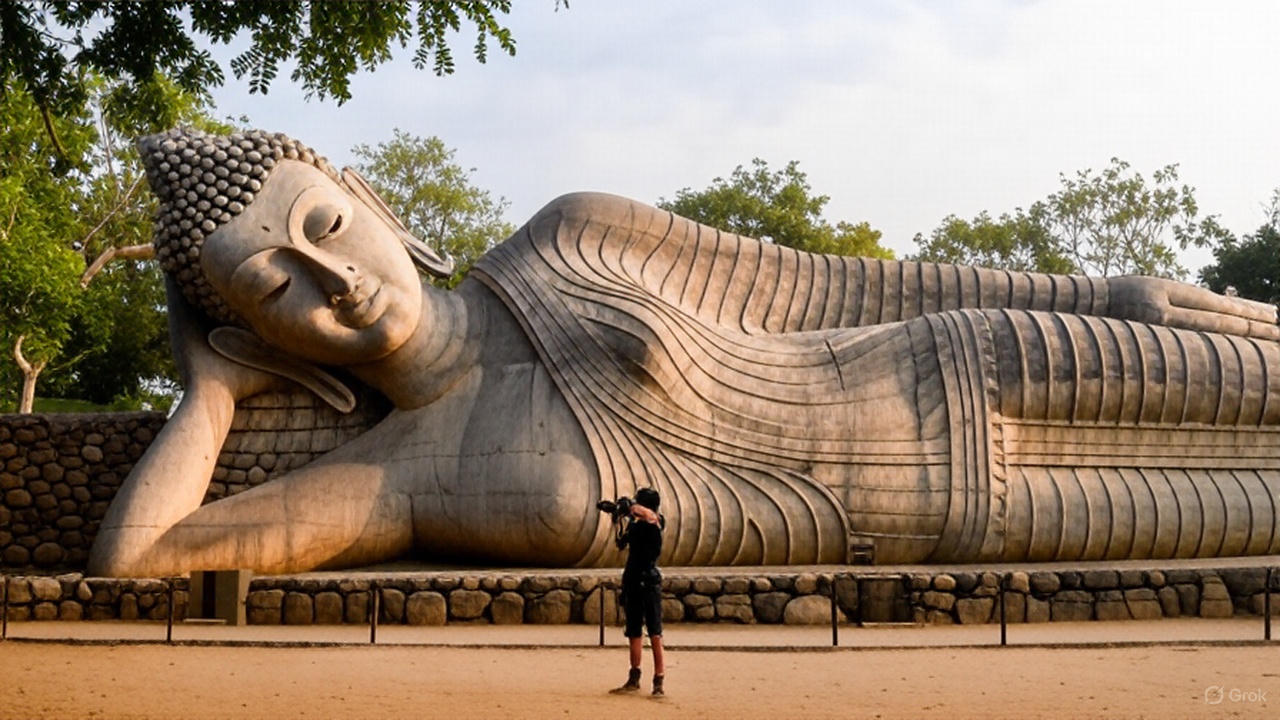
The reclining Buddha is the largest and most dramatic statue at Gal Vihara. It depicts the Buddha at the final moment before entering Parinirvana. This marks the release from the cycle of rebirth.
The body rests on its side. The head supports itself on a raised arm. The expression stays peaceful. There is no sign of pain or struggle.
Many visitors feel the strongest emotional impact in front of this statue. It represents not death, but release. It teaches acceptance rather than fear. I remember watching people slow their steps here without realizing it. The silence around this statue always feels heavier.
The Lesser-Known Fourth Image
The fourth image sits slightly apart from the main three. It is smaller and less discussed. Some experts believe it shows a disciple of the Buddha. Others believe it represents a secondary form of the Buddha itself.
Regardless of interpretation, its presence adds balance to the site. It reminds visitors that Gal Vihara is not only about grand symbolism. It also honors devotion and learning.
How These Meanings Shape the Visitor Experience
When you understand what each statue represents, your visit changes. Gal Vihara transforms from a photo stop into a personal experience. You stop rushing. You begin observing.
This spiritual depth is what makes gal vihara polonnaruwa sri lanka feel different from many other heritage sites. The statues do not demand attention. They invite reflection.
What It Feels Like to Visit Gal Vihara in Person
No photo prepares you for the first real moment at Gal Vihara. The approach feels almost quiet on purpose. Trees offer shade, the path opens slowly, and then the massive rock face appears without warning. The scale becomes clear only when you stand close. The statues do not tower in an aggressive way. They simply exist with calm certainty.
The air here feels different from the rest of the Polonnaruwa ruins. Voices drop naturally. Footsteps slow. Even large tour groups tend to soften their energy without being asked. I noticed this change the moment I walked in. No guide prompted it. The place itself seemed to set the tone.
A Sense of Stillness You Can Feel
The stillness at Gal Vihara does not come from silence alone. It comes from balance. Wind moves through the trees without drama. Light shifts gently across the stone surface. The statues remain unmoved by it all.
Many ancient sites feel busy. This one feels settled. That difference stays with you. I found myself standing longer than planned, not because I wanted better photos, but because leaving felt rushed.
The Emotional Impact of Standing Before the Statues
Each statue affects people in different ways. Some feel peace. Others feel reflection. A few even feel sadness without knowing why. The seated Buddha often draws people closer than they expect. The reclining Buddha tends to slow everyone down.
The most iconic statue here is the reclining Buddha, which represents the Buddha’s passing into Nirvana. Read more reviews on Tripadvisor
I watched one visitor stand in front of the reclining figure for nearly fifteen minutes. No phone. No movement. Just quiet attention. That kind of reaction does not happen at every historical site.
How Time of Day Changes the Experience
Morning light brings softness to the stone. Late afternoon light adds shadow and contrast. Midday sun makes the details sharper but the heat stronger. I personally recommend visiting early. The air feels lighter. The site feels more personal.
Crowds also stay smaller in the morning. You gain space to stand without pressure. That alone changes how deeply you connect with the place.
Why This Experience Feels Different From Other Ruins
Many ruins tell their story through broken walls and distant imagination. Gal Vihara tells its story through presence. The faces still hold emotion. The postures still communicate meaning.
That is why gal vihara polonnaruwa sri lanka often leaves a deeper impression than larger sites nearby. You do not just witness history here. You feel it.
Best Time to Visit Gal Vihara and How to Plan Your Timing
Timing plays a quiet but powerful role in how you experience Gal Vihara. The statues never move, but light, heat, and crowd levels change everything. A well timed visit can feel personal and calm. Poor timing can feel rushed and uncomfortable.
Early Morning for Calm and Comfort
Early morning works best for most travelers. The air stays cool. The light feels soft. Shadows fall gently along the rock face. You can see details without harsh contrast.
Crowds also remain smaller at this hour. Many tour buses arrive later in the morning. If you reach Gal Vihara between 7:30 am and 9:00 am, you often enjoy quiet moments with the statues. This time suits solo travelers and photographers who seek clean, peaceful frames.
I always choose morning when I recommend this site. The atmosphere feels more spiritual before the day heats up.
Late Afternoon for Light and Mood
Late afternoon offers a different kind of beauty. The sun lowers. Light becomes warmer. The contours of the statues grow more dramatic. This time works well for emotional photography and slower walks.
Crowds may ease slightly after 4:00 pm. The heat also drops. You can spend more time without feeling drained. The only risk is sudden rain during certain months.
Midday Visits and What to Expect
Midday brings strong sun and high heat, especially during the dry season. The stone reflects warmth. The open space offers little shade. Tour groups arrive in waves.
If midday remains your only option, wear light clothing, carry water, and limit your time at the site. Short visits still allow you to appreciate the statues without strain.
Seasonal Considerations
Polonnaruwa experiences two main rainy periods. One falls between April and May. The other arrives from October to November. Rain can appear without warning.
The dry months from January to March and June to September offer more stable conditions. These months suit relaxed exploration. The skies stay clearer. Paths remain dry.
How Long You Should Spend at Gal Vihara
Most visitors spend between 20 and 40 minutes here. However, you may find yourself staying longer without noticing time. The space invites slow observation rather than quick movement.
If you enjoy history or quiet reflection, plan at least 45 minutes. That allows space to sit, walk, and observe without pressure.
Dress Code, Visitor Rules, and Respectful Behavior at Gal Vihara
Gal Vihara is not only an archaeological site. It remains a sacred place of worship. Because of that, the way you dress and behave here matters. Respect shapes the entire experience, both for you and for those around you.
What to Wear When Visiting Gal Vihara
Visitors must follow basic temple dress guidelines. This applies to people of all genders.
Here is what works best:
Cover shoulders with sleeves or a shawl
Wear bottoms that cover knees
Avoid tight or revealing clothing
Choose light fabrics because of the heat
Many travelers forget these rules because Gal Vihara sits inside a larger ruin complex. However, once you step near the statues, the space becomes religious again. Guards often stop visitors who dress inappropriately.
If you arrive unprepared, vendors outside the site rent sarongs at a small cost. Still, it feels easier to plan ahead.
Removing Footwear and Head Coverings
You must remove footwear before approaching the main statues. This includes shoes, sandals, and socks. The stone ground can feel hot during midday, so early morning or late afternoon helps.
You should also remove hats and caps as a sign of respect. This rule often surprises visitors, but it holds strong cultural meaning.
Photography Rules and Boundaries
Photography is allowed at Gal Vihara, but it comes with clear limits.
You should never:
Pose with your back facing the Buddha statue
Climb onto any rock surface
Sit on sacred platforms
Touch the statues
People often underestimate the seriousness of these rules. Guards monitor the area closely. Violations can lead to fines and removal from the site.
You can take respectful photos from the front or side. Wide shots work best here. Close ups should stay gentle and natural.
Behavior Inside the Sacred Space
Quiet behavior matters more here than at many other ruins. Loud talking, playful behavior, and phone noise feel out of place.
Small actions make a big difference:
Lower your voice
Walk slowly
Do not rush groups
Give space to those who are praying
I once watched a family gently guide their children into silence without a single word. The environment itself encouraged that shift.
Why Respect Deepens the Experience
Respect is not just about following rules. It changes how the place feels. When people move with care, the space feels calm. When noise rises, the calm weakens.
This balance is part of why gal vihara polonnaruwa sri lanka feels so emotionally steady. Visitors shape the atmosphere as much as the stone does.
Entrance Details, Ticketing, and How Gal Vihara Fits Into the Polonnaruwa Site Visit
Gal Vihara does not operate as a separate ticketed attraction. It forms part of the larger Sacred City of Polonnaruwa archaeological complex. Because of that, your entry process works a little differently than stand alone temples.
All visitors must purchase a general Polonnaruwa site ticket before entering Gal Vihara. You can buy this ticket at the main Archaeological Department ticket office near the museum entrance.
The ticket grants access to:
The Royal Palace
Vatadage
Rankoth Vehera
Gal Vihara
Lankathilaka Image House
Several smaller ruins across the complex
You do not need a separate pass for Gal Vihara once you enter the main zone.
Ticket Prices and What to Expect
Ticket prices change over time, so I always recommend checking the official counter on the same day of your visit. Foreign visitor prices differ from local rates.
Payment usually works in cash. Some counters now accept cards, but cash still moves faster.
Once you receive your ticket, guards may check it at multiple points across the ruins. Keep it safe and visible.
How Gal Vihara Fits Into a Polonnaruwa Route
Most people reach Gal Vihara midway through their Polonnaruwa exploration. If you follow a typical layout, you will likely visit:
Royal Palace first
Vatadage next
Rankoth Vehera after that
Then reach Gal Vihara
This order works well because Gal Vihara offers a calmer pause once you finish the larger structural ruins. Many people slow down naturally at this stage.
You can adjust this order if you arrive early. Starting at Gal Vihara first gives the quietest experience of the day.
How Long Your Full Polonnaruwa Visit Takes
A full Polonnaruwa circuit usually takes three to five hours. Timing depends on:
Walking pace
Bicycle use
Photography stops
Breaks for water and rest
Gal Vihara itself does not require much physical effort. The value lies in slowing down rather than covering ground.
Why Gal Vihara Feels Like a Turning Point in the Tour
Many visitors describe Gal Vihara as the emotional center of their Polonnaruwa visit. The earlier ruins impress through scale and layout. Gal Vihara connects through presence and mood.
That shift in feeling is part of what makes gal vihara polonnaruwa sri lanka stay in memory longer than expected.
How to Reach Gal Vihara Within Polonnaruwa and Transport Tips
Getting to Gal Vihara is simple once you arrive in Polonnaruwa. The challenge usually lies in choosing the right transport style for your comfort, budget, and energy level.
Reaching Polonnaruwa Town First
Most travelers reach Polonnaruwa by bus or train from Colombo, Dambulla, Habarana, or Anuradhapura. Once you arrive at the Polonnaruwa town center, you still need transport to enter the main archaeological zone.
The distance from the town to the main ruins area sits around four to five kilometers. The road remains flat and easy to navigate.
Bicycle as the Most Popular Option
Cycling remains the most common way to explore Polonnaruwa. You can rent bicycles near the town center and close to many guesthouses.
This option works well because:
The terrain stays mostly flat
Distances between sites feel manageable
You can stop freely for photos and rest
It creates a slower, more immersive experience
You can easily reach Gal Vihara by bicycle within 25 to 40 minutes from most hotels near town. The ride itself feels scenic with shaded stretches and open skies.
Tuk-Tuk for Comfort and Speed
Tuk-tuks offer the easiest option for travelers who prefer comfort or travel with families. Drivers usually wait near hotels and the main bus stand.
You can hire a tuk-tuk for:
A one way trip to Gal Vihara
A full Polonnaruwa site tour
A flexible half-day arrangement
Many drivers already know the standard site order. You can also request Gal Vihara as your first stop if you arrive early in the morning.
Walking Only Works for Nearby Stays
Walking to Gal Vihara only works well if your hotel sits very close to the archaeological zone. The heat often makes long walks uncomfortable by mid morning.
If you choose to walk:
Start early
Carry water
Wear sun protection
The path stays clear and safe during daylight hours.
Signage and Navigation Inside the Ruins
Once you enter the Polonnaruwa complex, signs guide you clearly. Most major sites appear marked in both English and Sinhala.
You will see signboards pointing to Gal Vihara along the main cycling route. The path remains wide and easy to follow. You do not need GPS inside the ruins.
Why Choosing Slow Transport Improves the Experience
Fast transport saves time, but slow movement shapes memory. When you approach gal vihara polonnaruwa sri lanka at a gentle pace, the shift in atmosphere feels stronger. Your mind arrives before your body.
Many people who cycle say the moment feels earned, not rushed. That small effort often deepens the final experience.
Photography Tips, Lighting, and How to Capture Gal Vihara Respectfully
Gal Vihara draws photographers without effort. The scale, texture, and emotion of the statues invite the camera naturally. However, this is also a sacred place, not just a visual one. The best photos come from balance, not from chasing dramatic angles.
Best Lighting Conditions for Photography
Light shapes everything at Gal Vihara. It changes not only how the stone looks but also how the mood feels in your frame.
Early morning offers:
Soft shadows
Gentle highlights on facial features
Cooler tones on the rock
Fewer people in the background
Late afternoon creates:
Warmer tones
Deeper contrast
Longer shadows that add drama
Midday light feels harsh. Shadows fall straight down. Details still appear sharp, but the emotional softness fades. If photography matters to you, plan around the sun rather than working against it.
Framing the Statues With Respect
The statues do not need forced drama. They carry presence on their own. Simple framing often works best.
Good approaches include:
Straight on views from a respectful distance
Side angles that show depth without distortion
Wide frames that include stone texture and space
Avoid extreme low angles that feel exaggerated. Avoid framing that cuts the face or posture awkwardly. Let the statue breathe within the frame.
What You Should Never Do for a Photo
Some actions cross a serious cultural line. Even if they look creative, they show disrespect.
You should never:
Turn your back toward the Buddha for a pose
Sit on sacred platforms for a photo
Lean against the statues
Use props that turn the site into a stage
Guards do stop people for these actions. More importantly, these rules protect the meaning of the place, not just the stone.
Phones vs Cameras and Crowd Awareness
Both phones and professional cameras work well here. What matters more than equipment is patience.
Wait for groups to move. Let the space clear naturally. Do not rush people out of your frame. Gal Vihara does not reward impatience.
If you see someone praying, step aside. A powerful photo never outweighs a private moment of devotion.
Why Fewer Photos Often Mean Better Memories
I have visited Gal Vihara more than once. The visits where I took fewer photos remain the ones I remember most clearly. The site speaks through stillness more than motion.
Gal Vihara does not ask to be captured constantly. It asks to be witnessed first. When you let that idea guide your camera, your images often carry more truth.
Nearby Attractions You Can Visit Along With Gal Vihara
Gal Vihara may feel like a destination in itself, but its location inside the Polonnaruwa Sacred City places it close to several powerful landmarks. Visiting a few of these nearby sites in the same route adds depth to your experience without adding fatigue.
Watadage and the Sacred Relic Circle
Watadage sits only a short distance from Gal Vihara. Many travelers visit it either just before or just after seeing the statues. The structure holds four seated Buddha images arranged around a central stupa.
The stone carvings, guardstones, and moonstones here still show fine detail. The surrounding space feels ceremonial. After the quiet intensity of Gal Vihara, Watadage adds a softer spiritual rhythm to your route.
Just a short walk from Gal Vihara, the sacred stone shrine at the Polonnaruwa Vatadage reveals another deeply spiritual side of the ancient city.
Rankoth Vehera and Its Towering Presence
Rankoth Vehera rises far above most other ruins in Polonnaruwa. You can spot it from many points along the cycling path. The scale alone creates impact.
This stupa reflects devotion through size rather than expression. When you walk its circular base, the contrast with Gal Vihara becomes clear. One speaks through still faces. The other speaks through towering form.
From the rock carvings of Gal Vihara, the spiritual journey naturally continues toward Rankoth Vehera Polonnaruwa, where the scale and silence of the great stupa offer a completely different sacred experience.
Lankathilaka Image House Nearby
Lankathilaka Image House often receives fewer visitors, yet it holds great value. The interior once contained detailed wall paintings. Though time has softened much of that artwork, the remaining fragments still show fine narrative motion.
The calm inside the image house pairs well with the reflective mood created by Gal Vihara. Both sites encourage slow watching rather than quick movement.
Parakrama Samudra and the Open Horizon
After stone, shadow, and sculpture, the wide horizon of Parakrama Samudra feels refreshing. The massive ancient reservoir sits close enough to include in a single half day route.
Many visitors pause here for rest. Birds move across the water. The wind feels cooler. This open space balances the enclosed stillness of Gal Vihara beautifully.
Why Combining These Sites Works So Well
Each nearby attraction offers a different energy:
Gal Vihara provides emotional stillness
Watadage brings ritual balance
Rankoth Vehera adds scale and movement
Lankathilaka offers quiet art
Parakrama Samudra gives wide space
Together, they create a full emotional loop. This is one reason gal vihara polonnaruwa sri lanka never feels isolated. It fits into a living landscape of belief, craft, and water.
For a completely different atmosphere after the open air granite carvings, step inside the shaded brick interior of the Lankathilaka Image House Polonnaruwa just a short distance away.
After viewing the granite Buddha statues, many visitors continue to the nearby Kiri Vehera Polonnaruwa to experience a softer and more meditative side of Polonnaruwa’s spiritual heritage.
Where to Eat Near Gal Vihara and Food Options During Your Visit
Exploring Polonnaruwa works up a quiet kind of hunger. The heat, the walking, and the long stretches between ruins make food planning more important than many travelers expect. While Gal Vihara itself has no restaurants right at the entrance, you will find several good options within easy reach.
Small Local Restaurants Near the Ruins
Just outside the main archaeological zone, a few small local restaurants serve simple Sri Lankan meals. These places do not look fancy, but they offer fresh food, fair prices, and quick service.
Common dishes you will find include:
Rice and curry with vegetables
Fried rice with egg or chicken
Hoppers in the morning
Fresh fruit plates and coconut water
These spots work well for lunch after you finish your Gal Vihara visit. The food feels light enough to continue cycling or walking afterward.
Hotel Restaurants as a Comfortable Option
Many travelers choose to eat at their hotel before or after visiting the ruins. Most guesthouses and hotels in Polonnaruwa serve full breakfast and dinner.
This option suits travelers who:
Prefer fixed meal times
Travel with children
Need easier dietary control
Return to rest after heat exposure
Hotel food may cost slightly more, but the comfort often makes up for it.
Carrying Snacks and Water
You will not find many snack stalls directly at Gal Vihara. Because of that, carrying water and small snacks helps a lot.
Good items to carry include:
Bottled water
Bananas or seasonal fruit
Biscuits or snack bars
Electrolyte drinks
Dehydration sneaks up fast under Polonnaruwa sun. I always remind people to drink before they feel thirsty.
Eating With Respect Near Sacred Areas
Even when you feel hungry, avoid eating directly in front of the statues or near prayer areas. This behavior feels disrespectful and may draw attention from guards.
Step away to shaded benches or outside food zones before eating. That small pause helps preserve the quiet rhythm of gal vihara polonnaruwa sri lanka.
Why Simple Food Often Tastes Best Here
After hours among stone, heat, and silence, even a simple plate of rice and curry can feel deeply satisfying. The food tastes better when effort leads you to it.
Polonnaruwa meals are not about luxury. They are about balance. And after visiting Gal Vihara, balance feels like the right theme.
Common Mistakes Visitors Make at Gal Vihara and How to Avoid Them
Gal Vihara feels calm and simple on the surface. Yet many visitors make small mistakes that affect both their experience and the atmosphere of the site. Most of these errors come from rushing, lack of awareness, or following crowds without thinking.
Arriving Without Proper Clothing
One of the most frequent issues involves dress code. Many travelers arrive straight from cycling or sightseeing without realizing they enter an active sacred area.
To avoid trouble:
Keep a light shawl in your bag
Wear clothing that covers knees and shoulders
Avoid transparent or tight outfits
Guards often stop visitors at the entrance. That moment can feel uncomfortable and unnecessary if you prepare ahead.
Treating the Site Like a Photo Studio
Photography adds value, but obsession takes it away. Some visitors focus so hard on angles and poses that they miss the experience itself.
Signs of this mistake include:
Rushing from statue to statue
Blocking others for long periods
Asking people to move for photos
Ignoring prayer moments
Slow movement creates better photos and better memories. Gal Vihara rewards patience far more than speed.
Skipping the Meaning Behind the Statues
Many people visit Gal Vihara without knowing what the statues represent. They see three large figures and move on.
When meaning stays unclear, the visit feels shallow. A few minutes of reading before arrival changes everything. Understanding posture, expression, and symbolism adds emotional depth to every view.
Visiting Only at Midday
Midday visits often feel rushed and uncomfortable. Heat rises. Crowds increase. Shadows fall straight down. Details lose softness.
If your schedule allows it at all, avoid midday. Early morning or late afternoon changes the experience entirely.
Rushing Through the Entire Polonnaruwa Complex
Another common mistake involves trying to see everything in one short burst. Polonnaruwa spreads wide. Fatigue builds slowly.
When people rush, they often reach Gal Vihara tired and distracted. The mind stays busy with the next stop rather than the present one.
Spacing your route helps:
Take water breaks
Rest at shaded areas
Pause after major sites
Gal Vihara deserves arrival with calm, not exhaustion.
Why Avoiding These Mistakes Changes Everything
Small changes shape big outcomes. When visitors move with awareness, gal vihara polonnaruwa sri lanka opens in a different way. The site does not demand perfection. It responds to presence.
Avoiding these common mistakes does not require effort. It only requires attention.
Who Should Visit Gal Vihara and What Type of Traveler Benefits Most
Gal Vihara does not try to impress every kind of traveler in the same way. It does not offer thrills, shopping, or entertainment. What it offers instead is depth. Because of that, certain travelers connect with it more strongly than others.
Cultural and History Travelers
If you enjoy understanding the story behind a place rather than just seeing it, Gal Vihara will suit you well. The site speaks through history, symbolism, and quiet detail.
History focused travelers often enjoy:
Tracing the era of King Parakramabahu
Comparing Polonnaruwa art with Anuradhapura
Observing how Buddhist sculpture evolved
This site rewards slow learning rather than fast sightseeing.
We were taken to this as an add on to our package and is a marvel to see, guarded by a pack of macaques each of the giant statues carved out of a single rock. Read more reviews on Tripadvisor
Solo Travelers Seeking Stillness
Solo travel and Gal Vihara pair naturally. The calm atmosphere allows space for private reflection. You do not need conversation to feel engaged here.
Many solo visitors linger longer than planned. The setting encourages still thought. It does not pressure you to move.
If you enjoy moments of silence while traveling, this place fits your rhythm.
Couples and Quiet Travelers
Couples who enjoy slow walks, photography, and shared calm often find Gal Vihara surprisingly meaningful. It creates conversations that feel softer and slower.
This is not a place for loud excitement. It suits travelers who value shared atmosphere more than shared activity.
Families With Respectful Children
Families can visit Gal Vihara, but the experience works best with children who can move quietly. The space does not suit running or loud play.
Older children often show curiosity here, especially when parents explain:
The meaning of the statues
The age of the carvings
The idea of meditation and stillness
When approached gently, the site becomes an educational moment rather than a restriction.
Travelers Who May Not Fully Enjoy Gal Vihara
Gal Vihara may not appeal strongly to:
Visitors seeking adventure or physical activity
Travelers who prefer crowds and social energy
People rushing through Polonnaruwa on tight schedules
This does not mean they should skip the site. It only means the emotional reward may feel subtler for them.
Why the Site Connects Best With Reflective Travelers
Gal Vihara does not perform. It waits. That waiting creates the connection.
Gal vihara polonnaruwa sri lanka often stays in memory not because of what happens there, but because of what slows down. Travelers who value that slowing tend to leave with the deepest impression.
Safety, Accessibility, and Visitor Facilities at Gal Vihara
Gal Vihara feels peaceful, but it still requires awareness. The site sits outdoors, carved into natural rock, and exposed to weather and crowds. A little preparation makes the visit smoother and safer.
General Safety at the Site
Gal Vihara is a well monitored public site. Guards stay present during visiting hours. Serious crime is rare here. Most safety issues come from heat, dehydration, or slippery stone during rain.
You can stay safe by:
Wearing stable footwear until the barefoot zone
Walking slowly on stone surfaces
Avoiding wet rock after rain
Drinking water often
The ground near the statues can feel uneven in spots. Take your time. There is no need to rush.
Heat, Sun, and Physical Comfort
Polonnaruwa heat can feel intense, even on calm days. Gal Vihara offers limited shade near the statues. The stone reflects warmth upward.
To stay comfortable:
Carry water at all times
Use sunscreen on exposed skin
Wear light, breathable clothing
Rest in shaded areas when needed
Heat exhaustion sneaks up quietly. If you feel dizzy or weak, step away and rest.
Accessibility for Older Visitors and Mobility Challenges
Gal Vihara is one of the more accessible sites within the Polonnaruwa complex, but it still has limits.
The path to the statues is mostly flat. Wheelchair access is possible to a certain extent. However:
Some stone surfaces feel uneven
The barefoot area may feel uncomfortable
Direct access right up to the statues may feel difficult
Older visitors often manage well with slow movement and light support. Tuk-tuks can drop visitors close to the entrance, which helps reduce walking distance.
Rest Areas and Seating
You will find a few shaded benches near the approach areas. These offer short rest breaks before and after viewing the statues.
There are no cafes or food stalls right at the site. Plan your breaks around nearby areas within the Polonnaruwa complex.
Toilets and Basic Facilities
Public toilets are available within the wider Polonnaruwa zone, but not directly at Gal Vihara itself. Facilities remain basic. Carry tissues and hand sanitizer.
Cleanliness varies by time of day and visitor volume. Early morning usually feels cleaner and calmer.
Managing Large Crowds
During peak tourist seasons, Gal Vihara can feel busy. Tour groups often arrive in waves.
To avoid crowd pressure:
Visit early in the morning
Wait patiently for space near the statues
Step back when groups gather
Avoid standing in main walk paths
Crowds pass quickly. The calm always returns if you stay patient.
Why Safety and Comfort Shape the Emotional Experience
When you feel physically comfortable, your mind stays open. When you feel rushed or strained, your attention shrinks.
Gal vihara polonnaruwa sri lanka offers a quiet emotional experience. Safety and comfort protect that space.
Weather, Climate, and What to Expect by Season at Gal Vihara
Weather shapes your Gal Vihara experience more than many people expect. The statues never change, but heat, rain, and humidity do. Knowing what each season brings helps you plan with confidence instead of guesswork.
Dry Season and Clear Skies
The dry season usually runs from January to March and again from June to September. These months bring the most stable conditions.
During this time, you can expect:
Clear or lightly clouded skies
Strong sunlight during midday
Lower chances of sudden rain
Easier cycling conditions
These months suit photography, long walks, and relaxed exploration. The only real challenge comes from heat between late morning and mid afternoon.
Early mornings during the dry season feel especially rewarding. The light stays gentle. The air feels lighter. Crowds also remain smaller.
Rainy Season and Changing Light
Rain appears more often from April to May and from October to November. These periods bring short but sometimes heavy showers.
Rain changes the experience in both good and difficult ways:
Positive sides include:
Cooler air temperatures
Deeper stone colors
Fewer tourists
Softer light after rainfall
Challenges include:
Slippery stone surfaces
Muddy paths in some areas
Sudden downpours without warning
If you visit during the rainy season, carry a light rain jacket and waterproof your bag. Short rain bursts often pass quickly.
Humidity and Its Effect on Energy
Polonnaruwa stays humid most of the year. Even on clear days, the air can feel heavy.
High humidity affects:
Physical energy
Walking comfort
Camera lens fog
Clothing comfort
Light cotton clothing helps a lot. Quick dry fabrics work best. Drink water often even when you do not feel thirsty.
Wind, Shade, and Natural Cooling
Gal Vihara receives occasional light wind, especially near the open rock face. That breeze can feel refreshing after heat buildup.
Shade exists near trees along the approach path. The statue area itself remains more open. Plan your rest stops before or after your barefoot visit.
Best Season for First Time Visitors
For first time travelers, the periods from January to March and July to September work best. Weather stays stable. Paths remain dry. Photography conditions stay strong.
If crowds concern you more than weather, shoulder months such as May and October can also work. You trade some comfort for quieter space.
How Weather Changes the Emotional Mood of the Site
Bright sun highlights every detail. Rain softens everything. Clouds create contrast. Each condition brings a different emotional tone.
Gal vihara polonnaruwa sri lanka feels calm in all seasons, but the mood shifts. Some people prefer warm clarity. Others fall in love with quiet rain and darker stone.
How Gal Vihara Fits Into a One Day Polonnaruwa Itinerary
Planning Polonnaruwa in a single day feels ambitious at first. The area spreads wide, and every site tempts you to linger. Still, with a balanced route and steady pace, you can enjoy Gal Vihara without turning the day into a race.
A Calm and Practical One Day Flow
For most travelers, this sequence works well:
Start early at the ticket counter
Visit the Royal Palace complex first
Walk or cycle to Vatadage
Continue to Rankoth Vehera
Reach Gal Vihara by late morning or early afternoon
End the day at Parakrama Samudra
This flow moves from large architectural ruins toward quieter spiritual spaces. The emotional energy softens as the day progresses, which helps manage fatigue.
Why Gal Vihara Works Best Midday or Early Afternoon
Morning light suits photography, but many people prefer to save Gal Vihara for later. After visiting palaces and stupas, the calm here feels well earned.
By late morning or early afternoon:
You have warmed into the rhythm of the ruins
Your curiosity feels focused
The statues offer a mental pause
This contrast between movement and stillness adds depth to your one day experience.
Adjusting the Route for Cyclists vs Walkers
Cyclists move faster between sites and save physical energy. Walkers move slower but often feel more connected to smaller ruins along the way.
Cyclists can:
Spend more time resting at Gal Vihara
Include extra stops like Lankathilaka Image House
Return to town before sunset with ease
Walkers should:
Start earlier
Keep water close
Limit extra detours
Rest after Gal Vihara before continuing
How Long Gal Vihara Should Occupy in Your Day
Within a one day plan, Gal Vihara deserves at least 30 to 45 minutes of focused time. This is not a place to rush through in ten minutes.
This time allows you to:
Observe each statue slowly
Sit quietly for a few minutes
Watch crowd movement
Take respectful photos
If you stay longer, that is often a good sign. The site invites that kind of pause.
When to End the Day After Gal Vihara
Many travelers feel emotionally settled after Gal Vihara and choose to end the day soon after. Others look for open space.
Parakrama Samudra works well as a closing point. The lake opens the day back into air, light, and horizon after hours of stone.
Why Gal Vihara Often Becomes the Emotional Center
In many one day routes, Gal Vihara becomes the quiet center of gravity. Other sites offer scale, height, and structure. Gal Vihara offers presence.
Gal vihara polonnaruwa sri lanka does not compete with the rest of the itinerary. It completes it.
The Spiritual Significance of Gal Vihara in Modern Sri Lanka
Gal Vihara may belong to the ancient world, but its spiritual role continues in the present. It does not stand as a silent relic. It still holds meaning for monks, pilgrims, and everyday visitors who arrive with faith rather than curiosity.
A Living Space of Devotion
Even today, people come to Gal Vihara to pray. You may see monks seated quietly near the statues. You may notice local families offering flowers with gentle movement. These moments happen without ceremony or announcement.
The space does not separate past from present. It allows both to exist together.
For many Sri Lankans, Gal Vihara represents:
A reminder of discipline and balance
A connection to the teachings of the Buddha
A link to the strength of the Polonnaruwa era
The emotional bond remains personal rather than performative.
How Pilgrims Experience the Site Today
Pilgrims approach Gal Vihara with a different rhythm than tourists. They move slowly, pause with intention and close their eyes near the statues.
For them, this is not a photo destination. It is a spiritual checkpoint. Many offer silent prayers. Some chant softly under their breath. Others simply sit without moving.
When you witness this, the site changes shape in your mind. It becomes less about history and more about continuity.
The Standing Buddha and Modern Interpretation
The standing Buddha often draws modern emotional readings. Many people interpret its gentle posture as sorrow for human suffering. Others see compassion and protection.
These interpretations evolve with time and social context. During periods of hardship, people often turn toward this statue with deeper emotion.
That living interpretation keeps gal vihara polonnaruwa sri lanka relevant across generations.
Why the Site Feels Spiritually Neutral Yet Powerful
Gal Vihara does not pressure visitors into devotion. It allows spiritual response without force.
Some people pray. Others reflect. Some simply observe. All feel welcome within the same silence.
That openness creates its power. It allows meaning to rise naturally rather than being assigned.
The Balance Between Tourism and Sacred Space
Modern tourism brings crowds, cameras, and noise. The spiritual presence asks for stillness. These two forces exist in fragile balance.
Most days, the balance holds. Respect guides movement. Guards support order. Visitors respond with awareness.
This balance protects what makes Gal Vihara more than stone. It protects its living spirit.
Many visitors continue their spiritual walk from the giant Buddha statues at Gal Vihara toward the quieter stone sanctuary of Shiva Devalaya Polonnaruwa inside the ancient city.
Comparison With Other Buddha Statue Sites in Sri Lanka
Sri Lanka holds many famous Buddha statues, each with its own character, style, and emotional tone. When you compare them, Gal Vihara stands out not because it is the largest or most elaborate, but because of how directly it speaks through stone.
Gal Vihara and Aukana Buddha
The Aukana Buddha statue often appears first in comparisons. It rises tall, free standing, and perfectly symmetrical. Its scale creates awe. Its posture reflects serene authority.
Gal Vihara feels different in mood:
Aukana inspires through height
Gal Vihara inspires through stillness
Aukana stands alone
Gal Vihara forms a spiritual sequence
Aukana impresses the eye instantly. Gal Vihara grows on you quietly the longer you remain.
Gal Vihara and Buddha Statues in Anuradhapura
Anuradhapura holds several seated and reclining Buddhas spread across its vast sacred city. Many of those statues sit within restored temples or sheltered structures.
Gal Vihara differs in three core ways:
The statues emerge directly from open rock
The site feels more intimate in scale
Artistic detail feels softer and more human
Anuradhapura carries immense sacred weight. Gal Vihara carries introspective depth.
Gal Vihara and Dambulla Cave Temple
Dambulla Cave Temple surrounds you with murals, colors, and golden statues. The experience feels rich and enclosed.
Gal Vihara offers the opposite:
No painted walls
No glowing gold
No ceiling or enclosure
Only open stone and sky
Dambulla overwhelms through abundance. Gal Vihara calms through restraint.
Why Gal Vihara Feels Unmatched in Emotional Balance
Other sites impress through:
Height
Decoration
Quantity
Scale
Gal Vihara impresses through:
Expression
Posture
Silence
Natural setting
It does not compete with other Buddha sites, complements them and offers what the others cannot provide, which is emotional quiet in raw form.
How This Comparison Shapes Expectations
If you arrive expecting grandeur, you may feel surprised at first. The power of gal vihara polonnaruwa sri lanka reveals itself slowly. It does not announce its importance.
Travelers who know this ahead of time tend to connect more deeply. They arrive without hype and leave with meaning.
Personal Reflections and Real Travel Tips From Repeated Visits to Gal Vihara
Every visit to Gal Vihara teaches something slightly different. The statues stay the same, but your state of mind never does. I have seen this place under soft morning light, beneath heavy cloud, and once during a quiet drizzle that left the stone dark and glossy. Each visit changed how the space felt.
On my first visit, I moved quickly. I followed the common route, took the expected photos, and checked it off my list. I remember thinking it was beautiful, but distant. On later visits, I slowed down. I stayed longer. I stopped trying to capture everything. That is when Gal Vihara truly started to stay with me.
What Repeated Visits Teach You
The first lesson Gal Vihara teaches is patience. Nothing here rewards rush. The second lesson is awareness. Small details reveal themselves only when you pause.
With each return visit, I began to notice:
How light shifts across the reclining Buddha’s face
How silence deepens when crowds move away
How different people react in different ways
How even brief stillness changes your breathing
These changes happen quietly. You only notice them when you stop forcing the moment.
Practical Tips That Come From Experience
Some tips only make sense after you have made mistakes yourself. These come from real trial, not theory.
Always carry more water than you think you need
Visit Gal Vihara before you feel fully tired
Keep one pocket free for footwear storage
Pause at the entrance before stepping in
Avoid looking at your phone for the first few minutes
That initial pause changes how you enter the space. It feels like knocking before stepping inside.
How Long You Should Truly Stay
Most guides suggest 20 to 30 minutes. From experience, that often feels rushed. If crowd levels allow it, 45 minutes to one hour feels more natural.
This gives you time to:
Walk the lineup of statues slowly
Step away and return once more
Sit quietly without purpose
Let thoughts settle
You do not need to fill this time with activity. Gal Vihara does not work like that.
The One Emotion That Often Surprises Visitors
Many people expect peace. Few expect emotional heaviness. Yet this feeling appears often, especially near the reclining Buddha.
It is not sadness. It feels more like quiet gravity. A reminder of impermanence without fear. People sometimes leave this area more thoughtful than they arrived.
That emotional shift marks the deepest connection for many.
Why I Still Recommend Gal Vihara Without Hesitation
Even after several visits, gal vihara polonnaruwa sri lanka never feels finished. It does not depend on novelty. It depends on presence.
That is why I continue to recommend it to first time visitors and seasoned travelers alike. It meets people where they stand, not where they plan to be.
Final Travel Planning Summary and the Right Mindset for Visiting Gal Vihara
By the time most travelers reach Gal Vihara, they have already seen palaces, stupas, and wide ruins. Yet this is often the place that stays with them after the journey ends. Gal Vihara does not rely on size or decoration. It relies on presence, balance, and emotional quiet.
To plan your visit well, keep a few simple priorities in mind.
Arrive early if you can. Morning gives you softer light, cooler air, and fewer crowds. Dress with respect and comfort in mind. Carry water. Slow your pace before you enter. These small choices shape the entire experience.
Gal Vihara fits best when you treat it as a pause rather than a task. Let it sit in the middle of your day like a breath between movements. It works beautifully after the Royal Palace and Vatadage, when your mind already holds the weight of history.
Most importantly, arrive without pressure. Do not try to feel something specific. Do not force meaning where it does not rise naturally. This space meets people in different ways. Some feel calm, feel heavy and feel nothing at first and realize its impact later.
That personal response is what makes gal vihara polonnaruwa sri lanka quietly powerful. It does not perform. It waits. And when you meet it with patience, it often gives back more than you expect.
Those who wish to continue exploring more attractions across the ancient city can follow the full guide to the best things to do in Polonnaruwa for a complete look at the region.
Frequently Asked Questions About Gal Vihara Polonnaruwa
Visiting Time and Duration
How long should I spend at Gal Vihara?
Most visitors spend between 30 and 60 minutes. If you enjoy photography, quiet observation, or reflection, one full hour feels ideal.
What is the best time of day to visit Gal Vihara?
Early morning offers the calmest atmosphere, softer light, and fewer crowds. Late afternoon also works well for photography, while midday tends to be hot and crowded.
Tickets, Entry, and Guides
Do I need a separate ticket for Gal Vihara?
No. Gal Vihara is included in the main Polonnaruwa archaeological site ticket. There is no separate entry fee.
Can I visit Gal Vihara without a guide?
Yes. Many travelers explore independently. However, understanding the meaning of the statues before you arrive greatly deepens the experience.
Photography Rules
Is photography allowed at Gal Vihara?
Yes, photography is allowed with clear rules. You must not turn your back to the Buddha statues while posing. You should also avoid touching, climbing, or using the area for staged photos.
Families, Older Visitors, and Accessibility
Is Gal Vihara suitable for children?
Yes, older children who can stay calm and respectful usually enjoy the site. Very young children may feel restless because the space requires quiet behavior.
Is Gal Vihara accessible for older visitors or people with limited mobility?
Yes, with care. The walking path is mostly flat, and tuk-tuks can drop visitors close to the entrance. The stone barefoot area may feel warm during midday.
Food, Facilities, and Comfort
Are there food stalls at Gal Vihara?
No food stalls operate directly at the site. You will find restaurants just outside the archaeological zone or at nearby hotels and guesthouses.
Spiritual and Cultural Experience
Can I pray at Gal Vihara?
Yes. It remains an active sacred site. Monks and visitors still come for prayer, meditation, and quiet reflection.
Why does Gal Vihara feel different from other ruins?
Most ruins tell their story through broken walls and structure. Gal Vihara tells its story through expression, posture, and silence. That emotional presence makes it deeply distinct.