


Kiri Vehera in Polonnaruwa is one of the most peaceful sacred sites in the ancient city. Unlike the large stone temples and royal buildings, this stupa feels calm and deeply spiritual. The smooth white dome rises gently above the ruins and trees. Many visitors report a sense of stillness as soon as they get close.
This stupa is still a place of worship today. Devotees come to offer flowers, light oil lamps, and walk around it in prayer. Kiri Vehera, located in Polonnaruwa, does not feel abandoned or stuck in the past. It remains vibrant with faith.
The name Kiri Vehera means “Milk White Stupa.” The bright color symbolizes purity and devotion in Buddhist tradition. This meaning has endured for centuries.
Historical Background and Construction
King Parakramabahu the Great built Kiri Vehera Polonnaruwa during the 12th century. His reign marked the golden age of Polonnaruwa. During this period, the kingdom reached high levels of religious, cultural, and engineering achievement.
The king did not build only one or two monuments. He transformed the entire city. He constructed massive irrigation systems, royal palaces, monasteries, hospitals, and temples. Kiri Vehera rose during this powerful wave of construction.
The stupa stands inside the Alahana Pirivena complex. This area served as a major center for Buddhist learning, meditation, and healing. Monks once studied, practiced, and taught within this sacred zone, closely associated with Kiri Vehera Polonnaruwa.
One of the Best Preserved Ancient Stupas
Kiri Vehera Polonnaruwa holds special importance because it remains mostly unrestored. Many ancient stupas required large modern restorations after damage and collapse. Kiri Vehera did not.
Its present shape stays very close to its original form. That makes it one of the best-preserved ancient stupas in Sri Lanka. When you stand in front of it, you view the same structure that people saw more than 800 years ago at Kiri Vehera Polonnaruwa.
This level of preservation gives the site strong historical value. It allows visitors to connect with the original craftsmanship of the Polonnaruwa era without modern reconstruction changing its character.
Religious Importance and Living Worship

Kiri Vehera Polonnaruwa holds deep religious meaning. Many believe that sacred relics of the Buddha rest inside the stupa. Ancient records mention this belief, though details differ between sources.
Pilgrims continue to visit throughout the year. They walk clockwise around the stupa in respectful silence. The soft sound of prayer and the scent of flowers often fill the air. This living worship separates Kiri Vehera from many other ruins that now function only as historical sites.
The stupa serves not only as a monument of the past but also as a place of present devotion in Kiri Vehera Polonnaruwa.
Relationship to Nearby Sacred Sites
Kiri Vehera stands close to Gal Vihara, one of the most famous rock temples in Sri Lanka. Visitors often walk between the two sites within minutes. This short distance allows travelers to experience two different styles of Buddhist architecture in one visit.
Gal Vihara shows dramatic stone carvings of the Buddha. Kiri Vehera reflects simplicity through its smooth white form. Together, they present two emotional sides of Polonnaruwa’s spiritual heritage.
Survival Through the Decline of Polonnaruwa
After the fall of Polonnaruwa as the capital, jungle slowly covered much of the city. Many buildings suffered damage from time and neglect. Yet Kiri Vehera remained standing, proudly part of Kiri Vehera Polonnaruwa.
Its sacred status likely protected it from destruction. Monks and villagers continued to respect the site even during periods of abandonment. When British archaeologists cleared the ruins in the late 1800s, they found Kiri Vehera in remarkable condition.
Today, it remains one of the few structures that clearly reflects the original spiritual landscape of medieval Polonnaruwa.
Location of Kiri Vehera Polonnaruwa
Kiri Vehera Polonnaruwa sits inside the Alahana Pirivena complex, one of the most important monastic zones of the ancient city. This area once served as the main center for Buddhist education, meditation, and healing. Monks lived, studied, and treated the sick here during the height of the Polonnaruwa Kingdom.
You will find Kiri Vehera on the western side of the main archaeological park. It lies just a short walk from Gal Vihara. Because of this close distance, most visitors explore both sites during the same visit.
The open landscape around the stupa makes it easy to spot from afar. Tall trees surround parts of the site, but the wide white dome still rises clearly above the greenery.
How the Surroundings Shape the Visitor Experience
The setting of Kiri Vehera Polonnaruwa feels calm and spacious. Unlike crowded palace ruins or narrow stone corridors, this area offers open ground and quiet paths. The space allows visitors to slow down and reflect.
Soft light often falls across the stupa during morning and late afternoon hours. Birds move between trees, and monks sometimes chant nearby. These natural sounds replace the noise found in busier archaeological zones.
This peaceful atmosphere makes Kiri Vehera feel less like a tourist stop and more like a spiritual retreat.
Walking Routes to Kiri Vehera

From Gal Vihara
Most visitors reach Kiri Vehera Polonnaruwa by walking from Gal Vihara. The path takes only a few minutes. It follows a flat, well-cleared route through shaded ground.
This short walk creates a smooth flow between the dramatic stone Buddhas of Gal Vihara and the silent white dome of Kiri Vehera. The contrast feels powerful and immediate.
From the Main Entrance Area
You can also reach Kiri Vehera from the central Polonnaruwa entrance by bicycle or electric vehicle. The distance feels comfortable, even in warm weather. Clear signboards guide visitors most of the way.
Cyclists often include Kiri Vehera as one of the first sacred stops in their route.
Physical Layout of the Kiri Vehera Site
The stupa stands on a raised circular platform made of stone and earth. A wide walking path surrounds the main structure. Devotees use this path for ritual circumambulation.
The platform allows visitors to walk freely around the entire stupa. You can view the structure from all angles without obstruction. This layout also helps control foot traffic without disturbing worshippers.
There are no large decorative gates or heavy stone walls at this site. The design feels open and simple. This simplicity matches the spiritual meaning of the monument.
Architectural Features of the Stupa
Kiri Vehera Polonnaruwa follows the traditional dagoba design used in Sri Lanka for many centuries. The structure includes:
-
A rounded white dome
-
A square harmika at the top
-
A tall spire rising upward
The smooth surface reflects sunlight strongly during the day. During overcast hours, the stupa appears soft and gentle against the sky. The visual effect changes with the weather.
There are no heavy carvings or decorative panels on the main body. The builders focused on form, balance, and purity rather than surface detail.
Visitor Flow and Crowd Patterns
Kiri Vehera does not attract the same crowd size as Gal Vihara or the Royal Palace. Most visitors arrive in small groups or as individual pilgrims.
Crowds remain low during early mornings. Midday brings moderate tourist activity. Late afternoons often turn quiet again as tour buses leave the area.
Because of this steady but light visitor flow, the site rarely feels congested. This makes it ideal for meditation, photography, and silent reflection.
Small Ritual Spaces Around the Stupa
You will notice small shrines, flower offering tables, and oil lamp holders placed near the base. Local devotees use these spots daily.
Fresh flowers often appear in the morning. In the evening, oil lamps glow near the platform. These simple offerings show how Kiri Vehera remains part of everyday religious life.
These ritual spaces stay modest. They do not interfere with the ancient structure or its visual harmony.
Explore Kiri Vehera on Google Maps
Religious Meaning of Kiri Vehera Polonnaruwa
Kiri Vehera Polonnaruwa holds deep spiritual meaning for both pilgrims and local devotees. Many people believe the stupa protects sacred relics of the Buddha. This belief has passed through generations and still guides worship today.
The white color of the stupa represents purity, peace, and enlightenment. In Buddhist tradition, white also connects with mental clarity and freedom from suffering. These meanings shape how people approach the site with respect and calm behavior.
Unlike many ruins that serve only as historical landmarks, Kiri Vehera remains a fully active place of worship.
Beliefs Connected to the Stupa
Local tradition says that prayers offered at Kiri Vehera Polonnaruwa bring mental peace, protection, and good health. Many visitors come with personal wishes and silent hopes.
Parents often bring children to receive blessings before exams. Elders come to pray for good health. Travelers seek safe journeys. These daily visits keep the spiritual life of the stupa alive.
Devotees also believe that walking around the stupa with calm intention helps clear negative thoughts and strengthen mindfulness.
Daily Worship Practices at Kiri Vehera

Offering Flowers and Water
Fresh lotus flowers, temple flowers, and jasmine appear at the base of the stupa each day. Visitors place them gently with joined hands. Some also offer water as a symbol of purity and life.
These acts remain simple. Devotees focus on intention rather than ritual complexity.
Lighting Oil Lamps
At dawn and after sunset, visitors light clay oil lamps near the platform. The soft flame represents wisdom that removes darkness. The warm glow transforms the site during evening hours.
Even on quiet days, a few lamps usually remain lit.
Walking Around the Stupa
Devotees walk clockwise around Kiri Vehera Polonnaruwa in silent prayer. This act represents respect and spiritual dedication. Many complete three full rounds.
Some chant softly. Others walk in complete silence. Both forms of devotion remain welcome.
Role of Monks and Temple Guardians
Monks from nearby temples often visit Kiri Vehera for short prayer sessions. They also guide visiting pilgrims when needed.
Temple attendants keep the area clean and peaceful. They manage flower tables, oil lamp zones, and minor upkeep without disturbing the ancient structure.
Their quiet work helps maintain dignity at the site.
Kiri Vehera During Religious Festivals
During major Buddhist festivals like Vesak and Poson, Kiri Vehera Polonnaruwa receives more visitors than usual. Devotees arrive dressed in white. Flower offerings increase. Oil lamps cover much of the base.
Despite higher visitor numbers, the atmosphere remains calm. Visitors move slowly and follow respectful behavior.
These festival days show how the stupa still plays an active role in religious life across Sri Lanka.
Difference Between Tourist Visits and Pilgrimage
Tourists often arrive with cameras and guidebooks. Pilgrims arrive with flowers and folded hands. Both groups share the space with mutual respect.
Tourists usually stay for photography and short walks. Pilgrims stay longer in prayer. This blend of travel and devotion gives unique character to Kiri Vehera Polonnaruwa.
It does not feel divided between tourists and locals. It feels shared.
Emotional Atmosphere at the Site
Many visitors describe a quiet emotional shift after stepping near the stupa. The open space, white form, and soft surroundings create a strong sense of calm.
Even travelers with no religious background often pause in silence. The space invites reflection without forcing belief.
This emotional calm stands as one of the strongest experiences at Kiri Vehera.
Architectural Design of Kiri Vehera Polonnaruwa
Kiri Vehera Polonnaruwa follows the classic Sri Lankan stupa design used for centuries. Builders shaped the structure to reflect balance, simplicity, and spiritual order. The design does not rely on heavy decoration. It relies on proportion and harmony.
The stupa rises in a smooth dome form. A square harmika sits at the top. A tall spire rises above it. Each of these elements holds symbolic meaning in Buddhist architecture.
The round dome represents the universe. The square harmika symbolizes moral discipline. The spire reflects spiritual ascent.
Scale and Proportions
The stupa stands smaller than giants like Ruwanwelisaya in Anuradhapura. Yet its size still feels powerful when you stand close.
The builders created the dome with careful balance. It does not appear heavy or narrow. It rises with steady grace. This balance helps explain why the structure still feels visually strong after many centuries.
The raised circular platform adds to this visual strength. It lifts the stupa above ground level and gives it a sense of importance.
Materials Used in Construction
Builders used brick as the main construction material for Kiri Vehera Polonnaruwa. They shaped these bricks with great precision. The smooth curves of the dome required careful planning and skilled labor.
They covered the surface with lime plaster. This plaster created the bright white finish that gives the stupa its name. Even today, traces of this original surface remain visible.
Stone appears mainly in the platform and walking path. The builders used stone for strength and long-term durability.
Construction Techniques of the Polonnaruwa Era
Builders during King Parakramabahu’s reign mastered stupa construction. They understood weight distribution, moisture control, and structural balance.
They layered bricks in carefully calculated patterns. These patterns spread pressure evenly through the dome. This method helped prevent collapse over centuries.
They also designed internal drainage systems. These channels allowed water to escape during heavy rains. This technique protected the inner core of the stupa from damage.
These advanced methods explain why Kiri Vehera Polonnaruwa survived while many other structures fell.
Surface Finish and Visual Appearance
The smooth white surface defines the visual identity of Kiri Vehera. Sunlight reflects strongly from the plaster during the day. The stupa glows softly during early morning and late afternoon.
The surface shows gentle aging rather than heavy damage. Minor cracks and stains reflect time without harming the structure’s dignity.
Unlike carving-heavy temples, this stupa relies on shape and color alone. This visual simplicity enhances its spiritual presence.
Comparison with Other Polonnaruwa Stupas
Polonnaruwa contains several major stupas. Rankoth Vehera stands massive and towering. Kiri Vehera feels calmer and more intimate by comparison.
Rankoth Vehera displays royal ambition. Kiri Vehera reflects personal devotion. Both share the same period and ruler, yet their expressions differ completely.
This contrast allows visitors to understand how builders balanced political power and spiritual humility during the Polonnaruwa era.
Why the Design Still Feels Timeless
Modern architecture often relies on decoration and materials. Kiri Vehera Polonnaruwa relies only on form, balance, and faith.
Its design avoids trends. It follows principles that never age. That is why it still feels peaceful centuries later.
The stupa does not compete for attention. It invites silent respect instead.
Archaeological Importance of Kiri Vehera Polonnaruwa

Kiri Vehera Polonnaruwa holds strong value for archaeologists because of its high level of original preservation. Many ancient structures in Polonnaruwa suffered heavy collapse or major rebuilding. This stupa survived with minimal structural change.
Because of this, researchers treat Kiri Vehera as a reference model for Polonnaruwa-era stupa construction. Its original brickwork, dome shape, and platform layout provide direct evidence of 12th-century building skills.
Archaeologists study this site not only as a monument but also as a technical record of ancient engineering.
Early Archaeological Surveys
British survey teams first documented Kiri Vehera during the late 19th century. At that time, thick jungle covered most of the surrounding area. Workers cleared vegetation carefully to avoid damaging the stupa.
During these early surveys, researchers confirmed that the main structure had not collapsed. This discovery surprised them because many other Polonnaruwa stupas had suffered major structural failures.
They recorded measurements, dome thickness, and platform size. These records still guide modern conservation work.
Excavations in the Alahana Pirivena Complex
Later excavations focused more on the surrounding monastic ruins than on the stupa itself. Researchers uncovered meditation cells, hospital rooms, and monk residences nearby.
These findings helped confirm that Kiri Vehera Polonnaruwa stood at the heart of a large religious and medical complex. The presence of hospital ruins strengthened the idea that spiritual and physical healing worked together in ancient Polonnaruwa.
Archaeologists paid special care to protect the stupa while they studied nearby structures.
Minimal Restoration Policy
Unlike many other ancient sites, authorities followed a minimal restoration approach at Kiri Vehera. They avoided heavy rebuilding wherever possible. Their goal focused on stabilizing the structure rather than changing its appearance.
Workers repaired only weak sections of the platform and surface plaster. They avoided modern materials that could damage the original brickwork. This conservative approach preserved the stupa’s historical authenticity.
Today, visitors still view a structure that remains very close to its original form.
Conservation Challenges Over Time
Even well-preserved structures face constant threats. Heavy rainfall affects surface plaster. Plant growth near the platform can weaken foundations. Temperature changes also create slow surface stress.
Conservation teams monitor these risks throughout the year. They remove invasive plants as part of routine maintenance, manage drainage paths around the base, and inspect small cracks before they widen into serious structural issues.
These routine efforts help protect Kiri Vehera Polonnaruwa without altering its historic character.
Role of the Archaeological Department
Sri Lanka’s Department of Archaeology oversees the protection of Kiri Vehera. Their teams conduct regular inspections. When necessary, they control visitor movement to reduce risk and enforce rules that prevent physical damage. In addition to on-site protection, they also manage awareness programs for guides and local communities. This education helps reduce careless behavior at the site.
Through this system, the stupa continues to receive both spiritual respect and scientific care.
Why Preservation Matters at This Site
Kiri Vehera Polonnaruwa does more than represent faith. It preserves original construction knowledge that scholars cannot recreate once lost.
Each untouched brick preserves construction secrets from the Polonnaruwa era. Each layer of plaster reveals ancient surface techniques. These details help researchers understand how builders achieved such long-lasting stability.
By protecting this stupa, conservation teams protect both religious heritage and ancient engineering wisdom.
Best Time to Visit Kiri Vehera Polonnaruwa
You can visit Kiri Vehera Polonnaruwa throughout the year. However, certain months offer a more comfortable and peaceful experience. The dry season provides the best overall conditions for walking and exploration.
The period from May to September brings less rainfall to the Polonnaruwa region. Pathways remain dry. The sky stays clearer. These months suit photography, cycling, and long walks inside the archaeological park.
The wetter season runs mainly from October to January. During this time, rain showers appear more often. The landscape turns greener, but movement becomes slower.
Visiting During the Dry Season
The dry season creates ideal conditions for visiting Kiri Vehera Polonnaruwa. The ground remains firm. The sky often stays bright. Early mornings and late afternoons offer soft light and cooler air.
During these hours, sunlight reflects gently off the white dome. This creates beautiful contrast against the trees and sky. Many visitors prefer these times for calm walks and reflective moments.
Midday heat can feel strong. Visitors should bring water, wear light clothing, and use sun protection.
Visiting During the Rainy Season
The rainy season changes the mood of the site completely. Clouds often cover the sky. Light rain cools the air. The surrounding trees and grass turn deeply green.
During these months, Kiri Vehera Polonnaruwa feels more secluded. Fewer tourists visit. The site becomes quieter. Some visitors enjoy this solitude despite occasional rain.
However, wet paths may become slippery. Visitors should walk with care near the platform.
Best Time of Day to Visit

Early Morning Visits
Early morning offers the most peaceful experience. Fewer tour groups arrive at this time. Devotees begin their morning prayers quietly.
The soft light enhances the white color of the stupa. Temperatures remain low. Many visitors describe early morning as the most spiritual time to visit.
Late Afternoon Visits
Late afternoon also provides a beautiful atmosphere. Warm sunlight bathes the stupa in golden tones. Heat begins to ease.
By sunset, oil lamps often glow near the base. This creates a gentle and calming visual scene.
Seasonal Changes Around the Site
Seasonal changes affect the vegetation around Kiri Vehera Polonnaruwa. During dry months, the landscape looks open and golden. During wet months, grass grows taller and trees become lush.
These visual shifts change the emotional feel of the visit. Dry seasons feel open and bright. Rainy seasons feel quiet and secluded.
Both experiences offer different kinds of beauty.
Crowd Levels by Season
Peak tourist seasons fall between December and April. During these months, visitor numbers increase across Polonnaruwa.
Even during peak months, Kiri Vehera usually stays less crowded than Gal Vihara or the Royal Palace. This makes it easier to enjoy peaceful moments even during busy travel periods.
Visitor Guidelines at Kiri Vehera Polonnaruwa
Kiri Vehera Polonnaruwa remains an active religious site. Visitors should follow basic guidelines to protect the site and show respect to worshippers. These rules help maintain the calm and sacred nature of the stupa.
Always walk slowly near the platform. Avoid loud conversations. Switch mobile phones to silent mode when possible.
Never climb the stupa or the surrounding platform walls. This causes damage and disrespects the religious value of the site.
Dress Code for Visitors
All visitors must wear modest clothing at Kiri Vehera Polonnaruwa. This applies to people of all genders.
Cover shoulders and knees at all times. Avoid short skirts, short pants, and sleeveless tops. Light cotton clothing works well in the warm climate.
Visitors should remove shoes and hats before stepping onto the stupa platform. Footwear should remain outside the sacred walking area.
This dress code reflects respect, not control. Locals appreciate visitors who follow it with care.
Behavior Around Worshippers
Devotees often visit Kiri Vehera for silent prayer. Visitors should avoid standing directly in front of those who are praying.
Do not interrupt rituals. Do not touch offerings, lamps, or flowers placed by others. These acts belong to personal devotion.
Photography should remain quiet and discreet. Avoid using flash near people in prayer.
Photography Rules at the Site
Photography remains allowed at Kiri Vehera Polonnaruwa. However, visitors should follow respectful limits.
Never pose with your back turned toward the Buddha or sacred symbols while facing the camera. This act feels deeply disrespectful to local culture.
Avoid climbing onto structures for better angles. Use natural ground-level viewpoints instead.
Respect moments of prayer. Some memories deserve privacy.
Rules on Offerings and Ritual Acts
Visitors may place flowers or light oil lamps at permitted areas near the platform. Staff and temple guardians guide visitors when needed.
Do not place offerings directly on ancient bricks or plaster. This creates long-term damage.
If unsure, observe local devotees. Their actions offer the best example of correct behavior.
Environmental Responsibility at the Site
Do not leave food waste, plastic, or paper near the stupa. Use waste bins provided in nearby areas.
Do not feed animals near the site. This disrupts the natural balance of the environment.
Protect the trees and plants around Kiri Vehera Polonnaruwa. These form part of the natural heritage of the site.
Respectful Movement Around the Stupa
Always walk clockwise around the stupa. This direction holds religious meaning in Buddhist tradition.
Move gently. Do not run. Do not push through groups of worshippers.
This slow movement allows everyone to share the space in harmony.
Why These Guidelines Matter
These rules protect more than stone and plaster. They protect living faith, cultural identity, and personal devotion.
When visitors follow these simple guidelines, Kiri Vehera Polonnaruwa remains peaceful for all who enter its space.
Nearby Attractions Around Kiri Vehera Polonnaruwa

Kiri Vehera Polonnaruwa sits in one of the richest sacred zones of the ancient city. Several of Polonnaruwa’s most important monuments stand within a short walking or cycling distance. This makes the site easy to combine with other major attractions in a single visit.
Most visitors explore this section of Polonnaruwa as a connected spiritual route rather than isolated stops. As you explore this sacred zone, the nearby Polonnaruwa Vatadage offers one of the finest examples of circular relic houses from the Polonnaruwa era.
Gal Vihara
Gal Vihara stands just a few minutes from Kiri Vehera. It features four large Buddha statues carved directly from granite rock. These figures display seated, standing, and reclining postures.
Visitors often move from Gal Vihara to Kiri Vehera in a smooth flow. The dramatic stone carvings create a strong visual contrast with the soft white surface of the stupa. Together, these sites show both artistic power and spiritual calm in one short walk.
Just a short walk away, the iconic granite Buddhas at Gal Vihara Polonnaruwa provide a powerful artistic contrast to the soft white form of Kiri Vehera.
Alahana Pirivena Monastic Ruins
The Alahana Pirivena complex surrounds Kiri Vehera Polonnaruwa. These ruins include monk residences, meditation chambers, and ancient hospital remains.
Walking through this area helps visitors understand how monks lived and trained during the Polonnaruwa era. The layout shows how spiritual life, learning, and healing worked together in one sacred environment.
Many visitors overlook these ruins, yet they add deep historical context to the stupa.
Rankoth Vehera
Rankoth Vehera lies a short distance away and stands as one of the largest stupas in Polonnaruwa. King Parakramabahu also built this massive monument.
Visitors who explore both Rankoth Vehera and Kiri Vehera gain a powerful comparison. Rankoth Vehera reflects royal scale and political strength. Kiri Vehera reflects quiet devotion and spiritual balance.
Together, they reveal the dual character of religious architecture during the Polonnaruwa golden age.
Lankathilaka Image House

Lankathilaka Image House stands nearby as another important religious structure. It once housed a towering seated Buddha statue inside a brick and stone image chamber.
Though parts of the statue now lie in ruins, the scale and layout still impress visitors. This site adds another layer to the religious story of the area.
For travelers planning a full discovery route, this stupa fits perfectly into a wider list of things to do in Polonnaruwa that blend history, culture, and living heritage.
While Kiri Vehera reflects quiet devotion, the massive nearby Rankoth Vehera Polonnaruwa represents royal ambition and large-scale religious architecture from the same period.
How to Combine These Sites in One Visit
Walking Route Plan
Many visitors begin at Gal Vihara. From there, they walk to Kiri Vehera Polonnaruwa. After spending time at the stupa, they continue through the Alahana Pirivena ruins. They often end at Rankoth Vehera.
This route allows a natural shift from dramatic art to silent devotion, followed by reflection on monastic life and royal power.
The full walking loop takes about one to one and a half hours at a relaxed pace.
Cycling Route Plan
Cyclists often include Kiri Vehera as part of a wider Polonnaruwa circuit. They may start at the Royal Palace area, continue toward the Sacred Quadrangle, then reach Gal Vihara and Kiri Vehera.
This route covers a wide historical range in a single journey. Cycling allows visitors to manage distance and time more efficiently.
After visiting the peaceful white stupa at Kiri Vehera, many travelers step into the shaded stone interior of Shiva Devalaya Polonnaruwa for a quieter spiritual contrast.
Why This Area Works Well as a Sacred Cluster
This part of Polonnaruwa holds a strong spiritual concentration. Stupas, image houses, and monastic ruins stand close together. Visitors can sense how religion shaped daily life during the kingdom’s peak.
Kiri Vehera Polonnaruwa acts as the emotional center of this cluster. It creates a calm pause between large monuments and busy tourist paths.
Because of this balance, many visitors remember this part of Polonnaruwa most clearly after their visit.
Cultural Importance of Kiri Vehera Polonnaruwa
Kiri Vehera Polonnaruwa holds a strong place in the cultural identity of the surrounding region. For local communities, this stupa does not stand only as an ancient monument. It remains part of living tradition.
Many families in nearby villages grow up visiting this site from childhood. Parents teach children how to offer flowers and walk around the stupa with respect. These habits pass naturally from one generation to the next.
The stupa acts as a quiet cultural teacher. It shapes how people understand faith, respect, and heritage.
Local Traditions Linked to the Stupa
Villagers often visit Kiri Vehera during key moments in life. Parents bring children before important school exams. Couples visit before marriage. Elders come to pray for health and peace.
These visits remain simple. People do not organize large public ceremonies here. They prefer silent prayer and personal reflection.
This quiet tradition keeps the stupa free from noise and crowd pressure.
Role of Kiri Vehera in Religious Education

Nearby monks often teach young novices about stupa worship at Kiri Vehera Polonnaruwa. They explain the meaning of clockwise walking, flower offerings, and mindful silence.
Students learn that religious practice does not depend on size or decoration. They learn that devotion grows through intention and calm behavior.
These lessons help protect the spiritual dignity of the site far into the future.
Community Care and Daily Protection
Local caretakers help protect Kiri Vehera through daily attention. Each day, they remove fallen leaves, tidy the offering areas, and gently guide confused visitors when needed. Rather than working as strict guards, they serve as quiet protectors of tradition and calm.
Their daily presence prevents careless damage and keeps the atmosphere calm.
Seasonal Community Activity
During major Buddhist months, local families visit in larger groups. They bring children, older parents, and relatives who live far away.
Even during these times, the crowd stays small when compared with major city temples. People choose to keep the visit personal rather than public.
This balance preserves both access and peace.
How Locals View Tourists at the Site
Locals generally welcome travelers at Kiri Vehera Polonnaruwa. They understand that visitors come to learn and experience history. Respectful behavior matters more than nationality.
When visitors dress properly and follow walking direction, locals respond with warmth. Polite exchange through smiles and shared silence often replaces spoken words.
This quiet harmony between locals and tourists creates one of the most genuine experiences in Polonnaruwa.
Why Cultural Connection Matters Here
Many ancient ruins lose meaning when people stop engaging with them. That has not happened at Kiri Vehera.
The local community keeps the stupa alive through daily use, not museum rules. Their small acts protect its meaning better than fences or signs could.
This connection between people and monument keeps Kiri Vehera Polonnaruwa rooted in living culture, not frozen in the past.
Common Visitor Mistakes at Kiri Vehera Polonnaruwa
Many visitors arrive with good intentions but still make small mistakes that affect the site and its atmosphere. Awareness helps prevent these issues.
Some visitors talk loudly on mobile phones. Others rush around the platform for quick photos. These actions disturb worshippers who seek silence.
A few visitors also forget the clockwise walking direction. This breaks religious tradition and creates confusion for devotees.
Standing Too Close to Worshippers
Visitors sometimes stand very close to people who pray. This causes discomfort even when no words are spoken.
Always keep space between yourself and worshippers. This shows respect and allows people to focus on prayer without distraction.
Sitting on Sacred Surfaces
Some visitors sit on the stone platform or lean on the stupa base. These areas hold ritual importance and should remain untouched.
Use the ground nearby for rest instead. This simple choice protects both tradition and structure.
Using Flash Photography
Flash photography distracts worshippers and damages the calm mood of the site. It also affects surface materials over long periods.
Always use natural light when taking photos at Kiri Vehera Polonnaruwa.
Safety Tips for Visitors
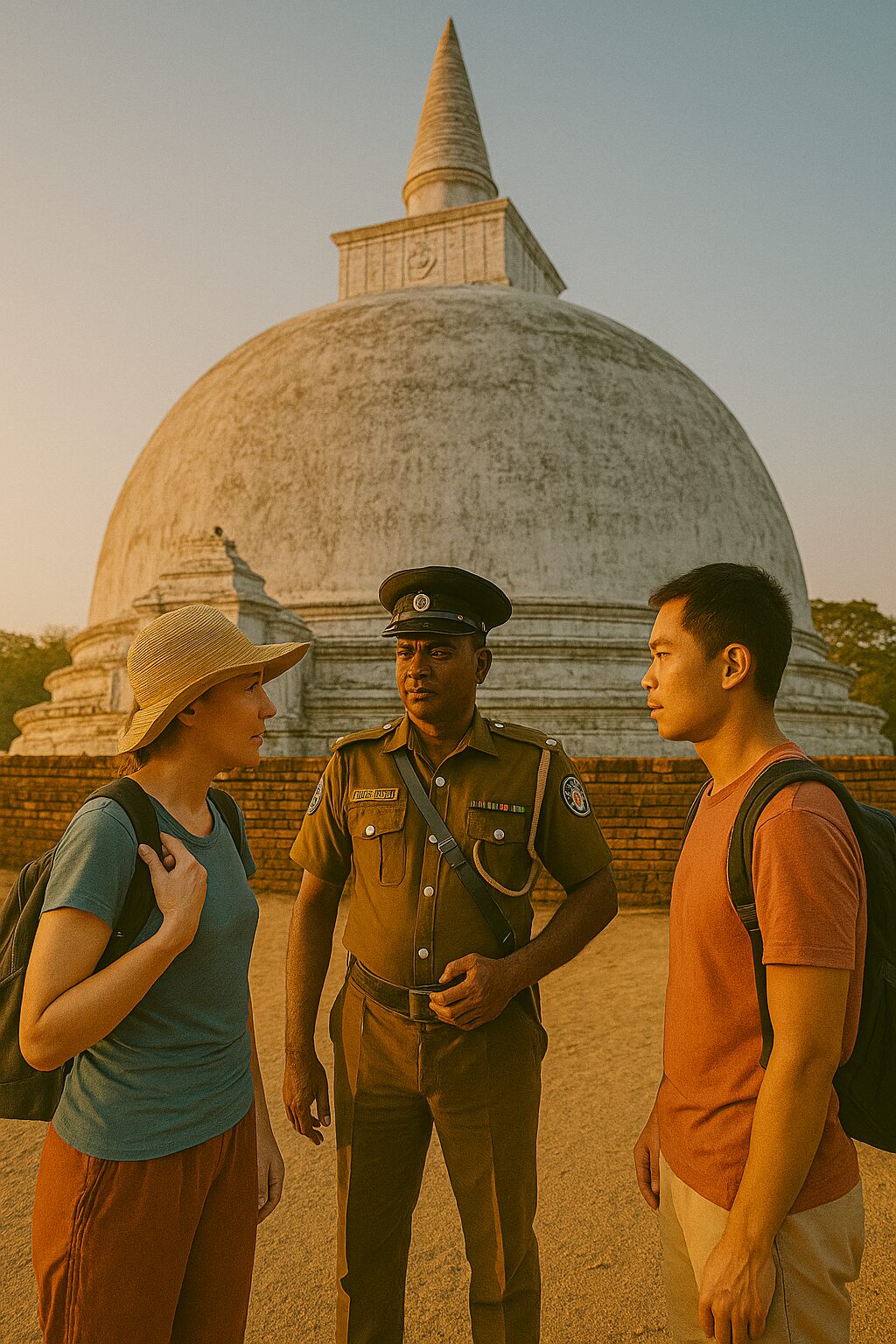
Protect Yourself from Heat
The Polonnaruwa climate feels hot for most of the year. Visitors should carry water at all times. A hat and light clothing help protect against sun exposure.
Morning and late afternoon visits reduce heat stress.
Walk Carefully Around the Platform
The stone areas near the stupa can feel slippery after rain or early morning dew. Walk slowly and choose stable footing.
Older visitors should take extra care near raised edges.
Keep Valuables Secure
Kiri Vehera Polonnaruwa remains peaceful and safe, but basic travel safety still matters. Carry small bags and keep valuables secure during walks.
Avoid placing phones or wallets on the platform edge.
Things You Should Never Do at the Site
-
Do not climb the stupa
-
Do not touch ancient plaster
-
Do not place stickers or marks
-
Do not light fires outside designated lamp holders
-
Do not bring food onto the sacred walking path
Each of these actions causes long-term damage or cultural disrespect.
Why Avoiding These Mistakes Matters
Kiri Vehera Polonnaruwa remains special because people protect its calm nature. One careless action can disturb both atmosphere and structure.
When visitors avoid these mistakes, they help preserve the site for future generations. They also gain a deeper and more meaningful experience.
First Impressions at Kiri Vehera Polonnaruwa
Most visitors notice the calm before anything else at Kiri Vehera Polonnaruwa. The open space, white stupa, and slow movement of people create instant stillness. The site does not overwhelm with size or noise. It welcomes with quiet presence.
Many travelers describe their first few minutes here as slow and reflective. Even those who arrive quickly tend to pause without realizing it.
This natural pause sets the tone for the entire visit.
How Visitors Describe the Experience
Visitors often use words like peaceful, soft, and grounding when they speak about Kiri Vehera Polonnaruwa. The space does not demand attention. It allows people to find their own pace.
Some feel a gentle emotional shift. Others feel simple relaxation after walking through busier ruins. There is no single reaction. Each person experiences the stupa in a personal way.
This quiet flexibility makes the site memorable.
Photography at Kiri Vehera Polonnaruwa

Best Angles for Photos
The best photographs often come from low ground angles. These show the full curve of the dome against the sky. Side angles also work well when sunlight falls across the surface.
Early morning and late afternoon provide the softest light. These hours reduce harsh shadows and improve color balance.
Respectful Photography Practice
Visitors should always keep distance from worshippers. Avoid aiming cameras directly at people in prayer. This moment belongs to them.
Do not climb structures for a higher angle. Natural ground-level views offer more authenticity.
The most powerful photos often come from patience rather than movement.
Sound and Silence at the Site
Sound plays a strong role in the experience at Kiri Vehera Polonnaruwa. Birds, wind, soft footsteps, and distant chanting replace traffic noise and crowds.
Visitors often notice how clearly they hear their own steps. This awareness draws attention inward and slows thought.
Silence acts as part of the experience, not an absence of sound.
Time Spent at the Stupa
Most visits last between fifteen and forty minutes. Some people stay longer in quiet reflection. Others return more than once during the same day.
There is no correct duration. The site allows freedom of time. Visitors may leave when they feel complete.
This freedom contributes to the relaxed emotional impact.
Emotional Impact After Leaving
Many visitors carry a calm feeling after walking away from Kiri Vehera Polonnaruwa. The memory feels soft rather than dramatic.
Even travelers who prefer large ruins often describe this stupa as their most peaceful memory of Polonnaruwa.
This quiet emotional imprint often lasts longer than visual excitement.
Time Required to Visit Kiri Vehera Polonnaruwa
Most visitors spend 15 to 30 minutes at Kiri Vehera Polonnaruwa. This time allows a slow walk around the stupa, quiet observation, and a few respectful photos.
Visitors who come for prayer may stay longer. Those who combine the stupa with nearby ruins often move on after a short visit.
The site does not demand long hours. It offers quality over duration.
Entry Access and Tickets
Kiri Vehera Polonnaruwa sits within the main Polonnaruwa Archaeological Park zone. Visitors enter using the same entrance ticket required for the larger site.
There is no separate ticket counter for this stupa. Once inside the park, you can walk or cycle freely between monuments.
Ticket checks sometimes take place near key junctions inside the park.
Best Way to Reach the Stupa Inside the Park

On Foot
Walking suits visitors who focus only on the sacred zone. Paths remain mostly flat and easy to navigate. The distance between Gal Vihara and Kiri Vehera stays short and comfortable.
Walking allows slower movement and better awareness of surroundings.
By Bicycle
Many visitors choose bicycles at the main entrance. Cycling saves time and energy, especially under strong sun.
The route to Kiri Vehera Polonnaruwa remains smooth and clearly marked. You can park your bicycle near the walking path entrance.
Suggested Visit Order for Easy Flow
A smooth visit order works like this:
-
Begin at Gal Vihara
-
Walk to Kiri Vehera Polonnaruwa
-
Continue through Alahana Pirivena ruins
-
End at Rankoth Vehera
This order balances visual impact, spiritual calm, and historical depth.
What to Carry for the Visit
Visitors should carry only what they need. Light travel works best in this area.
Recommended items include:
-
Drinking water
-
Sun protection
-
Light walking shoes
-
Small bag for personal items
Avoid heavy backpacks. They slow movement and feel uncomfortable inside sacred spaces.
Facilities Near the Site
Basic facilities remain limited around Kiri Vehera Polonnaruwa. Public restrooms and refreshment stalls operate closer to main park entrances rather than near the stupa itself.
Visitors should plan ahead before walking deep into the sacred zone.
Accessibility for Older Visitors
The ground near the stupa remains mostly flat. However, the stone platform has raised edges. Older visitors should walk slowly near these areas.
Benches and shaded areas remain limited. Short visits work best for those with mobility concerns.
Beautiful stupas and monuments abound in the area. Polonnaruwa is a visual and cultural treat. Go ahead and explore!
Read more reviews on Tripadvisor
Travel Planning Tips for a Smooth Visit
-
Start early to avoid heat
-
Visit on weekdays for fewer crowds
-
Combine sacred sites by walking
-
Allow extra time for quiet moments
These simple steps improve comfort and experience.
Legends Linked to Kiri Vehera Polonnaruwa
Over centuries, local communities passed down several stories about Kiri Vehera Polonnaruwa. These legends did not come from royal records. They came from village memory and oral tradition.
One common belief says the stupa protects the land from drought and disease. Many elders claim that heavy rains once arrived after long dry periods when monks performed special prayers at the site.
People still speak about these moments with strong faith.
Stories of Protection and Blessings
Villagers believe that the stupa offers quiet protection rather than visible miracles. They say travelers who pray here often return safely from long journeys.
Some families also believe that visiting Kiri Vehera before major life changes brings steady fortune. This includes marriage, travel abroad, and business ventures.
These beliefs shape how people continue to use the site, not how tourists see it.
Folklore Around the White Color of the Stupa

Another local story links the bright white color of Kiri Vehera Polonnaruwa to purity in both land and mind. Elders say the stupa once appeared dull during a period of social unrest.
After the conflict ended, villagers noticed the surface appear brighter again after rain and sunlight. They saw this change as a sign of harmony returning.
While this story holds no scientific proof, many still remember it with respect.
Tales of Monks and Silent Healing
Some legends speak of monks who once treated the sick inside the Alahana Pirivena complex. Villagers say these monks used herbal medicine and meditation together.
They believe the presence of Kiri Vehera strengthened these healing practices. People brought the ill not only for physical help but also for calm of the mind.
This blend of medicine and mindfulness still shapes the spiritual image of the area today.
Why These Stories Still Matter
Modern visitors may see these legends as symbolic rather than factual. Yet locals treat them as part of the living identity of the site.
These stories help people feel emotionally connected to Kiri Vehera Polonnaruwa. They turn stone and plaster into memory and meaning.
Even without proof, such folklore keeps cultural depth alive.
Place of Kiri Vehera Polonnaruwa in the Royal Sacred Network
Kiri Vehera Polonnaruwa did not stand alone during the Polonnaruwa Kingdom. It formed part of a carefully planned sacred network built under King Parakramabahu. Each monument served a different purpose. Together, they supported both royal authority and religious life.
Large stupas like Rankoth Vehera reflected royal power and national devotion. Image houses like Lankathilaka supported daily worship and teaching. Kiri Vehera played a quieter role. It served as a steady center for monastic devotion and personal prayer.
This balance allowed spiritual life to function at many levels.
Daily Religious Life During the Polonnaruwa Era
Monks followed strict daily routines around Kiri Vehera Polonnaruwa. Each day began at dawn with silent meditation. After that, the monks gathered at the stupa for morning worship. Throughout the rest of the daylight hours, they focused on studying sacred texts and religious discipline.
Patients from the nearby hospital also came here for quiet prayer. They believed mental calm supported physical healing. This practice blended medicine and faith in daily life.
Lay worshippers visited during special days and full moon periods. They did not enter monastic living zones. They respected boundaries set by tradition.
Role in Buddhist Education
Young monks trained in the Alahana Pirivena complex. Senior monks guided them in scripture, ethics, and meditation. Kiri Vehera Polonnaruwa acted as their spiritual anchor.
Students learned to walk in mindfulness. They learned to offer flowers without attachment. They learned silence through direct practice rather than instruction.
This training shaped thousands of future monks who later served across the island.
Connection to Royal Patronage
King Parakramabahu supported monastic institutions with land, water, and protection. Kiri Vehera benefited from this royal support even though it lacked royal display.
The king valued discipline, learning, and healing as much as monument building. This stupa reflected his respect for quiet devotion rather than ceremonial grandeur.
Royal guards once protected the wider sacred zone. This protection kept spiritual life stable during times of political tension.
Role During Periods of Decline
After Polonnaruwa lost its status as capital, royal power faded. Monastic life also weakened across many areas. Yet Kiri Vehera Polonnaruwa continued to receive local support.
Villagers offered food to remaining monks. Pilgrims continued to visit during full moon days. These acts prevented complete abandonment.
This steady community devotion helped preserve the stupa long after royal systems collapsed.
Why This Historical Role Still Matters Today
Many visitors see Kiri Vehera Polonnaruwa as only a quiet stupa. Few realize how central it once stood in the daily spiritual system of the kingdom.
It did not host royal ceremonies. It guided daily discipline, healing, and education. These quiet roles shaped society more deeply than public rituals.
This hidden influence forms one of the most meaningful parts of its legacy.
How Kiri Vehera Polonnaruwa Compares with Other Major Stupas

Sri Lanka holds some of the largest and most famous stupas in South Asia. Names like Ruwanwelisaya, Jetavanaramaya, Abhayagiri, and Rankoth Vehera dominate most historical discussions. These monuments reflect massive scale, royal ambition, and national pride.
Kiri Vehera Polonnaruwa belongs to a different category. It does not compete through size. It stands apart through preservation, calm atmosphere, and active worship.
This difference gives it a unique place among Sri Lanka’s sacred monuments.
Comparison with Rankoth Vehera
Rankoth Vehera and Kiri Vehera share the same royal builder, King Parakramabahu. Both belong to the same historical period. Yet their purpose and emotional impact feel very different.
Rankoth Vehera rises with monumental force. Its massive dome reflects royal authority and large-scale devotion. Crowds often gather there. Visitors feel its power immediately.
Kiri Vehera Polonnaruwa feels personal by contrast. It invites quiet prayer instead of awe. Its scale supports reflection rather than spectacle. This contrast shows how Polonnaruwa balanced political power and daily devotion.
Comparison with Ruwanwelisaya in Anuradhapura
Ruwanwelisaya symbolizes national Buddhist identity. It attracts enormous crowds during major festivals. Devotees travel from across the country to worship there.
Kiri Vehera Polonnaruwa serves a quieter role. It supports local devotion more than national ceremony. Visitors arrive in small numbers. They come for calm rather than celebration.
Both stupas hold sacred value. They simply serve different spiritual functions.
Comparison with Jetavanaramaya
Jetavanaramaya once stood as one of the tallest structures in the ancient world. Its engineering scale still amazes historians today.
Kiri Vehera Polonnaruwa does not aim for height. It aims for harmony. Its strength lies in balance, not dominance.
This shows how Sri Lankan stupa architecture did not follow a single pattern. Builders tailored form to purpose rather than prestige.
Comparison with Abhayagiri Stupa
Abhayagiri became a center for scholarly monks and large-scale monastic communities. Its stupa served as part of a massive religious city.
Kiri Vehera Polonnaruwa served a smaller but focused spiritual zone. It supported meditation, healing, and disciplined training. Its role stayed inward rather than outward.
Both contributed deeply to Buddhist life, but through different methods.
What Makes Kiri Vehera Truly Unique
Several key traits separate Kiri Vehera Polonnaruwa from most other stupas:
-
It remains one of the best-preserved original stupas in Sri Lanka
-
It still functions as a daily worship site
-
It stands inside a medical and meditation complex
-
It maintains a calm visitor flow even during peak seasons
Most large stupas gained fame through size and spectacle. Kiri Vehera gained meaning through continuity and quiet devotion.
Why These Differences Matter to Visitors
Visitors often expect scale and grandeur at ancient monuments. Kiri Vehera Polonnaruwa reshapes that expectation.
It shows that spiritual depth does not depend on size. It proves that time can preserve silence as powerfully as stone.
For many travelers, this quiet contrast becomes one of their most meaningful discoveries in Polonnaruwa.
Spiritual Symbolism of Kiri Vehera Polonnaruwa
Kiri Vehera Polonnaruwa carries deep symbolic meaning through its form, color, and setting. Every part of the stupa reflects a layer of Buddhist philosophy. Visitors may not always notice these meanings, but the structure communicates them silently.
The dome represents the universe and the mind at rest. Its round shape reflects balance and unity. It reminds devotees of wholeness rather than division.
The harmika at the top symbolizes moral discipline. It reflects the structure of ethical life in Buddhism. The spire rising above it represents the final path toward enlightenment.
These elements work together as a complete spiritual message.
Meaning of the White Color
The white surface of Kiri Vehera Polonnaruwa stands as one of its most powerful visual features. White represents purity, non-attachment, and clarity of thought in Buddhist tradition.
This color also reflects simplicity. It removes distraction. It directs attention inward rather than outward.
Many devotees believe the bright surface helps settle the mind before prayer. Even visitors without religious background often feel this calming effect.
Energy and Atmosphere at the Site
Many people describe a gentle sense of energy around Kiri Vehera Polonnaruwa. This energy does not feel dramatic. It feels steady and quiet.
The open space allows the wind to move freely. The sound of leaves and distant birds replaces urban noise. These natural elements strengthen the feeling of mental openness.
The absence of heavy decoration also shapes this energy. Nothing competes for attention. The mind slows naturally.
Symbolism of Circumambulation

Walking clockwise around Kiri Vehera Polonnaruwa holds strong symbolic meaning. This act reflects movement in harmony with natural order.
Each round represents the cycle of life, suffering, awareness, and release. Devotees focus on breath, intention, and silence during this walk.
This simple action becomes a form of moving meditation rather than ritual routine.
Role of Stillness in Spiritual Meaning
Stillness forms part of the message of Kiri Vehera. The structure does not invite fast movement. It discourages urgency.
Visitors naturally reduce speed. Even conversation tends to fade without warning. This stillness reflects the Buddhist path of awareness and restraint.
The stupa teaches through atmosphere rather than instruction.
Personal Interpretations by Visitors
Each visitor connects with Kiri Vehera Polonnaruwa in a different way. Some feel religious devotion. Others feel emotional release. Some feel quiet joy. Others feel simple peace.
None of these reactions require belief. The site allows space for personal meaning without demand.
This openness gives the stupa its universal spiritual draw.
Why Symbolism Still Matters Today
Modern life often pushes speed, noise, and constant attention. Kiri Vehera Polonnaruwa offers the opposite.
Its symbolism reminds visitors that restraint can hold strength. Silence can carry power. Simplicity can deepen awareness.
These timeless values keep the spiritual meaning of the stupa relevant in every era.
Preservation Ethics at Kiri Vehera Polonnaruwa
Kiri Vehera Polonnaruwa survives today because people chose protection over alteration. Preservation here does not focus on heavy rebuilding. It focuses on safeguarding what already remains.
Experts aim to stabilize rather than modernize. They repair only what risks collapse. They avoid replacing original material unless failure leaves no other option.
This careful approach keeps the stupa authentic. It allows visitors to experience the structure close to its original state.
Balancing Tourism and Sacred Respect
Tourism brings awareness and funding. It also brings pressure. Kiri Vehera Polonnaruwa feels this balance every day.
Most visitors show respect. Some arrive without knowledge of sacred conduct. Education plays a key role in managing this pressure.
Clear signs, polite guidance from caretakers, and responsible tour leaders help regulate behavior. These small actions protect the spiritual tone of the site.
Physical Threats from Visitor Movement
Foot traffic causes gradual wear on stone paths. Touching ancient surfaces weakens plaster. Leaning on edges creates hidden cracks.
These effects do not show immediately. They collect slowly over years. This slow damage often becomes the hardest to reverse.
This is why even small rules at Kiri Vehera Polonnaruwa carry long-term meaning.
Climate and Natural Aging
Weather remains one of the strongest forces acting on the stupa. Sun, rain, and wind shape the surface every year.
Heavy rainfall affects drainage. Dry heat stresses surface plaster. Vegetation grows wherever moisture collects.
Conservation teams monitor these changes closely. They deal with moisture control, plant removal, and surface inspection throughout the year.
Role of Responsible Tourism
Responsible tourism protects both culture and structure. Visitors help preservation when they follow small rules with care.
Walking gently, avoiding touch, respecting silence, and following dress guidelines all reduce long-term strain on the site.
Responsible behavior spreads faster than formal rules. Visitors often follow the example they see.
Role of Local Community in Future Protection
Local residents remain the strongest guardians of Kiri Vehera Polonnaruwa. Their daily presence prevents vandalism and neglect.
They report damage early, guide lost visitors and maintain calm when crowds grow.
Their connection protects the site beyond official systems.
Long-Term Protection Plans
Authorities continue to review protection strategies. These include visitor flow management, surface monitoring, and education programs for tour operators.
Future plans avoid commercial expansion near the sacred zone. Officials aim to keep the surrounding space open and quiet.
This strategy protects both the structure and the feeling that defines the site.
Why Future Protection Matters
Once original material disappears, history loses part of its voice. Kiri Vehera Polonnaruwa still speaks clearly through its original form.
Protecting this voice carries value for archaeology, religion, and future generations alike.
Every careful step today shapes how this stupa will speak tomorrow.
Final Reflections on Kiri Vehera Polonnaruwa
Kiri Vehera Polonnaruwa does not overwhelm visitors with size or decoration. Instead, it works in a quieter way by slowing people down and softening thought. The space invites stillness without asking for belief or explanation.
Many travelers arrive with cameras but leave with calm. That quiet shift defines the true power of this place. The stupa speaks without sound and teaches without instruction. Very few monuments manage this level of silent influence.
Why This Stupa Feels Different from Other Sites

Ancient sites often impress through scale, drama, and visual intensity. Kiri Vehera Polonnaruwa chooses a different language. It communicates through balance, light, and open space.
Rather than competing with nearby monuments, it completes them. After large ruins and busy pathways, this stupa creates a pause. That pause shapes memory more than spectacle ever could.
In the end, visitors often remember how they felt here rather than what they photographed.
What Travelers Carry After the Visit
People leave Kiri Vehera Polonnaruwa with different emotions. Some feel calm, others feel light, while a few feel thoughtful without knowing why.
That emotional carry matters more than historical data. Facts educate, but feeling creates connection. This quiet connection often draws visitors back in memory long after they leave Polonnaruwa.
Why Kiri Vehera Still Matters Today
Modern life moves fast, and Polonnaruwa once moved fast too in its own way. Yet Kiri Vehera remained slow even during the kingdom’s busiest years.
That same slowness now offers rare value. It teaches restraint in a world driven by urgency and offers silence where noise dominates.
Its importance remains strong because it still performs the same role it once did. It steadies the mind.
The Lasting Value of This Sacred Space
Kiri Vehera Polonnaruwa serves as a bridge between past and present. It connects royal history, monastic discipline, village faith, and modern travel into one quiet space.
The stupa does not demand attention. Instead, it receives it naturally. This lasting balance stands as its greatest strength.
Closing Thought
Many places in Polonnaruwa tell stories of power, engineering, and ambition. Kiri Vehera tells a different story. It tells the story of calm.
That calm survived empires, jungle growth, colonial clearing, modern tourism, and changing belief.
As long as people continue to walk slowly around its base, this stupa will continue to teach without words.
Frequently Asked Questions About Kiri Vehera Polonnaruwa
General Visiting Questions
Kiri Vehera is famous for being one of the best-preserved ancient stupas in Sri Lanka and for its calm spiritual atmosphere.
Yes. Devotees visit daily for prayer, flower offerings, and oil lamp lighting.
Most visitors spend between 15 and 30 minutes at the site.
Location and Access Questions
Kiri Vehera is located within the Alahana Pirivena complex, near Gal Vihara.
Yes. A single Polonnaruwa archaeological park ticket allows access to Kiri Vehera.
Yes. The route is flat and well marked, making it very suitable for cycling.
Dress Code and Visitor Conduct
Visitors must cover their shoulders and knees and remove footwear near the platform.
Yes, photography is allowed, but flash and posing disrespectfully should be avoided.
No. Sitting on sacred surfaces is not allowed and damages the structure.
Best Time and Weather Questions
Early morning and late afternoon offer the best light and cooler temperatures.
Yes, but visitors should walk carefully as stone surfaces may become slippery.
It usually remains quieter than other major sites like Gal Vihara and the Royal Palace.
Religious and Cultural Meaning
Clockwise walking represents respect and spiritual alignment in Buddhist tradition.
Yes. Many locals visit for peace of mind, protection, and personal guidance.
Yes. The surrounding Alahana Pirivena area once supported both spiritual and medical care.
Safety and Travel Planning
Yes. The site is calm, open, and regularly visited by pilgrims and tourists.
No. Facilities are located closer to the main park entrance.
Yes, but they should walk slowly near raised stone edges.


