


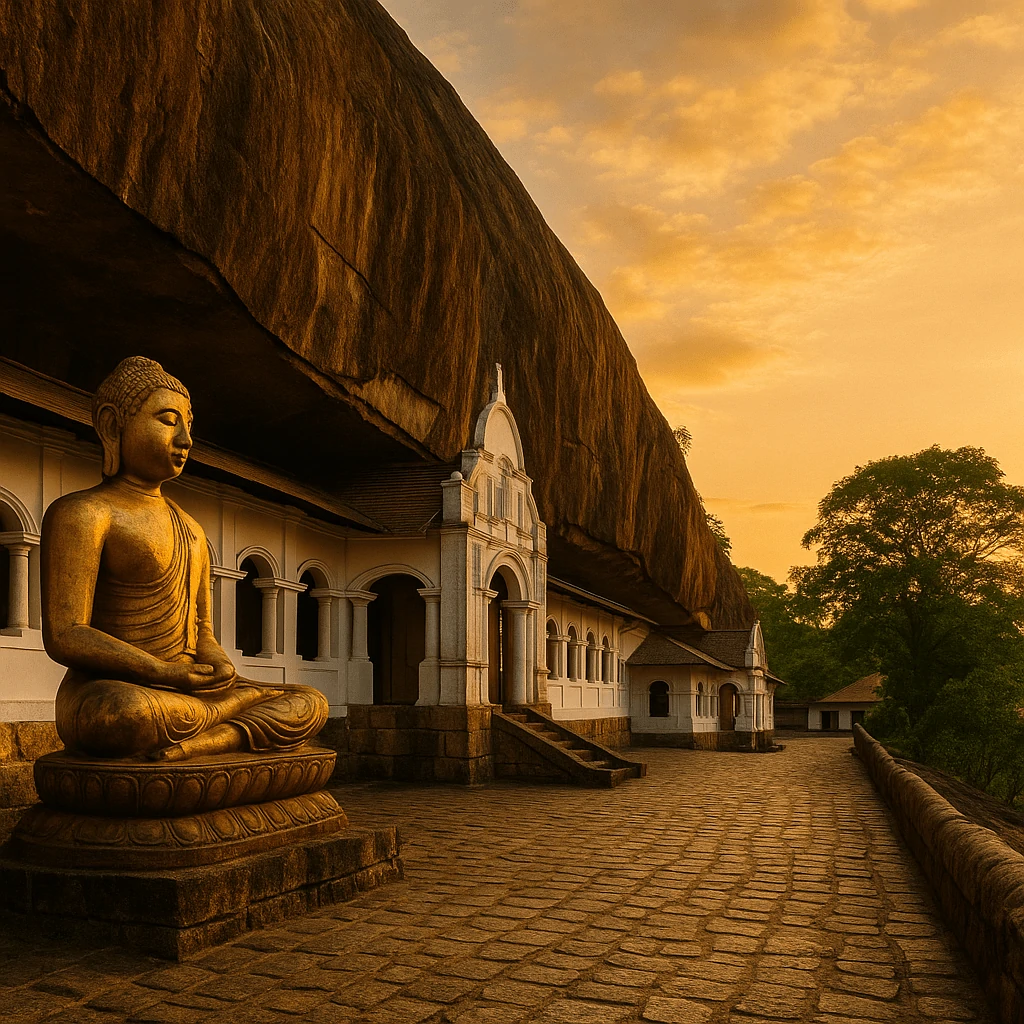
When I arrived at the base of the Dambulla Cave Temple, the morning air felt calm and cool. Before planning your visit, it’s important to check the Dambulla Cave Temple opening hours to fully enjoy your experience. A golden Buddha watched over the entrance, glowing under the soft Sri Lankan sun. Around me, locals moved slowly up the steps, carrying lotus flowers and small oil lamps. Their rhythm matched the stillness of the rock. I could already sense that time moved differently here.
The Dambulla Cave Temple, also called the Golden Temple of Dambulla, sits in the heart of Sri Lanka’s Cultural Triangle. It’s a place where art, devotion, and history blend perfectly. Before my visit, I made sure to learn about the Dambulla Cave Temple opening hours so I could climb before the heat settled on the rocks. That small decision made all the difference. The climb felt peaceful, and the light inside the caves revealed every detail of the ancient murals.
Explore Dambulla Cave Temple (Golden Temple of Dambulla) on google maps
This isn’t just another tourist stop. It’s a living monastery. Monks still chant inside the caves. Their voices echo softly across stone walls painted more than two thousand years ago. If you love culture, history, or quiet spiritual places, this temple will touch you in ways you can’t plan. The Dambulla Cave Temple forms one corner of Sri Lanka’s famed Cultural Triangle.
🏛️ The Story Carved in Stone – History of Dambulla Cave Temple
The story of this temple begins with a king in exile. Over two millennia ago, King Valagamba of Anuradhapura lost his throne during a South Indian invasion. Forced to flee, he found safety among monks living in these caves. They offered him food and shelter for years. When he finally reclaimed his kingdom, the king returned to thank them in the grandest way possible. He turned their refuge into a sanctuary for the Buddha.
Standing inside the first cave, I could imagine that moment. The ceiling curves low like a natural dome. Every surface glows with paintings of Buddha’s life. The air feels ancient yet alive. It’s humbling to think that these murals have survived centuries of rain, wind, and change.
As centuries passed, other rulers added their mark. King Nissanka Malla gilded the walls with gold leaf, giving the temple its modern name — the Golden Temple. Others restored the statues, repainted the frescoes, and built the entrance structures seen today. Despite wars and invasions, the caves remained a safe haven for monks and pilgrims.
🕉 The Heart of Devotion – What Awaits Inside
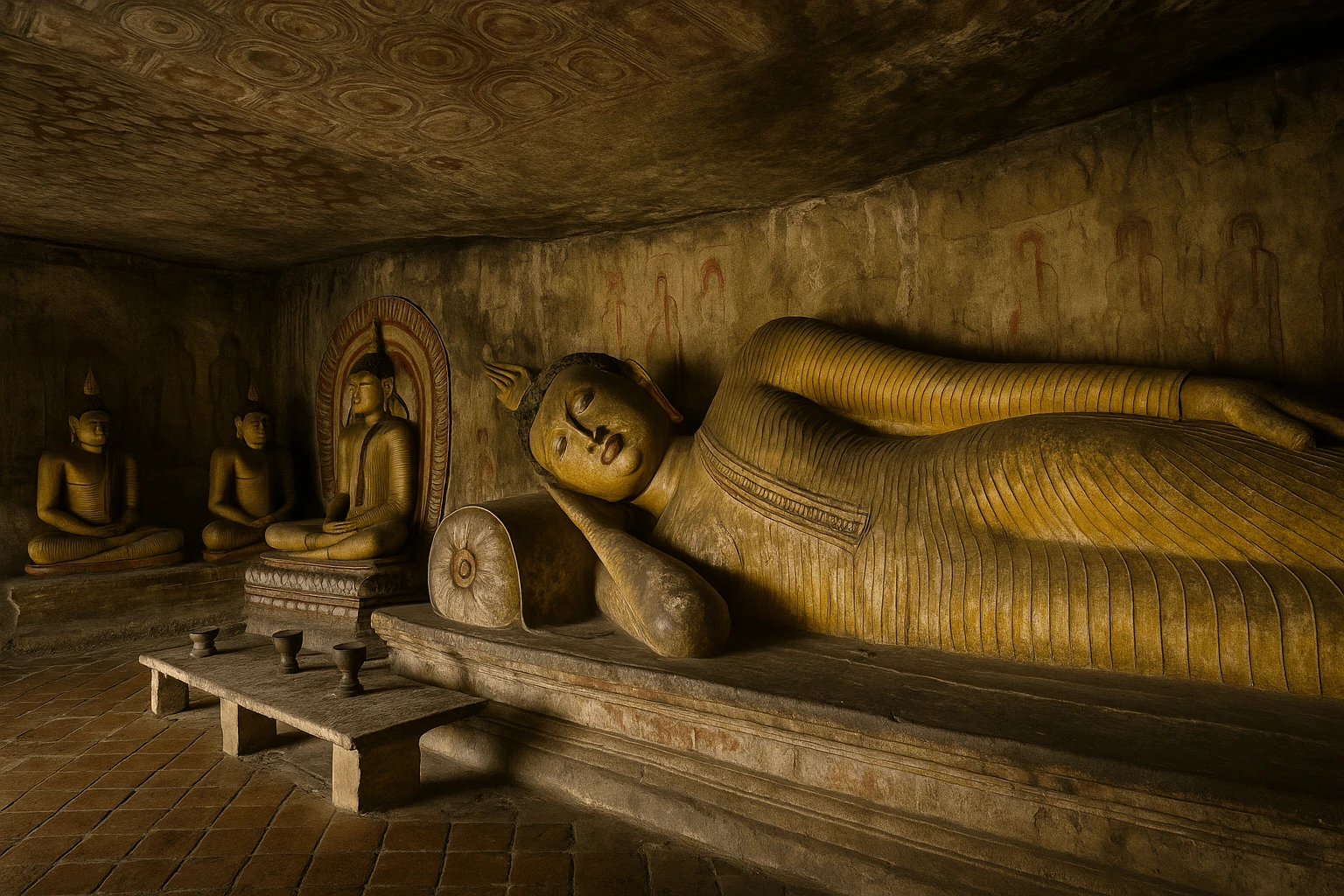
The Dambulla Cave Temple has five main caves, each with its own charm and story. When I entered the first one, the air felt cool and heavy with incense. In front of me, a massive reclining Buddha stretched almost the entire length of the chamber. Candlelight flickered across the surface, making it look alive.
In the second cave, the scale amazed me. Over fifty Buddha statues sat in rows, each hand-carved from stone. Above them, a sea of murals told stories from the Jataka tales — ancient legends of Buddha’s past lives. The colors were deep reds, ochres, and blues, still rich despite centuries of humidity.
The third cave was quieter. The walls shimmered faintly from the reflection of oil lamps. I noticed a small stupa at the back, said to contain sacred relics. The silence here was powerful. I could hear the faint rustle of robes as monks passed behind me.
Each cave blends faith and art in perfect balance. Every carving and brushstroke carries the effort of devotion. Even for someone who isn’t Buddhist, it’s impossible not to feel moved.
🌅 Planning Your Visit – Opening Hours and Best Time
The Dambulla Cave Temple opening hours are generous, but timing your visit matters. The temple usually opens at 7:00 a.m. and closes around 7:00 p.m. However, I found that the best experience comes between 7:00 a.m. and 9:00 a.m. During these hours, the light is soft, and the climb is pleasant. The crowds are small, and you can enjoy quiet moments inside each cave.
Midday visits can be tiring because of the heat. The stone absorbs sunlight quickly, and the steps can feel hot. If morning isn’t possible, late afternoon works well too. Around 4:30 p.m., the sun sits low, and the view across the plains turns golden.
Before you go, remember to dress modestly. Shoulders and knees must be covered. Bring a light scarf or shawl if needed. You’ll have to remove your shoes before entering, so wear sandals or easy footwear. Carry a small bag for them — I forgot once and had to backtrack halfway down the stairs!
💰 Entrance Fees, Dress Code, and Practical Travel Essentials
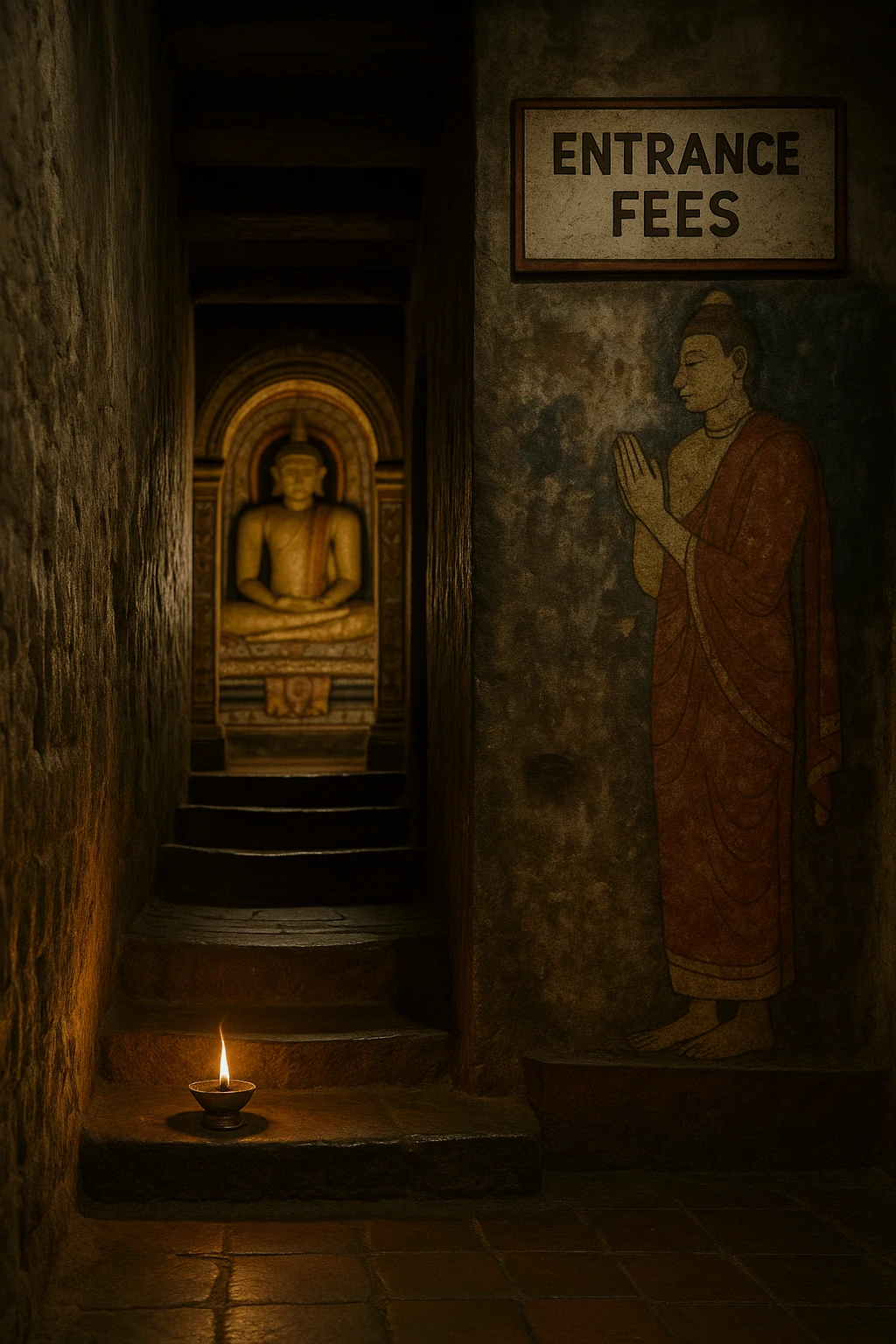
When I reached the entrance to buy my ticket, I realized how organized the process was. The ticket counter sits near the base of the hill, beside the large golden Buddha statue. It’s better to buy your ticket there before starting the climb, as there’s no booth at the top. If you’re planning to spend a night nearby, check out the Best Luxury Hotels in Sigiriya for a comfortable base before visiting the caves.
The Dambulla Cave Temple entrance fee for foreign visitors is usually around 1,500–2,000 LKR (about 5–6 USD). Prices change slightly depending on local updates, so it’s smart to bring extra cash in small notes. Locals pay less, and children often enter for free or at half price.
Always keep your ticket safe because attendants will check it near the upper entrance gate. I once tucked mine inside my camera bag and nearly forgot where I put it! Small moments like that can add stress, especially in the warm sun.
It takes a while to climb up the small hill to visit the Dambulla cave temples. The paintings look so stunning with clear structure and colourful pattern. The statues with different sizes are truly impressive.
🧘 Dress Code: A Sign of Respect
The Dambulla Cave Temple isn’t just a tourist attraction; it’s a living monastery. Monks live and meditate here every day. Dress respectfully to honor their tradition. Shoulders and knees should be covered for all visitors.
I wore a light cotton shirt and loose pants, which kept me cool and comfortable. Many travelers bring a scarf or sarong to wrap around their waist if their shorts are too short. You’ll also need to remove your shoes before entering the temple grounds.
There’s a designated shoe-keeping area near the main gate. The attendants there usually expect a small donation — something like 50–100 LKR. It’s a simple gesture that supports temple maintenance and local workers.
🧴 Travel Tips: Preparing for the Climb
The walk to the top isn’t long, but it can be warm. The stone steps are smooth, and the slope is steady. Bring a small bottle of water, especially if you visit outside the early Dambulla Cave Temple opening hours. Hydration helps you enjoy the climb without rushing.
Wear shoes that are easy to slip off and back on. The floor around the cave entrances can be warm during midday. If you visit in the afternoon, take short breaks under the shade of nearby trees.
Photography is allowed inside most caves, but flash photography is not. The bright light can harm the centuries-old murals. I took my photos in natural light, and the results were more beautiful than expected.
If you carry a tripod or a large backpack, check if it’s allowed. Some guards restrict bulky gear during crowded hours. Keeping your bag light makes the climb easier and lets you move freely through the narrow cave corridors.
🧭 Knowing Before You Go
I always recommend starting your day early. The Dambulla Cave Temple opening hours begin at 7:00 a.m., which is perfect for catching the morning calm. Arriving early also gives you more time to explore nearby sites later in the day, like the Dambulla Golden Buddha Museum or the small Ironwood Forest (Na Uyana Aranya) where monks meditate among ancient trees.
If you plan to visit Sigiriya afterward, note that it’s only about 17 kilometers away. You can visit both in one day if you start early. That’s why knowing the Dambulla Cave Temple opening hours helps you build a smooth itinerary. If you plan to continue your journey after exploring Dambulla, consider a night near Sigiriya. Our guide to the Best Luxury Hotels in Sigiriya, Sri Lanka – Top 5-Star Boutique Stays with Fortress Views will help you choose the perfect place to relax with fortress views.
🕰 Cultural Etiquette and Behavior
Inside the caves, silence feels sacred. Visitors often whisper or stay quiet out of respect. Avoid touching the statues or leaning against the painted walls. The paint is delicate and centuries old.
Always face the Buddha statues respectfully when taking photos or walking past them. It’s also polite to remove hats or caps. Even small acts like this show respect for local customs and spiritual spaces.
I once watched an older monk light an oil lamp inside the main cave. The flame flickered softly against the gold-painted walls. That quiet moment made me realize how much these traditions mean to the people who guard this temple.
🎒 Travel Essentials Checklist
Here’s what I found most useful for a smooth and comfortable visit:
-
Light cotton or linen clothing
-
A scarf or sarong for covering shoulders or knees
-
Refillable water bottle
-
Small cash for tickets and donations
-
Slip-on sandals or shoes
-
Camera (no flash)
-
A small umbrella or cap for shade
-
Tissue or wipes for the climb
These little details matter more than you think. When you travel prepared, you can focus fully on the atmosphere — the sound of chanting monks, the smell of incense, and the beauty of art carved into stone.
The Five Caves of Dambulla – A Journey Through Living History
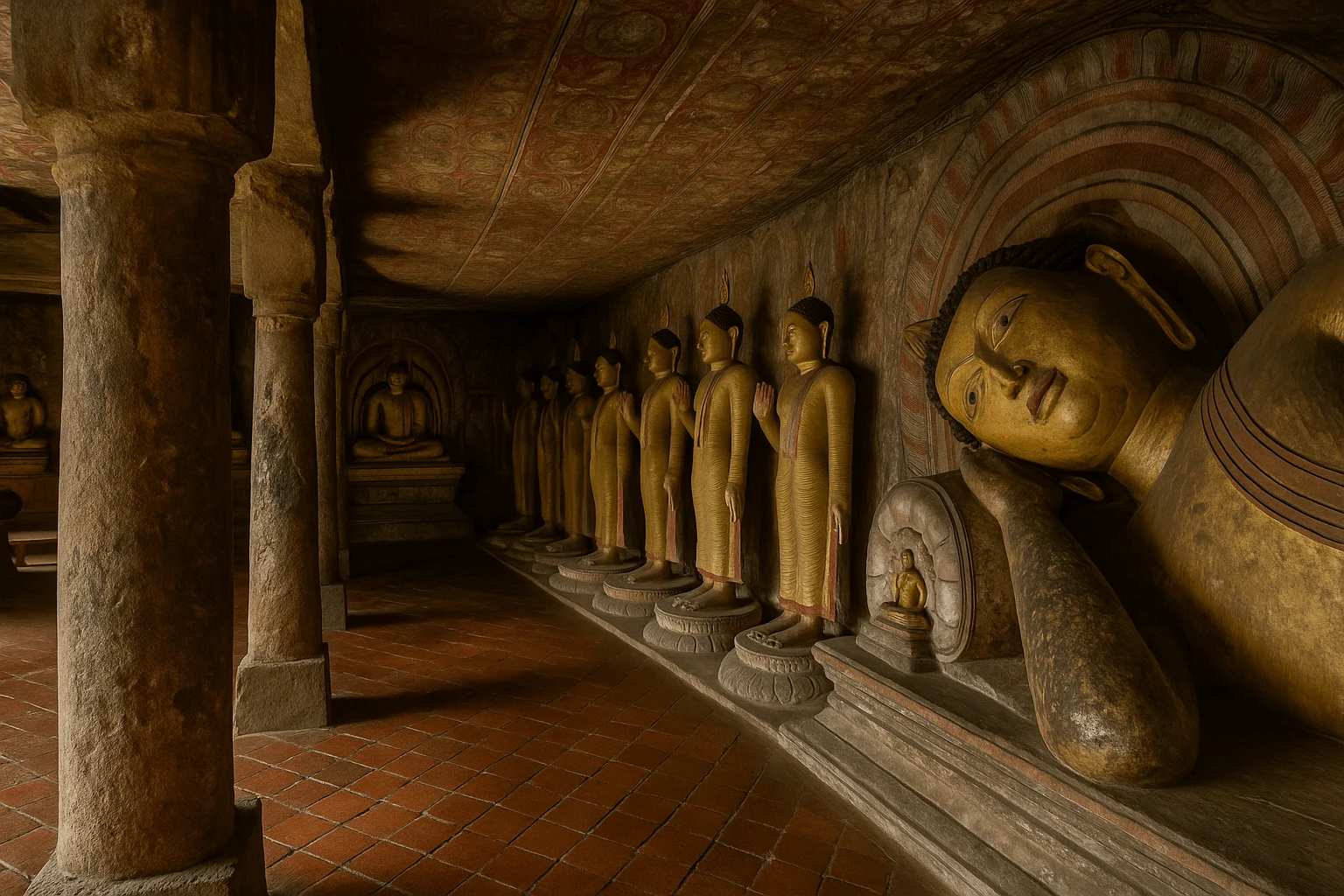
When I stepped into the first chamber, the air changed instantly. The sound of the outside world faded, replaced by silence and the faint scent of oil lamps. Each of the five caves here tells a different story. Together they create a journey through faith, art, and time.
🕉 Cave 1 – The Devaraja Lena (“Cave of the Divine King”)
This was my first stop. A long reclining Buddha stretched across the dim space, carved directly from the rock. His calm expression reflected the stillness around him. Close by stood statues of Vishnu and Ananda, guardians of both faith and compassion.
The cave’s ceiling shimmered faintly, its paintings aged but intact. I felt the sense of refuge that once protected King Valagamba when he hid here centuries ago. It’s easy to imagine him praying under this same roof before reclaiming his throne.
The gentle light inside made every curve of the Buddha’s form glow softly. Visiting early — within the Dambulla Cave Temple opening hours — gave me time alone here before the crowds arrived. That peace set the tone for the rest of my visit.
🪔 Cave 2 – The Maharaja Lena (“Cave of the Great Kings”)
The second cave felt like entering a hidden palace. This is the largest chamber, filled with more than fifty Buddha statues and two striking figures of Sri Lankan kings — Valagamba and Nissanka Malla. Their presence reminds every visitor that devotion and power once worked hand in hand.
The murals here are extraordinary. They cover the entire ceiling and walls, telling stories from Buddha’s life and his previous births. The reds and yellows seem to breathe under lamplight. I stood there for several minutes, trying to follow each scene from birth to enlightenment.
A natural spring drips from the ceiling into a small basin near the center. Locals believe its water never dries. I touched a few drops — cool, clear, and ancient. Small details like that make the temple feel alive.
Cave 3 – The Maha Alut Viharaya (“Great New Monastery”)
Despite the name “new,” this cave dates back several centuries. It was added during the Kandyan period when the temple received royal support once again.
Inside, dozens of Buddha statues line the walls. Their faces share the same gentle expression — serene and compassionate. Above them, bright murals blend with older artwork, showing how each generation added its layer to the sacred story.
When I visited, a monk quietly placed fresh lotus flowers in front of one statue. The petals glowed against the stone floor. That simple act felt more powerful than any grand ceremony.
If you arrive soon after the Dambulla Cave Temple opening hours, the sunlight entering from the doorway strikes these statues perfectly. The soft golden hue makes the space almost ethereal.
🌺 Cave 4 – The Pachima Viharaya (“Western Cave”)
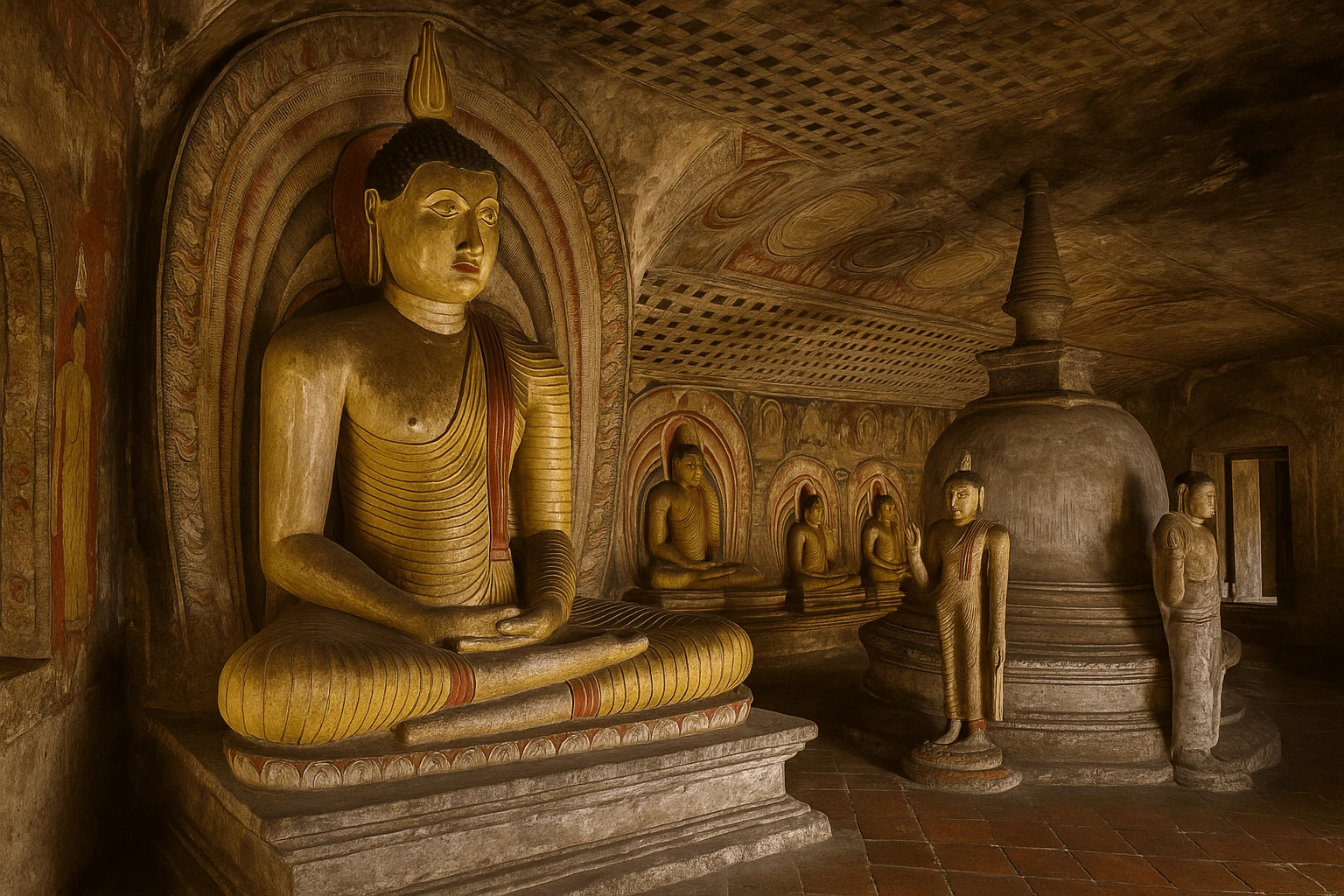
This smaller cave holds a seated Buddha under a carved arch. The walls carry fewer paintings, but the simplicity gives it charm. I liked the stillness here; most visitors move quickly through it, leaving a brief pocket of quiet.
Two small figures of deities stand beside the Buddha, symbolizing protection. I sat for a while, letting my eyes adjust to the low light. The rhythm of temple bells below drifted faintly upward.
This cave taught me something about travel itself: not every space needs grandeur to leave an impression. Sometimes peace is the most memorable detail.
🌼 Cave 5 – The Devana Alut Viharaya (“Second New Monastery”)
The final cave sits slightly apart from the others. Its ceiling feels lower, the walls smoother. Inside, the main Buddha statue rests under a painted canopy of lotus petals. Newer paintings decorate the surface, showing both ancient style and modern devotion.
I met a young monk here who was sweeping the floor with a palm broom. He smiled and said softly, “Every day we clean, and every day it becomes new again.” That sentence stayed with me the entire day.
Standing at the exit, I looked back toward the row of caves. Each one reflected a different century of Sri Lanka’s history, preserved in color and stone.
What a beautiful place. Several temples carved into the rock and decorated so beautifully. At the beginning I thought the ceiling was covered in cloth or carpet but on closer inspection I saw it was intricately painted artwork.
🌄 A Moment to Pause
After exploring all five caves, I stepped outside and took a deep breath. The valley below spread wide and green, with paddy fields shining in the sunlight. From that height, I could even spot the faint outline of Sigiriya far away.
Morning visitors often catch this view bathed in golden light. That’s why I always tell travelers: plan around the Dambulla Cave Temple opening hours. Arriving early rewards you with serenity, cooler air, and the softest colors imaginable.
When I stepped out from the caves, the brightness felt almost unreal. The world below stretched out in waves of green. From the top of this rock, the landscape tells its own story — paddy fields, small lakes, and distant mountains fading into mist.
I walked toward a ledge where a few pilgrims sat quietly. They weren’t looking at the view; they were meditating. That moment reminded me that Dambulla isn’t only about art and history. It’s about silence, reflection, and connection. From the summit of Dambulla, you can see the distant outline of Sigiriya. If you plan to explore it next, read our Ultimate Sigiriya Rock Fortress Travel Guide for the best viewing points and tips.
The Golden Buddha and the Lower Terrace
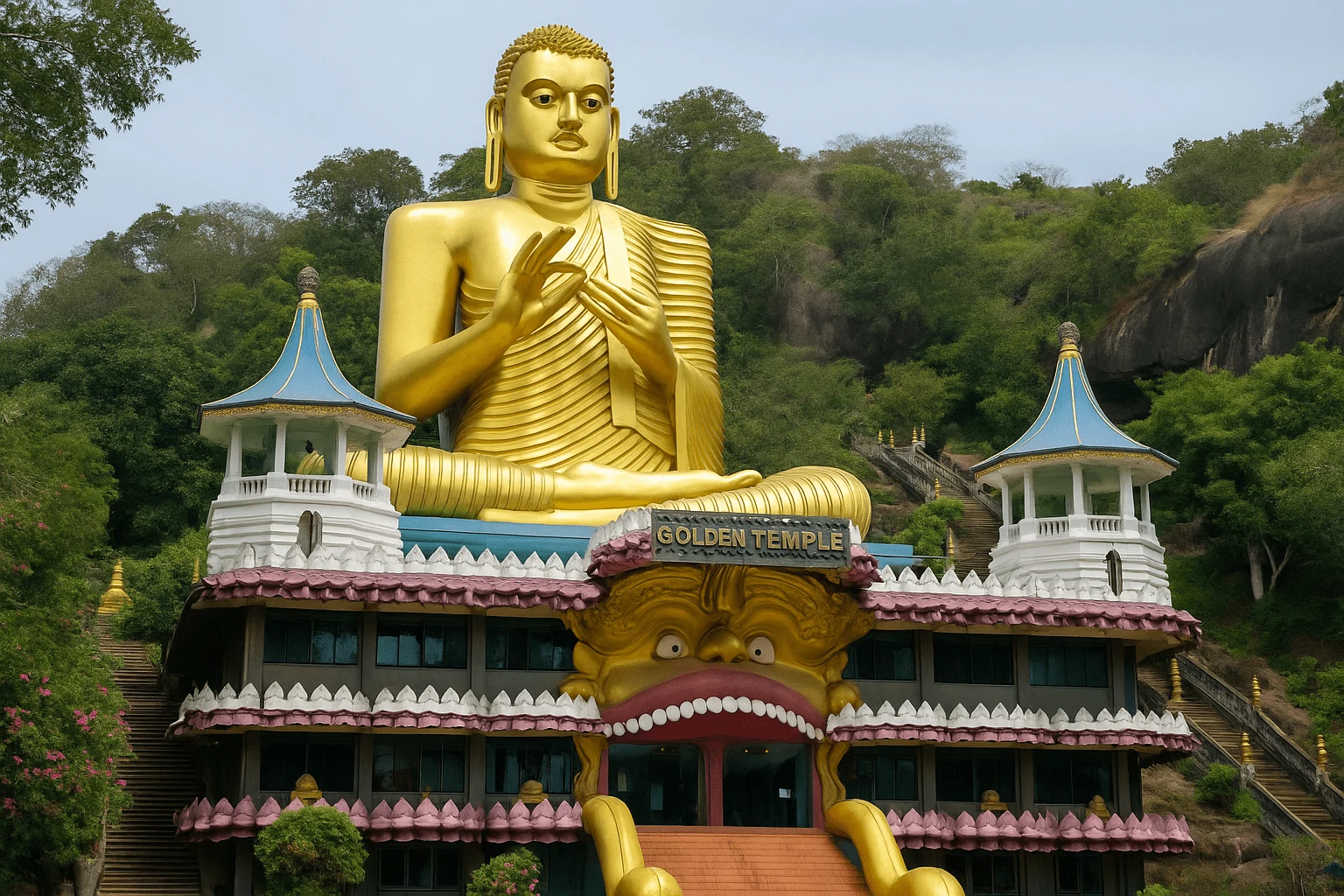
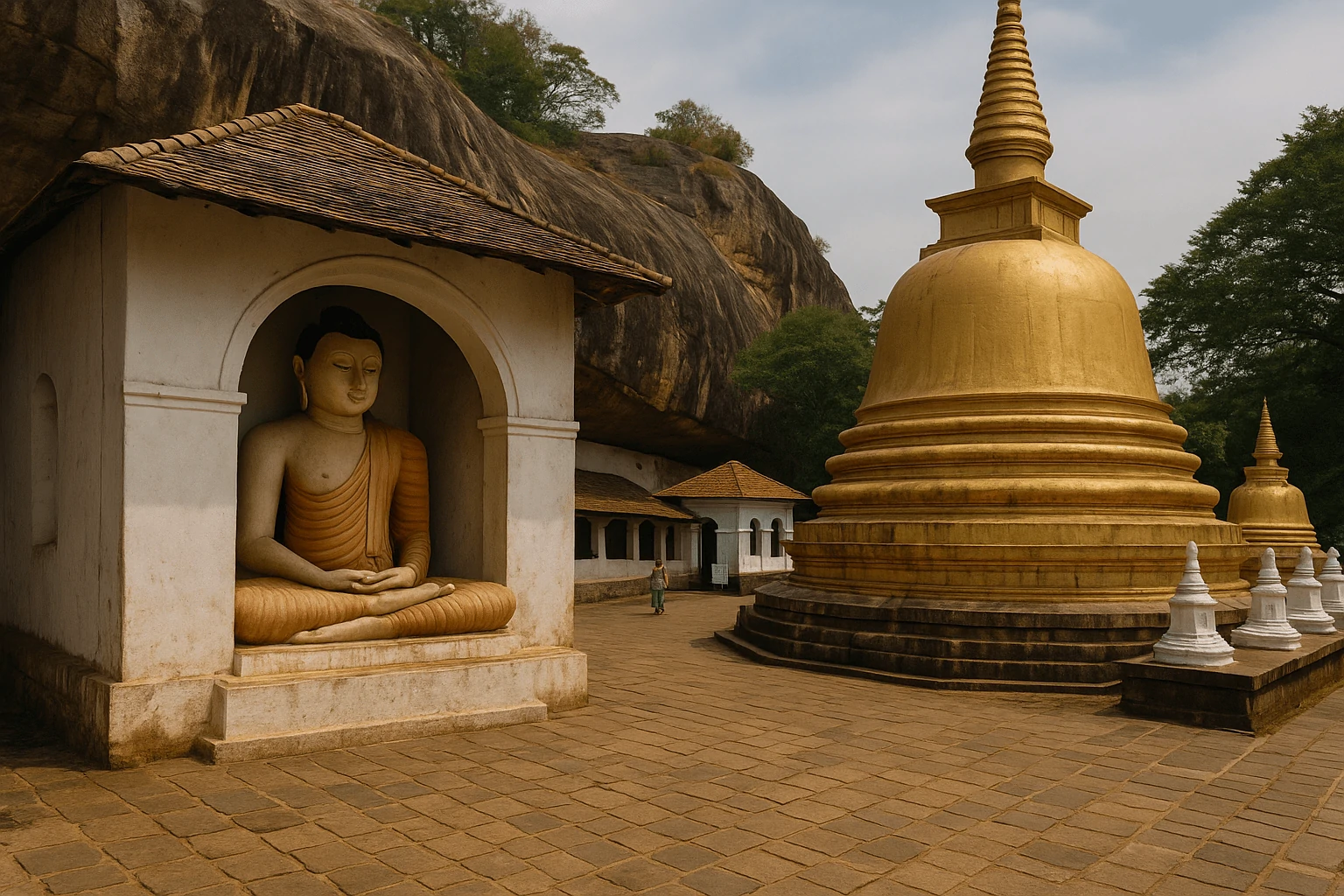
Before climbing up, I had already seen the enormous golden Buddha statue near the entrance. From above, it looked even more impressive. The statue rises almost 30 meters high and gleams against the blue sky. Its calm face feels welcoming, as if it watches over everyone approaching the hill.
Around the statue stands the Golden Temple Museum, displaying miniature models of the caves and detailed explanations of their artwork. The museum also helps you understand how the temple fits into the wider Cultural Triangle.
Visiting early, soon after the Dambulla Cave Temple opening hours, means you’ll find the museum empty and the Buddha glowing in the soft morning light. The combination of color and quiet makes it ideal for photography or simply for standing still.
While most travelers rush between the caves and the main gate, a few narrow trails lead off into shaded spots. I followed one of them and found a small shrine surrounded by flowering trees. It wasn’t listed in any guide, yet incense burned there, and fresh offerings rested on the stone.
A monk nearby smiled and said, “Few people walk here, but the spirit of the place lives everywhere.” His words stayed in my mind. Exploring these smaller spaces gives the temple a different dimension — one beyond history books.
Down the slope, monkeys move through the trees. They aren’t aggressive, but they’re curious. Keep snacks packed away, especially during mid-day heat. The temple grounds belong as much to them as to the pilgrims.
🕊 Panoramic Viewpoints
From the upper terrace, the view of central Sri Lanka unfolds in every direction. I could see the Sigiriya Rock Fortress standing proudly on the horizon and small villages scattered across green plains. The silence at that height felt like a blessing.
The light changes quickly here. Early morning gives soft shadows; noon brings clear contrast; late evening turns everything golden. Each moment feels new. That’s why I always advise travelers to plan their climb within the Dambulla Cave Temple opening hours, preferably before 9 a.m. or around 5 p.m. You’ll catch the best natural light and the most peaceful atmosphere.
🌸 Encounters with Monks and Locals
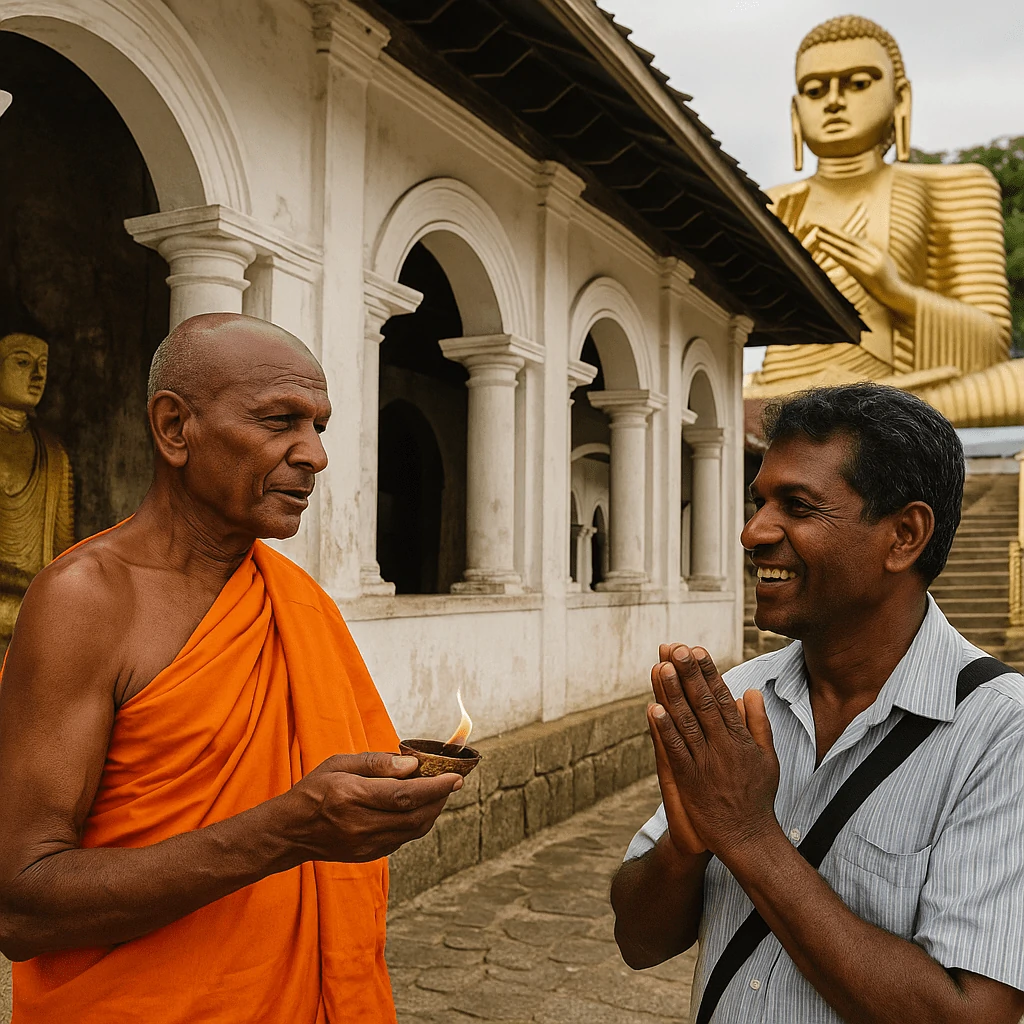
Every visit here includes unexpected kindness. On one afternoon, I met a monk who offered me a handful of temple flowers. He told me they pick them each morning before prayers. Another time, an older vendor at the base sold small mangoes and smiled when I greeted her in Sinhala.
These moments reveal the human heart of Dambulla. Beyond the ancient walls, people still live by rhythms that have existed for generations. Respecting those rhythms — dressing modestly, moving calmly, speaking softly — keeps the temple’s spirit alive for everyone who comes after.
🌤 Nature Around the Rock
The region surrounding Dambulla holds rich biodiversity. You’ll see colorful birds, small lizards basking on rocks, and sometimes a peacock calling from the forest below. The rock itself rises 160 meters above the plains, offering a perfect blend of heritage and nature.
During the dry season, the air is clear, and visibility stretches for miles. In the wet season, mist rolls over the hills, creating a mystical feeling. Both moods have their charm.
Whenever I think of this view, I remember how the morning light painted the fields below in shades of gold and green. It felt timeless — like the island itself was breathing slowly beneath the temple.
🧭 A Final Pause at the Summit
Before leaving, I always take a few minutes to sit near the edge of the rock. The breeze carries the sound of distant chanting from below. The smell of burning oil lamps still lingers in the air. In that stillness, you realize the temple’s beauty isn’t only in its walls. It’s in the harmony between nature, faith, and the people who keep this place alive.
That quiet reflection makes the Dambulla Cave Temple more than a destination. It becomes an experience — one that stays long after you descend the final step.
🌤 Best Times to Visit, Weather by Season, and Itinerary Planning
Timing is everything when it comes to visiting Dambulla. The experience changes completely depending on the hour and season. Over my visits, I learned that a little planning makes the difference between a good trip and a great one.
🌅 Best Time of Day to Visit
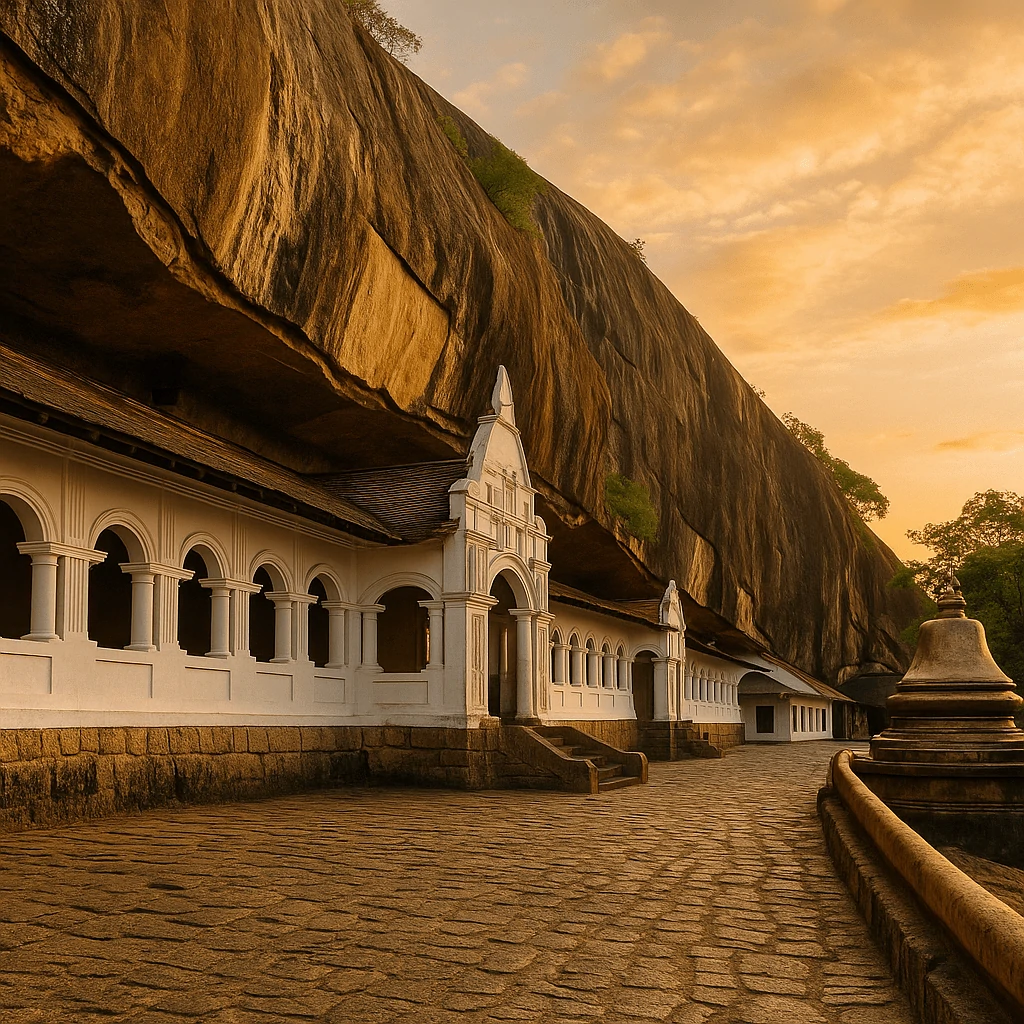
The Dambulla Cave Temple opening hours begin at 7:00 a.m., and mornings are magical. The air feels cool, the light is gentle, and the crowds are few. If you start your climb around 7:30 a.m., you’ll reach the top just as the sun begins to warm the rock.
Late afternoons also offer a peaceful atmosphere. Between 4:30 p.m. and 6:00 p.m., the temple glows in golden light. Shadows stretch across the plains, and the caves feel quieter again. If you plan to take photos, these hours give the softest natural tones.
I usually avoid the middle of the day. The climb isn’t long, but the heat can feel heavy. The rock surface becomes hot, and carrying shoes can be uncomfortable. Morning or evening visits always feel calmer and more meaningful.
Huge car park with clean toilets available for tourists and few drinks/ snack stalls . Tickets 3000 SLR per person paid cash on the first level of flight of stairs . Many more stairs upwards 10 mn walk .
☀️ Seasonal Weather and Travel Conditions
Dambulla lies in Sri Lanka’s dry zone, meaning it stays warm year-round. Yet the experience changes subtly with the seasons.
From December to April, the weather is dry and sunny. The skies are clear, and the views stretch for miles. It’s the most popular season for travelers. I visited during this period once, and the temple shone bright against a deep blue sky.
From May to August, short showers may appear in the afternoons. They cool the air but don’t last long. The mornings remain bright and ideal for visiting.
From September to November, you may encounter more frequent rain. The rock turns slippery, but the mist adds a mysterious beauty to the caves. I loved this mood — the sound of raindrops on stone and the smell of wet earth made it unforgettable.
Even during the monsoon, the Dambulla Cave Temple opening hours remain unchanged, and pilgrims continue to climb daily. If you’re prepared with an umbrella or light rain jacket, the temple still feels just as rewarding.
🌻 Planning Around Your Cultural Triangle Journey
Dambulla sits at the center of Sri Lanka’s Cultural Triangle, making it easy to combine with other heritage sites. It’s about a 30-minute drive from Sigiriya, two hours from Anuradhapura, and a bit more than two hours from Kandy.
I usually start my journey in Kandy, then head to Dambulla early in the morning. Visiting during the first two hours of the Dambulla Cave Temple opening hours allows time to explore fully and still reach Sigiriya by midday. You can end your day watching the sunset over Sigiriya Rock — a perfect pairing of culture and scenery.
If you prefer a slower pace, stay a night in Dambulla. Early the next morning, you can explore the Na Uyana Aranya, a quiet forest monastery nearby. The silence there feels deep and pure.
For longer itineraries, travelers often pair Dambulla with Polonnaruwa or Anuradhapura to complete their Cultural Triangle loop. Each site offers a distinct chapter of Sri Lanka’s story — Dambulla as the spiritual heart, Sigiriya as the royal fortress, and Polonnaruwa as the ancient capital of art and planning.
🧭 Month-by-Month Overview
| Month | Weather | Travel Tip |
|---|---|---|
| January – March | Dry and sunny | Perfect season for photos and long stays. |
| April – May | Warm, with light rain | Carry water and start early in the morning. |
| June – August | Intermittent showers | Pleasant mornings, cooler evenings. |
| September – October | Humid and cloudy | Quieter season, ideal for solitude. |
| November – December | Fresh and green | Best for photographers and cultural trips. |
🌞 Travel Itinerary Example
Here’s an itinerary that fits the temple and nearby highlights perfectly:
Day 1 – Kandy to Dambulla:
Leave early, around 6:00 a.m. Visit the Dambulla Cave Temple between 8:00 a.m. and 10:00 a.m. Afterward, explore the Golden Buddha Museum and have lunch at a local restaurant nearby.
Day 2 – Dambulla to Sigiriya:
Start again near sunrise. Use the early Dambulla Cave Temple opening hours if you want one last quiet morning view before heading toward Sigiriya. Arrive there by late morning, explore the rock fortress, and spend the evening watching sunset over the plains.
Day 3 – Continue to Polonnaruwa or Anuradhapura:
Depending on your interest, move north toward Polonnaruwa’s ancient ruins or west to Anuradhapura’s sacred stupas. Both routes keep you within Sri Lanka’s historical heartland.
This route keeps the journey balanced — one of meditation, discovery, and reflection.
🕰 Personal Tip for Timing
If you visit during a full moon, known locally as Poya Day, expect larger crowds but a stronger spiritual presence. Monks lead ceremonies, and locals bring flowers and incense. I attended once by chance, and the atmosphere was unlike any other day. The chants, the flickering lamps, and the hum of devotion filled the air.
To balance peace and participation, I recommend planning your climb right after sunrise on such days. The Dambulla Cave Temple opening hours let you arrive before most pilgrims and still witness the start of the ceremonies.
🍃 Nearby Attractions, Food Stops & Cultural Experiences Around Dambulla
After exploring the temple, I still felt curious about the world below the rock. Dambulla’s surroundings hold a perfect mix of culture, nature, and simple local life. Spending a full day here feels rewarding, especially when you time everything around the Dambulla Cave Temple opening hours. If you’re heading toward Sigiriya after your temple visit, explore local cuisine with our Sigiriya Restaurant & Food Guide featuring hidden cafés and authentic village flavors.
Sigiriya Rock Fortress – A View from the Lions
Just a short drive away stands the legendary Sigiriya Rock Fortress, rising high above flat jungle plains. From the top of Dambulla, I could see its outline shimmering through the morning haze. Visiting both sites in one day makes sense.
I left Dambulla after sunrise and reached Sigiriya before noon. The climb was steep, but the view over forests and villages was worth every step. Seeing Sigiriya after exploring Dambulla felt like reading the next chapter of Sri Lanka’s royal story — first faith, then power.
Travelers who begin within the Dambulla Cave Temple opening hours can finish the temple early and still enjoy Sigiriya without rushing. The two sites balance each other beautifully: Dambulla whispers peace, while Sigiriya shouts ambition.
🌺 Ironwood Forest ( Na Uyana Aranya )
A little outside the town lies a quiet retreat where monks meditate under ancient ironwood trees. The forest feels untouched. Walking there after visiting the caves adds another layer of calm to the day.
The path winds through tall trunks, and you can sometimes hear monks chanting softly in distant shrines. No crowds, no stalls — only nature and silence. I went in the late afternoon, when the air smelled of rain and jasmine. It reminded me that spirituality here stretches far beyond temple walls.
🛕 Rangiri Dambulla International Stadium & Local Town Life
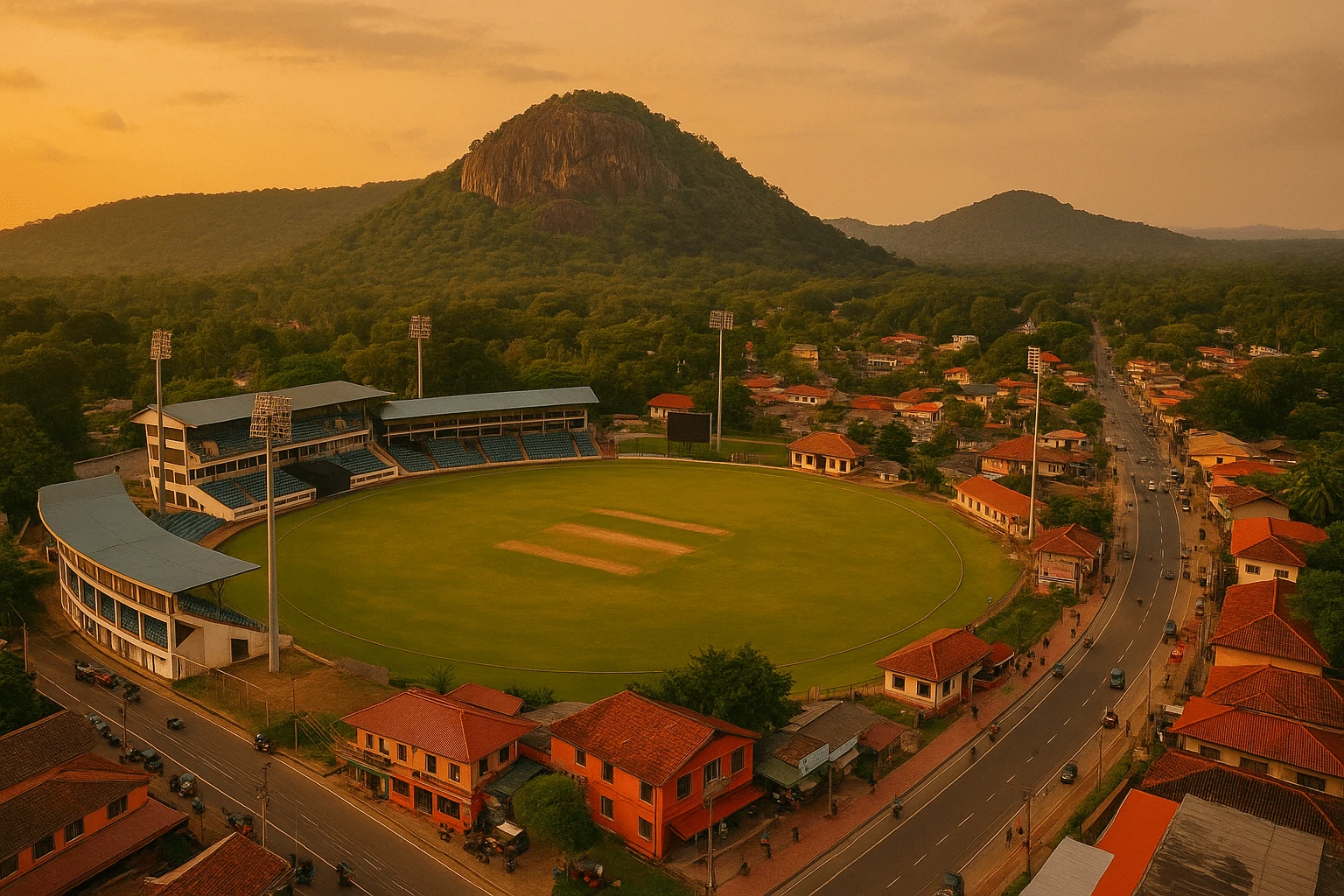
Dambulla isn’t only about history. Near the town center sits the Rangiri Dambulla Cricket Stadium, famous for its view of the surrounding hills. Even if you’re not a cricket fan, it’s interesting to see how local life connects tradition with modern culture.
After watching a practice match there, I wandered through the Dambulla Town Market. Vendors sold mangoes, coconuts, and bright flower garlands. I bought a bag of ripe bananas and shared them with a group of children who laughed when I tried my first few Sinhala words. Moments like that make travel feel real.
Good food in Dambulla doesn’t need fancy menus. My favorite stop was a small family café near the main road. The owner served rice and curry wrapped in banana leaves. The flavors were rich, the spices balanced, and the hospitality unforgettable.
Close to the temple base, small stalls sell coconut roti, mango juice, and herbal tea. They open early to serve pilgrims climbing soon after the Dambulla Cave Temple opening hours. Eating here supports local families and gives you a taste of everyday life in the region.
If you prefer a sit-down meal, a few guesthouses nearby serve traditional buffets with jackfruit curry, lentils, and sambol. Simple, homemade, and full of warmth — that’s the best description of Dambulla cuisine.
🎭 Cultural Experiences & Evening Moments
As evening arrives, the temple rock glows orange, and chants drift from the caves. Sometimes, local groups perform drumming and dance near the lower terrace during festival weeks. I once stayed late to watch a small performance of Kandyan dancers. Their movements echoed the rhythm of the drums, and the air felt charged with pride and tradition.
The locals invite travelers to join simple ceremonies, especially during Poya Days. Lighting an oil lamp or offering flowers connects you quietly with the rhythm of life here. It’s a reminder that culture in Dambulla isn’t something preserved behind walls — it still lives and breathes every day.
🧭 Small Day Trips from Dambulla
If you stay longer, there are other short journeys worth taking:
-
Ibbankatuwa Megalithic Tombs – An archaeological site dating back thousands of years. The stone chambers show the region’s ancient burial customs.
-
Kandalama Lake – A peaceful reservoir perfect for sunset walks or birdwatching. The water mirrors the sky at dusk, and the quietness feels endless.
-
Matale Hindu Temple – Located on the road to Kandy, filled with color and carvings celebrating Sri Lanka’s diversity.
Each of these sites lies within a short drive, and visiting them helps complete the story of the Cultural Triangle. You can plan these trips easily once you know the Dambulla Cave Temple opening hours, keeping mornings free for spiritual visits and afternoons for exploration.
🌄 Ending the Day in Dambulla
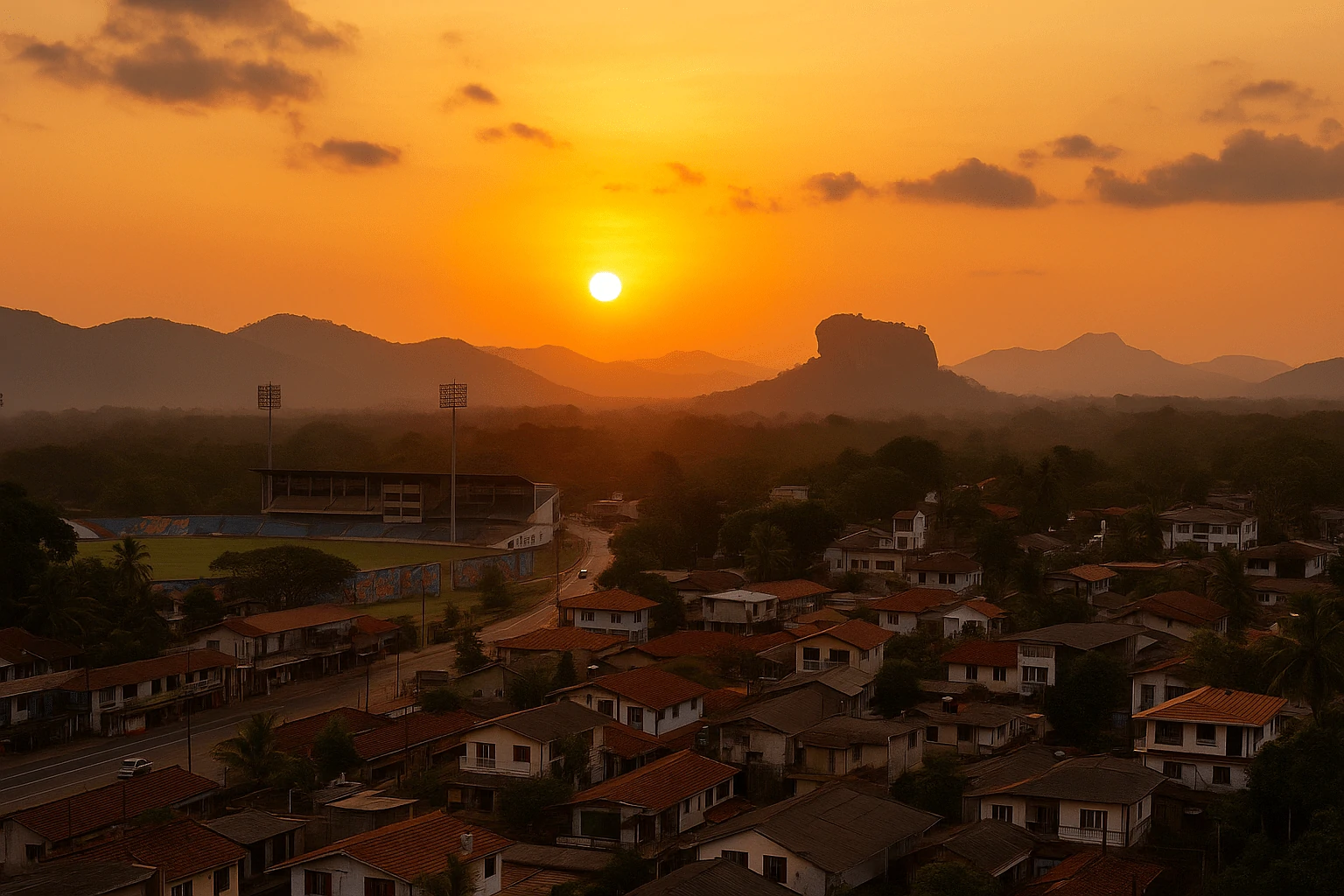
My favorite memory of Dambulla comes from a late evening when I sat near the base of the hill after the final prayers. The temple bells had stopped, and the sun slipped behind the trees. Locals walked home slowly, their hands carrying flowers that had touched the Buddha’s feet.
That silence carried more meaning than any guidebook could describe. Dambulla isn’t only a destination — it’s a rhythm, a pulse of faith that keeps beating quietly through centuries.
🧭 Practical Tips, Do’s and Don’ts, and FAQs for Visiting Dambulla Cave Temple
After visiting several times, I learned that a little preparation makes the entire trip smoother. The Dambulla Cave Temple welcomes thousands of visitors every year, but it still feels calm if you plan well. Here are the lessons that helped me most. Before heading out, make sure your outfit follows the Dambulla Temple Dress Code, so you can enter the temple respectfully without any last-minute issues at the gate.
🎒 Do’s — What to Bring and How to Prepare
-
Arrive early: The Dambulla Cave Temple opening hours begin at 7:00 a.m. Early hours mean cooler air and fewer crowds.
-
Carry small cash: You’ll need it for the ticket counter, shoe deposit, and donations. ATMs can be limited nearby.
-
Dress modestly: Shoulders and knees should remain covered. Bring a scarf or sarong if needed.
-
Bring water: The climb isn’t hard, but it feels long under direct sun. A refillable bottle helps.
-
Travel light: Avoid large backpacks inside the caves. A small sling bag works best.
-
Take breaks: Pause under shady spots to enjoy the view rather than rush.
🚫 Don’ts — What to Avoid
-
Don’t touch the paintings or statues: They’re fragile and priceless.
-
Don’t wear shoes or hats inside: Removing them shows respect for the sacred space.
-
Don’t use flash photography: Flash harms the murals and disturbs the quiet mood.
-
Don’t feed monkeys: They become aggressive if encouraged. Keep snacks sealed.
-
Don’t speak loudly: Inside the caves, silence holds meaning. Speak softly or not at all.
Following these simple courtesies keeps the temple’s spirit intact and shows gratitude toward the people who preserve it.
🌤 General Travel Tips from Experience
I always keep a small towel in my bag to wipe sweat after the climb. It sounds simple, but it makes a big difference. A cap or umbrella helps if you visit around noon. Even though the Dambulla Cave Temple opening hours extend to 7:00 p.m., most travelers leave before sunset. If you plan to stay late, carry a flashlight or use your phone light for the path down.
Hydration is crucial. The rock stores heat during the day, and by afternoon, the temperature can rise quickly. I’ve learned that slow, steady pacing makes the experience far more enjoyable than rushing to the top.
🙏 Cultural Etiquette
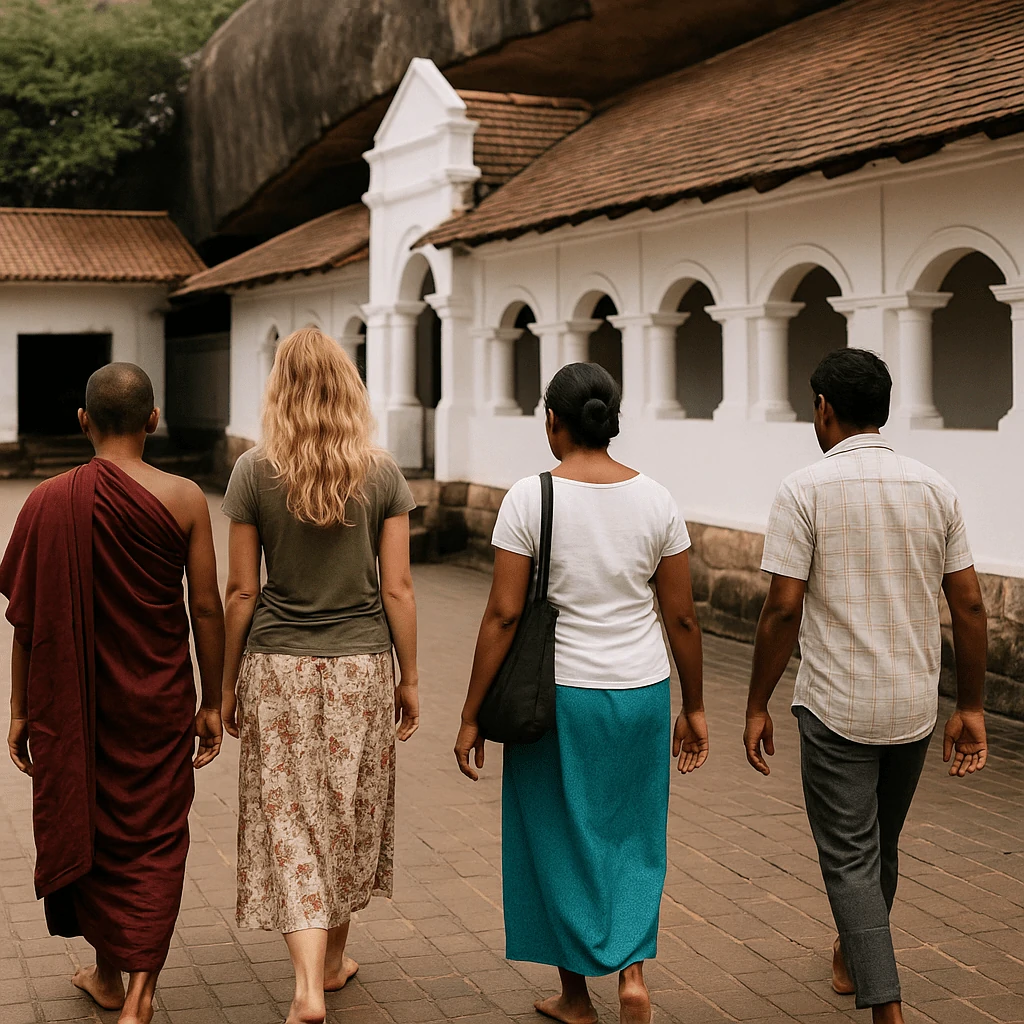
Respect forms the heart of any temple visit in Sri Lanka. Locals often bow or place their palms together before entering a cave. Following their example feels right. You don’t have to be Buddhist to participate; small acts of respect unite all visitors.
If a monk offers a blessing or flower, accept it with both hands. When taking photos, step aside if locals are praying. They appreciate space and calm.
Many visitors, including me, remove jewelry or sunglasses before entering. It’s not required, but it keeps attention focused on the experience, not appearances.
🧘 Physical Comfort and Safety
The climb involves about 300 steps, most of them carved from stone. Wear shoes with good grip and remove them only near the top where signs direct you. The steps can be slippery during rainy months.
There are no large restrooms on the upper level, so plan accordingly before starting your climb. If you’re visiting during the warmer months, a hand fan or cooling towel helps greatly.
🌙 My Final Advice
Each time I visit Dambulla, I notice something new — a color on the wall, a whisper of prayer, or the scent of incense carried by wind. If you take one lesson from this guide, let it be this: travel slowly. Let every step up the hill reveal another layer of the temple’s spirit.
The Dambulla Cave Temple isn’t about rushing to a destination. It’s about learning how stillness can speak.
🌄 Final Thoughts – The Spirit of Dambulla That Stays With You
When I think back to my first visit, the memory feels as vivid as the murals on the cave walls. The climb was quiet, the morning light gentle, and the sound of temple bells faint but steady. The world below was still waking up, yet inside the rock, time felt ancient and unhurried.
I had planned my journey carefully around the Dambulla Cave Temple opening hours, but what I found went beyond timing. The temple didn’t only reveal history; it offered perspective. Every statue, every painted ceiling, told me that beauty born from faith never fades.
Standing at the top, I realized this wasn’t just another stop on a map. Dambulla teaches patience. It shows that spiritual strength often lives in silence. The monks who maintain the temple do so without seeking attention. Their quiet dedication gives the place its energy. The Dambulla Cave Temple isn’t just a standalone wonder — it’s a key stop on the island’s Cultural Triangle. To continue your journey through Sri Lanka’s ancient kingdoms, follow the Sri Lanka Cultural Triangle Itinerary – A 7-Day Journey Through Ancient Kingdoms and Hidden Heritage Wonders.
🕯 Moments of Stillness
One morning, I watched a monk light an oil lamp near the reclining Buddha. The flame trembled but never went out. Around him, the cave walls shimmered softly. That image became my symbol of Dambulla — a flame that continues to burn through centuries of change.
I stayed there longer than planned. The rhythm of chanting drifted through the air, steady and comforting. I didn’t need to understand every word; the tone itself spoke peace.
Travel often rushes us, but Dambulla slows everything down. Here, you listen more than you speak. You notice small details — the way sunlight filters across a mural, or the sound of sandals brushing the stone floor.
🌤 Lessons for Travelers
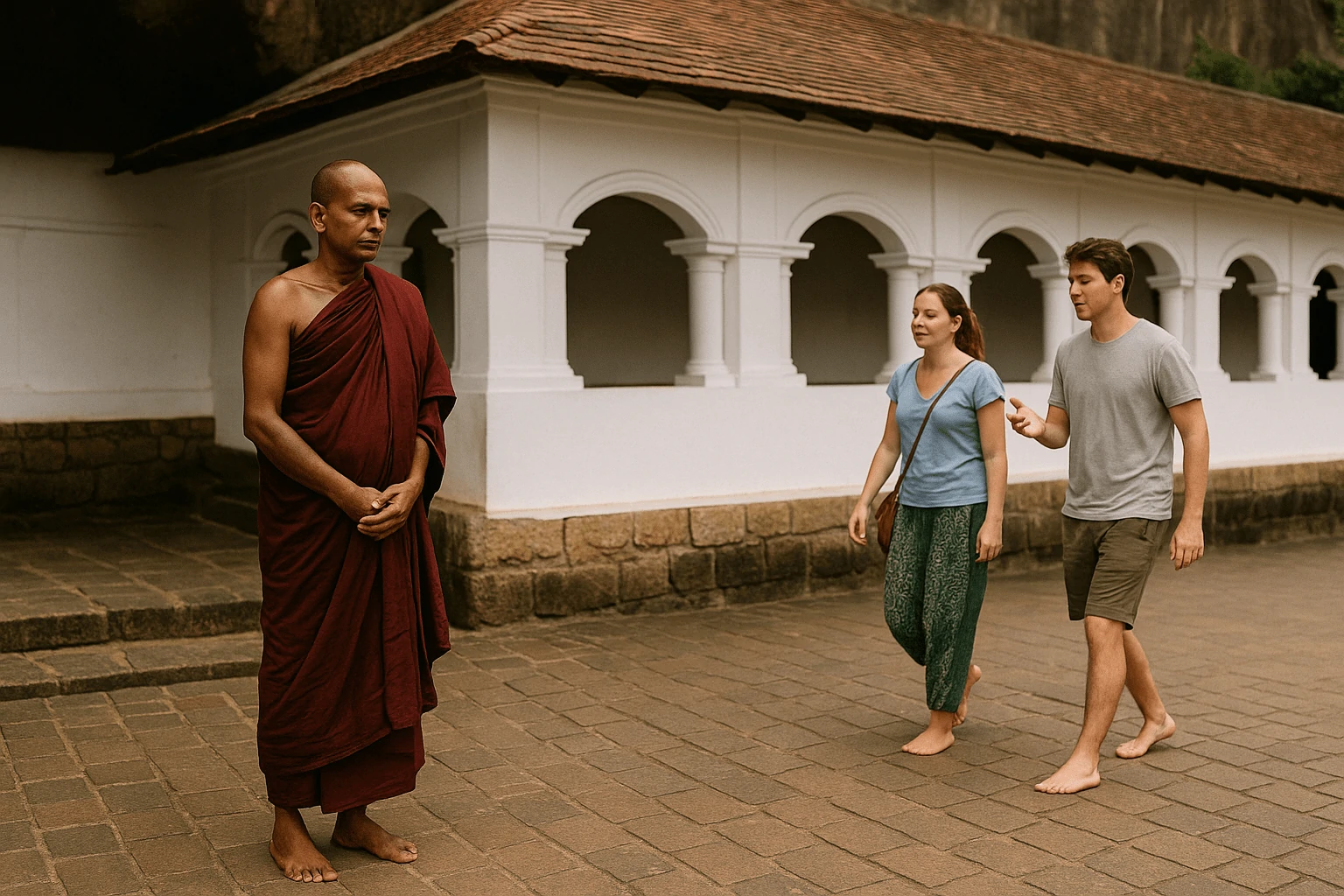
Dambulla reminded me that preparation matters, yet openness matters more. Knowing the Dambulla Cave Temple opening hours helped me avoid heat and crowds, but arriving with curiosity made the visit meaningful.
I learned that a temple is more than stone and paint. It’s the breath of everyone who has prayed there, the echo of stories told from one generation to another. You don’t just observe it — you join it, even for a few hours.
When I walked down the final steps, I felt lighter. The world below looked the same, but something in me had slowed. The hum of daily life felt softer, and the silence from the cave seemed to follow me.
🧘♂️ Why Dambulla Matters
The Dambulla Cave Temple represents everything timeless about Sri Lanka. It’s a bridge between royalty and religion, art and meditation, past and present. For travelers, it’s proof that wonder doesn’t need noise or luxury — only attention.
Each visit gives something new. Sometimes it’s a deeper understanding of history; sometimes it’s a reminder of gratitude. For me, Dambulla became a mirror of stillness — a lesson in seeing beauty without hurry.
🌺 A Personal Goodbye
As I left, the wind moved through the trees at the base of the hill. The scent of incense still lingered, and a single bell rang somewhere above. I turned once more to see the golden Buddha glowing in the late sun.
I knew then that I would return. Not for new photos or facts, but for that feeling — the calm that only Dambulla gives.
Travelers come here searching for culture or architecture, but they often leave with something quieter: peace. And that, I believe, is the true gift of Dambulla.
🏁 Closing Reflection
If you ever plan your own journey, remember this simple rhythm:
-
Arrive early.
-
Walk slowly.
-
Listen deeply.
The Dambulla Cave Temple doesn’t rush anyone. It waits, patient and eternal, ready to show its story to whoever climbs its steps with respect and open eyes.
Each visit begins with a schedule — the Dambulla Cave Temple opening hours — but ends with something timeless: a quiet understanding that faith, art, and nature can live together in perfect harmony.
💬 Frequently Asked Questions
🕰 General Information
The temple usually opens at 7:00 a.m. and closes around 7:00 p.m. It’s best to visit between 7:00 and 9:00 a.m. for a peaceful experience.
The entrance fee for foreign visitors is around 1,500–2,000 LKR. Tickets are sold at the booth near the golden Buddha statue at the base.
Set aside two to three hours to climb, explore all five caves, and enjoy the views from the top.
December to April offers dry weather and clear skies. May to August brings light showers and fewer crowds.
👕 Dress Code & Etiquette
Yes. Shoulders and knees should be covered for all visitors. Bring a light scarf or shawl if needed.
Photography is allowed, but flash is prohibited to protect the murals and preserve the atmosphere.
Move quietly, avoid touching the walls or statues, and face the Buddha respectfully when taking photos.
🚶 Accessibility & Travel Logistics
Yes, though the climb includes several stone steps. There are resting points along the way, and visiting early helps avoid heat.
Yes. Local guides are available near the ticket area and share the temple’s history and legends for a small fee.
Absolutely. Families often bring children who enjoy the statues and stories. Just keep an eye on them while climbing.
🌍 Nearby & Additional Experiences
You can explore the Golden Buddha Museum, visit the Ironwood Forest, or travel to the Sigiriya Rock Fortress, all within a short distance.
Yes. Small cafés and local stalls near the base open early, especially around the Dambulla Cave Temple opening hours, serving tea, coconut roti, and mango juice.
Yes. If you start early, you can visit Dambulla in the morning and climb Sigiriya before sunset.


