


There are places in Sri Lanka that feel like they hold echoes of thousands of footsteps. Whispers of ancient monks and the weight of stories carried across centuries linger. Mahavihara Anuradhapura is one of those places. Every time I walk toward this sacred complex, I feel the pace of the modern world fade behind me. There’s a quietness in the air—not silence, but a soft, steady presence that reminds you this was the birthplace of a spiritual tradition that shaped an entire island.
For many travelers, Mahavihara Anuradhapura is simply another historical site in the ancient city. But if you slow down and let the surroundings speak, you begin to understand its true significance. This monastery stands at the center of Sri Lanka’s Buddhist identity. It was the first major monastery, the beating heart of scholarly learning, meditation, and cultural growth. The rituals, teachings, and architecture that took root here spread through the island and continued for more than a thousand years.
The first time I visited Mahavihara Anuradhapura, I went early in the morning, just as the sky was shifting from pale blue to gold. The stones felt cool under my feet, and a few monks were gathering for their daily routines. Watching them walk across the courtyard made me realize how uninterrupted this tradition is. Mahavihara is not just an archaeological site but a living connection between the past and present. It’s a place where you don’t just learn history; you feel it.
If you want a complete overview of the ancient city before exploring Mahavihara in depth, you can read the full guide here: Anuradhapura What to See Best Places to Visit in Sri Lanka’s Sacred Ancient Capital.
Why Mahavihara Matters More Than Most Travelers Realize
Most visitors to Anuradhapura come to see the big names Sri Maha Bodhi, Ruwanwelisaya, Jethawanaramaya. Those places are essential, but Mahavihara is the foundation beneath all of them. Without it, the others may not have existed—or at least not in the same way we know them today.
From a cultural and historical perspective, Mahavihara Anuradhapura was the intellectual powerhouse of early Buddhism in Sri Lanka. Monks here studied scriptures, debated philosophy, wrote commentaries, and preserved teachings that eventually influenced much of South and Southeast Asia. The structure of monastic life that developed here shaped the discipline of monastic communities for centuries.
Yet travelers often overlook it because Mahavihara blends into the larger landscape of ancient ruins. It doesn’t always announce itself with towering structures from a distance, but the moment you step inside, you understand its depth. Large shade trees, old stone pathways, quiet meditation spaces, and ancient foundations show how massive and influential this monastery once was.
Whenever I explore Mahavihara Anuradhapura, different details reveal themselves. Carved balustrades hidden under moss, fragments of moonstones, and scattered stone pillars that once held up great halls appear. These remind you that great learning centers don’t always reveal their importance loudly. Sometimes, the significance lies in how they shaped an entire civilization quietly and steadily.
A Journey Back to the Beginning of Sri Lanka’s Buddhist Heritage
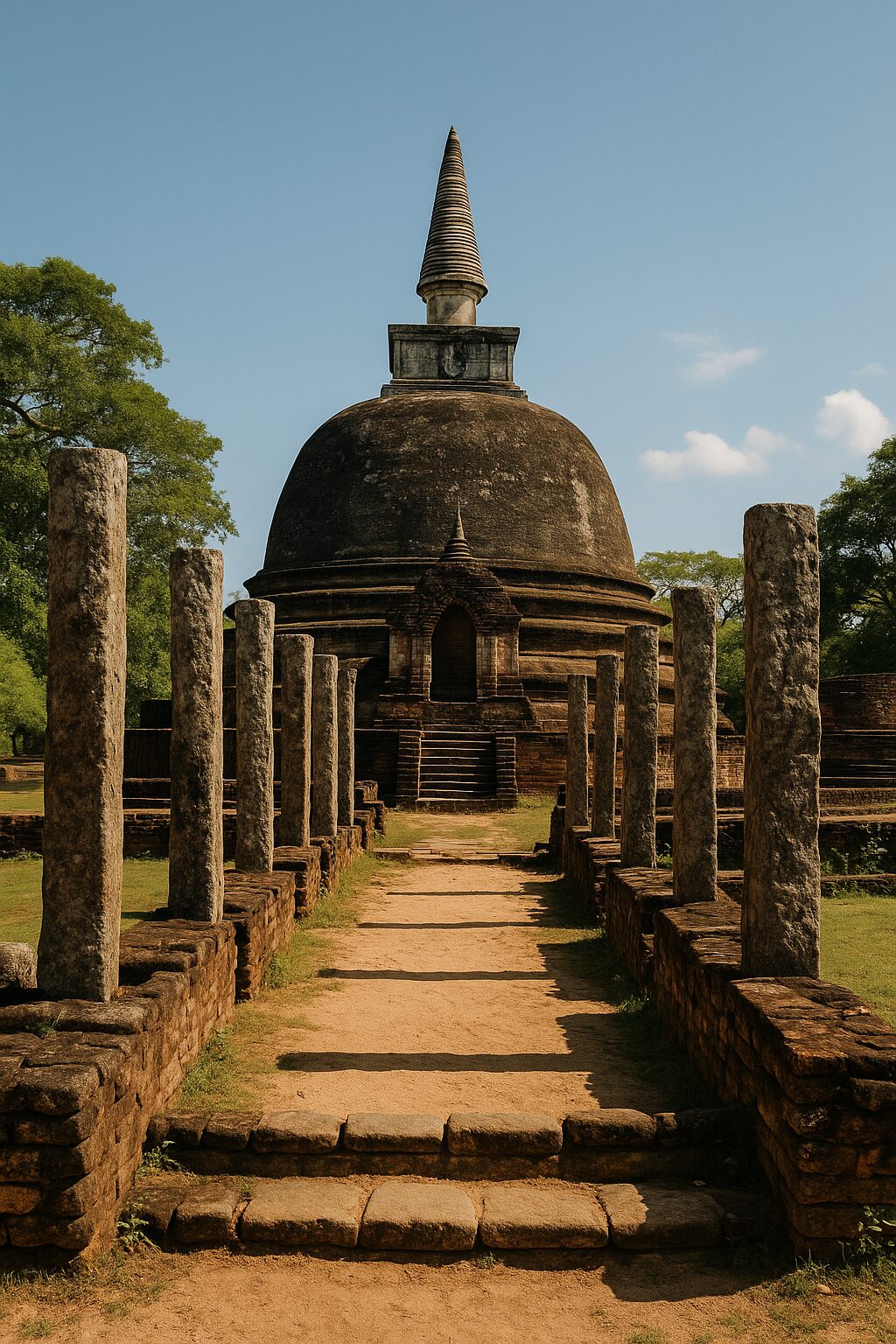
When you stand in Mahavihara Anuradhapura, you’re at the core of Sri Lanka’s spiritual beginning. This monastery dates back to the 3rd century BCE, founded during the reign of King Devanampiya Tissa. This was the era when Buddhism first arrived on the island. Mahavihara became the home of the earliest monks who studied and taught the new doctrine.
What I love about walking through Mahavihara is imagining what life here must have looked like during its peak. Thousands of monks lived, studied, and meditated within this complex. It wasn’t just a religious space; it was a university, a library, and a spiritual haven. The ancient texts that shaped Theravada Buddhism were studied and preserved here. Travelers, scholars, and pilgrims came from across the region to learn from the monks who lived inside these walls.
Even today, when you sit under a tree here and listen to the wind moving through the branches, it’s not hard to imagine the conversations, teachings, and quiet moments that once filled this place. The weight of that history lingers in the air. It makes every visit feel meaningful. Whether you come as a traveler, a Buddhist, or someone seeking to connect with a deeper layer of the island’s identity, the experience resonates.
The Spiritual Atmosphere of Mahavihara TodayThe Peace That Stays With You Long After You Leave
Although centuries have passed, the spiritual energy of Mahavihara Anuradhapura remains intact. When you visit now, you’ll often see local devotees offering flowers or lighting oil lamps. Pilgrims gather in small groups, monks pass quietly along the pathways, and the whole area feels grounded in a rhythm. This rhythm has endured through dynasties, invasions, and even periods of abandonment.
What makes Mahavihara special to me is how peaceful it feels—even on busy days. There’s space for reflection everywhere. If you take time to sit on one of the old stone steps or wander through the smaller sections, you’ll find places that feel unchanged for hundreds of years. Each time I visit, I discover something small but meaningful. A tiny carving on a stone pillar, a bird’s call echoing across the courtyard, or a moment of silence that feels impossibly ancient.
This atmosphere is not something you can capture in photographs. It’s something you experience with your senses—the scent of incense, the soft crunch of sand beneath your feet, the sunlight hitting white stone stupas. Mahavihara Anuradhapura has a way of grounding you. It reminds you that the spiritual heritage of Sri Lanka didn’t begin in books or stories. Rather, it began in real places like this.
If you want to explore another sacred site connected to Anuradhapura’s ancient Buddhist heritage, you can read our complete guide here: Mihintale Anuradhapura A Complete Guide to Sri Lanka’s Sacred Mountain of Buddhism.
How Mahavihara Connects to the Rest of Sacred Anuradhapura
As you explore Anuradhapura, you’ll notice how interconnected everything is. Mahavihara isn’t just one stop on a list; it’s a thread woven through the entire sacred city. Sri Maha Bodhi, Ruwanwelisaya, Thuparamaya, and the great reservoirs were all part of the same spiritual ecosystem.
Mahavihara was the anchor. It was here that the early monks lived close to the Bodhi Tree, here that kings sought guidance, and here that teachings spread across the kingdom.
Understanding Mahavihara Anuradhapura helps you understand why Anuradhapura is one of the most important UNESCO World Heritage Sites in Asia. When you grasp the monastery’s role, the rest of the ancient city makes more sense. The stupas, the temples, the ponds, and the meditation forests were not just built randomly. They formed a unified spiritual landscape centered around one great monastery.
Whenever I walk from Mahavihara to nearby sacred sites, I feel that continuity. The pathways, even if restored, still follow old routes. The layout of the ancient city becomes clearer. And you begin to see why Anuradhapura was not only a capital but also a spiritual beacon for the entire region.
The Historical Roots of Mahavihara Anuradhapura

If you really want to understand Mahavihara Anuradhapura, you have to imagine the island more than two thousand years ago—before the great stupas, before the networks of monasteries, and before Anuradhapura became the spiritual capital of Sri Lanka. The kingdom was transforming, not only politically but culturally. Buddhism had just arrived from India, carried by monks whose footsteps reshaped the identity of an entire nation.
Mahavihara became the first and most influential monastic center in this new era. When I walk through the complex today, I often think about the moment it all began. It was when King Devanampiya Tissa welcomed Arahat Mahinda and his disciples. That encounter didn’t just introduce a religion; it established a way of life that would define the spiritual landscape of Sri Lanka for centuries. Mahavihara was built as a place where monks could live, meditate, study, and share what they had learned with future generations.
Standing among the remaining foundations, I can almost see the early structures rising from the ground. Halls where monks debated philosophical ideas, meditation rooms lined with simple stone benches, and libraries full of palm-leaf manuscripts take shape in my mind. These weren’t just religious spaces—they were centers of wisdom. Much of what we know today about Theravada Buddhism was shaped, protected, and passed down by the monks who lived right here.
When I reflect on those early centuries, I’m always struck by how much patience it must have taken to build such a legacy. Nothing about Mahavihara feels rushed. Each stone seems placed with purpose. Each pathway feels like it was meant to last forever. And, in a way, it has—because even though many buildings have disappeared, the spirit of the monastery still lives in the air around it.
Life Inside the Ancient Monastery
One thing that surprises most travelers is how massive Mahavihara Anuradhapura once was. Today, we see ruins, scattered stone lines, and quiet spaces. Yet at its height, this was a vibrant, thriving monastic city. Thousands of monks lived here at the same time. Some meditated deep in the forested areas. Others copied manuscripts by hand, and many studied the scriptures day and night.
Whenever I explore the quieter corners of Mahavihara, I think about the daily routine of those monks. The day would begin before sunrise, with chanting carried across the courtyards. After their morning meditation and simple meal, they would gather for lessons or engage in their personal studies. Some would walk in silence under the shade of ancient trees, reflecting on what they learned. Others would teach novices, guiding them on their spiritual journey.
There is something peaceful about imagining that kind of life—structured, calm, and grounded. Even now, if you sit on one of the old stone platforms at noon, when the sun is at its highest, the heat and stillness feel like an invitation to slow down. It doesn’t take long to understand why this place was so effective for meditation and spiritual development.
What stands out to me each time I visit is how much the environment contributes to the experience. You can hear birds in the distance. The wind moves gently through the leaves. Sometimes you can even hear the faint ringing of a temple bell from a nearby shrine. Everything around you feels intentional, as if the natural world and the monastery were designed to work together.
The Architectural Footprint of a Lost Era
Mahavihara Anuradhapura may not have towering structures like Jetavanaramaya today, but its architectural footprint still shows how advanced the ancient builders were. The foundations, balustrades, moonstones, and stone pillars that remain tell a story of craftsmanship and devotion.
One of the first things I noticed during my early visits was how symmetrical everything feels. Pathways line up perfectly, foundations form clear geometric patterns, and platforms are positioned in ways that follow sacred design principles. Even the smaller ruins reveal incredible detail—smooth stone carvings, carefully placed steps, and drainage systems that still function when it rains heavily.
Some travelers walk past the fallen pillars without thinking much about them. However, when you picture them standing upright as part of great assembly halls, the scale becomes clearer. These were not simple structures; they were monumental buildings designed to hold hundreds of monks at once. The precision in their construction still amazes me, especially considering the limited tools available at the time.
I’ve spent long afternoons here just observing the details. Places where the stone has been polished smooth by centuries of footsteps come into view. Corners where moss grows in patterns that look almost intentional and carvings that seem to appear only when the sunlight hits at the right angle are fascinating. Even though much of the original monastery has not survived, the architectural language remains strong enough. It lets you imagine the grandeur that once defined this place.
The Great Kings Who Protected and Expanded Mahavihara

Throughout its long history, Mahavihara Anuradhapura was supported by many kings. They recognized its value as the heart of Buddhist scholarship. Some rulers added buildings; others donated land, relics, or resources. Their involvement shaped the monastery’s growth. It developed into a massive institution that guided the spiritual direction of the entire island.
I often think about how much trust and respect the kings must have had for the monks. They didn’t just build structures—they sought advice, learned from the teachings, and ensured that Mahavihara would be preserved for future generations. This kind of relationship between royalty and monastic communities is rare in history. It speaks to how deeply Buddhism became rooted in Sri Lankan society.
As centuries passed, different kings added new layers to Mahavihara. Some focused on expanding its teaching halls, others built residences for the monks. A few sponsored massive ceremonies that drew pilgrims from across the region. Even now, when you walk through the ruins, you can sense the layering of time. Different eras are marked by slightly different building styles, different stone textures, and different layout patterns.
What I find most moving is how all of this effort was driven by a desire to preserve wisdom. Every stone that was placed here and every hall that was built had a purpose. Every inscription that was carved aimed to protect the spiritual heritage of the island. More than two millennia later, we can still see the results of those decisions in the surviving stones beneath our feet.
A Silent Witness Through Conflict and Change
Like many ancient institutions, Mahavihara Anuradhapura did not escape periods of conflict and difficulty. Over the centuries, political struggles, invasions, and internal disputes disrupted its peaceful existence. Yet the monastery endured. Even when buildings were damaged or abandoned, the spiritual core remained strong.
When I walk through the quieter areas of the complex, I sometimes think about those turbulent times. Moments when monks had to leave, texts had to be hidden, or structures fell into disrepair come to mind. Despite these hardships, the monastery survived because generations of people believed it was worth saving. That resilience is part of what gives Mahavihara its magnetic atmosphere today.
Every ruin here is a reminder of survival. Every stone that remains standing has witnessed both devotion and destruction. There’s something powerful about being in a place that has seen so much and yet continues to draw people who want to understand their heritage.
Even though the loudest eras of Mahavihara’s history are long gone, what remains now is quiet, peaceful, and grounded. In that calmness, you feel the monastery’s strength more clearly than ever.
The Cultural Importance That Still Shapes Sri Lanka Today
Every time I visit Mahavihara Anuradhapura, I understand how deeply its influence runs through Sri Lankan culture. This monastery didn’t just preserve Buddhist teachings—it shaped the rhythm of daily life for entire generations. The festivals we celebrate, the rituals we follow, and the respect we show to temples all trace their origins to the early practices formed here.
Monks at Mahavihara guided kings, advised communities, and taught ordinary families how to live with mindfulness. They wrote texts that shaped religious thought and recorded histories that still guide scholars today. When I read some of these ancient chronicles, I imagine the monks who created them, sitting by lamplight, carving words into palm leaves with careful strokes. Their work still guides our understanding of the island’s spiritual and cultural path.
Even now, when modern Sri Lankans visit places like Sri Maha Bodhi or Ruwanwelisaya, they follow practices that Mahavihara monks established centuries ago. The offerings of flowers, the act of walking clockwise around a shrine, and the quiet moments of reflection all grew from that early monastic life. The monastery’s teachings traveled far beyond its walls, shaping traditions that feel completely natural today.
Whenever I walk across the courtyard, I feel that influence. The soft murmur of a prayer, the rustle of a robe as a monk passes, or the way local families enter with small trays of jasmine—each moment shows how deeply Mahavihara remains tied to the heartbeat of the island.

While many travelers visit the more famous ruins, Mahavihara Anuradhapura still holds quiet spaces that reward those who slow down. One of the things I love doing here is leaving the main path and exploring the less-visited sections. These areas often reveal details that most people miss—small meditation platforms, stone bases of old halls, or stairways leading into shaded areas where monks once sat in silence.
These secluded places always feel timeless. When I sit on an old stone platform surrounded by trees, I imagine how monks must have rested here after long hours of study. The air feels different in these corners, as if the past still lingers under the shade. Sometimes I hear nothing but birds and the faint rustling of leaves, and in those moments, the busy outside world feels incredibly far away.
I often encourage travelers to step away from the main structures and wander through the trees. The old foundations may look simple at first, but if you walk slowly, the layout starts to make sense. You notice how pathways connect, how meditation areas align with the direction of the sun, or how water once flowed through carefully designed channels. These hidden details reveal how thoughtfully the monastery was planned.
One of my favorite quiet spots lies just beyond a line of stone pillars. The area doesn’t look remarkable at first glance, but when you sit there for a few minutes, the silence feels deeper. The wind moves softly, and sometimes a monk passes through without making a sound. Places like this remind me that Mahavihara is not only an archaeological site—it is still a living sanctuary.
The Role of Mahavihara in Preserving the Teachings
Mahavihara Anuradhapura played a crucial role in protecting the teachings that form the foundation of Theravada Buddhism. Monks here wrote commentaries, safeguarded essential manuscripts, and taught generations of students who later spread knowledge to other regions.
I often imagine how much discipline those monks must have had. They copied long texts by hand, preserved delicate palm-leaf manuscripts, and memorized vast portions of scripture. Their work kept the teachings alive through periods when the island faced conflict, famine, or foreign influence.
When I walk past the remains of the old library buildings, I picture rows of shelves filled with manuscripts tied together with thread. The monks who lived here respected these texts deeply, treating them not just as books but as guides for spiritual life. Their commitment ensured that these teachings survived thousands of years.
Today, when we visit Mahavihara, we benefit from their dedication. The spiritual knowledge we still practice across the island has roots in their work. Every chant, every ritual, and every temple sermon carries echoes of what they preserved.
Mahavihara’s Influence on Art, Literature, and Daily Life

The influence of Mahavihara didn’t stop at religion. It shaped art, literature, language, and even the way ancient Sri Lankans built their homes and communities. When I look at the carvings scattered across Anuradhapura, I see techniques that began here—moonstones with intricate floral patterns, guard stones with symbolic figures, and sculptures that combine elegance with simplicity.
These artistic styles didn’t appear randomly. Monks taught meaning through symbols, helping craftsmen understand the deeper purpose behind their work. As a result, every carving carried layers of significance. Even everyday objects became expressions of spiritual ideas.
Mahavihara also shaped literature. The chronicles written under its influence documented history with a mix of storytelling and spiritual insight. These texts helped preserve not only events but the values that guided ancient society. When modern scholars study Sri Lanka’s past, they often turn to these chronicles first, because they offer a direct view into the minds of the people who lived here.
I find it inspiring to think about how one monastery shaped the creative expression of an entire civilization. The values of simplicity, clarity, discipline, and compassion still appear in Sri Lankan arts today. When children learn poetry in school or when artists carve traditional motifs, they unknowingly continue a legacy rooted in Mahavihara.
A Place Where the Past and Present Meet
One of the reasons I love writing about Mahavihara Anuradhapura is that it blends the ancient and the modern so naturally. Travelers walk through ruins while monks in saffron robes pass by with serene expressions. Local families bring offerings, and tourists quietly step aside when they see someone praying.
This harmony feels rare. Many historical sites remain silent and disconnected from modern life, but Mahavihara is different. The spiritual energy that shaped the ancient city still influences the people who come here today. Devotees offer flowers under the same trees that once shaded monks thousands of years ago. Students learn about the history of Buddhism by walking through the ruins instead of reading about them in classrooms. Visitors find a peaceful moment in spaces that once guided meditation practices.
Whenever I explore the site, I feel grateful that places like this still exist. They remind us that history is not just something written in books—it lives in the ground, in the trees, in the quiet moments when you pause and breathe. Mahavihara connects the present to a much older rhythm, and that connection makes the experience unforgettable.
Walking the Ancient Pathways of Mahavihara
Every time I return to Mahavihara Anuradhapura, I follow the same simple ritual. I walk the long stone pathway slowly, letting the stones guide my steps. These pathways carry history beneath them—monks walked here for meditation, kings walked here for blessings, and ordinary villagers walked here with offerings and hopes. When the morning sun hits the stone, it reveals a warmth that feels both natural and spiritual.
The pathways stretch through different parts of the complex. Some lead you past old foundations; others take you into shaded areas where sunlight filters through thick leaves. At times, I choose the quieter paths, the ones most visitors don’t notice. These routes often open into areas where the wind sounds different and the air feels calm. When you stand still long enough, you sense how deliberately this monastery was designed. The pathways weren’t just practical—they shaped the pace of monastic life.
I enjoy pausing along these paths, especially near the old meditation platforms. You can feel how the monks structured their days around silence and movement. Their teachings emphasized balance, and the layout of the monastery still reflects that wisdom. The slow walk, the steady breath, and the peaceful atmosphere all blend together. In those moments, you understand why Mahavihara Anuradhapura became the spiritual backbone of ancient Sri Lanka.
Hundreds of ruins lie scattered across Mahavihara, but each structure tells a story. When I wander through the complex, I try to look beyond the obvious. The stone carvings, the platform layouts, and even the orientation of buildings reveal meaning when you pay attention.
Many platforms face specific directions for symbolic reasons. Some represent purity; others represent clarity or the path to enlightenment. I’ve spent long afternoons studying the stone carvings, trying to understand the intentions behind them. Simple patterns often reflect deep ideas: life cycles, protective forces, or spiritual progress. The monks who lived here used art as a way to teach without speaking.
You also notice how open spaces functioned as teaching grounds. The wide courtyards allowed monks to gather for lessons or debates. These weren’t just meeting places—they were classrooms under the sky. When I stand in those courtyards, I imagine groups of novices sitting on stone floors while senior monks explained scriptures. It gives the ruins a sense of ongoing life, not abandonment.
Even broken balustrades hold subtle beauty. Their curves and ornaments reflect craftsmanship shaped by devotion, not just skill. Whenever sunlight hits one of these carvings, the details become clear again, as if the stone wakes up for a moment. Little discoveries like this make exploring Mahavihara Anuradhapura feel fresh every time.
The Spiritual Rhythm That Lives in Mahavihara

Mahavihara carries a spiritual rhythm that doesn’t depend on rituals alone. It’s in the quiet steps of monks, the slow movement of trees, and the soft murmur of wind that filters through the area. When you spend enough time here, you start to feel that rhythm yourself. Your breathing slows. Your thoughts settle. The ancient calmness begins to shape your own state of mind.
I often sit near the old foundations in the late afternoon, when shadows stretch across the ground. The light around that time feels warm but gentle, and the sounds of the monastery soften. Travelers usually move through quickly, but if you choose to remain still, Mahavihara reveals its softer voice.
Monks occasionally walk past, and their presence blends effortlessly with the surroundings. They don’t disturb the atmosphere—they enhance it. Their quiet movements remind you that Mahavihara remains a place of living practice. Even though much of the complex stands as ruins, the spiritual essence continues to thrive in the daily routines of those who still devote their lives to these teachings.
I’ve met people who told me that Mahavihara is the place where they first understood the influence Buddhism has on Sri Lankan culture. When they walked through the complex, they felt something settle inside them. They recognized that this monastery didn’t just preserve teachings; it shaped the way generations lived, prayed, and understood the world.
Traditions That Connect Generations
Many of the traditions Sri Lankans follow today began in the early centuries of Mahavihara Anuradhapura. Simple acts—offering flowers, lighting oil lamps, or walking clockwise around sacred places—carry roots that go back to the earliest monks.
When I observe local families visiting the area, I notice how naturally they follow these traditions. Parents explain rituals to their children without thinking twice, passing knowledge that their own families passed down to them. It creates a chain of continuity, linking present-day Sri Lankans to the monks who lived here two thousand years ago.
The monks of Mahavihara placed strong emphasis on mindful living, compassion, and discipline. These values eventually shaped social customs, language, literature, and community life. Even today, the respect Sri Lankans show toward elders, the emphasis on harmony within households, and the belief in thoughtful action reflect teachings that early monks taught here.
Whenever I watch a group of devotees preparing offerings, I see how deeply these practices live within everyday life. The arrangement of flowers, the gentle placement of a lamp, or the silent moment before a prayer carries the emotional continuity of centuries. These acts don’t feel forced—they flow naturally, as if Mahavihara still guides the rhythm of life.
The Emotional Pull of a Place That Shaped a Civilization
Mahavihara Anuradhapura has an emotional pull that grows with every visit. At first, you may notice the ruins, the architecture, or the landmarks. But after spending more time here, the deeper feeling begins to emerge. It comes from understanding how much of Sri Lanka’s identity grew from this single monastery. Kings, scholars, monks, and ordinary villagers all looked to Mahavihara for guidance. Their decisions influenced every aspect of society—from education and literature to architecture and governance.
You feel that history in the stillness. You feel it in the air that hangs over the ancient steps, in the trees that have watched centuries pass, and in the pathways shaped by countless footsteps. This place carries memories of dedication, wisdom, and resilience. When you walk here, you aren’t just exploring ruins—you’re entering a space where a civilization built its moral foundation.
Every time I leave Mahavihara, I carry that feeling with me. It stays in the back of my mind long after the visit ends. The sense of connection, the calm it brings, and the awareness of standing in a place where history shaped a people—it all lingers quietly but powerfully.
Exploring the Lesser-Known Sections of the Monastery
Most travelers head straight to the prominent ruins, but I’ve always found the quieter sections of Mahavihara Anuradhapura even more meaningful. One of my favorite areas lies beyond a line of fallen pillars where the ground dips slightly. The sunlight here filters through thick branches, and the shadows create soft patterns on the stone. This part of the complex feels untouched, almost forgotten, yet it reveals subtle details that help you understand how the monastery once functioned.
When I walk through this area, I notice foundations that outline small meditation cells. These spaces seem compact now, but their layout hints at the disciplined life monks lived. Each cell offered a simple sanctuary for personal practice. When I sit on the edge of these old rooms, I imagine a monk sitting cross-legged inside, focusing on his breath while the world remained quiet around him.
I also love exploring the quiet corridors that run between these cells. Some lead into shaded clearings, and others open into small courtyards where monks once gathered after long hours of study. These places hold a calm that doesn’t fade, no matter how many centuries pass. When you stand still long enough, you feel the rhythm of the ancient routine settle around you.
The Intellectual Life That Defined Mahavihara

Even though the physical ruins capture your attention, the real power of Mahavihara Anuradhapura comes from the intellectual life it nurtured. Scholars here dedicated their lives to understanding the teachings of the Buddha. They studied the scriptures line by line, debated ideas with clarity, and recorded their insights in manuscripts that survived for generations.
When I think about those scholars, I picture them gathered on a stone platform with palm-leaf manuscripts spread out in front of them. They worked carefully, carving text with steady hands and reciting passages with quiet determination. Their learning shaped Theravada Buddhism across Sri Lanka and beyond.
I often reflect on how deeply their work influenced everyday life. They taught compassion, mindful speech, and ethical behavior. Their interpretations guided kings and helped shape justice systems. They also trained novices who later carried these teachings across the island. The clarity and discipline of their work still appear in modern Buddhist scholarship.
Whenever I walk past the old foundations of lecture halls, I imagine the energy of those discussions—the questions, the insight, the deep respect for knowledge. The ruins may stand silent now, but the intellectual spirit of Mahavihara hasn’t vanished. It moves through the traditions we practice, the stories we tell, and the wisdom Sri Lankans still value today.
The Spiritual Discipline That Shaped Daily Life
Monks who lived at Mahavihara followed a strict routine that grounded their spiritual progress. Their days began before sunrise, often with a serene walk to the meditation grounds. They practiced chanting, engaged in silent reflection, and supported each other in maintaining focused, meaningful practice. These routines kept their minds steady, even during periods of political tension or uncertainty.
Whenever I spend time inside mahavihara anuradhapura, I try to imagine that disciplined lifestyle. The ruins don’t just show buildings—they show structure. Meditation platforms lie in strategic places. Walkways connect different areas with gentle flow. Shaded spaces appear exactly where a tired monk might have paused to rest or reflect.
I often sit on a quiet step here and watch the present-day monks walk across the grounds. Their calm, deliberate movements reflect the same discipline their ancestors practiced. Their presence ties the ancient teachings to the modern world. When you watch them pass through these ancient spaces, you understand how seamlessly the past and present coexist at Mahavihara.
The Emotional Experience of Being Alone With the Ruins
Some travelers visit Mahavihara quickly, but the true beauty of this place appears when you’re alone with it. I’ve spent hours here during quiet afternoons, sitting under a tree and listening to nothing but the wind and the distant call of birds. In those moments, the ruins feel alive. They speak through the silence, reminding you of the lives shaped here long before your time.
I often walk along the edge of the complex where fewer visitors go. These areas feel softer, as if time has slowed down. The stone foundations still mark the outlines of long-vanished rooms. A few roots wrap around old masonry, not in destruction but in gentle embrace. Nature and history blend quietly here.
One moment that stays with me happened late one afternoon. The sun hung low, casting golden light across the stones. I stood near a row of pillars, and the entire area fell into a warm glow. For a brief moment, I felt as if the centuries between then and now dissolved. The connection felt real, grounding, and strangely comforting.
This emotional connection is what keeps drawing me back. Mahavihara doesn’t impress you with size alone. It draws you into a deeper understanding of how people lived, learned, and found peace long before our modern world existed. That quiet emotional pull makes every visit meaningful.
A Journey Through Time and Space
Walking through Mahavihara Anuradhapura feels like stepping through different eras. You move from one courtyard to another, and each space carries a distinct atmosphere. One area feels scholarly, another feels meditative, and yet another feels ceremonious. The transition between these spaces tells a silent story about how the monastery functioned.
As I walk from one stone base to another, I imagine the daily movement of monks. Some carried water from nearby ponds. Others walked to lecture halls with manuscripts in hand. Senior monks met young novices for teachings. The entire complex worked like an ecosystem—every part supported the others.
This interconnectedness remains clear today. Even though the buildings no longer stand at full height, the foundations preserve the structure of the old monastery. You can still trace the layout with your footsteps. You feel the balance between public spaces and private retreat areas. You see how the designers shaped the monastery with intention, always keeping harmony and purpose in mind.
When you understand these layers, your experience deepens. You don’t just look at ruins—you look at a place that shaped a civilization.
How the Natural Environment Shapes the Experience

Whenever I return to mahavihara anuradhapura, I notice how much the natural environment shapes the emotions of the place. The rustling leaves, the filtered sunlight, and the quiet chorus of birds all play a role in creating a peaceful atmosphere. The monastery was built within a landscape that encourages calm reflection. Ancient planners didn’t simply choose a convenient location—they chose a setting that supported spiritual practice.
When I walk among the ruins, I often pause under the large trees that cast wide shadows across the ground. Their age feels immense, and their presence adds a protective quality to the space. I imagine monks sitting beneath these branches centuries ago, seeking wisdom in the stillness. These trees are silent companions to the monastery’s long history. They witnessed countless rituals, teachings, and personal transformations.
Even the breeze carries meaning here. Some places in Anuradhapura feel open and bright, but Mahavihara feels sheltered. The wind moves softly, as if it respects the sanctity of the space. You hear it whisper through the leaves in a rhythm that encourages slow breathing. When you spend time in this environment, you feel your thoughts settle. You understand why ancient monks chose this place for deep practice.
The ground also tells a story. The texture of the sand beneath your feet, the warmth of the stones as the sun rises, and the coolness that settles in the evenings all contribute to the atmosphere. The environment doesn’t distract—it supports. It encourages reflection without forcing it. When you walk here long enough, you begin to feel that same sense of quiet purpose that shaped monastic life centuries ago.
The Connection Between Architecture and Spiritual Practice
Mahavihara Anuradhapura doesn’t feel random. Every part of the architecture connects to the spiritual values the monks practiced. Structures were placed to create flow, balance, and intention. When you walk through the ruins, you move through a landscape designed to guide your mind toward clarity.
I often think about the wide courtyards where monks once gathered. These open areas allowed groups to assemble for teaching without feeling confined. They encouraged openness—both physically and mentally. The design helped students absorb knowledge while staying aware of the natural world around them.
Pathways also show intentional planning. They lead you gently from one space to another, creating a sense of progression. The transitions feel purposeful, as if the layout encourages a journey from learning to reflection, from activity to meditation. Even after centuries of change, this feeling remains.
Smaller details reflect the same thoughtful approach. Carved steps direct your movements. Raised platforms invite you to pause. Shaded corners provide opportunities for rest. These architectural elements did more than support daily life—they shaped the inner experience of everyone who lived here.
When I study the ruins closely, I also notice how symmetry plays a role. Balanced lines, paired structures, and geometric patterns all reflect the Buddhist principle of harmony. The architects didn’t build simply to impress. They built to create an environment where spiritual discipline could flourish naturally.
Listening to the Echoes of Ancient Conversations
While walking through Mahavihara Anuradhapura, I sometimes feel as though the echoes of ancient conversations still linger in the air. These ruins once hosted debates that shaped Buddhist philosophy. Monks gathered in shaded halls, exchanging ideas, questioning interpretations, and refining knowledge with remarkable dedication.
I often pause near the remains of what scholars believe were preaching halls. The stone bases outline the seating area and the raised platform where senior monks delivered teachings. When you stand here in the late afternoon, when the sun hangs low and the world grows quiet, you can almost imagine the voices rising and falling as monks engaged in thoughtful discussion.
These debates weren’t just intellectual exercises. They shaped the doctrinal foundation of Theravada Buddhism. The clarity, structure, and discipline in Buddhist teachings today come partly from the rigorous discussions that took place in mahavihara anuradhapura. Those monks didn’t simply preserve tradition—they refined it.
When you stand in these spaces, you sense the importance of their work. Their conversations influenced kings, guided entire communities, and ensured that teachings survived through political turmoil and cultural change. Today, you walk across stones that once supported some of the most important discussions in Sri Lankan history.
Moments of Reflection That Stay With You

Every traveler carries certain moments from Mahavihara back into the world. I’ve lost count of the times I paused in front of a foundation or stood beneath a tree simply because the feeling of the place pulled me in. These moments don’t always happen in the famous sections—they often appear in quiet corners.
One moment that stays with me took place beside a row of stone pillars near sunset. The ground glowed softly under the fading light, and the air felt warm but gentle. A monk walked past with slow, steady steps. His presence felt calm and natural, as if he belonged to the space as much as the stones did. That scene captured everything I love about mahavihara anuradhapura: the harmony between people, history, and nature.
Another moment happened earlier in the day, near a partially collapsed platform. I had been walking for a while and decided to rest. As I sat there, a light breeze moved across the ruins, and the scent of jasmine drifted from a nearby offering. The silence felt alive. I realized that the place didn’t need words to speak—it communicated through sensation, through presence.
These moments of reflection stay with you long after you leave. They remind you that history is not a distant concept. It lives in the places we walk, the air we breathe, and the experiences we allow ourselves to feel.
A Living Connection to Sri Lanka’s Spiritual Identity
Mahavihara Anuradhapura isn’t just a historical site—it remains a living symbol of Sri Lanka’s spiritual identity. Every Sri Lankan carries some influence from this place, even if they have never visited it. The teachings preserved here shaped the way communities approach life, compassion, and personal conduct.
Even today, monks continue to draw inspiration from the traditions established in this monastery. Their commitment to mindfulness reflects the same values that guided the earliest monks. Devotees who visit the site continue rituals that began here centuries ago. Families teach their children respect for sacred spaces and ethical behavior—values shaped here long before our modern world existed.
When I reflect on the role of mahavihara anuradhapura in shaping the island’s character, I feel a deep sense of gratitude. The teachings born here still influence how Sri Lankans think about kindness, patience, and simplicity. They appear in the way we speak, the way we solve problems, and the way we treat each other.
Walking through the ruins, you don’t just learn history—you feel the continuity of a culture grounded in spiritual wisdom.
How Modern Visitors Experience the Ancient Calm
Every time I watch modern visitors walk through mahavihara anuradhapura, I notice how their expressions change as they move deeper into the ruins. At first, they look curious, scanning their surroundings with excitement. After a few minutes, the atmosphere begins to sink in. Their pace slows. Their voices soften. Some stop to take photos, while others stand silently, observing the space with a kind of quiet respect.
It doesn’t matter whether someone arrives here out of historical interest, spiritual seeking, or simple exploration—the calmness of Mahavihara reaches everyone. I’ve seen families rest on stone steps while children run gently across the sandy ground. I’ve watched solo travelers sit under a tree for long minutes, absorbing the stillness. Some visitors close their eyes as they breathe, sensing a peace they didn’t expect to find among centuries-old ruins.
When I walk here with others, I notice how naturally conversation changes. People speak with softer tones. They share personal reflections without thinking twice. The place encourages honesty and openness. Even if someone knows little about Buddhism, they feel the presence of something meaningful, something that shapes the space without needing explanation.
This reaction shows the emotional power of the monastery. The ruins don’t try to impress with size or complexity—they invite you to feel. They create an atmosphere where time slows just enough for visitors to reconnect with themselves.
The Flow of Energy Through Ancient Spaces
Mahavihara Anuradhapura carries a flow of energy that moves quietly through the grounds. I always feel it most when I walk from one section to another. The transitions between open courtyards, shaded trees, and narrow pathways feel intentional, as if the ancient planners designed the complex to guide your emotional journey.
In the open spaces, you feel expansive and aware. These areas encourage breathing deeply and absorbing the surroundings. Shaded areas bring you inward, offering a sense of privacy and introspection. Then, narrow paths gently lead you back to the wider courtyards. This rhythmic pattern repeats throughout the monastery. It mirrors the natural balance between learning and reflection, movement and stillness.
Sometimes I stop at a point where two paths meet. The shift in atmosphere between them feels clear. One direction draws you toward larger structures; the other leads into quiet sections where you barely hear anything. Even though the original buildings no longer stand, the energy still flows along the same routes.
This subtle design becomes more noticeable the longer you stay. Your footsteps begin to follow the natural rhythm without effort. You move from light to shade, from openness to intimacy, from the present moment to the ancient past—then back again. This movement reminds you that spiritual practice often follows the same pattern: moments of clarity, periods of contemplation, and times of quiet rest.
Feeling the Weight of Two Thousand Years

As you spend more time exploring mahavihara anuradhapura, the weight of its age begins to stand out more vividly. The stones beneath your feet have witnessed thousands of years of footsteps. The carved edges on some ruins show the wear of generations. The ground holds layers of earth from different eras, each shaped by people who lived and practiced here long before modern society emerged.
I sometimes pause near the older foundations and imagine the very first monks building these structures. Their tools were simple, yet their precision remains impressive. They placed each stone with intention, knowing their work would support the lives of monks for centuries. Standing at those points, you feel the depth of time more clearly than any history book can explain.
When you touch a carved stone, the rough texture tells its own story. Moss grows along the cracks, and tiny plants sprout between stones softened by age. These natural signs don’t diminish the ruins—they add character. They remind you that time never stopped moving. Yet the spiritual core of Mahavihara stayed strong through every generation.
That sense of longevity creates a grounding feeling. You realize that you’re only one visitor in a long line of people who walked these same paths, felt the same breeze, and paused for the same reflections. This connection across time deepens the visit and makes the place unforgettable.
Where Stillness Becomes a Teacher
Mahavihara Anuradhapura teaches through stillness. You don’t need guided tours or loud explanations. The space itself guides your awareness. When you sit quietly, the environment begins to reveal its lessons.
I often sit near a quiet platform and let the surroundings speak. The gentle whisper of the wind becomes a reminder to slow down. The play of light across the stone surfaces encourages observation. The silence opens a space inside you that modern life rarely offers. You begin to notice small details—the shape of a stone edge, the movement of shadows, the way birds hop lightly across ruins.
These moments contain subtle lessons. The ruins show the impermanence of structures but the longevity of purpose. The quiet teaches patience. The beauty of the environment reveals the value of attention. When monks lived here, they used these same elements to nurture their spiritual practice. Today, those lessons remain accessible to anyone willing to pause.
Many people rush through travel experiences, checking locations off a list. Mahavihara doesn’t allow that. The space pulls you into a slower rhythm almost naturally. It encourages you to look deeper, breathe slower, and understand more fully.
The Presence of Devotion in Today’s Visitors
Even though Mahavihara stands mostly as ruins, the devotion you see here today feels strong and sincere. Families arrive with flowers in their hands. Older devotees walk the grounds with quiet respect. Sometimes, monks gather for small ceremonies, chanting softly as the sound carries across the courtyard.
I always witness beautiful moments of devotion here. Once, I saw a group of children sitting with their grandmother while she explained the significance of the place. The children listened carefully, their faces curious and calm. Another time, I saw a young couple lighting a small oil lamp and placing it gently on a stone ledge. These acts of devotion show how deeply Mahavihara still touches the lives of Sri Lankans.
For many visitors, this is not just a historical site—it is a spiritual home. They connect to the teachings, the atmosphere, and the sense of heritage that mahavihara anuradhapura represents. The ruins may show the passage of time, but devotion keeps the spirit of the monastery very much alive.
Quiet Encounters That Deepen the Journey
Some of my most vivid experiences in mahavihara anuradhapura come from small encounters that happened when I least expected them. One afternoon, while walking near a shaded corner of the complex, I saw a monk sweeping the ground with a long, simple broom. His movements were steady and calm, and the sound of the broom brushing the sand echoed softly in the quiet air. Nothing dramatic happened, yet the moment stayed with me. His presence showed how the traditions of the monastery continue, even within ancient ruins.
On another visit, I met an older man who had traveled from the south of the island just to spend a full day walking through the monastery. He told me he visited Mahavihara every few years to reconnect with a sense of inner peace. He didn’t speak loudly; his words carried a gentle sincerity. We stood together near the shade of a tree, talking briefly about the history of the site. Before he left, he pressed his palms together and said, “Places like this remind us who we are.” His simplicity reflected the deep emotional pull this place holds for so many Sri Lankans.
Then there was a moment where a group of school children passed through the area, chattering quietly while their teacher explained the significance of a particular stone foundation. Their curiosity filled the space with life. Watching the teacher guide them, I realized how Mahavihara continues to shape future generations. Even though the walls no longer stand tall, the knowledge and values born here still flow through the island’s cultural veins.
These small encounters add layers to the overall experience. They make each visit feel personal, as if the past and present meet for a brief moment and reveal something meaningful.

Mahavihara Anuradhapura may not display towering structures today, but its beauty reveals itself in smaller, more delicate ways. You find it in the curved edge of a stone step, the smooth surface of a weathered foundation, or the soft colors that appear when morning sunlight hits the ruins at the perfect angle.
I enjoy spending long minutes studying the textures of the stones. Some carry faint carvings—patterns that once symbolized protection or guidance. Others show marks from the tools that shaped them centuries ago. These quiet details feel intimate, as if the stones hold memories of the people who once lived and practiced here.
Sometimes I sit near a broken pillar and notice how tiny plants grow between the cracks. Their presence softens the old stone, creating a blend of strength and fragility. The contrast reminds me of how nature and history coexist in harmony here. The ruins don’t resist the passage of time—they embrace it. They allow the environment to move around them, just as they once shaped the lives of monks.
Even the play of light adds beauty to the space. In the early morning, the ruins glow with pale golden light, creating long shadows across the sandy ground. As the sun climbs higher, the colors shift and the stones take on a deeper tone. By sunset, the entire area transforms again. The warm light softens the ruins, giving them a quiet dignity.
These small, almost hidden aspects of beauty make mahavihara anuradhapura feel alive. You don’t simply look at ruins—you uncover layers of quiet elegance that appear only when you take your time.
Reflections on Time, Memory, and Identity
When I walk through the ruins, I often think about the relationship between time and memory. The stones may stand quietly, but they hold countless stories. The monks who lived here shaped the moral foundation of the island. Their teachings guided kings, influenced literature, and formed the basis of daily customs. Even though centuries have passed, their presence still lingers.
I sometimes feel as though the ground itself remembers. Each stone, each carved step, each weathered surface carries echoes of the people who once moved through these spaces. Their dedication helped build the identity Sri Lanka carries today. You feel that identity in the way people speak, in the values families teach children, and in the traditions communities still practice.
Mahavihara Anuradhapura doesn’t just preserve history—it preserves identity. It reminds visitors that the island’s character grew from a blend of wisdom, discipline, and compassion. You see that legacy in the way many Sri Lankans approach challenges—with resilience, patience, and a quiet strength that echoes the monastic discipline once practiced here.
Whenever I leave Mahavihara, I carry these reflections with me. The experience shapes the way I understand Sri Lanka’s past and the way I view the present. It gives depth to the simple moments of daily life. It also strengthens the awareness that the roots of our culture lie in the teachings preserved within these ancient grounds.
Why Mahavihara Still Matters in Modern Sri Lanka
In today’s world, where everything moves fast, places like mahavihara anuradhapura remind us to slow down and reconnect with the values that shaped our ancestors. Many visitors arrive with busy minds, but they leave with a sense of calm they didn’t expect. The ruins offer a quiet space where the noise of daily life fades into the background.
The teachings preserved here still guide millions of people. They influence how Sri Lankans approach generosity, kindness, and mindfulness. Even those who don’t follow Buddhist practices feel the cultural impact. You see it in the way families care for each other, in the respect shown to elders, and in the patience people offer during difficult moments.
Visiting Mahavihara helps you understand why these values run so deep. The monastery once served as the intellectual and spiritual heart of the island. Even though it stands in ruins today, its influence remains strong. The space may feel quiet, but the history behind it remains vibrant and powerful.
I often remind myself that the monks who lived here didn’t teach with grand gestures. They taught through discipline, patience, and gentle wisdom. Those qualities still appear in Sri Lanka’s cultural fabric today. When you explore the ruins carefully, you see how the ancient values continue to live through modern lives.
Walking Away With a Sense of Gratitude
Every time I leave Mahavihara Anuradhapura, I feel a deep sense of gratitude. The visit always stays with me long after I step outside the complex. There is something grounding about the experience—something that makes you appreciate the layers of history and devotion that shaped this place.
Walking through the ruins feels like moving through the thoughts, efforts, and aspirations of countless people who lived before us. Their dedication preserved teachings, built communities, and shaped the foundation of Sri Lanka’s spiritual heritage. The ruins remind you that wisdom doesn’t fade easily. It stays alive when people continue to practice and honor it.
Whenever I turn back for a final look at the ruins, I feel connected to something larger than myself. I see the pathways where monks walked, the platforms where they taught, and the spaces where they meditated. Those moments remind me why this place holds such importance for people from all walks of life.
The gratitude doesn’t come from seeing a beautiful landmark—it comes from recognizing the legacy carried by the stones beneath your feet.
How to Experience Mahavihara With Presence and Intention

Most people walk through historic sites without slowing down. They take photos quickly, read a signboard or two, and move on to the next spot. But mahavihara anuradhapura invites a different kind of experience. You cannot rush through a place like this. The space offers meaning only when you allow yourself to move with intention.
When I arrive here, I walk slowly, observing the environment without forcing any particular thought. This simple practice changes the entire visit. The ruins begin to feel alive. The sound of the wind grows clearer. The texture of the stones becomes more noticeable. Even the scent of the sand shifts depending on the time of day.
If you want to experience the true essence of Mahavihara, you need to sit somewhere quiet for at least a few minutes. Choose a shaded spot where the trees feel protective, and let your mind settle. Listen to the natural sounds. Watch how sunlight moves across broken pillars. Feel the ground beneath your feet. These small acts bring you closer to the spirit of the place than any guidebook ever could.
When you approach the ruins with presence, the emotional depth of the site reveals itself. You begin to sense the rhythm of monastic life, the quiet discipline of the monks, and the peaceful energy that shaped the daily routines here. Modern life rarely offers this kind of stillness. Mahavihara gives it freely.
Explore Mahavihara on Google Maps
The Way Light Transforms the Ruins Throughout the Day
One of the things I love most about mahavihara anuradhapura is how the experience changes depending on the time of day. I’ve visited during early mornings, bright afternoons, and golden sunsets. Each moment brings a distinct atmosphere.
In the early morning, the ruins look gentle. The light creates soft shadows, and the air feels cool. The stones carry a faint chill, and the quiet is almost complete. Birds begin their calls slowly, as if waking the space. Morning visits always feel meditative. Everything seems fresh, as if the past and present meet with calm intention.
During midday, the stones warm under the sun. Shadows become sharper. Visitors walk with slower steps, seeking shade under tall trees. This time of day highlights the geometry of the ruins—the alignment of walls, the symmetry of platforms, the precision of ancient foundations. You begin to appreciate the architectural intelligence of the monks who designed this space.
But nothing compares to the evening light. When the sun begins to descend, the ruins transform. The stones glow with warm, earthy colors. The air grows softer. A sense of nostalgia floats through the space. I find myself lingering near the pillars just to watch how the golden light touches each surface. This time of day feels emotional, as if the ruins want to share a story before night arrives.
Wherever you stand, the light plays a unique role. It turns stone into memory, shadow into presence, and the entire landscape into something poetic.
When the Ruins Feel Like a Conversation Partner
During certain moments, I feel as though the ruins respond to my presence. It sounds unusual, but the quietness of mahavihara anuradhapura often creates a subtle interaction between visitor and environment. The more you slow down, the more the space opens itself to you.
Once, while standing near a row of fallen pillars, I felt an unexpected sense of familiarity. The area wasn’t grand or famous, yet something about the way the stones lay scattered made me pause. I looked at the uneven edges, the faded carvings, and the way a single plant grew between two cracks. In that moment, I felt a connection that didn’t need explanation. The space seemed to express its own form of welcome.
These experiences don’t happen because of imagination—they happen because ancient places carry emotional weight. When you walk through mahavihara anuradhapura, you move through layers of memory created by monks, pilgrims, kings, scholars, and ordinary people. Their footsteps shaped the ground. Their presence shaped the atmosphere. Even now, the ruins hold those impressions.
If you stay long enough, you begin to sense the moods of different areas. Some parts feel instructive, others feel reflective, and certain corners feel deeply spiritual. You begin to understand why people describe this site not as a ruin, but as a living presence.
How Mahavihara Reveals the Essence of Ancient Sri Lanka
Every historical site has a story, but Mahavihara tells a story that shaped an entire civilization. When I walk across the grounds, I feel as though I’m looking into the roots of Sri Lankan identity. The discipline of the monks, the wisdom of their teachings, and the simplicity of their lives influenced the way people approached community, justice, and spirituality.
The teachings that began here produced a cultural rhythm built on compassion, mindfulness, and balance. Even today, when Sri Lankans make decisions with patience and humility, they reflect values shaped at Mahavihara. When families teach children to respect elders, to speak gently, or to live generously, they continue a legacy that began in these ruins.
When you stand among the foundations, you begin to see why this place matters so deeply. Mahavihara wasn’t just a monastery—it was a blueprint for how people should live. The ideas nurtured here guided kings and shaped policies. They influenced art, architecture, and literature. They formed the emotional landscape of a nation.
Walking through the ruins reminds me that culture doesn’t appear suddenly. It grows slowly through teachings, practices, and shared experiences. Mahavihara provided the soil for that growth. Its influence still blooms today.
Why Travelers Feel a Sense of Connection Here
I’ve met many travelers who couldn’t fully explain why they felt moved by mahavihara anuradhapura. Some said the silence soothed them. Others felt drawn to certain areas without knowing why. A few described a sense of grounding, as though the space pulled them into a deeper awareness of themselves.
This connection appears because Mahavihara blends history with emotion. You walk through a place shaped by devotion, wisdom, and discipline. Those values create a calm energy that affects people who enter the space. Even travelers who have no background in Buddhism sense something special here.
The connection doesn’t come from knowledge—it comes from presence. The ruins invite you to slow down, observe, and feel. When you move at that pace, the emotional resonance of the place begins to settle inside you.
Many visitors leave with something they didn’t expect: a sense of inner quiet. They may not remember every historical detail, but they remember how the place made them feel.
Rediscovering Forgotten Corners Within the Ruins

One of the most rewarding parts of exploring mahavihara anuradhapura is stepping into areas that most visitors overlook. These hidden corners carry a stillness that feels almost untouched. You can walk just a few steps away from the main path and suddenly find yourself in a space where the centuries feel heavier, the silence deeper, and the connection stronger.
I love exploring these forgotten edges because they reveal details you don’t see immediately. Some ruins lie half-covered in grass, their stone outlines softened by time. Others stand quietly in the shadow of tall trees, waiting for someone to notice the delicate carvings on their surfaces. When I stop and kneel beside these stones, I often spot faint patterns that the sun highlights only at certain angles. These small discoveries feel like personal conversations with history.
In one such corner, I found a narrow stone base that likely served as a meditation seat. It sits slightly lower than the surrounding area, almost hidden. When I placed my hand on the stone, it felt cool and smooth despite its age. Standing there, I imagined a monk sitting cross-legged, focusing on his breath while the world around him remained completely still. That simple image felt powerful, reminding me that ordinary moments within these ruins once shaped extraordinary spiritual lives.
These forgotten corners show the subtler side of Mahavihara. They reveal the spaces where monks lived quietly, not just where they worshipped or studied. They show the human side of monastic life—the quiet breaths, the personal struggles, the gentle reflections that filled their days.
Walking Paths That Echo With Ancient Footsteps
Every pathway at mahavihara anuradhapura tells a story. Some paths stretch toward ceremonial areas, while others weave through living quarters or meditation grounds. Many of these routes follow lines established centuries ago. When you walk them today, you follow the same directions monks once took every morning at dawn or late at night under the stars.
I often try to imagine the rhythm of those footsteps. A monk moving toward a preaching hall would walk with clarity of purpose. Another heading to meditation would walk with calm discipline. The sound of their steps mixing with the rustle of leaves must have created a peaceful soundtrack that shaped the atmosphere of the entire complex.
Today, when you walk these paths, your footsteps create the same gentle echo. If you listen closely, you may hear the sand shift or the leaves whisper above you. These subtle sounds bring the past closer. They remind you that even though centuries have passed, the essence of the place hasn’t changed. The pathways still guide visitors toward reflection, just as they once guided monks toward wisdom.
One of my favorite paths cuts through a shaded section where tall trees filter the light. The air feels cooler there, and the sand beneath your feet holds a softness that encourages slow movement. When I walk this route, I always feel as though time stretches a little longer, allowing me to notice details I never saw before—like a tiny plant growing between stones or a pattern formed by fallen leaves.
These observations are small, but they make the journey meaningful. They reveal how the ancient and the natural world blend seamlessly inside mahavihara anuradhapura.
How the Landscape Shapes the Emotional Tone
The landscape of Mahavihara plays a quiet but powerful role in shaping your emotions. Unlike urban temples or busy pilgrimage spots, mahavihara anuradhapura sits within an environment where nature guides the mood. The tall trees, open sky, shifting light, and gentle wind create a natural balance that enhances the spiritual feel of the place.
I often notice how the trees anchor the emotional tone. Their vast roots, thick trunks, and generous shade create a sense of protection. They stand as guardians of history, watching over visitors with silent strength. When the wind moves through their leaves, the soft rustling feels like a whisper of ancient wisdom.
The open areas create a different emotion. These spaces feel expansive and grounding. When you stand in the middle of a large courtyard surrounded by ruins, you sense the scale of the ancient monastery. That openness invites deep breaths and long thoughts. It makes you more aware of the space around you and the sky above.
The shaded corners, on the other hand, feel intimate. These areas offer places to sit, reflect, and listen. You don’t need to do anything. Just being present becomes enough.
This balance between open and closed spaces mirrors the inner balance monks tried to cultivate through their practice—clarity, stillness, openness, and focus. Even after thousands of years, the landscape supports those same qualities.
Every stone at mahavihara anuradhapura holds a story, even if the carving has faded or the pillar has collapsed. These stones were shaped by hands that belonged to people who lived with intention. They didn’t build casually. They carved each pattern, placed each block, and aligned each structure with care.
When I walk slowly across the ruins, I often stop to study individual stones. Some show clear patterns—lotus petals, swirling lines, or protective figures. Others show marks from the tools that shaped them long ago. Each stone carries a trace of effort, devotion, and purpose.
I once found a corner stone with a faint carving that almost disappeared into the surface. When the sunlight hit it from the right angle, the lines became clear. That moment reminded me how much of history lives in subtle details. You need patience to see it.
These stones also tell stories of resilience. They survived weather, time, and conflict. They stayed rooted even when the structures above them collapsed. Their endurance mirrors the endurance of the teachings preserved here. Kings came and went. Empires rose and fell. But the stones stayed, holding the memory of the monastery’s purpose.
Walking through the ruins with that awareness gives the experience a deeper meaning. You stop seeing the stones as broken remnants and start seeing them as storytellers.
A Space Where Silence Becomes a Guide

Silence holds a special presence in mahavihara anuradhapura. It isn’t the empty silence of an abandoned place. It feels full—calm, warm, and steady. When you let that silence surround you, it becomes a guide. It quiets your thoughts. It pulls you into the present moment. It allows the environment to speak in its own gentle ways.
I love sitting in silence inside the ruins because it reveals things you don’t notice when you move quickly. You begin to hear the soft wingbeats of birds flying overhead. You notice how the air shifts when clouds pass over the sun. You feel the ground settle under you. These small sensations remind you of the simplicity the ancient monks valued.
Sometimes the silence even reveals emotions you didn’t realize you were carrying. It offers space for reflection—space that modern life rarely makes time for. Visitors often enter Mahavihara with busy minds but leave with a feeling of release, as if the silence helped them untangle their thoughts.
This quality makes the monastery timeless. Even though the world outside moves at a fast pace, the silence inside Mahavihara slows everything down. It lets you reconnect with parts of yourself that daily routines often push aside.
How Mahavihara Inspires Personal Reflection
Every time I visit mahavihara anuradhapura, I feel something shift inside me. The ruins don’t speak loudly, yet they encourage an inner conversation. When I sit under a tree or rest near a quiet stone platform, I begin to reflect on my own life. The calmness of the place makes room for thoughts that usually stay buried under daily tasks.
I’ve had moments here where I suddenly understood something about myself—why I carried certain worries, why certain memories felt heavy, or why I avoided certain decisions. The silence of Mahavihara helps you hear the thoughts you normally push aside. It doesn’t force clarity; it gently encourages it. The environment feels like it holds space for you to think without judgment.
Whenever I walk slowly along the ancient paths, I find myself revisiting moments from my past. Some memories feel light; others feel challenging. But the atmosphere of Mahavihara softens the weight of those thoughts. The presence of history reminds you that every human being faces difficulty, change, and growth. The monks who lived here dealt with their own struggles. They learned to observe their emotions rather than fight them.
This realization always brings me comfort. Mahavihara teaches you that reflection is not a sign of weakness—it is a path toward understanding. In the quiet corners of the ruins, I often feel a sense of acceptance, as though the place understands the human heart better than anyone else.
The Emotional Weight of Ancient Wisdom
Walking through mahavihara anuradhapura, you sense the wisdom embedded in its stones. The teachings preserved here shaped how people approached compassion, patience, and ethical living. Those values still guide Sri Lanka today. Even visitors from abroad feel that emotional weight. They may not know the full history, but they sense the presence of something thoughtful and enduring.
Sometimes, when I rest against an old stone base, I feel the depth of this ancient wisdom. The stones once supported halls filled with dialogue and discovery. Monks debated complex ideas here, yet they always returned to the same foundation: understanding suffering and cultivating compassion. These teachings feel timeless because they address the deepest parts of human experience.
When you spend time in Mahavihara, you feel how simple truths can carry extraordinary strength. You don’t need books or lectures to sense it. The place itself embodies the value of patience and the power of silence. You realize that wisdom doesn’t always arrive through grand moments—it grows through steady observation and presence.
The more time I spend exploring mahavihara anuradhapura, the more I appreciate how these ancient teachings continue to shape everyday life. People often look for complex solutions to modern problems, but Mahavihara reminds you that clarity begins with calmness.
Learning From the Monastic Discipline That Still Lives On
The discipline practiced by the monks who lived here continues to inspire visitors. Their lives didn’t revolve around comfort or luxury. They followed a rhythm built on simplicity—waking early, meditating, studying, walking mindfully, supporting their community, and reflecting often.
I try to imagine that rhythm when I walk through the ruins. The layout of the monastery makes it easy to picture their daily routine. You can almost see a line of monks walking through the morning light, carrying bowls for alms. In the afternoon, you can imagine them discussing teachings under the shade of a tree. As night approached, they might have returned to their meditation cells for quiet contemplation.
Modern life rarely allows this kind of discipline, but Mahavihara shows that even small steps toward mindfulness can make a difference. When I leave the site after a long visit, I often feel motivated to simplify my own routine—wake up earlier, spend more time observing nature, or reduce unnecessary noise in my day.
Mahavihara doesn’t teach through instruction. It teaches through atmosphere. By observing the ruins, you understand how deeply the monks valued simplicity and clarity. You feel inspired to adopt some of that discipline in your own life.
The Comfort of Feeling Small in a Great Legacy
One of the most humbling feelings at mahavihara anuradhapura comes from recognizing your place within a much larger story. When you stand among the ruins that shaped a civilization, your worries shrink. The things that felt enormous before you arrived suddenly feel manageable.
I’ve stood in the middle of a wide courtyard and felt a wave of humility wash over me. The foundations beneath my feet held thousands of stories long before I existed. They supported people who lived with purpose, faced challenges, and sought understanding. Realizing this makes your own struggles feel lighter. It reminds you that difficulty isn’t unique—it is part of the human experience.
This sense of smallness isn’t discouraging—it’s comforting. It helps you let go of pressure. It encourages you to breathe. It shows you that life doesn’t need to be rushed. When you walk through Mahavihara, you realize you don’t have to carry everything alone. You walk among people who lived long before you, and their presence offers a sense of companionship across time.
In that moment, you feel deeply connected—to history, to culture, and to the countless individuals who found peace here centuries ago.
The Peace That Stays With You Long After You Leave

The most remarkable part of visiting mahavihara anuradhapura is how the peace stays with you even after you leave the site. The stillness settles inside you, shaping your thoughts for hours, sometimes days. I’ve often driven away with a softer heart and a calmer mind, feeling as though the place gave me something I didn’t know I needed.
This lingering peace shows the true power of Mahavihara. It doesn’t exist only as ruins. It lives as an experience. It becomes part of you. When you return to your daily routine, the memory of the quiet pathways, the warm evening light, and the gentle rustle of leaves often returns at unexpected moments.
Sometimes, I recall the sound of my footsteps on the sandy ground when I feel stressed. At other times, I remember the golden light of sunset on the pillars when I need inspiration. Mahavihara becomes a quiet guide, a reminder that calmness and clarity are always within reach.
This lasting effect is what makes the monastery so special. It isn’t simply a place to visit—it is a place that supports your inner growth long after the visit ends.
Very nice and interesting tour. Lampa knew with great enthusiasm very clearly and a lot about the city and Buddhism within Sri Lanka. Absolutely recommended.
Read more reviews on Tripadvisor
Standing at the Edge of the Past and Present
One of the most powerful feelings at mahavihara anuradhapura comes from standing at the meeting point between past and present. As I reach the end of my walk through the complex, I often pause at a high point where I can see both open courtyards and shaded ruins stretching out before me. The landscape feels timeless. The past lies in the stones. The present moves gently in the breeze. And the future stands waiting beyond the tree line.
In that moment, I feel the weight of two thousand years pressing and lifting at the same time. The ruins remind you of everything that came before, yet they also remind you that life continues to flow. People still visit. Monks still walk. Families still come here searching for meaning or connection. The monastery may not stand as it once did, but its presence remains alive.
When you stand in that space, you begin to see the world differently. The quiet teaches you to appreciate small details. The ruins show you how resilience shapes history. The natural environment reminds you that strength doesn’t always appear loud—it often grows gently, like the roots of an old tree wrapping around ancient stone.
This final pause always feels emotional. It turns the visit into something more than exploration. It becomes reflection.
How Mahavihara Shapes Your Understanding of Sri Lanka
As you prepare to leave mahavihara anuradhapura, you recognize how much the place has taught you. It deepens your understanding of Sri Lanka—not through facts or dates, but through atmosphere, emotion, and quiet presence. You see how Buddhist teachings influenced the way communities formed. You understand how the discipline of monks shaped the rhythm of daily life. You appreciate how compassion, patience, and mindfulness grew from the practices carried out within these walls.
The ruins show the foundation of a culture that still values simplicity and kindness. When you see families offering flowers or monks walking with calm focus, you see echoes of ancient traditions. When you watch children run across the sand, you sense that the future still carries the past in gentle ways.
Mahavihara gives you a deeper appreciation of Sri Lanka’s spiritual identity. It highlights the humanity behind the history—the individuals who lived, studied, and grew here. It reminds you that culture is not just taught; it is lived.
Letting the Experience Become Part of You
When visitors leave Mahavihara, they carry something quiet but powerful with them. At first, it may feel like a soft memory—a moment of silence under a tree, the warm glow of sunset on stone, the sound of leaves moving in the wind. But over time, that memory grows into a feeling of understanding.
I’ve often found myself reflecting on the lessons of mahavihara anuradhapura long after a visit ends. The idea of simplicity begins to influence how I approach my day. The presence of silence reminds me to pause more often. The patience reflected in the ruins teaches me to slow down when life becomes overwhelming.
The experience becomes internal. It becomes part of how you observe the world. It softens the edges of everyday stress. It encourages you to move with more intention. It brings you back to what matters: presence, clarity, and kindness.
Mahavihara doesn’t demand that you change—it gently inspires it.
The Last Look Before Leaving

There is something special about the moment when you turn around for one final look at the ruins before walking away. I always do this. It feels like a quiet form of gratitude, a small gesture that acknowledges the depth of the experience.
In that final glance, the stones appear softer. The pathways seem more familiar. The trees look like guardians that have watched over generations. The entire space feels like a friend you’re promising to return to. You feel the peace you found here settling into your mind, steady and grounding.
The last look reminds you that even though the visit ends, the connection continues. You carry a part of Mahavihara with you, and the monastery holds a part of your story in return.
A Gentle Conclusion to a Timeless Journey
Mahavihara Anuradhapura stands as one of Sri Lanka’s greatest spiritual landmarks—not because of its physical size, but because of its emotional and cultural presence. It shaped the island’s values, preserved sacred teachings, and guided generations toward clarity and compassion. Even in ruins, it maintains a quiet strength that reaches every visitor.
When you walk through the ancient stones, you move through the heart of a civilization that valued wisdom over power, simplicity over excess, and reflection over noise. The teachings born here still influence modern life, shaping the way Sri Lankans think, speak, and care for one another.
As your journey through Mahavihara ends, you step away with a deeper understanding of yourself, your culture, and the quiet power of history. The ruins teach more than facts—they offer presence, peace, and perspective.
And long after you leave, the spirit of mahavihara anuradhapura stays with you, reminding you to breathe slowly, think clearly, and walk gently through the world.
Frequently Asked Questions About Mahavihara Anuradhapura
General Information
Mahavihara stands at the center of Sri Lanka’s early Buddhist heritage. It shaped spiritual teachings, preserved ancient texts, and influenced how Sri Lankan culture developed for centuries.
Yes. Visitors of all backgrounds appreciate the calm atmosphere, ancient architecture, and emotional presence of the ruins at mahavihara anuradhapura.
Two hours is enough for a basic visit, but three hours offers a deeper sense of the site’s atmosphere, quiet corners, and historical layers.
Planning Your Visit
Early morning and late afternoon offer the most beautiful light and the most peaceful environment. If you want a comfortable place to stay while visiting Mahavihara and other sacred sites, you can explore my full guide here: Luxury Hotel Anuradhapura – The Best Places to Stay in Sri Lanka’s Ancient Capital.If you’re looking for a calm and comfortable place to stay while visiting these sacred sites, here is my full hotel review: Anuradhapura Jetwing Lake Review – Everything You Need to Know Before Booking
A guide can add historical context, but the experience is just as meaningful if you explore on your own. Most travelers prefer walking slowly and absorbing the environment.
Yes. The site sits within the sacred zone of Anuradhapura and is easily reached by tuk-tuk, bicycle, or a short walk depending on your route.
Respect and Etiquette
Dress modestly with shoulders and knees covered. Light fabrics help keep you cool in the sun.
Photography is welcome. Just avoid flash around monks and maintain space during rituals or quiet moments.
Exploring the Ruins
Look closely at textures, foundations, and shaded meditation corners. These subtle details reveal how carefully mahavihara anuradhapura was designed for spiritual life.
Yes. Children enjoy the open areas and gentle walkways, and many families use the visit to teach cultural and historical values.


