


What This Weligama Travel Guide Covers
Welcome to your Weligama travel guide. This article helps international travelers plan the perfect coastal escape. You’ll find the best beaches, surf schools, places to stay, food spots, and easy day trips. Moreover, you’ll get practical tips on seasons, safety, and transport. In short, this Weligama travel guide shows you how to enjoy the bay like a local while traveling with comfort.
Where Weligama Is and Why It Feels Different
Weligama sits on Sri Lanka’s south coast between Mirissa and Midigama. The town curves around a wide, calm bay. As a result, it offers gentle waves, a sandy bottom, and long, swimmable shallows. However, it still feels authentic. You’ll see fishermen at dawn, fruit sellers on bicycles, and cafés waking up to the smell of cinnamon and coffee. This Weligama travel guide highlights that blend of local life and modern comfort.
Who Will Love Weligama
Beginners love the bay for its forgiving surf. Families enjoy shallow water and walkable streets. Digital nomads find good Wi-Fi and affordable cafés. Meanwhile, photographers chase golden sunsets over palm-lined shores. If you want balance—quiet mornings, active afternoons, and relaxed nights—Weligama, as detailed in this travel guide, delivers perfectly.
How to Use This Weligama Travel Guide
This Weligama travel guide is organized for quick decisions. First, scan the “Why Visit” section to see if the town fits your style. Next, use the accommodation and surfing sections to plan core days. Finally, check the travel planning notes for best months and easy routes. Consequently, you can build a smooth itinerary in minutes. Whether you’re arriving by train, bus, or car, getting here is part of the adventure. For a full breakdown of transport routes, travel times, and costs, check out How to Get to Weligama from Colombo.
🌤️ If you’re wondering when the weather, waves, and local mood align perfectly, check out our detailed guide on the Best Time to Visit Weligama, Sri Lanka: Seasons, Weather & Surfing Tips.
2. Why Visit Weligama
2.1 Culture by the Coast
Weligama keeps its coastal identity. You’ll notice stilt fishermen, pastel temples, and lively markets. Furthermore, artisans still carve, sew, and weave by hand. Because of this, the town feels lived-in, not staged. For travelers who want real Sri Lankan rhythm with easy comforts, Weligama is ideal, as any travel guide would confirm.
2.2 Sri Lanka’s Best Bay for Beginner Surf
The bay is famous for small, consistent waves. Sand underfoot builds confidence fast. In addition, surf schools line the beach and offer fair prices. Lessons include boards, rash guards, and safety basics. After a few sessions, you can stand, turn, and ride longer waves. Meanwhile, intermediate riders can hop to Midigama or Rams Right within minutes. That’s a tip from any good Weligama travel guide.
2.3 Designed for Slow Travel
Weligama rewards unhurried days. Start with a lesson, then sip a smoothie at a beachfront café. Later, wander lanes toward spice gardens or a quiet shrine. As the sun drops, join friends at a small beach bar. Because everything sits close together, you can walk or tuk-tuk almost everywhere. Consequently, plans feel light and flexible, just as suggested in this travel guide.
2.4 Easy Access for International Travelers
Getting here is simple. The Southern Expressway connects Colombo to the south in a few hours. Trains run along the coast with scenic views. Additionally, local buses and taxis are frequent. Once you arrive, nearby highlights—Mirissa, Ahangama, and Galle Fort—are close. Therefore, Weligama works as both a base and a beach, according to this travel guide.
2.5 Good Value for Long Stays
Accommodation spans hostels, mid-range hotels, and boutique villas. Street food is affordable and fresh. Seafood lands in the morning and often reaches your plate by lunch. Because prices remain fair, many visitors extend their trip. This Weligama travel guide will help you pick stays that fit your budget and vibe.
2.6 Lively Evenings, Calm Nights
After sunset, cafés glow with lanterns and soft music. You can find live bands, yoga sessions, or a quiet dessert under palm trees. However, it rarely feels hectic. Nights end gently, and mornings begin with sea breeze and warm light. Altogether, the pace is soothing yet social, making it perfect for travelers using this Weligama guide.
3. History & Culture of Weligama
3.1 Ancient Roots of the Sandy Village
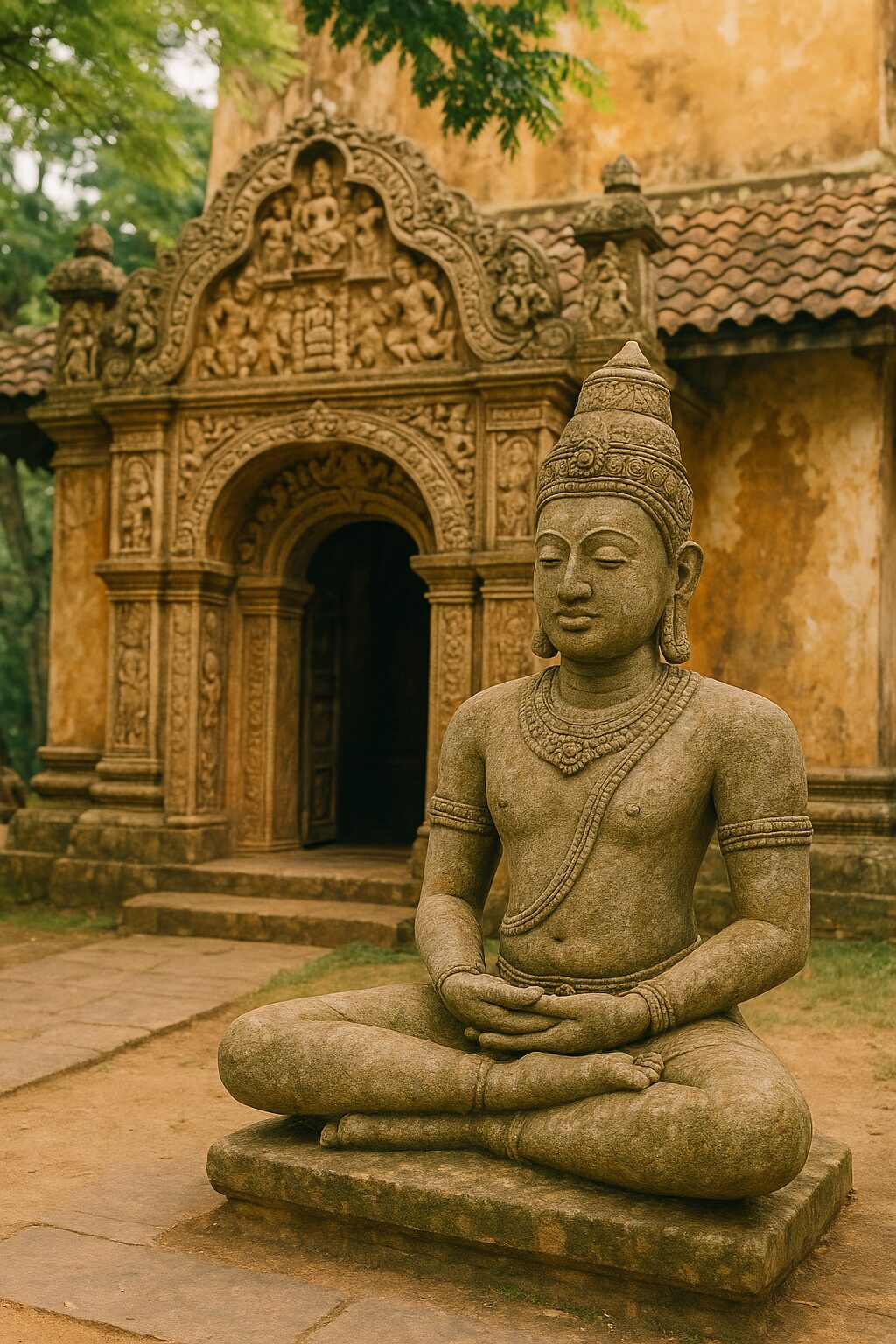
The name Weligama translates to “Sandy Village”—a fitting name for a bay wrapped in golden shoreline. Yet, this quiet beach town carries a history far deeper than its modern surfboards and cafés suggest. Long before tourism, Weligama stood as a vital stop for traders who sailed between Arabia, India, and Southeast Asia. These early visitors exchanged not only spices and gems but also stories, religions, and craftsmanship.
According to regional records, settlements near Weligama existed as early as the 2nd century BCE. Traders anchored their ships near Taprobane Island—the small rocky isle still visible from the main beach—to rest, barter, and refuel. Over centuries, these interactions shaped the town’s cultural fabric. Today, Weligama’s identity still reflects that blend of seafaring spirit and coastal hospitality.
This Weligama travel guide highlights how these layers of history continue to shape the town’s rhythm. Walking its narrow streets feels like reading a living timeline—from fishing traditions that predate colonial rule to temples that have watched generations grow and rebuild after storms.
3.2 The Colonial Influence and Maritime Heritage
During the 16th century, the Portuguese arrived along the southern coast. Their influence, followed by the Dutch and British, introduced new architecture, agriculture, and trade methods. Coconut plantations spread inland, and cinnamon—once more valuable than gold—became the region’s most prized export. Even now, you’ll find small family estates producing cinnamon sticks with techniques unchanged for centuries.
When you explore Weligama through this travel guide, pay attention to the details: a colonial-style post office, a British-era schoolhouse, and old bungalows shaded by towering tamarind trees. Each carries traces of that layered history. Though modernization has reshaped much of the coastline, fragments of the past remain quietly resilient.
In the late 19th and early 20th centuries, the Weligama Bay area became known for boat-building craftsmanship. Locals carved traditional oruwa (outrigger canoes) from a single tree trunk, shaping them with astonishing precision. Many of the fishermen you see balancing on stilts today still use inherited boats, their paint faded but their structure firm.
3.3 Spiritual Landmarks and Temples
No Weligama travel guide is complete without mentioning the town’s spiritual side. One of the most remarkable landmarks is the Kushtarajagala Statue, a 4-meter-high rock carving that dates back to the 8th century. It depicts a Bodhisattva believed to have healing powers, possibly Avalokiteshvara. According to legend, a king once suffering from leprosy prayed here and was cured—hence the name “Kushta” (leprosy). The carving stands just outside the main town and remains a symbol of faith and recovery.
Nearby, small village temples like Aggrabodhi Viharaya and Ruhunu Maha Viharaya host evening chanting sessions, open to visitors who approach respectfully. The sound of pirith (Buddhist recitations) mixed with the sea breeze gives travelers a sense of serenity that defines this part of Sri Lanka.
3.4 The Living Culture of Weligama
Culture in Weligama isn’t confined to monuments—it’s visible in everyday life. You’ll hear the rhythm of fishermen mending nets by the shore, children playing cricket under coconut palms, and women weaving beeralu lace, a skill introduced by the Portuguese and now mastered across generations.
Festivals in Weligama mark both religious devotion and community spirit. The Vesak Festival in May illuminates the town with lanterns celebrating Buddha’s birth, enlightenment, and passing. In August, the Perahera processions feature drummers, dancers, and elephants parading under the night sky. These events showcase the heart of southern Sri Lankan culture: vibrant, communal, and deeply spiritual.
Weligama’s markets also reveal its living heritage. Walk through the Main Market near the bus station early in the morning, and you’ll see locals trading spices, coconuts, and freshly caught fish. Sellers greet each other with laughter and friendly bargaining—a small reminder that despite tourism’s growth, the town’s soul remains anchored in its people.
3.5 The Cultural Spirit That Defines Weligama
What makes Weligama truly special is how its past and present coexist. You might watch surfers gliding past fishing canoes or see monks walking barefoot near beach cafés. This harmony of contrasts—ancient and modern, sacred and joyful—is what sets the town apart.
For travelers, the Weligama travel guide isn’t just about where to go; it’s about how to feel. Every smile, every market call, and every wave tells part of a larger story—the story of a town that has adapted without forgetting who it is.
4. Top Attractions in Weligama
4.1 Weligama Bay – The Heart of the Town
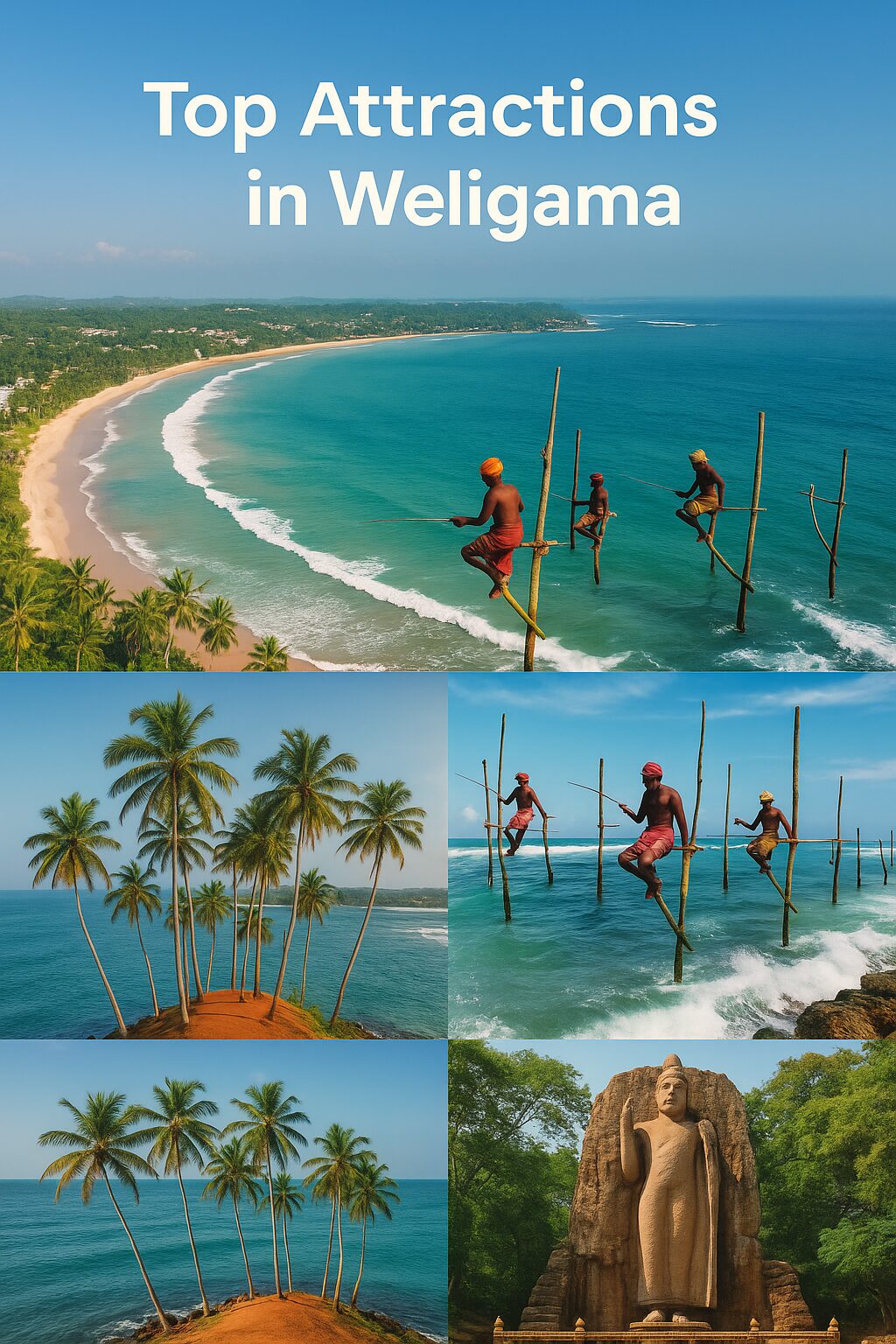
Every Weligama travel guide begins with the bay itself. Shaped like a crescent and lined with golden sand, Weligama Bay is the town’s soul. This two-kilometer stretch of coastline invites both locals and travelers from sunrise to sunset. Early mornings reveal stilt fishermen balancing above the water while the sun rises in shades of amber and pink. By mid-day, surfboards slice through gentle waves, and the air fills with laughter and salt.
The bay is perfect for swimming and beginner surfing thanks to its shallow gradient and soft sand bottom. Lifeguards patrol during high season, ensuring safety for families and first-timers. Beach cafés and juice stalls cluster near the center, offering coconuts, smoothies, and fresh seafood platters. As evening falls, lanterns flicker across verandas, and music drifts over the tide. For many visitors, one walk along the bay is enough to understand why Weligama has become a global favorite.
Tip: If you’re an early riser, visit around 6:00 a.m. The calm water, morning light, and fishermen setting up their stilts create unforgettable photographs.
4.2 Taprobane Island – A Dream Within the Bay
Just a short wade from the shore lies Taprobane Island, one of Weligama’s most iconic sights. This tiny rocky isle hosts a single elegant villa surrounded by palm trees. Built in the 1920s by a French count, the house became a retreat for writers and artists. Though it’s privately owned today, you can admire it from Weligama beach or the nearby cliff-top viewpoints.
Taprobane Island has become a symbol of exclusivity and imagination. Many travelers include it on their bucket list not for entry, but for its view. Watching waves shimmer around the island during sunrise is one of the simplest yet most rewarding experiences in this Weligama travel guide.
It was absolute pleasure to walk around the island and the day we visited there was breeze and it was magical .
See more reviews on Tripadvisor
4.3 Kushtarajagala Statue – Weligama’s Ancient Landmark
For travelers who love history, the Kushtarajagala Statue is a must-see. Carved into a granite rock face, this eighth-century figure of a Bodhisattva stands nearly four meters tall. It’s believed to represent a compassionate being who cured a king’s illness—hence the name “Kushta,” meaning leprosy.
The statue sits quietly by the roadside, surrounded by trees and birdsong. Though there’s no entry fee, it’s best to visit in the morning before the midday heat. Signboards explain the carving’s origins, making it a rewarding stop for those interested in archaeology and Sri Lanka’s Buddhist heritage. This sacred site adds a reflective depth to any Weligama travel guide, linking the modern surf town to its spiritual roots.
Very impressive stone statue. The place is pastoral and tranquil and very easy to get there. It’s in the middle of a neighborhood and worth a visit!
See more reviews on Tripadvisor
4.4 Midigama and Ahangama – Nearby Surf Breaks
Ten minutes west of Weligama lie Midigama and Ahangama, two smaller villages famous for their consistent surf breaks. While Weligama Bay is ideal for beginners, Midigama’s “Lazy Left” and “Rams Right” attract experienced surfers chasing longer rides.
Both spots maintain a relaxed vibe. You’ll find bamboo huts selling coconut pancakes, local board shapers repairing fins, and surf hostels filled with travelers comparing waves. The best part? These beaches are rarely crowded, especially during weekday mornings.
From an SEO perspective, this Weligama travel guide recognizes how closely these surf zones connect. They form part of the same coastline and complement one another perfectly—Weligama for learning, Midigama for improving, and Ahangama for testing skill and stamina.
4.5 Mirissa – Whale Watching and Sunset Views
Just ten minutes east, Mirissa offers one of the world’s best whale-watching experiences. Between November and April, blue whales and spinner dolphins migrate through deep waters just off the coast. Tour boats depart early from Mirissa Harbor, usually between 6:00 and 7:00 a.m., returning by midday.
While this section of your Weligama travel guide highlights local charm, Mirissa adds adventure. Watching a 30-meter blue whale surface beside your boat is an unforgettable sight. Always choose operators who follow responsible whale-watching practices—maintaining safe distances and avoiding noise pollution.
After your trip, explore Mirissa’s small hilltop viewpoint known as Parrot Rock, where panoramic views of the ocean and Weligama Bay reward the short climb. For an unforgettable marine adventure, don’t miss the chance to join one of the Whale Watching Tours from Weligama and witness blue whales gliding through the deep waters just off the coast.
4.6 Weligama Fish Market – A Slice of Local Life
To experience the town’s rhythm, head to the Weligama Fish Market near the harbor around sunrise. Fishermen bring in their nightly catch: tuna, snapper, squid, and sometimes shark. The scene is vibrant—auctioneers shouting prices, ice being crushed, and gulls circling overhead.
Visitors are welcome to walk through and photograph the activity, though it’s wise to wear shoes that can handle a bit of sea water. This market demonstrates the everyday livelihood that keeps the town grounded. Including it in any Weligama travel guide reminds travelers that the town’s heart still beats to the sea’s rhythm, not just tourism’s pace.
4.7 Tea and Cinnamon Estates Near Weligama
Only a short drive inland, the hills behind Weligama are dotted with tea and cinnamon plantations. These small estates offer guided tours where visitors can learn about Ceylon cinnamon’s harvest process and taste freshly brewed tea.
One notable stop is Handunugoda Tea Estate, located about 30 minutes away. Known for producing the “Virgin White Tea” picked without human touch, it combines scenic beauty with cultural depth. Visiting such plantations balances the beach experience with a glimpse into Sri Lanka’s agricultural soul.
Therefore, every complete Weligama travel guide should recommend at least one inland excursion—it deepens your understanding of local traditions and natural wealth.
4.8 Local Art and Crafts Workshops
Weligama’s artisans have long been known for beeralu lace-making and wood carving. Several family-run workshops welcome visitors for short demonstrations. You can observe intricate lace patterns woven on wooden bobbins or see masks carved for folk performances. Purchasing directly from the makers supports community heritage and ensures fair trade.
Adding such experiences transforms this Weligama travel guide from a list of places to a story of people. Every pattern and carving reflects generations of creativity inspired by the sea.
4.9 Coconut Tree Hill – The Perfect Sunset Spot
While technically closer to Mirissa, Coconut Tree Hill remains a favorite evening destination for travelers based in Weligama. The hill’s curved palms frame the ocean like a postcard. Sunset here glows deep orange, lighting up the coastline all the way back to Weligama Bay.
Arrive an hour before sunset to secure a good viewpoint and enjoy local vendors selling fresh king coconuts. This simple yet stunning location deserves a mention in any Weligama travel guide because it captures the island’s pure coastal magic.
4.10 Spice Gardens and Eco-Tours
For those curious about Sri Lanka’s natural resources, several eco-gardens near Weligama showcase medicinal plants and spices such as turmeric, clove, and lemongrass. Guides explain how ancient Ayurvedic remedies still influence daily life. Some gardens also sell organic oils and herbal teas.
These visits add educational value to your trip and align perfectly with sustainable tourism principles. Therefore, this Weligama travel guide encourages travelers to support eco-friendly operators and respect local environments.
👉 If you want to explore these hidden experiences, check out our full guide on Top Things to Do in Weligama Beyond the Beach, where we uncover temples, markets, yoga retreats, and local traditions that most visitors miss.
Explore Attractions Around Weligama Bay on Google Maps
5. Beaches & Surfing in Weligama
5.1 The Spirit of the Coast
Every Weligama travel guide must celebrate the ocean—it’s the heartbeat of this town. Weligama’s beaches combine natural beauty, calm surf conditions, and a relaxed community vibe. Unlike crowded resorts elsewhere, here you’ll find space to breathe, learn, and connect.
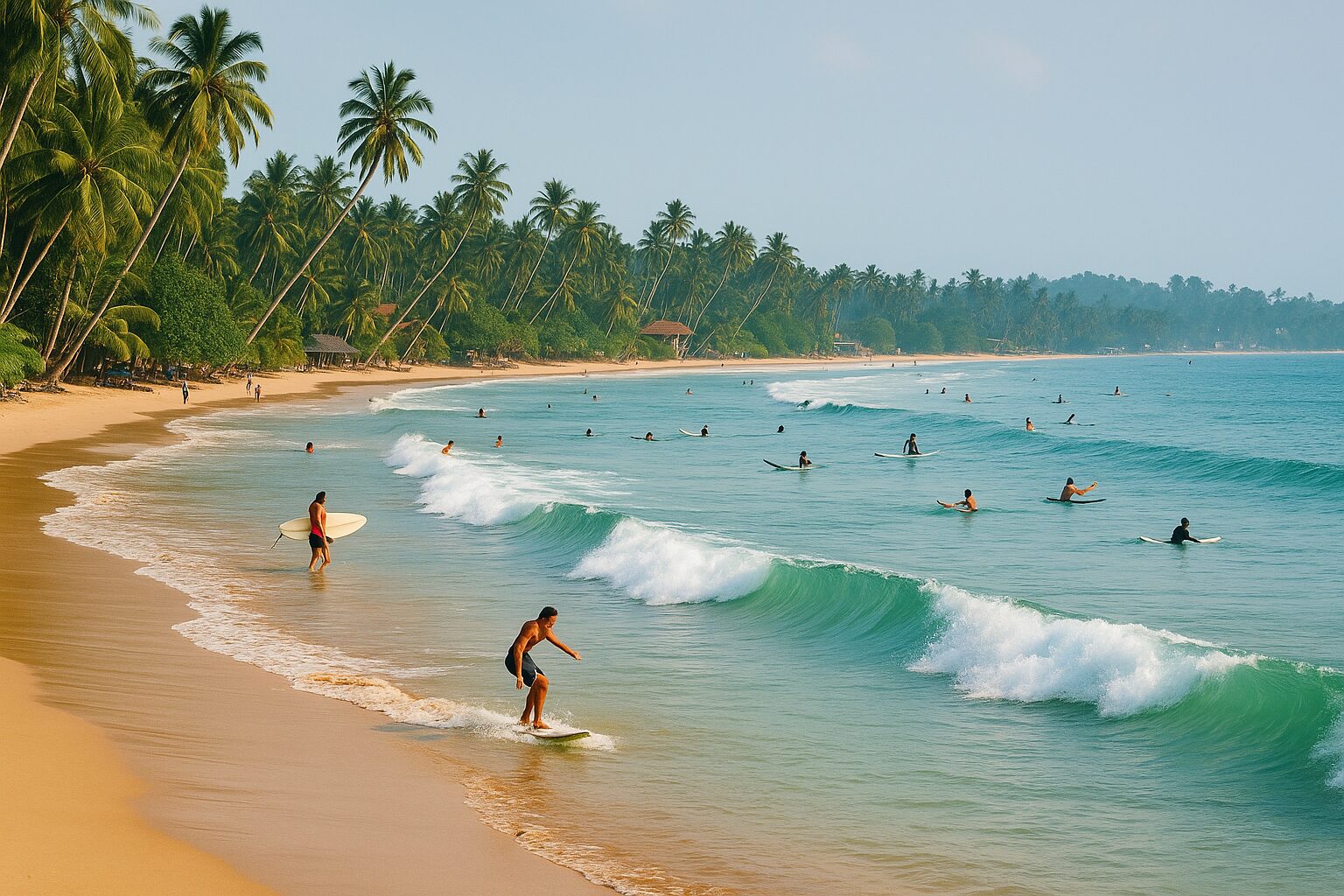
From dawn until dusk, life unfolds along the sand. Children chase waves, locals mend fishing nets, and surfers glide across rolling swells. The beach is more than scenery—it’s the town’s playground, marketplace, and meeting spot. Whether you come for surfing lessons or long walks, Weligama offers a stretch of coast that feels both wild and welcoming.
For an in-depth guide to Weligama’s surf schools, gear, and local etiquette, check out my full article — Surfing in Weligama – Complete Guide for Beginners & Pros — covering lessons, safety, and hidden surf spots loved by locals. If you’re looking to escape the busier parts of the bay, don’t miss our full guide to Weligama’s hidden and secluded beaches — calm shores and secret coves where the rhythm of the sea slows down.
5.2 Weligama Beach – The Surfing Classroom
If you’re reading this Weligama travel guide, chances are you’ve heard about its famous surf bay. Weligama Beach is widely regarded as the best beginner surf spot in Sri Lanka. The bay’s wide arc, sandy bottom, and gentle waves make it perfect for first-time riders. You can wade in from almost any point and catch a wave within minutes.
Surf Schools and Rentals:
Over thirty surf schools line the beach, ranging from small family-run shacks to professional academies with certified instructors. Most offer board rentals, rash guards, and 90-minute lessons for around 10–15 USD. Many instructors grew up here, and their local knowledge ensures you learn safely and quickly.
Best Times to Surf:
The ideal surf season runs from October to April, when winds are light and swells are consistent. However, beginners can surf year-round. Mornings usually bring the cleanest waves, while afternoons suit confident riders who enjoy mild challenges.
Surf Etiquette and Safety:
Weligama Beach maintains a friendly surf culture. Locals encourage beginners but expect respect—avoid dropping in on someone else’s wave and stay aware of swimmers nearby. Lifeguards patrol key areas during high season, adding a layer of reassurance for families and newcomers.
5.3 The Lineup Beyond Weligama
This Weligama travel guide wouldn’t be complete without mentioning nearby surf breaks. Within fifteen minutes, you’ll find an entire coastline of world-class waves suited to different skill levels.
-
Midigama: Known for “Lazy Left” and “Rams Right,” this spot challenges intermediate and advanced surfers with fast, clean waves.
-
Ahangama: Offers quiet beaches, coral reefs, and perfect peaks during early mornings.
-
Kabalana: Famous for its powerful “A-Frame” wave—great for experienced surfers chasing performance rides.
-
Mirissa Reef: Compact but thrilling; expect short, sharp rides when the swell is strong.
Together, these breaks create a surf corridor where you can progress naturally—starting at Weligama Bay, improving at Midigama, and testing skill further west. It’s one reason the area has become a home base for digital nomads and long-stay travelers who surf between work sessions.
5.4 Beach Life Beyond Surfing
Even if surfing isn’t your plan, Weligama’s beaches offer endless enjoyment. Stroll at sunrise when the sky turns silver-blue, or relax under palms with a chilled coconut. Local fishermen still balance on stilts at certain spots near Pelena—an ancient technique turned living art form.
Families appreciate the calm water near the main bay, ideal for swimming and paddling. Beach vendors sell tropical fruit, roti, and fresh juice, while cafés offer hammocks, shade, and Wi-Fi. If you prefer quiet, head west toward the Taprobane viewpoint; this section of coast remains peaceful even in peak season.
Travelers often describe the Weligama shoreline as “a beach that feels alive but never rushed.” That balance—energy without chaos—is what defines its charm.
5.5 Surf Camps and Long-Stay Options
Many visitors drawn by this Weligama travel guide decide to stay longer once they discover the area’s surf culture. Dozens of surf camps cater to multi-day learners and remote workers. They usually include accommodation, lessons, and community dinners.
Popular examples include Soul & Surf, Good Story, and several independent guesthouses near Pelena Beach. Most offer packages combining yoga, healthy meals, and flexible surf times. These setups attract solo travelers seeking friendship and routine.
The value-for-money ratio is excellent compared to Bali or Costa Rica, and the quality of instruction remains consistently high. Some surf camps also partner with conservation groups to keep beaches clean and protect marine ecosystems—a sign of how Weligama’s community values sustainability.
5.6 Sunset and Nighttime by the Sea
As evening falls, Weligama’s horizon transforms. Surfers drift to shore, carrying boards over their shoulders as the sun dips into the sea. Cafés switch from smoothies to cocktails, and mellow music fills the air. Watching the sunset from the sand is almost ritualistic—it feels like the day’s soft applause.
After dark, small beach bars host acoustic sets or candlelit dinners. The tone stays calm and social rather than loud. Travelers gather to share stories of their first waves or road trips through Sri Lanka’s south coast. Nights here remind you that paradise doesn’t need perfection—it just needs good company and the sound of the sea.
5.7 Sustainable Surfing and Ocean Care
Modern travel demands mindfulness, and this Weligama travel guide supports that. The local community actively promotes beach cleanups, coral preservation, and eco-friendly surfboard waxes. Visitors are encouraged to avoid single-use plastics and support cafés that use refillable glass bottles.
Organizations such as Surfing Weligama Clean Oceans run monthly cleanup events open to all travelers. Joining one adds meaning to your visit and helps keep the bay as pristine as it appears in photos.
Remember: respect for nature is part of the culture here. Leave no trace, take only memories, and let the ocean remind you why it deserves care.
5.8 Why Weligama’s Beaches Stand Out
Among all the coastal towns of southern Sri Lanka, Weligama stands out because it combines accessibility with authenticity. You can learn to surf in the morning, explore temples in the afternoon, and dine beside the bay at night—all within a few kilometers. Few destinations in the world offer that blend.
Every detail—from the friendly surf instructors to the fishermen balancing on stilts—tells a story of coexistence. The sea doesn’t just shape Weligama’s geography; it defines its people, pace, and promise.
So, whether you’re riding your first wave or watching the horizon fade into starlight, remember that this is what a real Weligama travel guide leads to: connection—with the ocean, with the culture, and with the moment itself.
6. Where to Stay in Weligama
6.1 Luxury Villas and Resorts in Weligama
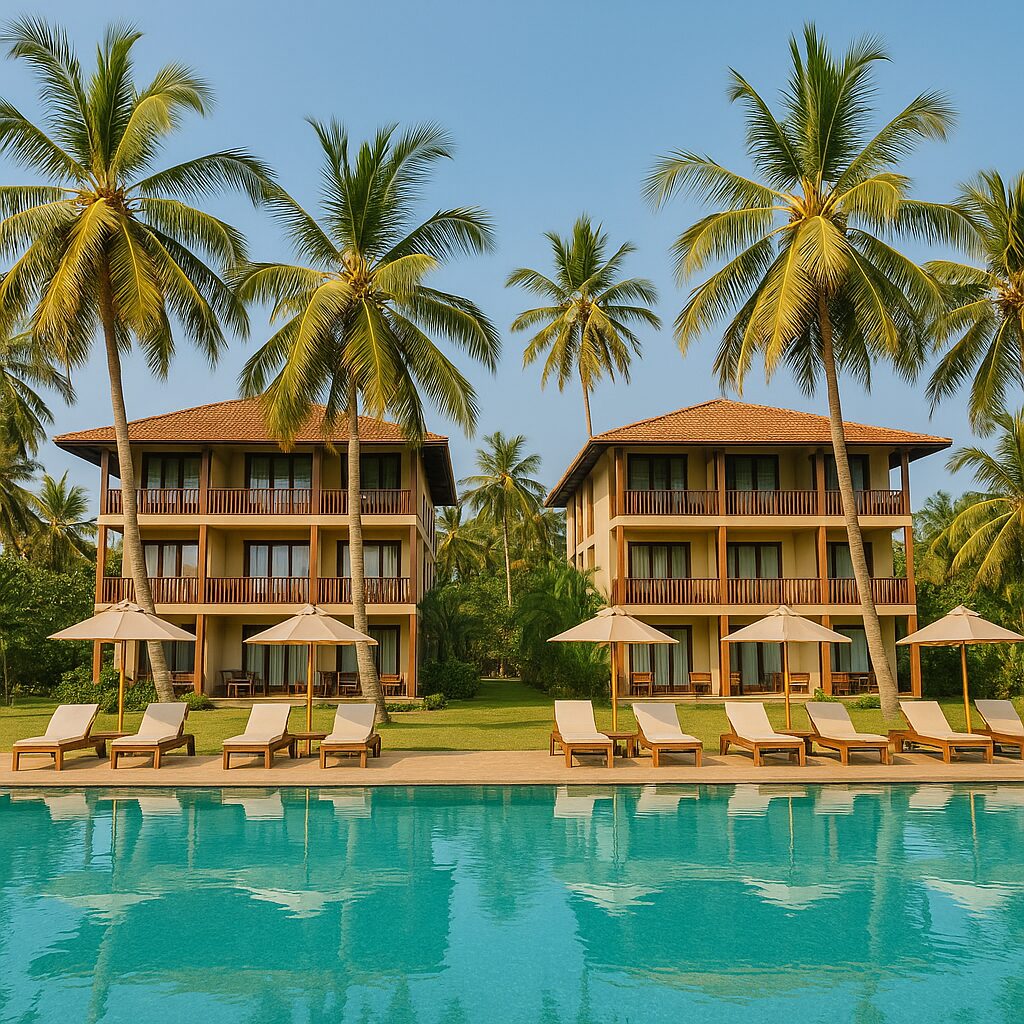
For travelers seeking elegance, this Weligama travel guide begins with world-class luxury. The most famous landmark is the Cape Weligama Resort, part of Relais & Châteaux. Perched on a cliff above the Indian Ocean, it features private pools, ocean-view villas, and fine dining with sunset panoramas. Service is flawless yet relaxed—perfect for honeymoons or high-end getaways.
Hotel facilities are great, service was really good. The nature surrounding it is awesome. Had to make the trip shorter due to an emergency in Brasil. Staff did their best to accommodate to our sudden unfortunate changes.
See more reviews on Tripadvisor
Another five-star icon is the Weligama Bay Marriott Resort & Spa, located directly on the beach. Its modern design contrasts beautifully with the traditional fishing boats outside. Guests enjoy infinity pools, an impressive breakfast buffet, and immediate access to surf schools.
Several private villas also dot the coastline—many include personal chefs, infinity pools, and staff who arrange yoga sessions or cooking classes. In this tier, comfort meets coastal calm; the luxury experience still feels connected to local life rather than detached from it.
🏨 Looking for detailed recommendations across all budgets? Check out my full guide — Best Hotels and Villas in Weligama – Where to Stay for Every Budget — featuring top-rated luxury resorts, boutique stays, and cozy guesthouses handpicked for every traveler type.
Weligama offers everything from cozy surf hostels to stunning oceanfront retreats. For travelers seeking elegance and privacy, explore our curated list of top luxury villas in Weligama with ocean views, where comfort meets the calm rhythm of the southern coast.
6.2 Boutique Hotels with Local Charm
Mid-range travelers will love the smaller boutique hotels that combine design and intimacy. Options such as We Escape, The Spindrift Hostel & Cafe, and Twenty-Two Weligambay deliver unique interiors, ocean views, and friendly atmospheres. Each property reflects Sri Lanka’s coastal personality—hand-woven fabrics, tropical wood furniture, and breezy verandas.
Many boutique stays emphasize sustainability: solar panels, refillable water systems, and locally sourced meals. These eco-minded practices align perfectly with this Weligama travel guide’s philosophy of mindful tourism.
Travelers often choose boutique hotels because they offer social connection without the noise of large resorts. You can chat with owners over breakfast, get personal surf recommendations, or join community beach cleanups.
6.3 Budget Guesthouses and Surf Hostels
Budget travelers will find Weligama refreshingly affordable. Dozens of guesthouses and surf hostels line the main beach road and inland lanes. Rooms often start around 10–20 USD per night, many including Wi-Fi and simple breakfasts.
Popular budget names include Basecamp Weligama, Hangtime Hostel, and Surf ’N Stay—each known for clean rooms, rooftop cafés, and a youthful, global crowd. Hangtime even features a yoga deck overlooking the bay, attracting digital nomads who mix remote work with wave sessions.
Amazing time , great rooms and big beds!! Really close to food spots and surf places and the restaurant is amazing and cheap upstairs!
See more reviews on Tripadvisor
Staying in these places offers community: you’ll meet travelers from Europe, Asia, and Australia sharing surf stories over rice & curry. Cheap doesn’t mean low quality; cleanliness, hospitality, and local tips come standard.
6.4 Family-Friendly Resorts and Stays
Families will appreciate Weligama’s safe swimming beaches and spacious resorts. The Weligama Bay Resort and Good Story Surf Hostel & Resort provide connecting rooms, shallow beachfront zones, and professional surf instructors for children. Many villas also include private kitchens—ideal for long family stays.
Parents love that most restaurants serve mild Sri Lankan and Western dishes, and pharmacies, supermarkets, and hospitals are nearby. This practical side rarely appears in guides, yet it’s why families return year after year.
Even boutique hotels adapt for multi-age groups, offering babysitting on request and playground corners. Therefore, this Weligama travel guide confirms the town as both stylish and family-friendly—rare in coastal Asia.
6.5 Tips for Choosing the Right Stay
When selecting accommodation, think about your goals:
-
For surf lessons: choose along the main bay near Pelena.
-
For quiet rest: look toward Taprobane Island’s west end or inland villas.
-
For nightlife: pick central properties within walking distance of cafés and bars.
-
For views: hillside villas or Cape Weligama offer dramatic panoramas.
Booking early is wise during December–March, the high season for surf and sunshine. Off-season travelers can negotiate discounts, especially for week-long stays. Many properties respond fastest through WhatsApp rather than email.
Above all, stay where hospitality feels genuine. The warmth of local hosts often becomes the most memorable part of a Sri Lanka journey.
6.6 Why Accommodation Matters in This Weligama Travel Guide
In Sri Lanka, where experiences vary with each region, accommodation shapes how you feel each day. A resort might provide serenity; a hostel brings friendship. Weligama lets you choose either without losing the ocean at your doorstep.
This Weligama travel guide highlights variety because diversity defines the town. Whether you sleep in a five-star suite or a bamboo cabana, you’ll wake to the same sea breeze—the true luxury of Weligama.
7. Food & Dining in Weligama
7.1 The Coastal Flavor of Weligama
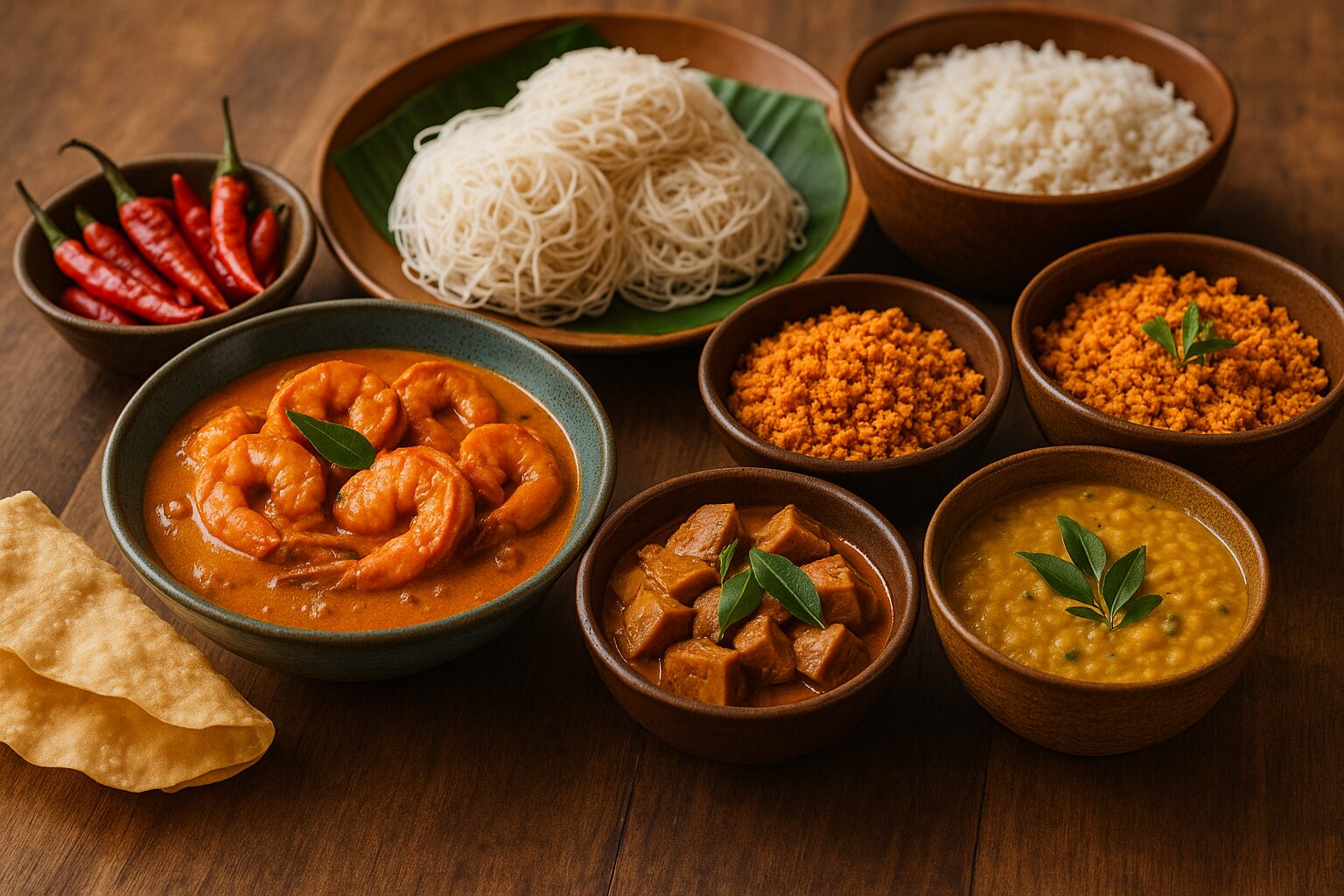
Every Weligama travel guide should celebrate the town’s food scene because it perfectly captures the essence of Sri Lankan coastal life—fresh, simple, and deeply satisfying. The town’s location on the ocean means seafood defines nearly every menu. Fishermen bring their catch straight from the boats each morning, and by noon, you’ll find tuna, prawns, crab, and calamari sizzling in clay pots.
Weligama’s dining culture blends local charm with international creativity. Traditional family kitchens stand beside modern cafés that serve smoothie bowls, espresso, and vegan-friendly meals. This balance keeps travelers comfortable while introducing them to real Sri Lankan flavors.
Transitioning from surfboard to supper is easy here—restaurants line the beachfront, and every lane inland hides a family eatery ready to serve rice, curry, and coconut sambal with a smile.
7.2 Best Restaurants and Cafés in Weligama
When you read any detailed Weligama travel guide, certain names always appear because they’ve defined the local food landscape.
-
Ceylon Sliders – A café-hotel hybrid that combines surf culture and creative cuisine. Try their avocado toast with a Sri Lankan twist, or a mango smoothie after a surf session.
Who knew weligama had some of the best burgers we’ve had in a long long time 🙂 we went at night so pity couldn’t enjoy the view. excellent service as well
See more reviews on Tripadvisor
-
Nomad Café & Boutique – Known for its healthy breakfasts, vegan curries, and laid-back bohemian atmosphere.
-
The Fish Point – A casual beachfront grill where you can choose your fish and have it barbecued while you watch the sunset.
-
Good Story Restaurant – Part of a surf hostel but serves high-quality seafood pasta, prawn curry, and local rice dishes.
-
W15 Weligama – Offers fine dining with an elegant beachfront setting—perfect for romantic dinners.
These spots blend global inspiration with island simplicity. The result is food that satisfies both international tastes and local authenticity.
7.3 Local Eats and Street Food
Beyond the trendy cafés, Weligama remains a town of everyday cooking and community. Visit the Weligama Public Market or walk the streets around the bus stand to find vendors serving kottu roti, spicy egg hoppers, and sweet pol pani pancakes filled with coconut and treacle.
For a truly local experience, try rice and curry at a small family-run café. A typical plate includes red rice, dhal, pumpkin curry, jackfruit curry, coconut sambal, and crispy papadam—all for under 500 rupees (about $1.50).
This Weligama travel guide recommends exploring lunchtime markets rather than eating only at hotels. You’ll discover tastes that don’t appear on resort menus—fiery sambals, homemade pickles, and regional specialties like ambul thiyal (sour fish curry).
7.4 Ocean View Dining Experiences
Few pleasures match dining with a sea breeze, and Weligama offers plenty of it. Restaurants like The Deck at Marriott and Tiki Cliff Top combine gourmet menus with panoramic views of the bay. Imagine candlelight reflecting off the water while you enjoy freshly grilled snapper and a local arrack cocktail.
For something more rustic, beach shacks near Pelena serve grilled prawns, calamari rings, and chilled beer just meters from the surf. Many host acoustic musicians at sunset, turning dinner into a relaxed coastal celebration.
Even simple places carry charm here—plastic chairs, flickering lanterns, and laughter drifting over the tide. In Weligama, atmosphere matters as much as flavor, and that’s why ocean view dining earns its own chapter in this travel guide.
7.5 Farm-to-Table and Sustainable Dining
Weligama’s food culture is evolving with sustainability in mind. Local chefs now partner with farmers in nearby villages to source organic produce and free-range eggs. Some cafés even grow their own herbs and greens on-site.
The Coconut Cult Café, for example, uses reusable containers and bans plastic straws. Shady Lane serves locally roasted coffee, reducing carbon footprint while supporting Sri Lankan farmers.
This movement fits the responsible travel values central to this Weligama travel guide—eat well, support locals, and minimize waste. When you choose these restaurants, your meal contributes to environmental care and community livelihood.
7.6 Sweet Treats and Desserts
For dessert, try curd with treacle, Sri Lanka’s classic combination of buffalo yogurt and palm syrup. Beach vendors sell it in small clay pots; the taste is creamy, smoky, and naturally sweet.
Bakeries in town serve coconut roti with jam or fresh-baked banana cake. International cafés offer brownies, smoothie bowls, and gelato, catering to travelers who crave comfort after spicy meals. Whether you prefer local sweets or modern desserts, Weligama ensures something memorable for every palate.
7.7 Drinks and Nightlife
Evenings in Weligama mix relaxation with subtle energy. Beachfront bars like Ceylon Sliders Rooftop and Cheeky Monkey host live DJs or acoustic performances. Cocktails often feature local ingredients—passionfruit, coconut water, cinnamon, and lime.
If you prefer quiet nights, many cafés transition into soft-lit lounges with tea, fruit juices, or mocktails. Locals enjoy ginger tea before bedtime, said to aid digestion after spicy food.
Unlike party towns such as Mirissa, Weligama’s nightlife feels balanced. You can enjoy music without crowds, conversation without shouting, and stars without neon glare.
7.8 Cooking Classes and Food Tours
A good Weligama travel guide always encourages participation. Several local chefs offer cooking classes where travelers can learn to make Sri Lankan curry powder, coconut sambal, and roti from scratch. Classes usually include a market visit to choose ingredients, providing insight into local produce and pricing.
Food tours are another growing trend. Guides lead small groups through hidden eateries, tea shops, and spice stalls. It’s one of the most authentic ways to connect with Sri Lankan hospitality—through shared meals and stories.
7.9 The Flavor That Defines Weligama
Ultimately, Weligama’s culinary scene represents its identity: simple, generous, and connected to the sea. Meals here aren’t rushed. Chefs talk with guests, families eat together, and even solo travelers rarely dine alone for long.
When you leave Weligama, you’ll remember not just what you ate but how it made you feel—warm, welcomed, and content. That, more than anything, is the secret ingredient this Weligama travel guide hopes you’ll taste.
8. Day Trips & Nearby Towns
8.1 Exploring Beyond Weligama
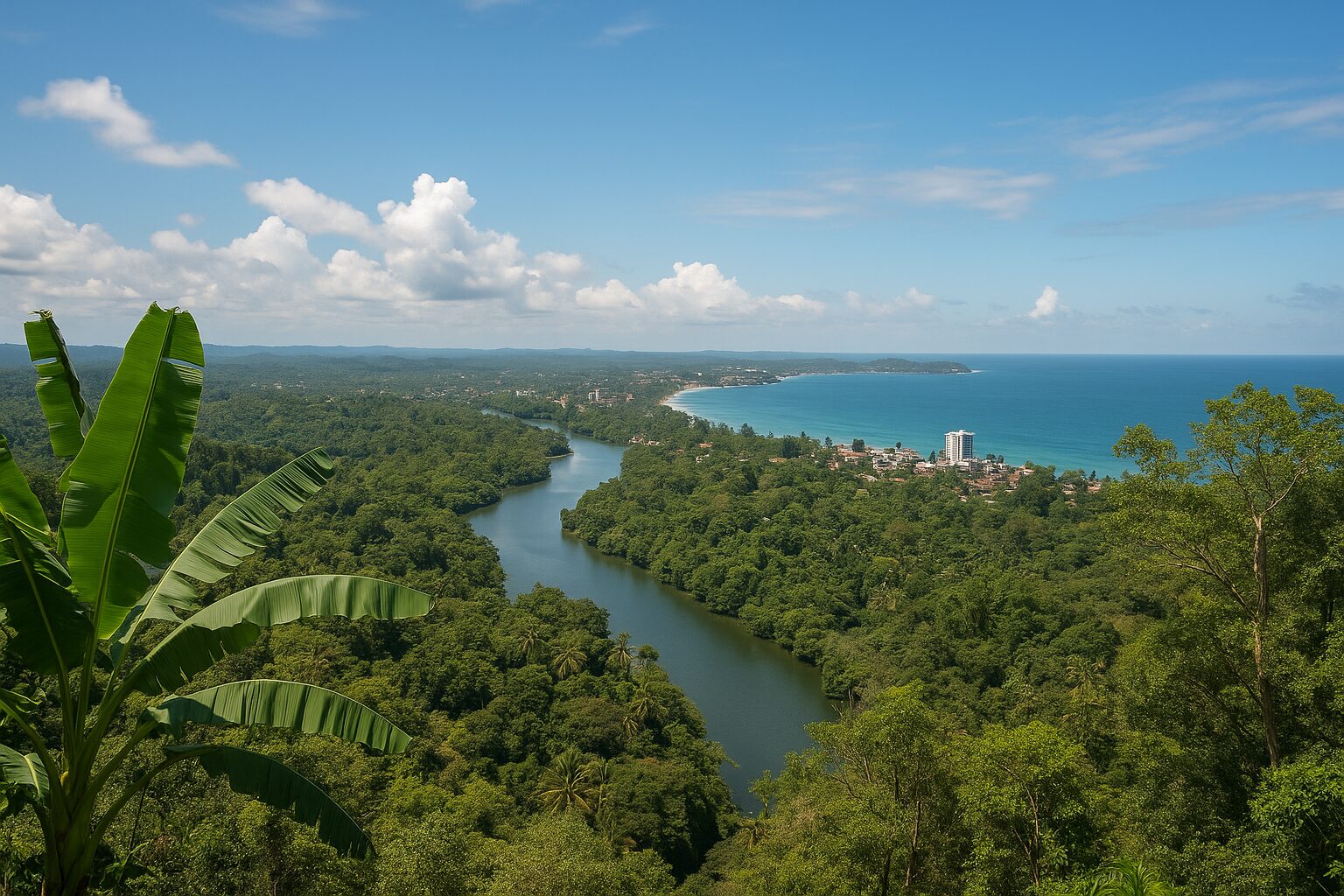
Every well-rounded Weligama travel guide includes nearby towns that reveal the diversity of Sri Lanka’s southern coast. Weligama’s central position makes it an ideal base for half-day or full-day adventures. Within an hour’s drive, you can explore ancient forts, wildlife sanctuaries, secluded beaches, and tea-clad hills. Whether you prefer cultural experiences, scenic drives, or active adventures, there’s something nearby for every traveler.
8.2 Mirissa – Whale Watching & Sunset Magic
Only ten minutes east lies Mirissa, famous for its golden beach, whale watching, and lively atmosphere. Boats depart early each morning from Mirissa Harbour, taking travelers into deep blue waters where blue whales and spinner dolphins glide beneath the surface. The season usually runs from November to April, and sightings are frequent.
After your whale-watching tour, spend the afternoon at Parrot Rock Viewpoint, a small islet offering one of the best coastal panoramas in southern Sri Lanka. Climb carefully during low tide to see turquoise waters framed by coconut trees.
As the sun sets, Mirissa transforms into a casual party hub. Beach cafés light lanterns, musicians perform live, and travelers gather for seafood feasts on the sand. This short trip adds excitement and contrast to your peaceful stay in Weligama.
8.3 Galle Fort – History by the Sea
About 40 minutes north of Weligama lies Galle Fort, a UNESCO World Heritage Site built by the Portuguese in the 16th century and later expanded by the Dutch. The fort’s cobblestone lanes and colonial architecture offer a glimpse into Sri Lanka’s maritime past.
You can walk along the old ramparts for sea views, visit small art galleries, or explore historic landmarks such as the Dutch Reformed Church and the Galle Lighthouse. Don’t miss the charming boutiques selling handmade jewelry and local spices.
Adding Galle Fort to this Weligama travel guide makes sense for history enthusiasts. The fort combines old-world elegance with modern energy—cafés serve lattes beside centuries-old walls, and travelers wander through alleys that echo with stories of trade, conquest, and resilience.
8.4 Unawatuna – Snorkeling & Lagoon Charm
Just 15 minutes from Galle, Unawatuna is a crescent-shaped beach known for calm waters and coral reefs. It’s ideal for snorkeling and stand-up paddleboarding. Families appreciate its safety, while couples love its romantic seaside restaurants.
Behind the beach lies Jungle Beach, a hidden cove accessible by a short jungle trail. The water there is crystal clear, and the setting feels private. For those following this Weligama travel guide, Unawatuna offers a perfect blend of adventure and tranquility, with plenty of accommodation and café options for spontaneous overnights.
8.5 Ahangama – Surf Town with a Soul
Heading west from Weligama, you’ll reach Ahangama, a growing surf town that feels more local than touristy. The waves here are stronger, drawing intermediate surfers from around the world. Cafés like Cactus Lounge and Dots Bay House serve delicious brunches with ocean views.
Ahangama’s creative community—artists, yoga teachers, and designers—has given rise to boutique shops and sustainable studios. The atmosphere is mellow, perfect for slow travelers seeking balance between connection and solitude.
Including Ahangama in this Weligama travel guide highlights how the region caters to every mood: Weligama for easy surf, Midigama for focus, and Ahangama for serenity.
8.6 Midigama – Where Surfers Chase Perfection
A short drive or tuk-tuk ride west takes you to Midigama, home to two legendary surf breaks: Lazy Left and Rams Right. Lazy Left offers long, forgiving left-hand waves ideal for intermediate surfers, while Rams Right challenges experts with fast, hollow tubes.
Even if you don’t surf, Midigama’s beachfront cafés—like Cafe Ceylon—make great day-trip stops for breakfast or sunset drinks. Watching surfers carve through glowing waves is a free show that never gets old.
Because it’s so close, many travelers sleep in Weligama but spend their mornings surfing Midigama, blending the best of both worlds. This convenience cements Weligama’s reputation as the heart of Sri Lanka’s surf coast.
8.7 Hiriketiya – The Horseshoe Bay of Dreams
About an hour east lies Hiriketiya Beach, often called “Hiri” by locals and travelers. It’s a small, horseshoe-shaped bay surrounded by palm forests and chic guesthouses. The vibe feels bohemian yet refined—yoga mats on decks, surfboards on verandas, and travelers sipping coconut lattes by the sea.
Waves here suit both beginners and pros. You can rent boards, join lessons, or simply float in calm water. With boutique stays and craft cafés, Hiriketiya is one of the most photogenic destinations in any Weligama travel guide.
8.8 Dondra Lighthouse – The Southernmost Point of Sri Lanka
Continue east from Weligama for about an hour to reach Dondra Head Lighthouse, marking the southern tip of the island. The white tower, built by the British in 1890, stands over 50 meters tall and offers breathtaking views of the Indian Ocean.
The nearby village of Dondra feels untouched by mass tourism. Visitors can walk coastal trails, watch fishermen repair nets, or visit the Devinuwara Temple, an important site for Buddhist and Hindu devotees.
For travelers following this Weligama travel guide, Dondra provides a peaceful escape into rural life and maritime heritage.
8.9 Koggala Lake – Serenity and Spice Islands
Only 20 minutes away, Koggala Lake offers an entirely different landscape—still water, mangroves, and tiny islands filled with birdlife. You can take a boat tour to visit a cinnamon plantation, a Buddhist temple, and a small fish spa where tiny fish nibble gently at your feet.
Photographers love the misty mornings here, while nature enthusiasts enjoy spotting herons, monitor lizards, and kingfishers. Koggala’s calm contrasts perfectly with the vibrant energy of Weligama. Therefore, this Weligama travel guide recommends a half-day trip to experience the area’s quiet side.
8.10 Tea Country Day Trips – From Sea to Highlands
Though Weligama is coastal, the Southern Tea Highlands begin only a few hours inland. Day trips to Handunugoda Tea Estate or Deniyaya reveal the connection between ocean and mountain life. At Handunugoda, you’ll learn about Virgin White Tea, picked without human touch. In Deniyaya, you can hike through Sinharaja Forest Reserve, a UNESCO-listed rainforest filled with waterfalls and endemic species.
These inland journeys balance your seaside experience with cooler air, lush greenery, and the aroma of fresh tea leaves. A comprehensive Weligama travel guide should always include this transition—from the salt of the sea to the scent of the hills.
8.11 Why Day Trips Matter
Weligama’s magic extends beyond its own bay. The town sits at the heart of southern Sri Lanka’s most accessible adventures. Within a short drive, you can surf, dive, hike, or sip tea among misty hills. Each journey adds dimension to your stay—turning a beach holiday into a full exploration of nature, culture, and connection.
When travelers ask why Weligama stands out, this travel guide answers easily: nowhere else in Sri Lanka lets you experience so much with so little travel time.
9. Best Time to Visit Weligama
9.1 Understanding Weligama’s Climate
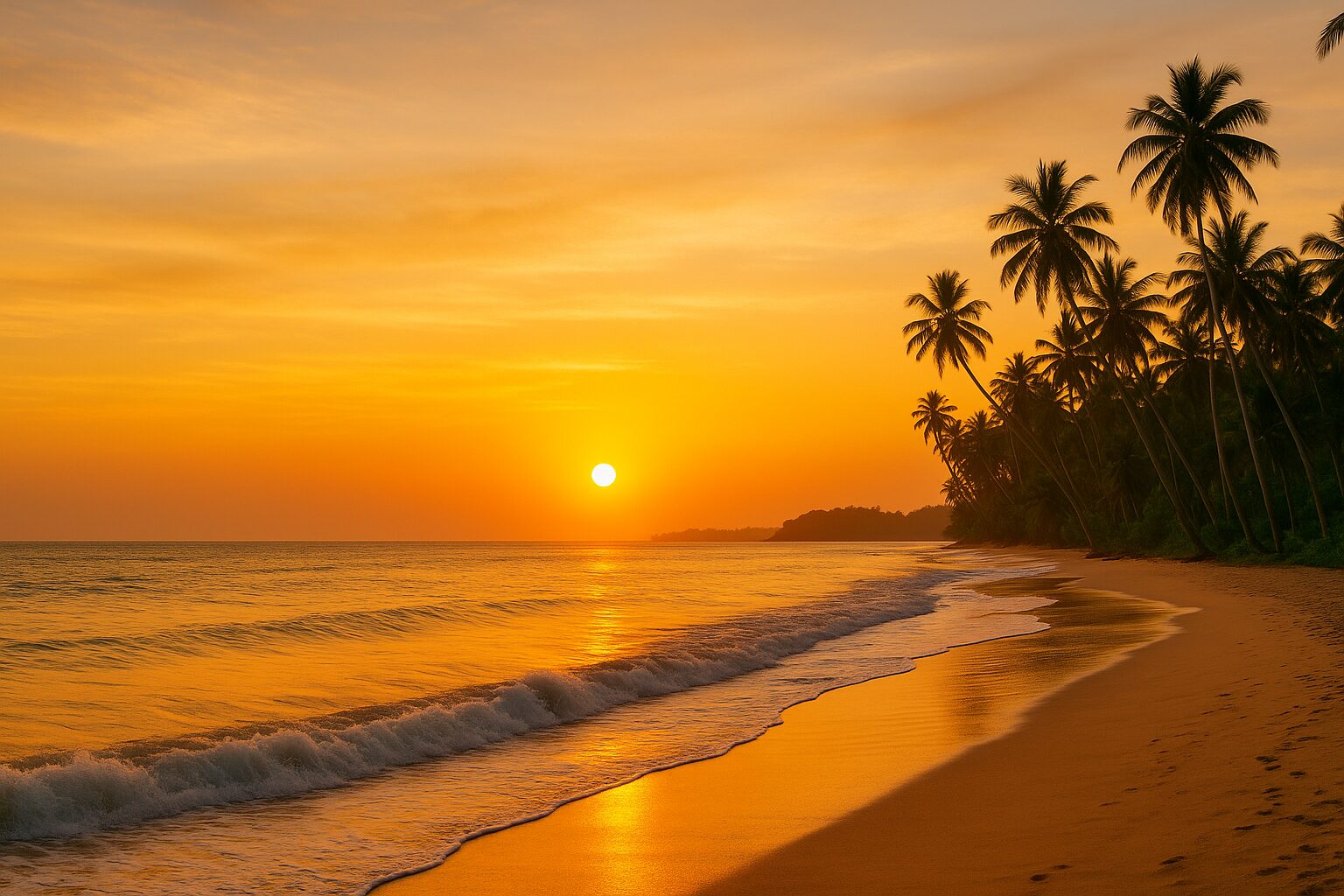
A reliable Weligama travel guide must begin this section with the weather, because climate shapes every traveler’s experience. Weligama, located on Sri Lanka’s southern coast, enjoys a tropical climate with warm temperatures year-round—typically between 26°C and 31°C (79°F–88°F).
Unlike northern or hill-country regions, Weligama doesn’t experience extreme cold or dryness. Instead, it cycles between two main seasons: the dry season and the monsoon season. Each brings a different atmosphere, making the best time to visit depend on your goals—surfing, sightseeing, relaxation, or photography.
Transition words such as “however,” “meanwhile,” and “therefore” help connect this explanation smoothly and naturally throughout the section, improving readability and flow.
9.2 Peak Travel Season – December to April
From December through April, Weligama enters its most popular period. The skies stay clear, humidity drops slightly, and the ocean glows turquoise under calm winds. These months are perfect for swimming, surfing, and day trips.
Hotels, surf schools, and cafés operate at full energy. Travelers fill beachside restaurants, but the atmosphere remains relaxed compared to busier spots like Unawatuna or Mirissa. For this reason, this Weligama travel guide strongly recommends the first quarter of the year to experience the town at its best.
It’s also the safest period for beginners to learn surfing because waves are consistent yet gentle. Snorkeling visibility improves, and whale watching from Mirissa is in full swing. However, book accommodation early—December holidays and New Year weeks attract both local and international visitors.
9.3 Shoulder Season – May to July
From May to July, the southwest monsoon begins. While the term “monsoon” might sound intimidating, in Weligama it rarely means constant rain. Instead, you’ll experience occasional afternoon showers followed by brilliant sunshine. Mornings often remain calm and bright, allowing time for exploration or surfing before the wind picks up.
This season has its quiet charm. Prices drop, crowds thin, and nature feels renewed. Green landscapes surround the bay, and sunsets glow through misty skies. Therefore, for budget travelers or photographers, the shoulder season offers value and mood that differ from the polished perfection of the high season.
9.4 Off-Peak Months – August to October
During August to October, Weligama transitions between monsoons. The weather becomes unpredictable—sunny mornings may shift to windy afternoons—but the sea temperature remains warm.
Surfers still find good conditions, especially in early mornings. Boutique hotels and surf hostels often offer discounts during these months, making it ideal for long stays or digital nomads who prefer fewer tourists.
However, heavy rain can occasionally affect inland travel or day trips to the tea country. Always check forecasts before planning hikes or long drives. Despite that, evenings by the beach remain peaceful, and many travelers enjoy the solitude of Weligama during this quieter time.
9.5 Second Surf Season – August to October
Interestingly, this same off-peak period doubles as a secondary surf season. While the southwest monsoon affects western Sri Lanka, the southern coast—including Weligama—still receives moderate, clean swells. Surf instructors often call this the “secret season,” as the waves are less crowded yet still consistent.
Therefore, this Weligama travel guide recognizes two ideal surf windows: November to April and August to October. The latter suits confident beginners and intermediates who prefer fewer people in the lineup.
9.6 Weather Tips for Travelers
To make the most of your stay:
-
Bring light cotton clothing – humidity can be high even on dry days.
-
Pack reef-safe sunscreen and sunglasses – the equatorial sun is strong year-round.
-
Carry a light rain jacket or poncho – sudden showers can appear without warning.
-
Book accommodations with good ventilation or air conditioning – especially in March and April, when midday heat peaks.
Transition words help structure these tips naturally: “in addition,” “moreover,” and “consequently” tie advice to experience, keeping the tone clear and conversational.
9.7 Festivals and Events
Travel timing can also depend on cultural experiences. Around May or June, the Vesak Festival lights up southern Sri Lanka with lanterns celebrating Buddha’s birth, enlightenment, and passing. During this period, Weligama’s streets and temples glow with color and compassion.
In August, you might witness Perahera processions, where dancers, drummers, and elephants parade through nearby towns. December and January often feature New Year beach parties and surf competitions, giving the town a festive yet relaxed energy.
Including these moments in your schedule transforms a typical visit into a cultural journey. This is why the Weligama travel guide emphasizes timing—not just for weather, but for connection.
9.8 When Not to Visit
Though Weligama is a year-round destination, some travelers might avoid late May and early June, when the sea can become rough for swimming. Heavy rains occasionally limit visibility for diving or boat trips. However, even during this period, inland experiences—temple visits, tea tours, and yoga retreats—remain enjoyable.
Unlike other tropical areas, Sri Lanka’s coast never shuts down entirely. Restaurants and hotels stay open, and rainfall patterns are less severe than those of Southeast Asia. Therefore, no month is truly “bad”—it’s simply a matter of adjusting your plans to match the weather.
9.9 Summary: The Best Time to Visit
-
For perfect weather: December to April
-
For budget-friendly peace: May to July
-
For quiet surfing: August to October
-
For cultural immersion: May (Vesak) and August (Perahera)
Ultimately, the best time depends on your purpose. Families may prefer stability and sunshine, while photographers and digital nomads might seek solitude during shoulder months. The beauty of this destination is its flexibility—you can visit anytime and still find the spirit of the coast waiting to greet you.
This Weligama travel guide concludes that December through April remains the prime window for most visitors, but every season has a story worth experiencing.
10. How to Get to Weligama

10.1 Weligama’s Easy Access
A strong Weligama travel guide must begin by emphasizing one thing—Weligama is one of the most accessible beach towns in southern Sri Lanka. Unlike more remote coastal destinations, you can reach it easily by car, train, or bus. Whether you’re arriving from Colombo, the airport, or another southern town, several convenient routes connect directly to Weligama.
The town lies roughly 150 kilometers (93 miles) south of Colombo along the Southern Expressway (E01). Travel times vary by vehicle, but most visitors reach Weligama in 2.5 to 3 hours by car or 3 to 4 hours by train.
Because Sri Lanka is compact, this journey often doubles as a scenic experience—expect glimpses of rice paddies, palm groves, and fishing villages as you head south toward the ocean.
10.2 By Car or Private Transfer
Hiring a private driver is the fastest and most comfortable option, especially for families or travelers carrying surfboards and luggage.
From Colombo or Bandaranaike International Airport (CMB):
-
Follow the Southern Expressway (E01) toward Matara.
-
Exit at Weligama Interchange; from there, the beach is only five minutes away.
-
The entire drive takes around 2.5 hours in light traffic.
Private transfers can be booked online through hotel services or apps such as PickMe, Kangaroo Cabs, and Malkey Rent-A-Car. Vehicles usually have air conditioning and English-speaking drivers.
Advantages:
-
Door-to-door convenience
-
Flexible stops for photos or snacks
-
Direct access to villas or resorts off the main highway
This Weligama travel guide recommends pre-booking your driver if you arrive late at night, as public transport runs less frequently after 8:00 p.m.
10.3 By Train – Scenic and Affordable
If you value the journey as much as the destination, travel by train. The coastal line from Colombo Fort to Matara passes directly through Weligama station, making it one of the most scenic train routes in Asia.
Key details:
-
Duration: about 3.5 to 4 hours
-
Cost: 500–1,000 LKR (under $3 USD)
-
Class: Choose 2nd class reserved for best balance between comfort and views
Seats on the left side (facing forward) offer ocean vistas most of the way. You’ll see turquoise waves, palm-lined villages, and stilt fishermen as the train hugs the coast.
Tips:
-
Book early, especially during weekends or holidays.
-
Bring snacks and water—there’s no café car.
-
Keep valuables close; stations can be crowded.
Though slower than driving, the train gives travelers an authentic window into Sri Lankan life. The gentle rhythm of wheels on tracks, the scent of sea breeze through open windows—it’s the kind of experience every Weligama travel guide should recommend.
10.4 By Bus – Budget and Local
Buses connect Weligama with nearly every major city. This is the most affordable transport mode, though also the least predictable.
From Colombo:
-
Take an express bus to Matara from the Colombo Central Bus Station (Pettah).
-
Get off at Weligama Junction, roughly 2.5 hours later.
-
Fares range from 300 to 500 LKR ($1–2) depending on the route.
Local buses also operate between nearby towns—Mirissa (10 min), Matara (20 min), and Galle (40 min). While the ride can feel bumpy, it offers insight into daily Sri Lankan life. You’ll hear local music, see children boarding for school, and feel the rhythm of travel that defines this island nation.
This Weligama travel guide recommends buses for adventurous travelers who don’t mind a little spontaneity.
10.5 By Taxi or Ride-Hailing Apps
Sri Lanka’s ride-hailing platforms such as PickMe or Uber operate mainly in larger cities, but you can often find drivers willing to travel longer distances for an agreed fare. Expect around 20,000–25,000 LKR ($60–75) for a one-way ride from Colombo to Weligama.
For short local journeys—like trips to Mirissa or Ahangama—tuk-tuks remain the best choice. Negotiate fares politely before starting, or use the meter when available.
Average tuk-tuk fares:
-
Weligama → Mirissa: 700–900 LKR
-
Weligama → Galle: 3,000–3,500 LKR
10.6 Arriving from Other Regions
From Ella or the Hill Country:
Many travelers combine mountain adventures with coastal relaxation. From Ella, take the train to Colombo (about 9 hours) and transfer to a southern express train or private taxi to Weligama. An easier option is to book a private driver directly from Ella—this scenic drive through tea country and waterfalls takes about 5–6 hours.
From Yala or Udawalawe National Parks:
Safari travelers can reach Weligama in 3–4 hours by car via Matara. Several travel agencies offer transfers that combine wildlife tours with drop-offs at southern beaches.
Therefore, this Weligama travel guide encourages visitors to include the coast as the perfect finale to a wildlife or cultural itinerary.
10.7 Getting Around Weligama
Once you arrive, moving around is simple:
-
Walking: most attractions lie within 2–3 km.
-
Tuk-tuks: available almost everywhere—fast and inexpensive.
-
Scooter rentals: around 2,500–3,000 LKR per day; ideal for exploring nearby towns.
-
Bicycles: a slower, eco-friendly option, often provided by guesthouses.
Be cautious on busy roads, as traffic in Sri Lanka follows its own rhythm. Helmets are mandatory for scooters, and local police occasionally check licenses.
Transition words such as “therefore,” “meanwhile,” and “furthermore” ensure the text flows naturally while maintaining SEO readability.
10.8 Sustainable and Responsible Travel
Modern travelers often consider their footprint, and this Weligama travel guide promotes responsible tourism. Opt for shared transfers when possible, choose eco-certified accommodations, and avoid littering beaches or roadsides.
Carpooling or joining group tours not only saves money but also reduces emissions. If you rent scooters, maintain moderate speeds and respect wildlife—monkeys and peacocks sometimes cross the highway unexpectedly.
Travel isn’t only about reaching a place—it’s about doing so thoughtfully.
10.9 Summary: The Best Ways to Reach Weligama
| Mode | Duration | Cost (Approx.) | Best For |
|---|---|---|---|
| 🚗 Private Car | 2.5 hrs | $60–75 | Comfort & flexibility |
| 🚆 Train | 3.5–4 hrs | $2–3 | Scenic journey |
| 🚌 Bus | 2.5–3 hrs | $1–2 | Budget travelers |
| 🚕 Taxi / PickMe | 2.5 hrs | $60+ | Door-to-door convenience |
| 🏍️ Scooter (local) | — | $8–10/day | Short trips & exploration |
Ultimately, how you arrive depends on your travel style. Some prioritize comfort; others chase adventure. Either way, the moment you step onto Weligama’s golden sand, the journey will feel worth it.
This Weligama travel guide concludes: getting here is easy, but leaving might be the hardest part.yeah
11. Safety & Travel Tips for Weligama

11.1 General Safety Overview
Any complete Weligama travel guide should begin with reassurance: Weligama is among the safest beach towns in southern Sri Lanka. Violent crime is extremely rare, and locals are known for their hospitality and calm temperament. Visitors often describe the area as relaxed, friendly, and easy to navigate—even for first-timers.
That said, sensible precautions apply anywhere in the world. Keep valuables out of sight, lock hotel doors when you go out, and avoid leaving belongings unattended on the beach. Petty theft can occur occasionally in crowded public areas, especially during festivals or at the main bus stand.
Police presence is visible, and officers are generally approachable. If you ever need assistance, look for uniformed personnel near the railway station or call the Weligama Police Station directly at +94 41 225 0055.
11.2 Beach & Water Safety
The ocean gives Weligama its identity—but it also deserves respect.
-
Currents & Conditions: Most of Weligama Bay is beginner-friendly, yet riptides can appear during changing tides. Observe flags and follow lifeguard instructions. Red flags mean strong currents—avoid swimming during those times.
-
Surf Etiquette: Beginners should stay near surf schools and avoid paddling into advanced areas like Midigama’s Rams Right. Always leash your board and watch for other surfers before catching a wave.
-
Marine Life: Jellyfish appear occasionally after heavy rain, though stings are mild. Rinse with vinegar or seawater—not fresh water—to neutralize. Sea urchins hide among rocks near Taprobane; water shoes help.
Lifeguard towers stand along the main beach, and first-aid posts remain open from 8 a.m. to 6 p.m. If emergencies arise, dial 119 for police or 1990 for the national ambulance service.
This Weligama travel guide reminds you that safe seas create joyful memories—never underestimate them.
11.3 Health & Hygiene Tips
Weligama’s warm climate makes hydration crucial. Carry bottled or filtered water and avoid tap water unless your accommodation provides purification systems. Most cafés now offer refill stations to reduce plastic waste.
Medical Care:
-
Weligama Government Hospital – small facility for minor treatment.
-
Matara General Hospital (25 min away) – large public hospital with emergency unit.
-
Lanka Hospitals Galle – private hospital (45 min drive) offering international-standard care.
For minor issues, local pharmacies stock basic medicines, insect repellent, and rehydration salts. Pharmacies in Sri Lanka are often marked with a green cross symbol.
Vaccinations: Standard travel immunizations (tetanus, hepatitis A, typhoid) are recommended. Mosquitoes are present, especially after rain, so use repellent and choose guesthouses with nets or screened windows.
Transition words like “moreover,” “in addition,” and “therefore” ensure smooth readability throughout this health section.
11.4 Transportation Safety
Roads along the south coast are generally well-paved, yet driving styles differ from Western norms. Tuk-tuks weave freely between lanes, buses honk frequently, and motorcycles carry everything from surfboards to fruit baskets.
Tips for safe travel:
-
Wear helmets when riding scooters; police occasionally check licenses.
-
Use headlights after 6 p.m.—many vehicles lack streetlights.
-
When crossing roads, look both ways; traffic flows on the left side in Sri Lanka.
-
Agree on tuk-tuk fares before the ride if no meter is used.
If you hire a car, consider a local driver instead of self-driving; they handle unpredictable traffic calmly.
This Weligama travel guide recommends walking by day and using tuk-tuks or taxis at night for comfort and security.
11.5 Cultural Etiquette & Respectful Behavior
Sri Lankans value politeness, humility, and respect—especially in temples or homes. Dress modestly when visiting religious sites: shoulders and knees covered, shoes and hats removed. Avoid physical contact with monks and never pose for photos with your back toward Buddha statues.
When greeting locals, a gentle smile or head nod is enough; handshakes are common but not universal. Public displays of affection are considered impolite outside tourist zones.
If invited to someone’s home, remove shoes at the entrance. Gifts such as sweets or fruit are appreciated but never mandatory.
Using transition words like “however” and “meanwhile” balances tone and ensures Yoast readability.
11.6 Money, ATMs & Scams to Avoid
Sri Lanka uses the Sri Lankan Rupee (LKR). ATMs are available near the Weligama bus stand and along Main Street—machines from Commercial Bank or Sampath Bank are most reliable for international cards.
Credit cards are accepted at hotels and mid-range restaurants but not always in small shops. Always carry some cash for tuk-tuks or markets.
Avoid common scams:
-
“Helpful” strangers offering to show you a secret surf spot or spice shop, then expecting a large tip.
-
Beach vendors inflating prices—politely decline or bargain with a smile.
-
Fake gemstone sellers in tourist areas.
If you need assistance, the Tourist Police (Galle District) can be reached at +94 91 222 2222.
This Weligama travel guide emphasizes honesty as the norm here—locals dislike scams as much as travelers do.
11.7 Solo & Female Traveler Safety
Weligama welcomes solo travelers warmly, including women exploring alone. Street harassment is uncommon but can occur occasionally in crowded or poorly lit areas.
Tips for solo visitors:
-
Dress modestly when walking away from beaches.
-
Avoid isolated stretches after dark—use tuk-tuks instead.
-
Stay in reputable guesthouses with online reviews.
-
Trust your instincts; Sri Lankans are helpful, and it’s fine to ask for directions or assistance.
Many female surfers and digital nomads live here long-term, forming an inclusive, supportive community. Therefore, this Weligama travel guide confidently assures solo visitors that Weligama balances independence with safety.
11.8 Emergency Contacts & Useful Numbers
Keep these handy in your phone or notebook:
-
Police (Emergency): 119
-
Ambulance / Medical Emergency: 1990
-
Fire Service: 110
-
Tourist Police (Galle District): +94 91 222 2222
-
Weligama Police Station: +94 41 225 0055
-
Matara General Hospital: +94 41 223 2012
-
Lanka Hospitals Galle (Private): +94 91 223 4861
Most locals speak basic English, especially near tourist areas. If language barriers arise, show the number on your phone—someone nearby will help you call.
11.9 Final Advice from This Weligama Travel Guide
Travel smart, stay kind, and respect local rhythms. Safety in Weligama doesn’t depend on fear but on awareness. The ocean, the roads, the people—all reward mindfulness.
Carry a copy of your passport (not the original) when going out, keep emergency numbers saved, and remember that a calm attitude opens more doors than caution ever could.
In essence, Weligama is a town where generosity outweighs risk. With simple awareness and respect, your visit will be peaceful, enriching, and unforgettable.
12. Shopping & Local Markets in Weligama
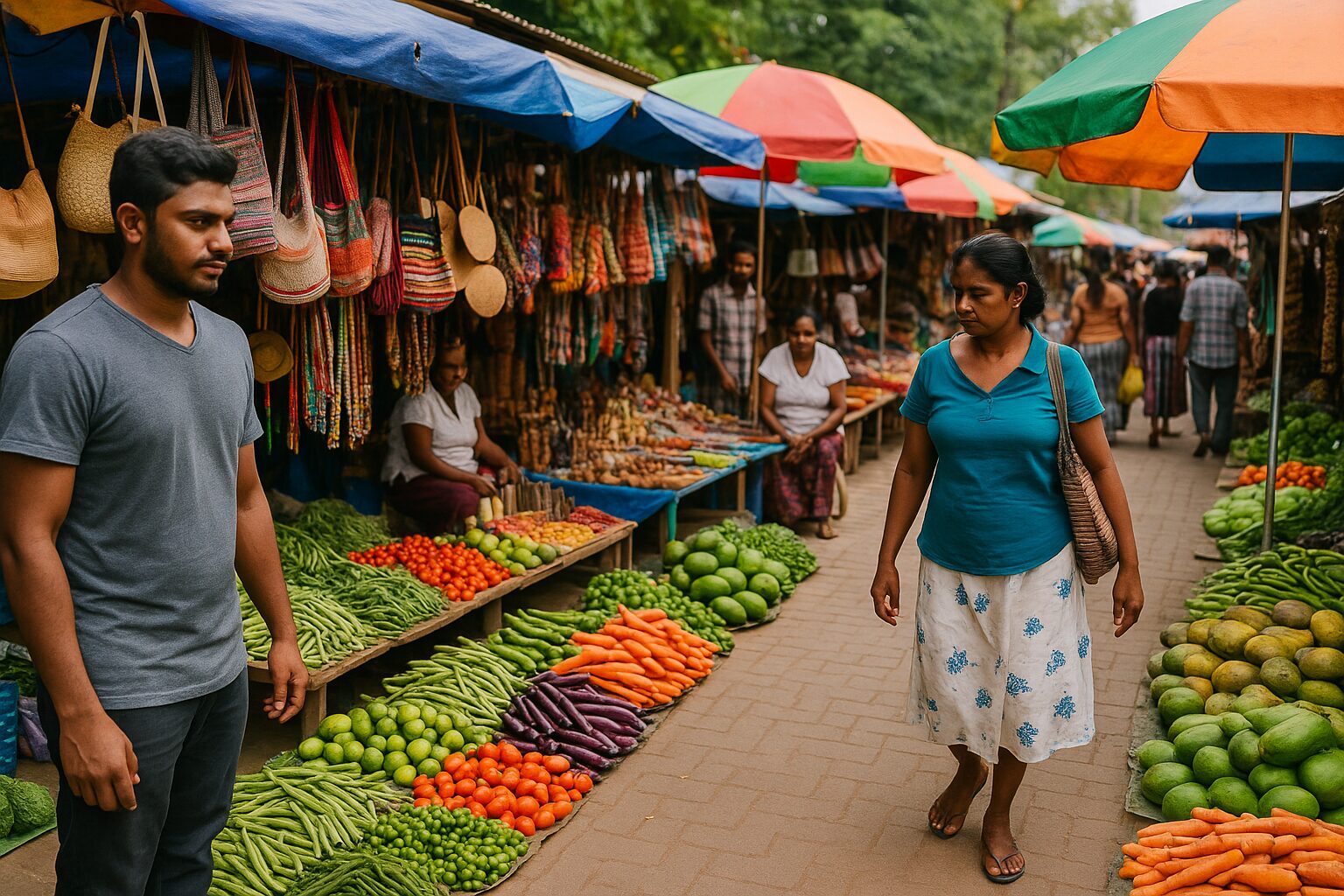
12.1 Introduction – The Rhythm of Local Trade
No Weligama travel guide feels complete without exploring its markets. Shopping here isn’t just about souvenirs; it’s about connecting with the heartbeat of the community.
From fishermen shouting morning prices to artisans threading lace in shaded courtyards, Weligama’s marketplaces reveal the daily rhythm of coastal life.
The town may not have the vast malls found in Colombo, but what it offers is authenticity. Small shops, open-air stalls, and family-run boutiques sell goods with stories behind them—each handcrafted, grown, or harvested locally.
12.2 Weligama Public Market – A Morning Experience
Located near the Weligama Bus Station, the Public Market is the busiest place in town. Mornings start before sunrise as farmers and fishermen arrive with their daily goods.
You’ll find:
-
Freshly caught fish and prawns
-
Fruits like mangosteen, rambutan, and king coconuts
-
Piles of cinnamon, cloves, cardamom, and dried chilies
-
Homemade sweets such as aluwa and kokis
This market isn’t designed for tourists—prices are local, and transactions are full of laughter and banter. Bring small rupee notes, and don’t be shy about bargaining; it’s part of the culture.
The market opens around 6:00 a.m. and winds down by noon. Early visits guarantee the freshest produce and liveliest scenes. For photographers, morning light spilling through tin roofs makes for unforgettable images.
12.3 Fish Market at Weligama Harbor
One of the most memorable stops in this Weligama travel guide is the Weligama Fish Market, near the town’s harbor. It’s raw, noisy, and fascinating—a true slice of coastal Sri Lanka.
Fishermen return from sea before dawn, unloading catches that range from tuna and snapper to squid and lobsters. Buyers from restaurants and households gather to bid while vendors clean fish on long wooden tables.
Travel tips:
-
Arrive before 7:00 a.m. to see the full action.
-
Wear sandals or shoes that can handle wet ground.
-
Ask permission before taking close-up photos.
Watching this process reminds you how closely the community’s livelihood ties to the sea. Every restaurant meal you enjoy later likely began here at sunrise.
12.4 Handicrafts and Souvenirs
Shopping in Weligama goes beyond food—it’s also about artistry. The town and nearby villages are known for wood carving, handloom textiles, and beeralu lace-making, a Portuguese-era craft still practiced by local women.
You can visit small lace cooperatives where artisans patiently weave cotton threads into intricate floral patterns. Buying directly supports rural families and preserves traditions that have survived for centuries.
Top finds for travelers:
-
Wooden masks inspired by southern folklore
-
Coconut-shell utensils and home décor
-
Batik clothing with tropical designs
-
Woven baskets made from palmyra leaves
This Weligama travel guide encourages travelers to choose handmade over mass-produced souvenirs. Each purchase sustains the town’s creative identity.
12.5 Boutique Stores and Concept Shops
In recent years, Weligama has attracted a wave of designers and entrepreneurs opening boutique stores that blend local materials with modern aesthetics. These concept shops offer a bridge between traditional craft and global style.
Notable stops include:
-
The Boho Loft – beachwear and jewelry made from recycled materials.
-
Ceylon Sliders Boutique – sustainable fashion and surf accessories designed in Sri Lanka.
-
Good Story Shop – local artwork, notebooks, and coconut candles, often made by community artists.
Browsing these shops feels like discovering a creative undercurrent within the laid-back surf scene. Items are pricier than market goods but ethically produced and eco-conscious—values this Weligama travel guide supports wholeheartedly.
12.6 Spice and Tea Shops
Sri Lanka is globally famous for its spices and tea, and Weligama offers both in charming small stores.
Visit Asha Spice Corner or Ruhunu Spices for cinnamon sticks, black pepper, cloves, and turmeric sourced from local farms. Many shops let you sample blends before buying, ensuring freshness and authenticity.
Tea lovers should explore Ceylon Leaf Tea Shop or Handunugoda Estate Outlets, where you can buy loose-leaf black, green, and white teas. Buying directly from growers not only ensures quality but also helps sustain small-scale agriculture in the region.
To store spices for travel, request vacuum-sealed packs—they maintain aroma and meet airport customs standards.
12.7 Art Galleries and Coastal Creativity
A newer addition to the town’s identity is its small but vibrant art scene. A handful of cafés and surf hostels display works from emerging Sri Lankan painters and photographers. Some artists even sell watercolor sketches of Taprobane Island or Weligama Bay.
This combination of surf culture and artistry sets Weligama apart. Supporting these creators strengthens the town’s evolving identity as not just a beach destination, but a hub for young talent.
Therefore, every mindful traveler following this Weligama travel guide should consider purchasing locally made art—it’s one of the few souvenirs that truly captures emotion, not just aesthetics.
12.8 Tips for Responsible Shopping
Responsible shopping in Weligama goes beyond buying; it’s about connection and respect.
-
Bring reusable bags to reduce plastic waste.
-
Pay fair prices—don’t over-bargain when you know the craft’s value.
-
Support women-led cooperatives—they reinvest earnings into education and community programs.
-
Ask about materials—some wood carvings use sustainable coconut or jackfruit wood rather than endangered species.
-
Buy small but meaningful—even a single purchase from an artisan can make a big difference.
When shopping ethically, you become part of Weligama’s story rather than just an observer.
12.9 Local Markets Beyond Weligama
Nearby towns expand your options further:
-
Matara Market (25 min): Larger selection of textiles, antiques, and Ayurvedic oils.
-
Galle Fort Shops (40 min): High-end boutiques for gems and handcrafted jewelry.
-
Mirissa Beach Stalls (10 min): Bohemian-style clothing, beach sarongs, and shell jewelry.
These short trips complement the Weligama travel guide, offering a regional view of southern Sri Lanka’s artistry and trade traditions.
12.10 Final Thoughts – Souvenirs with a Story
What makes Weligama’s markets memorable isn’t what you buy—it’s how you buy it. Every transaction comes with a conversation, a story, or a smile. Shopping here feels human, grounded, and real.
When you pack your bags to leave, your souvenirs will carry more than color and scent—they’ll carry connection. Each spice, carving, and piece of lace holds a trace of the people who made it possible.
That, ultimately, is what this Weligama travel guide hopes to share: the joy of finding meaning in simple moments—and taking a piece of that warmth home with you.
13. Nightlife & Entertainment in Weligama
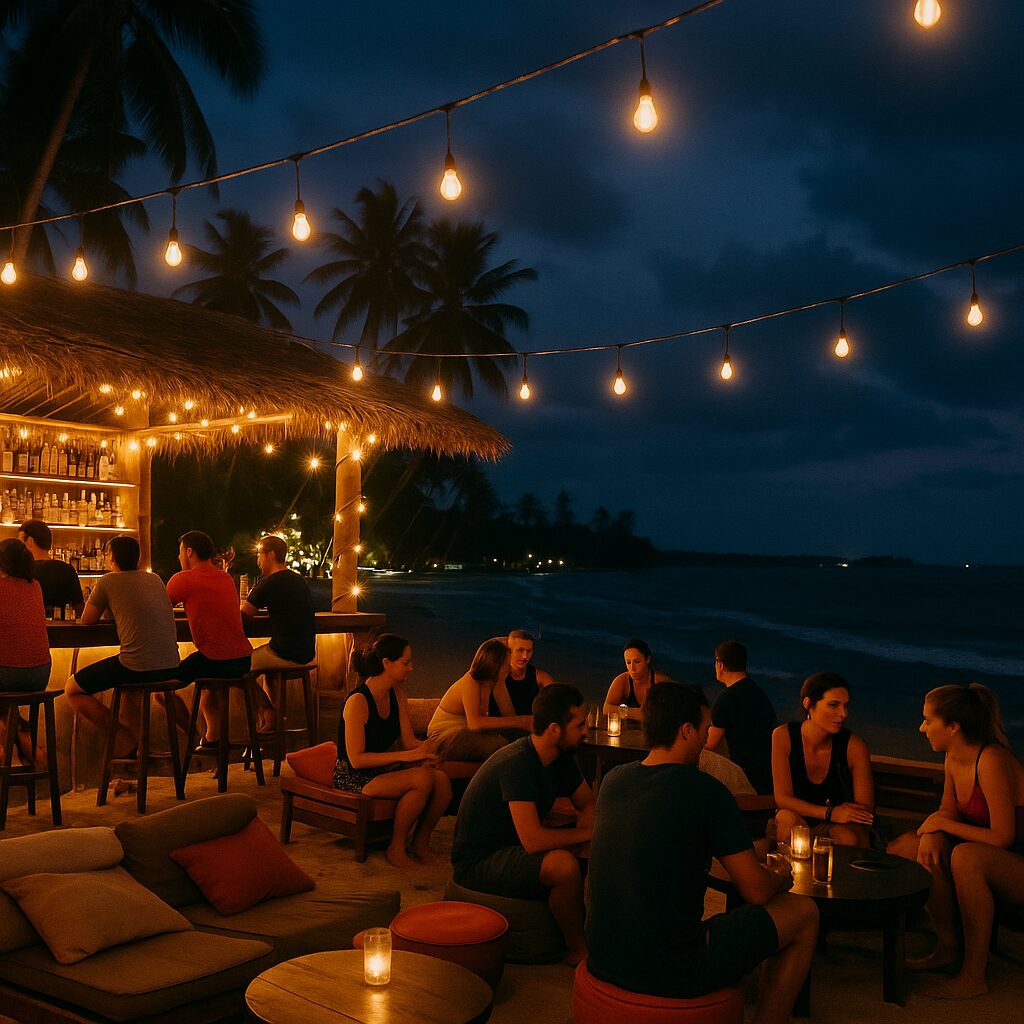
13.1 Introduction – The Soul of Weligama After Sunset
When the sun dips into the sea, Weligama transforms quietly. Unlike party-heavy towns such as Mirissa or Hikkaduwa, Weligama’s nightlife feels intimate, local, and authentic.
You won’t find blaring nightclubs or neon chaos here; instead, evenings flow with acoustic music, lantern light, and ocean breeze.
This Weligama travel guide shows that the town’s magic doesn’t end with sunset—it simply changes rhythm. Nights here invite conversation, slow dining, and laughter shared under swaying palms.
13.2 Beachfront Bars and Lounges
Most of Weligama’s nightlife unfolds along the main beach road and Pelena Beach. Beach bars and cafés convert into soft-lit lounges after 6:00 p.m., serving cocktails and chilled beers to travelers relaxing after a surf session.
Top spots to unwind:
-
Ceylon Sliders Rooftop Bar – Overlooks the bay with breezy décor and live DJ sets on weekends. Try their “Coconut Arrack Sour” or local craft beers.
-
Good Story Surf Café – Casual bar-meets-restaurant where travelers gather for conversation and surf tales.
-
Hangtime Rooftop Bar – Youthful energy, great views, and theme nights like taco Tuesdays or open mics.
-
W15 Weligama – Sophisticated beach bar offering fine cocktails, DJ music, and romantic ambience with bean bags on the sand.
We spent a day at the pool and sunbeds at this hotel. The staff was amazing and the pool was very clean and perfect for a sunny day. The food and drinks were also great.
See more reviews on Tripadvisor
What makes these places special is balance—they manage to be social without becoming noisy. The sound of waves replaces bass-heavy beats, keeping the beach atmosphere relaxed.
13.3 Sunset Rituals
In Weligama, sunsets aren’t just a time of day—they’re an event. Locals, surfers, and travelers gather along the shore to watch the sky blaze orange and violet before fading into twilight.
Many cafés host sunset happy hours, pairing half-price drinks with acoustic sessions. Others light bonfires and serve barbecue dinners on the sand.
At Tiki Cliff Top, guests watch the last light touch Taprobane Island while sipping passionfruit cocktails.
This Weligama travel guide recommends arriving around 5:30 p.m. to secure the best seaside tables. As daylight fades, the entire coastline glows golden—a perfect reminder of why evenings here feel so memorable.
13.4 Live Music and Cultural Nights
Weligama’s artistic scene continues into the night. Local musicians often perform at beachfront cafés, blending reggae, acoustic folk, and Sri Lankan percussion.
Fridays at Nomad Café bring small jam sessions, while Hangtime Hostel hosts occasional rooftop parties with visiting bands.
Cultural nights sometimes include traditional drumming (Bera) and fire dancing, performed by local artists from Matara and Galle. These events usually take place during festive weeks in December and April.
Watching these performances under open skies reminds visitors that music here is not imported—it’s born from the island’s heartbeat.
13.5 Night Markets and Late Bites
Though not a major shopping hub, Weligama features nighttime food stalls near the bus station and along the main road.
Vendors serve grilled corn, kottu roti, spicy noodles, and isso vade (shrimp fritters). The air fills with sizzling aromas and the chatter of evening shoppers.
Tips for enjoying Weligama’s night markets:
-
Most stalls open around 7:00 p.m. and close by 10:00 p.m.
-
Bring small bills; cash is preferred.
-
Try coconut roti with curry or pineapple juice with chili salt for local flavor.
This Weligama travel guide encourages food lovers to skip the polished menus once in a while—the best flavors often come from roadside woks.
13.6 Cultural Shows and Local Events
Occasionally, hotels and restaurants host cultural performances or community events. During Sinhala and Tamil New Year (mid-April), expect fireworks, drumming, and friendly competitions like tug-of-war or coconut climbing.
The Weligama Beach Festival, held every December, features music, food stalls, and art displays by local youth groups. Tourists and locals celebrate together, dancing barefoot in the sand.
These spontaneous moments define the spirit of Weligama—community-driven, cheerful, and inclusive.
13.7 Yoga, Wellness & Evenings of Calm
For many visitors, nightlife in Weligama means wellness rather than wildness. Yoga studios and retreat centers offer evening meditation or sound healing sessions.
Popular choices include Soul & Surf Sri Lanka and Jamu Surf Lodge, both known for peaceful twilight yoga overlooking the sea.
You can end the day with candlelit tea ceremonies, herbal baths, or Ayurvedic massages. These slow rituals align perfectly with the mindful travel philosophy this Weligama travel guide promotes.
13.8 Short Trips for Night Owls
For travelers seeking a livelier night, Mirissa (10 minutes away) offers a more energetic scene—beach parties, live reggae, and dance floors under the stars. Tuk-tuks run late into the night between the two towns.
However, most visitors return to Weligama afterward for its peace and safety. Think of Mirissa as your dance floor and Weligama as your sanctuary. This balance lets you experience both excitement and rest within a single evening.
13.9 Responsible Enjoyment
Sri Lanka maintains a respectful drinking culture. Alcohol is allowed in restaurants and licensed bars but discouraged near temples or public spaces.
Always respect local customs—avoid public intoxication or loud behavior in residential areas. Keep beaches clean; take bottles or cups with you when leaving.
Weligama’s hospitality thrives when visitors treat the town as home. This Weligama travel guide urges travelers to enjoy freely but respectfully—leaving nothing behind but footprints.
13.10 The Nightlife Spirit of Weligama
Weligama’s nights whisper rather than roar. They carry laughter over calm waves, soft music across coconut groves, and stories exchanged beneath moonlit skies.
It’s a different kind of entertainment—less about spectacle, more about presence.
When you walk along the sand at midnight, with fireflies drifting above and fishermen’s lamps glowing offshore, you’ll understand why the nightlife here feels sacred.
In Weligama, peace itself is the party.
14. Festivals & Annual Events in Weligama and Southern Sri Lanka
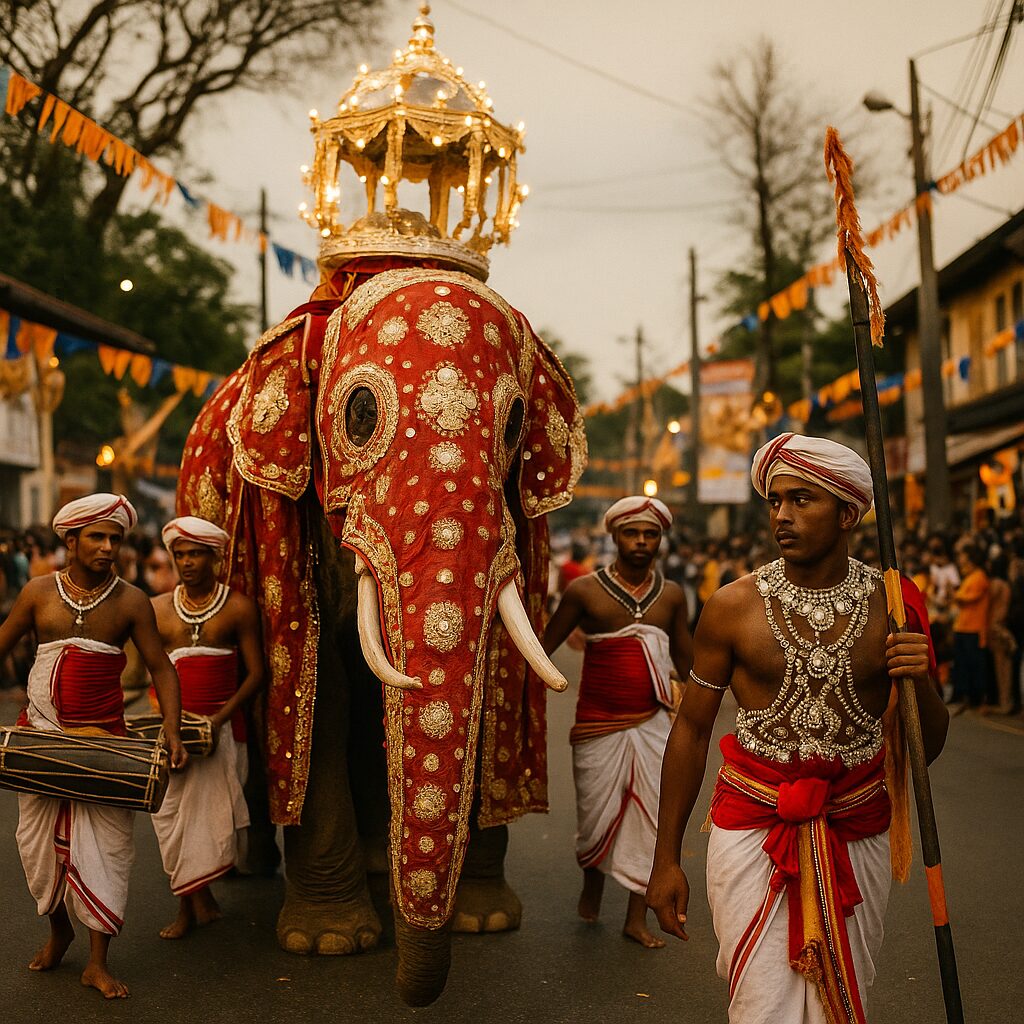
14.1 Why Festivals Matter to Weligama’s Identity
Every Weligama travel guide should highlight how festivals bring the town’s soul to life. Music, light, and ritual turn ordinary streets into a theatre of color. Locals celebrate with devotion yet welcome travelers to join. Here, you won’t be a spectator —you’ll be part of the moment.
Most festivals follow the lunar calendar, so dates shift slightly each year, but the spirit remains constant. Drumming, lanterns, floral offerings, and ocean breezes blend into something uniquely Sri Lankan.
14.2 April – Sinhala and Tamil New Year (Avurudu)
April marks Sri Lanka’s biggest national celebration: the Sinhala and Tamil New Year, locally called Avurudu. It symbolizes renewal, harvest, and family unity.
In Weligama, you’ll see homes decorated with fresh mango leaves and coconut flowers. Families light oil lamps at the exact auspicious minute announced on radio and share milk rice (kiribath) with neighbors. Children play traditional games like “breaking the pot” while elders exchange gifts.
Visitors are often invited to join village celebrations or taste New Year snacks such as kavum (sweet oil cakes) and kokis (crispy rice-flour flowers).
This Weligama travel guide recommends experiencing April here if you want authentic local culture without crowds.
14.3 May – Vesak Festival of Lights
In May, Weligama transforms into a sea of lanterns for Vesak, which honors the birth, enlightenment, and passing of the Buddha. Temples and homes glow with handmade paper lanterns (Vesak kudu), while free food stalls (dansal) offer rice, noodles, and ice cream to passers-by.
The atmosphere is peaceful and generous. Monks chant in temples like Aggrabodhi Viharaya, and children light candles along the streets. It’s a beautiful moment to witness community spirit in its purest form.
For photographers, this festival offers magical night scenes — soft light reflected on temple ponds and villagers sharing meals under colorful arches.
14.4 June–August – Esala Perahera Processions
During the southern monsoon, many towns host Esala Perahera parades honoring the Buddha’s relics and guardian deities. While Kandy’s procession is famous nationwide, Matara and Dondra also stage spectacular regional versions worth a short trip from Weligama.
Expect drummers, torch bearers, elephants in decorated robes, and dancers spinning fire through the streets. Crowds gather for hours to watch the processions pass temples lit with oil lamps.
Travelers should arrive early (even by 4 p.m.) to secure a good view and bring a light shawl for evening breezes. These festivals reveal southern Sri Lanka’s blend of devotion and performance art — a highlight in any Weligama travel guide.
14.5 August – Dondra Perahera and Temple Fair
Just 40 minutes east lies Dondra (Devinuwara), home to one of the oldest multi-faith temples in Sri Lanka. Its annual Dondra Perahera celebrates both Buddhist and Hindu traditions.
The festival features thousands of pilgrims, flower offerings, and coastal parades that last several nights. Drumming echoes across the bay, and food stalls line the temple roads. It’s a powerful example of inter-faith harmony in the southern province.
This Weligama travel guide suggests visiting in the early evening when the lights come on and the crowds swell with color and sound.
14.6 December – Weligama Beach Festival & Christmas Season
By December, Weligama’s energy shifts from spiritual to celebratory. The Weligama Beach Festival is a community-run event featuring live bands, food stalls, surf contests, and art installations along the shore. Locals and travelers join fire shows and lantern releases that illuminate the night sky.
Christmas adds its own warmth. Many guesthouses decorate with lights, cafés offer special dinners, and expats organize charity fairs for local schools. While Sri Lanka is majority Buddhist, the holiday is celebrated with inclusive joy.
The mood through December feels like a grand finale to the year — a fusion of surf, song, and community spirit.
14.7 January – Galle Literary Festival
Just an hour north, the Galle Literary Festival draws writers and readers from around the world. It features talks, workshops, and poetry readings inside the UNESCO Galle Fort.
For those staying in Weligama, it’s an easy day trip by train or taxi. Even if you’re not a book lover, the fort’s cafés and art markets buzz with conversation and live music. The festival also hosts food tents and street performances, making it a must-see for any creative traveler.
14.8 October – Kataragama Pilgrimage and Cultural Connection
Though a few hours east, the Kataragama Festival is Sri Lanka’s most spiritually charged pilgrimage, drawing Buddhists, Hindus, and Muslims alike. Some pilgrims walk from as far as Weligama to Kataragama carrying offerings.
Witnessing this event reveals the island’s deep religious tolerance and collective faith. If you’re in the south during this period, ask local guides about short trips to observe the processions respectfully.
14.9 Year-Round Local Events
Beyond major festivals, Weligama hosts smaller community events throughout the year:
-
Surf Competitions – usually in January and August, organized by local surf schools.
-
Beach Clean-Up Drives – monthly eco events inviting travelers to join.
-
Food Pop-Ups – weekend markets featuring farm-to-table chefs and bakers.
-
Art Exhibitions – rotating displays in cafés and boutique hotels.
These grassroots gatherings give the town its year-round vibrancy and show how locals blend creativity with community care.
14.10 Tips for Festival Travelers
-
Dress modestly at religious events—cover shoulders and knees.
-
Ask before photographing people or temples.
-
Carry small cash for donations and snacks.
-
Use public transport or tuk-tuks on festival days—roads can close.
-
Join locals with respect — you’ll be welcomed as a guest, not a tourist.
14.11 The Spirit of Celebration
Festivals in and around Weligama reflect what makes Sri Lanka extraordinary: diversity, faith, and joy. Drums echo from temples, lanterns rise over the sea, and neighbors share food with strangers.
For travelers, these moments create memories that last long after you’ve left the beach. No matter when you visit, some form of celebration will be waiting to welcome you.
That’s why this Weligama travel guide calls its festivals the heartbeat of the south—alive, inclusive, and eternally bright.
15. Practical Travel Information for Weligama

15.1 Currency and Payments
Sri Lanka’s official currency is the Sri Lankan Rupee (LKR). Banknotes range from Rs.20 to Rs.5,000, each with different colors and local imagery. The exchange rate fluctuates, but as of late 2026:
-
1 USD ≈ 305–325 LKR
-
1 EUR ≈ 330–350 LKR
You can exchange money at banks, authorized money changers, or major hotels. Avoid informal exchangers near airports or markets. Banks such as Commercial Bank, Sampath Bank, and People’s Bank are trustworthy and have branches in Weligama and Matara.
Most mid-range hotels, surf camps, and restaurants accept Visa and MasterCard. However, carry cash for tuk-tuks, markets, and small cafés where card readers aren’t always available.
This Weligama travel guide recommends splitting your cash between two places (wallet + bag) for safety and keeping small notes for day-to-day spending.
15.2 ATMs and Banking Tips
ATMs are common across southern Sri Lanka, especially near the Weligama Bus Stand and Weligama Railway Station. Machines from Commercial Bank, Sampath Bank, Hatton National Bank (HNB), and BOC usually accept foreign debit and credit cards.
Withdrawal limits range from Rs.50,000–80,000 per transaction (≈ $150–250). Machines charge a foreign card fee of Rs.600–900.
Tips:
-
Withdraw during daytime for safety.
-
Use ATMs attached to banks with guards.
-
Avoid small-town ATMs late at night; some may run out of cash during weekends.
15.3 SIM Cards and Internet Connectivity
Sri Lanka offers excellent mobile coverage, even along the coast. You can buy prepaid SIM cards at the airport or in Weligama’s town center. The top networks are:
-
Dialog (Best overall coverage and 4G speed)
-
Mobitel (Good island-wide service)
-
Airtel (Cheapest data packs)
How to get a SIM:
Bring your passport, visit a local store (Dialog or Mobitel branch), and request a tourist SIM. Staff will help set it up in minutes.
Recommended Packages (as of 2026):
-
Dialog: 50GB data + local calls ≈ Rs.1,300 ($4)
-
Mobitel: 40GB data ≈ Rs.1,200 ($3.70)
-
Airtel: 30GB data ≈ Rs.1,000 ($3)
Wi-Fi is common in cafés, hotels, and surf camps, though speeds vary. For remote work, Dialog 4G mobile data is more reliable than hotel Wi-Fi.
This Weligama travel guide suggests buying your SIM at Colombo Airport upon arrival to stay connected during your transfer.
15.4 Electricity, Plugs, and Voltage
Sri Lanka operates on 230V / 50Hz, and outlets use Type D, M, and G plugs.
-
Type D: 3 round pins (Indian style)
-
Type G: 3 rectangular pins (UK style)
Most hotels provide multi-socket adaptors, but it’s smart to pack a universal travel adapter. Power cuts are rare but may happen during storms; upscale hotels usually have backup generators.
15.5 Transport Within Weligama
Weligama is compact, so most attractions lie within 2–3 kilometers of each other.
Transport options:
-
🚶 Walking: Safe and scenic near the beach and main road.
-
🛺 Tuk-tuks: The easiest way to get around. Short rides cost Rs.300–800 ($1–2.50).
-
🏍️ Scooter rentals: Rs.2,500–3,000/day; helmet required by law.
-
🚗 Taxis / PickMe App: Convenient for airport transfers or day trips.
-
🚆 Trains: Run frequently between Weligama, Galle, and Matara for under Rs.100.
This Weligama travel guide recommends tuk-tuks for short trips and scooters for exploring beaches like Midigama or Ahangama.
15.6 Language and Communication
The main languages are Sinhala and Tamil, but English is widely spoken in Weligama due to tourism. Hotel and café staff communicate easily, and even tuk-tuk drivers know basic English phrases.
Helpful words to try:
-
Ayubowan – Hello / Long life
-
Istuti – Thank you
-
Hari hondai – Very good
-
Kohomada? – How are you?
Locals appreciate polite attempts at Sinhala—it opens doors to friendly conversation and often earns a smile.
15.7 Local Customs and Etiquette
Sri Lankan culture values respect and humility.
-
Dress modestly when away from the beach (especially when visiting temples).
-
Remove shoes and hats before entering temples.
-
Avoid touching heads, as it’s considered sacred.
-
Public displays of affection are discouraged outside tourist areas.
When greeting monks or elders, a small bow or “Ayubowan” gesture (hands together at chest level) is appropriate.
Remember: smiling goes a long way. The warmth you show will be returned tenfold.
15.8 Tipping Culture and Service Norms
Tipping isn’t mandatory but is appreciated.
-
Restaurants: 10% service charge is often included; if not, add 5–10%.
-
Tuk-tuks: Round up to the nearest Rs.100.
-
Hotel staff: Rs.200–500 for housekeeping per day; Rs.500–1,000 for porters on departure.
-
Guides/Drivers: Rs.1,000–2,000 per day depending on service quality.
This Weligama travel guide reminds visitors that small tips can have a big impact on local workers’ livelihoods.
15.9 Travel Insurance and Emergencies
Always travel with comprehensive travel insurance covering health, theft, and cancellations. Surfing and motorbike use may require an “adventure add-on,” so double-check before arrival.
For emergencies:
-
Ambulance (1990) – Nationwide free service
-
Police (119) – 24-hour hotline
-
Tourist Police Galle: +94 91 222 2222
-
Matara General Hospital: +94 41 223 2012
-
Lanka Hospitals Galle (Private): +94 91 223 4861
Save these in your phone. Locals are quick to help in emergencies, even if language barriers exist.
15.10 Useful Apps and Local Resources
-
PickMe: Local taxi & tuk-tuk app (like Uber).
-
Google Maps: Reliable navigation and restaurant listings.
-
Dialog SelfCare / Mobitel SelfCare: Manage SIM balance and data packs.
-
Booking.com / Agoda: For hotel deals and surf camp packages.
-
XE Currency: Real-time currency conversion.
-
WhatsApp: Primary communication method for hotels and tour operators.
15.11 Quick Reference Table
| Category | Details |
|---|---|
| Currency | Sri Lankan Rupee (LKR) – 1 USD ≈ 310 LKR |
| Best SIM Provider | Dialog (Airport or Weligama branch) |
| Voltage & Plugs | 230V / 50Hz, Types D, M, G |
| Transport Cost | Tuk-tuks Rs.300–800; Scooters Rs.2,500/day |
| Language | Sinhala, Tamil, English widely spoken |
| Emergency Numbers | 119 (Police), 1990 (Ambulance) |
| Best Apps | PickMe, Google Maps, WhatsApp |
| ATM Locations | Near Bus Stand, Commercial Bank & Sampath Bank |
15.12 Final Word – Be Prepared, Travel Freely
Weligama is easy to navigate once you know the basics. With cash in hand, a local SIM, and a friendly smile, you can move effortlessly through markets, beaches, and cafés.
This Weligama travel guide reminds travelers that simplicity is the secret: a few essentials, some common sense, and curiosity are all you need to feel at home on Sri Lanka’s southern shore.
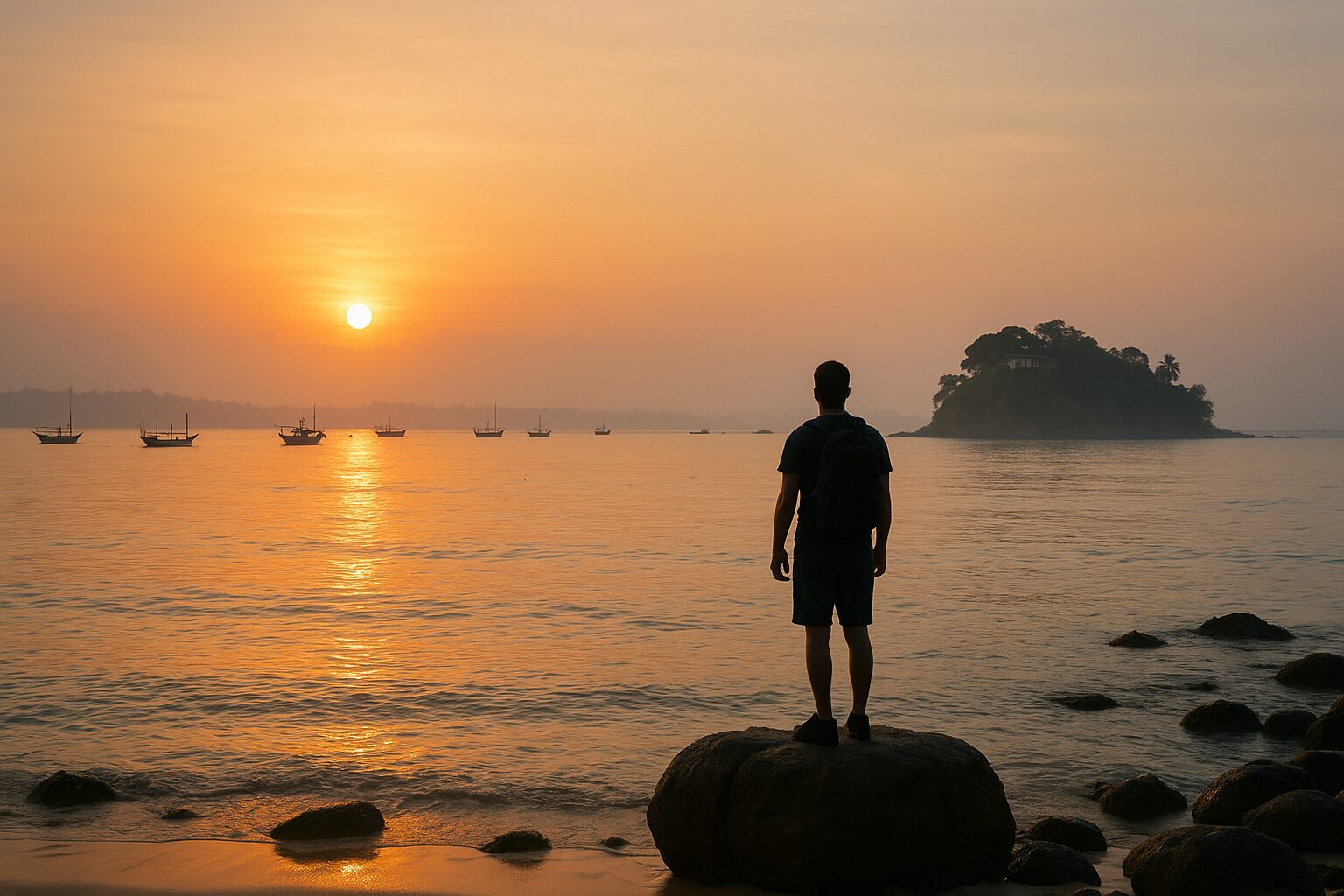
16.1 The First Light Over the Bay
Every Weligama travel guide can tell you where to surf, eat, and sleep — but what it cannot describe is how this place feels at sunrise.
I still remember my first morning here. The air was soft and salty. Fishing boats glided back to shore, their painted hulls glowing orange in the dawn. The town had not yet woken up, but roosters and temple bells were already sharing the morning. I bought a cup of milk tea from a small kiosk near the bus stand, and for a moment, I simply stood and watched the bay come alive.
There’s something spiritual about that hour — before the tourists arrive, before the surfboards hit the waves — when the sea mirrors the sky in perfect stillness. That quiet taught me more about Weligama than any map or museum could.
16.2 The Stories Behind Familiar Faces
Weligama isn’t just a destination; it’s a collection of small kindnesses that stay with you.
There’s the old fisherman named Sunil who mends nets near Taprobane Island. If you stop to talk, he’ll show you how to tie a reef knot with weathered fingers that have worked the same craft for fifty years. Or Nadeesha, who sells fruit by the railway crossing — she always remembers your face after one visit and insists you try a slice of mango “on the house.”
These encounters make the town feel personal. I’ve traveled across Sri Lanka, but nowhere else do strangers become friends so quickly.
Beyond the main beach, there are secret spots where the soul of Weligama hides quietly from the crowds.
One of my favorites is a small cove east of the harbor, reachable only by walking through a narrow path behind a coconut grove. Locals call it Polhena Pita, though it doesn’t appear on maps. The water there is shallow and clear, the sand sprinkled with tiny coral pieces. Fishermen anchor their boats there when storms are near, and at dusk, the entire bay smells faintly of salt and smoked fish.
Another spot sits behind the Aggrabodhi Temple, where a winding path leads to a tiny shrine under a massive bodhi tree. Few tourists visit, yet it’s one of the calmest places in the area. On Poya days, I often come here to sit quietly while devotees offer flowers and light oil lamps.
If you visit, go respectfully, speak softly, and you’ll feel what I call “the heartbeat of Weligama.”
16.4 The Taste of Simplicity
Food here isn’t fancy — it’s soulful. I’ve eaten in luxury hotels, but nothing compares to a roadside plate of string hoppers with coconut sambol served at dawn, or fresh isso vade (shrimp fritter) shared with friends on the beach.
There’s a small shop near the post office that sells kiri paan — sweet bread dipped in condensed milk — still warm from the oven. Locals gather there for breakfast, laughing over the latest cricket match or surf forecast. If you want to taste the real Weligama, skip the menus and follow the laughter.
That’s the beauty of travel in Sri Lanka — it’s not in the guidebooks; it’s in these everyday rituals that remind you how good life can be when it’s simple.
16.5 The Sound of Evening
When the sun sets behind the bay, Weligama changes tempo. The fishing lights appear offshore, and temple bells echo faintly across the water. Street vendors start packing up while the smell of curry leaves drifts from open windows.
Sometimes I walk from the beach to the railway station just to listen — the hum of trains, the chatter of travelers, the quiet of small-town life settling in for the night. Those sounds stay in your memory long after you’ve left.
16.6 Lessons from the Locals
Weligama has taught me patience. Here, life moves by the rhythm of the tides. People work hard, laugh often, and treat visitors not as customers but as guests.
Once, during a heavy rain, a shopkeeper refused to let me leave until he found an umbrella for me. When I tried to pay, he smiled and said, “No, this is Weligama — you take, and someday you give.”
That sentence sums up the spirit of this town. It’s not about tourism; it’s about trust.
16.7 Off the Beaten Path
If you’ve already explored the main beach, take a short tuk-tuk ride inland.
-
The Weligama Lagoon area hides mangrove trails perfect for kayaking or birdwatching at sunrise.
-
Pelena Backstreets are full of murals painted by local youth artists, each telling a piece of village history.
-
Kapparathota Cliff offers an elevated view of the bay, where the horizon turns gold at dusk — few travelers ever find it.
These hidden corners remind me why I started Explore Hidden Sri Lanka: to share places where the soul of the country still lives untouched.
16.8 When the Sea Becomes a Mirror
Some evenings, especially after rain, the sea turns perfectly still — reflecting boats, clouds, even the faint outline of Taprobane Island. Standing there, you feel suspended between earth and sky, time and tide.
I once met a young surfer from Germany who told me, “I came here to surf but found peace instead.” That’s exactly what Weligama does — it gives you what you didn’t know you were looking for.
16.9 Reflections as a Local Writer
As a Sri Lankan, I see Weligama not as a postcard but as a living community. It’s a place where culture and modernity share the same beach — fishermen working beside surf schools, temples beside cafés, old markets beside co-working hubs.
Writing this Weligama travel guide, I realize that what makes this town extraordinary isn’t how different it is from the world — it’s how honestly it remains itself.
Every smile, every sunset, every monsoon shower carries the same quiet grace.
16.10 Final Thoughts – The Heart of Weligama
When travelers ask me what to see in Weligama, I tell them: “Don’t just see it — feel it.”
Wake up before dawn. Talk to the shopkeepers. Eat with your hands. Watch the waves break, even when you don’t surf.
If you do that, you’ll understand what I learned years ago — Weligama isn’t a place you visit.
It’s a place that visits you, stays in you, and changes the way you see the world.
19. Final Thoughts – Why Weligama Stays With You
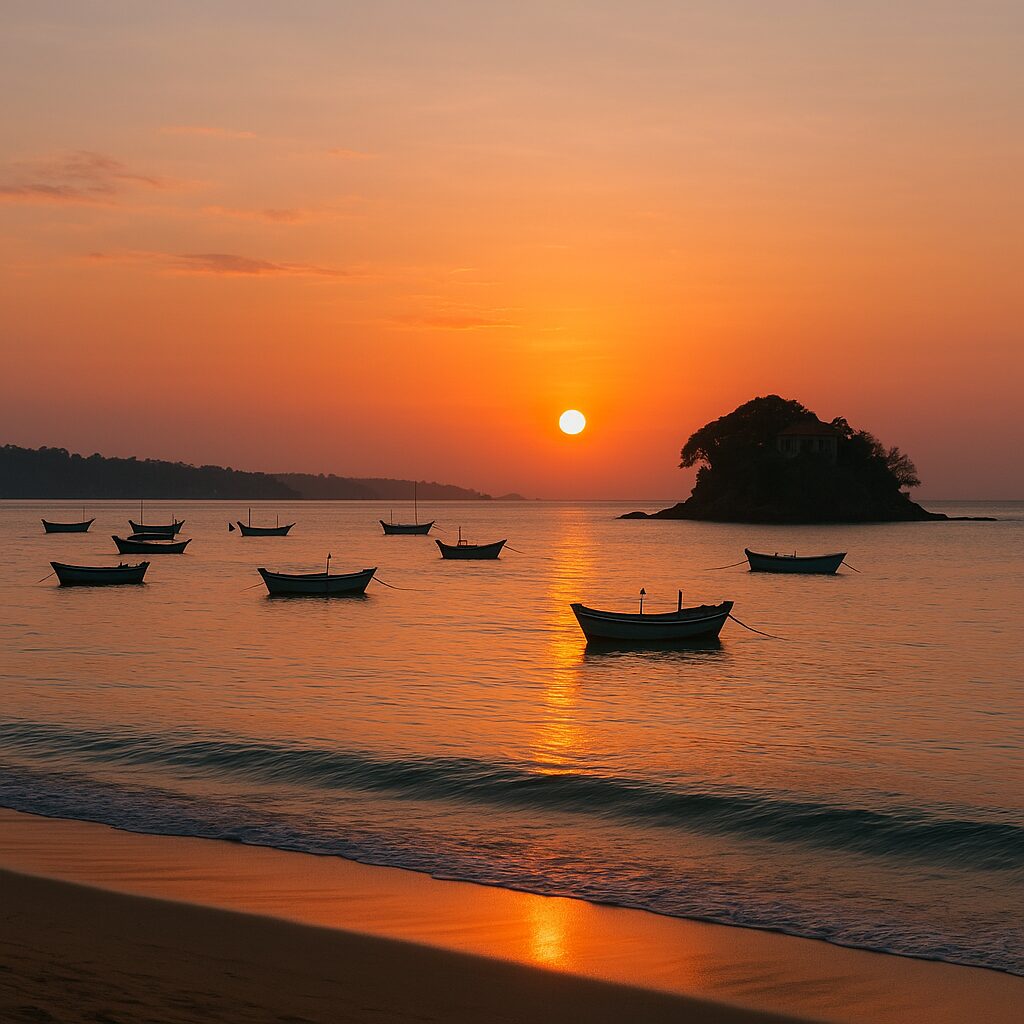
There are places that impress you, and then there are places that change you.
Weligama belongs to the second kind.
When I started writing this Weligama travel guide, I wanted to describe beaches, food, and culture. But as I wrote, I realized it’s not the sights that stay with you — it’s the feeling of being here.
It’s the rhythm of fishermen returning at dawn. The laughter of children chasing crabs. The quiet dignity of temple bells echoing through mist. Even the salty breeze feels like a whisper from the ocean, telling stories older than memory.
Every traveler who comes here finds something different — peace, inspiration, or maybe just the reminder that life is simpler than we make it.
If you take one thing from this guide, let it be this:
Don’t rush through Weligama. Walk slower. Talk to people. Let the sea teach you how to breathe again.
Because long after you’ve packed your bags, you’ll still hear it — the heartbeat of a small southern town that somehow makes the whole island feel like home.
17. Frequently Asked Questions – Weligama Travel Guide
🏝️ Travel Basics
Weligama is famous for its wide bay, gentle surf, and laid-back coastal charm. The name means “Sandy Village,” and that’s exactly what you’ll find — a town shaped by the sea. It’s one of Sri Lanka’s best beginner surf spots and home to Taprobane Island, colorful fishing boats, and coconut-fringed beaches that feel timeless.
The best months are November to April, when the weather is sunny and the ocean stays calm. This is the ideal season for surfing, snorkeling, and day trips along the southern coast. From May to October, rains arrive, but mornings often remain clear and peaceful. For cultural travelers, April (New Year) and May (Vesak) bring beautiful local festivals.
🚆 Getting There & Around
You can travel by:
Train: The scenic coastal train from Colombo Fort to Weligama takes about 2.5–3 hours.
Bus: Frequent air-conditioned buses run daily for about Rs.800–1,000.
Private Taxi or PickMe App: Around Rs.15,000 ($45) for door-to-door comfort.
Trains are my favorite — slow, breezy, and perfect for watching villages and palm-lined beaches pass by.
Tuk-tuks are the simplest way to explore. Short rides cost about Rs.300–800 ($1–2.50). For freedom, rent a scooter (Rs.2,500/day). If you’re heading to Mirissa, Galle, or Matara, local buses and trains are cheap and frequent.
🍛 Accommodation & Food
It depends on your style:
Luxury: Cape Weligama, Weligama Bay Marriott Resort
Mid-range: W15, Ceylon Sliders
Budget: Hangtime Hostel, Spindrift Surf Stay
All are near the beach, so you can walk to surf points or cafés easily. Book early between December and March — that’s peak season.
Try fish curry with red rice, hoppers (appa), and kottu roti from night stalls. Don’t miss pol sambol, prawn curry, and kiribath (milk rice). For drinks, taste fresh king coconut and homemade ginger tea. The flavor of Weligama is always honest and homemade — just like its people.
🌊 Activities & Attractions
Absolutely. Weligama Bay is one of the best beginner surf beaches in Sri Lanka. The waves are gentle, the sandy bottom safe, and surf schools line the shore. Instructors rent boards for Rs.1,000–1,500 per hour, and lessons are relaxed and friendly. Even first-timers stand up on their first day here.
Taprobane Island – a photogenic private isle near the bay.
Kushtarajagala Rock Carving – a mysterious 8th-century statue.
Midigama & Ahangama – quiet surf towns 10 minutes away.
Galle Fort – UNESCO heritage town just 40 minutes north.
Each spot reveals a different piece of southern Sri Lanka’s soul.
🕊️ Safety & Culture
Yes. Weligama is one of Sri Lanka’s safest towns. Locals are helpful, crime rates are low, and guesthouses take care of their guests. Basic precautions — like keeping valuables secure and avoiding isolated beaches after dark — are enough. Many solo travelers, especially women, find it peaceful and welcoming.
Dress modestly away from the beach, remove shoes at temples, and never touch someone’s head (it’s considered sacred). Public affection is rare in Sri Lankan culture. A polite smile or a “Ayubowan” greeting earns instant goodwill. Respect makes every connection here warmer.
🌺 Traveler Curiosity & Voice Search SEO
Yes — Weligama offers a calmer, more authentic vibe than Mirissa. Mirissa is famous for nightlife, but Weligama feels real — a working fishing town mixed with surf culture. It’s perfect for travelers who prefer quiet mornings and local interaction over crowds.
Yes. The main bay has gentle waves and shallow entry, ideal for swimmers. Always stay within flagged zones and avoid rocky areas near the harbor. Lifeguards patrol most sections, especially during the tourist season.
Three days is perfect for surfing, sightseeing, and relaxing. Stay five or more days if you plan day trips to Galle, Mirissa, or Dondra. The rhythm of life here rewards slow travel — the longer you stay, the more it reveals.
🧭 Closing Note on FAQs
These questions reflect what most travelers ask me through Explore Hidden Sri Lanka — honest, practical, and personal.
Whether you come for surf, food, or peace, I hope this Weligama travel guide helps you arrive not just informed, but inspired.


