


If you’ve ever dreamed of learning to surf in Sri Lanka, there’s no better place to start than Weligama — a golden crescent of sand where gentle waves meet laid-back island culture. Nestled on the south coast between Galle and Mirissa, this coastal town has become one of the most welcoming surf hubs in Asia. Whether you’re picking up your first board or chasing bigger breaks, surfing in Weligama offers something for every skill level.
I first came here years ago, expecting to stay a weekend. Instead, I found a community that made it impossible to leave — sunrise surf sessions, friendly instructors, and cafés that smelled like salt and espresso. Today, Weligama remains one of the best places in Sri Lanka to balance adventure and relaxation.
If you’re planning your first surf trip or want to explore more of what this coastal town offers beyond the waves, check out the Ultimate Travel Guide to Weligama, Sri Lanka for insider tips, local attractions, and essential travel advice.
Why Weligama Is Sri Lanka’s Surf Capital
Weligama literally translates to “Sandy Village,” and that simplicity defines its charm. Unlike crowded beaches in other countries, this one stretches for nearly two kilometers of smooth, shallow shoreline — perfect for learners. The consistent beach break, soft sand bottom, and gentle swells make it ideal for beginners, yet the nearby reefs provide challenges for intermediate and advanced surfers.
Geography That Creates Perfect Waves
The bay’s curve faces southeast, catching Indian Ocean swells but sheltering riders from overpowering waves. The southern monsoon (May to October) and northeast monsoon (November to April) alternate to shape distinct surfing seasons, ensuring there’s always a wave somewhere nearby.
A Community That Welcomes Everyone
Walk along the main beach, and you’ll notice surfboards leaning against palm trees, laughter spilling from beach cafés, and instructors calling out encouragement to new riders. Locals and expats alike contribute to Weligama’s unique vibe — part surf town, part fishing village, entirely welcoming.
The Best Surf Spots in Weligama Bay
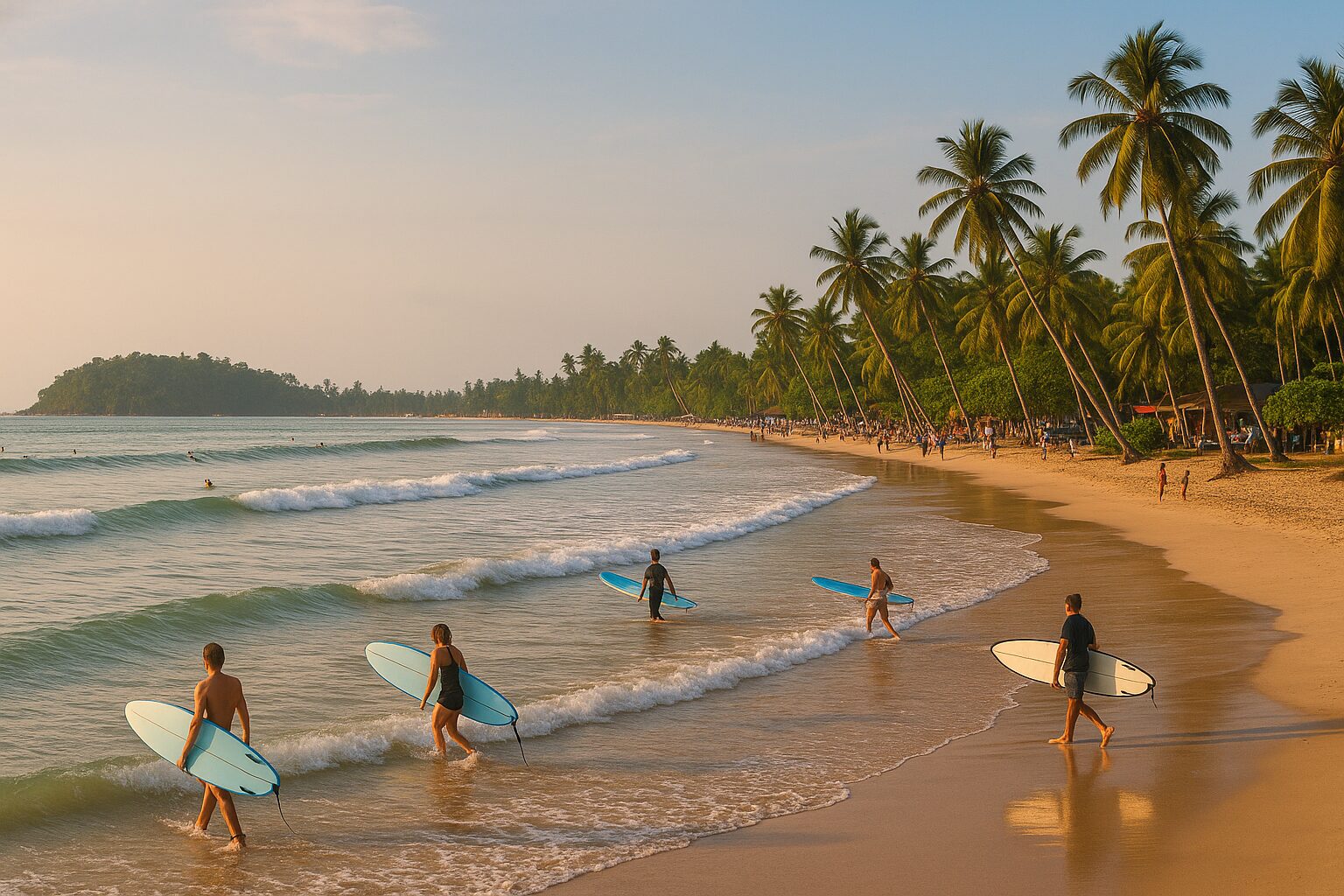
Surfing in Weligama doesn’t mean you’re tied to one beach. The area offers several accessible points that cater to different moods and skill levels. After an early morning surf session, few things beat a hearty local breakfast. Check out our best restaurants and cafés in Weligama to find the perfect post-surf brunch or smoothie bowl by the beach.
Once you’ve mastered the waves, explore the quieter side of this coast through our guide to Weligama’s hidden and lesser-known beaches — calm coves perfect for relaxing after a surf session.
Weligama Main Beach – For Beginners
If it’s your first time standing on a board, Weligama Main Beach is the ultimate classroom. Its long, forgiving waves roll in predictably, breaking over a soft sandy bottom. You can catch whitewater rides near the shore or paddle out further for gentle green waves.
-
Wave Type: Beach break
-
Best For: Beginners and intermediate learners
-
Board Rentals: Available all along the beach (LKR 500–800/hour) (USD 1.50 – 2.50 per hour)
-
Crowd Level: Moderate — early mornings are quieter
Plantations Point – For Intermediate Surfers
Just a short walk east from the main beach lies Plantations Point, named for the nearby coconut groves. The reef here offers faster, more defined peaks, perfect for those who’ve already mastered standing and turning.
-
Wave Type: Reef break
-
Best For: Intermediate surfers
-
Pro Tip: Go during mid-tide for cleaner waves.
Fisherman’s Reef – Local Favorite

A lesser-known spot west of the bay, Fisherman’s Reef is where you’ll find locals escaping the crowds. It’s more exposed to swell and can hold size on good days.
-
Wave Type: Reef and point break mix
-
Best For: Experienced surfers
-
Access: 10-minute tuk-tuk from Weligama town
Explore major surf spots in Weligama Bay on Google Maps
Surf Seasons in Weligama
One of the best things about surfing in Weligama is that you can do it year-round — you just need to know where to go and when.
🌤️ Before you plan your surf sessions, it helps to know when the weather and waves are at their best. Discover the Best Time to Visit Weligama for ideal surf conditions, sunny skies, and calm seas.
Main Surf Season (October to April)
This is the dry season for Sri Lanka’s south coast. Winds are gentle, water is clear, and swells are consistent. From December to March, conditions are especially good for beginners — smaller waves and sunny skies make it perfect for lessons.
Off-Season (May to September)
During the southwest monsoon, the main bay can get choppy, but other nearby breaks like Ahangama and Midigama light up with cleaner waves. Advanced surfers often shift their base while still staying in Weligama because of its easy access and vibrant social scene.
Temperature and Water Conditions
The water temperature rarely dips below 27°C (80°F), so wetsuits are optional. Most surfers wear rash guards for sun protection rather than warmth.
Surf Schools and Lessons in Weligama
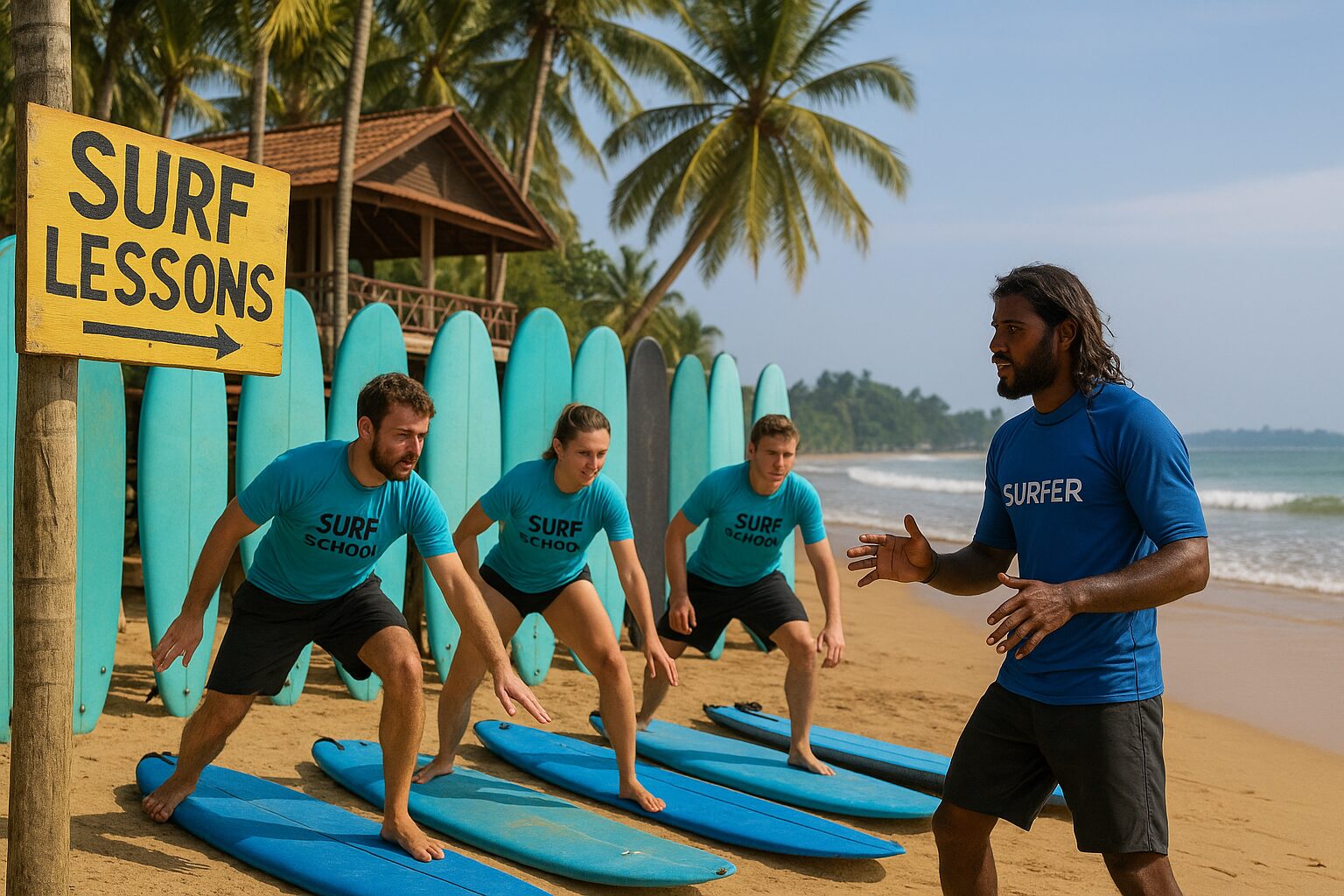
The surf schools in Weligama are some of the most beginner-friendly in Asia. Along the two-kilometer stretch of golden sand, you’ll find more than 50 surf schools offering everything from one-hour beginner lessons to full-week surf camps with accommodation and meals. What makes this beach so special is not just the waves but the teaching culture — patient, friendly, and focused on helping each student progress safely.
Most surf instructors in Weligama are certified through local or international programs, and almost all speak English fluently. They know the currents, the tides, and the small details that make the difference between struggling and gliding smoothly across the water.
Many travelers book group lessons for the fun and social vibe, but private lessons are available for those who want focused instruction. A standard one-hour lesson usually costs between LKR 4,000–6,000 (USD 12–18), including the surfboard and rash guard.
Recommended Surf Schools
1. Freedom Surf School Weligama
One of the oldest surf schools on the beach, Freedom has built its reputation on experienced instructors and flexible lesson packages. They cater to beginners and intermediates, offering both single lessons and multi-day progress programs.
Great solo surf lesson today. Very professional and supportive instructor. Helped me achieve success on the sea! Also seemed happy with my success too
See more reviews on Tripadvisor
2. Ceylon Sliders Surf Club
Ceylon Sliders is more than just a surf school; it’s a creative hub for surfers, digital nomads, and travelers. Their instructors focus on ocean awareness, positioning, and improving balance and style. After lessons, guests can relax in their café overlooking the bay.
“A delightful place to stay in the heart of Golden. The breakfast was really good and It tastes delicious, warm, and comforting,highly recommended!!
See more reviews on Tripadvisor
3. Rise Surf School
Perfect for families or first-time surfers, Rise offers lessons in small groups, often timed for the calmest tides of the day. Their personalized approach helps students gain confidence quickly.
Very friendly staff and good service. I came here almost every day during my stay in Weligama and always felt very welcomed.
See more reviews on Tripadvisor
4. Hangtime Surf School
Located near the Hangtime Hostel, this school is ideal for backpackers who want a casual but well-structured learning environment. Lessons are offered twice daily, and they also organize surf photography sessions.
Each of these schools operates directly on the beach, so you can sign up in person or through your hotel. If you’re staying in one of Weligama’s villas or resorts, many have partnerships with surf schools that offer discounts or door-to-beach transfers.
I had great fun staying at hangtime hostel , lakshya and all other staff members were very friendly and supportive. You get open mic, yoga sessions and some amazing fellow traveller along with stay 🙂
See more reviews on Tripadvisor
Explore Surf Schools on Google Maps
Surfboard Rentals and Equipment
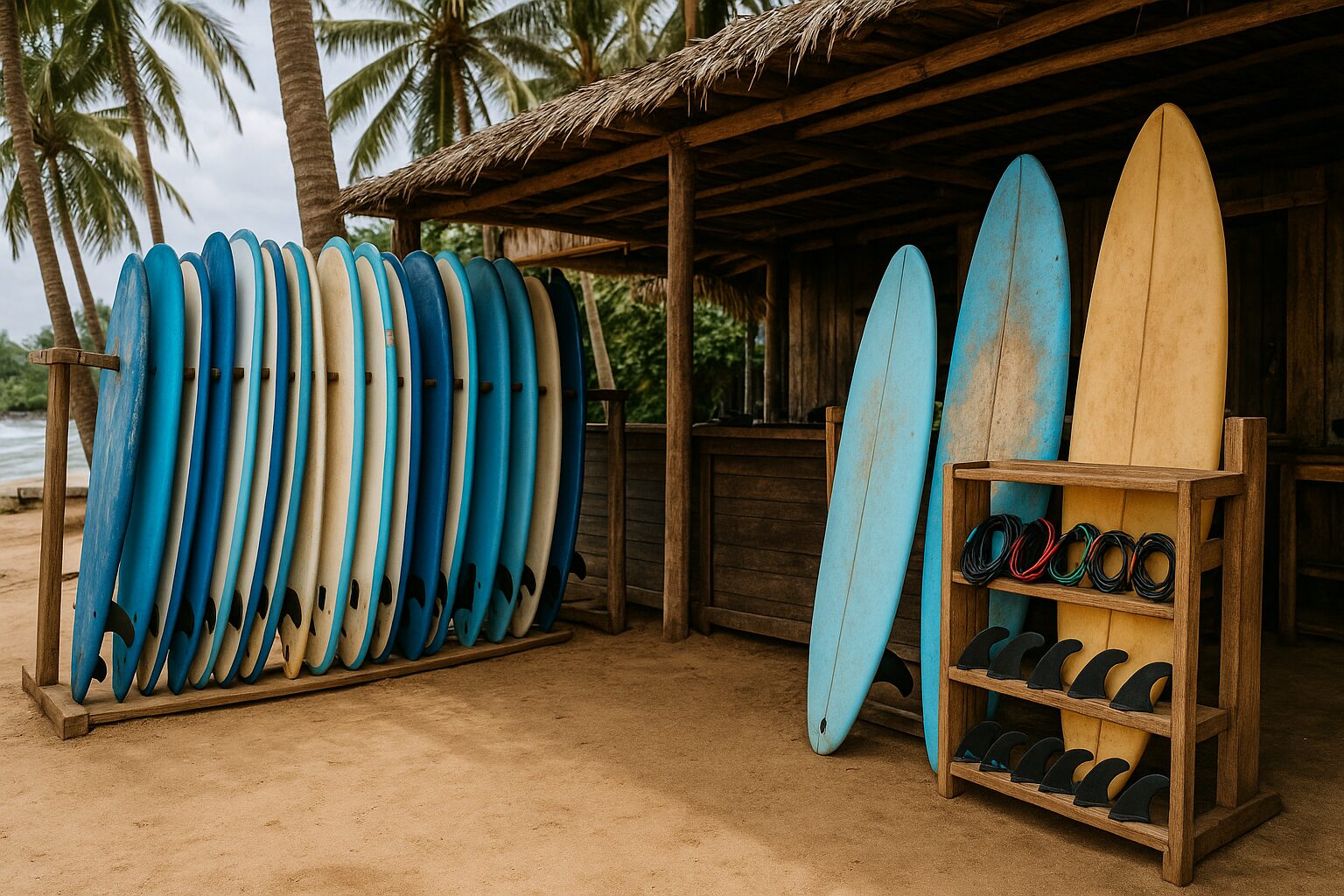
If you already know how to surf, you can rent boards directly from the stalls lining the beach. Most places offer hourly, daily, and weekly rates, and you can swap between soft-tops, longboards, and shortboards depending on your preference.
-
Hourly Rentals: Around LKR 500–800 ≈ USD 1.50–2.50
-
Full-Day Rentals: Around LKR 2,500–3,000 ≈ USD 7.50–9.00
-
Weekly Rentals: Around LKR 10,000–12,000 ≈ USD 30–36
It’s best to check the board for dings or cracks before taking it out. Locals are generally honest, but it’s good practice to do a quick inspection and agree on the board’s condition. Some shops also rent GoPro mounts and waterproof pouches for those who want to record their sessions.
Pro Tip for Beginners
Try to surf early in the morning between 6:00 AM and 9:00 AM. The ocean is calm, winds are light, and you’ll avoid the crowds that fill the bay later in the day. Afternoon sessions can be fun too, but the waves tend to become smaller and more unpredictable when the onshore breeze picks up.
Intermediate and Advanced Surfing in Weligama
While Weligama is famous for its beginner-friendly beach break, it’s also a great base for intermediate surfers. A short tuk-tuk ride in either direction takes you to world-class reef breaks and uncrowded points.
Midigama is only ten minutes west of Weligama and has several challenging surf spots, including Lazy Left, Rams Right, and Coconut Point. These waves are faster, hollower, and more consistent — a good testing ground for those ready to move beyond whitewater surfing.
To the east, Ahangama and Kabalana offer reef breaks that attract more experienced riders. The waves there can reach shoulder to head height, and conditions stay consistent throughout the dry season. Most Weligama instructors organize day trips to these spots for students who are ready to push their limits. If you love the ocean beyond surfing, join one of the Whale Watching Tours from Weligama for a chance to spot blue whales and dolphins in their natural habitat.
Surf Etiquette and Safety
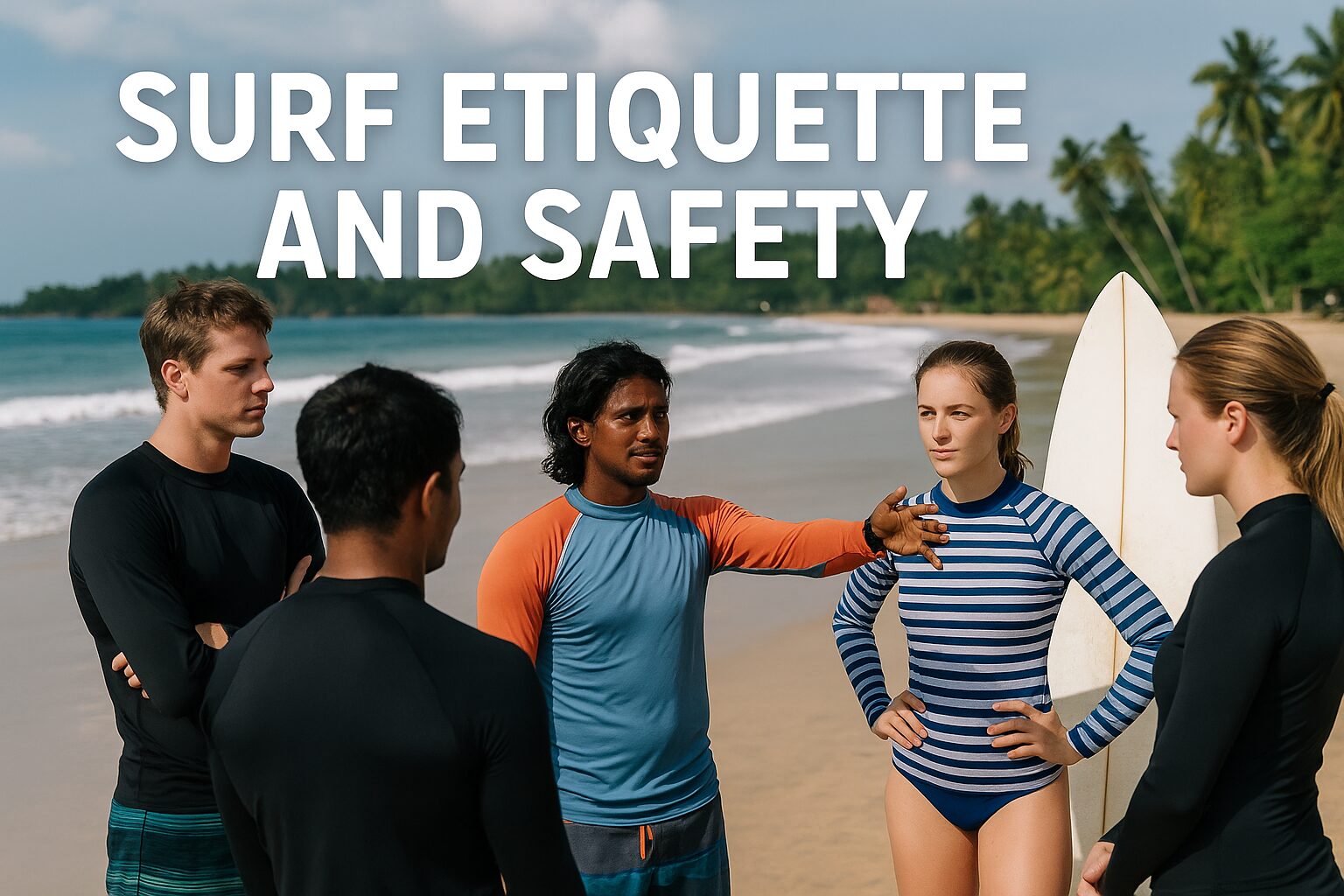
Surfing is more enjoyable when everyone respects the ocean and each other. In Weligama, beginners often share the lineup with locals, so following basic etiquette goes a long way toward keeping the atmosphere friendly and safe.
-
Don’t drop in: Wait your turn for a wave; cutting in front of another surfer is considered rude.
-
Hold on to your board: Always use a leash and try not to let go during a wipeout.
-
Learn positioning: Stay aware of where the waves are breaking and avoid drifting into crowded takeoff zones.
-
Respect local surfers: A smile or friendly wave can go a long way toward creating good vibes in the lineup.
Even though Weligama is one of the safest beaches to surf in Sri Lanka, beginners should always surf near instructors or lifeguard zones. The soft sand bottom minimizes injury risks, but occasional rip currents appear during monsoon season. If you’re unsure, ask a surf instructor or local lifeguard before paddling out.
Best Time to Surf in Weligama
Weligama’s year-round warm weather makes it one of the few destinations in Asia where you can surf almost any month of the year. Still, knowing the seasonal patterns helps you choose the best time to match your skill level and goals.
October to April marks the main surf season on Sri Lanka’s southern coast. This period brings consistent swells, offshore winds, and sunny skies — ideal for beginners and intermediates. During these months, the bay stays calm in the mornings and glassy through most of the day. Surf lessons are in full swing, and the town feels alive with travelers from around the world.
May to September is the off-season, when the southwest monsoon brings wind and rain. However, the waves don’t disappear completely. Mornings often remain surfable, especially for advanced riders who prefer stronger conditions. Accommodation prices also drop during this time, making it a budget-friendly option for long-term travelers who don’t mind occasional storms.
For the perfect balance of good waves and smaller crowds, October, November, March, and April are considered the best months for surfing in Weligama.
Weather and Water Conditions
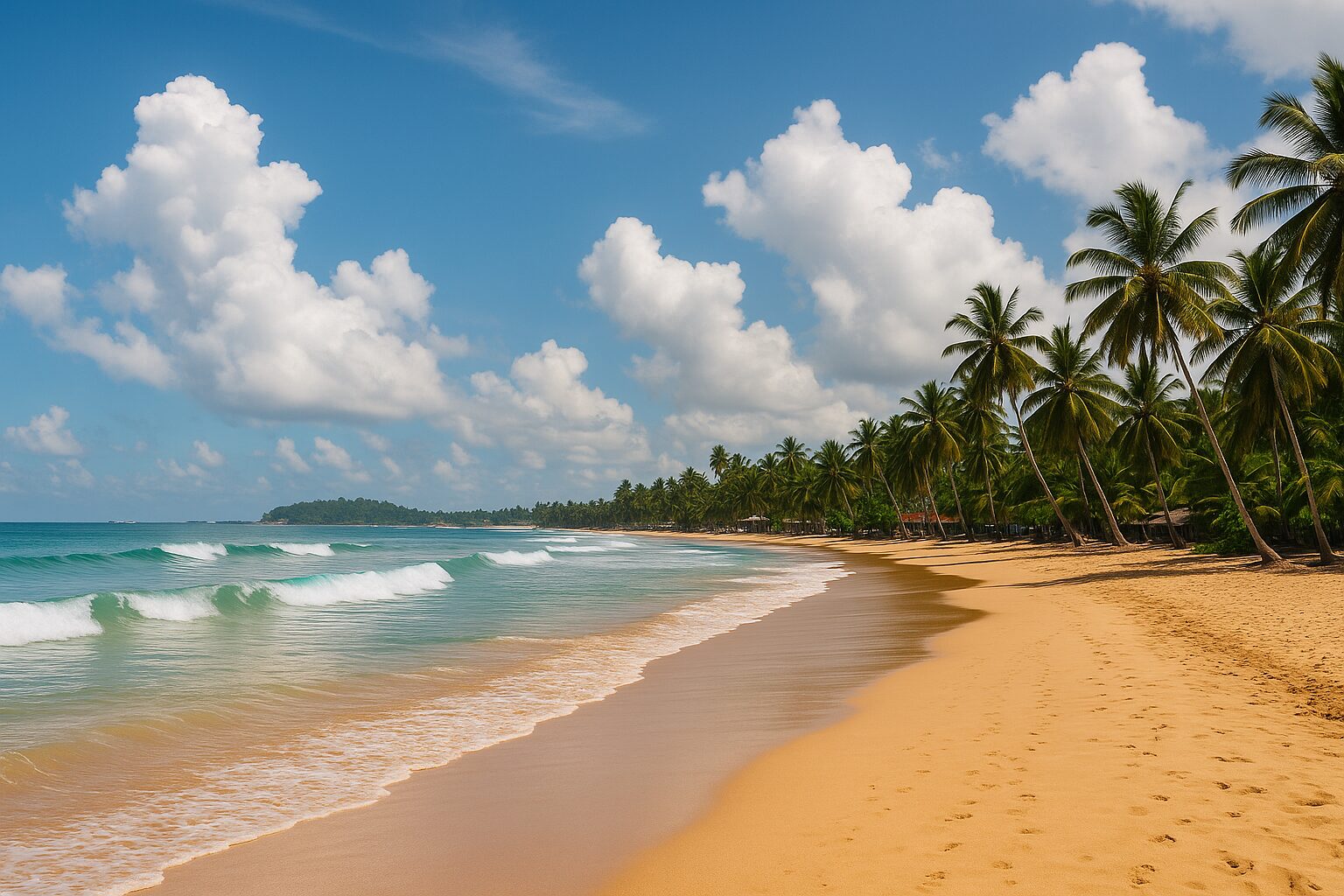
The ocean around Weligama stays pleasantly warm, averaging 27°C to 29°C (80–84°F) throughout the year. You don’t need a wetsuit — just a rash guard or long-sleeve top to protect your skin from the tropical sun. Sunscreen, zinc for the face, and a hat or cap between sessions are essentials for anyone spending full days at the beach.
Rain showers can appear even in the dry season, but they’re brief and refreshing. Often, a short burst of rain clears the haze and leaves the sea calmer than before. Even during the wet season, most mornings are surfable, especially right after sunrise when the air is still.
Where to Stay Near the Surf Points
Accommodation in Weligama ranges from beachfront hostels to five-star villas. If surfing is your main focus, staying close to the main bay gives you quick access to the best breaks and surf schools. Most places are within walking distance of the water, allowing you to grab your board and hit the waves at dawn. For detailed recommendations on where to stay near the surf, from beachfront hostels to luxury villas, check out our guide to the Best Hotels and Villas in Weligama, Sri Lanka — complete with reviews, amenities, and booking tips.
Here are some of the best stay types for different travelers:
Surf Hostels:
For solo travelers or backpackers, surf hostels near the beach offer an affordable and social environment. You’ll often find shared dorms, surfboard storage, and rooftop hangout areas. Many also organize group surf sessions and community dinners.
Mid-Range Guesthouses:
Guesthouses and boutique hotels around Weligama Bay provide comfort and privacy while keeping you close to the action. They’re ideal for couples or small groups who want a balance between quiet nights and easy beach access.
Luxury Resorts and Villas:
For those seeking comfort, Weligama has several luxury stays with direct beach access and panoramic ocean views. These properties often feature on-site spas, yoga decks, and surf packages that include professional lessons and board rentals. Staying at one of these villas means you can wake up, step outside, and be in the lineup within minutes.
If you plan to surf daily, try to stay within the main bay area or east toward Plantations Point. The west side of Weligama tends to be quieter but may require a short tuk-tuk ride to reach the surf schools.
Daily Surf Routine in Weligama
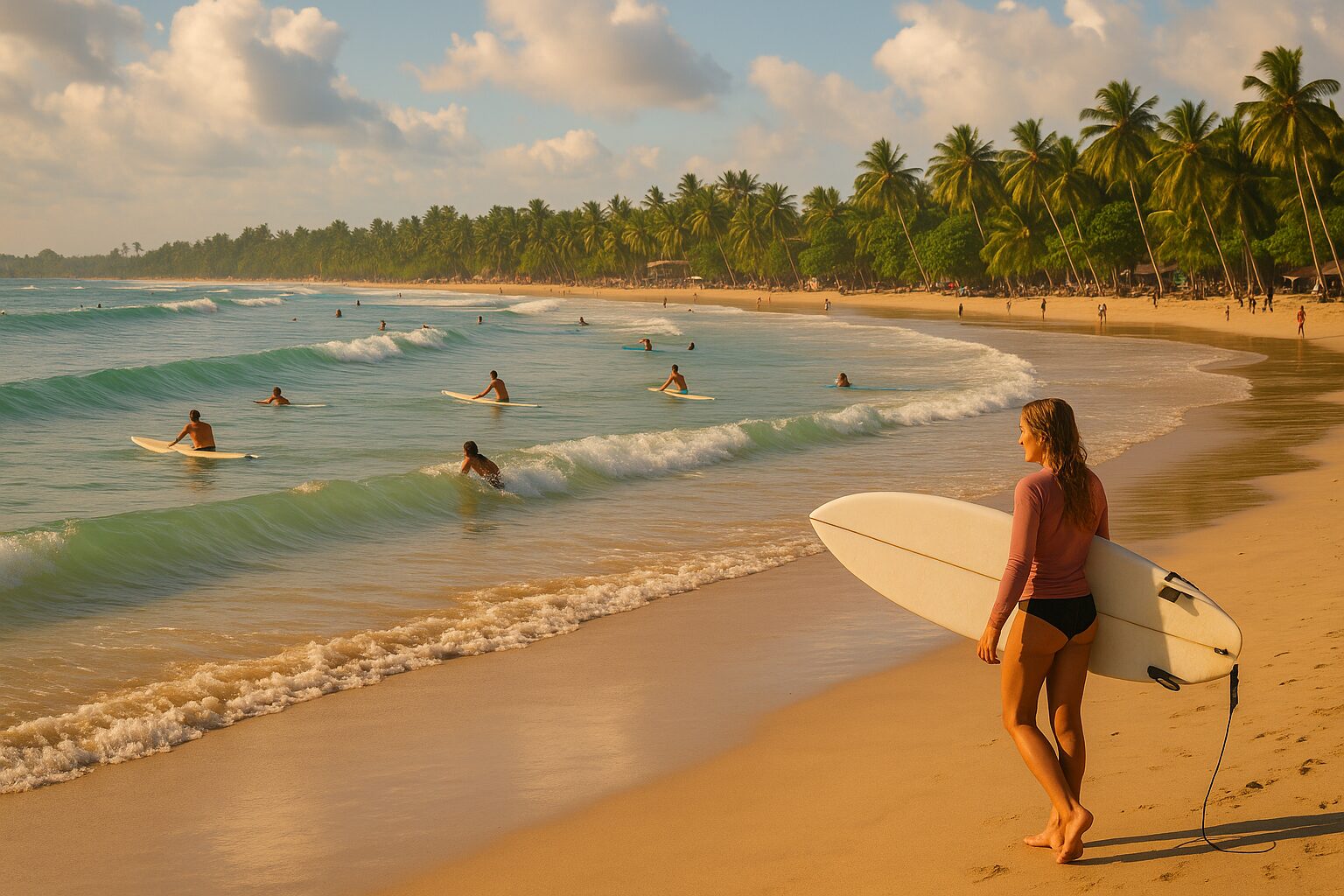
A typical day in Weligama follows the rhythm of the waves. The mornings begin early with the sound of the ocean and the sight of long shadows on the sand. Surfers start paddling out just after sunrise when the light is soft and the water glassy.
After a couple of hours in the water, most people head to one of the beachfront cafés for fresh fruit bowls, iced coffee, or Sri Lankan hoppers. The town has built a wonderful surf-friendly café culture — relaxed, creative, and full of travelers sharing tips about tides and breaks.
By noon, the tide shifts, and the sun gets stronger, so many surfers take a break, explore nearby towns, or visit the local market. Evenings bring another surf window around 4:30 to 6:00 PM, when the wind drops again and the sunset turns the entire bay gold.
Surf Culture and Community Vibe
Surfing in Weligama isn’t just about waves — it’s a lifestyle that blends ocean adventure with Sri Lankan warmth. Locals have embraced the surf scene without losing their cultural identity. You’ll still see traditional fishermen launching their boats at dawn, women selling coconuts by the roadside, and monks walking silently toward temples in the distance.
Many surf schools and hostels organize beach cleanups, sunset yoga sessions, and community dinners that bring locals and travelers together. There’s a strong sense of shared respect for the ocean here — not just as a playground, but as something sacred that connects everyone who visits.
In the evenings, the town lights up with music. Acoustic guitars, laughter, and the hum of motorbikes fill the air. Small beach bars open up with simple cocktails and reggae tunes, where surfers gather to talk about the day’s rides. It’s a community built around joy, freedom, and a deep love for the sea.
Essential Surfing Tips for Weligama Beginners
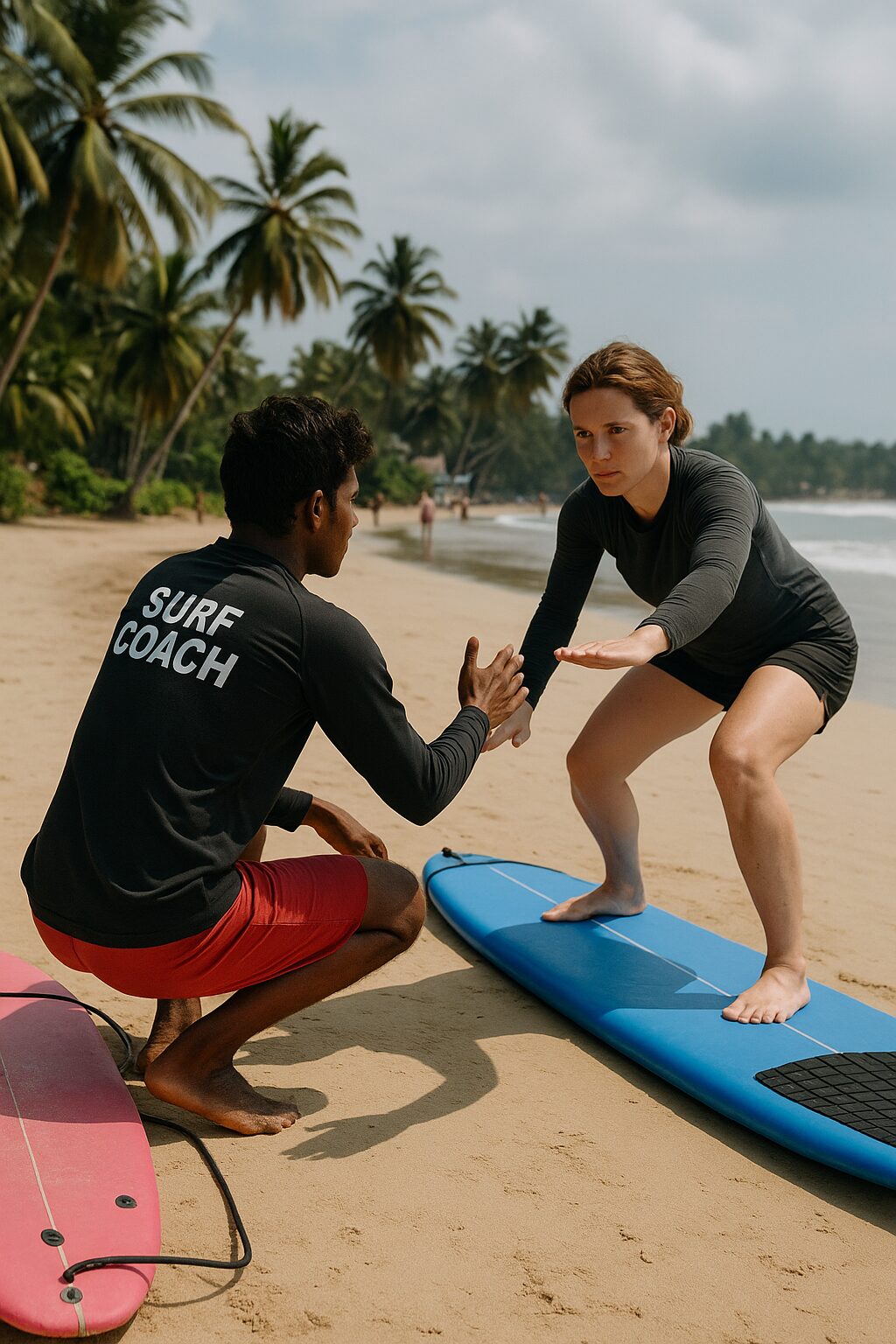
Surfing in Weligama is rewarding for anyone, but like all ocean sports, it demands respect, patience, and awareness. These practical tips will help you make the most of your time in the waves while staying safe and confident.
1. Learn Ocean Reading
Before paddling out, spend at least ten minutes watching the waves. Notice where they break, where surfers are catching them, and how the sets come in. This small habit helps you understand rhythm, avoid collisions, and position yourself properly.
2. Start with a Soft-Top Board
For beginners, soft-top surfboards are ideal because they provide stability and cushion in case of falls. Most surf schools in Weligama use 8- to 9-foot soft-tops that make catching waves much easier. As your balance improves, you can try shorter boards with more maneuverability.
3. Respect the Flags
Weligama’s main beach is monitored by lifeguards who mark safe swimming and surfing zones with colored flags. Surfing outside these areas is risky, especially during changing tides. Always stay within the designated section.
4. Mind the Tides
High tide brings deeper water and shorter rides, while low tide exposes more sandbanks. Mid-tide often offers the best balance between wave shape and length. Locals usually check the daily tide charts before planning their sessions.
5. Keep Hydrated and Sun-Protected
The tropical sun in Sri Lanka is no joke. Bring a reusable water bottle, wear a long-sleeve rash guard, and apply reef-safe sunscreen frequently. Dehydration or sunburn can quickly ruin an otherwise perfect surf day.
6. Take Breaks
It’s easy to lose track of time in the water, but regular breaks help you recover energy and avoid cramps. Between sessions, relax under palm trees, sip king coconut water, or grab a plate of rice and curry from one of the beachfront cafés.
7. Celebrate Progress
Whether you stand up for the first time or finally master a bottom turn, celebrate it. Weligama’s charm lies in its encouragement — everyone remembers being a beginner once, and no achievement is too small.
Advanced Surfing and Local Challenges
For experienced riders, Weligama opens doors to bigger adventures. The reef breaks at nearby Ahangama, Kabalana, and Midigama test precision and endurance. You’ll need to time your entry carefully to avoid sharp coral and strong rips, but the reward is world-class waves with perfect form.
Rams Right, a hollow right-hand reef in Midigama, is a favorite among professional surfers visiting Sri Lanka. It breaks fast and powerful, especially at mid-tide. Only confident riders should attempt it, as the wave breaks over shallow coral.
Lazy Left and Coconut Point, also in Midigama, are slightly more forgiving and suit intermediate surfers looking for longer rides. From Weligama, these spots are only about 10–15 minutes away by tuk-tuk, making it easy to explore them in a single morning.
Many advanced surfers use Weligama as their base because it combines access to heavy reef breaks with the convenience of a lively town. You can chase waves during the day and return to comfort, food, and nightlife by evening.
Surf Gear Care and Maintenance
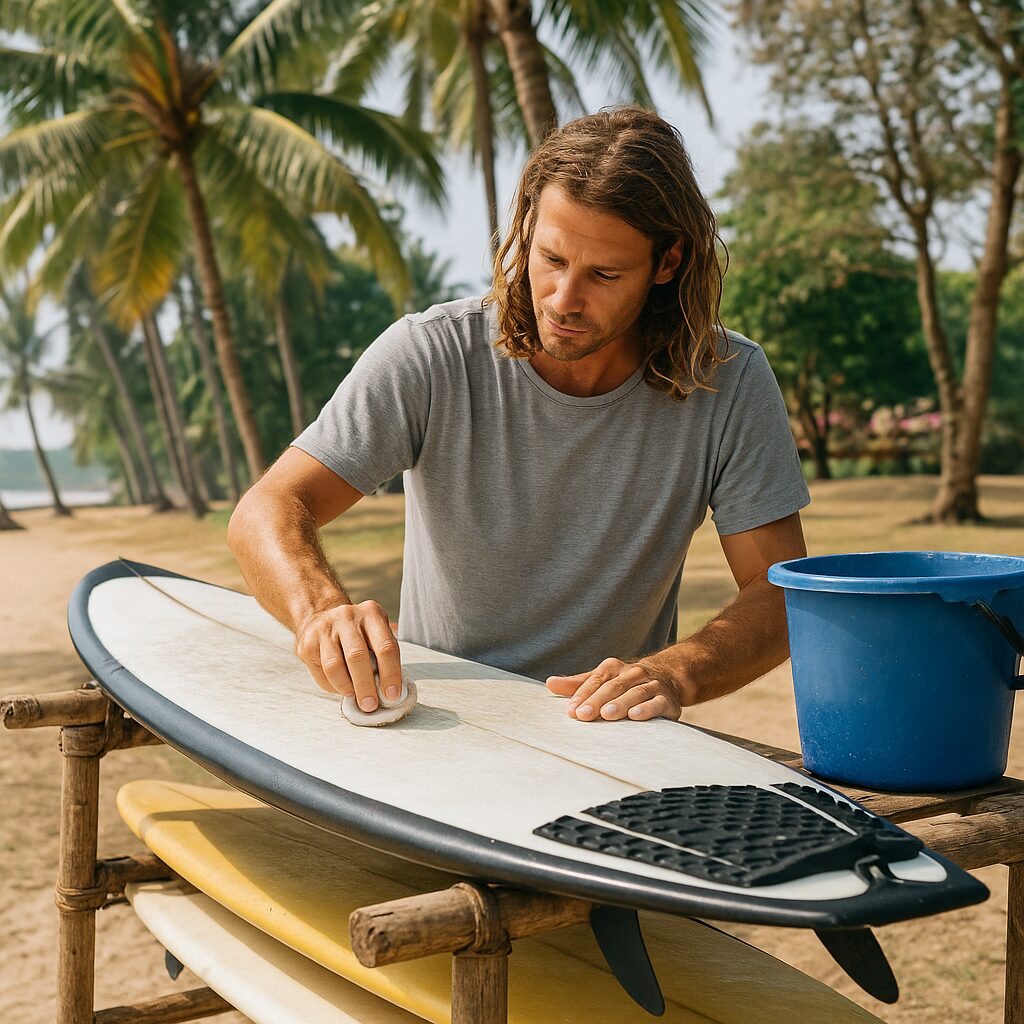
If you plan to stay in Weligama for more than a few days, taking care of your equipment is key. The combination of sun, saltwater, and sand can wear down gear faster than you think.
-
Rinse after every session: Always wash your board, leash, and fins with fresh water to remove salt and sand.
-
Avoid leaving boards in direct sunlight: UV rays can damage the foam and weaken the glue on soft-tops.
-
Repair dings promptly: Small cracks allow water to seep into the board, which affects performance and durability.
-
Store indoors or under shade: Most surf hostels and schools have board racks or storage spaces — use them whenever possible.
If you rent equipment, the surf shops usually handle maintenance, but it’s good practice to check for damage before and after use.
Surfing Day Trips from Weligama
One of the best parts of staying in Weligama is how close it is to other famous surf towns. Within a 30-minute ride, you can explore an entire coastline filled with hidden breaks, coconut groves, and stunning views.
Midigama (10–15 min west): Home to Lazy Left and Rams Right, it’s ideal for intermediates and experts. Early mornings are best before the wind picks up.
Ahangama (15–20 min west): Offers a mix of reef and beach breaks. A quieter alternative to Weligama, perfect for relaxed sessions and photography.
Kabalana (25 min west): Known for “The Rock,” a powerful A-frame break that attracts experienced surfers looking for challenging waves.
Mirissa (10 min east): Mostly known for its scenic beauty and whale-watching tours, but small surfable waves appear during calm days. It’s also great for rest days between surf sessions.
These mini day trips help you experience the diversity of Sri Lanka’s south coast while keeping Weligama as your central base.
Practical Travel Tips for Surfers
-
Getting There: The easiest route is from Colombo via the Southern Expressway (about 2.5 hours by car). Trains from Colombo Fort to Weligama are slower but scenic, passing through lush countryside and oceanfront tracks. Reaching Weligama’s surf-friendly shores is simple if you plan ahead. You can find all routes, travel times, and tips in our guide on How to Get to Weligama from Colombo.
-
Local Transport: Tuk-tuks are the main way to move between surf spots. Drivers usually charge fair prices, but agreeing on a rate before departure avoids surprises.
-
Board Transport: If you’re carrying your own board, look for roof racks on tuk-tuks or buses. Most drivers are used to surfers and handle boards carefully.
-
Cash and Connectivity: Surf schools and small cafés often prefer cash (LKR), though most accommodations accept cards. Wi-Fi is widely available, and 4G coverage is strong along the coast.
-
Health and Safety: Minor scrapes and sunburns are common among surfers. Pharmacies in town carry basic first aid, but bring waterproof bandages and antiseptic cream just in case.
Responsible Surfing and Environmental Awareness
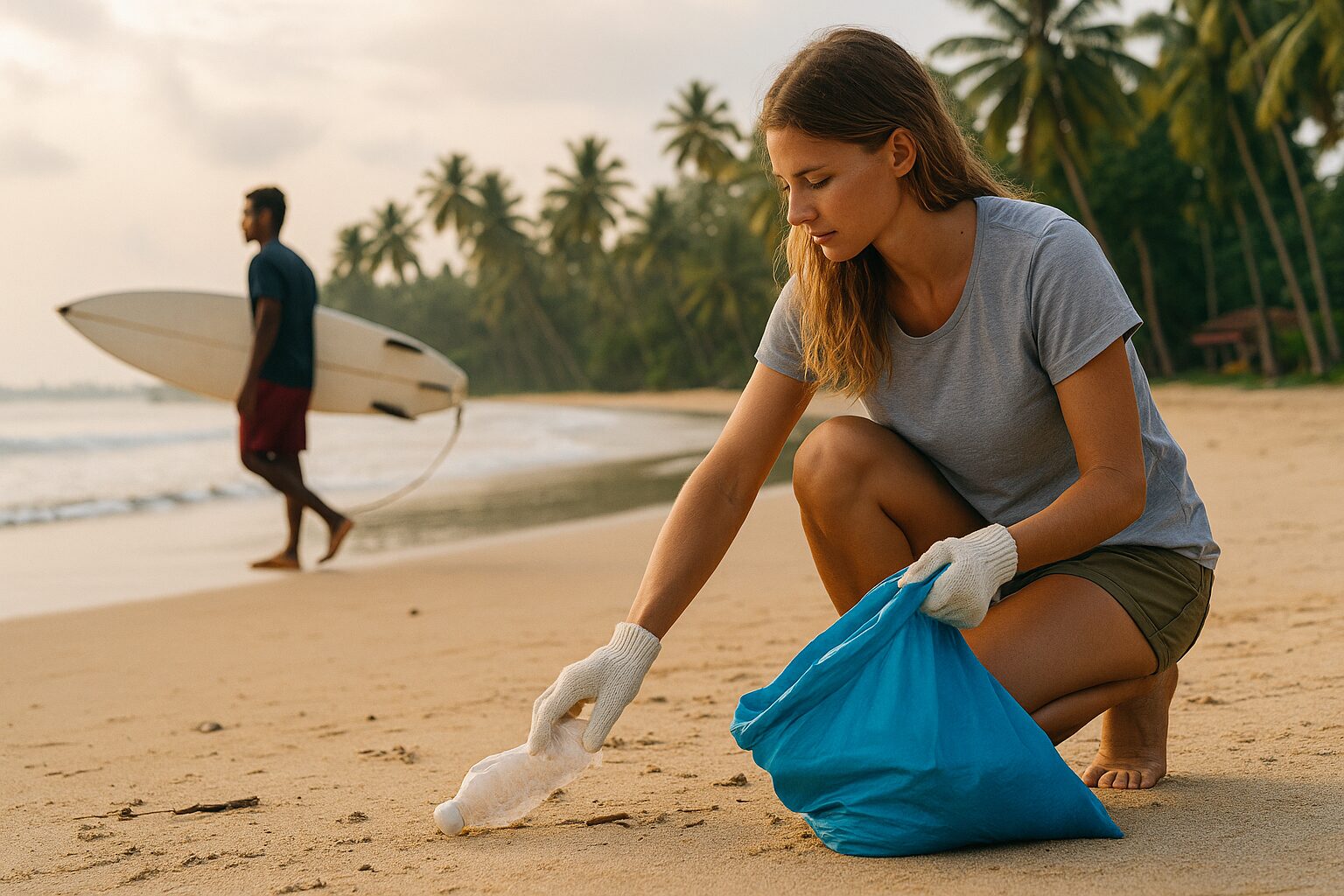
Weligama’s natural beauty is one of its greatest assets, but it also depends on visitors treating the ocean and beach with care. The local surf community is increasingly conscious of environmental preservation, and many schools encourage eco-friendly habits among their students.
Avoid Single-Use Plastics:
Bring a refillable water bottle and say no to plastic straws and bags. Many cafés now use metal straws and glass bottles — a small but meaningful shift toward sustainability.
Respect Marine Life:
Occasionally, you might spot sea turtles swimming near the bay. Keep your distance and never touch or chase them. Their presence is a sign of healthy waters, and it’s important to preserve that balance.
Join a Beach Cleanup:
Several surf schools and hostels organize weekly beach cleanups. Joining one not only helps keep Weligama pristine but also gives you a chance to connect with locals and other travelers.
Use Reef-Safe Sunscreen:
Traditional sunscreens often contain chemicals that harm coral reefs. Reef-safe brands are now available locally in eco shops and surf cafés — they protect your skin without damaging marine ecosystems.
Surfing responsibly in Weligama isn’t just about protecting the environment; it’s about showing gratitude for the place that makes these experiences possible. Every small action contributes to keeping the ocean clean and the community thriving.
The Cultural Side of Weligama
Beyond the surfboards and coconut palms, Weligama has a soul that runs deep into Sri Lankan culture. A short walk inland reveals a quieter world of temples, spice gardens, and local workshops.
The Kushtarajagala Statue, dating back to the 8th century, is one of the area’s most significant historical landmarks. This intricately carved figure of a Bodhisattva is surrounded by stories linking it to ancient Buddhist healing traditions. Visiting early in the morning allows you to hear birds echoing through the stone corridors while monks prepare offerings — a serene contrast to the energetic surf scene just minutes away.
You’ll also find small family-run mask and woodcarving workshops where artisans continue traditions passed down for generations. These handmade souvenirs tell stories of local mythology and sea spirits — a perfect way to bring a piece of Weligama’s heritage home.
Food and Café Culture After Surf
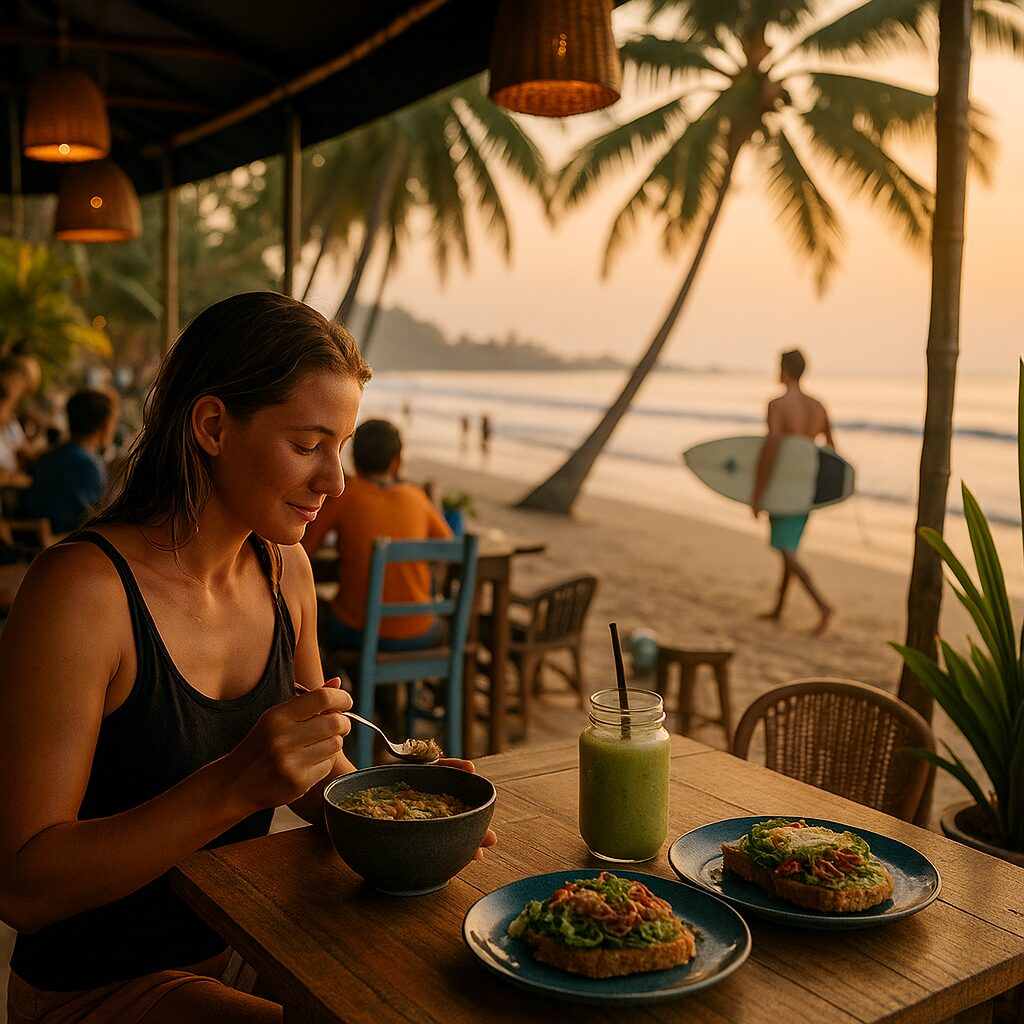
After a long session in the water, there’s nothing like refueling at one of Weligama’s many beachfront cafés. From traditional Sri Lankan curries to smoothie bowls and seafood platters, the food scene here blends global flavors with island simplicity.
Popular surf cafés serve everything from iced lattes and avocado toast to local favorites like kottu roti, string hoppers, and fresh tuna steaks. The vibe is always relaxed — barefoot travelers chatting about wave conditions, locals sharing stories, and the faint sound of music drifting from beach bars as the sun sets.
If you prefer quieter evenings, many small restaurants along the inland roads serve authentic home-cooked rice and curry meals. These spots often use fresh ingredients sourced from the nearby market — perfectly spiced, hearty, and inexpensive.
Surfing and Well-Being
Weligama is also a growing hub for wellness tourism. Surfing naturally complements yoga and meditation, and many retreats combine the two for a holistic experience. Morning surf sessions are followed by sunset yoga classes overlooking the bay, where travelers learn to balance body and mind.
Several surf camps offer week-long packages that include accommodation, surf lessons, yoga classes, and nutritious meals. These programs attract a mix of solo travelers, digital nomads, and couples looking to reset from their busy lives.
The connection between surfing and mindfulness becomes clear once you experience it — each wave demands presence, focus, and surrender. Many who come to Weligama for surfing leave with a renewed sense of calm and gratitude.
Safety, Community, and Final Advice
Weligama remains one of the safest surf towns in Sri Lanka. The people are friendly, and the atmosphere is peaceful, even during the busiest months. Still, it’s wise to take a few precautions: keep valuables in your accommodation, carry only what you need to the beach, and respect local customs when exploring inland.
If you’re visiting for the first time, plan at least four to five days to settle into the rhythm of the waves. Spend the first day taking lessons, the next exploring nearby breaks, and another relaxing or trying something new like snorkeling or yoga.
Most visitors find that time slows down here. You start waking up earlier, sleeping better, and noticing the color of the sky more than the clock. That’s the magic of Weligama — it’s not just about learning to surf; it’s about learning to live simply and fully.
Final Thoughts
Surfing in Weligama is more than a sport; it’s an experience that connects people from all walks of life. From sunrise sessions in warm turquoise water to conversations with locals over tea, every moment here feels genuine.
Whether you’re a first-time surfer chasing your first ride or an experienced traveler seeking new waves, Weligama welcomes you with open arms and endless horizons. It’s a place where the ocean teaches patience, the community teaches kindness, and the rhythm of life flows with the tide.
So pack your board or rent one on arrival, wake up with the sunrise, and paddle out toward the horizon. The waves are waiting — and they’ll remember you long after you leave.
Frequently Asked Questions – Surfing in Weligama
🏄 Surf Basics in Weligama
Yes. Weligama Bay is one of the most beginner-friendly surf spots in Sri Lanka. Its soft sand bottom, gentle waves, and long, forgiving breaks make it ideal for first-timers learning to balance and paddle.
Yes, surfing in Weligama is possible throughout the year. Even during the off-season, morning sessions often bring clean, manageable waves suitable for all skill levels.
Weligama’s bay is shallow and protected from large swells, making it safe for both swimming and surfing. Beginners should still stay within lifeguard zones and surf schools for guidance.
🌊 Surf Seasons, Lessons & Costs
The main surf season runs from October to April with calm seas and consistent waves. The May to September monsoon brings stronger winds, but mornings often remain surfable.
Yes. Weligama has dozens of reputable surf schools that offer beginner to advanced lessons. Certified local instructors provide coaching, safety tips, and rental gear right on the beach.
Lessons generally cost between LKR 4,000 and 6,000 per hour ≈ USD 12–18 per hour, including a surfboard, leash, and rash guard. Multi-day packages often include yoga or accommodation discounts.
No. Surfboards are easy to rent all along the beach. Rental prices range from LKR 500–800 per hour or around LKR 10,000–12,000 per week ≈ USD 1.50–2.50 per hour or ≈ USD 30–36 per week, depending on the board type.
🏖️ Travel & Accommodation Tips
Weligama is roughly 145 km south of Colombo. The fastest route is via the Southern Expressway (about 2.5–3 hours). Trains from Colombo Fort also run daily and offer scenic coastal views.
Yes. Accommodation options include beachfront hostels, boutique hotels, and luxury villas. Many are within walking distance of surf schools and offer special surf-and-stay packages.
Pack lightweight beachwear, a rash guard, reef-safe sunscreen, flip-flops, and a reusable water bottle. Weligama’s ocean stays warm all year, so you won’t need a wetsuit.
🌅 Nearby Attractions & Comparisons
Popular nearby spots include Mirissa for whale watching, Galle Fort for history, and Midigama or Ahangama for advanced surfing. You can also visit yoga retreats and spice gardens nearby.
Weligama is better for beginners and casual surfers, offering gentler waves and more surf schools. Mirissa caters to experienced surfers with a smaller, reef-based break.


